Quick Reference
How to Compare Ammo Prices: A CPR Guide

| Time & Effort | |
|---|---|
Read Time | 9 min read |
How to Compare Ammo Prices: A CPR Guide
Handbook article
From The Boise Gun Club Handbook
You're standing in a gun store, staring at two boxes of 9mm. One's $18.99 for 50 rounds, the other's $34.99 for 100 rounds with a shipping sticker still on the flap. Which one's cheaper? Most people just grab the one that feels like less money out of pocket. That's how you overpay every single time.
The fix is one simple number: cost per round, or CPR. Once you start thinking in CPR, every ammo decision gets easier -- whether you're comparing two boxes on a shelf, weighing a bulk online deal against a local shop price, or figuring out if that gun show table is actually a bargain.
What CPR Is and Why It's the Only Number That Mattersedit

CPR is just division. Take everything you're spending -- the sticker price, shipping, hazmat fees, whatever -- and divide it by the number of rounds you're getting. That's it.
Price Per Round = Total Purchase Cost ÷ Number of Rounds
The reason this matters is that ammo pricing is designed to confuse you. A 50-round box has a low sticker. A 1,000-round case has a scary sticker. But when you run the math, the case might be $0.18 per round while the box is $0.38. You just cut your ammo cost in half -- on the same caliber, same load.
According to Last Shot AZ, that single number tells you which package or seller really saves you money. Everything else -- the branding, the box art, the "sale" tag -- is noise.
The Costs You Have to Includeedit
Here's where people screw up the math. They calculate CPR on the sticker price and forget the fees that come after.
Online orders have extra costs that local purchases don't. The two big ones:
- Shipping -- can run $8–$20+ depending on weight and distance
- Hazmat fees -- ammunition ships as a hazardous material, and some retailers charge a flat hazmat fee that can be $20–$40 per order, regardless of how much you buy
If you order 200 rounds online at a great per-round price but pay a $25 hazmat fee, that fee alone adds $0.125 per round to your CPR. Suddenly the "deal" isn't.
Local shops skip the shipping and hazmat math -- but they may have sales tax that online purchases avoid depending on your state. Call ahead and ask whether listed prices include tax. Per Last Shot AZ, that's one of the first questions to ask before you drive anywhere.
Safety Note: When you call a local shop, ask for exact packaging size and unit price so you can calculate CPR yourself. Don't assume the guy at the counter did that math for you.
CPR in Action -- A Real Comparisonedit
Here's how to run the numbers side by side. These are illustrative examples to show the method:
| Option | Rounds | Sticker | Shipping + Fees | Total Cost | CPR |
|---|---|---|---|---|---|
| Local shop box | 50 | $21.99 | $0 (pickup) | $21.99 | $0.44 |
| Online retailer, small box | 100 | $32.99 | $12.99 shipping | $45.98 | $0.46 |
| Online retailer, case | 1,000 | $219.99 | $25 hazmat + $0 ship | $244.99 | $0.24 |
| Gun show table | 200 | $64.00 | $0 (cash deal) | $64.00 | $0.32 |
The case wins by a wide margin -- but only if you'll actually shoot 1,000 rounds before they sit in a corner for three years. That's a real consideration. CPR assumes you're buying what you'll use.
What Moves Ammo Pricesedit
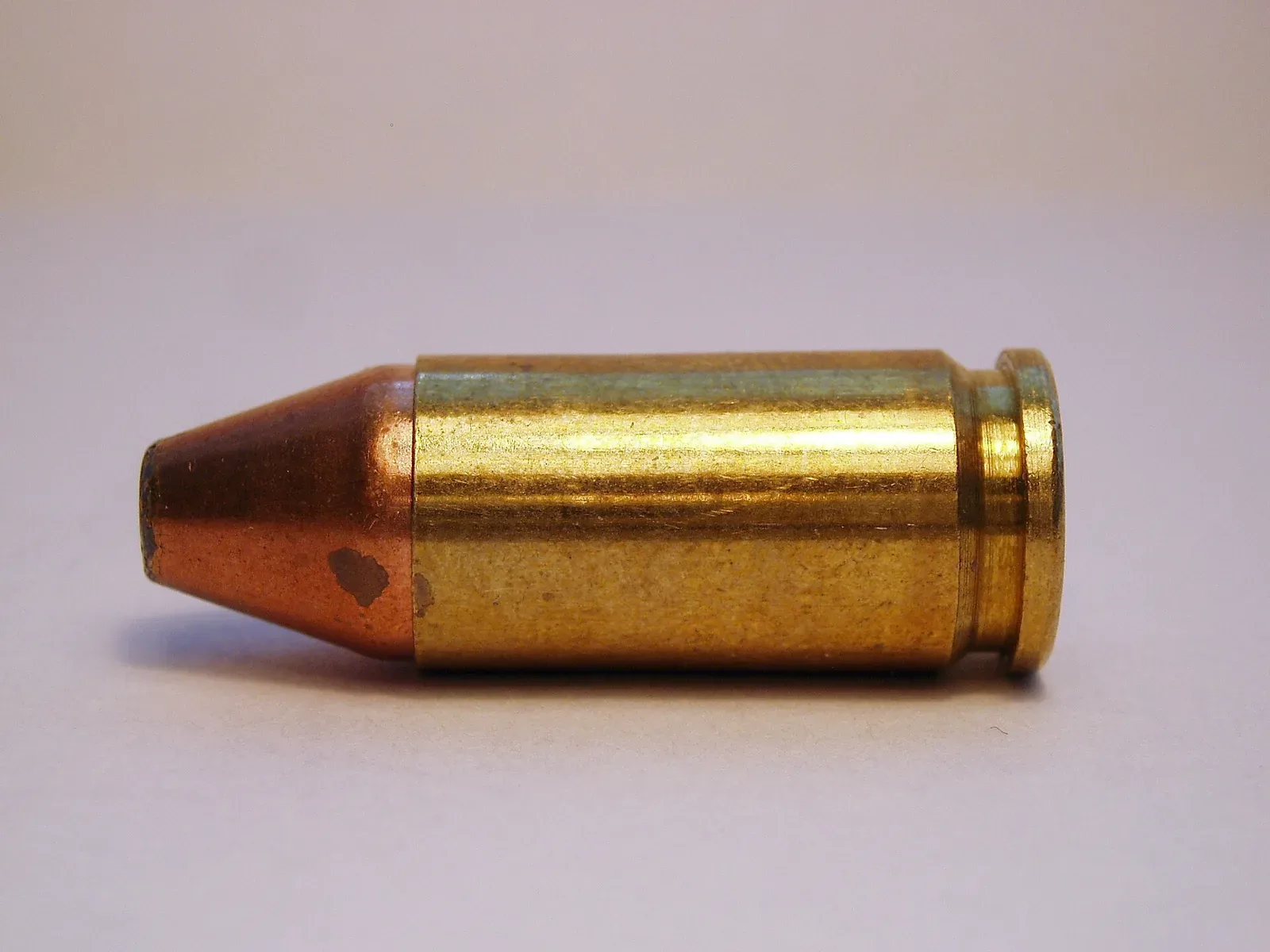
Knowing CPR helps you compare. Knowing what drives prices helps you time your purchases.
According to Last Shot AZ, in 2025 the main price drivers are supply stabilization, factory capacity, and caliber-specific demand. When manufacturers scale up production on high-volume calibers like 9mm and 5.56, unit costs fall. Demand spikes -- think election years, civil unrest, or a shortage scare -- push them back up fast.
Caliber matters a lot here. The cost structure is different across ammo types:
| Ammo Type | Relative CPR | Why |
|---|---|---|
| .22 LR | Typically lowest | Rimfire, high production volume, small components |
| 9mm | Generally economical | Highest production volumes of any centerfire pistol round |
| 5.56/.223 | Moderate to higher | Larger components, brass cases, more material per round |
| Shotgun shells | Varies widely | Depends on payload, shell length, shot type |
Seasonal sales are predictable, per Last Shot AZ -- holidays and end-of-season clearances are real windows. Signing up for retailer newsletters and price alert tools can catch short-lived deals on your primary calibers before they're gone.
Bullet Type Changes the Math Tooedit
CPR is a unit cost comparison -- but it only makes sense when you're comparing apples to apples. A full metal jacket (FMJ) practice round and a hollow point (HP) defensive round are not the same product at different prices. They're different tools.
Match the load to the job before you run CPR:
- FMJ / ball ammo -- range practice, training volume, plinking. Buy cheap, buy a lot.
- Hollow points / defensive loads -- carry ammo, home defense. Pay the premium. This is not the place to optimize CPR.
- Match-grade rifle ammo -- precision shooting where consistency and tight tolerances matter. Higher cost per round is justified by the application.
Per Last Shot AZ, premium rounds cost more because of stricter specs and higher-grade components. When you're comparing defensive hollow points, CPR still matters -- but so does reliability data and whether your specific pistol feeds that round reliably.
Local vs. Online -- When Each Winsedit
There's no universal answer here. The right channel depends on what you're buying and how much.
Local shops win when:
- You need ammo today
- You want to inspect packaging before buying
- Your order is small enough that shipping fees would dominate the CPR calculation
- The local price is already competitive and you skip hazmat fees entirely
Online wins when:
- You're buying in bulk (case quantities) where the per-round savings outweigh shipping math
- You're hunting a specific load your local shops don't stock
- You can hit a free-shipping threshold that kills the hazmat-per-round hit
The hybrid approach -- local for immediate needs, online for planned bulk buys -- is what most experienced shooters end up doing. Per Last Shot AZ, combining local pickup with online bulk buys often produces the lowest effective cost per round overall.
Pro Tip: Gun shows can be bargains, but they require extra attention. You can't always verify lot consistency or return a bad batch. Treat gun show ammo prices like any other -- run the CPR, compare to what you know online, and don't assume the table price is a deal just because it's cash.
Bulk Buying -- When It Makes Sense and When It Doesn'tedit
Bulk buying lowers CPR by spreading fixed costs -- manufacturing, packaging, shipping -- across more rounds. That math is real. But it only helps you if a few things are true:
- You'll actually shoot that caliber regularly
- You have storage space and conditions that keep ammo stable
- The rounds won't sit so long they become a liability (though properly stored ammo has a very long shelf life)
Rarely-used calibers are a trap. Buying a case of something you shoot twice a year because the CPR looks great is just money sitting in a box. Per Last Shot AZ, the break-even point depends on how often you shoot and your storage options.
Key Point: Bulk buying wins on math. But unused ammo is just expensive clutter. Buy bulk on calibers you shoot consistently.
Financing is another option some retailers offer for large bulk buys. If you go that route, compare the interest or fees against the per-round savings. If the financing cost wipes out the CPR advantage, you didn't actually save anything.
Finding Prices to Compareedit
You can't run CPR math if you don't have prices in front of you. A few practical channels:
- Aggregator sites like AmmoSeek pull prices from multiple retailers and let you sort by CPR after entering your zip code -- which accounts for shipping estimates. This is the fastest way to see the market at a glance.
- Retailer sites directly -- sign up for newsletters and restock alerts on your primary calibers
- Historical price charts -- sites like Black Basin track ammo price history by caliber so you can see whether today's price is high or low relative to recent trends
- Local shops -- call ahead, ask for the per-round price on the packaging size they stock
- Gun shows -- useful for spot checks, but verify before you buy
When you're evaluating online retailers, check inventory dates and reviews. An out-of-stock listing showing a great CPR doesn't help you, and a misrepresented stock situation wastes your time.
Quick Reference: CPR Checklistedit
Before you commit to any ammo purchase, run through this fast:
- Total price includes shipping, hazmat, and any fees
- Divided by exact round count (not estimated)
- Same bullet type and grain as what you're comparing against
- Quantity is realistic for your actual usage
- Seller has current inventory (not a ghost listing)
- For local: confirmed price includes or excludes tax
That's the whole system. Run those six checks and you'll never overpay because you skipped the math.
Putting It Togetheredit
CPR won't make you a better shot, but it will stretch your range budget further than almost anything else you can do. The math is simple -- add all costs, divide by rounds. The discipline is just remembering to actually do it before you hand over money.
Start with whatever you buy most often. Look up the current price at your local shop, run CPR. Pull up an aggregator, find the best online price including shipping and hazmat, run CPR. Compare. Do that three times and it becomes automatic. Last Updated: March 30, 2026
- Phils Custom Handloads(Swartz Creek, MI)
- Gls Guns(Sumner, IA)
- J & L Gunsmithing(Chesapeake, VA)
- Oliver Firearms(Spartanburg, SC)
Loading comments...