Quick Reference
Five Stand Shooting Guide

The Browning Auto-5 — John Browning's pioneering semi-auto design from 1902, still in production and competition use today.
Arthurrh (CC BY-SA 3.0)
| Time & Effort | |
|---|---|
Read Time | 11 min read |
Equipment Needed | |
| |
| Prerequisites | |
| |
Safety | |
| |
Key Takeaways | |
| |
Organization | |
| NSCA (National Sporting Clays Association) | |
| Divisions | |
NSCA Five Stand (standard 25-target)Wobble Five StandSub-gauge Five Stand (20-gauge, 28-gauge, .410)Youth Five StandFlurry Five Stand | |
Related Topics | |
| |
Five Stand
Handbook article
From The Boise Gun Club Handbook
Five Stand gives you all the variety of sporting clays without the walking, course changes, or premium prices--25 targets from five fixed stations with machines throwing everything from ground bouncers to high towers.
You show up, shoot your round, and leave. No wandering through the woods looking for the next station, no waiting while they reset elaborate target presentations. Just pure shotgunning variety at trap field prices.
Five Stand emerged in the 1980s when range owners figured out they needed sporting clays' appeal without the headaches. Brilliant solution: park shooters at five fixed stations with six to eight trap machines arranged around them. You get crossing shots, quartering targets, rabbits bouncing along the ground, and chandelles climbing toward the clouds--all from one compact setup.
The format keeps you guessing without being random. Each station has a menu card showing the sequence, but you won't know if that crossing shot is coming high or low until you see it. Makes it excellent training for hunting situations where ducks don't follow skeet house flight patterns.
How It Worksedit
You rotate through five shooting positions with four other shooters, taking five targets at each station. Unlike trap where everything goes away from you, or skeet where the presentations never change, Five Stand mixes it up. That crossing shot from station 3 might be a screaming teal one round and a slow-floating midi the next.
Each shooter gets two shells per target--break it with the first shot or the second, doesn't matter for scoring. Dead bird gets you one point, miss gets you zero. Simple math that adds up to 25 possible points per round.
Five Stand rotation pattern - shooters move clockwise through stations
Safety rules are non-negotiable and strictly enforced. When the range officer calls cease fire, everything stops immediately.
Safety rules are non-negotiable and strictly enforced. Actions stay open except when you're in the shooting box. Everyone wears eyes and ears. The range officer runs the show and has absolute authority--when they call cease fire, everything stops immediately.
Equipment You Neededit
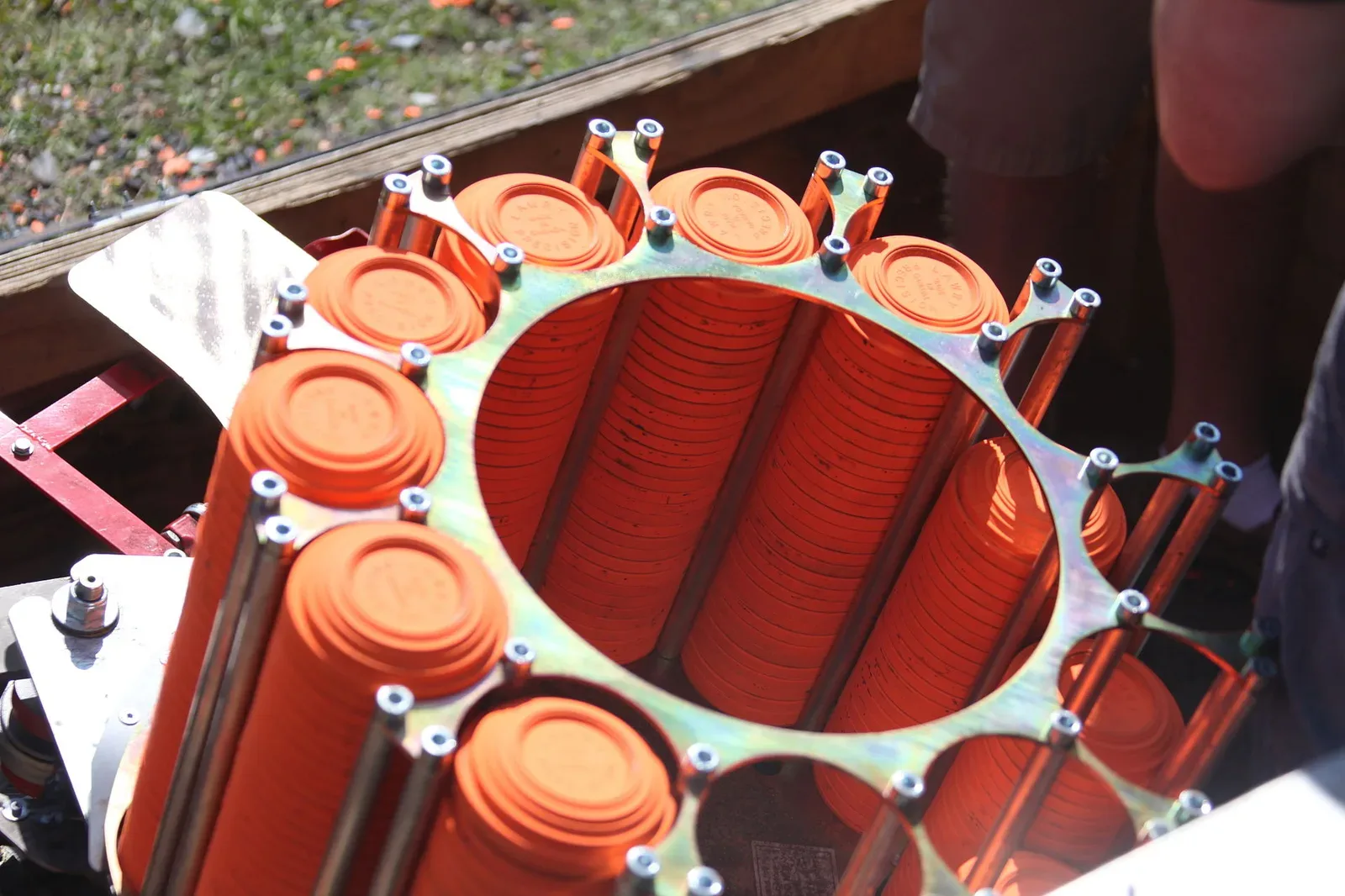
Start simple and upgrade as you learn what matters. A reliable shotgun beats an expensive one that doesn't fit you properly.
Essential Equipment
| Equipment Category | Essential Items | Cost Range |
|---|---|---|
| Shotgun | 12-gauge pump, semi-auto, or O/U | $400-1,500 |
| Chokes | Skeet, Light Modified, Modified | $50-200 |
| Ammunition | Target loads, 1 oz or 7/8 oz, #8 or #7.5 shot | $8-12/box |
| Safety Gear | ANSI Z87.1 shooting glasses, electronic ear protection | $50-150 |
| Storage | Shell vest or bag (25+ capacity) | $25-75 |
| Optional | Gun case, recoil pad, shell catcher, barrel towel | $100-300 |
Over/unders dominate serious competition because you can run different chokes in each barrel--Skeet for close crossing shots, Modified for long outgoers. But plenty of good shooters run semi-autos and do just fine.
The gun that fits you and cycles reliably matters more than what's stamped on the receiver.
Optional Upgrades
Don't get caught up in gear obsession early on. A $600 semi-auto with proper chokes will outshoot a $3,000 over/under in hands that practice regularly.
Useful Additions:
- Gun case for transport and storage
- Recoil pad for high-volume practice sessions
- Shell catcher if required by your range
- Barrel towel for quick cleaning between rounds
Rules and Scoringedit
Scoring System
Five Stand scoring couldn't be simpler--hit equals one point, miss equals zero. You get two shots per target, so break it with either shell for full credit. No style points, no degree of difficulty multipliers, just dead birds.
Squad Rotation
The rotation moves clockwise through stations 1-2-3-4-5, with station 5 going back to station 1. Everyone shoots their five targets before the squad moves. Most clubs run singles first, then report pairs (second target launches when you shoot at the first) or true pairs (both launch simultaneously).
Range Commands
- "Load" means put shells in your gun
- "Pull" calls for your target
- "Unload" means extract all shells and show clear action
- When not shooting, keep action open and muzzle pointed downrange
Two-shot maximum per target, then move on regardless of result. Gun must be shouldered when firing--no hip shooting allowed. Only the shooter in the designated box loads shells.
Getting Startededit
Find a local club through the NSCA website or ask at gun shops--most areas have at least one option within reasonable driving distance. Call ahead about beginner sessions or instruction. Many clubs offer orientation that covers safety and basic technique before throwing you into competition.
Getting started pathway for new Five Stand shooters
Arrive early your first time to handle paperwork and get familiar with the layout. Watch a squad shoot if possible--seeing the target sequence helps enormously. Don't hesitate to ask questions. Five Stand shooters generally help newcomers who show proper safety awareness.
Expect to shoot poorly initially. Breaking 15 out of 25 is respectable for beginners. Focus on safety and following commands rather than your score. Most clubs use classification systems that group shooters by ability, so you won't compete directly against local hotshots until your scores improve.
First Session Checklist:
- Eye and ear protection (bring your own if possible)
- Comfortable clothing that won't snag gun mount
- More shells than you think you need
- Patience with yourself--this stuff takes time
Costsedit
Per-Session Costs
Entry fees typically run $15-25 for 25 targets at most clubs. Add shells, gas, and incidentals, and you're looking at $25-35 per session.
The real expense comes from shooting regularly--dedicated Five Stand shooters burn through 3,000-5,000 rounds annually between practice and competition.
| Shooting Frequency | Annual Sessions | Estimated Cost | Target Volume |
|---|---|---|---|
| Casual Shooter | 12 sessions/year | $800-1,200 | 1,000-1,500 rounds |
| Regular Competitor | 24-36 sessions/year | $2,000-4,000 | 3,000-4,000 rounds |
| Serious Tournament Shooter | 50+ sessions/year | $5,000-8,000 | 5,000+ rounds |
Annual Budgets
Annual Budget Estimates:
- Casual shooter (once monthly): $800-1,200
- Regular competitor: $2,000-4,000
- Serious tournament shooter: $5,000-8,000
Equipment Investment
Equipment costs front-load, then level off unless you catch upgrade fever.
| Cost Category | Starter Setup | Competitive Setup |
|---|---|---|
| Shotgun | $400-800 | $1,500-3,000 |
| Chokes | $50-150 | $200-600 |
| Safety Gear | $50-100 | $150-300 |
| Accessories | $100-200 | $300-600 |
| Total Initial | $600-1,250 | $2,150-4,500 |
Competitive gear pushes $3,000-5,000, but won't make you a better shooter until you've developed the skills to use it properly.
Hidden Costs:
- Choke tube upgrades ($200-600 for quality sets)
- Travel to major tournaments
- Gun modifications and gunsmithing
- League fees and club memberships ($100-500 annually)
- Shell price fluctuations--budget extra during shortages
Where to Shootedit
The NSCA club search tool gets you started--search by ZIP code and distance to find clubs in your area. Many trap and skeet operations have added Five Stand fields over the past decade. Urban ranges sometimes offer indoor versions, though these typically use shorter distances.
State sporting clays associations maintain club lists and coordinate traveling leagues. USA Clay Target League focuses on youth programs but can point toward youth-friendly clubs if you're getting kids started.
Don't overlook smaller clubs that might not show up in online searches. Ask at local gun shops or check with county extension offices--they often know about shooting clubs that fly under the radar.
Organizationsedit
NSCA handles the serious competition side with standardized rules, classification systems, and score tracking. Annual membership ($45-65) gets you official classification and registered tournament eligibility. Their insurance coverage and consistent rules make them the obvious choice for competitive shooters.
USA Clay Target runs youth programs through high schools--valuable if you have kids interested in shooting sports. State associations vary widely in activity level. Some organize extensive traveling circuits, others just maintain basic club coordination.
Five Stand hits the sweet spot between trap's simplicity and sporting clays' complexity--enough variety to improve your hunting shots without the premium prices or time commitment that sporting clays demands.
Loading comments...