Quick Reference
Getting Started with Long-Range Shooting

| Time & Effort | |
|---|---|
Read Time | 11 min read |
Getting Started with Long-Range Shooting
Handbook article
From The Boise Gun Club Handbook
You pull the trigger. Three seconds pass. Then you hear it -- that distant, unmistakable clang of steel at 1,000 yards. If you've never experienced that, it's hard to explain. If you have, you already know why people get hooked on this sport and never look back.
Long-range shooting is more chess than checkers. It layers math, gear, environmental reading, and fundamental marksmanship into something that takes real time to master -- and that's exactly what makes it worth pursuing.
What "Long Range" Actually Meansedit
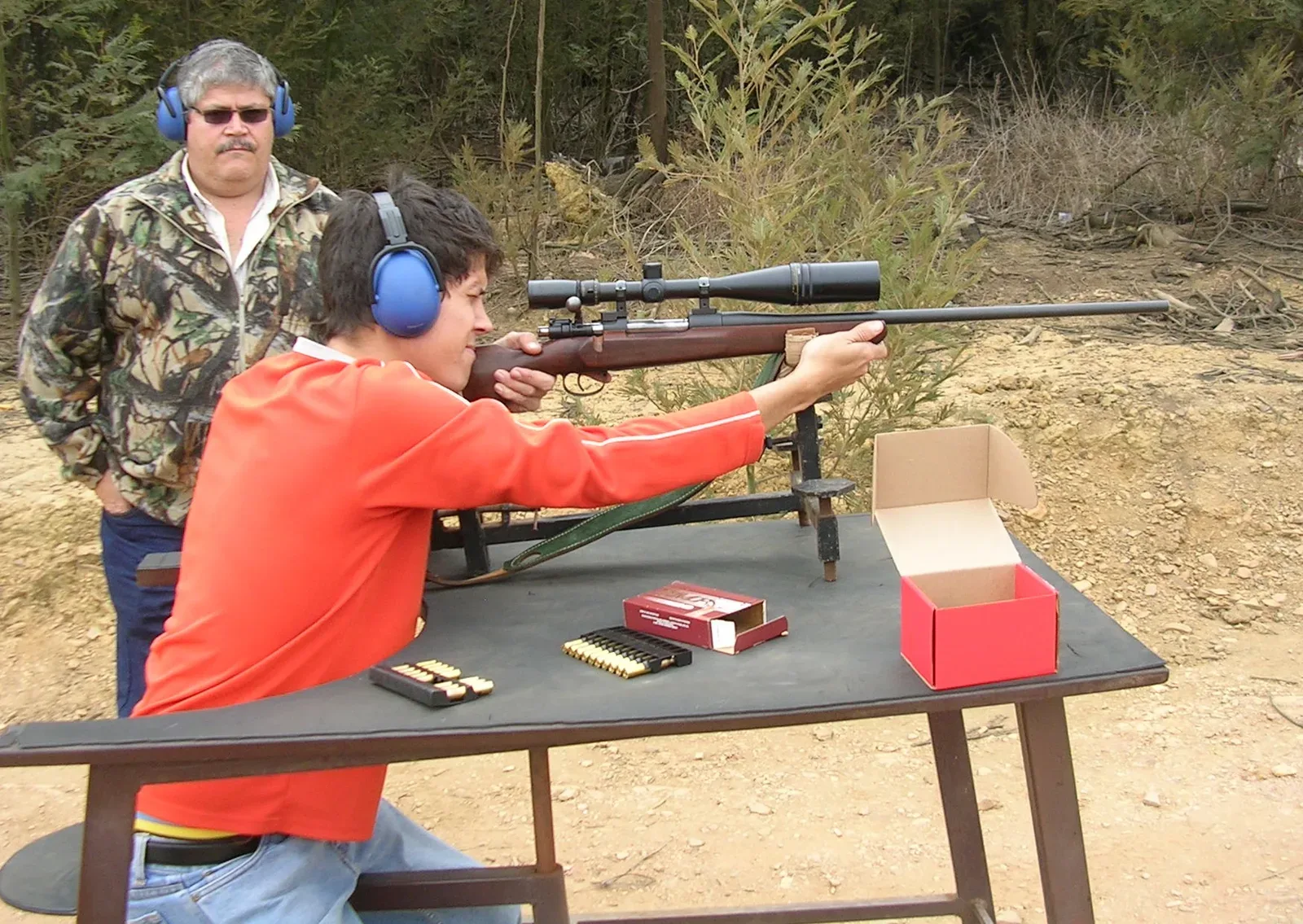
The term gets thrown around loosely, so here's a working definition. According to Bryan Litz, Founder and President of Applied Ballistics LLC, long-range shooting is "where you need to make significant adjustments to your zero to hit a target due to gravity drop and wind deflection."
For practical purposes, the ranges break down like this:
| Category | Distance |
|---|---|
| Short range | Under 300 yards |
| Long range | 300–1,200 yards |
| Extra-long (ELD) range | Greater than 1 mile |
At short range, you can mostly eyeball it. Past 300 yards, you can't. The bullet's path becomes a math problem -- and you need the tools and knowledge to solve it before you pull the trigger.
Why Fundamentals Matter More at Distanceedit
Every flaw in your technique gets magnified the farther out you shoot. A sloppy trigger pull that costs you half an inch at 100 yards costs you five inches at 1,000. There's nowhere to hide.
The five fundamentals you need locked in before worrying about anything else:
- Stable platform -- prone position or seated, with a bipod. Standing shots at long range are a novelty, not a technique.
- Natural point of aim -- your body should be aligned with the target, not fighting itself.
- Proper grip and cheek weld -- stock firmly in the shoulder pocket, cheek planted, eye one to two inches from the scope. Too much gap and you can't see the target straight-on.
- Breathing control -- exhale halfway, hold, fire. Your rifle rises and falls with every breath, and at 1,000 yards that movement translates to misses measured in feet, not inches.
- Smooth trigger squeeze -- squeeze steadily and slowly. Jerking the trigger pulls the muzzle left or right, and horizontal groups that scatter while staying consistent vertically are the tell.
Follow-through matters too. After the shot, hold everything -- position, grip, sight picture -- exactly as it was. Change any variable between shots and your next group will show it.
Key Point: Most long-range shooters are chasing sub-MOA accuracy. One MOA (Minute of Angle) equals one inch at 100 yards. Shooting sub-MOA means your group diameter stays under one inch at that distance -- and that's the baseline you need to have any business stretching out past 500 yards.
The Gear: What You Actually Neededit
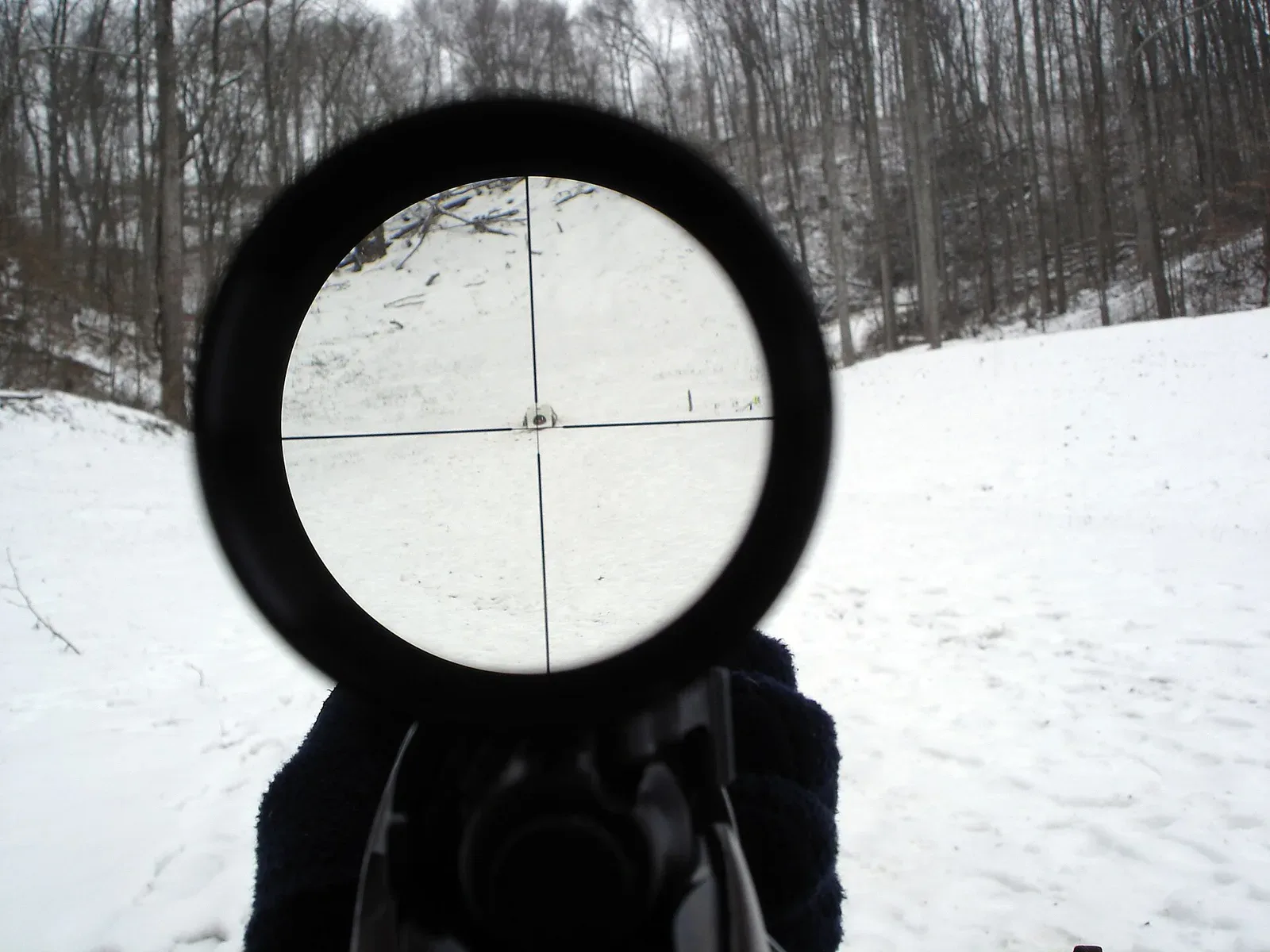
Here's the thing that surprises most new shooters: spend more on the optic than the rifle.
According to longrangeshooting.org, most quality modern rifles in the right caliber can reach 1,000 yards. The same is not true of budget optics. A cheap scope with sloppy turret tracking or bad glass will hold you back no matter how good the rifle underneath it is.
The Scope
Long-range scopes differ from hunting scopes in a few important ways. You need:
- Variable magnification -- you need enough power to see a target at distance clearly. A scope that adjusts from something like 5x to 30x gives you flexibility across ranges.
- Turrets that track accurately -- you'll be dialing elevation and windage corrections based on precise calculations. If your turrets don't track true, those calculations are worthless.
- A parallax adjustment knob -- at extended ranges, parallax error affects your point of impact. You need to be able to dial it out.
- A BDC or MIL/MOA reticle -- hash marks in the reticle let you hold for wind and drop without physically turning a turret, which matters in competition and hunting scenarios.
The Rifle
You don't need a custom rifle to get started, but you do need one that's consistent. A good barrel, a solid stock, and a decent trigger are non-negotiable. Heavier rifles handle recoil better, which means less movement between shots and more consistency.
Some commonly mentioned entry-level options that claim sub-MOA accuracy out of the box:
- Remington Model 700 SPS Tactical
- Ruger Precision Rifle
- Tikka T3
- Browning X-Bolt Long Range
- Savage 12 Long Range Precision
If budget allows and you want to go further up the ladder, builders like Gunwerks and GA Precision specialize in long-range hunting rifles built to spec. On the more tactical end, Accuracy International, Cadex Defence, Barrett, and Steyr are names that come up regularly.
The Supporting Gear
Beyond rifle and scope, a functional long-range kit includes:
| Item | What It Does |
|---|---|
| Bipod | Stable shooting platform, reduces shooter-induced movement |
| Rangefinder | Gives you the exact distance to target for accurate firing solution |
| Wind meter (anemometer) | Measures wind speed at your position as a baseline |
| Spotting scope or binoculars | Reads conditions downrange and spots impacts |
| Ballistics app | Does the drop and drift math in real time based on your inputs |
| Scope level | Eliminates cant, which causes diagonal error at long range |
| DOPE card / logbook | Records your real-world data for future reference |
According to longrangeshooting.org, a complete system -- rifle, scope, bipod, rangefinder, wind meter, cleaning kit, and accessories -- can be put together for around $2,000–$3,000 capable of reaching past 1,000 yards with quality ammunition. You can spend a great deal more, but that's a workable starting point.
Choosing a Caliberedit
There's no single right answer here -- the caliber question depends on what you're doing.
Ballistic Coefficient (BC) is the key concept. BC describes how efficiently a bullet cuts through the air based on its shape. Higher BC bullets -- typically aerodynamic designs with a boattail -- resist wind deflection better and retain velocity longer. You'll find BC numbers on your ammo box or from the manufacturer, and you need that number to calculate your firing solution accurately.
For general long-range target shooting, the 6mm and 6.5mm cartridge families have become the go-to choices. For hunting and military applications, the 300 Winchester Magnum has a long track record, though some argue that 7mm-class cartridges now offer better BC and range. The tradeoff with less common cartridges is ammunition availability -- worth factoring in before you commit.
Long-range shooting also requires the bullet to stay supersonic out to your target distance. Once a bullet goes subsonic, it becomes unpredictable. Know your cartridge's supersonic limit.
Ammunition: Match Grade Mattersedit
Plinking ammo is fine at 50 yards. At 800, it'll drive you crazy. Long-range shooting demands consistent, accurate ammunition -- either factory match-grade loads or carefully worked handloads.
Ballistic performance varies significantly between ammunition types at extended ranges. Inconsistent muzzle velocity, bullet weight variance, or poor BC will scatter your groups in ways that make it impossible to know if the problem is you, the rifle, or the ammo. Eliminate the variable by using quality, consistent ammunition from the start.
A ballistics calculator app -- fed with your bullet's BC, muzzle velocity, sight height, and environmental data -- will generate a firing solution telling you exactly how many MOA or MIL to dial at any given distance. Those numbers are only as good as the ammo data going in.
Reading the Wind: The Hard Partedit
Everything else in long-range shooting can be learned from a book or a range session. Wind reading is different -- it comes from time in the field, paying attention, and building an intuition that no app fully replaces.
According to Savage Arms, wind blowing from the side (crosswind) has the most significant effect on a bullet's flight, pushing it laterally off target. Headwinds and tailwinds affect drag slightly -- increasing or decreasing bullet drop a small amount -- but crosswind is the primary enemy.
The longer the bullet is in the air, the more time wind has to push it. Lighter, slower bullets drift far more than heavy, fast ones. That's another argument for high-BC cartridges at long range.
Reading Wind Without a Meter
A wind meter tells you what's happening at your position. It says nothing about what the wind is doing at 600 yards -- which might be completely different. That's where environmental reading comes in.
Savage Arms provides this reference for estimating wind speed from natural indicators:
| Visual Indicator | Approximate Wind Speed |
|---|---|
| Smoke and dust drifting | 1–3 mph |
| Grass moving | 4–7 mph |
| Leaves rustling | 8–12 mph |
| Branches swaying | 13–18 mph |
| Trees swaying | 20+ mph |
One of the sharpest tools available is mirage -- the heat shimmer you see through a high-magnification scope or spotting scope. Per Savage Arms, mirage moving straight up indicates little or no wind. Mirage angled at roughly 45 degrees suggests a 5–10 mph crosswind. Mirage lying nearly flat and horizontal indicates winds above 10 mph. It also tells you the direction the wind is traveling between you and the target -- information your wind meter at the firing line can't give you.
Additionally, watch vegetation at multiple points along the bullet's path. Short grass bending slightly suggests 3–5 mph. Larger leaves or branches moving steadily put you in the 10–15 mph range. Changes in vegetation movement between you and the target signal variable winds -- the hardest condition to compensate for.
Holding vs. Dialing for Wind
Once you've made your wind call, you have two options:
Holding uses your reticle's hash marks to aim off-center without touching the turrets. It's faster -- useful in competition, hunting, or whenever the wind is shifting and you can't keep up by dialing.
Dialing means physically adjusting the turret to account for drift. More precise, but takes more time. Best when conditions are stable and you have the seconds to spare.
Most experienced shooters use both depending on the situation. Learn both from the start.
Key Point: According to longrangeshooting.org, the wind is described as "the great equalizer." Shooters who read it well will consistently outperform better-equipped shooters who can't.
Zeroing Your Setupedit
Before any of the above matters, your rifle and scope need to be zeroed -- meaning the point of aim and point of impact align at a known distance. Without a proper zero, every calculation you make is starting from a wrong baseline.
Zeroing at short range first (100 yards is standard) gives you a confirmed starting point. From there, you build your DOPE -- Data On Previous Engagements -- by shooting at progressively longer distances, recording what adjustments were needed to hit at each range, and building a firing solution table specific to your rifle, ammunition, and environmental conditions.
No two setups are identical. Your DOPE card is yours. It's built from real rounds fired under real conditions, and it becomes more valuable every time you use it.
Where to Practiceedit
This is a real challenge. Many ranges in the U.S. top out at 100–200 yards, and even ranges with long-range lanes often have limited availability. Public BLM land is a common solution for shooters who don't have access to a private range with long-distance capability. Check local regulations before setting up anywhere on public land.
When you do get time at distance, make it count. Shoot in variable conditions -- including wind. Don't wait for a calm day. Log everything. Note your wind call, the actual impact, and the correction you made. That record becomes your education.
The Order of Operations for Getting Startededit
Don't jump straight to 1,000 yards. The sequence matters:
- Lock in your fundamentals at 100 yards. Shoot small groups consistently before going farther.
- Get your zero confirmed and documented.
- Learn to use a ballistics app with your specific ammunition data.
- Stretch to 300, then 500, recording DOPE at each distance.
- Add wind reading practice deliberately -- pick windy days, not calm ones.
- Work out to 1,000 yards once your closer-range data is solid.
Safety Note: At extended ranges, know your backstop and what's beyond your target. A .300 Win Mag remains dangerous well past 1,000 yards. Always verify your range is clear and that your rounds have a safe impact zone.
The equipment matters. The caliber matters. But as longrangeshooting.org puts it plainly: it's not about the money spent -- it's about the time spent practicing. Buy the best setup you can afford, find a consistent load, and put rounds downrange. The steel doesn't lie.
Go Deeperedit
- J & L Gunsmithing(Chesapeake, VA)
- Gls Guns(Sumner, IA)
- Tkc Customs(Wimberley, TX)
- Oliver Firearms(Spartanburg, SC)
Loading comments...