Legal Details
Legislation

| Identification | |
|---|---|
| Jurisdiction | |
Territory | Idaho |
Idaho Red Flag Laws: What You Need to Know
Legal information and analysis
From The Boise Gun Club Handbook
This is educational information, not legal advice. Laws change. Consult an attorney for your specific situation.
Idaho has no red flag law -- but understanding what that means, what an ERPO is, and what the landscape looks like across the country helps you know exactly where Idaho stands and what to watch for.
Idaho Has No Red Flag Lawedit
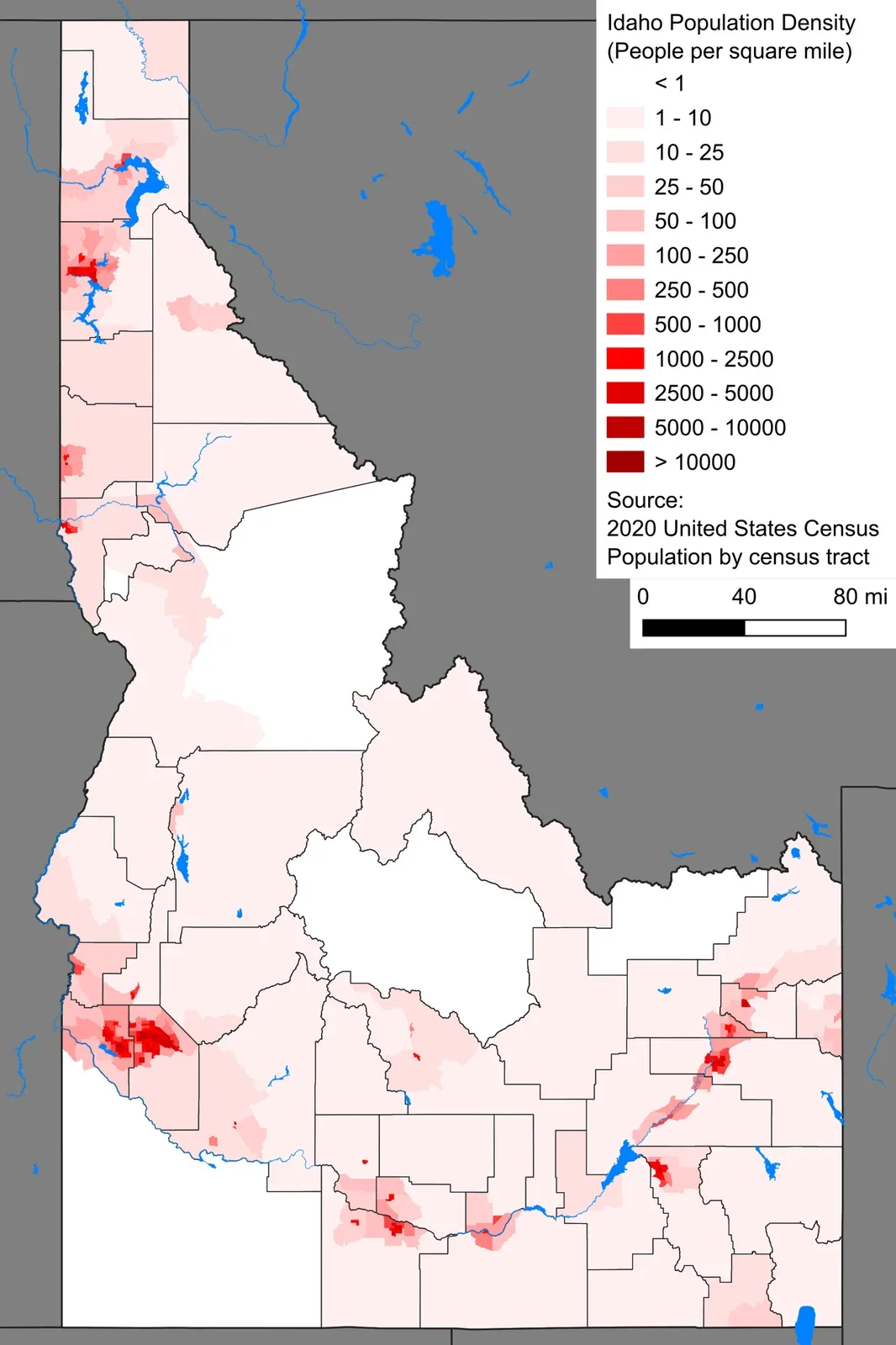
According to both Everytown Research & Policy and the National ERPO Resource Center, Idaho has not adopted an Extreme Risk Protection Order (ERPO) law. As of February 2026, 22 states, the District of Columbia, and the U.S. Virgin Islands have enacted ERPO laws. Idaho is not among them.
That's the short answer. If you live in Idaho and you're worried about someone showing up with a court order to seize your guns under a red flag law, there is currently no state mechanism for that. No Idaho court can issue an ERPO because no Idaho statute authorizes one.
Key Point: Idaho has no ERPO statute, and no anti-ERPO statute of the kind Montana, Oklahoma, Tennessee, Texas, West Virginia and Wyoming enacted. Title 18, Chapter 33 of the Idaho Code contains no section on the subject in either direction.
What Is an ERPO, Exactly?edit
An Extreme Risk Protection Order -- also called a red flag order, a gun violence restraining order, or a risk protection order depending on the state -- is a civil court order that temporarily prohibits a person from purchasing or possessing firearms. According to the National ERPO Resource Center, ERPOs are civil proceedings, not criminal ones. Violating an ERPO may be a criminal offense depending on state law, but the order itself is issued through civil court.
The process, in states where it exists, works roughly like this: a qualified petitioner (who can be law enforcement, a family member, or other designated individuals depending on the state) files a sworn petition with a court. A judge reviews the evidence and can issue an emergency order -- often called an ex parte order -- without prior notice to the subject. That emergency order lasts a short period, after which a full hearing is held where the subject can contest the order. If the judge finds sufficient evidence at the full hearing, a final order is issued, typically lasting up to one year.
According to Giffords Law Center, ERPOs are modeled heavily on domestic violence protective order systems, which have existed in all 50 states for decades. The key distinction: a domestic violence order protects a specific named individual from a specific aggressor. An ERPO is used when someone poses a risk of harm to themselves or others broadly -- including suicide -- regardless of whether they've made a specific threat against a specific person.
"ERPO laws, on the other hand, may be used to prevent harm when a person is suicidal, has not made a threat against a specific individual, or when they may be a danger to others outside the family." — Giffords Law Center
The National Landscape as of Early 2026edit
As of February 2026, according to the National ERPO Resource Center, 22 states plus DC and the U.S. Virgin Islands have enacted ERPO laws. Connecticut was first, passing its law in 1999. The pace picked up dramatically after the Parkland school shooting in February 2018 -- eight states enacted ERPO laws during 2018 legislative sessions alone, according to Ballotpedia.
On the other side of the ledger, six states have enacted laws that specifically prohibit or restrict ERPOs -- what Ballotpedia calls "anti-red flag laws." All six were under Republican trifectas when the laws passed:
| State | Law Type | Year Enacted | Trifecta at Passage |
|---|---|---|---|
| Oklahoma | Anti-ERPO | 2020 | Republican |
| West Virginia | Anti-ERPO | 2021 | Republican |
| Wyoming | Anti-ERPO | 2024 | Republican |
| Tennessee | Anti-ERPO | 2024 | Republican |
| Montana | Anti-ERPO | 2025 | Republican |
| Texas | Anti-ERPO | 2025 | Republican |
Idaho falls into neither category. The state hasn't passed an ERPO law, but it also hasn't passed a statute expressly prohibiting one.
States with ERPO Laws (as of February 2026)
According to the National ERPO Resource Center and Everytown Research:
| State | Law Name | Effective Date |
|---|---|---|
| California | Gun Violence Restraining Order | January 1, 2016 |
| Colorado | Extreme Risk Protection Order | April 12, 2019 |
| Connecticut | Risk Protection Order | October 1, 1999 |
| Delaware | Lethal Violence Protective Order | December 27, 2018 |
| District of Columbia | Extreme Risk Protection Order | January 30, 2019 |
| Florida | Risk Protection Order | March 9, 2018 |
| Hawaii | Gun Violence Protective Order | January 1, 2020 |
| Illinois | Firearms Restraining Order | January 1, 2019 |
| Indiana | Risk Warrant / Jake Laird Law | July 1, 2005 |
| Maine | Extreme Risk Protection Order | February 21, 2026 |
| Maryland | Extreme Risk Protection Order | October 1, 2018 |
| Massachusetts | Extreme Risk Protection Order | August 17, 2018 |
| Michigan | Extreme Risk Protection Order | February 13, 2024 |
| Minnesota | Extreme Risk Protection Order | January 1, 2024 |
| Nevada | Order for Protection Against High-Risk Behavior | January 1, 2020 |
| New Jersey | Extreme Risk Protective Order | September 1, 2019 |
| New Mexico | Extreme Risk Firearm Protection Order | May 20, 2020 |
| New York | Extreme Risk Protection Order | August 24, 2019 |
| Oregon | Extreme Risk Protection Order | January 1, 2018 |
| Rhode Island | Extreme Risk Protection Order | June 1, 2018 |
| U.S. Virgin Islands | Extreme Risk Protection Order | January 20, 2025 |
| Vermont | Extreme Risk Protection Order | April 11, 2018 |
| Virginia | Substantial Risk Order | July 1, 2020 |
| Washington | Extreme Risk Protection Order | December 8, 2016 |
Why No ERPO in Idaho?edit
The sources don't explicitly explain Idaho's legislative history on this issue -- the source material doesn't contain Idaho legislative debate records or failed bill histories on ERPOs. What the sources do show is a clear partisan pattern nationally: according to Ballotpedia, 13 of the 22 ERPO states were under Democratic trifectas when their laws passed. One was a Republican trifecta (Florida, in direct response to Parkland). The rest passed under divided government or via ballot measure.
Idaho has operated under a Republican trifecta for years. That political context helps explain the absence of an ERPO law, though the sources don't confirm any specific Idaho legislative action or inaction.
How ERPOs Work in States That Have Themedit
Understanding the mechanics matters -- especially if you travel to ERPO states or have family in them.
Who Can Petition
This varies significantly by state. According to Everytown Research, the breakdown looks like this:
| Category | States |
|---|---|
| Law enforcement + family/household members | Oregon, Nevada, New Jersey, Washington, Maine, Minnesota, Illinois, Delaware, Michigan, and others |
| Law enforcement only | Florida, New Mexico, Rhode Island, Virginia |
| Broader petitioners (employers, coworkers, medical professionals, educators) | California, Colorado, Hawaii, Maryland, Massachusetts, Michigan, New York |
Giffords Law Center notes that 16 states and DC allow family or household members to petition directly, while five states limit petitions to law enforcement or state officials only.
The Two Types of Orders
According to Giffords, there are two distinct order types in most ERPO states:
Ex parte orders are emergency orders a judge can issue without prior notice to the subject. Because the person has no opportunity to contest it before it's issued, the standard of proof is typically lower and the duration is short -- giving the subject time to appear for a full hearing. Duration of ex parte orders across states ranges from 6 days (New York) to 21 days (California and Oregon), with 14 days being the most common window.
Final orders are issued after a hearing where the subject can contest the petition. The standard of proof is higher -- most states require clear and convincing evidence for a final order. Final orders in most states last up to one year, though there are exceptions: Illinois, Vermont, and Virginia cap final orders at six months, while New Jersey's orders run indefinitely until the subject proves they're no longer a risk.
Standards of Proof
For ex parte (emergency) orders, most states use a probable/reasonable/good cause standard. For final orders after a full hearing, the majority of states require clear and convincing evidence -- a higher bar than preponderance of the evidence (more likely than not) but lower than the criminal standard of beyond a reasonable doubt.
What Happens to the Guns
Once an order is served, the subject must relinquish firearms. In California, for example, Giffords Law Center explains that a respondent must immediately turn over all firearms and ammunition to the serving officer, or relinquish them to a local law enforcement agency within 24 hours, or transfer them to a licensed dealer. A receipt must be filed with the court within 48 hours. If a receipt isn't filed confirming relinquishment, the court may issue a search warrant.
Most other ERPO states have similar mechanics -- the details vary, but the structure is consistent: surrender guns promptly, get a receipt, prove to the court it's been done.
Due Process Arguments -- What the Courts Have Saidedit
The primary legal challenges to ERPO laws hit on two fronts: Second Amendment rights and due process. According to Giffords Law Center, courts that have heard these challenges have largely upheld ERPO and risk-warrant laws as constitutional.
The notable exception is New York, where lower court judges issued conflicting rulings. According to Ballotpedia, New York Supreme Court Judge Tom Moran ruled the state's red flag law unconstitutional on December 22, 2022, and a different judge reached the same conclusion on April 4, 2023. However, at the appellate level, New York courts have upheld the law. The state continued amending and expanding the law through at least 2024.
Opponents of ERPOs -- including the National Rifle Association -- have argued that ex parte orders allow "a person's rights [to] disappear merely on the say-so of someone else," according to Ballotpedia, and that the laws are ripe for abuse. Gun rights attorney critics have also pointed to the Sixth Amendment concern that a respondent can have their rights restricted without any testimony from the accused.
The Everytown counterargument is that due process is built into ERPO systems through the requirement for a full hearing, the right to contest evidence, and the limited duration of orders. They point to a Florida appeals court upholding Florida's law against a due process challenge.
"In all states, ERPOs are civil, not criminal, court orders. However, violation of an ERPO law may be a criminal offense depending on state law." — National ERPO Resource Center
What About Federal Law?edit
Federal law doesn't create ERPOs, but it does interact with this landscape in two ways.
First, under existing federal law per Giffords Law Center, a person is generally prohibited from possessing firearms only if they fall into specific categories -- convicted felon, domestic violence misdemeanant, subject to a qualifying domestic violence restraining order, or formally adjudicated as mentally defective (the federal statute at 18 U.S.C. § 922(g)(4) still uses that archaic term). Someone who is clearly displaying warning signs but hasn't crossed any of those legal thresholds can still legally buy and possess firearms. ERPOs are designed to fill that gap.
Second, the Bipartisan Safer Communities Act authorizes states and localities to use Edward Byrne Memorial Justice Assistance Grant (Byrne JAG) funding to implement ERPO programs, according to Giffords. To qualify, a state ERPO program must include pre- and post-deprivation due process rights, heightened evidentiary standards, the right to an in-person hearing, and penalties for abuse of the ERPO process. This is a funding incentive, not a federal mandate -- no state is required to have an ERPO law.
What the Research Saysedit
The sources cite several studies worth noting, though this is a contested research area.
A multistate study cited by Everytown Research found that one suicide was averted for every 17 ERPOs issued across four states (California, Connecticut, Maryland, and Washington) -- translating to 269 lives saved according to their count. Giffords cites research from Connecticut and Indiana showing those states' laws are associated with reductions in firearm suicide rates of 14% and 7.5% respectively.
On mass shootings specifically, a study in California cited by Giffords found the state's ERPO law prevented 58 potential mass shootings as of the study's publication date. A separate study of six ERPO states found 10% of all orders were filed in response to threats of mass violence, with more than 650 potential multiple-victim shooting incidents prevented.
The County Health Rankings database rates ERPO laws at the "expert opinion" evidence level for reducing homicide -- meaning credible experts recommend them but the research base isn't yet strong enough for a "scientifically supported" rating. For suicide reduction specifically, the rating is higher, with available evidence suggesting states with ERPO laws may see greater reductions in firearm suicides.
Key Point: The research on ERPOs and mass shootings specifically shows no statistically significant association in some studies -- meaning the evidence is stronger for suicide prevention than for mass shooting prevention, according to County Health Rankings.
Crossing State Lines: What Idaho Gun Owners Need to Knowedit
If you're an Idaho resident traveling to an ERPO state, a few practical points apply.
First, an ERPO issued in another state against you would prohibit you from possessing firearms in that state during the order's effective period. Federal law (18 U.S.C. § 922(g)) prohibits possession of firearms by anyone subject to certain qualifying court orders -- consult an attorney about whether a specific ERPO from another state triggers federal prohibitions.
Second, if someone who lives in an ERPO state wants to petition a court against an Idaho resident, they'd generally need to petition in the state where they reside and where the court has jurisdiction -- the mechanics get complicated across state lines quickly. This is an area where you need an attorney, not a magazine article.
Third, if you move to an ERPO state from Idaho, you're now under that state's laws. What's legal in Idaho isn't always legal in Washington, Oregon, or Nevada -- all of which border Idaho and have ERPO laws.
The Legislative Landscape to Watchedit
The sources don't include the full text of Idaho Senate bill S1356 (listed as a source but the content wasn't available). That bill number appears in the Idaho Legislature's system for the 2026 session. Without the text, this article cannot confirm what it contains or its current status. If you're tracking Idaho ERPO legislation, check the Idaho Legislature's website directly at legislature.idaho.gov.
What the broader national picture shows is that the ERPO landscape is still shifting. Maine just enacted its law via ballot measure in November 2025 -- approved 62.9% to 37.1% according to Ballotpedia. Texas, Montana, and Tennessee enacted anti-ERPO laws in 2024 and 2025. The political polarization on this issue isn't softening.
The bottom line: Idaho has no red flag law and no ERPO process as of early 2026 -- Idaho gun owners currently face no state mechanism for firearm seizure under a red flag order, but that doesn't mean this issue is going away nationally, and crossing into neighboring states means playing by different rules.
Resourcesedit
- https://erpo.org/state-by-state/
- https://everytownresearch.org/rankings/law/extreme-risk-law/
- https://ballotpedia.org/Extreme_risk_protection_order_laws_by_state
- https://www.everytown.org/solutions/extreme-risk-laws/
- https://giffords.org/lawcenter/gun-laws/policy-areas/who-can-have-a-gun/extreme-risk-protection-orders/
- https://www.countyhealthrankings.org/strategies-and-solutions/what-works-for-health/strategies/extreme-risk-protection-order-erpo-laws
Last Updated: March 05, 2026
- Ace Hardware of Sandusky(Sandusky, MI)
- New Philly Sportsman Specialities(New Philadelphia, OH)
- Atwoods Ranch & Home #46(LACY LAKEVIEW, TX)
- G & P Distributors(McConnellsburg, PA)
This is not legal advice
This guide provides general information about federal and state firearms laws based on publicly available statutes. Laws change frequently and vary significantly by state. Always verify current laws in your jurisdiction. Consult a qualified attorney for legal advice on your specific situation. When in doubt, contact local law enforcement or state police.
Loading comments...