Legal Details
Legislation

The Smith & Wesson Model 19 — a compact .357 Magnum revolver widely carried for civilian defense and law enforcement since 1957.
Tim Dobbelaere from Ieper, Belgium (CC BY-SA 2.0)
| Identification | |
|---|---|
| Jurisdiction | |
Territory | Idaho |
Idaho Enhanced Concealed Carry Permit: The Complete Legal Reference
Legal information and analysis
From The Boise Gun Club Handbook
This is educational information, not legal advice. Laws change. Consult an attorney for your specific situation.
Idaho runs two separate concealed weapons licenses, and which one you carry determines where you can legally carry across state lines -- roughly 13 additional states will only honor the Enhanced version.
Idaho's Two-Track Permit Systemedit
Idaho sheriffs issue two distinct licenses under two separate statutes. The basic License to Carry Concealed Weapons (CWL) is governed by Idaho Code § 18-3302. The Enhanced License to Carry Concealed Weapons (E-CWL) is governed by Idaho Code § 18-3302K. These are not tiers of the same license -- they are separate documents requiring separate applications, separate fees, and separate eligibility requirements.
If you already have a basic CWL and want the Enhanced, you cannot simply upgrade it. You go through the entire application process again, including new fingerprints, according to the Idaho Sheriffs' Association. The Enhanced license will have the word "Enhanced" printed on it, which is how other states verify which type you're carrying.
Key Point: Some states will only honor Idaho's Enhanced CWL because of its stricter age and mandatory training requirements. If you travel regularly, the Enhanced is the one worth getting.
Constitutional Carry -- The Baselineedit
Before getting into permits, understand the baseline: Idaho does not require a permit to carry a concealed firearm for most residents. Per Idaho Code § 18-3302(4)(f), any U.S. citizen (or current U.S. Armed Forces member) who is at least 18 years old and not otherwise disqualified may carry a concealed weapon without any license at all.
The same rule applies to your vehicle. Per Idaho Code § 18-3302(4), you can carry any deadly weapon concealed in your vehicle -- loaded or unloaded -- as long as you're at least 18, a U.S. citizen or Armed Forces member, and not disqualified.
So why bother with a permit at all? Two reasons: out-of-state recognition and proof of eligibility when crossing state lines. The E-CWL is specifically designed to satisfy the training and age requirements that other states demand before they'll honor an out-of-state permit.
Enhanced CWL: Eligibility Requirementsedit
To qualify for an Idaho Enhanced CWL, you must meet all of the following under Idaho Code §§ 18-3302K(4)(a) and 18-3302(11)(a):
- Be at least 21 years old
- Be a U.S. citizen or legally in the U.S. (with additional immigration verification required for non-citizens)
- Have no disqualifying factors under Idaho Code § 18-3302(11)(a) through (n)
- Meet the residency or out-of-state permit requirement (see below)
- Complete the mandatory 8-hour training course
Residency requirement: Per Idaho Code § 18-3302K(4)(b), you must either have been an Idaho resident for at least six consecutive months before applying, or -- if you're not an Idaho resident -- hold a valid and current concealed weapons license from your state of residence.
The Mandatory Training Requirementedit
This is where the Enhanced CWL differs most sharply from the basic. There are no exceptions, no waivers, and no workarounds -- even if you're a retired law enforcement officer, active military, or an NRA-certified pistol instructor. Per Idaho Code § 18-3302K(4)(c), you must complete Idaho-specific Enhanced CWL training regardless of any prior experience.
According to the Idaho Sheriffs' Association, the training must consist of a minimum of 8 hours taught in person and must include:
- Idaho law relating to firearms and the use of deadly force
- Basic concepts of the safe and responsible use of handguns
- Self-defense principles
- Live fire training with at least 98 rounds fired
Key Point: The legal portion of the course must be taught by a licensed Idaho attorney or an Idaho peace officer holding at minimum an Intermediate POST certificate. That requirement alone is why out-of-state enhanced training -- even from another state with similar requirements -- doesn't qualify unless it was specifically Idaho E-CWL training.
According to the Idaho Sheriffs' Association, qualifying instructors include those certified by:
- The NRA (for certain course components)
- Nationally recognized organizations that customarily certify firearms instruction
- Instructors certified by the Idaho Peace Officers Standards and Training Council (POST)
To find a qualified instructor in your area, contact your local sheriff's office CWL unit.
Basic CWL vs. Enhanced CWL: Side-by-Sideedit
| Feature | Basic CWL (§ 18-3302) | Enhanced CWL (§ 18-3302K) |
|---|---|---|
| Minimum age | 18 (sheriff's discretion) | 21 |
| Training required | Sheriff's discretion | Mandatory 8-hour course |
| Live fire requirement | None mandated | 98 rounds minimum |
| Legal instruction requirement | None | Licensed Idaho attorney or POST-certified officer |
| Residency (non-residents) | None -- open to all | Must hold valid home-state permit |
| Idaho residency requirement | None | 6 consecutive months OR valid home-state permit |
| Fee (original) | $20 | $20 |
| Renewal fee | $15 | $15 |
| Valid period | 5 years | 5 years |
| Out-of-state reciprocity | ~25 states | ~38 states |
Fee information per Idaho Code §§ 18-3302(15), (16) and 18-3302K(7), (8). Reciprocity figures per Concealed Coalition data, subject to change.
Application Processedit
Applications for both the basic CWL and Enhanced CWL are submitted in person to your local county sheriff's office. Idaho has 44 counties, each with its own sheriff's office. Per the Idaho Sheriffs' Association, some offices operate by appointment only -- call before you show up.
Per Idaho Code § 18-3302, there is no online or mail-in application process for new licenses. Renewals may be accepted by mail at some sheriff's offices -- contact your issuing office to confirm.
For the Enhanced CWL, you must bring proof of completing the required 8-hour training course. The Idaho Sheriffs' Association provides a CWL Training Certificate form that the instructor signs upon course completion.
Renewal window: Per the Idaho Sheriffs' Association, you can renew up to 90 days before expiration or within 90 days after. Between 90 and 180 days after expiration, a penalty fee applies. Past 180 days, you start over with a new application and new fingerprints.
If you lose your license: Contact the sheriff's office that issued the original license for a replacement.
Age Requirements Summaryedit
| Action | Minimum Age | Statute |
|---|---|---|
| Constitutional carry (permitless) | 18 | Idaho Code § 18-3302(4)(f) |
| Vehicle carry (concealed, no permit) | 18 | Idaho Code § 18-3302(4) |
| Basic CWL application | 18 (sheriff discretion for 18-20) | Idaho Code § 18-3302(20) |
| Enhanced CWL application | 21 | Idaho Code §§ 18-3302K(4)(a), 18-3302(11)(a) |
| Handgun purchase (FFL dealer) | 21 | Federal law |
| Long gun purchase (FFL dealer) | 18 | Federal law |
Feesedit
Per Idaho Code §§ 18-3302(15), (16) and 18-3302K(7), (8):
- Original CWL (basic or Enhanced): $20
- Renewal: $15
- Additional fingerprint processing fees may be collected by the sheriff
- Costs vary by county -- some charge more than others
Both licenses are valid for five years from the date of issue per Idaho Code § 18-3302(7).
Prohibited Personsedit
A CWL -- basic or Enhanced -- shall not be issued to anyone who meets one or more disqualifying criteria under Idaho Code § 18-3302(11)(a) through (n). Additionally, anyone convicted of crimes listed in Idaho Code § 18-310(2)(a) through (jj) is ineligible.
Federal prohibitions also apply independently of state law. The full list of state disqualifiers is in Chapter 33, Title 18 of the Idaho Code -- review it carefully before applying if you have any criminal history, mental health adjudications, domestic violence history, or other potential disqualifiers.
Felony rights restoration: Per Idaho Code § 18-310, an Idaho felony conviction results in automatic restoration of firearms rights upon final discharge from sentence -- but this applies only to Idaho felony convictions. Felonies from other states do not receive automatic restoration. The offenses listed in § 18-310(2)(a) through (ii) are exempt from automatic restoration. Application to the Idaho Commission of Pardons and Parole is required for those not automatically restored.
Prohibited Placesedit
Even with a valid CWL, certain locations are off-limits under Idaho state law. Per the Idaho State Police:
- Courthouses
- Juvenile detention facilities
- Adult correctional facilities, prisons, and jails
- Public and private elementary and secondary schools
Beyond state prohibitions, federal law adds its own list -- federal courthouses, post offices, and certain other federal facilities. Private property owners and businesses may also post their premises as no-carry zones. When in doubt, ask before you carry onto any property.
Key Point: The school prohibition applies to the physical premises of "a private or public elementary or secondary school" -- not just during school hours.
What "Concealed Weapon" Actually Means Under Idaho Lawedit
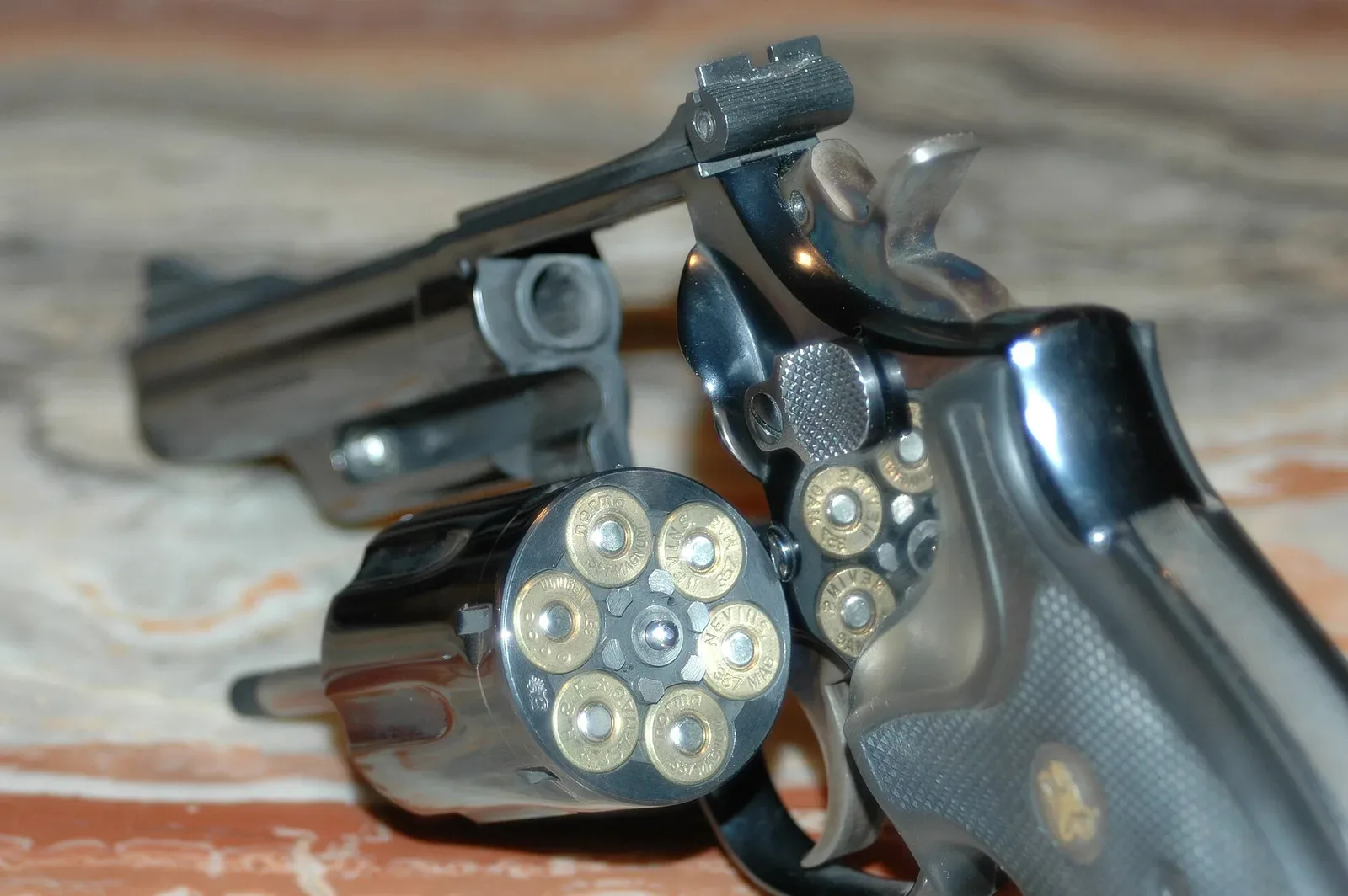
Idaho's concealed carry laws cover more than just firearms. Per Idaho Code § 18-3302(2) and the Idaho Sheriffs' Association, a concealed weapon includes any dirk, dirk knife, bowie knife, dagger, pistol, revolver, or any other deadly or dangerous weapon carried on a person in a manner not discernible by ordinary observation.
Notably, the following are explicitly excluded from the definition of "deadly weapon" per the Idaho Sheriffs' Association: knives used for food processing or eating, knives with blades of 4 inches or less, tasers, stun guns, pepper spray, and mace.
Reciprocity: Traveling Out of Stateedit
This is the core reason most people pursue the Enhanced over the basic CWL. Per the Idaho State Police and Concealed Coalition data, Idaho's two licenses do not carry equal weight across state lines.
Basic CWL -- honored in approximately 25 states (resident and non-resident permits accepted):
| Alabama | Arkansas | Florida (resident only) | Georgia | Indiana |
| Iowa | Kansas | Kentucky | Maine | Michigan (resident only) |
| Mississippi | Missouri | Montana | New Hampshire | North Carolina |
| North Dakota | Ohio | Oklahoma | South Dakota | Tennessee |
| Texas | Utah | Vermont | West Virginia | Wyoming |
Enhanced CWL -- honored in the above 25 states PLUS these 14 additional states:
| Alaska | Arizona | Colorado | Delaware | Louisiana |
| Minnesota | Nebraska | Nevada | New Mexico | Pennsylvania |
| South Carolina | Virginia | Washington | Wisconsin |
States that do NOT honor any Idaho permit:
| California | Connecticut | Hawaii | Illinois | Maryland |
| Massachusetts | New Jersey | New York | Oregon | Rhode Island |
Per Concealed Coalition. These lists change. Verify with the specific state before you travel.
The Idaho State Police maintain formal reciprocity agreement documents for all 50 states on their website. According to the ISP, some states only honor Idaho's Enhanced CWL specifically because of the stricter requirements -- mandatory training and the 21-year-old minimum age being the primary factors.
Per the Idaho State Police: "Some states only honor Idaho's Enhanced Concealed Weapons License because of the stricter requirements to obtain one (such as must be at least 21 years old and complete mandatory training from properly qualified trainer)."
When you're in Idaho with an out-of-state permit: Per Idaho Code § 18-3302(5)(g) and (h), Idaho honors all validly issued and current concealed weapons licenses from all other states. You must have the physical license on your person while carrying. Permits from foreign countries and U.S. territories are not recognized -- only state or local law enforcement agency or court-issued licenses qualify.
Key Point: Idaho's recognition of out-of-state permits is broad -- all 50 states' permits are honored here. The limitation runs the other direction: not all states will honor Idaho's permit when you leave.
Carrying in Your Vehicleedit
Per Idaho Code § 18-3302(3) and (4), you do not need any concealed weapons license to carry a concealed deadly weapon in a motor vehicle in Idaho. This includes loaded and unloaded firearms. The standard eligibility requirements still apply -- 18 years old, U.S. citizen or Armed Forces member, not disqualified.
This also means out-of-state visitors traveling through Idaho with a firearm concealed in their vehicle are generally fine as long as they meet those baseline requirements, per the Idaho State Police FAQ.
Non-Residents Applying for an Idaho E-CWLedit
Idaho is one of the more accessible states for non-residents seeking a permit. Per Idaho Code § 18-3302(10) and (11), the basic CWL is available to anyone not disqualified, regardless of state of residency.
For the Enhanced CWL, non-residents must hold a valid and current concealed weapons license issued by their state of residence per Idaho Code § 18-3302K(4)(b). The same mandatory 8-hour training requirement applies -- no exceptions.
Per the Idaho Sheriffs' Association, Idaho does not distinguish between resident and non-resident licenses -- they are the same document with the same privileges.
Canadian and foreign visitors: A foreign citizen visiting the U.S. is not eligible to possess a firearm unless they hold a valid resident visa, per the Idaho Sheriffs' Association. A foreign citizen with a resident visa can possess a firearm and is eligible for a CWL. A Canadian tourist visiting Idaho cannot obtain a CWL.
Denial and Revocationedit
Per Idaho Code § 18-3302(22)(a) through (f), the sheriff of the county where your license was issued or where you currently reside may revoke a CWL for any of the following:
- Fraud or intentional misrepresentation in obtaining the license
- Misuse of a license
- Any act or condition that would have been grounds for denial
- Violation of any terms of Idaho Code § 18-3302
- Conviction or withheld judgment for any crime that would have disqualified you from receiving the license
Retired Law Enforcementedit
Idaho provides a separate pathway under Idaho Code § 18-3302H, titled "Carrying of Concealed Firearms by Qualified Retired Law Enforcement Officers." Qualified retired officers meeting the conditions of Idaho Code §§ 18-3302(5)(f) and 18-3302H may carry under that authority.
Nothing in Idaho law prevents a person from holding both a retired law enforcement CWL and a standard or Enhanced CWL simultaneously, provided they have no disqualifiers and meet all requirements of each license type.
Full Statute List for Referenceedit
All of Idaho's concealed weapons statutes are found in Chapter 33, Title 18 of the Idaho Code. Key sections include:
| Statute | Subject |
|---|---|
| Idaho Code § 18-3302 | Basic Concealed Weapons License |
| Idaho Code § 18-3302B | Additional provisions |
| Idaho Code § 18-3302C | Additional provisions |
| Idaho Code § 18-3302D | Additional provisions |
| Idaho Code § 18-3302E | Requirements for minors |
| Idaho Code § 18-3302H | Qualified Retired Law Enforcement |
| Idaho Code § 18-3302K | Enhanced Concealed Weapons License |
| Idaho Code § 18-3309 | Additional weapons provisions |
| Idaho Code § 18-310 | Felony conviction / rights restoration |
| Idaho Code § 18-3316 | Additional prohibitions |
The Bottom Lineedit
The bottom line: If you're an Idaho resident who travels, get the Enhanced -- the extra paperwork and one mandatory training day buys you access to roughly 13 additional states that won't honor the basic. If you never leave Idaho, constitutional carry covers you from age 18 without any permit at all.
Resourcesedit
- Ace Hardware of Sandusky(Sandusky, MI)
- New Philly Sportsman Specialities(New Philadelphia, OH)
- Atwoods Ranch & Home #46(LACY LAKEVIEW, TX)
- G & P Distributors(McConnellsburg, PA)
This is not legal advice
This guide provides general information about federal and state firearms laws based on publicly available statutes. Laws change frequently and vary significantly by state. Always verify current laws in your jurisdiction. Consult a qualified attorney for legal advice on your specific situation. When in doubt, contact local law enforcement or state police.
Loading comments...