Legal Details
Idaho Government Building Gun Laws: What You Can Carry and Where

| Identification | |
|---|---|
| Jurisdiction | |
Territory | Idaho |
Idaho Government Building Gun Laws: What You Can Carry and Where
Legal information and analysis
From The Boise Gun Club Handbook
This is educational information, not legal advice. Laws change. Consult an attorney for your specific situation.
Idaho is one of the most permissive carry states in the country, but government buildings are where the exceptions live — and walking into the wrong one armed can flip your day from routine to criminal.
The Foundation: State Preemption Controls Everythingedit
Before getting into specific buildings, you need to understand who makes the rules in Idaho. Under Idaho Code § 18-3302J, the state legislature has declared that it "wholly occupies the field of firearms regulation" in Idaho. No county, city, agency, board, or other political subdivision can adopt or enforce any law, rule, regulation, or ordinance that regulates the sale, acquisition, transfer, ownership, possession, transportation, carrying, or storage of firearms — or ammunition.
That's a broad stroke, and it's intentional. The legislature found that uniform statewide firearms laws are necessary to protect rights guaranteed by both the Second Amendment of the U.S. Constitution and Article I, Section 11 of the Idaho Constitution. The practical result: Boise can't pass a city ordinance banning guns in city hall any more than a rural county can ban carry at the county courthouse — at least not through local ordinance.
The carve-outs from preemption are narrow. Counties and cities can regulate the discharge of firearms within their boundaries, but that authority doesn't touch carry, possession, or transportation. The Idaho Department of Fish and Game retains authority to regulate wildlife management under Idaho Code § 36-104, and counties and cities can regulate the location and construction of sport shooting ranges under Chapter 26, Title 55, Idaho Code — but neither of those touches carry in government buildings.
Courthouses, Jails, and Juvenile Detention Facilitiesedit
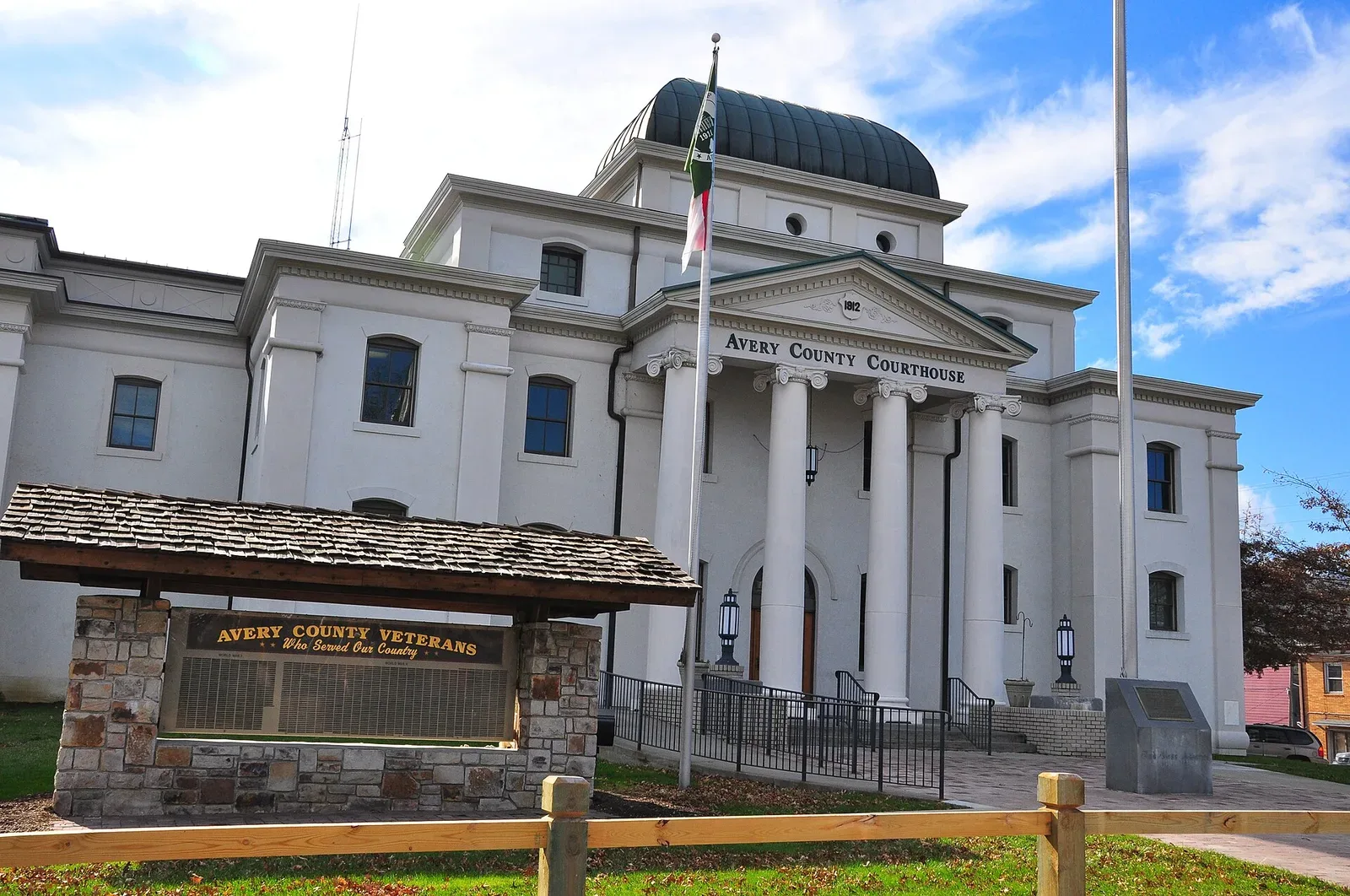
Here's where Idaho draws a hard line. Carrying a concealed weapon is generally prohibited in a courthouse, juvenile detention facility, or jail under Idaho Code § 18-3302C. This applies regardless of whether you hold a concealed weapons license.
The Giffords Law Center confirms this reading: concealed weapons are generally prohibited from entering any courthouse, juvenile detention facility, or jail in Idaho. If you're heading to the county courthouse to pay a fine, attend a hearing, or handle any other business, leave your concealed firearm in your vehicle.
Open carry is a different question — Idaho Code § 18-3302(4)(a) carves out "any deadly weapon located in plain view" from the concealed carry licensing requirement — but courthouse security screening and the practical reality of armed bailiffs makes that a conversation worth having with an attorney before you test it.
The Public Property Carry Rule: A Major 2023 Developmentedit
One of the more significant recent changes to Idaho carry law involves government-owned property that's normally open to the public. Idaho Code § 18-3302(25) — which the FindLaw version of the statute notes supersedes Herndon v. City of Sandpoint, 531 P.3d 1125 (Idaho 2023) — establishes that the private property carry restriction provisions do not apply to property owned by the state of Idaho or its political subdivisions that is "normally and habitually open to the public."
The practical effect: a government entity generally cannot restrict concealed carry on public property that's normally open to everyone just by posting a sign or passing a policy, unless specific conditions are met. According to § 18-3302(25)(b), a restriction on carrying concealed weapons on such public property can only be invoked when the use of that property is:
- For a private event by invitation only
- For a commercial event that charges admission
- For any other event with restricted access, whether admission is charged or not
For any such event, it must be apparent to a reasonable person that the general public doesn't have unrestricted access to the property during that time. A city park rented out for a private wedding could post a no-firearms policy. The same park on a regular Tuesday afternoon — almost certainly cannot.
Critically, § 18-3302(25)(d) explicitly states that this subsection does not alter or amend the provisions of Idaho Code §§ 18-3302C and 18-3309. Those courthouse and school carry restrictions remain intact regardless of the public property rule.
Giffords also notes that Idaho law limits the ability of government-owned property to restrict concealed carry, confirming that any restriction may only be invoked when the property is being used for the specified private or restricted-access purposes.
Schools and School-Adjacent Government Propertyedit
Public and private schools are prohibited places for concealed carry under Idaho Code § 18-3302C. Idaho Code § 18-3302D goes further — it's a separate crime to possess a firearm on the property of any private or public elementary or secondary school, or in portions of any building, stadium, or other structure on school grounds being used for a school-sponsored activity.
The exceptions in § 18-3302D are specific:
- An adult non-student with a firearm secured and locked in their vehicle in an unobtrusive, nonthreatening manner
- A person lawfully possessing a firearm in a private vehicle while delivering minor children, students, or school employees to and from school or a school activity
- Any person or employee of the school or school district authorized to carry by the board of trustees
Note that the vehicle exception requires the firearm to be secured and locked — not just in your car, but locked up.
Public Colleges and Universitiesedit
Public higher education is its own category. Under Idaho Code § 18-3309, the governing boards of public colleges and universities — including the board of regents of the University of Idaho, state college and university boards of trustees, the board of professional-technical education, and community college boards — can prescribe rules and regulations relating to firearms on their property. That's a meaningful carve-out from preemption.
However, that authority has a hard limit: it cannot extend to regulating or prohibiting the otherwise lawful possession, carrying, or transporting of firearms by persons holding an enhanced concealed carry license or a license authorizing a qualified retired law enforcement officer to carry.
Even enhanced license holders have restrictions on campus. Per NRA-ILA's summary of § 18-3309, enhanced license holders cannot carry:
- Within student dormitories or residence halls
- Within the building of a "public entertainment facility" owned by the college or university — think theaters, auditoriums, sports arenas with seating capacity of at least 1,000 — if that facility is properly posted at each public entrance notifying attendees of the restriction during a game or event
Standard concealed carry license holders and permitless carriers are subject to the campus board's regulations, which vary by institution. If you're heading onto a state college or university campus, check that institution's specific firearms policy.
State Administrative Facilities: Healthcare and Residential Settingsedit
Beyond the statutory restrictions, Idaho administrative regulations impose firearms prohibitions in specific state-administered facilities. According to Giffords Law Center, firearms are not allowed in:
- Children's residential care facilities
- Children's therapeutic outdoor programs
- State veterans' homes
State administrative regulations also require any agency that enters into a Medicaid provider agreement for mental health clinic services to prohibit firearms in the clinic facility, per Idaho Admin. Code.
These are regulatory restrictions rather than criminal statutes, but violating them carries its own consequences — and entering these facilities armed puts you in conflict with state administrative rules regardless of your carry license status.
The Enhanced License Advantageedit
Idaho issues two primary carry licenses: a standard license and an enhanced license under Idaho Code § 18-3302K. For navigating government buildings and institutional settings, the enhanced license is the one that matters.
The enhanced license requires applicants to be over 21 and complete a minimum 8-hour in-person training course with live-fire components. In exchange, enhanced license holders get access to public college and university campuses (with the dormitory and posted entertainment facility exceptions noted above) that standard license holders and permitless carriers don't.
For anyone who spends time on state university campuses — attending classes, working, visiting — the enhanced license is worth the additional training requirement. Standard license holders and permitless carriers are fully subject to campus board restrictions, which can effectively prohibit carry in all campus buildings.
Permitless Carry and Government Buildingsedit
Idaho's permitless carry law, fully in effect as of its current form, allows any U.S. citizen 18 or older — or current armed forces member — who is not otherwise disqualified from obtaining a license to carry concealed without a license, per Idaho Code § 18-3302(3)(d) and (4)(f). That broad permission doesn't override the specific building restrictions.
Permitless carriers walking into a courthouse are still in violation of § 18-3302C. Permitless carriers on a state university campus are still subject to campus board regulations. The permitless carry framework tells you when you don't need a license — it doesn't suspend the location-specific prohibitions.
Places With No Statutory Prohibition Worth Knowing Aboutedit
Giffords Law Center notes that Idaho has no statutes specifically prohibiting firearms in:
- Hospitals
- Sports arenas (other than those related to elementary or secondary schools, or certain college/university-owned facilities)
- Gambling facilities
- Polling places
- Establishments that serve alcohol
Administrative regulations may apply to some of these — the Medicaid mental health clinic rule being one example — but there's no criminal statute making it a crime to carry at, say, a polling location or a bar. That said, private property owners retain the right to prohibit carry on their property under § 18-3302(25), and a business posting a no-firearms sign is exercising that private right.
Hotel and Hospitality Propertiesedit
For government-adjacent lodging situations — like staying near the state capitol during a legislative session — Giffords notes that a hotelkeeper has the right to evict any person, guest or not, who seeks to bring a firearm into the hotel, and is not required to provide accommodations or facilities to such persons. This is a private property right, not a government restriction, but it's worth knowing before you check in.
Prohibited Persons: Who Can't Carry Anywhereedit
None of the location rules matter if you're a prohibited person. Idaho Code § 18-3316 prohibits anyone with a felony conviction in any jurisdiction from purchasing, owning, possessing, or having custody or control of a firearm — with exceptions for convictions nullified by expungement, pardon, or similar procedures, or where firearm rights have been specifically restored.
The full disqualification list for carry license purposes appears at Idaho Code § 18-3302(11) and includes:
- Anyone under 21 (except provisional license holders aged 18-20)
- Anyone formally charged with or convicted of a crime punishable by over one year imprisonment
- Fugitives from justice
- Unlawful users of marijuana or controlled substances
- Persons adjudicated as lacking mental capacity, mentally ill, gravely disabled, or incapacitated under specified Idaho statutes
- Anyone discharged from the armed forces under dishonorable conditions
- Aliens illegally present in the United States
- Persons subject to certain active protection orders
- Anyone otherwise ineligible to possess a firearm under state or federal law
These disqualifiers apply to license issuance, but several — particularly the felony prohibition and mental health adjudications — independently prohibit possession regardless of where you are or what license you hold.
What 2026 Legislation May Changeedit
The NRA-ILA notes that House Bill 621, a concealed carry clarification bill, was printed and introduced in the House State Affairs Committee in March 2026, and that the 2026 legislative session convened on January 12, 2026. As of the sources available, that bill's substance and final disposition are not confirmed. If you're relying on current law for any specific situation, check the Idaho Legislature's website for the current session's output — the Idaho Statutes on the legislature's site are updated to reflect changes following each session.
The Bottom Lineedit
The bottom line: Idaho's preemption law keeps local governments from piling on their own carry restrictions, but the state itself carved out courthouses, jails, juvenile detention facilities, and school grounds as hard no-carry zones — and government-owned campuses can restrict carry for anyone without an enhanced license. Know which building you're walking into before you walk into it.
Resourcesedit
- https://legislature.idaho.gov/statutesrules/idstat/title18/t18ch33/sect18-3302j/
- https://codes.findlaw.com/id/title-18-crimes-and-punishments/id-st-sect-18-3302j/
- https://codes.findlaw.com/id/title-18-crimes-and-punishments/id-st-sect-18-3302/
- https://www.nraila.org/gun-laws/state-gun-laws/idaho/
- https://giffords.org/lawcenter/state-laws/location-restrictions-in-idaho/
- https://law.justia.com/codes/idaho/title-18/chapter-33/section-18-3302/
- https://www.atf.gov/media/15311/download
Last Updated: March 05, 2026
- Ace Hardware of Sandusky(Sandusky, MI)
- New Philly Sportsman Specialities(New Philadelphia, OH)
- Atwoods Ranch & Home #46(LACY LAKEVIEW, TX)
- G & P Distributors(McConnellsburg, PA)
This is not legal advice
This guide provides general information about federal and state firearms laws based on publicly available statutes. Laws change frequently and vary significantly by state. Always verify current laws in your jurisdiction. Consult a qualified attorney for legal advice on your specific situation. When in doubt, contact local law enforcement or state police.
Loading comments...