Legal Details
Legislation

A waterfowl hunter with decoys set out on the water — the classic setup that federal lead shot bans specifically target to reduce environmental contamination.
Unknown authorUnknown author or not provided (Public domain)
| Identification | |
|---|---|
| Jurisdiction | |
Territory | Multi-State / Federal |
2026 Lead Ammunition Restrictions: State-by-State Guide
Legal information and analysis
From The Boise Gun Club Handbook
This is educational information, not legal advice. Laws change. Consult an attorney for your specific situation.
As of 2026, California stands alone as the only state in the country with a complete statewide ban on lead ammunition for hunting — every other state either runs voluntary programs, targets specific species or land types, or has no restrictions at all. If you hunt anywhere in the U.S., here's where things actually stand.
The Only Full Ban: Californiaedit
California's lead ammunition ban didn't happen overnight. It was a phased rollout that started with a narrower restriction and ended with a complete statewide prohibition. The legislative foundation is Assembly Bill 711, introduced in March 2013 by Assembly Member Anthony Rendon, signed by the governor on October 11, 2013, and fully implemented on July 1, 2019.
The law's language is broad and unambiguous:
Non-lead ammunition "shall be required when taking all wildlife, including game mammals, game birds, nongame birds, and nongame mammals, with any firearm." — California AB 711
The three-phase rollout looked like this:
| Phase | Effective Date | What It Covered |
|---|---|---|
| Phase 1 | July 1, 2015 | Nelson bighorn sheep statewide; all wildlife on CDFW Wildlife Areas and Ecological Reserves |
| Phase 2 | July 1, 2016 | Upland game birds (turkey, chukar, pheasant) statewide by shotgun, except dove, quail, snipe, and licensed game bird clubs; depredation shotgun permits |
| Phase 3 | July 1, 2019 | All wildlife, with any firearm, anywhere in California — public and private land |
Key Point: The ban applies to private land too. If you're shooting ground squirrels on your buddy's ranch, you're covered by the same rule as a deer hunter on public land. Depredation permit holders are not exempt.
Lead shot restrictions in the California Condor Range predate AB 711 — those were in place since 2008. AB 711 folded that in and expanded it statewide.
One narrow carve-out worth knowing: pellet guns are not classified as firearms under California law, so lead pellets for pellet rifles are not prohibited under this statute, according to the California Department of Fish and Wildlife's FAQ.
Rimfire Specifics
Rimfire firearms are not legal in California for hunting big game or wild turkeys regardless of ammunition type. For nongame and small game, certified non-lead rimfire became required on CDFW properties starting July 1, 2015, and statewide starting July 1, 2019.
Compliance Rates
According to the California Department of Fish and Wildlife, 98.89 percent of hunters comply with the non-lead requirement, per reporting cited by the National Shooting Sports Foundation (NSSF). That's about as close to universal compliance as you get with any hunting regulation.
The Federal Picture: Waterfowl and Federal Landsedit
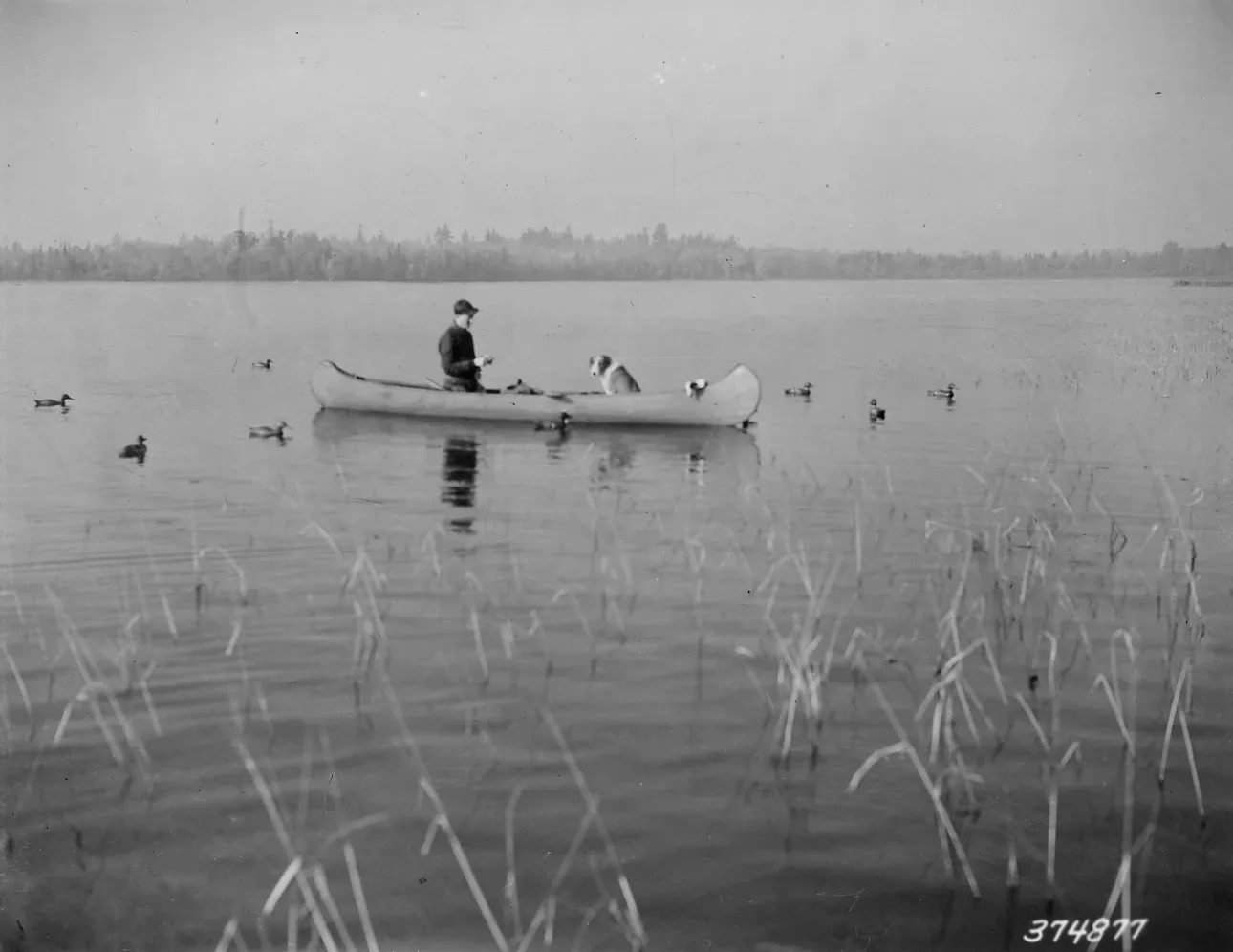
Lead shot for waterfowl hunting has been banned nationwide since 1991 — that's federal law, not state, and it applies everywhere. The rationale was waterfowl ingesting spent shot in wetlands. That restriction is not new and not contested in any practical sense at this point.
The situation on federal lands is more complicated. On the final day of the Obama Administration, the U.S. Fish and Wildlife Service announced that lead ammo would be banned on USFWS-managed lands five years later. On his first day as Interior Secretary during the first Trump Administration, Ryan Zinke reversed that ban via Executive Order 3346.
In September 2022, FWS issued a final rule that opened new hunting and fishing opportunities but also phased out lead ammunition use by 2026 on some federal lands, according to the Congressional Sportsmen's Foundation. If you're hunting on specific USFWS lands, check the applicable land regulations — the federal picture is a patchwork, not a blanket rule.
State-by-State: Where Things Standedit
Outside California, no state has enacted a complete ban on lead hunting ammunition as of 2026. What exists is a mix of mandatory restrictions on specific species or land types, voluntary incentive programs, and states with no restrictions at all.
| State | Status | Details |
|---|---|---|
| California | Full ban | All hunting, all wildlife, all land — since July 1, 2019 (AB 711) |
| Iowa | Mandatory (limited) | Non-lead required for all game animals except deer and turkey on selected public hunting areas in northcentral and northwest Iowa |
| Minnesota | Mandatory (limited) | Emergency order issued in 2023 prohibiting lead ammo during special hunts on certain state lands |
| Arizona | Voluntary | Incentive programs — hunters who remove gut piles entered into prize drawings; since 2008, 80% of hunters in condor areas have used lead-free ammo or cleaned up remains |
| Utah | Voluntary | Coupons for non-lead ammunition for hunters in southern Utah |
| Oregon | Voluntary | Incentive-based programs; recent legislative proposals to restrict or ban lead ammo |
| Colorado | Pilot program | 2023 legislation established a pilot program with range demonstrations comparing lead and copper ammo; CPW's 10-year State Wildlife Action Plan (finalized September 2025) continues hunter outreach and incentives but introduces no new mandatory rules |
| Maryland | No restriction (as of 2025) | Lead ammo ban bills considered in the legislature in 2025 — both failed |
| Washington | Proposed (status unclear) | Legislation introduced to prohibit lead ammo for hunting; outcome not confirmed in sources |
| New York | Proposed (status unclear) | Legislation introduced regarding lead ammo restrictions |
| Maine | Proposed (status unclear) | Legislation introduced regarding lead ammo restrictions |
Key Point: The Congressional Sportsmen's Foundation notes that Minnesota, New York, Maine, Washington, and Oregon have all either introduced legislation to prohibit lead ammunition for hunting or proposed outright bans on lead ammo and tackle sales in recent years. None had passed a full ban as of the sources available here.
What Happened in Maryland
In early 2025, the Maryland legislature considered bills that would have made it the second state — alongside California — to ban lead-based hunting ammunition outright. Those bills failed, including a deer hunting exemption amendment. According to Delegate Matt Morgan, the amendment on lead-based ammunition failed in March 2025. As of the sources available, Maryland has no lead ammo hunting restriction.
Colorado's Approach
Colorado is the clearest example of the voluntary-over-mandatory path. The state legislature passed a law in 2023 establishing a pilot program, and as of August 2025, Colorado Parks and Wildlife (CPW) was finalizing its 10-year State Wildlife Action Plan. A CPW spokesperson confirmed to KUNC that the plan includes continuing hunter outreach and incentives for non-lead options but is not intended to introduce new mandatory rules.
A state website assures Colorado hunters that lead-free options are comparable in price and available — which the hunting and shooting industry disputes in broader terms, noting that non-lead alternatives are often more expensive and harder to source.
The Lead Shot / Fishing Tackle Pictureedit
Fishing tackle and lead sinkers are a separate regulatory track from hunting ammunition.
| State/Jurisdiction | Restriction | Details |
|---|---|---|
| Federal (waterfowl) | Mandatory | Lead shot banned for waterfowl hunting since 1991 |
| New Hampshire | Mandatory | First state to ban lead fishing tackle (2000); SB 89 (2013) banned jigs and sinkers weighing one ounce or less |
| New York | Mandatory | Banned sale of lead fishing weights weighing one-half ounce or less |
| Vermont | Mandatory | Banned sale of lead fishing weights weighing one-half ounce or less |
| Massachusetts | Mandatory | Fisheries and Wildlife Board banned use and sale of jigs and sinkers weighing one ounce or less |
| Maine | Mandatory | LD 958 (2023) banned use and sale of jigs and sinkers weighing one ounce or less |
| California | Proposed concern | California DTSC declared fishing tackle one of the top seven threats in its 2015 departmental priority plan; no confirmed full ban in sources |
The Science and Policy Debateedit
This is where it gets complicated, and it's worth knowing the arguments on both sides — not because you need to pick a side, but because these arguments drive the legislative fights you're watching unfold.
The case for restrictions centers on California condors and other scavengers. Lead bullets fragment on impact, leaving tiny pieces in carcasses and gut piles that scavengers feed on. Lead poisoning is cited as the leading cause of death for California condors, which live in California, northern Arizona, and southern Utah. Advocacy groups including the Coalition to Protect America's National Parks and Public Employees for Environmental Responsibility have been pushing Colorado and other states to act, arguing that voluntary programs haven't moved the needle fast enough.
The case against broad bans runs along several lines. The Congressional Sportsmen's Foundation notes that as of their analysis, there is no documented evidence that sportsmen's use of lead has had significant population-level impacts on wildlife in the U.S. The Hunt for Truth Association reviewed the scientific reports submitted to California lawmakers before AB 711 and found alternative sources of lead in condor habitats — paint chips from old buildings, legacy leaded gasoline in soils, mining waste, old insecticides, and microtrash. Two condors were directly observed eating paint chips from a fire lookout tower and later regurgitating those paint fragments to feed their chicks.
The NSSF points out a specific problem with post-ban California research: studies published in 2025 are still attributing condor deaths to lead ammunition despite 98.89% hunter compliance with a ban that has been in effect since 2019. If hunters aren't using lead ammo and haven't been for years, the ongoing lead exposure is coming from somewhere else.
What changed: According to NSSF reporting from March 2025, California condors reached an all-time population high of 559 condors in 2023, up 22 from the prior year — with nearly 600 condors flying in the wild according to USFWS data. The NSSF argues this growth happened while hunters used traditional ammunition for centuries in America generally, and that other mortality factors — power line collisions, avian bird flu, trash ingestion — are significant contributors to condor deaths.
"While some researchers maintain that lead ammunition from gut piles or game carrion left in the field by hunters is the primary source of lead exposure to condors, there is compelling evidence of alternative sources of lead in the environment." — Hunt for Truth Association analysis
Economic and Conservation Funding Stakesedit
This isn't just a science argument — there's a funding argument attached to it. The Congressional Sportsmen's Foundation makes the case that hunting and fishing license sales and Pittman-Robertson excise taxes are the backbone of state fish and wildlife agency budgets. A ban that reduces hunting participation reduces that revenue.
Hunting activity contributes nearly $36 billion to the GDP annually, per the Congressional Sportsmen's Foundation. Angling contributes an average of $48 billion in angler spending. Any restriction that reduces participation hits those numbers.
The NSSF puts the total Pittman-Robertson contribution at over $29 billion (inflation-adjusted) since 1937, with over 90% of that funding coming directly from firearms and ammunition manufacturers. Non-lead alternatives — tungsten, steel, copper — are more expensive to manufacture, and that cost passes to hunters. The Congressional Sportsmen's Foundation notes that manufacturers would need to retool facilities to meet demand for non-lead alternatives, a process that is both costly and time-consuming, which historically has driven up prices and created supply shortages.
Practical Takeaways for Huntersedit
If you hunt in California, the rule is simple: no lead, no exceptions, anywhere in the state, for any wildlife with any firearm. Pellet guns are exempt. Get certified non-lead ammunition and verify it's certified before you go out.
If you hunt on federal lands, check the specific regulations for that land unit. A 2022 FWS rule phased out lead on some USFWS lands by 2026. That's not universal — it's land-specific.
If you hunt waterfowl anywhere in the U.S., lead shot has been federally prohibited since 1991. That's been settled law for over 30 years.
If you hunt in Iowa or Minnesota, you may hit mandatory non-lead requirements on specific public areas — check with your state wildlife agency before you go.
If you hunt in Arizona, Utah, or Colorado, you're looking at voluntary programs right now. Participation is your call, but know that advocacy groups are actively pushing these states toward mandatory rules.
If you buy fishing tackle in New Hampshire, New York, Vermont, Massachusetts, or Maine, lead sinkers under certain weight thresholds are banned in those states. Know your state's specific rules.
What this means for you: The trajectory of this issue is clear — more states are looking at restrictions, not fewer. Stocking up on non-lead alternatives and learning to use them before you're legally required to is a smarter play than scrambling when a ban passes in your state.
Resourcesedit
- https://wildlife.ca.gov/Hunting/Nonlead-Ammunition
- https://www.nssf.org/articles/traditional-ammo-banned-in-california-when-will-anti-hunters-stop-blaming-it/
- https://congressionalsportsmen.org/policy/lead-ammunition-and-fishing-tackle-bans/
- https://www.kunc.org/regional-news/2025-08-20/advocates-push-for-phasing-out-lead-ammo-phase-as-states-advance-voluntary-approaches
- https://www.varminter.com/california-begins-implementing-their-statewide-lead-bullet-ban/
- https://awionline.org/awi-quarterly/2013-fall/california-legislature-approves-lead-ammunition-ban
- https://www.facebook.com/DelegateMattMorgan/posts/amendment-on-lead-based-ammunition-has-just-failed/1304087278207053/
- https://crpa.org/news/blogs/reminder-for-california-hunters-phase-2-of-non-lead-ammunition-requirements-currently-in-effect/
Last Updated: April 03, 2026
- Ace Hardware of Sandusky(Sandusky, MI)
- New Philly Sportsman Specialities(New Philadelphia, OH)
- Atwoods Ranch & Home #46(LACY LAKEVIEW, TX)
- G & P Distributors(McConnellsburg, PA)
This is not legal advice
This guide provides general information about federal and state firearms laws based on publicly available statutes. Laws change frequently and vary significantly by state. Always verify current laws in your jurisdiction. Consult a qualified attorney for legal advice on your specific situation. When in doubt, contact local law enforcement or state police.
Loading comments...