Quick Reference
Winter Shooting Tips

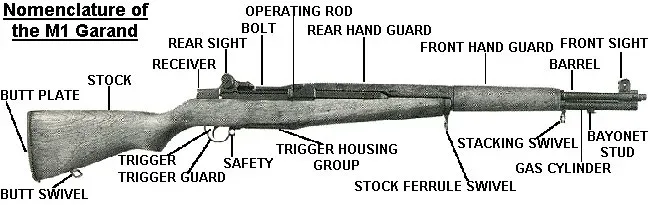
M1 Garand parts breakdown from Army Field Manual 23-5 — understanding each component's function is essential for maintaining reliability in cold conditions.
Department of the Army (Public domain)
| Time & Effort | |
|---|---|
Read Time | 6 min read |
Equipment Needed | |
| |
Safety | |
| |
Key Takeaways | |
| |
Related Topics | |
Winter Shooting Tips
Cold Weather Range Guide for Idaho Shooters
From The Boise Gun Club Handbook
Idaho winters will teach you things about shooting that August never could--when it's 18 degrees at the range and your breath is freezing on your shooting glasses, you learn real fast what works and what's just theory.
- The upside: Winter shooting makes you better by exposing every shortcut in your setup
- The downside: Cold weather doesn't care about your summer zero or favorite gear
- The reality: Show up prepared instead of trying to tough it out
Most shooters pack it in when snow flies. That's their loss--winter conditions teach you what your gear and skills actually are, not what they are when everything's perfect.
Your Body Runs the Gunedit
Cold hands don't work right. That's not weakness--that's physiology. When your core temperature drops, your body pulls blood away from your extremities to protect vital organs. Your trigger finger gets stiff, your grip weakens, and fine motor control goes to hell.
Cold hands don't work right. That's not weakness--that's physiology. When your core temperature drops, your body pulls blood away from your extremities to protect vital organs.
Base Layer Strategy
The base layer matters more than the jacket. Compression-style long underwear works better than the old waffle-weave stuff your dad wore. It pulls moisture away from your skin, and staying dry is half the battle.
Merino wool base layers don't smell like death after a few range sessions, and they regulate temperature better than synthetics.
For your lower half, insulated pants or ski pants keep your legs functional. Forget looking cool. I've seen guys in Carhartts trying to tough it out while shivering through their strings. They shoot like crap and go home early.
You need insulated boots rated for the actual temperature, not what you hope it'll be. Muck boots work great if you're standing in one spot. For walking ranges or hunting scenarios, get proper winter hunting boots. Cheap boots mean cold feet, and cold feet mean you're thinking about your toes instead of your sight picture.
| Temperature Range | Boot Type | Key Features |
|---|---|---|
| 20°F to 32°F | Insulated hiking boots | Waterproof, moderate insulation |
| 0°F to 20°F | Winter hunting boots | Heavy insulation, toe warmers |
| Below 0°F | Arctic-rated boots | Extreme insulation, vapor barrier |
| Wet/muddy conditions | Muck boots | Waterproof, easy on/off |
The Hand Problem
Your hands are the interface between your brain and the gun. When they don't work, nothing works. You've got three options, and which one depends on what you're shooting.
- Thin gloves with hand warmers - work for rifles where you don't need much trigger feel
- Fingerless shooting gloves - give better trigger control, but fingers get cold
- Trigger finger cutout gloves - sweet spot for most shooting, full protection with trigger access
| Glove Type | Trigger Control | Warmth | Best For |
|---|---|---|---|
| Thin + hand warmers | Poor | Good | Bench shooting, slow fire |
| Fingerless | Excellent | Poor | Competition, rapid fire |
| Trigger finger cutout | Good | Good | General shooting, hunting |
| Full winter gloves | Dangerous | Excellent | Never recommended |
Mechanix winter gloves or similar work fine for the thin glove option. Stick a hand warmer in each pocket, keep your hands warm between strings.
Fingerless shooting gloves give you better trigger control, but your fingers will get cold. Keep your hands in your pockets with warmers until you're ready to shoot. This works if you're not doing rapid fire or competition stages.
Trigger finger cutout gloves are the sweet spot for most shooting. Full glove with a slit or opening for your trigger finger. Keep a hand warmer in your shooting hand pocket, pull your trigger finger out only when you're on target.
I've tried shooting with full winter gloves. Don't. You can't feel the trigger properly, and that's how people get surprised by their gun going off. Dangerous and stupid.
Guns and Ammo Act Differentedit
Cold metal shrinks. Your zero will shift, usually downward. How much depends on the temperature swing and your specific rifle, but figure on 1-2 MOA difference from your summer zero at 100 yards. Some barrels walk more than others as they warm up from cold.
| Temperature Drop | Expected Zero Shift | Velocity Loss | Action Required |
|---|---|---|---|
| 70°F to 50°F | Minimal | 10-20 fps | Monitor only |
| 70°F to 32°F | 0.5-1 MOA down | 30-50 fps | Verify zero |
| 70°F to 0°F | 1-2 MOA down | 50-100 fps | Re-zero for winter |
| Below 0°F | 2+ MOA down | 100+ fps | Complete cold weather workup |
The practical answer: confirm your zero in winter conditions if you're doing anything that matters. Don't assume your August zero holds in January.
Ammunition Performance
Powder burns slower when it's cold. That means lower velocities, which means more drop at distance. You might see 50-100 fps velocity loss in extreme cold, depending on the powder. Factory ammo using ball powders tends to be more temperature sensitive than stuff loaded with extruded powders.
For most shooting inside 300 yards, this won't ruin your day. Beyond that, you need to either re-zero for winter or dial your dope to account for the velocity change.
The real problem is cycling issues. Semi-autos can get sluggish when oil and grease thicken up in the cold. Your AR that runs like a sewing machine in summer might short-stroke at 15 degrees if you've got heavy oil in it.
Use lighter lubricants in winter. CLP or Mobile 1 synthetic instead of heavy greases. Keep the gun outside if you're shooting outside--bringing a cold gun into a warm building causes condensation, and that moisture will freeze when you go back out.
If you need to bring guns inside, keep them in cases until they warm up gradually.
Optics and Electronicsedit
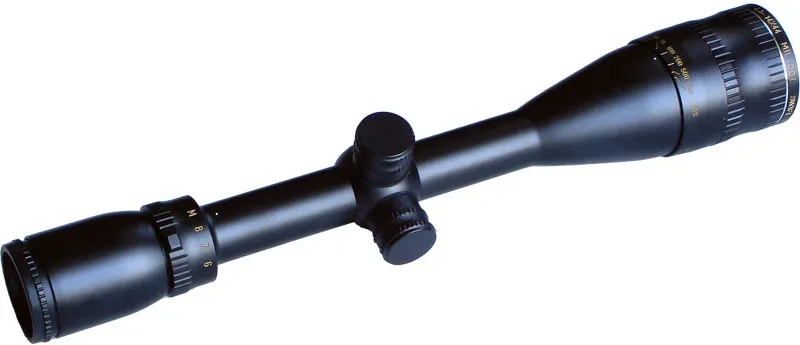
Cold kills batteries faster. That's basic chemistry--lithium batteries lose about 20% of their capacity at freezing temperatures. Keep your spare batteries in an inside pocket close to your body, not in your range bag.
| Battery Type | Capacity Loss at 32°F | Capacity Loss at 0°F | Winter Runtime |
|---|---|---|---|
| Alkaline | 30% | 50% | Very poor |
| Lithium AA/AAA | 20% | 35% | Good |
| CR123A Lithium | 15% | 25% | Best |
| Rechargeable Li-ion | 25% | 40% | Poor in extreme cold |
Red dots and electronic optics will keep working, but the battery won't last as long. Carry spares. I've seen guys at winter matches with dead optics because they didn't check their battery before showing up.
The Fog Problem
Take a warm gun outside into cold air, and the outside of your scope will fog up. Take a cold gun into a warm building, and the inside of your scope will fog up. Neither one helps you shoot.
Let your rifle acclimate outside before you shoot. Don't keep it in a warm truck until the last minute.
Good sunglasses aren't optional. Snow glare will wreck your eyes and make it impossible to see targets. Polarized lenses help with glare, but even non-polarized eye protection beats nothing. Your shooting glasses count--just make sure they don't fog up from your breath. Either get glasses with good anti-fog coating or adjust your face covering so you're not breathing directly onto your lenses.
Range Setup Changesedit
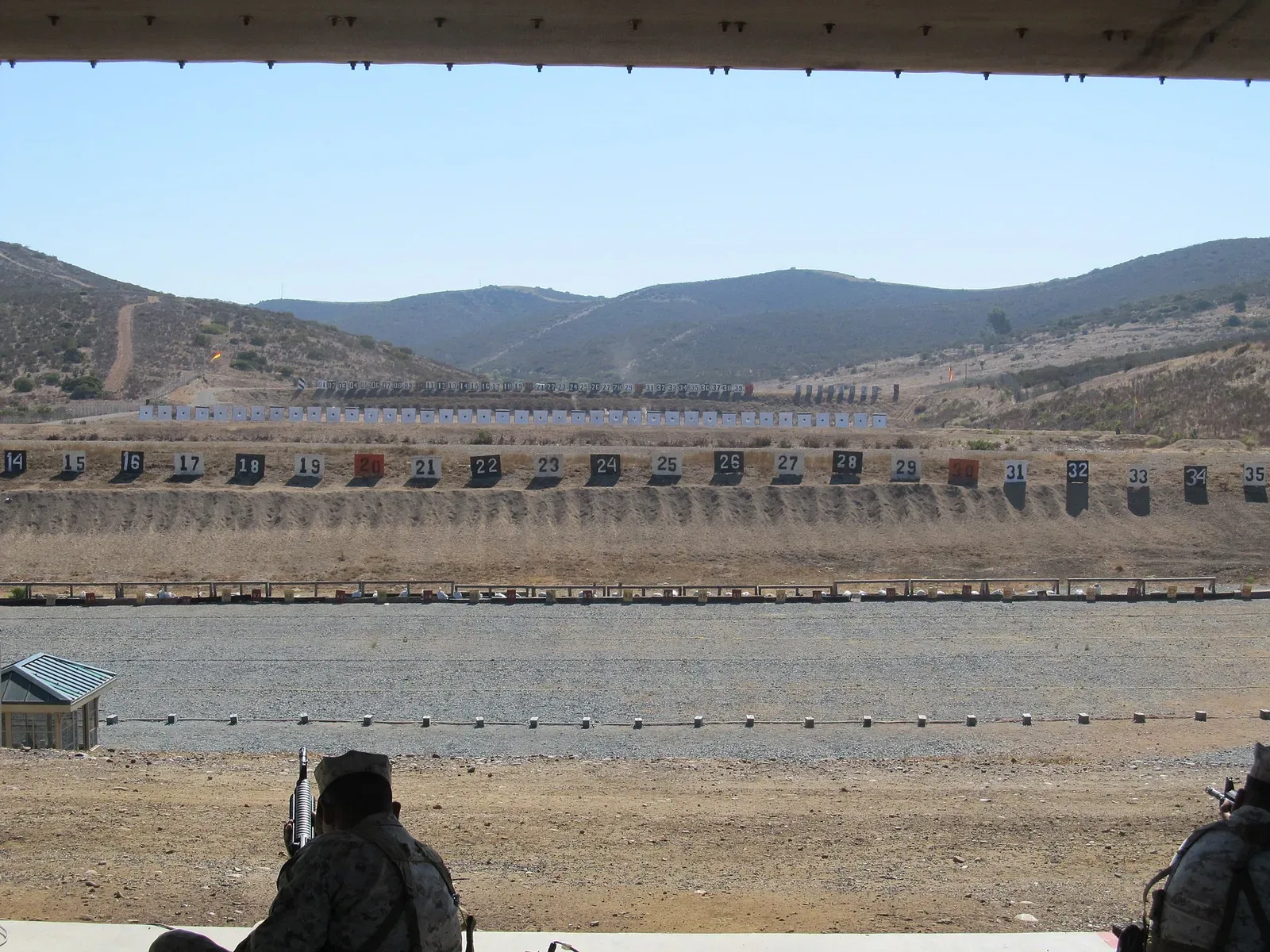
A good tripod or rest becomes essential in winter. You don't want to be lying prone in snow for 20 minutes trying to zero. Bipods work, but a tripod or shooting bench keeps you more functional.
Bring a pad or mat if you're shooting prone. A closed-cell foam pad keeps you off frozen ground. Those yoga mats work fine.
Target stands and cardboard behave differently in snow and wind. Free-standing target stands blow over easier when there's wind. Weight them down or stake them better than you think you need to.
What Winter Does to Your Shootingedit
Your natural point of aim changes when you're wearing more clothes. Your shooting position feels different with extra layers. Your support arm sits differently, your cheek weld changes with a thick jacket, and your shooting stance might shift.
The fix is simple but annoying: you need to re-establish your fundamentals with winter clothing on. Five minutes of dry-fire practice in your actual winter gear will show you what needs adjustment.
Breathing control matters more. When you can see your breath, you can see how much your body moves with each breath cycle. Use that feedback. The cold makes you want to rush shots to get back to warm, but rushing shots makes you miss. Slow down, breathe right, break the shot correctly.
Idaho-Specific Considerationsedit
Range Access
The public ranges managed by Idaho Fish and Game stay open year-round, but conditions vary. Check if the access roads are plowed. Some ranges at higher elevations become inaccessible after heavy snow.
Boise-area ranges usually stay accessible, but early morning ice can make things interesting. The parking lot at the Boise Gun Club gets icy--drive accordingly.
Private ranges sometimes close or reduce hours in winter. Call ahead if you're driving more than 20 minutes.
State land shooting areas become harder to access in winter. What was a simple drive down a forest service road in July might need a snowmobile in January. Know before you go, and tell someone where you'll be.
Gear That Actually Helpsedit
You don't need to buy a bunch of new stuff, but a few items make winter shooting functional instead of miserable.
| Item | Cost | Priority | Why It Matters |
|---|---|---|---|
| Insulated thermos | $20-40 | High | Maintains core temperature |
| Foam shooting pad | $15-25 | High | Keeps you off frozen ground |
| Camp chair | $30-60 | Medium | Rest between strings, stay dry |
| Gear sled | $20-50 | Medium | Transport through snow |
| Extra batteries | $10-20 | High | Electronics fail in cold |
A good thermos with hot coffee or tea between strings keeps your core temperature up. Your body works better warm.
Keep extra magazines inside your jacket if you're running semi-auto pistols. Cold mags shoot fine, but some pistol magazines get cranky in extreme cold.
A sled or cart for dragging gear through snow beats carrying everything. A cheap plastic sled works great for hauling bags and targets.
A camp chair with a back lets you rest between strings while keeping your butt dry. Standing in snow gets old fast.
When Not to Shootedit
- Frostbite conditions - exposed skin damage in under 10 minutes
- Heavy snowfall - can't see targets beyond 50 yards
- Icy shooting positions - dangerous footing with loaded firearms
The Winter Advantageedit
Here's what makes cold-weather shooting worth the hassle: mirage disappears. That heat wave distortion that screws up long-range shooting in summer? Gone. You get clearer sight pictures at distance in winter than any other time of year.
Fewer people at the range means you get better shooting spots and more space. The guys who show up in winter are serious about shooting, which generally means better range behavior and more useful conversations.
Winter shooting teaches you what your gear and skills actually are when conditions aren't perfect--and that's knowledge you can't get any other time of year.
- R&R Sports & Outdoors(Brandon, FL)
- Cash America Pawn(BRYAN, TX)
- Bi-mart - Yakima (Fruitvale Ave)(Yakima, WA)
- New Philly Sportsman Specialities(New Philadelphia, OH)
Loading comments...