Quick Reference
Bullseye/Precision Pistol Competition Guide

Photo: U.S. Army (Public Domain (U.S. Gov))
| Time & Effort | |
|---|---|
Read Time | 11 min read |
Equipment Needed | |
| |
| Prerequisites | |
| |
Safety | |
| |
Key Takeaways | |
| |
Organization | |
| National Rifle Association (NRA) ↗ | |
| Divisions | |
NRA Precision Pistol (2700 aggregate)CMP Service PistolIndoor PrecisionRimfire OnlyWomen's/Junior categories | |
Related Topics | |
| |
Bullseye/Precision Pistol
Handbook article
From The Boise Gun Club Handbook
Bullseye pistol strips away all the running, gunfighting, and tactical stuff to focus on one thing -- can you consistently hit what you're aiming at? It's the grandfather of all pistol sports, and the marksmanship fundamentals you learn here transfer to everything else.
- The format: 30 shots at paper targets, standing unsupported at 25 yards
- Three stages: Slow fire, timed fire (20 seconds), rapid fire (10 seconds)
- Mental game: 60 seconds between shots to overthink everything
This isn't about speed or tactics. It's about putting 30 rounds into a circle the size of a silver dollar while your brain tries to sabotage every trigger pull.
How It Worksedit
Bullseye pistol has been around since the late 1800s, back when competitive shooting meant standing still and hitting your target instead of spraying and praying. The format crystallized around military and police training needs -- if you couldn't hit a stationary target with unlimited time, you had no business carrying a gun.
Match Format and Timing
A standard match fires three 10-shot strings. Slow fire gives you basically unlimited time (though practically 60-90 seconds per shot). Timed fire gives you 20 seconds to fire two 5-shot strings. Rapid fire cuts that to 10 seconds. Maximum score is 300 points.
| Stage | Time Limit | Shots | Description |
|---|---|---|---|
| Slow Fire | 60-90 seconds per shot | 10 shots | Unlimited time, focus on precision |
| Timed Fire | 20 seconds | Two 5-shot strings | Controlled pace |
| Rapid Fire | 10 seconds | Two 5-shot strings | Maximum speed with accuracy |
| Maximum Score | - | 30 shots | 300 points possible |
The full 2700 aggregate shoots this course three times -- once with .22 rimfire, once with centerfire, and once with .45. That's where the 2700 possible points come from. Most local matches just shoot one course to keep things simple and affordable.
Standard bullseye match progression showing the three stages and optional 2700 aggregate format
Mental Challenges
What separates bullseye from practical shooting is the complete focus on precision over speed. No holsters, no movement, no multiple targets. Just you, your pistol, and 25 yards of distance.
What separates bullseye from practical shooting is the complete focus on precision over speed. No holsters, no movement, no multiple targets. Just you, your pistol, and 25 yards of distance.
The mental component is brutal. In USPSA, you're moving fast enough that you don't have time to think about screwing up. In bullseye, you get a full minute between shots to replay that last trigger pull and convince yourself you're about to do it again.
Equipment That Mattersedit
Starting Equipment
Start simple and upgrade as your scores justify it. Save the $3,000 target pistol until you can consistently keep all your shots in the 9-ring.
A Ruger Mark IV with decent sights will teach you everything you need to know about marksmanship fundamentals. Save the $3,000 target pistol until you can consistently keep all your shots in the 9-ring.
For .22 rimfire, adjustable sights are mandatory and a decent trigger helps enormously. The Ruger Mark IV, Browning Buckmark, or Smith & Wesson Model 22 will all work fine. Once you're shooting Expert scores consistently, then start looking at a Smith Model 41 or similar target pistol.
Platform Selection
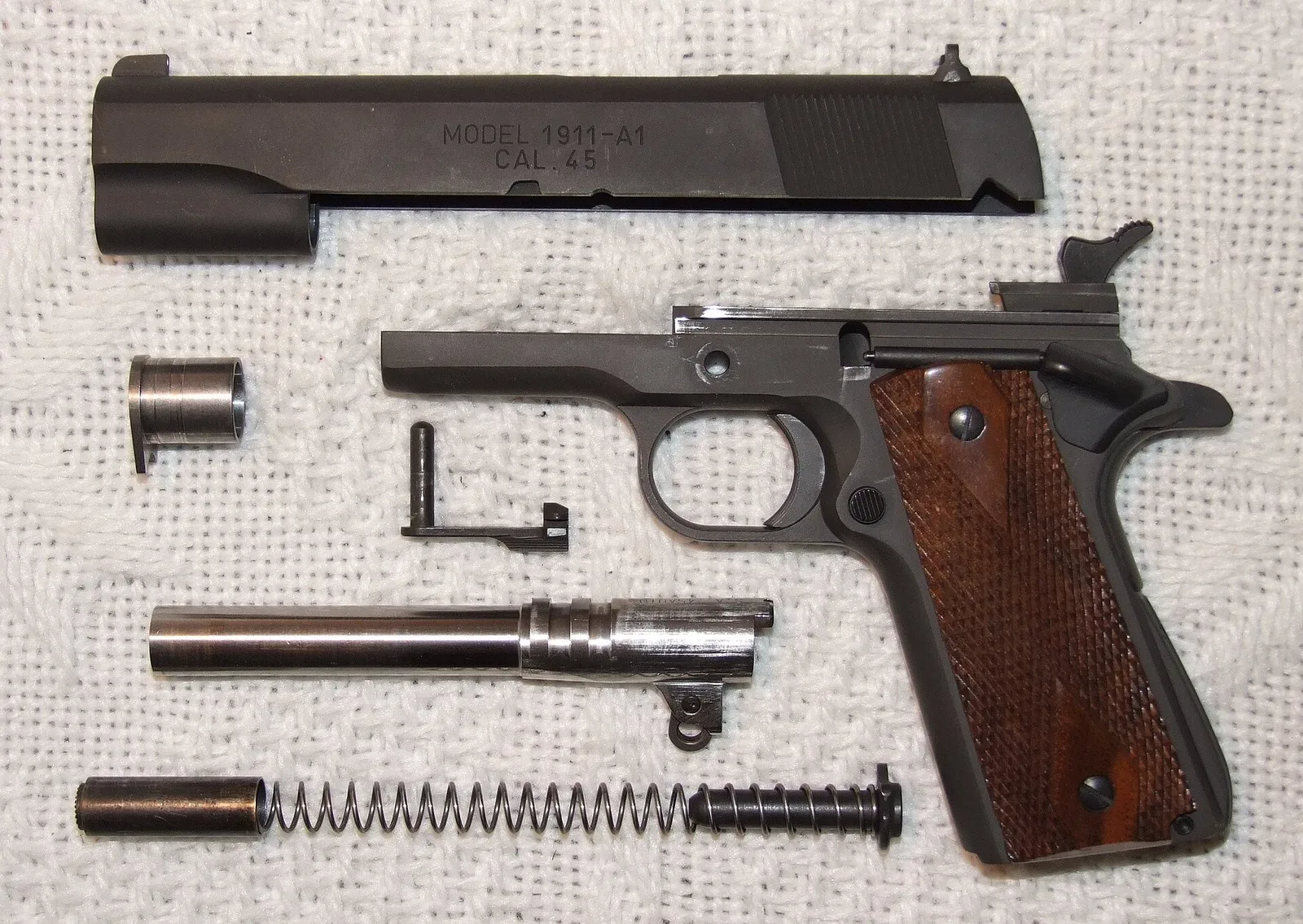
Centerfire and .45 competition gravitates toward the 1911 platform for good reason -- excellent triggers, outstanding accuracy potential, and decades of aftermarket support. A basic Springfield Loaded 1911 can be upgraded incrementally as your wallet and scores allow.
Essential Accessories
You'll need a spotting scope to see your hits at 25 yards. A basic 20-45x model runs $200-400 and beats squinting through iron sights. Electronic ear protection helps you hear range commands clearly.
| Item | Budget Option | Price Range | Notes |
|---|---|---|---|
| .22 Pistol | Ruger Mark IV, Browning Buckmark | $400-600 | Must have adjustable sights |
| Centerfire/.45 | Springfield Loaded 1911 | $800-1,200 | Upgradeable platform |
| Spotting Scope | 20-45x basic model | $200-400 | Essential for seeing .22 holes |
| Shooting Box | Basic organization system | $100-200 | Holds ammo, tools, parts |
| Eye/Ear Protection | Electronic muffs | $50-150 | Hear range commands clearly |
| Targets/Pasters | B-8 repair centers | $30-50 | Official NRA targets |
Skip the expensive accessories until you know what you actually need. Many successful shooters started with basic gear and upgraded only after their fundamentals were solid.
Rules and Scoringedit
Scoring System
The 10-ring scoring system puts the highest points in the center, with the X-ring serving as a tiebreaker. Shots have to be completely within the ring to count -- touching the line doesn't help you.
Range Commands and Timing
Timing is controlled by range officers with electronic timers. In timed and rapid fire, you start at 45-degree ready position, raise and fire on command, then return to ready between strings. Any shot after time expires scores zero, so watch your pace.
The NRA Classification System sorts shooters by skill level: Marksman (beginner), Sharpshooter, Expert, and Master. Classifications are based on your recent match averages, so you compete against people near your skill level. A new shooter might start around 240/300, while Master-class competitors consistently break 285.
| Classification | Typical Score Range | Skill Level | Requirements |
|---|---|---|---|
| Marksman | 200-240/300 | Beginner | Starting classification |
| Sharpshooter | 240-270/300 | Intermediate | Consistent fundamentals |
| Expert | 270-285/300 | Advanced | Strong mental game |
| Master | 285+/300 | Elite | Competition-level precision |
Safety Requirements
Safety is straightforward but non-negotiable. Chamber flags when not shooting, muzzle downrange at all times, follow commands promptly. No drawing from holsters or rapid movement -- the biggest safety issue is muzzle direction during loading and unloading.
- Wrong target hits score zero -- pay attention to your assignment
- No coaching during firing strings, but advice between strings is fine
- Equipment malfunctions may qualify for alibis (re-fires) if you don't touch the gun
- Protests must be made before targets are changed
Getting Startededit
Find local clubs through the NRA website or ask at gun shops. Most clubs welcome new shooters and many have loaner equipment for first-timers. Call the match director beforehand -- they'll explain what to bring and may pair you with an experienced shooter.
Practice basic marksmanship first. If you can't hit a paper plate consistently at 25 yards, work on fundamentals before showing up to a match.
Dry fire practice at home helps develop trigger control without burning through expensive ammunition.
Your first match will be humbling. The pressure affects everyone differently than practice, and you'll probably shoot 40-50 points lower than your practice average. Focus on safe gun handling and following commands rather than your score.
A 200-220 for your first time is respectable.
Recommended path for new shooters entering bullseye competition
Entry fees run $10-25 for local matches, and you'll need about 50 rounds of ammunition for a 30-shot course. Most clubs sell targets and pasters on-site. Matches last 1-2 hours for a single course, or 3-4 hours for a full 2700 aggregate.
The pace is deliberate with plenty of time between stages. Unlike practical shooting, nobody's rushing you or yelling "Shooter ready!" The atmosphere is generally relaxed and educational.
Costs and Realityedit
Bullseye remains affordable compared to other shooting sports since you're not burning through 200 rounds per match. A typical local match uses 30-90 rounds total.
However, the demand for precision drives up equipment and ammunition costs.
Initial Investment
Initial investment runs $800-1,200 for basic gear that will serve you for years. Serious competitors spend $4,000-8,000 on equipment, but that's not necessary to enjoy the sport or shoot decent scores.
| Expense Category | Budget Approach | Serious Competitor | Notes |
|---|---|---|---|
| Initial Equipment | $800-1,200 | $4,000-8,000 | Basic gear serves for years |
| Match Ammunition | Bulk .22 ($5/box) | Match .22 ($15-20/box) | Accuracy difference significant |
| Centerfire Ammo | Commercial ($1-2/round) | Handloads ($0.30-0.50/round) | Handloading becomes essential |
| Annual Participation | $500-800 | $2,000-5,000 | Includes matches, ammo, travel |
| Single Match Cost | $35-50 | $50-100 | Entry fee plus ammunition |
Ongoing Expenses
Match-grade .22 ammunition costs $15-20 per box compared to $5 for bulk ammo, but the accuracy difference is significant. For centerfire, you'll eventually need to start handloading -- commercial match ammo runs $1-2 per round while handloads cost about $0.30-0.50.
Annual costs including ammunition, match fees, and travel run $500-800 for casual participation, or $2,000-5,000 if you're chasing classifications and traveling to major matches.
Where to Find Matchesedit
Club Resources
The NRA club locator provides the most complete list of affiliated clubs. Many traditional gun clubs that host rifle matches also offer bullseye pistol. Online forums like BullseyeForum.net and TargetTalk.org maintain informal calendars and regional discussions.
Ask around at local gun stores -- they usually know which clubs are active and welcoming to new shooters. Some clubs struggle with declining membership and actively recruit newcomers.
The CMP hosts military-oriented matches that welcome civilian shooters. Their events emphasize service pistols but the fundamentals are identical.
Match Schedules
Most clubs run matches weekly or monthly during outdoor season, typically March through October in northern climates. Indoor precision provides year-round opportunities where outdoor ranges aren't available.
Bullseye teaches marksmanship fundamentals that transfer to every other type of shooting, but it demands patience and mental discipline that not everyone enjoys.
Loading comments...