Legal Details
Legislation

| Identification | |
|---|---|
| Jurisdiction | |
Territory | Idaho |
Idaho NFA Items and Regulations: What Gun Owners Need to Know
Legal information and analysis
From The Boise Gun Club Handbook
Updated August 14, 2026. The law moved twice since this article was written. The $200 making and transfer tax on suppressors, SBRs, SBSs and AOWs was eliminated effective January 1, 2026 by the One Big Beautiful Bill Act. Then on August 5, 2026 a federal court in Silencer Shop Foundation v. ATF struck down the NFA registration and approval requirements for those same items, and that injunction took effect August 13. It covers only the plaintiffs, their members and their customers. Living in a plaintiff state does not make you covered. Machine guns and destructive devices are unchanged. Read the current guide: NFA Items in 2026: What Actually Changed.
This is educational information, not legal advice. Laws change. Consult an attorney for your specific situation.
Idaho is one of the most permissive states in the country for NFA items — but federal law still runs the show, and a 2026 bill could reshape the machine gun landscape entirely if federal restrictions fall.
The Foundation: How NFA Works in Idahoedit
The National Firearms Act of 1934 (NFA), as described by the NRA-ILA, requires federal registration of fully-automatic firearms, rifles and shotguns with an overall length under 26 inches, rifles with barrels under 16 inches, shotguns with barrels under 18 inches, and firearm sound suppressors. The Gun Control Act of 1968 (GCA) added destructive devices — primarily explosives and firearms over .50 caliber — to the NFA's framework.
Idaho's posture is simple: the state doesn't pile on. According to Silencer Shop, Idaho follows federal NFA guidelines and imposes no additional state licensing, registration requirements, or fees on top of what the ATF requires. That means if you can clear the federal hurdles, Idaho won't throw any of its own in your way.
Idaho Constitution, Article I, Section 11 provides strong protections for the right to keep and bear arms. Per the Arizona Shooting source citing Ammoland, Idaho's constitution specifically prohibits special taxation, registration, or licensure on firearms — which is part of why no state-level NFA surcharge exists here.
Suppressors in Idahoedit
Idaho residents can legally own, possess, and use suppressors under both state and federal law. According to Silencer Shop, the state imposes no additional permit requirements beyond standard federal ATF approval.
Suppressors are also legal for hunting in Idaho across a wide range of game species. That makes them genuinely practical here — not just a range toy.
The federal process applies:
| Step | What Happens |
|---|---|
| Choose your suppressor | Select from a licensed dealer or online retailer |
| File Form 4 (transfer) or Form 1 (make) | Submit through ATF eForms |
| Pay federal tax stamp | Currently required at time of application |
| Background check | Standard NFA check conducted |
| Wait for ATF approval | Timelines vary; eForms are currently the fastest method |
| Take possession | After approval, from your licensed dealer |
According to Silencer Shop, Idaho has dealers in Boise, Idaho Falls, Twin Falls, Coeur d'Alene, and Pocatello, among other locations.
Key Point: Setting up an NFA trust is worth considering. Per Silencer Shop, a trust makes it easier to share suppressors among family members, pass them to heirs, and streamline future purchases. It's not required, but it's a smart move if more than one person in your household will handle the item.
The $200 Tax Stamp: Eliminated January 1, 2026edit
This is where things get interesting. According to an article published by the Idaho Press (authored by attorney Alexandria Kincaid), beginning in 2026 the federal $200 NFA tax stamp is being eliminated for suppressors, short-barreled rifles (SBRs), short-barreled shotguns (SBSs), and Any Other Weapons (AOWs).
"Beginning in 2026, the federal tax stamp — the infamous $200 fee paid on each NFA item transfer or manufacturing application — is eliminated for: Suppressors, Short-barreled rifles (SBRs), Short-barreled shotguns (SBSs), Any Other Weapons (AOWs) and similar categories."
According to that same source, registration and background check requirements remain in place. You'll still file Form 4s or Form 1s — just without the tax payment attached.
What is NOT changing, per the Idaho Press article:
- Machine guns remain fully regulated and taxed
- Destructive devices still require the tax stamp
- Registration, background checks, serial-number tracking, and ATF approval remain mandatory for all NFA items
Key Point: The Idaho Press article is authored by an attorney and carries a legal disclaimer. The NFA tax stamp change described there should be verified against current ATF guidance before you act on it, as NFA rules are subject to ongoing litigation and regulatory change.
The Idaho Press article also notes that pending NFA applications filed before 2026 may still be subject to the old tax stamp requirement, and that increased demand could temporarily affect ATF wait times as the suppressor and SBR markets grow.
Short-Barreled Rifles and Shotgunsedit
Per the NRA-ILA, SBRs (rifles with barrels under 16 inches or overall length under 26 inches) and SBSs (shotguns with barrels under 18 inches) are regulated under the NFA. Idaho imposes no state-level restrictions beyond federal requirements.
According to the Ammoland article (via Arizona Shooting), NFA items including suppressors and SBRs in Idaho "face only federal hurdles" — meaning state law creates no additional barriers to ownership.
As noted above, the Idaho Press article indicates the $200 tax stamp for SBRs and SBSs is being eliminated starting in 2026, though registration and approval requirements remain.
Machine Guns: The Current Lawedit
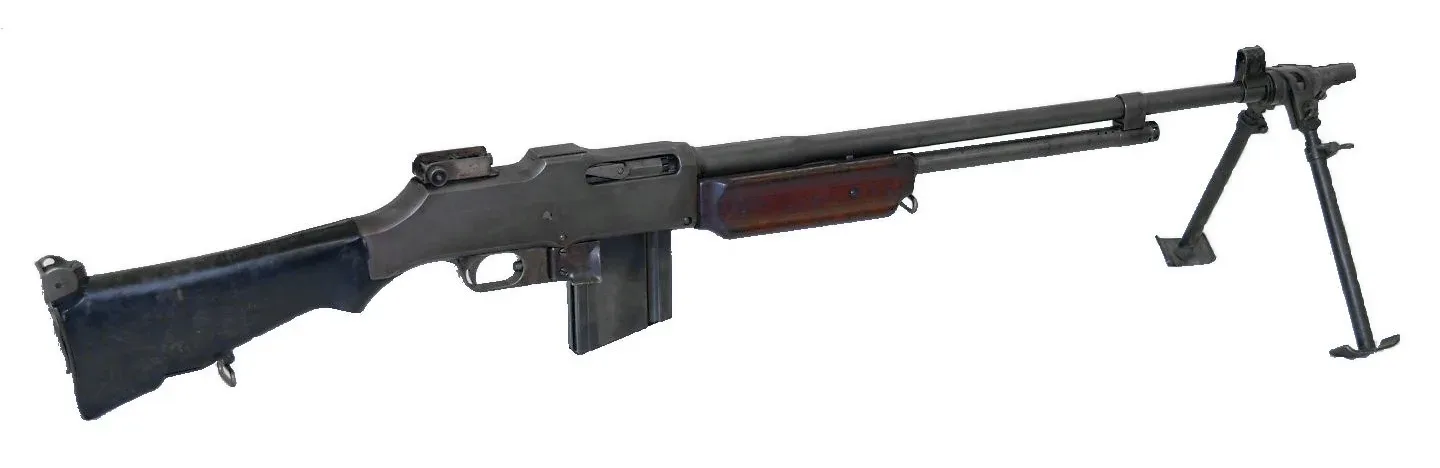
Here's where Idaho's hands are tied by federal law — at least for now.
The NRA-ILA notes that the GCA prohibited importation of fully-automatic firearms for private purposes, and a 1986 amendment prohibited domestic manufacture of fully-automatics for private purposes. That amendment — the Hughes Amendment to the Firearms Owners' Protection Act (FOPA), codified at 18 U.S.C. § 922(o) — is the wall.
Per the Ammoland article, the result of the Hughes Amendment is that only approximately 250,000–300,000 transferable "pre-86" machine guns exist nationwide, and they command premium prices — often $20,000–$50,000 or more depending on the model.
Idaho currently imposes no additional state restrictions on pre-1986 machine guns. Per the Ammoland source, "pre-86 machine guns are legal with federal compliance" in Idaho, just as in most states. If you can afford one and clear the federal NFA process, Idaho won't stop you.
Post-1986 machine guns remain unavailable to civilians under current federal law, regardless of state.
Senate Bill 1349: Idaho's Machine Gun Contingency Planedit
This is the most significant firearms legislation moving through Idaho in 2026. Senate Bill 1349 (S1349), introduced on March 2, 2026, and referred to the Senate State Affairs Committee on March 3, 2026, proposes a framework that would legalize civilian ownership of fully automatic weapons in Idaho — but only if federal restrictions fall first.
According to Idaho Freedom Foundation and the BillTrack50 summary, S1349 would create new Idaho Code sections 18-3328 and 18-3329. The bill carries an emergency clause and an effective date of July 1, 2026.
The legislation defines "machine gun" consistent with federal law: any firearm that shoots, is designed to shoot, or can be readily restored to shoot more than one shot without manual reloading by a single function of the trigger.
The Four Trigger Events
S1349 does not immediately legalize new machine guns. It establishes a contingent authorization activated only by one of four specific federal-level events:
| Trigger Event | Description |
|---|---|
| Congressional repeal | Congress repeals 18 U.S.C. § 922(o) or any successor provision |
| Supreme Court ruling | SCOTUS holds § 922(o) unconstitutional in whole or relevant part |
| Federal court injunction | A federal court binding in Idaho permanently enjoins enforcement of § 922(o), and the ruling is not stayed |
| AG notice | Idaho's Attorney General receives formal written notice that the ATF has ceased enforcing § 922(o) against law-abiding civilians generally |
Per the Ammoland/Arizona Shooting source, upon any trigger event the Idaho Attorney General must notify officials and publish notice within 30 days, with provisions taking effect 30 days after that.
What S1349 Would and Would Not Do
If a trigger event occurs, per the bill's text as described across sources:
Would allow any person "not otherwise prohibited from possessing firearms under state or federal law" to legally possess, purchase, receive, sell, transfer, or manufacture a machine gun in Idaho.
Would prohibit state agencies and local governments from adopting or enforcing any rule, regulation, ordinance, or policy that prohibits or "unduly burdens" lawful machine gun activities.
Would not authorize possession by prohibited persons, override criminal laws related to firearm misuse, or compel private parties to manufacture or sell.
The companion section, § 18-3329, would prohibit state entities from spending resources to enforce the federal restriction after a trigger event, or from assisting federal prosecutions of conduct now lawful under Idaho law.
The Federalism Debate
The Idaho Freedom Foundation rated S1349 with a mixed score. The organization supports expanding Second Amendment rights (+1) but raises a federalism concern (-1): the bill ties state protections to federal law changes, when the state could — without any federal trigger — simply recognize that the right to keep and bear arms includes fully automatic weapons and refuse to enforce the federal prohibition. The IFF argues that broadly referencing or requiring compliance with "federal law" allows the federal government to effectively change state law without the Idaho Legislature's involvement.
Key Point: S1349 is contingent legislation. Until one of the four trigger events occurs, nothing changes about machine gun legality in Idaho. This is not a nullification bill in the traditional sense — it's a framework sitting in reserve.
Where the Bill Stands
As of the information available in these sources, S1349 was introduced March 2, 2026, referred to the Senate State Affairs Committee on March 3, 2026, and had a committee hearing scheduled for March 6, 2026. The bill had not yet crossed over to the House at that point.
Destructive Devicesedit
Per the NRA-ILA, destructive devices — primarily explosives and firearms over .50 caliber — are regulated under the NFA via the GCA. The Idaho Press article confirms that destructive devices still require the $200 tax stamp even under 2026 reforms. Idaho imposes no additional state restrictions documented in these sources, but this is a narrow category where consulting an attorney before any transaction is strongly advised.
Preemption: Cities Can't Write Their Own NFA Rulesedit
Idaho has full state preemption of firearms regulation. In 2008, Idaho enacted Idaho Code § 18-3302J, which declares that "uniform laws regulating firearms are necessary to protect the individual citizen's right to bear arms" and that the legislature intends to "wholly occupy the field of firearms regulation within this state."
Per Giffords Law Center's documentation of Idaho preemption:
"Except as expressly authorized by state statute, no county, city, agency, board or any other political subdivision of this state may adopt or enforce any law, rule, regulation, or ordinance which regulates in any manner the sale, acquisition, transfer, ownership, possession, transportation, carrying or storage of firearms or any element relating to firearms and components thereof, including ammunition."
That language is broad. A city cannot create additional restrictions on NFA items, impose local waiting periods, or require local registration of suppressors or SBRs. The only carve-outs under § 18-3302J are narrow ones related to firearm discharge within city or county limits (not ownership or possession), and even those discharge ordinances cannot restrict lawful self-defense, hunting, sport shooting ranges, or target shooting on public land.
Additionally, per Idaho Code § 46-1008(7) as cited by Giffords, during a state of emergency neither the governor nor any government agency may impose restrictions on the lawful possession, transfer, sale, transport, storage, display, or use of firearms or ammunition.
Key Point: If you're an NFA item owner moving to or traveling through Idaho, no local ordinance can add to the federal compliance requirements you've already met. Preemption here is genuine and enforced.
Idaho in the Broader National Contextedit
Idaho isn't alone in pushing back on NFA restrictions. According to the Ammoland article via Arizona Shooting, as of early 2026:
- West Virginia introduced Senate Bill 1071, described as a GOA-drafted measure exploiting a narrow exception in the Hughes Amendment allowing states to transfer machine guns — a more aggressive approach than Idaho's contingent model
- Wyoming lawmakers signaled interest in similar legislation
- Kentucky introduced a comparable bill
These efforts follow the post-Bruen (New York State Rifle & Pistol Association v. Bruen) legal environment, where the history-and-tradition test has gun-rights advocates more optimistic about challenging longstanding NFA restrictions in court.
The NRA-ILA has also filed multiple lawsuits challenging the NFA. Per NRA-ILA, on February 26, 2026, the NRA announced the filing of a third lawsuit challenging the constitutionality of the National Firearms Act. In December 2025, the U.S. Supreme Court denied certiorari in Rush v. United States, a challenge to NFA short-barreled rifle restrictions.
The legal landscape around the NFA is actively contested. What the law looks like in 12 months may be different from what it looks like today.
What Idaho Gun Owners Should Actually Do Right Nowedit
If you're looking at NFA items in Idaho, here's the practical picture pulled from the sources:
For suppressors: You can buy one now. Idaho has no state permit requirement. Federal ATF approval is required. The $200 tax stamp may be going away in 2026 per the Idaho Press article, but if you have a pending application, the old rules may still apply to it. Consider an NFA trust if multiple family members will possess the item.
For SBRs and SBSs: Same situation — legal under federal compliance, no state add-ons. The same 2026 tax stamp changes described above apply.
For pre-1986 machine guns: Legal in Idaho with full federal NFA compliance. Expensive by definition given the restricted supply pool. Nothing in Idaho state law blocks ownership.
For post-1986 machine guns: Currently illegal for civilian ownership under federal law regardless of where you live. Watch S1349 and federal developments — but as of today, they're off the table.
For destructive devices: Highly regulated at federal level, tax stamp still required even under 2026 reforms. Consult an attorney before any transaction here.
| NFA Item | Legal in Idaho? | State Permit Required? | Tax Stamp (Current) | Tax Stamp (2026 per Idaho Press) |
|---|---|---|---|---|
| Suppressor | Yes | No | $200 | Eliminated |
| Short-Barreled Rifle (SBR) | Yes | No | $200 | Eliminated |
| Short-Barreled Shotgun (SBS) | Yes | No | $200 | Eliminated |
| Any Other Weapon (AOW) | Yes | No | $200 | Eliminated |
| Pre-1986 Machine Gun | Yes (federal compliance) | No | $200 | Still required |
| Post-1986 Machine Gun | No (federal prohibition) | N/A | N/A | N/A |
| Destructive Device | Federal rules apply | No | $200 | Still required |
Note: The 2026 tax stamp changes referenced above come from the Idaho Press article by attorney Alexandria Kincaid. Verify current ATF rules before relying on this for purchase decisions.
Resourcesedit
- https://www.silencershop.com/suppressor-laws-idaho
- https://giffords.org/lawcenter/state-laws/preemption-of-local-laws-in-idaho/
- https://www.nraila.org/get-the-facts/national-firearms-act-nfa/
- https://idahofreedom.org/senate-bill-1349-machine-guns/
- https://www.billtrack50.com/billdetail/1982990
- https://www.arizonashooting.org/threads/idaho-introduces-bill-to-legalize-machine-guns-if-federal-ban-falls.27682/
- https://www.idahopress.com/emmett/blog/what-gun-owners-need-to-know-about-the-2026-nfa-changes/article_88f249b3-a657-4adf-966a-0a76aa3a76a7.html
- https://legislature.idaho.gov/sessioninfo/2026/legislation/S1349/
Last Updated: March 05, 2026
The bottom line: Idaho puts no state-level barriers on NFA items beyond what federal law requires — and an active 2026 bill positions the state to immediately expand civilian machine gun rights if federal restrictions ever fall.
- Ace Hardware of Sandusky(Sandusky, MI)
- New Philly Sportsman Specialities(New Philadelphia, OH)
- Atwoods Ranch & Home #46(LACY LAKEVIEW, TX)
- G & P Distributors(McConnellsburg, PA)
This is not legal advice
This guide provides general information about federal and state firearms laws based on publicly available statutes. Laws change frequently and vary significantly by state. Always verify current laws in your jurisdiction. Consult a qualified attorney for legal advice on your specific situation. When in doubt, contact local law enforcement or state police.
Loading comments...