Legal Details
Legislation

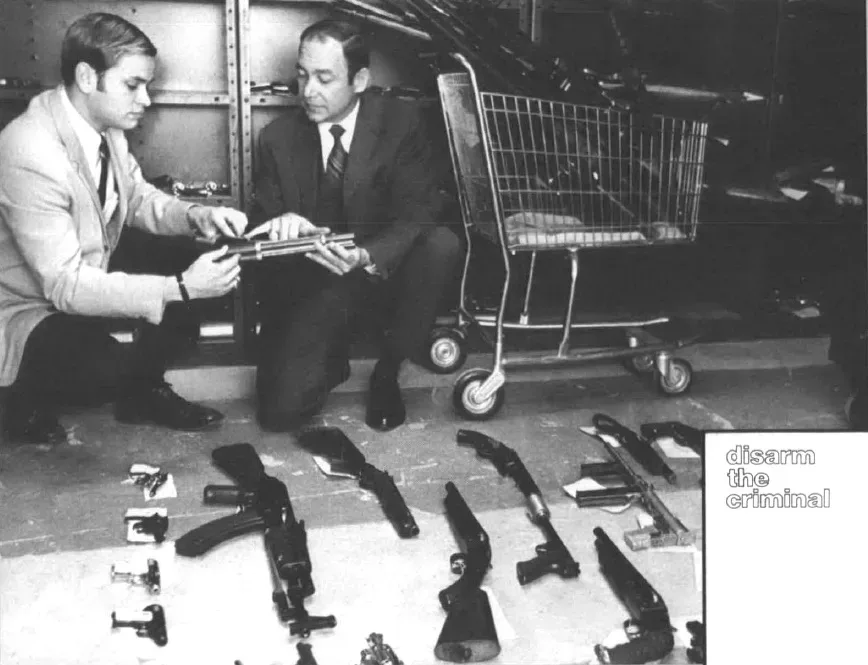
ATF investigators with weapons seized for Gun Control Act violations — enforcement imagery directly relevant to federal suppressor penalties.
Federal Bureau of Investigation (Public domain)
| Identification | |
|---|---|
| Jurisdiction | |
Territory | Idaho |
Idaho Suppressor Laws: The Complete Legal Guide
Legal information and analysis
From The Boise Gun Club Handbook
Updated August 14, 2026. The law moved twice since this article was written. The $200 making and transfer tax on suppressors, SBRs, SBSs and AOWs was eliminated effective January 1, 2026 by the One Big Beautiful Bill Act. Then on August 5, 2026 a federal court in Silencer Shop Foundation v. ATF struck down the NFA registration and approval requirements for those same items, and that injunction took effect August 13. It covers only the plaintiffs, their members and their customers. Living in a plaintiff state does not make you covered. Machine guns and destructive devices are unchanged. Read the current guide: NFA Items in 2026: What Actually Changed.
This is educational information, not legal advice. Laws change. Consult an attorney for your specific situation.
Suppressors are legal in Idaho, but every single one you own is still regulated under federal law -- and the gap between what Idaho allows and what the federal government requires is where people get into serious trouble.
The Short Version: Idaho Says Yes, Federal Law Says Slow Downedit
Idaho has no state-level prohibition on suppressor ownership. You can own one, use one, hunt with one, and generally go about your business with a suppressor in this state without running afoul of Idaho law. That's the easy part.
The hard part is that suppressors are still National Firearms Act (NFA) items under federal law -- same category as machine guns and short-barreled rifles. That means no matter what Idaho does or doesn't say, you're playing by ATF rules first. Idaho's permissiveness doesn't exempt you from the federal process. Not even close.
How Federal Law Actually Works for Suppressorsedit
The National Firearms Act of 1934 is the governing law here. Under the NFA, a suppressor is a regulated item that requires:
- A completed ATF Form 4 (for a transfer from a dealer or individual) or Form 1 (to manufacture your own)
- No federal tax: the $200 stamp on suppressors ended January 1, 2026
- ATF approval before the suppressor transfers to you
- A background check through the ATF
- Registration in the federal NFA registry
Key Point: You do not take possession of the suppressor until the ATF approves your paperwork. The wait time is real. According to the Idaho Capital Sun, it's not uncommon to wait up to 270 days for paperwork processing -- that's nine months of waiting to pick up a hearing protection device.
Once approved, the tax stamp travels with the suppressor. If you sell it, the buyer goes through the same process. You can't just hand it to your buddy.
The $200 Tax and the Wait: What You're Actually Dealing Withedit
The $200 NFA tax stood unchanged from 1934 until it was zeroed for suppressors on January 1, 2026. In today's dollars it's less punishing than it once was, but combined with the processing delay, it's still a meaningful friction point. Per the Idaho Capital Sun's reporting on Senate Joint Memorial 104, the Idaho Legislature specifically called out the wait time and tax as unreasonable burdens on Idaho hunters and sportsmen.
"The resolution says suppressor restrictions enacted in the 1930s 'put the hearing health of gun owners at risk.'" — Idaho Capital Sun, February 27, 2024
For context on what a suppressor actually does: according to Senator Crapo's office, suppressors diminish the noise of a gunshot by 20-35 decibels -- roughly the same reduction you'd get from earplugs or earmuffs. The most effective suppressors on the market can only reduce peak sound to around 110-120 decibels, which is roughly equivalent to a jackhammer. They are not silent. The Hollywood version is fiction.
Buying a Suppressor in Idaho: The Step-by-Step Realityedit
Here's what the process actually looks like for an Idaho resident buying through a licensed dealer:
| Step | What Happens | Timeline |
|---|---|---|
| Find a suppressor | Locate item at a dealer (SOT/Class III) | Varies |
| Pay for it | Full purchase price paid upfront | Day 1 |
| Complete ATF Form 4 | Paperwork filed with ATF | Day 1 |
| Tax stamp | $0 since January 1, 2026 for suppressors | n/a |
| Background check | ATF conducts its own check | Ongoing |
| Wait for approval | ATF processes your application | Up to 270 days |
| Take possession | Suppressor transferred to you | After approval |
You're paying for something you can't touch for the better part of a year. That's the reality of the current federal system.
Key Point: Buying through an NFA trust is a common approach that allows multiple people to legally use the suppressor and can simplify transfer logistics. If you're considering this route, consult an attorney familiar with NFA trusts in Idaho -- this is one area where spending a couple hundred dollars on legal advice upfront saves headaches later.
The Idaho Firearms Freedom Act and Why It Doesn't Help Youedit
You may have heard something about Idaho-made suppressors not needing a stamp. This claim circulates on forums and occasionally comes up at gun counters. The short answer: federal law still applies, and the ATF does not recognize state firearms freedom acts as exemptions from the NFA.
A Northwest Firearms forum thread captures exactly this confusion -- a user asking whether an Idaho-manufactured suppressor purchased by an Idaho resident could bypass the federal stamp requirement. The legal reality is that state law cannot supersede federal law on NFA items. Possessing an unregistered suppressor is a federal felony regardless of what any state statute says about in-state manufacture. The Idaho Firearms Freedom Act concept has been challenged in courts, and no federal court has upheld a state's ability to exempt NFA items from federal regulation.
This is one of those situations where getting your legal information from a neighbor or a forum post can land you in federal prison. If someone tells you that an Idaho-made can doesn't need a stamp, they are wrong.
What Idaho's Legislature Has Actually Doneedit
Idaho's legislature has been active on the suppressor issue -- not by changing state law (there's no Idaho state suppressor restriction to change), but by sending a message to Congress.
In February 2024, Senate Joint Memorial 104 (SJM104) passed the Idaho Senate on a 30-5 vote, with all five opposing votes coming from Democrats. The resolution urged the U.S. Congress to pass the Hearing Protection Act, which would remove suppressors from NFA regulation entirely and replace the current process with a standard NICS background check. Per the Idaho Capital Sun, SJM104 then headed to the Idaho House for consideration.
Sen. Mark Harris (R-Soda Springs), who sponsored the resolution, noted that suppressors are legal in 42 states and that millions are in the hands of law-abiding citizens. He argued the policy was simply overdue for an update.
Sen. Todd Lakey (R-Nampa) put it plainly:
"These aren't the things that you see in the movies in Hollywood, where the dramatic assassin goes in and silently deals death with a firearm. This simply reduces the noise so it does not cause potential damage to your hearing. But it's not a silencer, it's a suppressor."
Not everyone agreed. Sen. Melissa Wintrow (D-Boise) argued suppressors have been used in crimes and murders of police officers. Rep. Ali Rabe (D-Boise) expressed concern that easier access would "downplay the powers that guns have." These are the dissenting voices on record.
The Hearing Protection Act: Where Federal Reform Standsedit
The Hearing Protection Act (HPA) is the federal bill that would change the game for every suppressor owner in Idaho and across the country. Idaho's own Sen. Mike Crapo reintroduced it as S. 364 on February 6, 2025, leading a group of 28 Senate co-sponsors.
What the HPA would actually do:
- Remove suppressors from regulation under the NFA entirely
- Replace the Form 4 process with an instant NICS background check -- the same check used for a rifle or shotgun purchase
- Eliminate the $200 NFA tax
- Tax suppressors under the Pittman-Robertson Act instead, directing funds toward state wildlife conservation agencies
As of the article's last update date, the HPA has been introduced in the 119th Congress but has not been enacted into law. The NFA process remains in effect.
Sen. Crapo's office noted that Idaho's own House and Senate had passed a resolution calling for suppressors to be regulated like firearms -- pointing to SJM104 -- as evidence of state-level support for federal reform.
The HPA carries support from the Academy of Doctors of Audiology, National Shooting Sports Foundation (NSSF), American Suppressor Association (ASA), Gun Owners of America (GOA), and the NRA.
Amyn Amlani, Ph.D., President of the Academy of Doctors of Audiology, stated:
"While the use of conventional hearing protection tools, such as earplugs and earmuffs are fundamental for preventing noise induced hearing loss in firearm users, conventional hearing protection alone does not always offer adequate protection from noise exposure. Firearm noise suppressors can be an effective supplement to traditional hearing protection."
Suppressor Ownership: What You Can and Cannot Do in Idahoedit
Once you've gone through the federal process and have your approved suppressor in hand, Idaho puts essentially no additional restrictions on how you use it.
| Activity | Legal in Idaho? | Notes |
|---|---|---|
| Owning a suppressor | Yes | Subject to NFA compliance |
| Hunting with a suppressor | Yes | No state prohibition |
| Using on public land | Yes | Check land-specific rules |
| Selling/transferring | Yes | Buyer must complete NFA process |
| Taking across state lines | Generally yes | Check destination state laws |
| Manufacturing without ATF approval | No | Federal felony |
| Possessing unregistered suppressor | No | Federal felony |
Key Point: If you're traveling out of Idaho with your suppressor, you need to know the laws of every state you're passing through. Some states prohibit suppressor ownership outright. The federal Firearm Owners Protection Act (FOPA) safe passage provisions generally apply to firearms in transport but NFA items have their own complexities -- consult an attorney before crossing state lines with a can.
Penalties for Getting This Wrongedit
The federal penalties for NFA violations are not minor. Possessing an unregistered suppressor is a federal felony carrying up to 10 years in federal prison and up to $250,000 in fines. This applies whether you're in Idaho, Texas, or anywhere else in the country. State law being friendly toward suppressors provides zero shield from federal prosecution.
This is not an area where ignorance of the law is a workable defense. The ATF has prosecuted cases where individuals genuinely believed they were operating within the law based on misinformation about state firearms freedom acts.
The Bottom Lineedit
The bottom line: Idaho welcomes suppressor ownership and its legislature has formally pushed Congress to modernize federal rules -- but until the Hearing Protection Act or similar legislation actually passes, every suppressor in Idaho is still an NFA item, and skipping the federal process is a federal felony.
Resourcesedit
- https://www.crapo.senate.gov/media/newsreleases/crapo-reintroduces-hearing-protection-act
- https://idahocapitalsun.com/briefs/resolution-calls-for-suppressors-to-be-regulated-like-guns-it-now-heads-to-the-idaho-house/
- https://x.com/MikeCrapo/status/1887910282535571857
- https://www.nraila.org/articles/20250205/the-hearing-protection-act-introduced-in-the-119th-congress
Last Updated: March 05, 2026
- Ace Hardware of Sandusky(Sandusky, MI)
- New Philly Sportsman Specialities(New Philadelphia, OH)
- Atwoods Ranch & Home #46(LACY LAKEVIEW, TX)
- G & P Distributors(McConnellsburg, PA)
This is not legal advice
This guide provides general information about federal and state firearms laws based on publicly available statutes. Laws change frequently and vary significantly by state. Always verify current laws in your jurisdiction. Consult a qualified attorney for legal advice on your specific situation. When in doubt, contact local law enforcement or state police.
Loading comments...