State Details
Louisiana

Overview | |
|---|---|
State | Louisiana (LA) |
Capital | Baton Rouge |
Statehood | 1812 |
Population | 4,573,749 |
Gun Ownership | 53.1% |
Active FFLs | 931 |
Carry Laws | |
Constitutional Carry | Yes (2024) |
Open Carry | Yes |
CCW Permit Available | Yes |
Permit Reciprocity | 37+ states |
Self-Defense | |
Castle Doctrine | Yes |
Stand Your Ground | Yes |
Duty to Retreat | No |
Regulations | |
State Preemption | Yes |
Red Flag / ERPO | No |
Waiting Period | None |
Universal BGC | No |
NFA Items | Yes |
Assault Weapons Ban | No |
Magazine Limit | None |
Key Legislation | |
| |
Notable Manufacturers | |
| |
Louisiana Firearms History: From French Colonial Muskets to Constitutional Carry
Reference article
From The Boise Gun Club Handbook
Overviewedit
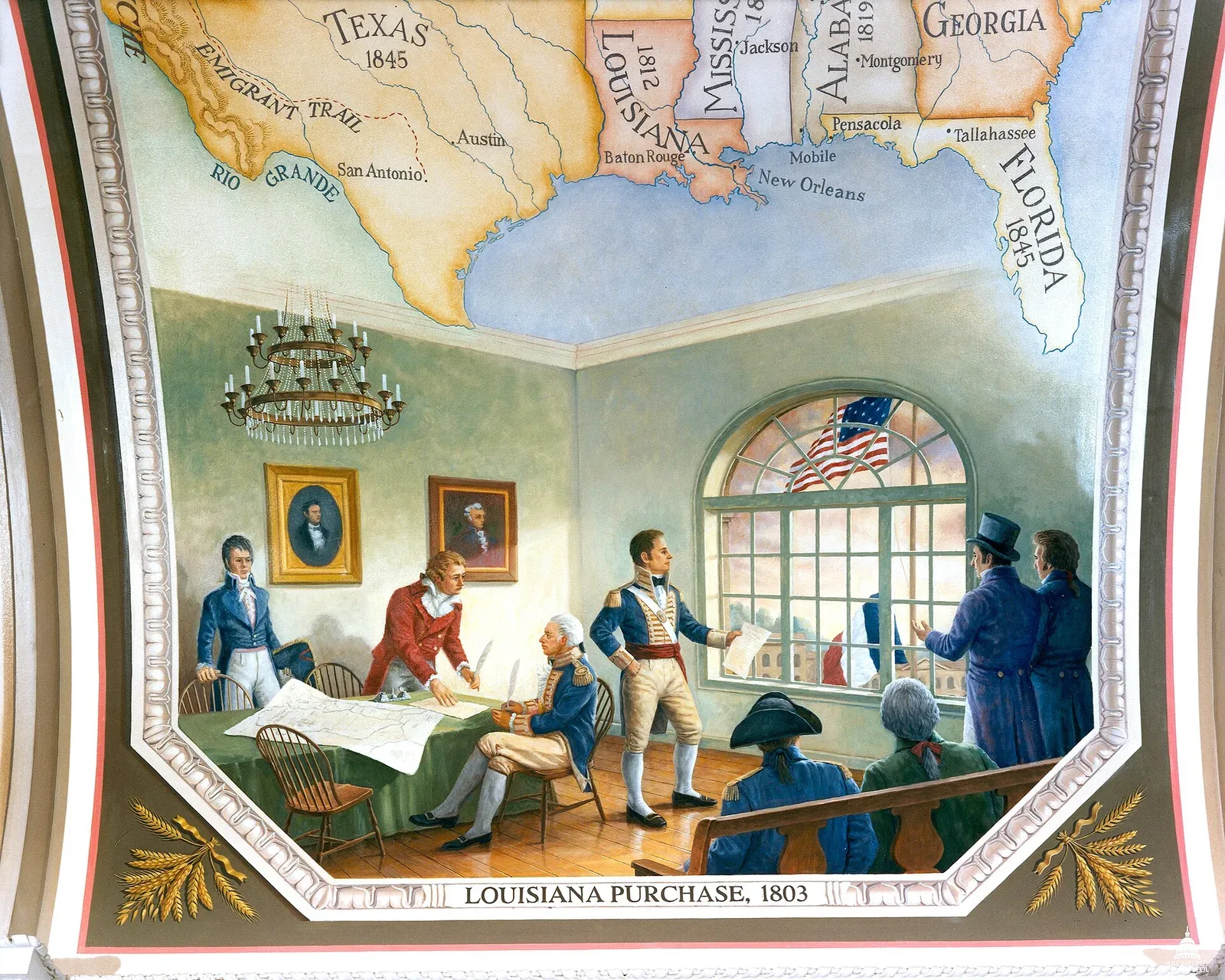
Louisiana has one of the most layered firearms histories in the United States -- and one of the most contradictory. It was among the first states to restrict concealed carry, passing that law in 1813, barely a year after joining the Union. It also produced some of the most celebrated frontier riflemen in American history, hosted the engagement that turned Andrew Jackson into a national hero, and sustained a Creole dueling culture that made personal arms not just a right but a social institution.
The state's gun laws have swung hard in both directions over two centuries. Early legislators in New Orleans were worried about knives and pistols in taverns. Twenty-first century legislators responded to Hurricane Katrina's firearm confiscations by enshrining strict preemption and storage rights into state law. In 2024, Louisiana joined the constitutional carry movement, allowing any legal gun owner to carry concealed without a permit. That arc -- from one of the nation's earliest gun restrictions to one of its most permissive modern regimes -- tells you a lot about how the state thinks about firearms.
The geography matters too. Consider the two distinct regional cultures:
- South Louisiana: urban, regulation-tolerant, French/Spanish colonial heritage
- North Louisiana: rural, Protestant, Scots-Irish, minimal regulation preference
Those two cultures have been arguing about this in the legislature for two hundred years, and they're still at it.
Colonial & Frontier Eraedit
French Colonial Period (1682-1762)
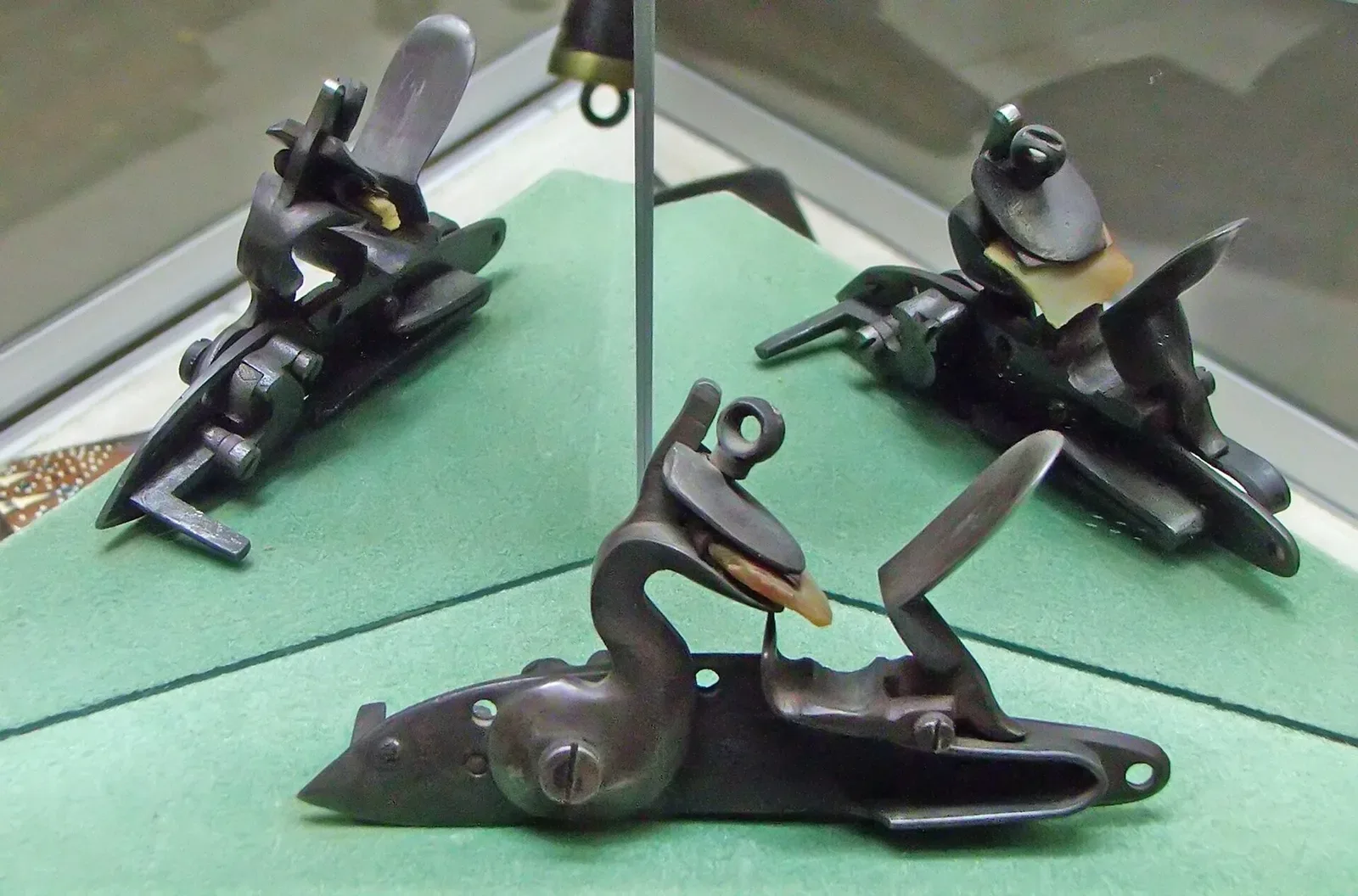
France claimed Louisiana in 1682 when René-Robert Cavelier, Sieur de La Salle descended the Mississippi and planted a cross at its mouth. The firearms that came with French colonization were largely flintlock muskets -- the standard military arm of the era -- along with trade fusils distributed to allied Native American nations as part of France's diplomatic and economic strategy in the lower Mississippi valley.
The Natchez people learned that lesson painfully in 1729 when they rose against Fort Rosalie near present-day Natchez, Mississippi, killing roughly 230 French colonists with a combination of their own arms and weapons acquired through trade. The French response was swift and brutal -- they enlisted Choctaw allies, counterattacked, and effectively destroyed the Natchez as a political entity by 1731.
| Period | Colonial Power | Primary Firearms | Key Events |
|---|---|---|---|
| 1682-1762 | France | Flintlock muskets, trade fusils | La Salle claims territory, Natchez uprising (1729) |
| 1762-1803 | Spain | Spanish military arms, militia weapons | Treaty of Fontainebleau, militia system established |
| 1803+ | United States | Kentucky/Tennessee long rifles | Louisiana Purchase, Factory System |
The episode underscored how completely firearms had become the currency of power in the lower Mississippi valley within a generation of sustained European contact.
Spanish Administration & American Acquisition
Spain acquired Louisiana through the Treaty of Fontainebleau in 1762, and Spanish colonial administration brought its own arms traditions. Spanish governors maintained a militia system, and New Orleans gunsmiths operated small shops supplying both the garrison and the civilian population. The arms trade along the Mississippi was brisk -- Kentucky and Tennessee long rifles moved downriver to New Orleans markets, where they were sold or traded into the interior. By the time of the Louisiana Purchase in 1803, New Orleans had a functioning commercial firearms economy that predated American control.
The Attakapas, Chitimacha, Houma, and other Louisiana tribes had been navigating the European arms trade since the 1600s, acquiring flintlocks through French, Spanish, and British networks. Access to firearms was a survival question -- tribes that armed themselves could defend territory and conduct trade; those that didn't found themselves at a severe disadvantage. After American acquisition, the federal government's Factory System -- government-operated trading posts that supplied Native nations with goods including arms -- extended into Louisiana territory, though the Factory System itself was abolished by Congress in 1822 under pressure from private traders including those associated with John Jacob Astor's fur interests.
19th Century: Statehood, Dueling & the Battle of New Orleansedit
Early Statehood & Concealed Carry Law
Louisiana became the 18th state on April 30, 1812. Within a year, its legislature had passed what the Duke Center for Firearms Law identifies as one of the earliest state-level concealed carry restrictions in American history. The Act of March 25, 1813 prohibited carrying concealed weapons -- dirks, daggers, knives, pistols, or any other deadly weapon hidden on the person -- with fines ranging from $20 to $50 for a first offense and up to $100 plus six months imprisonment for a second offense.
The law wasn't abstract policy. New Orleans in 1813 was a brawling port city of roughly 25,000 people -- French Creoles, Americans, free people of color, enslaved people, Spanish, British merchants, riverboat men, and every variety of frontier opportunist. The legislature was genuinely worried about people stabbing and shooting each other in taverns and on the street. The Kaintuck flatboatmen who floated goods down the Mississippi to New Orleans were notorious for hard drinking and harder fighting. The concealed weapon law was a crowd-control measure as much as anything else.
| Year | Law/Event | Significance |
|---|---|---|
| 1812 | Louisiana statehood | April 30, becomes 18th state |
| 1813 | Concealed carry prohibition | One of earliest state-level restrictions |
| 1815 | Battle of New Orleans | Decisive rifle victory, Jackson becomes hero |
| 1896 | Extended weapons ban | Prohibited carry in public venues |
Creole Dueling Culture
None of that stopped New Orleans from developing one of the most elaborate dueling cultures in North America. The Dueling Oaks in City Park -- specifically the area beneath the ancient live oaks near the present-day New Orleans Museum of Art -- was a recognized site for affairs of honor from roughly the 1790s through the Civil War era. Dueling in Louisiana followed the Code Duello, and New Orleans had professional duelists, most famously the Creole fencing masters of the Passage de la Bourse (Exchange Alley), who taught both sword and pistol technique to the city's young men of quality. Pepe Llulla, a Spanish-born fencing master who ran a salle d'armes in the French Quarter from the 1840s onward, was said to have participated in more than fifty duels and killed several opponents. He's buried in St. Louis Cemetery No. 1.
Battle of New Orleans
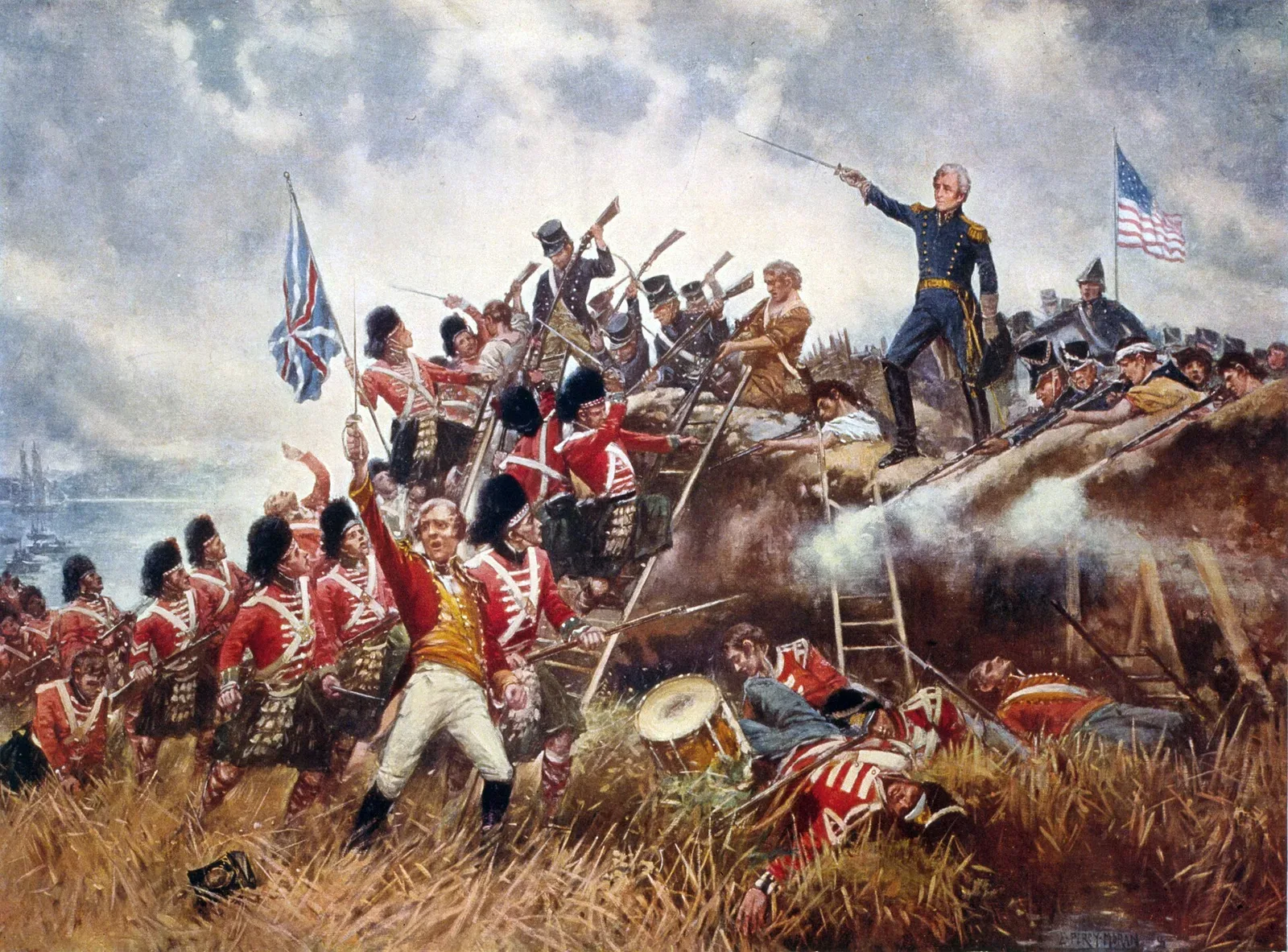
The Battle of New Orleans, fought January 8, 1815, is the defining military event in Louisiana firearms history -- and it was largely won by rifle fire. Andrew Jackson's defensive line at Chalmette was manned by a mix of regular U.S. Army troops, Louisiana militia, Jean Lafitte's Baratarian privateers (who supplied artillery and powder), free men of color organized into two battalions of the Louisiana militia, and frontier riflemen from Kentucky and Tennessee. When Sir Edward Pakenham's British forces advanced across the open field, they were met with disciplined rifle fire that inflicted catastrophic casualties -- roughly 2,000 British killed, wounded, or captured against fewer than 100 American casualties on the main line.
The battle made Jackson a national hero and cemented the Kentucky/Tennessee long rifle as an American symbol. It also gave Louisiana a martial identity that the state has traded on ever since. Chalmette Battlefield is now a unit of Jean Lafitte National Historical Park and Preserve.
Major 19th century firearms law and cultural milestones in Louisiana
Antebellum Regulations & Civil War
The antebellum period brought a wave of additional arms regulation, most of it focused on the enslaved population. Louisiana's Black Codes -- among the most restrictive in the South -- prohibited enslaved people from possessing firearms under virtually any circumstances. Free people of color occupied a complicated legal space: in New Orleans, prosperous free Black Creoles sometimes owned arms legally, but the legal protections were thin and inconsistently enforced. The 1811 German Coast Uprising -- the largest slave revolt in American history by participant count, involving as many as 500 people under the leadership of Charles Deslondes -- had been suppressed by militia and U.S. Army troops, and afterward Louisiana legislators tightened restrictions on both the movement and armament of enslaved people.
The 1896 Louisiana legislature revisited public carry law, passing an act prohibiting the carrying of dangerous weapons "concealed or otherwise" into public halls, taverns, picnic grounds, and places for shows -- extending the original 1813 logic into an era of higher-capacity revolvers and greater urban density.
Louisiana raised troops for the Mexican-American War (1846-1848), including the Louisiana Volunteers who served in Zachary Taylor's campaign. Taylor himself, though born in Virginia, had deep Louisiana ties -- he owned Fashion Plantation in St. Mary Parish and is buried in Louisville, Kentucky, but his Louisiana connections made him a local figure of some pride. The Mexican War veterans returned home with practical experience of military firearms that fed into the volunteer culture that would explode a decade later.
During the Civil War, Louisiana's position as a Confederate state with early Union occupation created a unique situation. New Orleans fell to Admiral David Farragut's fleet on April 25, 1862 -- the largest city in the Confederacy captured without a prolonged land siege. The Confederate Arsenal at Baton Rouge had already been seized by state forces in January 1861 before secession was formalized. Louisiana Confederate units -- including the legendary Louisiana Tigers, the zouave-uniformed infantry brigades known for ferocity throughout the Eastern Theater -- were equipped with a mix of Confederate-manufactured arms, captured Union weapons, and imported British Enfield rifle-muskets brought through the blockade. The P.1853 Enfield was the most common foreign arm in Confederate service, and Louisiana units received a significant share through New Orleans before the port fell.
20th Century: Wars, Industry & Regulationedit
World War Contributions
Louisiana contributed heavily to both World Wars without becoming a significant arms manufacturing center in the way that Connecticut or Ohio did. The state's industrial base -- petrochemicals, sugar, timber -- didn't naturally pivot to weapons production. What Louisiana did contribute was manpower and, critically during World War II, shipbuilding.
Higgins Industries & Military Manufacturing
Higgins Industries, founded by Andrew Higgins in New Orleans, built the LCVP (Landing Craft, Vehicle, Personnel) -- the flat-bottomed shallow-draft boats that put Allied troops on the beaches of North Africa, Sicily, Normandy, and the Pacific islands. Eisenhower called Higgins "the man who won the war" in a 1964 interview, attributing Allied amphibious capability to the LCVP design.
Dwight Eisenhower called Higgins "the man who won the war" in a 1964 interview, attributing Allied amphibious capability to the LCVP design.
Higgins built over 20,000 of them at plants along the New Orleans waterfront. While the LCVP wasn't a firearm, it's the most consequential piece of military hardware Louisiana ever produced, and it deserves its place in any serious account of the state's military-industrial history. The National WWII Museum in New Orleans -- originally opened as the National D-Day Museum in 2000 -- was built there specifically because of Higgins's New Orleans connection.
On the conventional firearms side, Louisiana did not host a major federal arsenal or armory. Fort Polk (now Fort Johnson), established in 1941 near Leesville in Vernon Parish, became a major Army training installation and saw millions of soldiers pass through its ranges over the decades. Barksdale Air Force Base near Bossier City has been a strategic bomber base since 1933, home to the 2nd Bomb Wing and later elements of Air Force Global Strike Command. Neither installation manufactured arms, but both contributed to a military culture that shaped north Louisiana particularly.
Federal Regulation Era
The postwar regulatory picture in Louisiana followed national trends -- the Federal Firearms Act of 1938 and later the Gun Control Act of 1968 set the federal floor, and Louisiana added state-level layers on top. The Law Library of Louisiana's legislative archive documents a steady stream of arms regulation acts throughout the 20th century: the 1990 Act No. 328 extended the felon-in-possession prohibition to cover anyone convicted of manufacturing or possessing an incendiary device or bomb. The 1990 Act No. 620 mandated automatic school expulsion for students found with firearms -- predating the federal Gun-Free Schools Act of 1994 by four years.
Through the 1970s and 1980s, New Orleans developed one of the highest urban homicide rates in the country, which drove periodic legislative pushes for stricter city-level gun ordinances. The tension between New Orleans city government -- which wanted to regulate firearms more aggressively -- and the rural-dominated legislature -- which did not -- became a recurring structural feature of Louisiana politics that persists today.
The 1974 Louisiana Constitution included a right to keep and bear arms provision in Article I, Section 11: "The right of each citizen to keep and bear arms shall not be abridged, but this provision shall not prevent the passage of laws to prohibit the carrying of weapons concealed on the person." The carve-out for concealed carry regulation -- echoing the 1813 law -- gave the legislature explicit constitutional cover for the permit system it had built.
Modern Era (2000–Present)edit
Hurricane Katrina Impact
Hurricane Katrina in August 2005 is the single most consequential event in modern Louisiana firearms law. In the chaos following the storm, New Orleans Police Superintendent Eddie Compass ordered police and National Guard personnel to confiscate legally owned firearms from civilians -- including from residents sheltering in their homes in areas that had not flooded. Footage of officers wrestling a revolver away from a small elderly white woman in the Algiers neighborhood circulated nationally and became a rallying point for gun rights advocates.
The NRA v. Nagin lawsuit followed quickly. The NRA filed suit and obtained a temporary restraining order from the federal district court halting the confiscations within days. The legal and political fallout was significant.
Post-Katrina evolution of Louisiana firearms law showing the cascade from emergency confiscations to constitutional carry
In 2006, Congress passed the Disaster Recovery Personal Protection Act as an amendment to the Department of Homeland Security Appropriations Act, prohibiting the confiscation of legally owned firearms during a declared emergency. Louisiana's own legislature moved quickly as well, enacting state law prohibiting firearm confiscation during states of emergency.
Constitutional Amendment & Strict Scrutiny
The 2012 constitutional amendment was the next major shift. Louisiana voters approved Amendment 2 on November 6, 2012, by a margin of roughly 74 to 26 percent -- changing the Article I, Section 11 language to read: "The right of each citizen to keep and bear arms is fundamental and shall not be infringed. Any restriction on this right shall be subject to strict scrutiny."
The right of each citizen to keep and bear arms is fundamental and shall not be infringed. Any restriction on this right shall be subject to strict scrutiny.
The "strict scrutiny" standard was legally significant -- it meant Louisiana courts would apply the most demanding constitutional test to any firearms regulation, requiring the state to show a compelling government interest and narrowly tailored means. Louisiana became the first state to apply strict scrutiny explicitly to right-to-bear-arms claims in its constitution.
The Louisiana Supreme Court applied that standard almost immediately in State v. Draughter (2013), upholding a prohibition on convicted felons possessing firearms under strict scrutiny -- but the court's analysis established that Louisiana would evaluate firearms laws more rigorously than most states.
Constitutional Carry Movement
On the carry law front, Louisiana operated a shall-issue concealed handgun permit system under R.S. 40:1379.3 for decades -- requiring a $125 fee, training course, and background check. The permit was valid for five years, and the system generated significant administrative revenue for the Department of Public Safety. By the early 2020s, Louisiana was in the minority of southern states still requiring a permit, as Texas (2021), Mississippi (2016), and others had moved to constitutional carry.
In 2024, the Louisiana legislature passed Act 504, signed by Governor Jeff Landry, establishing permitless concealed carry for any person 18 or older who is legally allowed to possess a firearm under state and federal law. The law took effect July 4, 2024 -- the date was not accidental. Louisiana joined a group of over two dozen states that no longer require a permit for concealed carry. The existing concealed handgun permit system remains in place for those who want it -- primarily for reciprocity purposes when traveling to states that recognize Louisiana permits.
The debate over New Orleans-specific gun ordinances has continued into the 2020s. The city government has periodically attempted to pass local firearms restrictions only to be blocked by state preemption law -- R.S. 40:1796 prohibits local governments from enacting ordinances more restrictive than state law on firearms possession, carrying, or transfer. New Orleans has filed legal challenges to the preemption statute and lost. The structural dynamic -- urban South Louisiana wanting more regulation, rural North Louisiana wanting less -- shows no sign of resolving.
Mardi Gras and the festival culture create recurring debates about firearms in crowded public spaces. Louisiana law prohibits carrying firearms, concealed or otherwise, into parades and certain festival gatherings, which produces annual enforcement conversations given the scale of French Quarter crowds.
Notable Figures & Manufacturersedit
Colonial & 19th Century Figures
Jean Lafitte (c. 1780–c. 1823) is the most colorful arms figure in Louisiana history. His Baratarian smuggling operation supplied New Orleans with goods that bypassed American customs, including arms and powder. His contribution of artillery, gunners, and powder to Jackson's defense at Chalmette was militarily significant -- the Baratarian privateers manned several of the artillery batteries that decimated the British advance. Lafitte negotiated a pardon from the U.S. government in exchange for his Chalmette service, though he eventually returned to privateering operations in the Gulf.
Andrew Jackson himself, though a Tennessean, is inseparable from Louisiana firearms history. His management of the mixed forces at Chalmette -- regular infantry, militia, Baratarian privateers, free Black battalions, Cherokee allies, and Tennessee/Kentucky riflemen -- remains a study in combined arms.
Pepe Llulla (José "Pepe" Llulla, 1820–1888), the Spanish-born fencing master and duelist, operated his salle d'armes in New Orleans for decades. He was not a manufacturer but a practitioner -- the foremost example of New Orleans's professional dueling culture.
| Figure | Era | Role | Significance |
|---|---|---|---|
| Jean Lafitte | 1780s-1823 | Privateer/smuggler | Supplied artillery at Battle of New Orleans |
| Andrew Jackson | 1815 | Military commander | Led mixed forces at Chalmette |
| Pepe Llulla | 1820-1888 | Fencing master/duelist | Professional dueling culture |
| Andrew Higgins | 1886-1952 | Naval manufacturer | Built LCVP landing craft |
| Jeff Landry | 2024-present | Governor | Signed constitutional carry law |
Manufacturing & Modern Political Leaders
Andrew Higgins (1886–1952), while not a firearms manufacturer, built the amphibious craft that defined Allied military logistics in World War II. His Higgins Industries employed over 30,000 workers in New Orleans at peak production.
On the manufacturing side, Louisiana never developed a large-scale firearms industry. New Orleans gunsmith shops -- concentrated in the French Quarter and along Canal Street in the 19th century -- were artisanal operations serving the local market. Names like Peter Gonon and J. Rippey appear in period advertisements, but none grew into manufacturers of regional or national significance. The state's economy simply ran on different rails: cotton, sugar, timber, and later petroleum.
Shreveport and Baton Rouge have hosted gun shows and dealers of regional significance, but no Louisiana-based firearms manufacturer has achieved national distribution. The major names in Louisiana's modern retail firearms landscape are dealers and distributors, not makers.
Governor Jeff Landry deserves mention in the modern regulatory context -- his signing of the 2024 constitutional carry law represented the culmination of a legislative push that had failed in prior sessions under Governor John Bel Edwards, who vetoed earlier permitless carry bills.
Current Legal Landscapeedit
Constitutional Framework
Louisiana's current firearms legal framework sits among the more permissive in the country, though with specific carve-outs that reflect the state's urban-rural tension.
Constitutional Provision: Article I, Section 11 of the Louisiana Constitution (as amended in 2012) reads: "The right of each citizen to keep and bear arms is fundamental and shall not be infringed. Any restriction on this right shall be subject to strict scrutiny." This is the strongest state constitutional protection for firearms rights in the country in terms of stated judicial standard.
Carry Laws & Prohibited Locations
Carry Laws: As of July 4, 2024, Louisiana is a constitutional carry state. Any person 18 or older who can legally possess a firearm may carry it concealed without a permit. Open carry has always been legal in Louisiana without a permit. The existing concealed handgun permit (CHP) under R.S. 40:1379.3 remains available for $125 (5-year) or $100 (4-year) and is recognized by a significant number of other states.
Prohibited Locations: Even under constitutional carry, Louisiana law prohibits firearms in:
| Location Type | Firearms Prohibited | Notes |
|---|---|---|
| Law enforcement facilities | Yes | Buildings, jails, prisons |
| Courthouses | Yes | All courtrooms and buildings |
| Schools | Yes | With specific statutory exceptions |
| Bars (65%+ alcohol revenue) | Yes | Revenue threshold determines status |
| State Capitol | Yes | Government building prohibition |
| Churches | Varies | Unless church affirmatively permits |
| Parades/festivals | Yes | Certain designated gatherings |
| Polling places | Yes | During voting periods |
Purchase and Registration: Louisiana requires no permit to purchase firearms, no firearm registration, and no licensing of owners. Private sales are legal. There is no state-mandated waiting period.
State Preemption: R.S. 40:1796 provides strong preemption -- local governments cannot enact firearms ordinances more restrictive than state law. New Orleans has challenged this and lost. The preemption statute is one of the more litigated provisions in Louisiana firearms law.
Emergency Confiscation Prohibition: Post-Katrina legislation explicitly prohibits the confiscation or seizure of legally owned firearms during a declared state of emergency.
Felon in Possession: Louisiana R.S. 14:95.1 prohibits convicted felons from possessing firearms or carrying concealed weapons, mirroring the federal prohibition. As noted, Louisiana courts apply strict scrutiny to evaluate firearms restrictions, though the felon prohibition has been upheld.
Castle Doctrine and Stand Your Ground: Louisiana has enacted both. The Castle Doctrine -- presumption of reasonable fear when a person forcibly enters your home -- is codified in Louisiana law. Stand Your Ground applies outside the home as well, with no duty to retreat before using force in a place where you have a legal right to be.
Louisiana carry law decision tree under constitutional carry system
Reciprocity & Interstate Recognition
Reciprocity: Louisiana maintains true reciprocity -- it recognizes permits from any state that recognizes Louisiana's permit. With constitutional carry now in effect, the practical significance of reciprocity has shifted: Louisianans who want to carry in states that still require permits still need the Louisiana CHP to do so legally in those states.
The BGC Takeedit
Louisiana is a genuinely interesting state for anyone trying to understand American gun culture, because it contains multitudes. New Orleans is not Shreveport. Cajun duck hunters in the Atchafalaya Basin are not the same as suburban Baton Rouge CCW holders, who are not the same as the old-money Creole families who kept dueling pistols in mahogany cases in the 1840s. The state has been having a complicated conversation about firearms since 1813, and the conversation hasn't simplified.
What you can say with confidence is that gun ownership in Louisiana is high, the culture is deeply embedded -- hunting, fishing, and shooting are woven into the fabric of life across most of the state -- and the political direction since Katrina has been strongly toward expanded rights and reduced regulation. The 2012 constitutional amendment passing 74-26 tells you something real about where Louisiana voters stand when they're asked directly.
The Katrina confiscations left a mark that hasn't healed. Talk to Louisiana gun owners about it even now, twenty years later, and the anger is still there.
Watching police and National Guard personnel take firearms from people sheltering in their own homes during the worst natural disaster in the state's history radicalized a significant portion of the population on this issue in a way that no NRA mailer could have managed.
The legislature's response -- strict preemption, emergency confiscation prohibition, the 2012 amendment, constitutional carry -- has a direct through-line to those events.
The tension between New Orleans and the rest of the state is real and probably permanent. New Orleans is a majority-Black city with a severe gun violence problem; its political leadership wants regulatory tools the state won't give them. Rural and suburban Louisiana sees the same violence statistics and concludes the problem is enforcement of existing law, not new restrictions. Neither side is changing the other's mind, and the preemption statute means the state wins the structural argument every time.
For gun owners visiting or relocating to Louisiana: the legal environment is permissive and the culture is welcoming. The ranges are busy, the gun stores are well-stocked, the deer camps are full in November, and the duck blinds are packed from Thanksgiving through January. If you're coming from a restrictive state, you'll notice the difference immediately -- there's no paperwork to buy a rifle, no waiting period, and since mid-2024, you can carry concealed without going through a permit process.
What Louisiana is not is a state where gun ownership is politically contested at the grassroots level outside of New Orleans. The debate is legislative and legal; it's not a culture war at the kitchen table in most of the state. Guns are tools, they're heritage, and for a lot of people they're part of how you eat. That's been true here for two hundred years, and no amount of legislative maneuvering has changed it.
Referencesedit
-
Duke Center for Firearms Law. "LA. STAT., ch. 37, no. 59, §1 (E. Johns & Co. 1842) (Law Passed 1813)." Firearms Law Repository. Duke University School of Law. Retrieved February 2026.
-
Law Library of Louisiana. "Arms Regulation in 20th Century Louisiana." LibGuides. Louisiana Supreme Court Law Library, 2026. https://lasc.libguides.com/arms-regulation-20th
-
Law Library of Louisiana. "Arms Regulation in 19th Century Louisiana: 1896." LibGuides. Louisiana Supreme Court Law Library. https://lasc.libguides.com/c.php?g=1248779&p=9146713
-
Louisiana Legislature. R.S. 40:1379.3 -- Statewide permits for concealed handguns. https://www.legis.la.gov/legis/law.aspx?d=97451
-
NRA-ILA. "Louisiana State Gun Laws and Regulations Explained." Updated September 5, 2024. https://www.nraila.org/gun-laws/state-gun-laws/louisiana/
-
Giffords Law Center. "State Right To Bear Arms Laws in Louisiana." https://giffords.org/lawcenter/state-laws/state-right-to-bear-arms-in-louisiana/
-
Everytown Research & Policy. "Gun Laws in Louisiana." https://everytownresearch.org/rankings/state/louisiana/
-
Louisiana State Museum. "Armament & Protection -- Science & Technology Collection." https://louisianastatemuseum.org/armament-protection-science-technology-collection
-
Bullard, Henry A. and Thomas Curry, eds. A New Digest of the Statute Laws of the State of Louisiana, from the Change of Government to the Year 1841, Inclusive. New Orleans: E. Johns & Co., 1842.
-
Remini, Robert V. The Battle of New Orleans: Andrew Jackson and America's First Military Victory. New York: Viking, 1999.
-
Kmen, Henry A. Music in New Orleans: The Formative Years, 1791–1841. Baton Rouge: Louisiana State University Press, 1966. (Background on antebellum New Orleans culture.)
-
State v. Draughter, 2013-0323 (La. 12/10/13); 130 So.3d 855.
-
Louisiana Legislature. Act 504 (2024). Constitutional carry / permitless concealed carry legislation.
-
National WWII Museum. "Andrew Higgins and the Boats That Won World War II." https://www.nationalww2museum.org
-
US Concealed Carry Association. "Louisiana CCW Laws and Reciprocity." https://www.usconcealedcarry.com/resources/ccw_reciprocity_map/la-gun-laws/
Last Updated: February 24, 2026
- Quail Creek Plantation(Okeechobee, FL)
- 2aHawaii(Honolulu, HI)
- Boston Firearms(Everett, MA)
- Safeshoot(Kingston, NY)
Loading comments...