Organization Info
AAFTA
American Airgun Field Target Association

| Overview | |
|---|---|
Founded | 1987 |
Headquarters | Unknown, USA |
Disciplines | air guns |
Membership | |
Cost | $25/year per affiliated club (no direct individual membership) |
| Affiliated Clubs | 45+ clubs across 21 states |
| International | World Field Target Federation (WFTF) |
Links | |
| www.aafta.org | |
American Airgun Field Target Association (AAFTA)
Reference article
From The Boise Gun Club Handbook
The American Airgun Field Target Association (AAFTA) is the national governing body for field target (FT) shooting in the United States. Founded in 1987, it operates as an association of member clubs rather than individual shooters, sanctioning competitions, maintaining rulebooks, and connecting the US field target community to the international governing body. As of the mid-2020s, AAFTA consists of over 45 member clubs spread across 21 states.
History & Foundingedit

UK Origins
Field target originated in the United Kingdom on September 7, 1980, when the National Air Rifle and Pistol Association held an informal event on land behind the Red Lion pub in Magham Down, Sussex. The format spread quickly through British airgun clubs during the early 1980s, picking up the knockdown steel target format that defines the sport today.
Timeline of field target sport development from UK origins to international competition
American Adoption
By the mid-1980s, a handful of American clubs had adopted the sport. As participation grew, those clubs needed a national structure to standardize rules, sanction competitions, and coordinate with the UK. AAFTA was founded in 1987 to fill that role. The timing wasn't arbitrary -- 1987 was also roughly when pre-charged pneumatic (PCP) rifles and high-magnification scopes started making serious inroads into FT competition, which changed how the sport was played on both sides of the Atlantic.
US rules developed somewhat independently from the British version and retain some differences to this day, though both fall under the umbrella of the World Field Target Federation (WFTF) for international competition purposes. The first formal Field Target World Championship took place in the early 1990s, with the US and UK as the two founding participants.
Mission & Purposeedit
AAFTA's stated purpose is straightforward: promote field target shooting clubs across the United States. It functions as the connective tissue between local clubs -- providing a rulebook they can all operate from, a calendar of sanctioned events, and a pathway to national and international competition.
The association doesn't own ranges or employ professional staff in the way a large national organization might. It's a volunteer-driven structure where the clubs are the primary unit. If you want to shoot AAFTA-sanctioned events, you join a member club -- AAFTA itself doesn't sell individual memberships in the traditional sense.
Beyond the competitive side, AAFTA maintains educational resources, a club-finder tool, match result databases, and a handbook covering everything from setting up a course to submitting match results. The organization also manages a target inventory program, which helps clubs access the steel knockdown targets the sport requires.
Programs & Competitionsedit
Competition Format
Field target shooting sequence showing the technical decision process
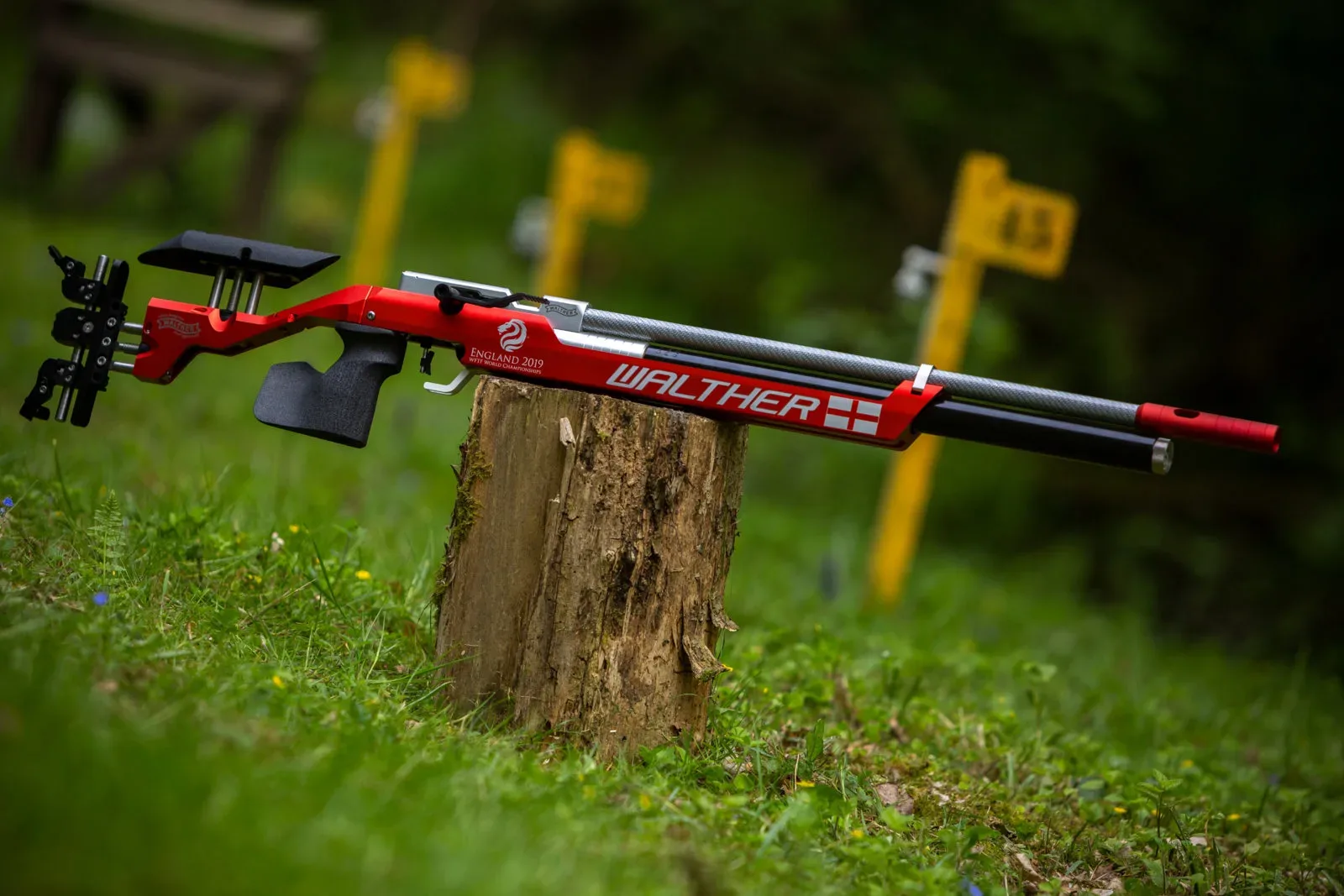
Field target as a discipline is deceptively technical. Competitors shoot at self-resetting steel targets placed between roughly 10 and 55 yards, with kill zones ranging from 15mm to 40mm in diameter. The target falls when the pellet hits the kill zone cleanly -- miss the zone and it stays up. Scoring is binary: it falls or it doesn't.
| Competition Element | Specification |
|---|---|
| Target Distance | 10-55 yards |
| Kill Zone Size | 15mm-40mm diameter |
| Match Duration | 3-5 hours |
| Shot Count | 40-60 shots |
| Scoring | Binary (falls or stands) |
| Range Finding | Scope parallax only |
The core challenge is range estimation. There are no laser rangefinders in sanctioned competition.
There are no laser rangefinders in sanctioned competition. Shooters use the parallax adjustment on their scope to focus precisely on the target and read the distance off a calibrated wheel -- a technique that takes real practice to do accurately and quickly. Wind reading compounds everything, since airgun pellets are light and slow enough that even a modest crosswind will push them off a small kill zone at distance.
AAFTA sanctions three primary shooting positions:
- Seated position (standard)
- Standing position
- Kneeling position
Matches typically run 40 to 60 shots over a 3-to-5-hour window across a wooded or natural terrain course.
Equipment Classes
| Equipment Class | Description | Typical Use |
|---|---|---|
| Piston | Spring-piston and gas-ram airguns | Entry-level competition |
| PCP | Pre-Charged Pneumatic | Dominant at competitive level |
| Hunter | Less equipment-intensive class | Approachable for beginners |
| Open/Freestyle | Broader equipment configurations | Advanced competition |
Grand Prix Series
The Grand Prix series is AAFTA's premier competitive circuit -- a sequence of sanctioned matches held by member clubs throughout the season, with results aggregated for national standings. Clubs submit match dates in advance, run their events to AAFTA rules, and report results back to the national organization. This structure means the quality and format of individual matches can vary by club, but the rules framework is consistent.
AAFTA also coordinates US participation in WFTF World Championships, which rotate internationally and draw competitors from over 40 member nations.
Membership & Benefitsedit
Club-Based Structure
AAFTA doesn't offer direct individual memberships in the conventional sense -- the association is built around club membership. Clubs affiliate with AAFTA for $25 per year in dues, and only affiliated clubs hold voting rights within the organization.
Individual shooters participate through their local member club. What that actually means in practice: if you want to shoot AAFTA-sanctioned matches and be counted in national standings, you need to be a member of an affiliated club. Many clubs charge their own separate dues on top of that, which varies widely by club.
Benefits Overview
| Club Benefits | Individual Benefits |
|---|---|
| Sanctioned match infrastructure | Access through club membership |
| Grand Prix circuit access | National standings eligibility |
| Official rulebook & handbook | Competition pathway |
| AAFTA website club listing | Educational resources |
| Match result tracking | WFTF international events |
| Target inventory program | Course planning tools |
| WFTF coordination | Club finder access |
For individual shooters who aren't near a club, AAFTA's website includes resources on starting a club, which is the intended path rather than shooting independently.
Notable Achievementsedit
AAFTA's most concrete achievement is sustaining an organized national competition structure for a niche discipline over nearly four decades.
AAFTA's most concrete achievement is sustaining an organized national competition structure for a niche discipline over nearly four decades.
Field target occupies a narrow slice of the shooting sports world -- it requires dedicated equipment, real skill development, and a tolerance for slow-paced, technically demanding competition. That AAFTA has maintained 45-plus active clubs across 21 states is a reasonable indicator that the organizational model works for the community it serves.
On the international stage, US competitors have participated in WFTF World Championships since the inaugural event in the early 1990s. AAFTA serves as the official US member association within WFTF, giving American competitors a formal pathway to world-level competition.
The association has also managed the transition through major equipment shifts -- from spring-piston dominance to the PCP era -- by maintaining equipment classes that keep both technologies competitive rather than letting one obsolete the other.
Structure & Governanceedit
AAFTA is organized as an association of member clubs. Governance runs through the affiliated clubs, which hold voting rights on organizational matters. The day-to-day operation is handled by elected officers and volunteers rather than paid staff.
| Governance Level | Responsibility |
|---|---|
| AAFTA National | Rules framework, WFTF liaison |
| Affiliated Clubs | Voting rights, local operations |
| Elected Officers | Day-to-day administration |
| Volunteers | Match management, resources |
| Annual Dues | $25 per club |
The AAFTA Clubs and Shooters Handbook is the primary governing document, covering competition rules, equipment specifications, match conduct, and club responsibilities. Affiliated clubs are responsible for their own internal affairs -- safety, club organization, member disputes -- while AAFTA sets the competitive framework they operate within.
AAFTA organizational structure showing the club-based membership model
This decentralized structure keeps overhead low, which is why the $25 annual club dues figure is viable. It also means AAFTA's reach depends heavily on active volunteer clubs. A state without an affiliated club effectively has no AAFTA presence.
Relationship to Other Organizationsedit
AAFTA is the US member association of the World Field Target Federation (WFTF), the international governing body for the sport. WFTF currently counts over 40 national member associations and runs the biennial World Championships. AAFTA's affiliation with WFTF is what gives US competitors standing in international competition.
Within the broader US airgun community, AAFTA is discipline-specific -- it covers field target and nothing else. Organizations like the Airgun Shooting Association and various state-level airgun clubs may overlap in membership with AAFTA clubs but operate independently.
AAFTA maintains relationships with airgun industry sponsors -- the website lists Gold, Silver, and Bronze tier sponsors -- which provides some funding for organizational activities without dues increases.
There's no formal relationship with the National Rifle Association or other mainstream shooting organizations, though individual club members often have overlapping memberships. Field target sits at an interesting crossroads: it uses airguns exclusively, which puts it outside the regulatory scope of most firearms-focused organizations, but the competitive culture and community feel align closely with precision rifle disciplines.
The BGC Takeedit
Worth Joining?
If there's a club near you, yes, without much hesitation. Field target is genuinely one of the more technically demanding shooting sports you can participate in, and it's almost entirely skill-dependent once you have competent equipment.
Field target is genuinely one of the more technically demanding shooting sports you can participate in, and it's almost entirely skill-dependent once you have competent equipment.
The entry cost compared to centerfire precision shooting is dramatically lower, and you can practice in a backyard with modest space. The catch is the club-dependent structure. AAFTA itself isn't something you join directly -- it's the framework your local club operates inside.
If there's no club within reasonable driving distance, you're either starting one or you're shooting outside the sanctioned structure entirely. The AAFTA website has a club finder and resources for starting a club, but that's a significant ask if you just want to compete.
Who benefits most from AAFTA membership is the serious competitor who wants access to the Grand Prix circuit and a pathway to national standings and WFTF competition. Casual shooters who just want to ring steel on weekends don't need the sanction structure -- they can train at home and show up to open matches at member clubs without formal affiliation.
Geographic Limitations
The honest gap in AAFTA's model is geographic coverage. With clubs in only 21 states, large parts of the country have no realistic access to sanctioned competition. The organization's volunteer-dependent structure makes expanding coverage slow. That's not a criticism of the people running it -- it's the natural limitation of a small, self-funded discipline-specific organization.
Bottom Line
For the airgunner who takes the sport seriously and has a club within reach, AAFTA's infrastructure -- the rulebook, the results tracking, the Grand Prix circuit, the WFTF connection -- is worth more than the $25 club dues suggest. For everyone else, the website is still a useful resource for understanding the sport and finding a path in.
Referencesedit
- AAFTA Official Website: https://www.aafta.org
- AAFTA About Page: https://www.aafta.org/about-aafta.html
- AAFTA Clubs and Shooters Handbook (PDF): https://mexicoarmado.com/index.php?attachments/aafta_handbook-20-5-pdf.200901/
- World Field Target Federation -- History: https://www.world-field-target-federation.org/history
- Wikipedia -- Field Target: https://en.wikipedia.org/wiki/Field_target
- Airgun Depot -- Field Target Competition Guide: https://www.airgundepot.com/field-target.html
- Airgun Warriors Forum -- AAFTA Membership Discussion: https://web.archive.org/web/20250319132111/https://airgunwarriors.com/community/field-target/aafta-membership/
- Airgun Nation -- AAFTA Official Rules Thread: https://www.airgunnation.com/threads/aafta-official-rules.561478/
Last Updated: February 24, 2026
- Quail Creek Plantation(Okeechobee, FL)
- 2aHawaii(Honolulu, HI)
- Boston Firearms(Everett, MA)
- Safeshoot(Kingston, NY)
Loading comments...