Organization Info
ICFRA
International Confederation of Fullbore Rifle Associations

| Overview | |
|---|---|
Founded | 2003 |
Headquarters | United Kingdom |
Disciplines | Target Rifle (TR / Palma), F Class |
Membership | |
Cost | Not open to individuals — national associations only. Full: £250/yr, Affiliate: £130/yr, Observer: £60/yr |
Links | |
| www.icfra.com | |
International Confederation of Fullbore Rifle Associations (ICFRA)
Reference article
From The Boise Gun Club Handbook
The International Confederation of Fullbore Rifle Associations (ICFRA) is the international governing body for fullbore rifle shooting — defined as centerfire rifle target shooting at distances of 200 yards or greater, using calibers from 5.56mm to 8mm, excluding the 300m rifle classes that fall under ISSF jurisdiction. It oversees two primary disciplines: Target Rifle (TR), known in the United States as Palma rifle, and F-Class. The organization is headquartered in the United Kingdom and operates through its constituent national rifle associations rather than individual membership.
ICFRA manages the schedule of World Championships and major international matches for both disciplines, and works to standardize competition rules across member nations. Its website is icfra.com.
History & Foundingedit
The Palma Origins (1876-1940s)
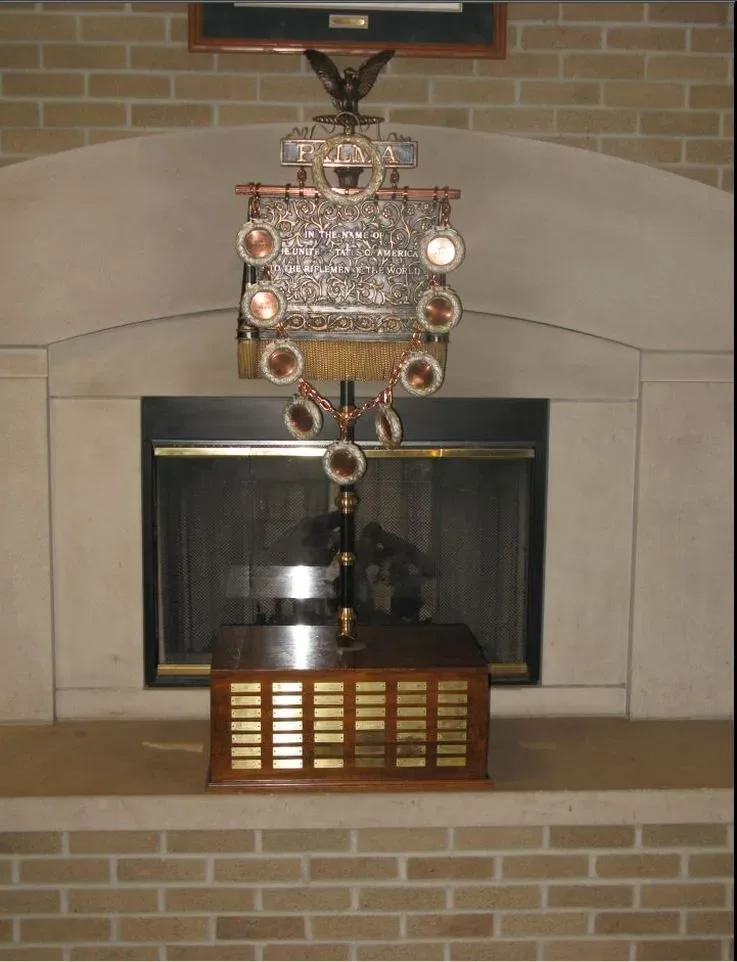
The roots of organized international fullbore competition go back to 1876, when the first Palma Match was contested by teams from the United States, Australia, Canada, Scotland, and Ireland — shot with muzzle-loading rifles at distances out to 1,000 yards. The Palma competition is considered the world's second-oldest international team rifle match.
The matches ran through the late 1920s, the trophy was eventually lost in Washington D.C. around the start of World War II, and the event was revived in its modern form in Canada in 1966.
Evolution from informal Palma Council to formal international confederation
Modern Revival and Formalization
For decades, those matches operated under the loose authority of the Palma Council. The push toward a formal international body started at the 1999 Palma and Individual Long Range World Championship in South Africa, where representatives from 14 countries formed a steering committee to build something more permanent.
ICFRA was formally founded in July 2003, absorbing the Palma Council's functions and giving the 2003 Palma Match its first official status as a World Team Championship. Management of Palma and TR events was vested in ICFRA's World Championship Committee, while F-Class events fall under its F-Class Committee.
F-Class itself predates ICFRA as a formal body. The discipline was created in Canada by George "Farky" Farquharson — the F stands for his name — who is enshrined in the Dominion of Canada Rifle Association (DCRA) Hall of Fame in the Builder category. In the United States, J.J. Conway is widely credited as the discipline's stateside pioneer.
Mission & Purposeedit
ICFRA describes itself as "the only worldwide body for the promotion of fullbore rifle shooting."
Its core function is custodianship of the rules and championship calendar for TR and F-Class at the international level. That means setting equipment specifications, approving match formats, ratifying results, and providing the framework under which national associations can field competitive teams on the world stage.
It is explicitly not a membership organization for individual shooters. ICFRA is controlled entirely by its constituent national rifle associations. If you're a shooter, you're engaging with ICFRA's rules through your national governing body — not through a direct relationship with the confederation itself.
The organization also maintains historical records for both disciplines, including the Palma Book — a detailed record of Palma Match results and histories, most recently updated in April 2025 to include the 2019 and 2024 matches.
Programs & Competitionsedit
Championship Schedule
ICFRA runs two flagship championship events on a four-year cycle, staggered two years apart from each other.
| Championship | Cycle | Next Event | Location | Disciplines |
|---|---|---|---|---|
| World Long-Range Target Rifle Team Championship (Palma Match) | 4 years | July 2028 | Bisley, UK | Target Rifle (TR) only |
| F-Class World Championship | 4 years (staggered) | August 10-16, 2026 | Bisley, UK | F-Open & F/TR |
| Australia Match | Annual | October 17-18, 2026 | Duncan Rifle Range, Brisbane | Various |
Target Rifle (Palma) Competition
The World Long-Range Target Rifle Team Championship — the Palma Match — is the older and more tradition-laden of the two. Teams of 16 firers, 4 wind coaches, a captain, manager, main wind coach, and 2 reserves compete with iron-sighted bolt-action rifles chambered in .308 Winchester or .223 Remington, firing at distances out to 1,000 yards.
Key equipment and rules:
- Teams of 16 firers, 4 wind coaches, captain, manager, main wind coach, and 2 reserves
- Iron-sighted bolt-action rifles only
- Chambered in .308 Winchester or .223 Remington
- Distances out to 1,000 yards
- No optics, bipods, or rests permitted
- Equipment limited to sling and shooting jacket
No optics, no bipods, no rests — just a sling, a shooting jacket, and the shooter's ability to read wind across a thousand yards of open range. The winner takes the Palma Trophy. Great Britain won the 2015 edition held in the United States; Australia won in New Zealand in 2019. The next Palma Match and Long-Range World Championship is scheduled for Bisley, July 2028.
F-Class Divisions
The F-Class World Championship runs on the alternate cycle. F-Class permits telescopic sights and supported shooting positions — either a bipod or front pedestal rest at the front, and a rear sandbag. Competitors choose between two classes:
| Class | Calibers | Optics | Support | Max Weight | Bullet Restrictions |
|---|---|---|---|---|---|
| F-Open | Any up to 8mm | Telescopic sights | Front rest or bipod + rear bag | 10 kg (22 lbs) | None |
| F/TR | .223 Rem or .308 Win only | Telescopic sights | Bipod only + rear bag | 8.25 kg (18.2 lbs) | Unrestricted weight |
F-Class targets add an extra scoring ring at the center — half the diameter of the smallest TR ring — to account for the inherently tighter groups achievable from a supported position. The VII F-Class World Championship is scheduled for Bisley, August 10–16, 2026.
Other International Events
Beyond the flagship championships, ICFRA also organizes the Australia Match — a long-standing international event held in Australia. The 2026 edition is scheduled for October 17–18, 2026, at the Duncan Rifle Range, Belmont, Brisbane, Queensland, followed by ICFRA International Pairs and Individual Matches on October 19–20, 2026.
Membership & Benefitsedit
Membership Tiers
| Membership Tier | Annual Fee | Eligibility | Voting Rights | Requirements |
|---|---|---|---|---|
| Full Membership | £250 | National governing bodies | Yes (Council seat) | Competed in 1+ of last 3 World Championships |
| Affiliate Membership | £130 | National governing bodies | Yes | Nations wishing to participate in ICFRA affairs |
| Observer Membership | £60 | National governing bodies | No | Nations developing fullbore rifle domestically |
ICFRA also maintains relationships with nations where fullbore rifle shooting is dormant, at a nominal fee.
Current Membership
As of current records, ICFRA has:
- 12 full members
- 28 affiliated members
- 8 observer members
- Countries span Australia and Canada to Japan, Mongolia, Brazil, and Kenya
- Russia holds affiliated status but is currently suspended
Individual Shooter Connection
For an individual shooter, "what ICFRA membership gets you" is indirect — the organization sets the rules you compete under and organizes the international events your national team attends. Your direct membership relationship is with your national association.
Notable Achievementsedit
ICFRA's clearest achievement is providing institutional continuity for two disciplines that had operated under informal arrangements for decades. The Palma Match existed for over a century before it had a formal world championship governing body behind it — ICFRA gave it that structure in 2003.
The confederation's membership growth from its 14-country founding steering committee to its current 48-plus member nations across multiple continents reflects genuine international expansion of both TR and F-Class. F-Class in particular has grown substantially since ICFRA began formally administering it — the discipline has spread well beyond its Canadian origins into Europe, Asia, Africa, and the Pacific.
The 2024 TR World Long-Range Championships were held in South Africa, and the 2023 F-Class World Championship wrapped with published summary results available through the ICFRA website. The Palma Book, maintained and updated by Mr. EPJ Harrison and made available through the ICFRA site courtesy of Lt Col CCC Cheshire, stands as a significant historical record for the sport.
Structure & Governanceedit
ICFRA organizational structure - note that individual shooters connect through national associations, not directly
Executive Leadership
ICFRA operates as a confederation — the national associations are the members and they control the organization through Council representation. Full member nations each hold a Council seat. The current officers are:
| Position | Name | Country |
|---|---|---|
| President | D. (Des) Vamplew | Canada |
| Vice-President | B. (Bruce) Scott | Australia |
| Secretary General | L.M. (Lindsay) Peden | Scotland |
Committee Structure
Day-to-day and event-specific work flows through standing committees:
| Committee | Chair | Country | Focus Area |
|---|---|---|---|
| World Championship Committee | John Webster | GBR | Overall championship oversight |
| F-Class Committee | Tony Marsh | GBR | F-Class rules and events |
| TR Committee | Iain Robertson | GBR | Target Rifle rules and events |
| Veterans Committee | Scott Brindley | AUS | Senior competitor programs |
| Commonwealth Committee | Martin Watkins | WAL | Commonwealth-specific events |
| Anti-Doping Committee | Roger Mullin | CAN | Competition integrity |
Special Membership Notes
One structural note worth understanding: England, Scotland, Wales, and Northern Ireland hold separate memberships from Great Britain, and the Channel Islands are represented through the Channel Islands Rifle Association (CIRA) with Guernsey and Jersey covered under that umbrella rather than holding independent councillors.
Relationship to Other Organizationsedit
Jurisdictional Boundaries
ICFRA's jurisdictional boundary sits at the overlap with ISSF (International Shooting Sport Federation) — ISSF owns the 300m rifle discipline, which is explicitly carved out of ICFRA's remit. Everything else in the centerfire, long-range, 200-yards-and-beyond space belongs to ICFRA.
National Association Partners
At the national level, ICFRA works through its member associations:
- United States: NRA and USNRT (United States National Rifle Team)
- Canada: DCRA (Dominion of Canada Rifle Association)
- Australia: NRAA (National Rifle Association of Australia)
- United Kingdom: National Rifle Association (NRA UK) at Bisley
ICFRA is also distinct from the Commonwealth Rifle Shooting structure, though the two overlap in practice — many of the same national associations and teams participate in both Commonwealth-level and ICFRA-level competitions, and ICFRA has a dedicated Commonwealth Committee.
Commonwealth and Olympic Relations
There is no formal relationship between ICFRA and the International Olympic Committee (IOC). Fullbore rifle at ICFRA distances is not an Olympic discipline.
The BGC Takeedit
Worth joining? That question doesn't really apply to individual shooters — you can't join ICFRA directly. What matters is whether your national association is a member, and whether that association actually sends teams to ICFRA events. If you're in the US, Canada, Australia, GB, or New Zealand, the answer is yes and has been for decades.
If you're in a country where fullbore rifle is still developing, ICFRA observer status is probably the first step toward eventually fielding a competitive team.
Who benefits most? Competitive shooters who have aspirations beyond their national circuit. ICFRA's world championships are the top of the ladder for both TR and F-Class — if you're serious enough to be shooting for a national team berth, this is the organization whose rules you're training under whether you know it or not.
For club-level and regional competitors, ICFRA's impact is more indirect: standardized rules, documented equipment specs, and a historical record that gives the sport institutional weight.
What's worth watching: The 2026 F-Class Worlds at Bisley will be the VII edition — these events have grown in participation and competitive depth. For F-Class shooters specifically, this is the marquee international event, and the UK venue means strong European participation alongside the traditional Commonwealth powerhouses.
The 2028 Palma at Bisley sets up another strong field given Australia's 2019 win and the traditional strength of Great Britain and Canada.
The honest limitation:
ICFRA's administrative reach is only as strong as the national associations beneath it.
In countries where fullbore rifle infrastructure is thin, ICFRA membership is more aspirational than functional. And for the average shooter in a strong member nation, ICFRA exists largely in the background — the rules come down through your national body, and unless you're chasing a national team spot, you may never interact with the confederation directly.
Referencesedit
- ICFRA Official Website: icfra.com
- ICFRA Organisation Page: icfra.com/organisation
- ICFRA Constitution and History: icfra.com/history
- ICFRA Match Results and Histories: icfra.com/past-results
- Wikipedia: International Confederation of Fullbore Rifle Associations
- US National Rifle Team — Competitions: usnrt.com
- NRAA About Us: nraa.com.au
- Queensland Rifle Association — Sport Structure: qldrifle.com
- Dominion of Canada Rifle Association Wikipedia entry
Last Updated: February 24, 2026
- Quail Creek Plantation(Okeechobee, FL)
- 2aHawaii(Honolulu, HI)
- Boston Firearms(Everett, MA)
- Safeshoot(Kingston, NY)
Loading comments...