Quick Reference
Paintball Guide

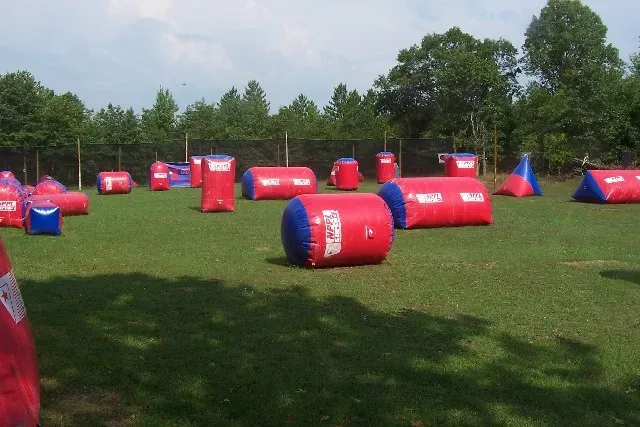
Competitive paintball on a sup-air field — the tournament standard featuring inflatable bunkers and close-quarters tactical gameplay.
WardyPB (CC BY-SA 4.0)
| Time & Effort | |
|---|---|
Read Time | 11 min read |
Equipment Needed | |
| |
Safety | |
| |
Key Takeaways | |
| |
Organization | |
| National Xball League (NXL) | |
| Divisions | |
SpeedballWoodsballScenario GamesPump PlayMagfedLow Impact | |
Paintball
Handbook article
From The Boise Gun Club Handbook
Paintball gives you tactical training, team communication practice, and adrenaline hits without the commitment of military service or the expense of burning through rifle ammo. Plus you get to shoot your friends legally.
Recreation — NXL, USPL
Three guys in New Hampshire started this whole thing in 1981 when they couldn't settle an argument about who'd survive longest in the woods. They grabbed some forestry marking guns, loaded them with paint balls, and hunted each other through the trees. Forty-plus years later, we've got million-dollar tournaments and fields in every major city.
The concept is simple: eliminate the other team by marking them with paint-filled gelatin capsules fired from compressed-air markers. Get hit, paint breaks, you're out. No arguing, no honor system debates like airsoft—the evidence is right there on your shirt.
What started as weekend warrior fun has split into everything from birthday party chaos to professional leagues where guys practice eight hours a day. The National Xball League runs tournaments with six-figure prize pools, while your local field hosts corporate team building events and bachelor parties.
Game Types You'll Findedit
Competition Formats
Overview of paintball game format hierarchy and characteristics
Speedball runs the tournament scene—fast, athletic, and brutal. Two teams on a symmetrical field with inflatable bunkers, trying to eliminate everyone or hang a flag. Games last 2-10 minutes of pure chaos.
Think hockey meets chess at 300 feet per second.
| Game Type | Duration | Players | Key Features | Best For |
|---|---|---|---|---|
| Speedball | 2-10 minutes | 3-7 per team | Inflatable bunkers, symmetrical field | Competitive players, tournaments |
| Woodsball | 15-45 minutes | 5-20 per team | Natural terrain, permanent bunkers | Tactical gameplay, military vets |
| Scenario | Hours to days | 50-500+ total | Storylines, objectives, themes | Immersive experience seekers |
| Pump Play | Varies | Any | Manual cocking, limited rate of fire | Skill development, accuracy focus |
| Magfed | 15-30 minutes | 6-12 per team | Magazine-fed, limited ammo | Realistic military simulation |
Recreational Variants
Woodsball happens in actual woods with permanent bunkers and longer sight lines. More tactical, less sprinting. You can actually use stealth and patience instead of raw speed and paint volume. Military vets love this format because it rewards real-world tactical thinking.
Scenario games are where paintball goes full nerd—hundreds of players, military themes, storylines, and objectives that run for days. Some events recreate historical battles or Hollywood movie plots. You'll see guys with radio headsets calling in artillery strikes and medics dragging wounded players to aid stations.
Pump play forces you to cock the gun manually after every shot. Slows everything down and makes accuracy matter since you can't spray paint like a garden hose. Old-school players swear by it for skill development.
Magfed uses magazine-fed markers that look and function like real rifles. Limited ammo capacity changes everything—you actually have to aim instead of hosing down bunkers hoping to get lucky.
Gear That Actually Mattersedit
Essential Safety Equipment
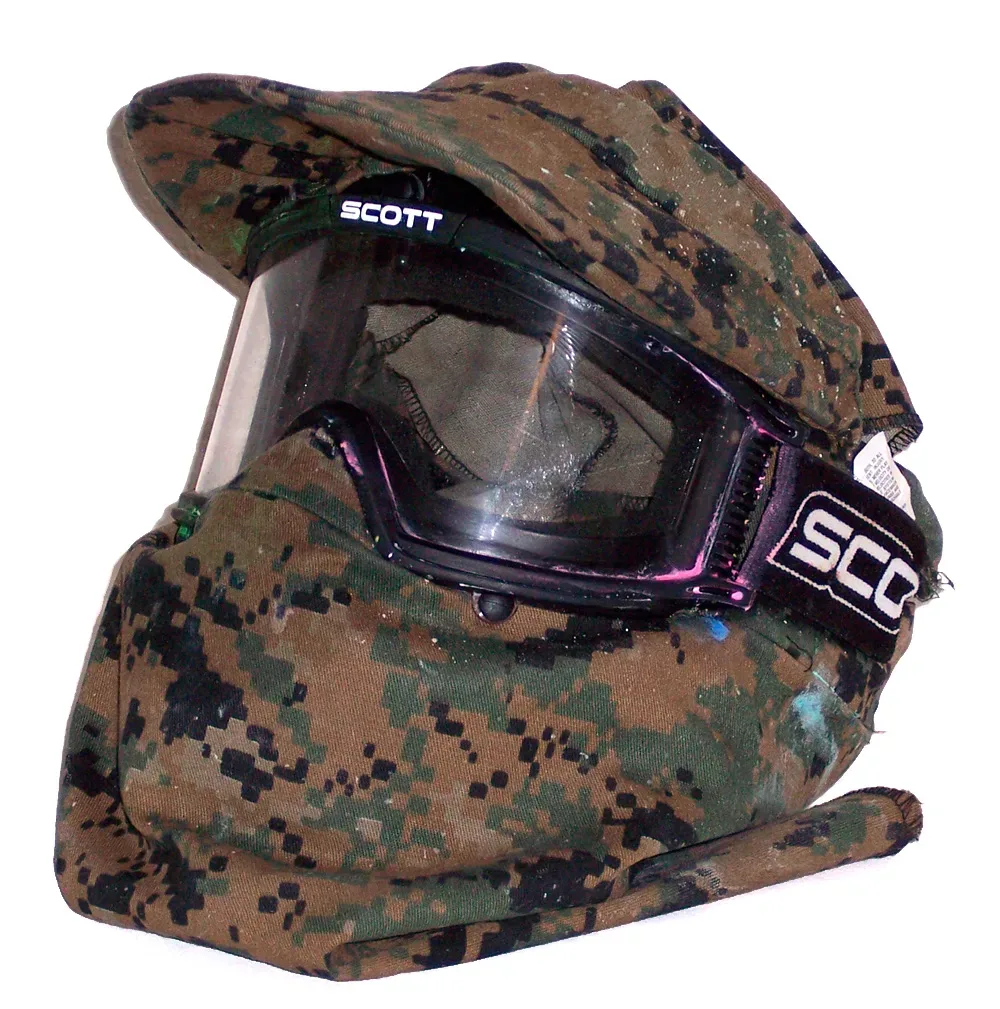
Your mask is the only piece you cannot cheap out on. A $30 mask that fogs up will ruin every game, while a quality setup keeps you in the fight.
A quality mask is non-negotiable. Start with something like a JT ProFlex or V-Force Grill that breathes well and has replaceable lenses.
Markers and Performance Gear
For markers, reliability beats features every time. A basic Tippmann A-5 or Planet Eclipse Etha will shoot paint accurately all day without drama. Save the high-end electronic markers until you know this sport isn't going to collect dust in your closet.
Steel air tanks work fine starting out, but carbon fiber HPA systems give you more shots and better consistency. Most serious players upgrade within six months because the performance difference is obvious once you try both.
You'll burn through paint faster than you think. Beginners might shoot 200 rounds per game, but that jumps to 500-1000+ as you get aggressive.
Tournament-grade paint costs more but flies straighter and breaks reliably on target.
| Equipment Category | Entry Level | Mid-Range | High-End | Priority Level |
|---|---|---|---|---|
| Mask | JT ProFlex ($60) | V-Force Grill ($80) | Push Unite ($150) | Critical |
| Marker | Tippmann A-5 ($200) | Planet Eclipse Etha ($350) | DLX Luxe ($1,400) | High |
| Air System | Steel CO2 ($40) | Aluminum HPA ($120) | Carbon Fiber HPA ($180) | Medium |
| Hopper | Gravity Feed ($15) | Electronic ($100) | High-End Electronic ($200) | Medium |
| Paint | Recreational ($40/case) | Tournament ($65/case) | Premium ($80/case) | Ongoing Cost |
What It Costsedit
Getting Started
Rental packages run $40-80 per person and include everything needed to play. Good way to test the waters without commitment.
If you catch the bug, expect to spend $300-600 on starter equipment that won't embarrass you. Competitive setups start around $1,500 and can hit $3,000+ quickly once you start chasing marginal improvements.
Long-term Investment
The real money drain is paint. Casual players might spend $100-200 monthly including field fees. Tournament guys easily drop $300-500 monthly on paint alone, plus travel costs for events. I know players who spend more on paintball than their car payments.
| Cost Category | Beginner | Intermediate | Tournament Player |
|---|---|---|---|
| Initial Equipment | $0 (rentals) | $300-600 | $1,500-3,000+ |
| Monthly Field/Paint | $100-200 | $200-350 | $300-500+ |
| Tournament Entry | N/A | $60-120 | $100-200+ |
| Annual Total | $1,200-2,400 | $3,000-5,000 | $6,000-10,000+ |
| Per Game Cost | $40-80 | $25-50 | $50-150 |
Getting Your First Tasteedit
Call ahead to local fields—many require minimum group sizes on certain days. Dress like you're doing yard work in a thorn bush:
- Long sleeves and long pants (never shorts and t-shirts)
- Boots with ankle support
- Clothes you don't mind getting paint on
- Extra layer for protection against welts
Step-by-step process for first-time paintball participation
Listen to the safety brief like your vision depends on it, because it does. Goggles stay on in playing areas no matter what. Velocity limits are enforced with chronographs—usually 280 fps for close-quarters fields, 300 fps for woods games.
The honor system works because paint doesn't lie. Call yourself out when hit, don't argue about close calls, and help new players figure out the basics.
Act like a jackass and you'll get banned faster than you can reload.
Tournament Reality Checkedit
Skill Development
Want to compete? Expect to get destroyed for months while you learn fundamentals. Tournament players have invested thousands of hours developing muscle memory, communication, and game sense you can't fake.
Entry fees range from $60-200 depending on division and event size. Add paint, air, food, gas, and hotel costs—tournament weekends easily run $300-500 per person. Teams split costs but individual expenses add up fast.
Competition Levels
- Entry fees: $60-200 per event
- Paint and air: $100-200 per weekend
- Food and beverages: $30-50
- Gas and travel: $50-300
- Hotel accommodation: $80-150 per night
The NXL runs the major leagues with professional divisions and livestreamed matches. Regional series like the USPL provide stepping stones without cross-country travel requirements. Most areas have monthly local tournaments that welcome new teams.
Last Updated: January 28, 2026
Loading comments...