Legal Details
Idaho Private Firearm Transfers Law

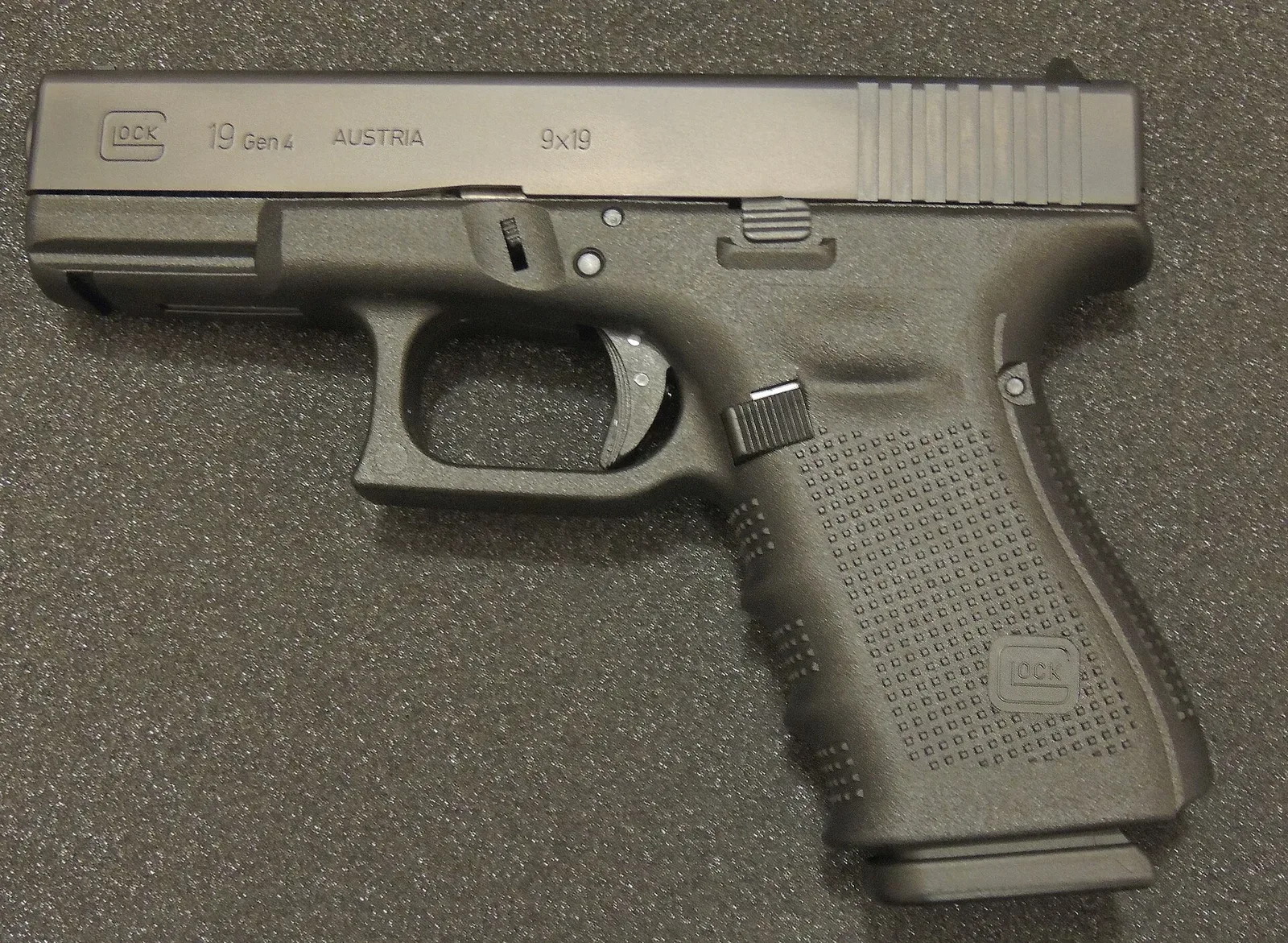
Photo by old publication (CC0)
| Identification | |
|---|---|
Citation | Idaho Code § 18-3302A |
| Code Sections |
|
| Jurisdiction | |
Territory | Idaho |
Enacted By | Idaho State Legislature |
Administered By |
|
| Key Provisions | |
| |
| Applicability | |
| Applies To | Private individuals (non-FFL holders) conducting firearm transfers in Idaho; federal provisions apply to all persons regardless of state |
| Exemptions |
|
| Penalties | Violations of applicable federal statutes (18 U.S.C. § 922) constitute federal felonies prosecuted in federal court. Knowingly selling to a prohibited person, conducting unlicensed interstate handgun transfers, or dealing without an FFL all carry federal felony charges. Idaho state-level violations carry separate state penalties. |
Related Laws | |
Idaho Private Party Firearm Transfer Laws (2026)
Legal information and analysis
From The Boise Gun Club Handbook
This is educational information, not legal advice. Laws change. Consult an attorney for your specific situation.
Idaho lets you sell a firearm to your neighbor with a handshake and cash — no paperwork, no background check, no government permission slip. Federal law still applies to every single one of those sales, and getting it wrong is a federal felony.
What Idaho Law Actually Saysedit
Idaho has no statute that regulates private firearm transfers between adults. There is no state-mandated background check, no registration requirement, and no waiting period for private sales between individuals. No paperwork you're legally required to file. The only state transfer rule is the ban on selling to minors, Idaho Code § 18-3302A, covered below.
Idaho also explicitly prohibits state firearm registries. Per the Idaho Constitution, Article I, Section 11, no law shall impose licensure, registration, or special taxation on the ownership or possession of firearms or ammunition. A 2023 statute codified this further — Idaho Code Ann. § 18-3326A(2) prohibits any state government entity or local government from keeping any list, record, or registry of privately owned firearms or their owners, except during the regular course of a criminal investigation and prosecution or as otherwise required by law. Neither the state nor private sellers are required to create or maintain ownership records.
This framework applies to transfers between private individuals. The moment a federally licensed firearms dealer (FFL) gets involved in a transaction — even as a facilitator for an otherwise private deal — federal regulations apply and the buyer fills out a Form 4473 and goes through NICS.
Federal vs. State Jurisdictionedit
Idaho is not a point-of-contact state for NICS. According to the Giffords Law Center and FBI NICS Participation Map, when licensed dealers run background checks in Idaho, those checks route directly to the FBI rather than through a state agency. Idaho state records are not always included in the federal database — which matters when you're thinking about whether your buyer's history would even show up in a check run by a dealer.
For private sales, there is no check at all. Idaho puts full responsibility on the seller to avoid transferring to a prohibited person, then gives you zero state-level tools to verify anything. You're working on good faith, ID verification, and common sense.
The Federal Rules That Don't Moveedit
Idaho's permissive stance on private sales doesn't create a bubble around you. Three federal rules apply to every private transfer regardless of what Idaho allows, and violating them means federal prosecution — not state charges, federal.
Prohibited Persons
Under 18 U.S.C. § 922(g), certain people cannot legally possess firearms anywhere in the United States. Knowingly selling to any of them is a federal felony. The prohibited categories include:
- Persons convicted of any felony punishable by more than one year imprisonment — 18 U.S.C. § 922(g)(1)
- Fugitives from justice — 18 U.S.C. § 922(g)(2)
- Unlawful users of controlled substances (including marijuana) — 18 U.S.C. § 922(g)(3)
- Persons adjudicated as mentally defective or committed to a mental institution — 18 U.S.C. § 922(g)(4)
- Illegal or unlawful aliens — 18 U.S.C. § 922(g)(5)
- Persons dishonorably discharged from the military — 18 U.S.C. § 922(g)(6)
- Persons who have renounced U.S. citizenship — 18 U.S.C. § 922(g)(7)
- Persons subject to qualifying domestic violence protective orders — 18 U.S.C. § 922(g)(8)
- Persons convicted of domestic violence misdemeanors — 18 U.S.C. § 922(g)(9)
- Persons under felony indictment — 18 U.S.C. § 922(n)
Idaho Code Ann. § 18-3316 prohibits anyone with a felony conviction in any jurisdiction from purchasing, owning, possessing, or having custody or control of a firearm — with exceptions for those whose conviction has been nullified by expungement, pardon, or other comparable procedure, or whose firearm rights have been restored.
The critical word in the federal statute is knowingly. "I didn't ask" is not a legal defense when there were obvious red flags. You don't have to pull the trigger yourself to catch a federal charge — you just have to sell to someone when you knew, or had reasonable cause to believe, they were prohibited. If the buyer tells you they just got out of prison, shows obvious signs of hard drug use, or says they're buying it "for someone else" — and you complete the sale anyway — you've got a problem.
Idaho law also makes it a felony to supply, sell, or give possession of a firearm to a person knowing that he or she is a gang member, per Idaho Code Ann. § 18-8505.
Residency and Interstate Sales
This is where a lot of private sellers step on a landmine they didn't know existed.
A private seller can only transfer a firearm to a buyer who lives in Idaho. If your buyer lives in Oregon, Washington, Nevada, or anywhere outside Idaho, you cannot hand them a pistol or a rifle in a parking lot and call it legal. That transaction must go through an FFL in the buyer's home state: the gun ships there, and the buyer picks it up after completing a Form 4473 and passing a background check.
Long guns follow the same rule. Federal law bars an unlicensed seller from transferring any firearm, rifle and shotgun included, to a buyer who lives in another state. The only exceptions are a bequest and a temporary loan or rental for lawful sporting purposes. Ship the long gun to an FFL in the buyer's state.
Any interstate firearm transfer between unlicensed people that bypasses an FFL is a federal crime under 18 U.S.C. § 922(a)(5), and § 922(a)(3) covers the buyer who takes delivery. Don't let a buddy from out of state talk you into a parking lot handgun deal because "Idaho doesn't require paperwork."
A quick reference:
| Transfer Type | Idaho Residents | Out-of-State Buyers | FFL Required? |
|---|---|---|---|
| Handguns | Private sale legal | Must use FFL | Yes (buyer's state) |
| Long Guns | Private sale legal | Must use FFL | Yes (buyer's state) |
| Any Interstate Firearm | — | Always illegal without FFL | Always |
| Dealer Sales | FFL required | FFL required | Always |
Dealing Without a License
Under 18 U.S.C. § 922(a)(1)(A), you cannot be "engaged in the business" of dealing firearms without a federal firearms license. The ATF looks at frequency of sales, profit motive, and whether you're maintaining inventory — meaning you acquire guns specifically to sell them rather than selling from a personal collection.
Cleaning out a deceased relative's gun safe over the course of a year or two? Generally fine. Buying five pistols at a gun show with the plan to flip them for profit the following weekend? That's dealing without a license, and it's a federal felony regardless of how many individual sales stay under some imaginary threshold. There's no magic number. If your pattern of conduct looks like a business, the ATF will treat it like one.
Age Requirements for Private Transfersedit
Idaho law makes it a misdemeanor to sell, directly or indirectly, a firearm to a minor under the age of 18 without the written consent of the minor's parent or guardian, per Idaho Code Ann. § 18-3302A. A separate provision — Idaho Code Ann. § 18-3308 — makes it a crime to sell or give to any minor under the age of 16 any gunpowder, shells, or fixed ammunition of any kind (with exceptions for shotgun shells and .22 caliber rimfire ammunition), without written parental consent.
Federal rules set the floor for dealer sales — 18 for long guns, 21 for handguns — but for private transfers, the Idaho statutes above govern. Don't sell to minors. If age or eligibility is unclear, don't proceed.
The CWL Background Check Exemptionedit
One wrinkle worth knowing: Idaho concealed weapons permit holders are exempt from the federal background check requirement when purchasing a handgun from a licensed dealer. Under 18 U.S.C. § 922(t)(3) and 27 C.F.R. § 478.102(d), state permits issued within the previous five years after a background check that included NICS qualify for this exemption.
That exemption applies at dealer counters — it has nothing to do with private sales, where there's no background check to skip in the first place. As of January 1, 2026, Idaho made changes to its Enhanced Concealed Weapons License program, specifically adding fingerprint-based criminal background checks for initial applications. This makes an Enhanced CWL a more thorough vetting benchmark than it was previously — relevant context if a buyer shows you one as a good-faith indicator.
Per the Giffords Law Center, people who have become prohibited from possessing firearms may continue to hold state permits if the state fails to remove them in a timely fashion. A clean permit is a good sign, not a guarantee.
Bills of Sale: Not Required, Not Optional If You're Smartedit
Idaho law doesn't require any documentation for private firearm transfers. You can hand someone a shotgun, take their cash, and never write a single word down. Don't do that.
ATF traces follow the paper trail to the last known owner — that's you, until you can prove otherwise. When that firearm shows up at a crime scene and traces back to you as the last documented owner, you will want proof the gun left your possession legally. "I sold it" is not proof of anything without documentation.
A solid bill of sale covers:
| Element | Purpose |
|---|---|
| Date of transaction | Establishes when transfer occurred |
| Firearm details (make, model, caliber, serial number) | Unique identification |
| Buyer name and address | Identity verification |
| Buyer ID documentation | Residency proof |
| Sale price | Legitimate transaction evidence |
| Eligibility statement | Buyer affirms legal eligibility |
| Signatures of both parties | Agreement confirmation |
Keep your copy somewhere you'll find it. A photo of the signed document backed up to cloud storage works fine. The goal is being able to show, clearly and immediately, that you transferred the gun on a specific date to a specific person.
Verifying the Buyeredit
Here's the uncomfortable reality of Idaho's private sale framework: the state puts full responsibility on you to avoid selling to criminals, then gives you zero tools to verify anything. There is no mechanism for private sellers to run a voluntary NICS check in Idaho.
Most careful sellers take a few practical steps:
- Ask for valid Idaho ID to confirm in-state residency
- Request a current Idaho Enhanced Concealed Weapons License as a positive eligibility indicator
- Meet at an FFL and pay the transfer fee ($25–50 typically) for a voluntary background check on record
- Use common sense — watch for obvious red flags, evasive answers, or pressure to skip paperwork
The most legally conservative approach, even though Idaho doesn't require it, is meeting at an FFL. The buyer gets a background check on record, you get documented proof of the sale, and everyone has paper if questions come up later. More Idaho sellers are doing this voluntarily for expensive firearms or sales to strangers — not because the law requires it, but because it's cheap insurance.
Straw Purchases, Gifts, and Inheritanceedit
Straw purchases are federal crimes. A straw purchase happens when you buy a gun from a dealer, filling out the Form 4473 as the actual buyer, when you're actually acquiring it for someone else. The person handing you cash to go pick up "their" gun from the gun store just made you both federal felons under 18 U.S.C. § 922(a)(6). This applies even if the end recipient could legally own firearms — the issue is lying on the Form 4473 about who the actual buyer is.
Gifts are legal when done correctly. Buying your son a .22 for his birthday with your own money, as a genuine gift with no expectation of reimbursement, is a legal purchase. Transferring it privately in Idaho involves no paperwork. The line is intent — genuine gifts versus disguised straw purchases.
Inherited firearms don't require FFL involvement or background checks for in-state transfers. When someone dies and leaves guns to a beneficiary in Idaho, those firearms can transfer directly without going through a dealer. The executor or personal representative can temporarily possess the firearms for the purpose of distribution.
The interstate inheritance situation is different. If the estate is in Idaho but the beneficiary lives in another state, federal law exempts a bequest to a person who may lawfully possess the firearm in their home state (18 U.S.C. § 922(a)(5)(A)), so an FFL is not required. Many executors still ship to an FFL in the beneficiary's state for the paper trail and to confirm the beneficiary is eligible.
Stolen Firearmsedit
Buying or selling a stolen firearm is illegal even when you genuinely don't know it's stolen — and you lose the gun either way. If you unknowingly purchase a stolen firearm and law enforcement recovers it, they confiscate it. You lose your money and the gun. In most cases you won't face criminal charges if you can demonstrate you had no knowledge of the theft, but you get nothing back.
You can run a serial number check before buying through HotGunz (hotgunz.com), a civilian-accessible stolen gun database. Some local police departments will also run serial numbers if you ask. Not all will, but it costs nothing to try. This step matters most when buying from someone you don't know, particularly from online listings.
If a firearm you purchased turns out to be stolen after the fact, cooperate fully with law enforcement, document your purchase, and contact an attorney if charges seem likely. This is another reason the bill of sale matters.
Online and Out-of-State Salesedit
Selling through platforms like GunBroker, ArmsList, or GunsAmerica works differently than a face-to-face deal, even when both parties are in Idaho.
For in-state online sales where you meet locally to complete the transaction, the same rules apply as any other private transfer — verify residency, document the sale, confirm there are no obvious red flags.
When shipping is involved, the firearm must ship to an FFL in the buyer's state. You as the seller are generally not required to hold an FFL to ship through one, but you need to find an FFL willing to accept the transfer on the receiving end. Most FFLs charge the buyer a transfer fee ($25–75 typically). Carrier rules matter: FedEx and UPS ship long guns; handguns require overnight shipping through those carriers; USPS allows long guns shipped by unlicensed persons but handguns require an FFL on the shipping end.
For handguns: even if you find an Idaho buyer online who wants to meet you in a parking lot, that face-to-face deal is straightforward. The moment geography or shipping crosses state lines on a handgun, you need FFL transfers on at least the receiving end. Don't let a platform's lack of enforcement make you think the federal rules have changed.
Where Transfers Can and Can't Happenedit
Idaho doesn't restrict the location of private firearm transfers beyond general prohibited-places laws. People complete sales at gun shops, at ranges, at homes, and in public parking lots.
Many police departments have designated safe exchange zones — visible, camera-monitored, understood as neutral ground for transactions. Some sellers default to these for stranger-to-stranger deals. That's a reasonable habit.
Don't conduct a transfer anywhere firearms are prohibited under state or federal law. That includes:
- K-12 school grounds — Gun-Free School Zones Act, 18 U.S.C. § 922(q); Idaho Code Ann. § 18-3302D
- Courthouses and juvenile detention facilities — Idaho Code Ann. § 18-3302C
- Federal buildings
- Post offices and their parking lots
- Any location with legally enforceable no-firearms signage
The private sale itself might be legal, but possession at a prohibited location isn't — and completing the transfer there means you're facilitating it.
Idaho Preemption: No Local Restrictionsedit
Idaho has statewide preemption of local firearms ordinances under Idaho Code Ann. § 18-3302J. Unless specifically authorized by state law, no county, city, agency, board, or other political subdivision may adopt or enforce any law, rule, regulation, or ordinance regulating in any manner the sale, acquisition, transfer, ownership, possession, transportation, carrying, or storage of firearms or any element relating to firearms and components, including ammunition.
Boise cannot require background checks for private sales. Coeur d'Alene cannot mandate waiting periods. Whatever the state allows, local jurisdictions cannot further restrict it for private transfers. The rules in this article apply uniformly across Idaho — you don't need to check city ordinances on top of state law for basic private sale requirements.
The preemption law does preserve county authority to regulate firearm discharge within county boundaries, subject to several exceptions (lawful self-defense, hunting, landowner guests, sport shooting ranges, target shooting on public land). Cities may regulate discharge within city limits with similar carve-outs. Neither of these touches transfer law.
No Red Flag Lawedit
According to the NRA-ILA, Idaho does not have a "red flag" law — formally known as an Extreme Risk Protection Order (ERPO) law. No pending legislation to create one passed in the 2025 legislative session, and the political composition of the Idaho legislature makes such a change unlikely in the near term.
Constitutional Carry: Separate from Private Sale Lawedit
Confusing constitutional carry with private sale law is one of the most common mistakes. Idaho's permitless concealed carry — codified at Idaho Code Ann. § 18-3302 — means eligible persons can carry a concealed firearm without a permit. It has nothing to do with how private sales work. Two entirely separate legal frameworks.
Idaho's permitless carry applies to persons over 18 who are U.S. citizens or current armed forces members and are not otherwise disqualified. Open carry is also legal. Idaho is a "shall issue" state for those who want a formal Concealed Weapons License (CWL), issued by the county sheriff with a minimum age of 21 for standard licenses (provisional licenses available for ages 18–20 who meet enhanced license requirements).
What Has and Hasn't Changededit
The core private sale framework — no background checks, no registration, no state paperwork — remains unchanged. No pending Idaho legislation to mandate universal background checks for private transfers passed in the 2025 legislative session. Federal proposals for universal background check requirements have not become law as of this update.
As of January 1, 2026, Idaho made changes to its Enhanced Concealed Weapons License program, adding fingerprint-based criminal background checks for initial applications and increasing associated fees. This affects the CWL process, not private sale rules directly.
The NRA-ILA reported in March 2026 that House Bill 621, a concealed carry clarification bill, was printed and introduced in the House State Affairs Committee. As of the date of this article, that bill had not been signed into law. Monitor the Idaho Legislature for updates if significant time has passed since this was written.
Verify current status if any significant time has passed since early 2026. Laws move.
When to Use an FFL Anywayedit
Even when Idaho doesn't require it, some situations call for routing a private sale through a licensed dealer:
| Situation | FFL Recommended? | Reason |
|---|---|---|
| Known neighbor or friend | Optional | Personal relationship reduces risk |
| Online stranger | Yes | No personal knowledge of buyer |
| High-value firearm | Yes | Transfer fee is cheap insurance on a $2,000+ asset |
| Interstate handgun | Required by law | Federal law mandates FFL |
| Buyer is evasive or shows red flags | Yes | Red flags warrant extra protection |
| Estate with out-of-state beneficiary | Yes | Clean legal transfer across state lines |
When you route a sale through an FFL, their bound book records the transaction. The buyer fills out a Form 4473 and a NICS check runs. You're documented as having transferred the firearm to a licensed dealer, and the responsibility for proper vetting shifts to them from that point forward.
Selling to Licensed Dealersedit
Gun shops and pawn shops operate under FFL rules on both sides of the transaction. When you sell to a dealer, they'll check your ID, log the purchase in their bound book, and give you immediate payment — typically wholesale value, which runs below what you'd get in a private sale. The tradeoff is simplicity and a complete paper trail from that moment forward. If you want to offload something quickly without the hassle of listing it and meeting strangers, a local gun shop is a straightforward option.
Common Mistakesedit
The same errors show up repeatedly in Idaho private sales.
Selling to someone who "seems fine" based on gut feeling, then discovering later they had a disqualifying record, is the mistake that results in federal prosecution. You don't need to run a background check — but you do need to not ignore obvious warning signs. The legal standard is what you knew or had reasonable cause to believe.
Skipping documentation on an expensive firearm because asking feels awkward. Write it down. Anyone with nothing to hide will spend five minutes on paperwork.
Assuming state lines don't matter because Idaho doesn't care. Idaho's lack of restriction governs Idaho. Federal law governs everywhere. Those are two different governments with two different sets of consequences.
Thinking that selling frequently from a "personal collection" that you continuously replenish is somehow not dealing. The ATF has prosecuted people on exactly this theory. If you're buying guns specifically to resell them — even one at a time, even slowly — get an FFL or get a lawyer.
The bottom line: Idaho trusts you to handle private sales without government supervision — no background checks, no registry, no permission slip required. Federal law sets the floor that doesn't move: don't sell to prohibited persons, keep every private sale in-state or route it through an FFL, and don't run an unlicensed gun business. Document your sales, verify residency, and when something feels off, route it through an FFL.
Resourcesedit
- Idaho Code § 18-3302A (sale of weapons to minors): https://legislature.idaho.gov/statutesrules/idstat/Title18/T18CH33/SECT18-3302A/
- Idaho Code § 18-3302J (preemption): https://legislature.idaho.gov/statutesrules/idstat/Title18/T18CH33/SECT18-3302J/
- 18 U.S.C. § 922 (federal firearms prohibitions): https://uscode.house.gov/view.xhtml?req=granuleid:USC-prelim-title18-section922
- ATF: Federal Firearms Regulations Reference Guide: https://www.atf.gov/firearms/docs/guide/federal-firearms-regulations-reference-guide
- ATF: Engaged in the Business — Dealer: https://www.atf.gov/firearms/qa/when-person-required-have-federal-firearms-license
- FBI NICS Participation Map: https://www.fbi.gov/file-repository/cjis/nics-participation-map-020124
- ATF Brady Permit Chart (CWL NICS exemptions): https://www.atf.gov/rules-and-regulations/laws-alcohol-tobacco-firearms-and-explosives/gun-control-act/brady-law/brady-permit-chart
- HotGunz stolen gun registry: https://www.hotgunz.com
- NRA-ILA Idaho gun laws summary: https://www.nraila.org/gun-laws/state-gun-laws/idaho/
- Giffords Law Center — Idaho background checks: https://giffords.org/lawcenter/state-laws/background-check-procedures-in-idaho/
Last Updated: March 05, 2026
- Ace Hardware of Sandusky(Sandusky, MI)
- New Philly Sportsman Specialities(New Philadelphia, OH)
- Atwoods Ranch & Home #46(LACY LAKEVIEW, TX)
- G & P Distributors(McConnellsburg, PA)
This is not legal advice
This guide provides general information about federal and state firearms laws based on publicly available statutes. Laws change frequently and vary significantly by state. Always verify current laws in your jurisdiction. Consult a qualified attorney for legal advice on your specific situation. When in doubt, contact local law enforcement or state police.
Loading comments...