Details
Gunpowder
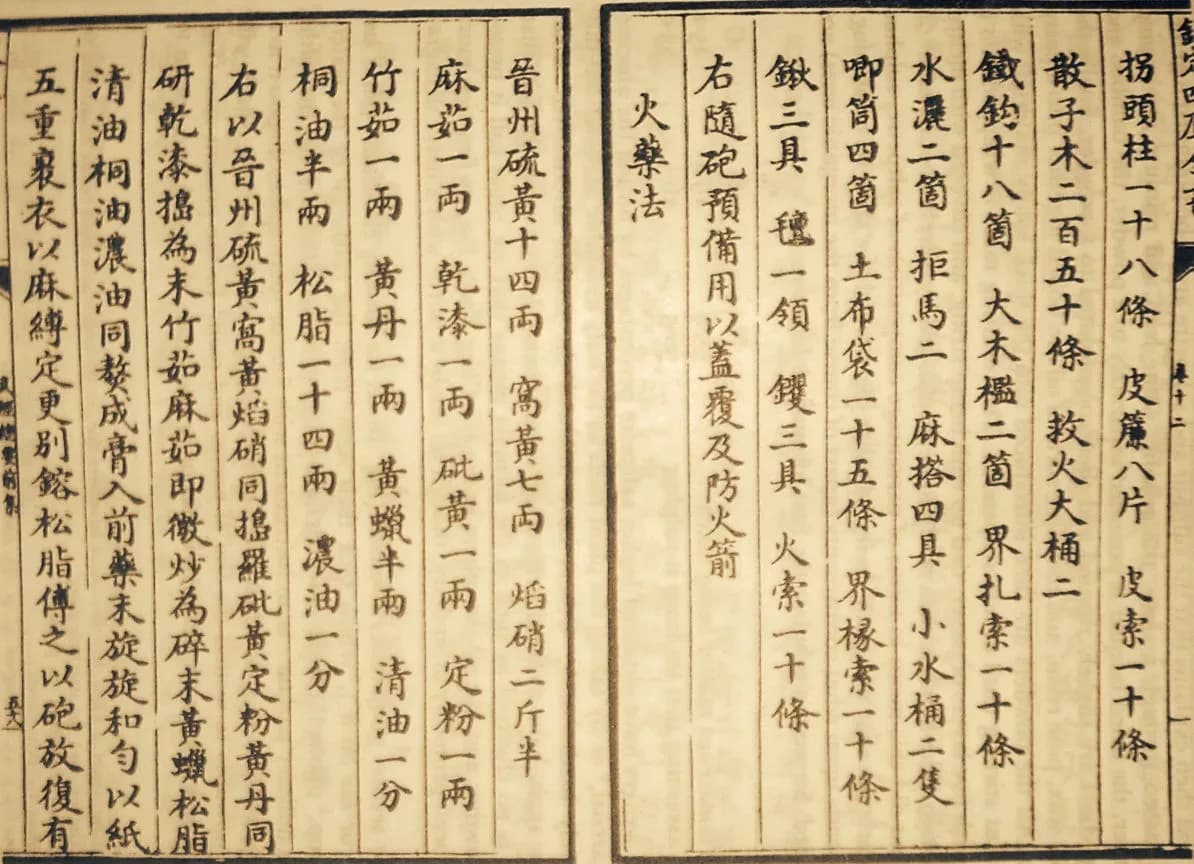
The earliest known written gunpowder formula, from a 9th-century Chinese military text — documenting the exact ratios that changed warfare forever.
| Origins | |
|---|---|
| Invented | 808 AD |
| Country | China |
| Timeline | |
| Era | Tang dynasty |
| Replaced By | Smokeless powder |
| Impact | |
| Significance | The earliest known chemical explosive that fundamentally transformed warfare, siege fortifications, and political structures by enabling centralized states to overcome medieval castle-based power systems. |
Gunpowder: The Accidental Invention That Rewrote History
Firearms encyclopedia article
From The Boise Gun Club Handbook
Overviewedit
| Component | Percentage | Function |
|---|---|---|
| Potassium Nitrate (Saltpeter) | 75% | Supplies oxygen for combustion reaction |
| Charcoal | 15% | Provides carbon fuel for burning |
| Sulfur | 10% | Lowers ignition temperature, increases burn rate |
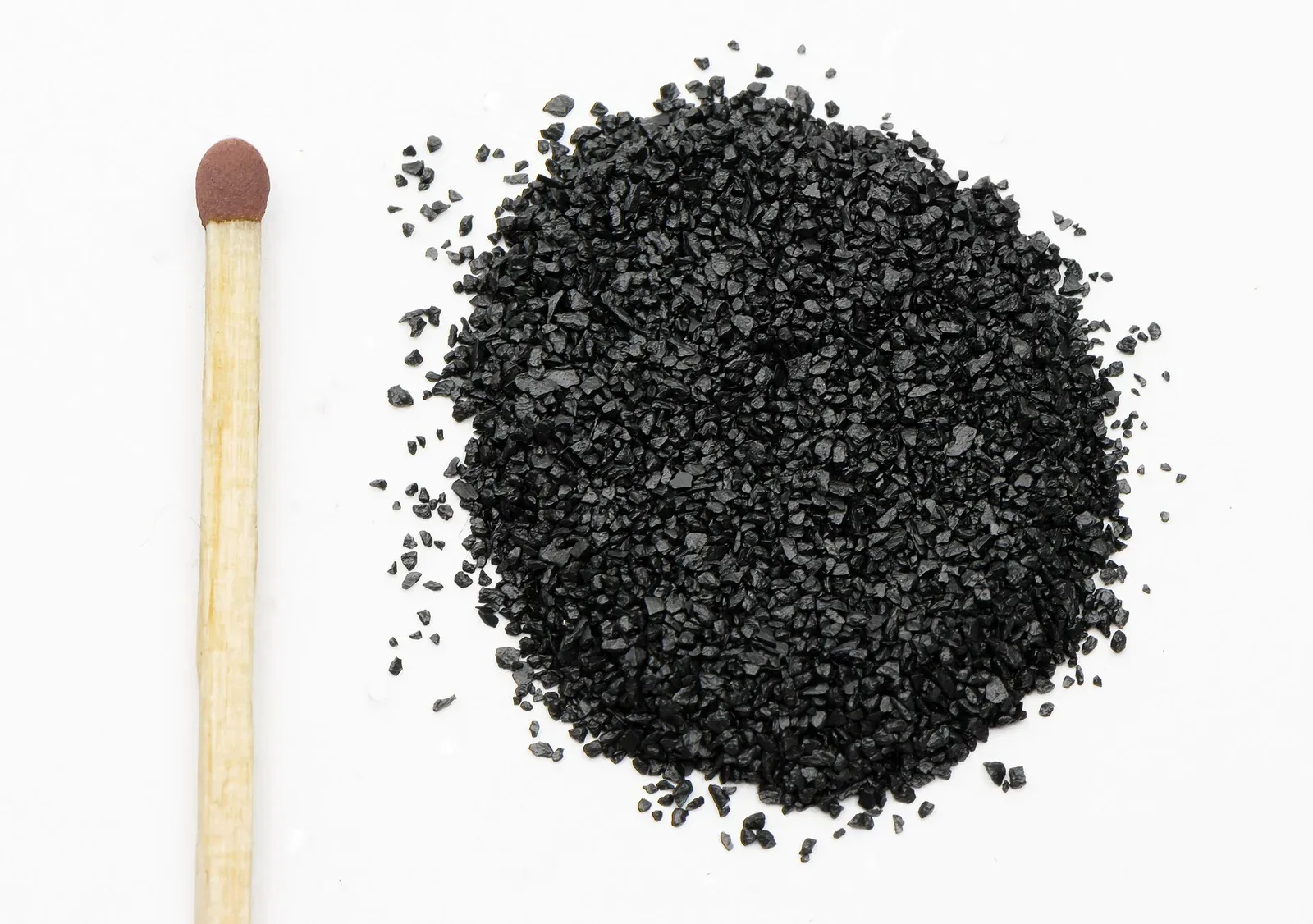
Black powder — called by that name once smokeless alternatives arrived in the late 19th century — is the earliest known chemical explosive. This standard composition of 75% potassium nitrate, 15% charcoal, and 10% sulfur by weight was adopted by powder manufacturers as far back as 1780 and remains the benchmark.
Gunpowder is technically a low explosive — it deflagrates, meaning it burns at subsonic speeds, rather than detonating and producing a supersonic shockwave like high explosives do. That distinction is not a weakness; it is the whole point. Igniting gunpowder packed behind a projectile generates enough pressure to push a ball or bullet down a barrel at high velocity without rupturing the gun itself.
It makes an excellent propellant precisely because it does not shatter what contains it. As a blasting agent for demolishing rock or fortifications, however, that same quality is a drawback — and by the second half of the 19th century, high explosives like dynamite had largely replaced it in industrial applications.
Before all of that, though, gunpowder spent roughly a thousand years being discovered, weaponized, lost, rediscovered, refined, and fought over across three continents. That story is what this article is about.
Development Historyedit
The Accident in the Tang Dynasty
The first confirmed written reference to what can be recognized as gunpowder appears in China during the Tang dynasty, in a formula contained in the Taishang Shengzu Jindan Mijue dated to 808 AD. About fifty years later, a Daoist text called the Zhenyuan miaodao yaolüe described what happens when you heat sulfur, realgar, and saltpeter together with honey: "smoke and flames result, so that their hands and faces have been burnt, and even the whole house where they were working burned down."
That is not a recipe — it is a warning.
The people who wrote it were not trying to build weapons. They were Chinese alchemists pursuing the elixir of immortality, experimenting with minerals and chemicals in hopes of unlocking long life or spiritual transcendence. The Chinese name they eventually gave the substance — huoyao, written 火药 — means "fire medicine."
Scholars today overwhelmingly concur that the gun was invented in China. — Historian Tonio Andrade
The military applications came later. The accidental discovery came first, and the evidence for it being a single-origin invention from China is, according to historians, overwhelming.
Saltpeter had been known to the Chinese since at least the mid-1st century AD, produced primarily in the provinces of Sichuan, Shanxi, and Shandong. A Chinese alchemical text from 492 AD recorded that saltpeter burns with a purple flame — a practical observation that let alchemists distinguish it from other salts and refine purification techniques. The earliest Latin accounts of saltpeter purification don't appear until after 1200.
| Period | Location | Key Development | Saltpeter % |
|---|---|---|---|
| 808 AD | China (Tang Dynasty) | First written reference | Unknown |
| 904 AD | China | First military use (incendiary projectiles) | ~30-40% |
| 1040-1044 AD | China (Song Dynasty) | Wujing Zongyao formal recipes | ≤50% |
| 1240-1280 AD | Middle East | Muslim acquisition via Mongols | ~75% |
| 1267 AD | Europe | Roger Bacon's accounts | Variable |
| 1287 AD | China | True metal-barrel guns | ~75% |
From Medicine to Military Weapon
The earliest formal gunpowder formulas appear in the Song dynasty text Wujing Zongyao (Complete Essentials from the Military Classics), written by Zeng Gongliang between 1040 and 1044. The mixtures in that manual contain at most 50% saltpeter — not enough to produce an explosion, but enough to generate an incendiary. The book also references fire arrows, slow matches for flame-throwing mechanisms, fireworks, and rockets.
Military use had already begun before Zeng wrote it down. The first recorded military application of gunpowder dates to 904 AD, in the form of incendiary projectiles at the siege of Yuzhang. Fire arrows — initially just arrows with bags of gunpowder attached — were in operational use, and by 1083 the Song court was producing hundreds of thousands of them for garrison defense.
The fire lance appeared around 950: a polearm with a gunpowder charge near the tip, designed to erupt at the start of close-quarters infantry combat. Engineers quickly realized that packing stones or metal fragments into the charge turned the weapon into something closer to a shotgun. Barrels evolved from hardened paper to bamboo to metal, with each iteration better able to withstand the pressure. Bombs using iron casings appear in the early 13th century. Explosive weapons recovered from a shipwreck off the Japanese coast, dated to the Mongol invasions of Japan (1274–1281), provide physical archaeological confirmation of this.
- Fire arrows with gunpowder bags (904 AD)
- Fire lances - polearms with gunpowder charges (950 AD)
- Stone and metal fragment charges (early 1000s)
- Iron-cased bombs (early 1200s)
- Metal hand cannons (1287 AD)
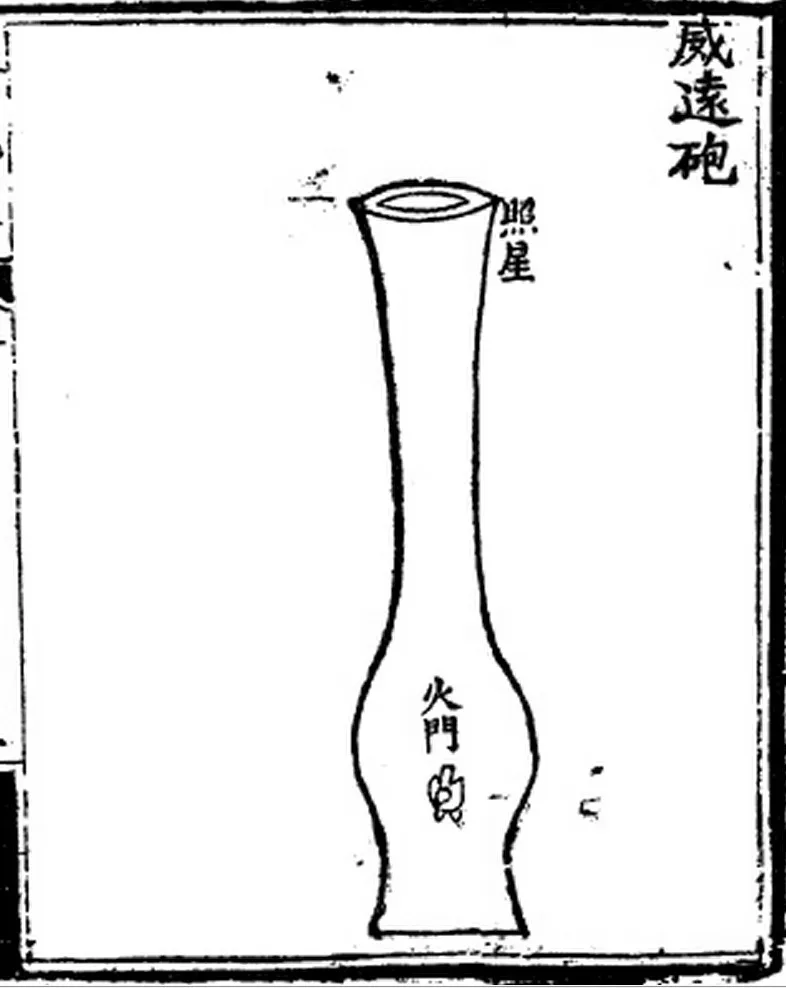
By 1287 at the latest, metal fire lances had become true guns — the hand cannon, with a metal barrel, touch hole, and dedicated gunpowder chamber. The Heilongjiang Hand Cannon, dated to 1288, is an extant example. Chinese forces were deploying functional projectile firearms before Europe had any concept of such a thing.
Transmission West: The Middle East
According to historian Iqtidar Alam Khan, the Mongols introduced gunpowder into Persia and Mesopotamia during their westward conquests. Muslims had acquired knowledge of gunpowder sometime between 1240 and 1280, by which point the Syrian scholar Hasan al-Rammah had written recipes, purification instructions for saltpeter, and descriptions of gunpowder incendiaries. Al-Rammah called saltpeter "Chinese snow" and referred to fireworks as "Chinese flowers" and rockets as "Chinese arrows" — the terminology alone confirms where the knowledge originated.
Al-Rammah's text The Book of Military Horsemanship and Ingenious War Devices included the following:
- Called saltpeter "Chinese snow"
- Referred to fireworks as "Chinese flowers"
- Named rockets "Chinese arrows"
- Included 107 gunpowder recipes (22 for rockets)
- Described fuses, bombs, fire lances, and torpedoes
The median composition of those rocket recipes — 75% nitrates, 9.06% sulfur, 15.94% charcoal — is nearly identical to the modern ideal formula of 75% potassium nitrate, 10% sulfur, and 15% charcoal. The book also describes fuses, incendiary bombs, fire lances, and what appears to be the earliest description of a torpedo: a pear-shaped vessel filled with gunpowder, metal filings, and a rocket for propulsion, intended to glide across the water surface.
The Mamluk Sultanate certainly used cannons by 1342, according to historian Paul E. J. Hammer. Cannons were used by Moors at the siege of Algeciras in 1343. Contemporary accounts of a metal-barrel cannon in the Islamic world do not appear until 1365. The Ottoman Empire eventually built a state-controlled manufacturing apparatus for gunpowder, drawing nitre, sulfur, and high-quality charcoal from oak forests in Anatolia — a supply chain that contributed significantly to Ottoman military expansion between the 15th and 18th centuries.
Arrival in Europe
The earliest Western accounts of gunpowder appear in texts by English philosopher Roger Bacon, written in 1267 in the Opus Majus and Opus Tertium. The oldest written recipes in continental Europe were recorded under the name Marcus Graecus between 1280 and 1300 in the Liber Ignium (Book of Fires). Professor Kenneth Warren Chase credits the Mongols with introducing gunpowder and its associated weaponry into Europe, though historian Timothy May cautions that "there is no concrete evidence that the Mongols used gunpowder weapons on a regular basis outside of China."
In England, records show gunpowder being manufactured at the Tower of London by 1346 — the same year King Edward III used gunpowder weapons at the Battle of Crécy. A powder house existed at the Tower by 1461, and by 1515 three King's gunpowder makers worked there.
The earliest depiction of a European cannon appears in Walter de Milemete's De Nobilitatibus Sapientii Et Prudentiis Regum, dated 1326.
European militaries were quick to identify gunpowder's potential for reshaping siege warfare. Fortifications that had resisted assault for generations were now vulnerable to cannon fire. The fall of Constantinople in 1453, achieved in significant part through the use of massive Ottoman cannons, marked a clear turning point — walls that had held for a thousand years could not stop artillery.
The Corning Revolution
The earliest European gunpowder was called serpentine — a fine flour produced by grinding the ingredients together with a mortar and pestle, sometimes for 24 hours. The problem was that vibration during transport caused the components to separate again, requiring field remixing. Humidity was a constant enemy. Loading a cannon with serpentine was a skilled craft, not a straightforward operation.
In late 14th-century Europe, manufacturers began wet-grinding the ingredients with liquid — distilled spirits or water — and drying the resulting paste. They discovered that forming the damp paste into corn-sized clumps before drying produced a dramatically superior product: corned powder. Each grain provided its own air space, allowing far more rapid and consistent combustion than fine powder packed into a barrel. This "corned" gunpowder was from 30% to 300% more powerful than serpentine.
A contemporary example makes the improvement concrete: where 15 kilograms of serpentine were needed to fire a 21-kilogram ball, only 8.2 kilograms of corned powder accomplished the same task.
| Powder Type | Period | Characteristics | Power Comparison |
|---|---|---|---|
| Serpentine | Pre-1400 | Fine flour, components separate during transport | Baseline |
| Corned Powder | Late 1300s+ | Wet-ground, formed into grains | 30-300% more powerful |
| Press-cake | Post-1800 | Compressed under screw presses | Consistent, graded by sieve |
After 1800, the damp mill-cake was pressed in molds under screw presses to extract liquid and increase density, forming press-cake with the hardness of slate. That was broken into granules, then sorted through sieves into standardized grades: coarse powders for cannons, medium for muskets, fine for pistols and priming. By the late 19th century, American manufacturers worked with grades designated Fg through FFFFg, each calibrated to specific bore sizes and weapon types.
France, Lavoisier, and the American Revolution
In 1774, Louis XVI ascended to the French throne and discovered his country was not self-sufficient in gunpowder. A Gunpowder Administration was established, and the lawyer and scientist Antoine Lavoisier was appointed to head it. For centuries, France had relied on saltpetremen with royal warrants — the droit de fouille or "right to dig" — who could seize nitrous-bearing soil and demolish barnyard walls without compensating the owners. Farmers routinely bribed them to go away.
Lavoisier overhauled the entire system. He revised and eventually eliminated the droit de fouille, researched refining and manufacturing methods, instituted management and record-keeping, and established pricing structures that encouraged private investment. The results were rapid and consequential. In only a year, France had gunpowder to export. By 1788, powder from mills such as the one at Essonne outside Paris was considered the finest and least expensive in the world. A chief beneficiary of France's surplus was the American Revolution — an accidental but decisive contribution from a chemistry reform program.
The Smokeless Transition
The introduction of smokeless powder in the late 19th century — a nitrocellulose-based propellant — fundamentally altered the industry. According to GUNS Magazine, French chemist Paul Vieille created a nitrocellulose-based propellant in 1884, producing far less smoke than black powder, improving battlefield visibility, and reducing the corrosive fouling that wore out gun barrels. Two British physicists, Andrew Noble and Frederick Abel, worked to improve gunpowder properties during this same period, their work forming the basis for the Noble-Abel gas equation for internal ballistics.
Black powder's military role collapsed rapidly. After World War I, the majority of British gunpowder manufacturers merged into a single company, Explosives Trades Limited, which became Nobel Industries Limited and in 1926 became a founding member of Imperial Chemical Industries. Factory closures followed steadily. The last gunpowder mill at the Royal Gunpowder Factory, Waltham Abbey, was damaged by a German parachute mine in 1941 and never reopened. ICI Nobel's Ardeer site in Scotland — the last gunpowder factory in Great Britain — closed its gunpowder section in October 1976.
How It Worksedit
Chemical Composition and Roles
Gunpowder's chemistry is straightforward once you understand the roles of the three ingredients. Potassium nitrate is the most important component by both volume and function: when heated, it releases oxygen, feeding the rapid combustion of the charcoal and sulfur. Sulfur's primary role is lowering the ignition temperature — removing it raises the threshold significantly, which is why sulfur-free gunpowder formulas exist but require specific conditions to ignite reliably. Charcoal is the fuel, and its quality matters. The best charcoal for gunpowder uses Pacific willow, though alder, buckthorn, and cottonwood have all been used historically.
Combustion Products and Fouling
Combustion produces a mix of solid and gaseous byproducts. One study found the results were:
| Combustion Products | Percentage | Components |
|---|---|---|
| Solid Products | 55.91% | K₂CO₃, K₂SO₄, K₂S (potassium compounds) |
| Gaseous Products | 42.98% | CO₂, N₂, CO (carbon dioxide, nitrogen, carbon monoxide) |
| Water | 1.11% | H₂O vapor |
Less than half the mass of gunpowder actually converts to gas. The rest becomes particulate matter: some ejected from the muzzle, some deposited as soot inside the barrel. That soot is not just a nuisance — it contains potassium oxide and sodium oxide, which are hygroscopic and form potassium hydroxide and sodium hydroxide when they absorb moisture, corroding iron and steel barrels.
Guns that fired black powder required thorough, regular cleaning. That requirement went away with smokeless powder, which was one of its biggest practical advantages.
Energy Output and Granulation Effects
| Explosive Type | Energy Density | Burn Characteristics |
|---|---|---|
| Black Powder | 3 MJ/kg | Deflagration (subsonic burn) |
| TNT | 4.7 MJ/kg | Detonation (supersonic shockwave) |
| Gasoline | ~44 MJ/kg | Requires external oxygen |
Gunpowder releases approximately 3 megajoules per kilogram — less energy density than TNT (4.7 MJ/kg) and vastly less than gasoline. What it has that gasoline lacks is its own oxidizer built into the mixture, which means it can ignite and burn in a sealed chamber without any external oxygen supply. That self-contained oxidation is why it works as a propellant inside a gun barrel.
The granularity of the powder controls its burn rate. Finer grains have more surface area and burn faster; coarser grains burn slower. Cannons generally used coarser powder because higher burn-rate powders would burst the barrel before the projectile could move. Pistols used the finest grades. The mathematics of surface area and pressure drove centuries of practical experimentation before anyone had the chemistry vocabulary to explain why it worked.
Impact on Warfare & Societyedit
End of Castle-Based Power
Gunpowder did not simply change how wars were fought — it changed what kinds of political entities could exist. Castles and city walls had defined the power structure of medieval Europe for centuries. A local lord with a fortified position could defy a king; a fortified city could withstand a larger army almost indefinitely. Cannon fire ended that equation.
As historian John Keegan observed:
The modern frontiers of Europe are largely the outcome of fortress building — a recognition that defensive architecture developed in response to gunpowder artillery shaped the political map of the continent.
Centralized states benefited most. Kings who could afford large guns and steady supplies of powder could reduce barons who couldn't. The Ottoman Empire's conquest of Constantinople in 1453 with massive artillery was not just a military victory — it was a demonstration that no wall, regardless of how long it had held, was now safe from a sufficiently resourced adversary. The Ottoman state's investment in controlled gunpowder manufacturing is directly connected to its expansion over the following three centuries.
Global Military Expansion
Beyond Europe and the Middle East, gunpowder traveled with colonial expansion. Key figures and campaigns include:
- Vasco da Gama - Cape of Good Hope (1497)
- Hernán Cortés - Americas (early 1500s)
- Compact, transportable, decisive against unprepared adversaries
- Coastal intimidation via shipboard cannon
The technology that made conquest possible was compact, portable, and decisive against adversaries who had never encountered it. Coastal ports could be intimidated by shipboard cannon without the need for large occupying armies.
In India, the Mughal emperor Akbar mass-produced matchlock firearms for the Mughal Army. Hyder Ali and his son Tipu Sultan of Mysore deployed gunpowder rocket artillery against British forces during the Second Anglo-Mysore War, effectively defeating British battalions on multiple occasions. The Mysorean rockets that resulted from this campaign directly inspired the development of the Congreve rocket, which the British subsequently used during the Napoleonic Wars and the War of 1812.
Industrial Applications
The social disruption extended well beyond the battlefield. During the 19th century, outside of war emergencies, more black powder was consumed in mining, quarrying, and road construction than in firearms and artillery. Tunnels, canals, and railways expanded because gunpowder could move rock faster than any human labor. The building of the American transcontinental railroad, for instance, was in substantial part a gunpowder project.
Dynamite eventually displaced black powder in most industrial applications, but gunpowder opened the door.
The Chinese Paradox
The geopolitical paradox at the heart of gunpowder's history is that China — the civilization that invented it — was eventually eclipsed in its use by European states that adopted it later. Historians have identified multiple explanations. China's centralized bureaucracy and long periods of internal peace under powerful dynasties reduced the military pressure to continuously innovate. European kingdoms, locked in near-constant conflict with one another, had strong competitive incentives to refine every advantage.
As Tonio Andrade argues, the variation in gunpowder recipes found in Chinese sources compared to European ones suggests that Europe received gunpowder as a more mature technology with formulas already close to optimal, and then applied their superior metallurgy to weapon design. By the 1500s, European firearms had surpassed Chinese designs, and by the late Ming and Qing periods, China was importing European cannons and muskets to remain competitive.
Modern Relevanceedit
Current Manufacturing and Applications
Black powder is not a historical artifact — it is still manufactured and used, though its applications have narrowed significantly. The largest civilian market is muzzleloading firearms: hunting rifles, historical replicas, and competition shooting. Granulation grades from Fg through FFFFg remain standardized:
| Grade | Granulation | Primary Use | Bore Size |
|---|---|---|---|
| Fg | Coarsest | Large cannons, mortars | >0.75" |
| FFg | Coarse | Muskets, large rifles | 0.50"-0.75" |
| FFFg | Fine | Rifles, pistols | 0.36"-0.50" |
| FFFFg | Finest | Priming powder | Flash pans |
Each grade is suited to specific bore sizes and ignition roles. Black powder substitutes like Pyrodex, Triple Seven, and Black Mag3 pellets have been developed since the 1970s to reduce fouling and simplify loading while preserving the volumetric measurement system that muzzleloader shooters depend on.
Technical Limitations
One practical constraint has not changed since the 17th century: black powder does not work well in gas-operated semi-automatic firearms. The fouling is severe enough to cause cycling failures in most designs. The most compatible modern guns are smoothbore-barreled shotguns that are long-recoil operated, with chrome-plated bores — the chrome resists the corrosive residue that hygroscopic combustion byproducts leave behind.
Specialized Uses
Gunpowder also still appears in the following applications:
- Fireworks and signal flares
- Rescue-line launches
- Pyrotechnic applications requiring specific burn characteristics
- Powder-actuated construction tools (since 1930s)
Beginning in the 1930s, powder-actuated tools — stud guns used in construction to drive fasteners into concrete — used gunpowder or smokeless powder cartridges, and that application continues today.
Supply Chain Revolution
The saltpeter supply question that obsessed European governments for centuries has been resolved by industrial chemistry. Potassium nitrate is now produced synthetically using the Haber process to generate nitric acid. The political leverage once held by countries controlling saltpeter deposits — leverage significant enough that Queen Elizabeth I reportedly paid the equivalent of millions of dollars in modern value for a manual on saltpeter cultivation — no longer exists.
For competitive shooters and hunters using muzzleloaders, the chemistry of black powder remains exactly what it was in the Tang dynasty: a mixture of potassium nitrate, charcoal, and sulfur that burns fast, fouls reliably, and requires cleaning after every range session. The alchemists who accidentally created it while looking for immortality would probably find that ironic.
The BGC Takeedit
Gunpowder gets treated as background information — the stuff before the "real" firearms story starts. That framing undersells it badly.
Every mechanical innovation in firearms history was an attempt to solve a problem that gunpowder itself created.
The fouling, the moisture sensitivity, the inconsistent burn rates, the need for a separate priming charge — cartridge firearms exist because engineers spent five hundred years trying to work around the limitations of black powder. Smokeless powder did not make gunpowder history irrelevant; it made it possible to finally build the guns that gunpowder had been pointing toward all along.
The China-to-Europe transmission story also deserves more attention than it usually gets in American gun culture, where the narrative often jumps straight to Samuel Colt. The geopolitical competition over saltpeter supply — where a book on saltpeter cultivation cost the equivalent of millions of dollars — was as consequential to the development of firearms as any individual inventor or design. Lavoisier's work in France directly fueled the American Revolution. The Mysorean rockets directly produced the Congreve rocket. None of these connections are coincidental; they are cause and effect across centuries and continents.
What the history of gunpowder actually shows is that technology does not develop in a straight line and does not belong to the civilization that invented it. The Chinese had it first, refined it furthest for several centuries, and then watched European states — with better metallurgy and worse diplomacy — run the table on firearms development for the next four hundred years. That divergence had nothing to do with chemistry and everything to do with the political and military pressures each civilization faced.
The best technology does not automatically win; the most motivated adopter does.
Referencesedit
- https://en.wikipedia.org/wiki/Gunpowder
- https://gunsmagazine.com/our-experts/the-history-of-gunpowder/
- https://opentextbooks.clemson.edu/sciencetechnologyandsociety/chapter/gunpowder-in-medieval-china/
- https://substack.com/home/post/p-137688981?utm_campaign=post&utm_medium=web
- https://everything-everywhere.com/the-history-of-gunpowder/
Last Updated: February 27, 2026
- Gls Guns(Sumner, IA)
- Bi-mart - Yakima (Fruitvale Ave)(Yakima, WA)
- New Philly Sportsman Specialities(New Philadelphia, OH)
- R&R Sports & Outdoors(Brandon, FL)
Loading comments...