Specifications
Remington 700

The XM2010 Enhanced Sniper Rifle — a modernized M24 variant adopted by U.S. Army in 2010 with improved ergonomics and a .300 Winchester Magnum option.
Unknown authorUnknown author (Public domain)
| Manufacturer | |
|---|---|
| Made By | Remington Arms (RemArms) |
| Designer | Mike Walker |
| Origin | United States |
| Specifications | |
| Caliber | .308 WinchesterAlso: .223 Remington, .22-250 Remington, .243 Winchester, .270 Winchester, .280 Remington, .30-06 Springfield, 6.5 Creedmoor, .375 H&H Magnum, 7.62×51mm NATO |
| Action | bolt action |
| Capacity | 4 rounds (internal magazine) |
| Barrel | 24 inches |
| Length | 43.6 inches |
| Weight | 7.1 lbs (113.6 oz) |
| Feed | Internal box magazine with hinged floorplate |
| Production | |
| Designed | 1962 |
| In Production | 1962 |
| Produced | Over 5 million |
| Variants | |
| |
| Service Use | |
U.S. ArmyU.S. Marine Corps | |
| Cultural Note | |
| Most popular bolt-action rifle in American history with over 5 million units produced across more than 60 years. Foundation platform for military sniper rifles and custom precision builds. | |
Remington 700
Firearms encyclopedia article
From The Boise Gun Club Handbook
The Remington 700 is a bolt-action centerfire rifle that's been the gold standard for American hunters and precision shooters since 1962. With over 5 million units produced, it's the most popular bolt-action rifle in U.S. history -- and for good reason.
This is the rifle that defined modern bolt-action design. Whether you're hunting deer in Idaho or building a custom precision rig, the 700's combination of factory accuracy, smooth operation, and massive aftermarket support makes it the benchmark everything else gets measured against.
The rifle features Remington 700's cylindrical receiver design, two-lug bolt system, and adjustable trigger that became the template for countless other manufacturers. Standard configurations come with a 24-inch barrel, 4-round internal magazine, and weigh about 7 pounds -- the sweet spot for most hunting applications.
You can get a 700 in virtually any caliber you'd want, from .223 Remington up to .375 H&H Magnum. It's served as the foundation for military sniper rifles, police precision weapons, and more custom builds than any other action.
History and Developmentedit
Origins and Design Goals
Mike Walker and his team at Remington developed the 700 to replace their earlier 721 and 722 models. They wanted one platform that could handle multiple calibers while delivering consistent accuracy right out of the box.
This was 1962 -- surplus military rifles were still dominating the market, but hunters wanted something built specifically for them. The timing was perfect. Americans were getting serious about hunting with bolt-actions, and they wanted rifles that didn't require a gunsmith's touch to shoot straight. The 700 delivered that reliability from day one, starting with seven calibers including the standards like .30-06 and .308 Winchester.
| Year | Milestone |
|---|---|
| 1962 | Model 700 introduced with 7 calibers |
| 1966 | U.S. Army adopts M40 sniper rifle |
| 1977 | Marine Corps adopts M40A1 |
| 1980s | Production exceeds 100,000 units annually |
| 1988 | Army adopts M24 Sniper Weapon System |
| 2020 | RemArms acquires production rights |
Military Adoption
The military took notice fast. In 1966, the Army adopted a modified 700 as their M40 sniper rifle in 7.62×51mm NATO. The Marine Corps followed with the M40A1 in 1977. That military adoption did more for the rifle's reputation than any marketing campaign could have managed.
Commercial Success
By the 1980s, Remington was cranking out over 100,000 units annually. The platform survived corporate ownership changes, including Remington's bankruptcy and the 2020 acquisition by RemArms. Production continues today with the same basic design that made it famous six decades ago.
Design and Mechanismedit
Action Design
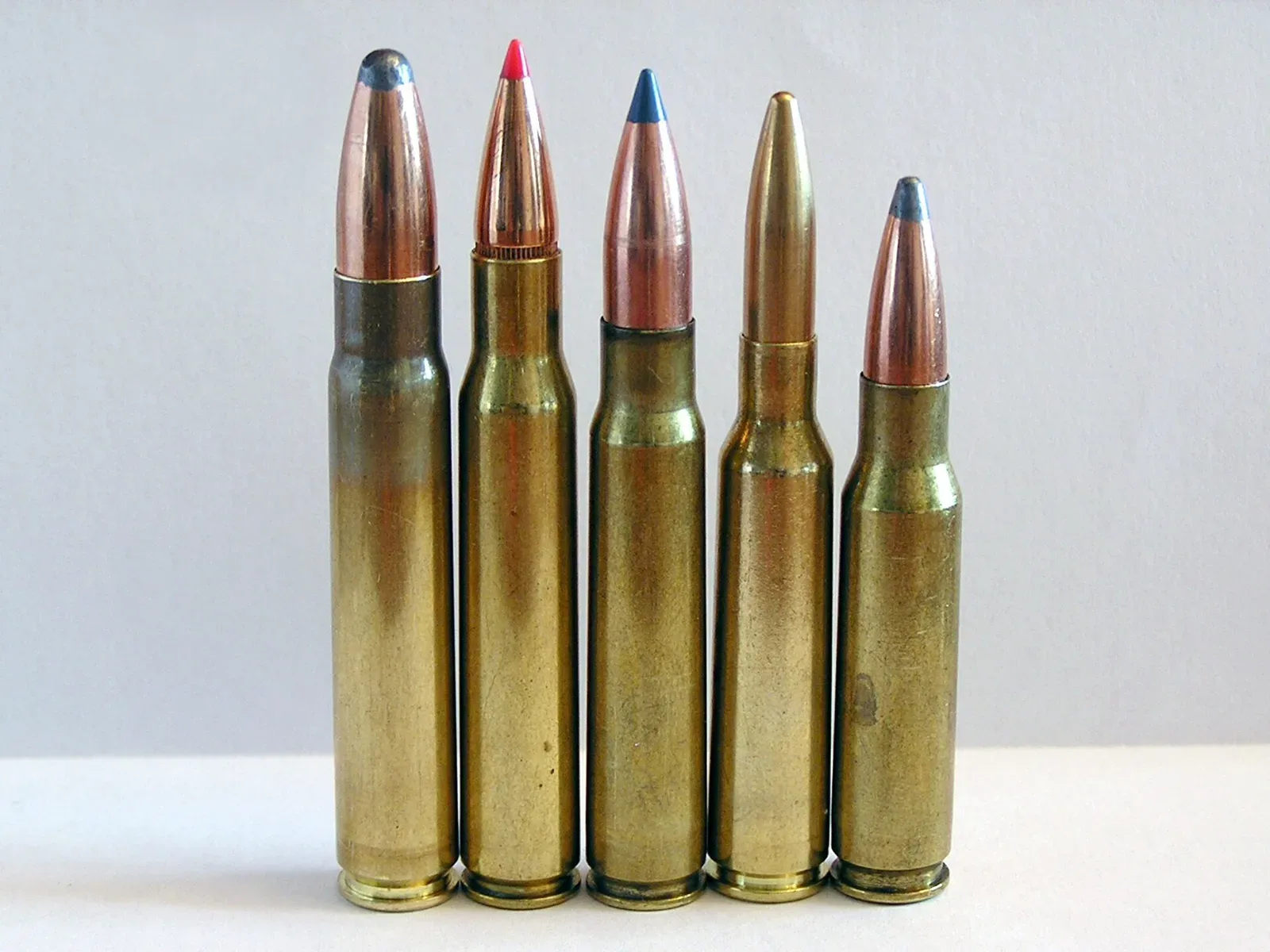
The 700 uses a push-feed bolt-action system -- not the controlled-feed design you'll find on a Mauser 98, but something optimized for smooth cycling and manufacturing efficiency. The cylindrical steel receiver gets machined from 4140 chrome-moly steel, measuring exactly 1.350 inches in diameter with precise threading for barrel installation.
Key features of the action design:
- Push-feed bolt-action system (not controlled-feed like Mauser 98)
- Cylindrical steel receiver machined from 4140 chrome-moly steel
- 1.350-inch diameter receiver with precise threading
- Dual opposing locking lugs at bolt head
- 90-degree bolt throw for smooth cycling
Bolt System
The bolt features dual opposing locking lugs at the bolt head, giving you a short 90-degree throw and even stress distribution when locked up. The extractor is a simple C-clip spring steel piece that grabs the cartridge rim, while a plunger ejector in the bolt face kicks spent cases clear of the action.
Remington 700 operating cycle showing the push-feed bolt system
Trigger and Safety
The trigger system -- currently called the X-Mark Pro -- ships set between 3.5 and 5 pounds from the factory. Earlier rifles used the Walker trigger, named after designer Mike Walker, which earned a reputation for crisp breaks and easy adjustment. The whole trigger assembly drops in and out as one unit, making swaps straightforward.
The internal box magazine loads through the top with a hinged floorplate for unloading. The magazine spring and follower present cartridges at the right angle for smooth feeding. The safety is a cross-bolt button behind the trigger guard that blocks both trigger and bolt when engaged.
Assembly and Bedding
Two action screws hold everything together -- one through the trigger guard tang, another up front. When properly torqued to spec (45-50 inch-pounds rear, 35-40 front), this gives you solid bedding and consistent accuracy.
| Specification | Value |
|---|---|
| Action Type | Bolt-action |
| Caliber | Various (.308 Win, 6.5 Creedmoor, .30-06, others) |
| Capacity | 4 rounds (internal magazine) |
| Barrel Length | 24.00 inches (standard) |
| Overall Length | 43.60 inches |
| Weight | 113.60 oz (7.1 lbs) |
| Receiver | Steel, cylindrical |
| Bolt | Two-lug, push-feed |
| Trigger | X-Mark Pro, adjustable |
| Safety | Cross-bolt behind trigger guard |
| Stock | Synthetic or wood |
| Finish | Matte blue or stainless steel |
Variants and Modelsedit
Entry-Level Models
The Model 700 SPS (Special Purpose Synthetic) is your entry-level option with a synthetic stock and matte blue finish. It's available in all the common hunting calibers and represents solid value for money.
The Model 700 ADL (Average Deluxe) uses a blind magazine without the hinged floorplate to keep costs down. The Model 700 BDL (Better Deluxe) brings back the floorplate along with Monte Carlo stock design and better materials.
Model 700 variant family tree showing different use categories
| Model | Key Features | Target Use |
|---|---|---|
| SPS | Synthetic stock, matte blue | Entry-level hunting |
| ADL | Blind magazine, basic features | Budget hunting |
| BDL | Hinged floorplate, Monte Carlo stock | Standard hunting |
| SPS Tactical | Heavy barrel, tactical stock | Precision shooting |
| PCR | Aluminum chassis system | Competition/tactical |
| Long Range | Extended heavy barrel | Long-range precision |
| Mountain SS | Stainless steel, lightweight | Backcountry hunting |
| Sendero | Heavy contour barrel | Long-range hunting |
Precision and Tactical Variants
For precision work, you've got options like the Model 700 SPS Tactical with heavy barrel profiles and tactical stocks, or the Model 700 PCR (Precision Chassis Rifle) that comes in an aluminum chassis system. The Model 700 Long Range features longer heavy barrels specifically for extended-range shooting.
Specialized Configurations
The Model 700 Mountain SS gives you stainless steel construction in a lightweight package for backcountry hunting. The Model 700 Sendero was the go-to for long-range precision with its heavy contour barrel and specialized stock.
Remington has produced dozens of variants over the years, including many discontinued models like the VS (Varmint Synthetic) and PSS (Police Sniper System) that still command strong prices on the used market.
Military and Law Enforcement Useedit
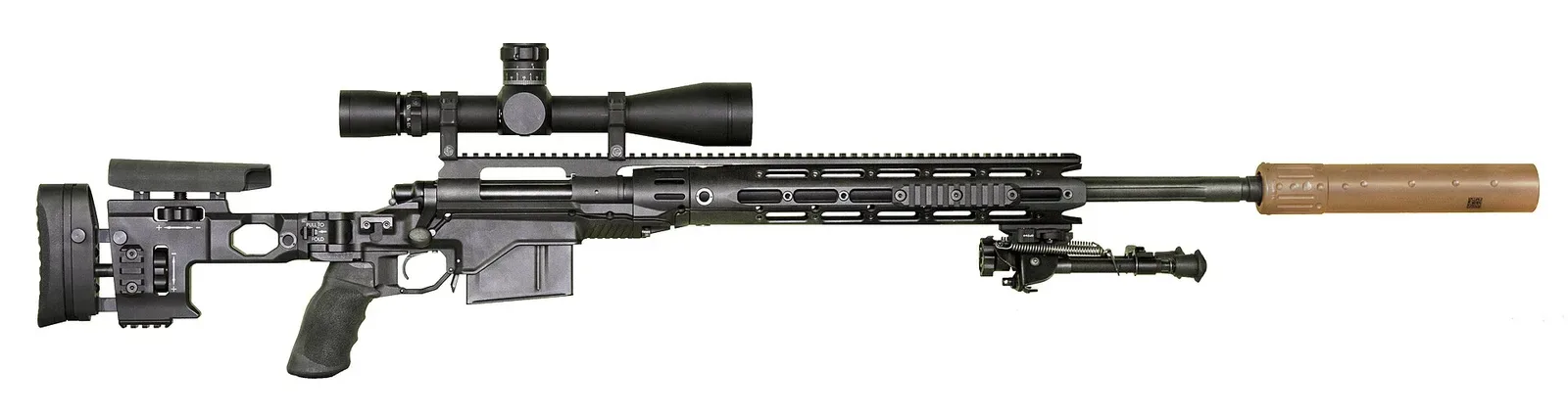
The military adoption of the 700 platform wasn't just about accuracy -- it was about having a reliable supply chain and known manufacturing tolerances that field armorers could work with.
The U.S. Army's M40 sniper rifle, adopted in 1966, featured a 24-inch heavy barrel and Redfield 3×9 scope. Marine snipers put these rifles to work in Vietnam, building the platform's reputation for battlefield accuracy. The M40A1 that followed in 1977 upgraded to a McMillan fiberglass stock and better scope mounting.
The Army's M24 Sniper Weapon System, adopted in 1988, took the 700 action and built a complete precision system around it. Over 10,000 M24 rifles saw service in Iraq, Afghanistan, and other theaters. These weren't just modified hunting rifles -- they were purpose-built military weapons that happened to share the same fundamental action design.
| Military Designation | Branch | Year Adopted | Key Features |
|---|---|---|---|
| M40 | U.S. Army | 1966 | 24" heavy barrel, Redfield 3×9 scope |
| M40A1 | U.S. Marine Corps | 1977 | McMillan fiberglass stock, improved optics |
| M24 SWS | U.S. Army | 1988 | Complete precision system, 10,000+ produced |
Law enforcement agencies worldwide adopted various 700 configurations for precision roles. Models like the 700 Police and PSS were specifically marketed to departments, featuring heavy barrels, tactical stocks, and finishes suitable for both urban and rural operations.
Civilian Use and Applicationsedit
Hunting Applications
Most 700s end up in deer camps and elk hunts, where they've earned their reputation for reliable accuracy across multiple generations of hunters. Short-action calibers like .243 Winchester and .308 Winchester handle deer and black bear, while long-action chamberings like .30-06 Springfield and .300 Winchester Magnum reach out for elk and moose.
Competitive Shooting
The competitive shooting world embraced the 700 early on. You'll find heavily modified 700 actions forming the foundation of custom rifles in F-Class, benchrest, and precision rifle competitions. The platform's dimensional consistency and aftermarket support make it a natural choice for serious competitors.
Aftermarket Support
What this means for you: No other bolt-action rifle comes close to the aftermarket support available for the 700. Companies like Timney, Jewell, and Trigger Tech make replacement triggers. Barrel manufacturers including Krieger, Bartlein, and Shilen offer precision barrels in every contour and caliber you could want.
No other bolt-action rifle comes close to the aftermarket support available for the 700. The standardized dimensions mean components swap easily between rifles.
Stock options range from hunting-focused designs by companies like Bell & Carlson to precision chassis systems from Accuracy International and KRG. Many gunsmiths built their entire business around accurizing and customizing 700s.
Custom Rifle Platform
The custom rifle market runs heavily on Remington 700 actions. Builders blueprint actions by squaring receiver faces, truing bolt faces, and lapping locking lugs to squeeze out every bit of accuracy potential. The standardized dimensions mean components swap easily between rifles.
The BGC Takeedit
After six decades and 5 million rifles, the Remington 700 remains the standard against which all other bolt-actions get measured. Is it perfect? No. The extraction can be finicky compared to a controlled-feed Mauser, and quality control had some rough patches during Remington's final years.
But here's what matters -- you can walk into any gun shop in America and find 700s, parts for 700s, and someone who knows how to work on 700s. The aftermarket support is unmatched, the accuracy potential is proven, and the basic design has stood the test of time.
If you're buying your first bolt-action rifle, starting a custom build, or just want something reliable for hunting season, the 700 delivers. The new RemArms production seems to have sorted out the quality issues, and the fundamental design remains as solid as ever.
The 700 isn't just a rifle -- it's a platform. You're working with 60 years of proven engineering and the largest aftermarket ecosystem in the bolt-action world.
See Alsoedit
- Winchester Model 70
- Savage Model 110
- Tikka T3
- Bergara B-14
- Ruger American Rifle
- Gls Guns(Sumner, IA)
- Bi-mart - Yakima (Fruitvale Ave)(Yakima, WA)
- New Philly Sportsman Specialities(New Philadelphia, OH)
- R&R Sports & Outdoors(Brandon, FL)
No reviews yet
Be the first to review the Remington 700. Share your experience with the community.
Write the First ReviewLoading comments...