Legal Details
Second Amendment
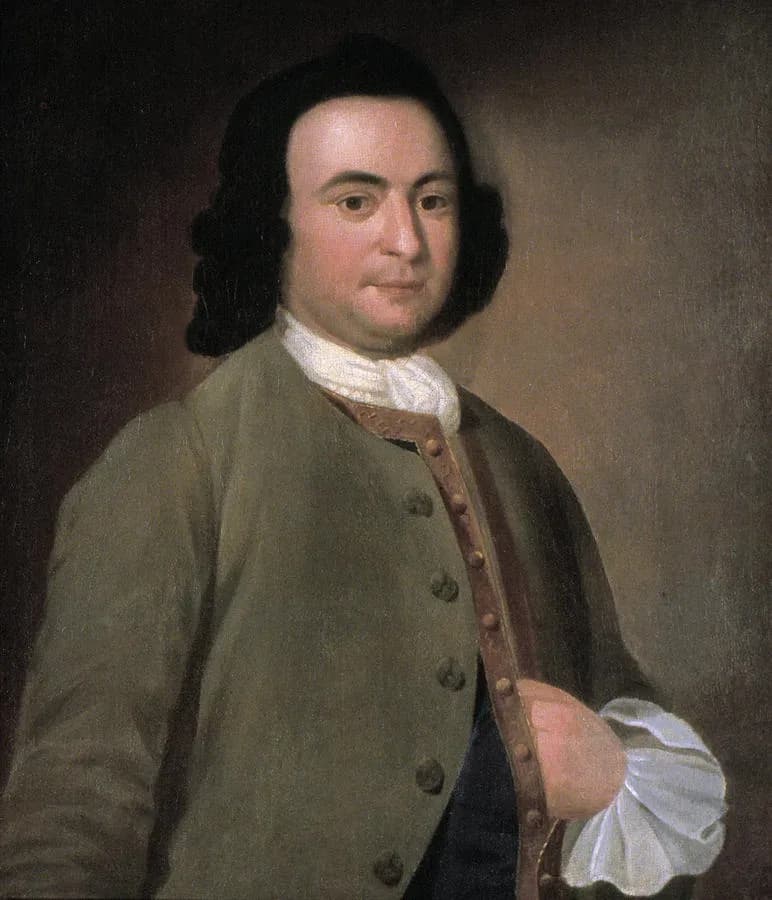
George Mason (1725–1792) drafted Virginia's Declaration of Rights, the primary textual ancestor of the Second Amendment's language.
After John Hesselius (Public domain)
| Identification | |
|---|---|
| Jurisdiction | |
Territory | United States (Federal) |
| Timeline | |
Signed | December 15, 1791 |
| Key Provisions | |
| |
| Applicability | |
| Applies To | All people of the United States |
Second Amendment to the United States Constitution
Firearms encyclopedia article
From The Boise Gun Club Handbook
Overviewedit
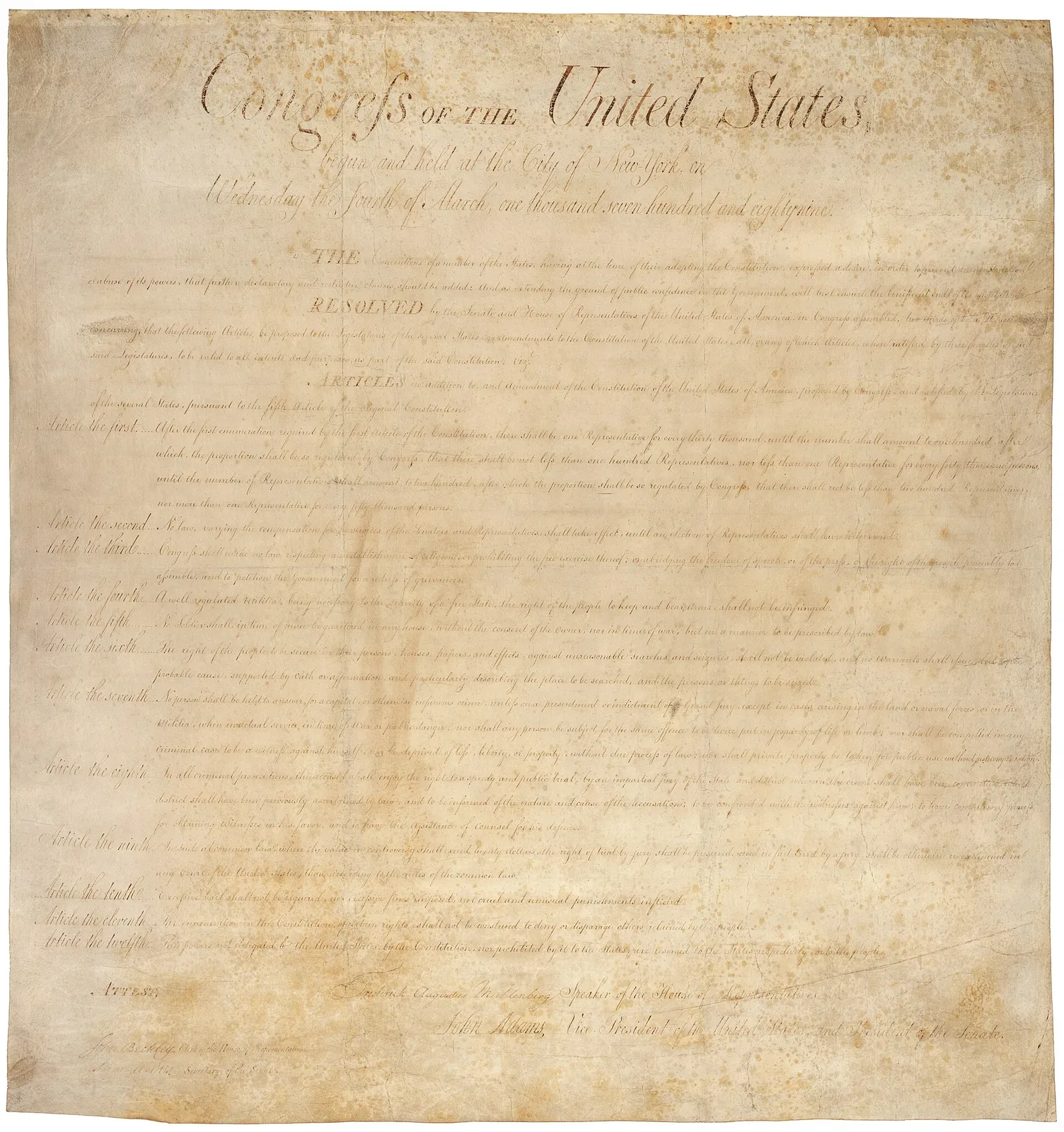
The Second Amendment to the United States Constitution reads:
A well regulated Militia, being necessary to the security of a free State, the right of the people to keep and bear Arms, shall not be infringed.
Ratified on December 15, 1791, as part of the Bill of Rights, those twenty-seven words have generated more sustained legal and political controversy than almost any other clause in American constitutional history.
For most of the nineteenth and twentieth centuries, the amendment sat largely dormant in federal courts. That changed decisively in the twenty-first century.
- District of Columbia v. Heller (2008) - first Supreme Court confirmation of individual right
- McDonald v. City of Chicago (2010) - extended protection against state and local governments
- New York State Rifle & Pistol Association, Inc. v. Bruen (2022) - overhauled analytical framework
- United States v. Rahimi (2024) - refined the framework again
Second Amendment doctrine is still actively being built.
Backgroundedit
The English Inheritance
The right to keep and bear arms did not spring from nowhere in 1791. Its most direct ancestor is the English Bill of Rights of 1689, which emerged from a particularly turbulent stretch of English politics. King James II had used select, loyal militias to suppress Protestant opposition, disarming subjects he regarded as threats to his government.
When James was overthrown in the Glorious Revolution and replaced by William III and Mary II, Parliament codified the assurance that Protestant subjects could have arms suitable to their condition and as allowed by law. The Supreme Court, in Heller, described the English right at the time of the 1689 Bill as "clearly an individual right, having nothing whatsoever to do with service in the militia" — a right not to be disarmed by the Crown. The historical link between that document and the Second Amendment was explicitly acknowledged by the Court.
William Blackstone gave the most influential pre-founding description of the right in his 1765 Commentaries on the Laws of England, calling it:
The fifth and last auxiliary right of the subject — a public allowance of the natural right of resistance and self-preservation, when the sanctions of society and laws are found insufficient to restrain the violence of oppression.
Blackstone's framing was widely read by the American founding generation and shows up repeatedly in their arguments. The British Militia Act of 1757 also mattered. That act declared a "well-ordered and well-disciplined militia" essentially necessary to the kingdom's safety. It influenced Timothy Pickering's 1775 militia discipline plan, which he submitted to George Washington, and which the Massachusetts Bay Council adopted on May 1, 1776 as the discipline for their militia.
America Before the Constitution
By the 1760s, the colonial situation had sharpened everyone's thinking about arms. The established colonial militia included loyalists alongside patriots, and as tensions with Britain escalated, patriot colonists grew to distrust loyalists in the ranks. Some patriots formed their own independent militias and began stocking separate armories.
The British Parliament responded with an embargo on firearms, parts, and ammunition to the American colonies. King George III began disarming individuals in the most rebellious areas. When British and loyalist forces moved to seize patriot militia armories in the early phase of the Revolution, the patriots cited the English Declaration of Right, Blackstone's summary of it, and their own militia laws in protest. A 1769 Boston newspaper editorial put it plainly: "It is a natural right which the people have reserved to themselves, confirmed by the Bill of Rights, to keep arms for their own defence."
The armed forces that won the Revolution were a mix of the standing Continental Army, French forces, and state and regional militias. After victory, the country governed itself under the Articles of Confederation — a structure that Federalists found dangerously weak, in part because the standing army had been reduced to as few as 80 men. When armed Pennsylvania farmers rose in Shays' Rebellion in the mid-1780s and the federal government proved unable to suppress it, the inadequacy of the existing arrangement became hard to ignore.
State Constitutions Before the Bill of Rights
Several states had already written arms-bearing rights into their own constitutions before the federal amendment existed. The Pennsylvania Constitution of 1776 stated in Article 13: "That the people have a right to bear arms for the defence of themselves and the state." This is the first use of the phrase "right to bear arms" in the context of American constitutional law. Virginia (June 1776), North Carolina (December 1776), Vermont (July 1777), Massachusetts (June 1780), Maryland, and New York all adopted related provisions. The specific language varied — some tied the right explicitly to militia duty and hostility to standing armies, others mentioned personal self-defense directly — but the underlying consensus was broad enough that the Founders could draw on it when drafting the federal amendment.
| State | Year | Constitutional Provision |
|---|---|---|
| Pennsylvania | 1776 | "The people have a right to bear arms for the defence of themselves and the state" |
| Virginia | June 1776 | Arms bearing for defense of state |
| North Carolina | December 1776 | Right to bear arms provision |
| Vermont | July 1777 | Arms bearing rights |
| Massachusetts | June 1780 | Right to keep and bear arms |
| Maryland | 1776 | Related militia provisions |
| New York | 1777 | Related arms provisions |
The Constitutional Convention and the Path to the Bill of Rights
In March 1785, delegates from Virginia and Maryland met at the Mount Vernon Conference to address problems with the Articles of Confederation. A follow-up meeting in Annapolis in 1786 scheduled the Constitutional Convention of May 1787, which produced the Constitution. That document gave Congress sweeping new authority over the militia and the power to raise standing armies — a massive shift of military power from the states to the federal government.
This shift alarmed Anti-Federalists. They feared that Congress could neglect the militia, raise an overwhelming standing army, and use it to subdue the states. Federalists, including James Madison, initially argued a bill of rights was unnecessary. Madison wrote in Federalist No. 46 that a federal army would be checked by the militia: "a standing army would be opposed [by] militia" backed by state governments. Noah Webster made the same point more bluntly — before a standing army can rule, the people must be disarmed, and Americans were armed.
The Federalists ultimately recognized they lacked enough votes to ratify the Constitution without promising a bill of rights. That compromise brought enough Anti-Federalist support to secure ratification. The Constitution was declared ratified on June 21, 1788, when nine states approved it. The remaining states followed, though North Carolina and Rhode Island waited until after Congress had already passed the Bill of Rights.
Drafting the Second Amendment
Madison brought his initial proposal to the House of Representatives on June 8, 1789. His first draft read:
"The right of the people to keep and bear arms shall not be infringed; a well armed and well regulated militia being the best security of a free country: but no person religiously scrupulous of bearing arms shall be compelled to render military service in person."
A House committee reworked it on July 28, reordering the clauses so that the militia language came first and specifying the militia as "composed of the body of the people." The House debated and modified the text through August. The debates centered largely on the conscientious objector clause — representatives worried that giving the government power to define who was "religiously scrupulous" would allow it to destroy the militia the same way the British had tried. The House sent its version to the Senate on August 24, 1789.
| Date | Event | Significance |
|---|---|---|
| June 8, 1789 | Madison presents first draft | Initial proposal with conscientious objector clause |
| July 28, 1789 | House committee revision | Reordered clauses, militia defined as "body of the people" |
| August 1789 | House debates | Focus on conscientious objector clause concerns |
| August 24, 1789 | House passes version | Sent to Senate for consideration |
| September 9, 1789 | Senate revision | Removed "body of the people," conscientious objector clause |
| September 21, 1789 | House accepts | Final congressional approval |
| December 15, 1791 | Ratification | Adopted as part of Bill of Rights |
The Senate stripped the clause defining the militia as "composed of the body of the people," changed "the best security" to "necessary to the security," and removed the conscientious objector clause entirely. A proposal to insert "for the common defence" after "bear arms" was defeated. The Senate returned a final version on September 9, which the House accepted on September 21. The enrolled joint resolution, placed on permanent display in the Rotunda, reads:
"A well regulated Militia, being necessary to the security of a free State, the right of the People to keep and bear Arms, shall not be infringed."
On December 15, 1791, the Bill of Rights was adopted after ratification by three-fourths of the states. Connecticut, Massachusetts, and Georgia did not ratify at the time and added their ratifications in 1939.
Notably, Senate debates on the Second Amendment do not survive in recorded form. The documentary record of Bill of Rights debates consists of deliberations in the House of Representatives.
The Militia After Ratification
On May 8, 1792, Congress passed the First Militia Act, requiring every free able-bodied white male citizen between 18 and 45 to enroll and to provide himself with a musket or firelock, bayonet, cartridges, and related equipment within six months.
- Every free able-bodied white male citizen aged 18-45 must enroll in militia
- Must provide musket or firelock, bayonet, and cartridges within six months
- Compliance rates ranged from 10-65 percent for weapons
- Penalties enforced sporadically across states
The first real test came in July 1794 with the Whiskey Rebellion in western Pennsylvania. Efforts to raise a militia for nationalization proved inadequate; most of the roughly 13,000 soldiers lacked required weapons, and the War Department provided nearly two-thirds of them with guns. President George Washington and General Harry Lee marched on 7,000 rebels who conceded without fighting. The episode exposed the gap between the amendment's idealized citizen-soldier and the reality on the ground.
The militia's poor condition contributed to multiple American defeats in the War of 1812, including the sacking of Washington, D.C., and the burning of the White House in 1814. In the twentieth century, Congress passed the Militia Act of 1903, which divided the militia into the National Guard and an unorganized reserve militia. Federal law today defines the militia as all able-bodied males aged 17 to 44 who are citizens or intend to become one, plus female citizens who are members of the National Guard.
Key Argumentsedit
The Founding-Era Debate
The core tension at the founding was not individual rights versus collective rights in the modern sense — that framing came much later. The Federalist-Anti-Federalist argument was about whether the Constitution gave the federal government too much military power over the states. Both sides agreed the government should not disarm the citizenry. They disagreed about whether an armed populace could actually deter federal oppression.
Alexander Hamilton argued in Federalist No. 29 that a well-regulated militia would render a large standing army unnecessary, and that citizens "little, if at all, inferior to them in discipline and the use of arms" would serve as the only reliable substitute. Patrick Henry, arguing against ratification in the Virginia convention, warned:
Guard with jealous attention the public liberty. Suspect everyone who approaches that jewel. Unfortunately, nothing will preserve it but downright force.
George Mason stressed that the militia consisted of the whole people, and that history showed the most effective way to enslave a people was to disarm them. Noah Webster made the arithmetic plain: the supreme power cannot enforce unjust laws by the sword when the whole body of the people are armed and constitute a force superior to any regular troops.
These arguments — anti-tyranny, anti-standing-army, and individual self-defense — all fed into the same amendment but emphasized different things. Scholars Thomas B. McAffee and Michael J. Quinlan concluded that Madison "did not invent the right to keep and bear arms when he drafted the Second Amendment; the right was pre-existing at both common law and in the early state constitutions." Historian Jack Rakove has argued, by contrast, that Madison's main intention was to reassure moderate Anti-Federalists that state militias would not be disarmed.
The Slavery Question
A separate and contested strand of historical argument holds that the Second Amendment's final form was shaped by Southern slaveholders' need to protect state slave patrols from federal interference. Professor Carl T. Bogus of Roger Williams University Law School has argued that Madison redrafted the amendment specifically to assure Southern states — particularly Virginia — that the federal government could not undermine slave control by disarming state militias.
Legal historian Paul Finkelman finds this scenario implausible. He points out that Henry and Mason were political enemies of Madison's and neither was in Congress when Madison drafted the Bill of Rights. Finkelman acknowledges Madison drafted the amendment to protect states' ability to maintain their militias, but argues "the amendment had nothing to do with state police powers, which were the basis of slave patrols." Professor Finkelman's position is that the specific claim of a Second Amendment intent to protect slave revolts is not supported by the historical record.
The debate reflects a genuine complexity: the founding generation held multiple simultaneous purposes for the amendment — anti-tyranny, militia defense, individual self-defense — and the people drafting it were themselves embedded in a society that enslaved human beings. Both things can be true without one fully determining the other.
The Collective vs. Individual Rights Debate
The modern legal debate over the Second Amendment's meaning crystallized in the late twentieth century around two competing models. The collective rights model held that the amendment protects only the right of states to maintain armed militias — that individual citizens have no constitutional right to keep firearms independent of militia service. Prior to 2001, every federal circuit court decision that interpreted the Second Amendment endorsed this model.
The individual rights model held that the Second Amendment protects a personal right of individuals to keep and bear arms, regardless of militia membership. A middle position, the "sophisticated collective right model," recognized some limited individual right but tied it to active participation in a functioning organized state militia — a position some scholars argued was functionally equivalent to the collective rights model.
The Fifth Circuit's 2001 decision in United States v. Emerson broke from the collective rights consensus, determining that the Second Amendment protects an individual right. The Ninth Circuit conflicted with Emerson in Silveira v. Lockyer, while the D.C. Circuit supported it in Parker v. District of Columbia — which became District of Columbia v. Heller.
Decision & Rulingedit
Key Supreme Court Cases
| Case | Year | Key Holding | Impact |
|---|---|---|---|
| U.S. v. Cruikshank | 1876 | 2A only restricts federal government | Limited scope to Congress only |
| Presser v. Illinois | 1886 | Confirmed federal-only limitation | States could regulate militia activities |
| U.S. v. Miller | 1939 | Weapons must relate to militia efficiency | Ambiguous standard, first federal test |
| D.C. v. Heller | 2008 | Individual right, home self-defense | Revolutionary shift from collective model |
| McDonald v. Chicago | 2010 | 2A applies to states via 14th Amendment | Extended Heller nationwide |
| Caetano v. Massachusetts | 2016 | Protection extends to modern arms | Affirmed technological evolution |
| NYSRPA v. Bruen | 2022 | History-and-tradition test | Replaced interest-balancing approach |
| U.S. v. Rahimi | 2024 | Refined historical analogies | Clarified Bruen methodology |
United States v. Cruikshank (1876) arose from the Colfax Massacre, in which white men killed more than sixty Black people in Louisiana. The Court dismissed charges that the defendants had conspired to prevent Black citizens from exercising their right to bear arms. The Second Amendment, the Court held, "means no more than that it shall not be infringed by Congress" — it restricted only the federal government, not private individuals or state actors. For their protection, people must look to the states.
Presser v. Illinois (1886) reaffirmed Cruikshank. Herman Presser led a 400-man armed paramilitary parade through Chicago in violation of a state law requiring a governor's permit. The Court upheld the law, confirming the Second Amendment limited only the federal government — though the Court added that states could not prohibit citizens from keeping and bearing arms to the extent it would deprive the United States of its military reserve.
United States v. Miller (1939) was the first case to test a federal firearms law against the Second Amendment. Jack Miller and Frank Layton transported an unregistered short-barreled shotgun across state lines in violation of the National Firearms Act. The Court held unanimously that the amendment does not guarantee the right to keep a weapon that has no "reasonable relationship to the preservation or efficiency of a well regulated militia." The holding was widely described afterward as ambiguous — gun rights advocates read it as protecting militia-type weapons; gun control advocates read it as tying the right to militia service. Law professor Andrew McClurg captured the consensus: "the only certainty about Miller is that it failed to give either side a clear-cut victory."
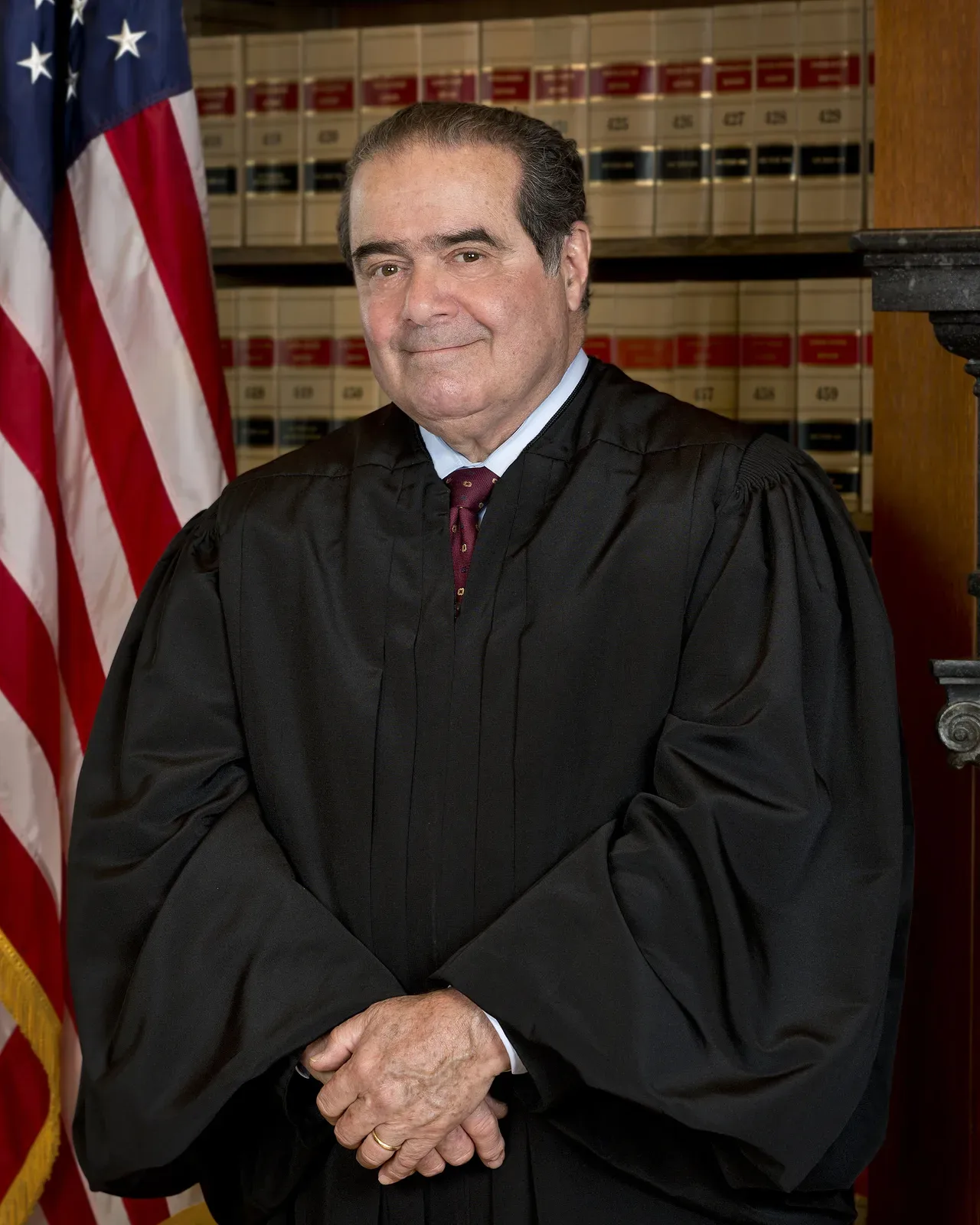
District of Columbia v. Heller (2008) resolved the collective-versus-individual debate. The District of Columbia had effectively banned handgun possession in the home and required lawful firearms to be disassembled or trigger-locked. Dick Heller, a special police officer, was denied a license to keep a handgun at home. The Supreme Court, in a 5-4 decision written by Justice Antonin Scalia, held that the Second Amendment protects an individual right to possess a firearm unconnected with militia service, and to use it for traditionally lawful purposes — including self-defense in the home.
Justice Scalia's opinion worked through the text carefully. The operative clause — "the right of the people to keep and bear Arms, shall not be infringed" — controls; the prefatory militia clause announces a purpose but does not limit the operative clause. Nowhere else in the Constitution does a right attributed to "the people" refer to anything other than an individual right. "Arms" covered weapons not specifically designed for military use. "Keep" means possess; "bear" means carry for confrontation. The Court struck down D.C.'s handgun ban and its trigger-lock requirement.
The majority was explicit that the right is not unlimited:
- Right is not unlimited - longstanding prohibitions on felons and mentally ill remain valid
- Carrying restrictions in sensitive places like schools and government buildings permitted
- Commercial sale regulations and licensing requirements allowed
- Protected arms are those "in common use" for lawful purposes
- "Dangerous and unusual weapons" not protected
Justice Anthony Kennedy was the crucial fifth vote and reportedly requested that the opinion include language affirming these limitations. Justice John Paul Stevens, joined by three dissenters, wrote that the Second Amendment was adopted to protect the right of each state to maintain a well-regulated militia, and that nothing in the text or the framers' intentions showed any interest in limiting legislative authority over private civilian firearms use.
McDonald v. City of Chicago (2010) answered the next question: does Heller bind the states? Chicago had a handgun ban similar to D.C.'s. The Court held 5-4 that the Second Amendment is incorporated against state and local governments through the Due Process Clause of the Fourteenth Amendment. Justice Clarence Thomas concurred but argued the correct vehicle was the Privileges or Immunities Clause. The Court reiterated that:
Self-defense is a basic right, recognized by many legal systems from ancient times to the present day, and is the central component of the Second Amendment right.
Caetano v. Massachusetts (2016) was a per curiam decision vacating a conviction for carrying a stun gun. The Court reiterated that the Second Amendment extends to all instruments that constitute bearable arms, even those not in existence at the founding, and that protection is not limited to weapons useful in warfare.
New York State Rifle & Pistol Association, Inc. v. Bruen (2022) struck down New York's "may-issue" concealed carry licensing regime, which required applicants to show "proper cause" before a license would issue. The Court ruled 6-3 that the law violated the Second and Fourteenth Amendments. More significantly, the majority rejected the interest-balancing test lower courts had been applying and replaced it with a history-and-tradition test: regulations must be justified by demonstrating consistency with the nation's historical tradition of firearm regulation. When a modern law addresses a problem that existed at the founding, the government must show a historical regulation with a comparable burden and justification.
United States v. Rahimi (2024) refined Bruen. A federal law prohibited persons subject to certain domestic-violence restraining orders from possessing firearms. The Court upheld the law 8-1, with Justice Thomas — the author of Bruen — as the lone dissenter. The majority held that historical laws disarming people who posed a public threat confirmed a general principle: the government may disarm anyone who presents a clear threat of physical violence to another. Importantly, the Court clarified that the Bruen history-and-tradition test calls for analogous principles and general historical reasoning, not strict matches with founding-era statutes. Lower courts had been struggling with Bruen's demands for precise historical analogues; Rahimi gave them more room to work.
Impact on Gun Rightsedit
Doctrinal Evolution
Before Heller, the Second Amendment was functionally irrelevant in federal court for most purposes. Every circuit that had addressed the question since 1939 had applied the collective rights model, which left legislatures broad freedom to regulate firearms.
Heller changed the baseline: individual possession for self-defense is now a constitutional right, not a statutory privilege. But the scope of that right remained contested for years after Heller.
Lower federal courts generally upheld challenged gun laws by applying interest-balancing tests that weighed the government's regulatory interest against the burden on the right. Bruen shut that approach down. Courts must now work from history and tradition — a methodology that has produced uneven results and conflicting decisions at the circuit level as courts work out what historical analogues actually establish.
| Regulation Type | Pre-Heller Status | Post-Bruen Status | Key Changes |
|---|---|---|---|
| Handgun bans | Often upheld | Presumptively invalid | Core 2A protection |
| Concealed carry licensing | May-issue systems common | Shall-issue required | Objective criteria only |
| Domestic violence prohibitions | Generally upheld | Upheld in Rahimi | Historical threat-disarmament principle |
| Sensitive place restrictions | Broad deference | Historical grounding required | Schools, government buildings preserved |
| Commercial sales regulations | Minimal scrutiny | History-based review | Some dealer requirements survive |
| Registration requirements | Generally upheld | Mixed results | Simple registration vs. knowledge tests |
| Serial number requirements | Rarely challenged | Some restrictions struck | Obliterated serial numbers affected |
Practical Applications
The practical effect has been mixed. Some previously settled regulations were struck down in the wake of Bruen — including bans on firearms with obliterated serial numbers and, in some circuits, restrictions on firearms in the hands of domestic abusers — before Rahimi brought the domestic-violence prohibition back. The Third Circuit ruled in 2023 that a lifetime firearms ban resulting from a nonviolent conviction could violate the Second Amendment. The D.C. Circuit struck down a regulation requiring gun owners to pass a knowledge test or re-register firearms every three years, but upheld fingerprinting, photography, and safety training requirements.
On carrying firearms in public: the Seventh Circuit held in 2012 that Heller and McDonald extended to public carry, leading Illinois — the last state to prohibit concealed carry — to pass a shall-issue carry law in July 2013 after the legislature overrode a governor's veto. Bruen itself addressed public carry directly, confirming it is a protected right subject to shall-issue-type regulations with objective criteria.
Incorporation through McDonald means the Second Amendment now constrains every level of government. Questions the Court has not yet definitively resolved include the status of non-citizens and the full scope of permissible restrictions beyond the categories Heller listed as "presumptively lawful." As the Constitution Center's analysis notes, Second Amendment doctrine "remains profoundly unsettled" — the Court has not offered a fully consistent approach to Bruen's test, and lower courts continue to produce conflicting rulings.
The BGC Takeedit
This is The Idaho Steward's opinion — clearly labeled as such and not sourced from the reference materials above.
Here's what strikes me after reading through all of this: the Second Amendment has always meant multiple things at once, and pretending otherwise is how you end up in bad-faith arguments that go nowhere. The founders loaded several different concerns into one sentence — resistance to tyranny, functional state militias, individual self-defense, and in some states almost certainly the maintenance of slave control — and they didn't resolve the tension between those concerns. They just ratified the sentence and moved on.
Heller settled the question of whether the right is individual. It is. That was the right call based on the text, the historical record, and the consistent understanding of early American legal commentators from Tucker through Cooley. The collective-rights model required courts to read "the right of the people" as meaning something it means nowhere else in the Constitution, which is a hard position to defend with a straight face.
What Heller didn't settle — and what Bruen is still working through — is the hard question of what regulations survive. The history-and-tradition test sounds clean until you try to apply it. Eighteenth-century America didn't have semiautomatic pistols, red-flag laws, background check systems, or mass shootings at the scale we see today. Finding meaningful historical analogues for every modern regulatory question is going to keep courts busy for a generation, which may be exactly what the Bruen majority intended — or it may just be what happens when you build doctrine on history that was never written with these questions in mind.
The one thing I'd push back on, from the gun-owner side, is the tendency to treat Heller's individual right as absolute. Justice Scalia was explicit: it's not. The right doesn't cover every weapon in every circumstance. A constitutional right to keep a handgun at home for self-defense is meaningful. It just doesn't answer every question that comes after it.
Referencesedit
- https://en.wikipedia.org/wiki/Second_Amendment_to_the_United_States_Constitution
- https://constitutioncenter.org/the-constitution/amendments/amendment-ii/interpretations/99
- https://constitution.congress.gov/constitution/amendment-2/
- https://www.vanholaw.com/blog/2025/may/the-history-and-background-of-the-second-amendme/
- https://www.law.cornell.edu/constitution-conan/amendment-2/historical-background-of-the-second-amendment
- https://www2.law.ucla.edu/Volokh/2amteach/sources.htm
- https://constitution.findlaw.com/amendment2.html
Last Updated: February 27, 2026
- Gls Guns(Sumner, IA)
- Bi-mart - Yakima (Fruitvale Ave)(Yakima, WA)
- New Philly Sportsman Specialities(New Philadelphia, OH)
- R&R Sports & Outdoors(Brandon, FL)
Loading comments...