Legal Details
D.C. v. Heller
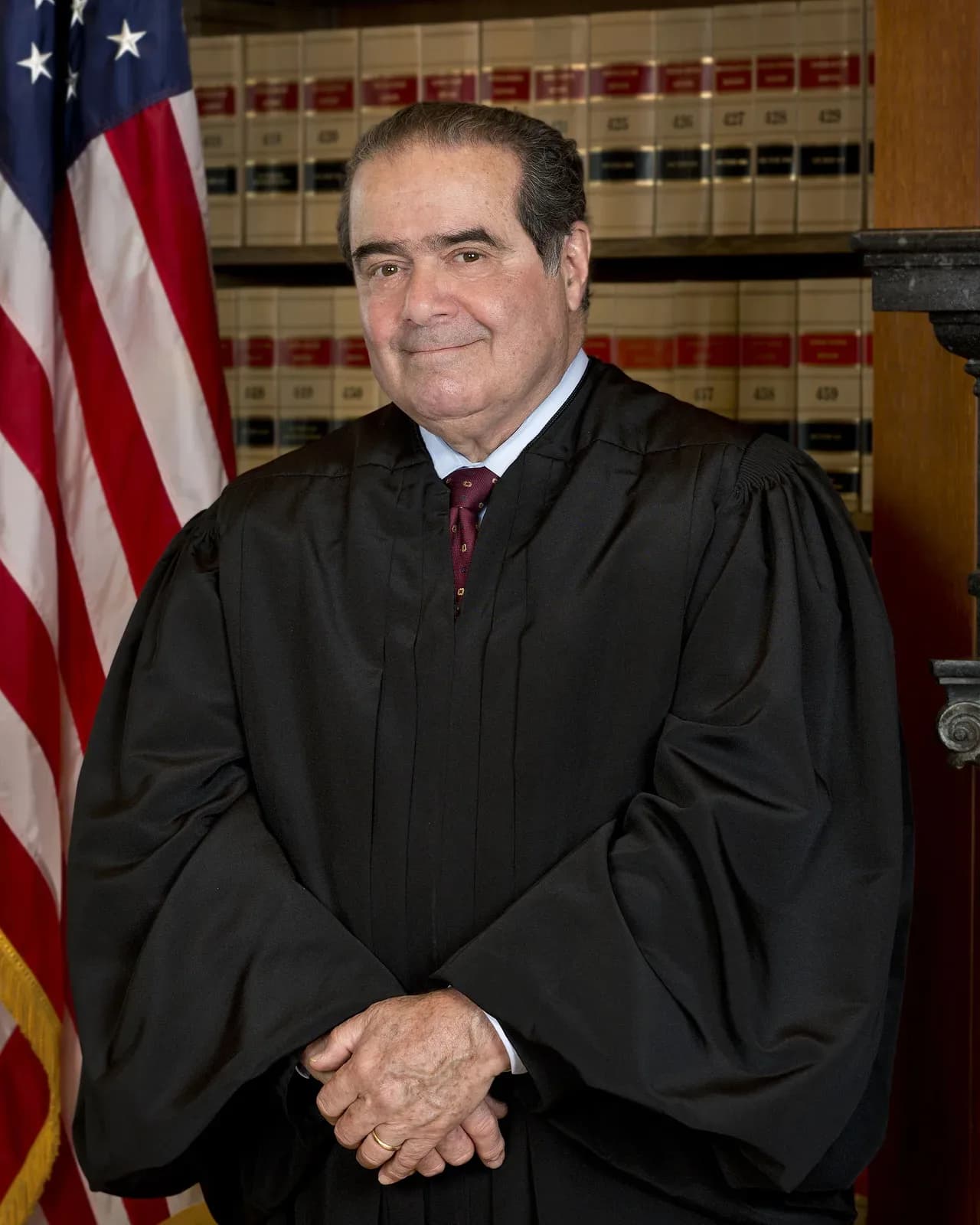
Justice Antonin Scalia authored the majority opinion in District of Columbia v. Heller, establishing an individual right to firearm ownership.
Collection of the Supreme Court of the United States (Public domain)
| Identification | |
|---|---|
| Jurisdiction | |
Territory | United States (Federal) |
| Timeline | |
Signed | June 26, 2008 |
| Key Provisions | |
| |
| Applicability | |
| Applies To | Individuals seeking to exercise Second Amendment rights |
District of Columbia v. Heller (2008)
Firearms encyclopedia article
From The Boise Gun Club Handbook
Overviewedit
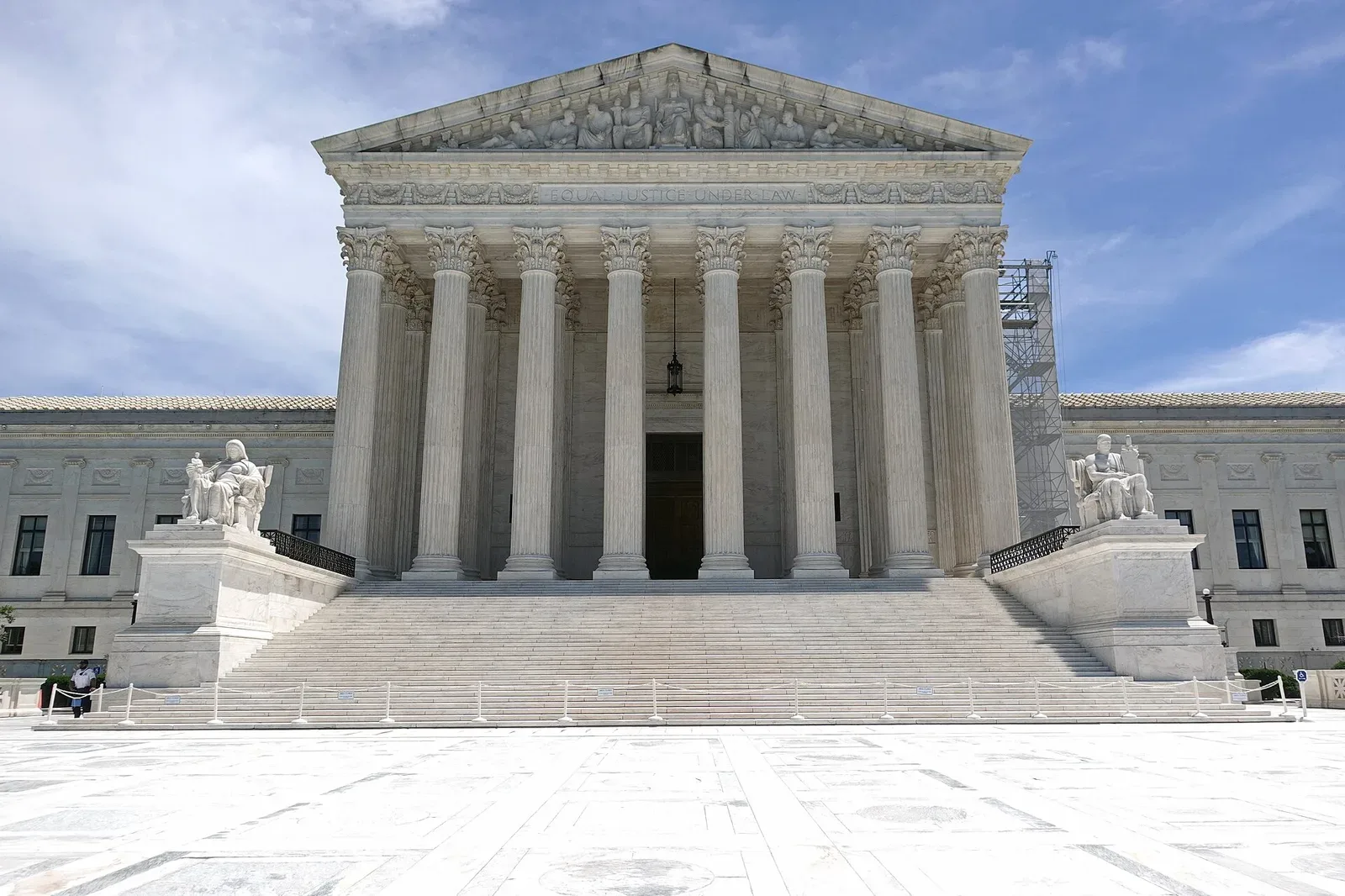
District of Columbia v. Heller, 554 U.S. 570 (2008), is the Supreme Court case that answered the question American gun owners and lawmakers had been arguing about for generations: does the Second Amendment protect an individual's right to own a firearm, or is it only about arming state militias? On June 26, 2008, the Court said yes — it's an individual right — and struck down the District of Columbia's handgun ban along with its requirement that all other lawfully owned firearms be kept unloaded, disassembled, or bound by a trigger lock.
The vote was 5 to 4. Justice Antonin Scalia wrote the majority opinion. It was the first time since United States v. Miller in 1939 that the Supreme Court had directly addressed the scope of the Second Amendment — a gap of nearly seven decades.
What Heller did not do is just as important as what it did:
- Left Second Amendment application to state and local governments unresolved
- Did not specify standard of judicial review for lower courts
- Explicitly carved out long list of constitutionally permissible firearm restrictions
- Generated more than 1,370 follow-on cases in eleven years
Backgroundedit
The D.C. Gun Ban
The law at the center of the case was the Firearms Control Regulations Act of 1975, enacted by the D.C. Council in response to rising gun violence and accidental deaths. The Act banned the registration of handguns outright — with a narrow grandfather exception for handguns registered before 1975 and those held by active or retired law enforcement — and required that all other lawfully owned firearms, including rifles and shotguns, be kept unloaded and either disassembled or secured with a trigger lock at all times.
For context, these were widely regarded as the most restrictive gun laws in the nation at the time.
Building the Constitutional Challenge
In 2002, Robert A. Levy, a senior fellow at the Cato Institute, began building a constitutional challenge to those laws. Levy — a constitutional scholar who had never owned a gun — personally financed the effort and worked with attorney Clark M. Neily III to vet plaintiffs. Their model was deliberately strategic: they wanted a diverse group of ordinary D.C. residents whose circumstances would make the constitutional injury obvious to a court, modeled consciously after Thurgood Marshall's approach to dismantling school segregation.
The Plaintiffs
They selected six plaintiffs ranging from their mid-20s to early 60s, three men and three women, four white and two Black:
| Plaintiff | Age Range | Occupation | Location/Situation | Desired Outcome |
|---|---|---|---|---|
| Tracey Ambeau (Hanson) | Mid-20s to early 60s | USDA employee | Union Station area, high-crime neighborhood | Handgun for home defense |
| Dick Anthony Heller | Mid-20s to early 60s | Licensed special police officer | Southeast D.C., near Kentucky Courts housing | Keep work firearm at home |
| George Lyon | Mid-20s to early 60s | Communications lawyer | D.C. resident | Handgun to complement rifles/shotguns |
| Tom G. Palmer | Mid-20s to early 60s | Cato Institute colleague | D.C. resident | Handgun for self-defense |
| Shelly Parker | Mid-20s to early 60s | Software designer/former nurse | Anti-drug activist, threatened by dealers | Handgun for protection |
| Gillian St. Lawrence | Mid-20s to early 60s | Georgetown mortgage broker | Owns registered long guns | Handgun for home defense |
Lower Court Proceedings
In February 2003, all six filed suit in the District Court for the District of Columbia, challenging the constitutionality of the Firearms Control Regulations Act under the Second Amendment. District Court Judge Emmet G. Sullivan dismissed the lawsuit on March 31, 2004.
On appeal, the U.S. Court of Appeals for the D.C. Circuit reversed that dismissal 2-1. Senior Circuit Judge Laurence H. Silberman wrote the court's opinion; Circuit Judge Karen L. Henderson dissented. The appeals court found that only Heller — who had actually applied for a handgun permit and been denied — had standing to sue. On that narrowed basis, it struck down D.C.'s handgun ban and the trigger lock requirement as unconstitutional.
Henderson's dissent argued that the Second Amendment simply did not apply to D.C. residents because the District is not a state. The District and Mayor Adrian Fenty petitioned for rehearing en banc in April 2007; the D.C. Circuit denied it 6-4 in May. D.C. then petitioned the Supreme Court, which granted certiorari on November 20, 2007.
Timeline of the Heller case from initial planning through Supreme Court decision
NRA Opposition
A notable backstory: Dick Anthony Heller had previously approached the National Rifle Association about a lawsuit to challenge the D.C. gun ban, and the NRA declined. When Levy's team moved forward independently, the NRA actively tried to derail the litigation — fearing that a Supreme Court with the composition it had at the time might rule against individual gun rights and set a damaging precedent. Lead counsel Alan Gura used the phrase "sham litigation" in a 2003 filing to describe the NRA's attempts to have the case consolidated with its own challenge. Levy later stated the NRA's interference "almost killed the case."
NRA chief executive Wayne LaPierre confirmed the organization's misgivings: "There was a real dispute on our side among the constitutional scholars about whether there was a majority of justices on the Supreme Court who would support the Constitution as written." The NRA eventually filed an amicus brief supporting the plaintiffs' position once the case was moving forward.
Key Argumentsedit
Oral Arguments Structure
Oral arguments were heard on March 18, 2008. Each side was initially allotted 30 minutes, with U.S. Solicitor General Paul D. Clement allotted 15 minutes to present the federal government's position. The argument ran 23 minutes over the allotted time.
Walter E. Dellinger of O'Melveny & Myers — a Duke University Law School professor and former Acting Solicitor General — argued D.C.'s case. Alan Gura of Gura & Possessky argued for Heller, with Levy and Neily as co-counsel.
The Core Constitutional Dispute
The core dispute came down to how you read the Second Amendment's two clauses. The amendment reads: "A well regulated Militia, being necessary to the security of a free State, the right of the people to keep and bear Arms, shall not be infringed."
| Position | Second Amendment Interpretation | Key Legal Theory | Proposed Outcome |
|---|---|---|---|
| D.C. (Dellinger) | Prefatory clause limits the right | Right exists only for organized militia service | Uphold handgun ban |
| Heller (Gura) | Operative clause is the protected right | Individual right, prefatory clause states purpose only | Strike down ban |
| Federal Gov't (Clement) | Individual right with limitations | Middle ground approach | Remand for narrower ruling |
D.C. argued the prefatory clause — the militia language — defined and limited the right. The right existed only in the context of organized militia service, and a complete handgun ban was therefore constitutional as applied to ordinary civilians.
Heller's side argued the operative clause — "the right of the people to keep and bear Arms, shall not be infringed" — was the actual right being protected, and that the prefatory clause stated a purpose without limiting the scope of what followed. On this reading, the "people" who hold Second Amendment rights are the same people who hold First and Fourth Amendment rights: individuals.
Federal Government's Middle Position
The federal government's position, presented by Paul D. Clement, was somewhere in the middle — it agreed the Second Amendment protects an individual right but urged the Court to remand rather than strike down the D.C. law, arguing for a more limited ruling. Vice President Dick Cheney, acting in his role as President of the Senate, joined a congressional amicus brief urging the Court to affirm the lower court ruling, breaking with the George W. Bush administration's official position. A majority of states — represented in a brief authored by Texas Attorney General Greg Abbott and his solicitor general, Ted Cruz — also filed in support of affirmance. Then-Illinois Senator Barack Obama did not sign that brief; Arizona Senator John McCain did.
The Dissenting Position
The four dissenters — Justices John Paul Stevens, David Souter, Ruth Bader Ginsburg, and Stephen Breyer — argued that the Second Amendment was designed to protect the states' ability to maintain militias, that the Founders would have made any individual right explicit if that had been the intent, and that two centuries of lower court interpretation treating the amendment as militia-related constituted precedent that should not be casually overturned. Justice Breyer's separate dissent proposed an "interest-balancing" approach — essentially asking courts to weigh Second Amendment protections against the government's interest in preventing crime — and argued that even under an individual-rights reading, D.C.'s handgun ban would survive that analysis.
Decision & Rulingedit
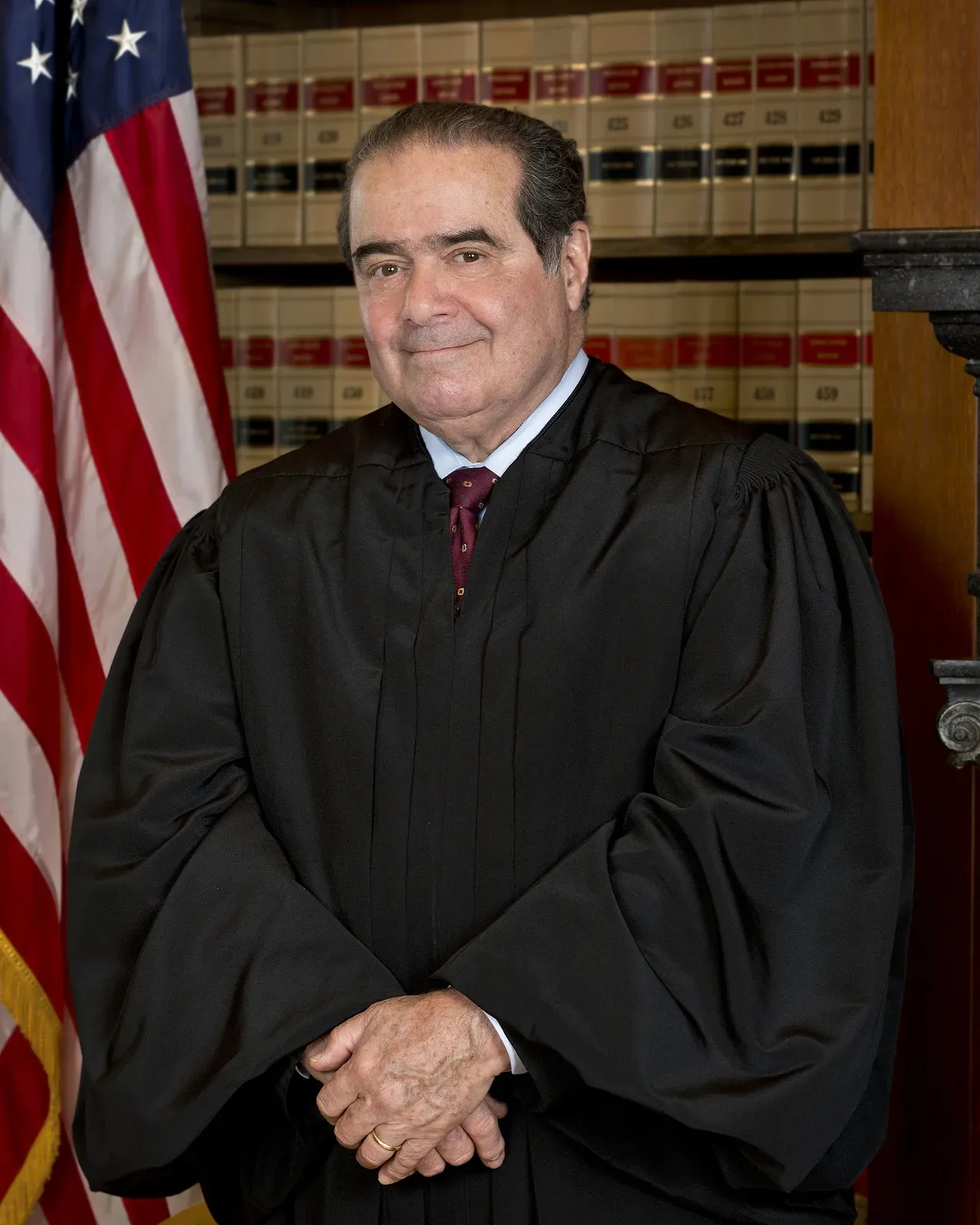
The Supreme Court affirmed the D.C. Circuit's ruling on June 26, 2008, by a vote of 5 to 4.
Scalia's majority opinion interpretation of Second Amendment structure and meaning
The Three Main Holdings
Justice Scalia's majority opinion rested on three main holdings:
| Holding | Constitutional Principle | Practical Effect |
|---|---|---|
| Individual Right | Second Amendment protects individual firearm possession unconnected to militia service | Establishes constitutional baseline for gun ownership |
| Limited Right | Right subject to "longstanding prohibitions" and regulations | Preserves existing regulatory framework categories |
| Core Protection | Total handgun bans violate amendment as applied to self-defense | D.C. must permit Heller's handgun registration |
Individual Right Established
First, the Second Amendment protects an individual right to possess a firearm unconnected with militia service, for traditionally lawful purposes such as self-defense within the home. Scalia's analysis treated the prefatory clause as announcing a purpose — preserving the citizens' militia — without limiting the operative clause's broader guarantee. The "people" to whom the right belongs are the same people who hold First and Fourth Amendment protections. Scalia also surveyed state constitutions, historical scholarship, and post-ratification commentary to support the conclusion that the right to keep and bear arms had always been understood as belonging to individuals.
Limitations and Exceptions
Second, the right is not unlimited. The majority opinion explicitly stated:
Nothing in our opinion should be taken to cast doubt on longstanding prohibitions on the possession of firearms by felons and the mentally ill, or laws forbidding the carrying of firearms in sensitive places such as schools and government buildings, or laws imposing conditions and qualifications on the commercial sale of arms.
The opinion also indicated that concealed carry prohibitions had historically been upheld, and drew on Miller's "common use" language to suggest that weapons not typically possessed by law-abiding citizens for lawful purposes — the Court mentioned short-barreled shotguns and, by implication, M-16-style weapons — could be regulated or banned. Handguns, as the weapon Americans most commonly choose for home defense, could not be.
Application to D.C. Laws
Third, D.C.'s handgun ban and trigger lock requirement violated the Second Amendment as applied to self-defense. A total ban on an entire class of arms that citizens overwhelmingly choose for lawful self-defense fails constitutional scrutiny.
The trigger lock requirement was separately unconstitutional because it made it impossible to use a firearm for the core purpose the amendment protects. The Court's remedy was specific: assuming Heller was not otherwise disqualified from exercising Second Amendment rights, D.C. must permit him to register his handgun and issue him a license to carry it in the home.
The majority opinion deliberately left unresolved which standard of judicial review — strict scrutiny, intermediate scrutiny, or something else — lower courts should apply when evaluating Second Amendment claims. Scalia rejected Breyer's interest-balancing approach, noting that no other enumerated constitutional right had its core protection subjected to a freestanding interest-balancing test. But the Court declined to fill that gap with a clear standard of its own, which created significant uncertainty in the lower courts.
The Dissents
Justice Stevens's dissent called the majority's reading "a strained and unpersuasive" interpretation that constituted "a dramatic upheaval in the law." He argued the Founders would have been explicit about any individual right to self-defense separate from militia service, pointing to the absence of such language compared to contemporaneous state constitutions that did include it. Justice Stevens later called Heller "unquestionably the most clearly incorrect decision that the Supreme Court announced during my tenure on the bench" and called for a constitutional amendment overruling it.
The Court did not address incorporation — whether the Second Amendment applies to the states — because D.C. is a federal enclave, not a state. That question was answered in McDonald v. City of Chicago (2010), which held that the Second Amendment is incorporated against the states through the Fourteenth Amendment's Due Process Clause.
Impact on Gun Rightsedit
Immediate D.C. Implementation Problems
The immediate practical effect in D.C. was more complicated than the headline suggested. Dick Heller went to register a semi-automatic pistol shortly after the ruling — and was rejected. The District interpreted its new regulations to classify all bottom-loading, magazine-fed firearms as equivalent to machine guns, a reading that effectively excluded most modern semi-automatic handguns. Revolvers would likely not fall under the ban.
Heller filed a follow-on civil suit challenging those new restrictions; on March 26, 2010, D.C. District Judge Ricardo M. Urbina denied Heller's request for summary judgment. The D.C. Council also unanimously passed the Firearms Registration Emergency Amendment Act of 2008 on December 16, 2008, which updated the District's registration framework while adding new requirements.
D.C. also indicated it would use zoning ordinances to prevent firearms dealers from operating in the District — meaning residents who could legally own a gun still had significant difficulty actually acquiring one.
National Legal Response
Outside D.C., the ruling triggered a wave of litigation and legislative action. The NRA filed a lawsuit against the city of Chicago over its handgun ban on the day of the ruling, followed the next day by a suit against San Francisco's public housing handgun ban. The San Francisco Housing Authority settled out of court, permitting residents to possess legal firearms in SFHA apartment buildings.
| Jurisdiction | Action Taken | Timeline | Outcome |
|---|---|---|---|
| Chicago, IL | NRA filed lawsuit | Day of Heller ruling | Led to McDonald v. Chicago (2010) |
| San Francisco, CA | NRA sued over public housing ban | Day after Heller | Housing Authority settled out of court |
| Morton Grove, IL | Repealed complete handgun ban | Post-Heller | First U.S. city to ban handguns (1981) reversed course |
| Wilmette, IL | Repealed 19-year handgun ban | Post-Heller | Compliance with new precedent |
| Evanston, IL | Partially repealed handgun ban | Post-Heller | Modified existing restrictions |
Morton Grove, Illinois — the first city in the U.S. to completely ban handgun possession, in 1981 — repealed its ban. Wilmette, Illinois repealed its 19-year handgun ban. Evanston partially repealed its own ban. Three other Illinois municipalities with handgun prohibitions also rescinded them.
Federal Case Law Development
In Idaho, Morris v. U.S. Army Corps of Engineers (January 10, 2014) applied Heller's home-defense reasoning to outdoor recreation areas: the District Court for the District of Idaho struck down a Corps of Engineers regulation barring loaded firearms in recreation areas surrounding Corps dams, holding that tents are sufficiently analogous to homes that Second Amendment protections apply.
On the national litigation front, according to the Giffords Law Center, more than 1,370 Second Amendment cases had been filed in lower federal courts as of May 2019. In the vast majority of those cases, the gun law being challenged was upheld. Lower courts leaned heavily on Scalia's dicta about permissible regulations — felony prohibitions, sensitive places, commercial sale conditions — as the framework for evaluating whether a particular law survived.
UCLA constitutional law professor Adam Winkler observed:
What gun rights advocates are discovering is that the vast majority of gun control laws fit within these categories.
Robert Levy, who funded the litigation, expressed frustration with that passage in Scalia's opinion: "I would have preferred that that not have been there," saying it "created more confusion than light."
The failure to specify a standard of review created real problems. Lower courts developed varying two-step frameworks. That lack of clarity ultimately fed into the next major Second Amendment case, New York State Rifle & Pistol Association, Inc. v. Bruen (2022), in which the Supreme Court ruled that the ability to carry a pistol in public is a constitutional right guaranteed by the Second Amendment — and replaced the lower courts' interest-balancing tests with a text-and-history standard.
Scholarly and Political Reactions
Reactions to Heller from legal scholars cut across ideological lines in ways that don't fit neatly into gun-politics camps. Seventh Circuit Judge Richard Posner — a Reagan appointee — compared it to Roe v. Wade and described Scalia's originalism as yielding the opposite of what a genuine originalist analysis would produce, calling it "faux originalism." Fourth Circuit Chief Judge J. Harvie Wilkinson III argued that Heller represented the same kind of judicial activism that conservatives had criticized in the Warren Court era. Lead counsel Alan Gura rejected both critiques, arguing that the Court had simply applied the Second Amendment's original public meaning as confirmed by its text.
The Brady Campaign to Prevent Gun Violence had urged D.C. to modify its laws rather than appeal before certiorari was granted. After the ruling, Brady Campaign president Paul Helmke took the position that Heller had actually clarified the limits of the Second Amendment in a way that should put the "slippery slope" argument to rest — the Court had rejected both total bans and the absolutist reading that any regulation is unconstitutional.
The BGC Takeedit
Heller is one of those decisions that almost everyone claims vindicated their position, which tells you something.
Gun rights advocates got the essential holding they'd been arguing for since the amendment was ratified: it's an individual right, not a collective one tied to militia service. That much is real, and it matters. For most of the 20th century, the collective-rights interpretation dominated federal courts, and the practical consequence was that legislatures could effectively treat the Second Amendment as a dead letter. Heller ended that.
But the decision is also genuinely messier than either side admits. Scalia's majority opinion explicitly blessed a long list of gun regulations — felon prohibitions, sensitive places, commercial sale conditions — without saying how far those categories extend or what scrutiny applies. That wasn't an oversight; Justice Kennedy apparently pushed for language that would limit Heller's disruptive effect on existing gun laws.
The honest assessment is that Heller established an important principle and then left almost everything downstream of that principle to be fought out case by case in lower courts that had little guidance and often less enthusiasm for the right it recognized.
The result is a constitutional right with a clearly stated core and almost completely undefined edges. What that produced in the lower courts for the next fourteen years wasn't a clear doctrine — it was a guessing game. Courts invented their own two-step tests, applied varying levels of scrutiny, and generally upheld whatever gun law was in front of them by finding it fit somewhere in Scalia's list of permissible exceptions. Over 1,370 cases, and gun rights challengers lost most of them. That's not the picture either side was painting in June 2008.
The practical experience of Dick Heller himself — the man the case is named after — is instructive. He won at the Supreme Court, walked down to register his pistol, and got rejected because D.C. decided his magazine-fed semi-automatic counted as a machine gun. He had to file another lawsuit. That's not a legal system that took the ruling seriously; it's a legal system running out the clock.
Bruen in 2022 was, in part, the Supreme Court's acknowledgment that the lower court free-for-all wasn't working. The argument about what the Second Amendment actually protects — beyond the specific handgun-in-the-home fact pattern in front of the Heller Court — is still very much live.
Referencesedit
- https://en.wikipedia.org/wiki/District_of_Columbia_v._Heller
- https://www.oyez.org/cases/2007/07-290
- https://www.bradyunited.org/resources/issues/district-of-columbia-v-heller
- https://pmc.ncbi.nlm.nih.gov/articles/PMC2728671/
- https://www.ebsco.com/research-starters/law/district-columbia-v-heller
- https://www.scotusblog.com/cases/case-files/dc-v-heller/
- https://supreme.justia.com/cases/federal/us/554/570/
Last Updated: February 27, 2026
- Gls Guns(Sumner, IA)
- Bi-mart - Yakima (Fruitvale Ave)(Yakima, WA)
- New Philly Sportsman Specialities(New Philadelphia, OH)
- R&R Sports & Outdoors(Brandon, FL)
Loading comments...