Details
Smart Gun Technology

| Origins | |
|---|---|
| Invented | 1997 |
| Country | United States |
| Timeline | |
| Era | Late 20th century to present |
| Impact | |
| Significance | Technology designed to restrict firearm operation to authorized users through RFID, biometric, or other authentication methods to prevent unauthorized use and reduce accidental deaths and weapon theft. |
Smart Gun Technology: A History of Promise, Politics, and Persistent Problems
Firearms encyclopedia article
From The Boise Gun Club Handbook
Overviewedit
A smart gun—also called a personalized firearm—is any firearm that incorporates technology to restrict operation to one or more authorized users. The core idea is straightforward: the gun works for you, and for nobody else. In practice, that idea has proven deceptively difficult to execute, and the technology's 30-year development arc is as much a story about politics and market dynamics as it is about engineering.
Two primary technologies have driven smart gun development. Radio frequency identification (RFID) uses a coded signal between a wearable token—a ring, watch, or bracelet—and a receiver embedded in the firearm. When the token is within range, the gun is authorized to fire; when it isn't, the firing mechanism stays locked. Biometric recognition takes a different approach, reading a physiological characteristic—most commonly a fingerprint—directly from the user's hand, authenticating identity before enabling the trigger. More recent designs have combined fingerprint scanning with 3D infrared facial recognition, functioning in much the same way a modern smartphone unlocks.
Beyond those two categories, researchers have explored:
- Dynamic handgrip recognition (DGR) — authenticating based on unique pressure patterns
- Ultrasonic token systems — using inaudible sound frequencies for proximity linking
- Combined biometric approaches — multiple authentication methods with redundancy
Each approach carries different tradeoffs in speed, durability, reliability under stress, and susceptibility to spoofing.
The technology has never lacked for advocates or detractors, and it has rarely lacked for political entanglement. Understanding where smart guns stand today requires understanding where they've been.
Development Historyedit
Early Government Programs (1997-2005)
The earliest serious government-funded smart gun research in the United States dates to 1997, when Colt's Manufacturing received over $500,000 from the Department of Justice to develop a pistol that would only fire when the user wore the correct RFID-enabled wristband. Colt produced two prototypes by 1998. Testing found them too unreliable to warrant further development, and the project was scrapped.
That same year, gun advocates organized a boycott of Colt products, costing the company millions in sales—an early demonstration of the commercial risk that would shadow the entire field.
| Year | Company/Organization | Technology | Funding | Outcome |
|---|---|---|---|---|
| 1997-98 | Colt's Manufacturing | RFIC wristband | $500K+ DOJ | Too unreliable, scrapped |
| 1998 | Jonathan Mossberg | RFID ring (iGun M-2000) | Private | Functional prototype, never mass produced |
| 1999-2005 | Smith & Wesson | PIN, fingerprint, grip sensors | $3.7M DOJ | 8 patents, 2 prototypes only |
| 2000 | FN Herstal | RFID ring | $2.6M DOJ | 3 "erratic" prototypes, abandoned |
| 2006-2015 | Armatix | RFID watch (iP1/.22 cal) | Private | Defcon hack demo, bankruptcy |
| 2012 | Kodiak Industries | Fingerprint retrofit (Intelligun) | Private | Did not reach production |
| 2013 | Safe Gun Technologies | Fingerprint retrofit kit | Private | Did not reach production |
| 2014-present | Biofire Technologies | Fingerprint + 3D facial recognition | $40M VC | First commercial shipments 2024 |
Also in 1998, Jonathan Mossberg created the iGun M-2000, a shotgun that required the shooter to wear a passive RFID ring to fire. The iGun is generally considered the first fully functional smart gun—it worked—but it was never mass produced. Mossberg has said in interviews that his family's company, O.F. Mossberg & Sons, was unwilling to absorb the boycott risk that had already hit Colt.
The iGun's RFID system used an ultra-low frequency, patented design. When the shooter gripped the weapon, a lever in the stock was depressed, generating a signal to the ring. The ring transmitted a coded response. Only after a second matching verification did the firearm enable. The system was factory-integrated—not an add-on—and was designed so that the authorization process would be invisible to a trained shooter.
Smith & Wesson entered the picture around 1999, developing smart guns that incorporated PINs, fingerprint sensors, and grip sensors. The company's involvement deepened under political pressure: in March 2000, S&W struck a deal with the Clinton administration, promising to continue developing smart gun technology as part of a broader agreement intended to reduce the company's exposure to municipal lawsuits.
The gun industry responded with a boycott that nearly bankrupted the company before it was sold to new ownership. Despite the backlash, S&W continued development quietly until approximately 2005, ultimately receiving $3.7 million in total DOJ grants and filing eight smart gun patents. Only two prototypes were officially produced.
In 2000, FN Herstal—the Belgian manufacturer with a significant American subsidiary—received $2.6 million from the DOJ to develop RFID ring-based smart guns. Three prototypes were built. Testing described them as behaving "erratically," and the program was abandoned.
The New Jersey Effect (2002-2019)
Meanwhile, New Jersey passed a law in 2002 that would prove to have consequences far beyond its borders. The statute was written as an incentive: once any smart gun became commercially available anywhere in the United States, New Jersey dealers would eventually be required to sell only smart guns. The intent was to push the market forward. The effect was the opposite.
No manufacturer wanted their product to be the trigger that imposed a statewide sales mandate, so the law created a powerful disincentive to bring any smart gun to market. It became the single most-cited factor in chilling development throughout the following decade.
Private Sector Attempts (2006-2015)
In 2006, German company Armatix began developing what would become the iP1, a .22-caliber pistol that required the shooter to wear a paired RFID watch—the iW1—within 10 inches of the firearm to enable firing. Armatix announced plans to ship to the U.S. market in 2014. At least two American dealers stocked it that year—one in California, one in Maryland—and both stopped selling it shortly after amid organized pressure from gun rights advocates.
The New Jersey Attorney General examined the iP1 in November 2014 and determined it did not meet the state's smart gun standards because anyone within 10 inches of the watch could fire it, regardless of identity. That same year, a presenter at Defcon demonstrated that the iP1's RFID security could be spoofed to fire the gun from as far as 20 feet from the watch—and then showed the system could be defeated using nothing more than magnets, a piece of wood, and a screw. Armatix filed for bankruptcy in 2015.
In 2012, Kodiak Industries developed the Intelligun, a fingerprint-based locking system installed in the handle of a standard 1911 .45-caliber handgun. The system was designed as a retrofittable add-on, available through Kodiak or licensed dealers. It did not reach production.
In 2013, Safe Gun Technologies built a fingerprint-based smart gun prototype on a Remington 870 shotgun, targeting both civilian and law enforcement markets as a retrofit kit. It also did not reach production.
Also ongoing during this period was the New Jersey Institute of Technology's Childsafe Weapons Project, led by Professor Donald Sebastian. NJIT's work focused on dynamic handgrip recognition—the hypothesis that the pattern of pressure a specific person applies while gripping and firing a handgun is unique enough to serve as a biometric identifier. NJIT built a prototype with 32 pressure sensors and achieved a high recognition rate in limited testing. The approach is notable because it requires no separate sensor pad or token—authentication happens through the act of holding the gun—but independent research on a representative sample size had not been completed as of the sources available here.
Modern Developments (2014-Present)
In 2014, Kai Kloepfer, then a teenager in Colorado, began developing a pistol frame with an integrated fingerprint sensor, partly motivated by the 2012 Aurora, Colorado theater shooting. He received a grant from the Smart Tech Challenges Foundation, attended MIT, and eventually left to found Biofire Technologies full time. As of 2024, the company employed over 30 people and had raised $40 million in venture capital.
Ireland-based Triggersmart began smart gun research in 2010, building demonstration models on a shotgun, handgun, and rifle using high-frequency RFID. Legal changes in Ireland regarding firearm ownership shifted the company's target platform to an MP5. The Triggersmart system replaced a firearm's lower receiver with a smart-enabled unit—factory add-on in function, if not from the original manufacturer.
Free State Firearms (formerly SmartGunz) of Baldwin City, Kansas, developed Sentry pistols that pair with a coded RFID ring. In November 2024, the company announced an agreement to sell the pistols through a dealer in Ottawa, Kansas—approximately a year after six law enforcement agencies completed beta testing.
LodeStar Works of Pennsylvania and Tennessee developed a Glock-pattern 9mm pistol frame with multiple redundant authentication options: two fingerprint sensors, a PIN pad built into the grip, and a Bluetooth smartphone app. The company stated a sale price of $895 for complete pistols. As of available sources, the product remained in testing.
How It Worksedit
The mechanics of smart gun authentication differ substantially depending on the technology platform, but all current approaches share one design requirement: the firearm must default to a locked, inoperable state and require positive authorization before it can fire.
RFID Token Systems
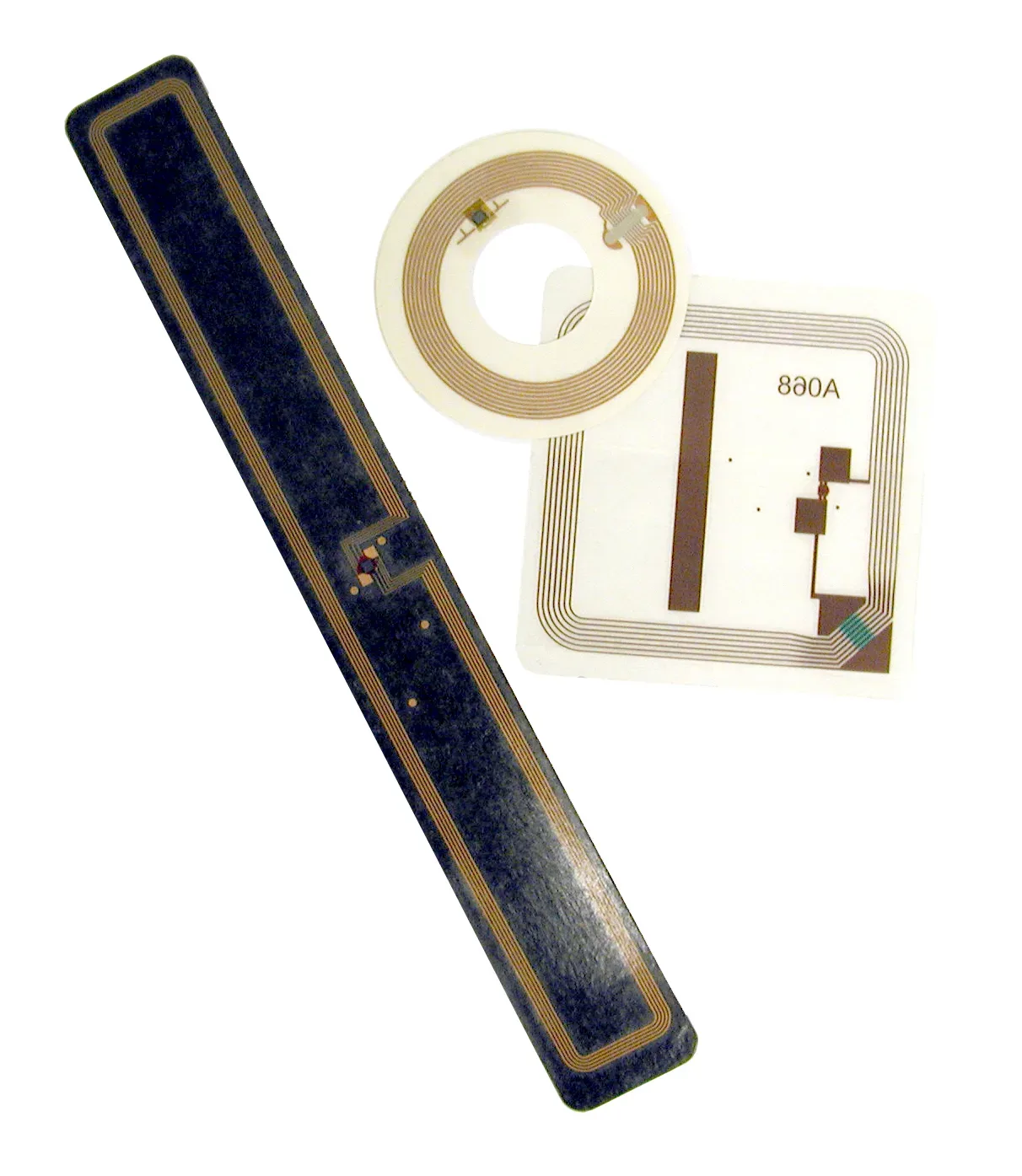
In RFID token-based systems, the weapon contains a powered reader and the token—ring, watch, or wearable—contains a passive or active chip. When the token is within the reader's range, a coded signal is exchanged. In the iGun M-2000's implementation, the shooter's grip on the weapon initiates the signal exchange, and firing is enabled only after the code is matched twice. The range is deliberately short—typically a few inches—to prevent unauthorized users from firing simply by being near someone wearing the token.
RFID's practical advantage is that it functions through gloves, in rain, and in mud. Its vulnerability is that the token can be stolen, and—as the Armatix hack demonstrated—the signal can potentially be spoofed.
Biometric Authentication
In fingerprint biometric systems, a sensor is positioned where a shooter's finger naturally rests during a firing grip. The sensor reads the print, compares it against an encrypted on-device database, and either enables or maintains the lock within a fraction of a second. The Biofire system extends this with a rear-facing 3D infrared facial recognition camera, functioning in complete darkness, so either the fingerprint or the face can independently authorize the weapon. Laser sensors in the grip detect whether the authorized user maintains contact; if the gun is set down, dropped, or taken, it locks immediately.
Biofire's system is notable for its fire-by-wire firing mechanism—the trigger has no mechanical connection to the striker. This is a significant design departure. Every other modern defensive pistol uses a direct mechanical linkage; the Biofire's trigger sends an electronic signal. The company designed the pistol from the ground up to accommodate the circuitry required, including a proprietary barrel lockup (not a Browning tilting-barrel design) and proprietary magazines, because standard magazine catch locations interfered with the fingerprint pad placement.
For dynamic handgrip recognition, the authentication happens passively through a pressure-sensor array embedded in the grip. The system measures how a specific person applies force across the grip surface while preparing to fire and compares it to a registered baseline. Unlike fingerprint or facial systems, there is no discrete sensor pad to find or disable—the entire grip is the sensor.
| Technology | Authentication Method | Range/Contact | Advantages | Vulnerabilities |
|---|---|---|---|---|
| RFID Token | Coded signal exchange | Few inches | Works through gloves, rain, mud | Token theft, signal spoofing |
| Fingerprint Biometric | Print comparison to encrypted database | Direct contact | Unique to individual | Sensor degradation, dirty hands |
| 3D Facial Recognition | Infrared facial mapping | Line of sight | Works in darkness | Lighting conditions, facial changes |
| Dynamic Handgrip | Pressure pattern analysis | Grip contact | No separate token/sensor pad | Limited testing, grip variation |
| Ultrasonic Token | Sound frequency proximity | Short range | Inaudible to humans | Range limitations, interference |
Engineering Challenges
All current approaches face a shared engineering challenge stated plainly in the 2016 Report to the President:
When something is made of multiple components, it is only as reliable as its least reliable component.
Adding electronics, sensors, software, and a power source to a mechanical system that has been refined for reliability over more than a century means accepting new failure modes. Dead batteries, circuit corrosion, software failure, and sensor degradation under field conditions are real considerations—not theoretical ones.
Impact on Warfare and Societyedit
Smart gun technology has not yet reached the battlefield or patrol car in any meaningful deployment, but both the military and law enforcement communities have been cited repeatedly in development rationale—and both present specific operational challenges that general consumer designs don't fully address.
Law Enforcement Applications
For law enforcement, the primary use case is weapon retention. According to data cited in the sources, over 7% of police officers killed in the line of duty between 2010 and 2019 were first disarmed, and nearly 4% were killed with their own weapons. A firearm that cannot be fired by anyone other than its enrolled user eliminates this category of fatality.
The April 2016 joint report from the Departments of Defense, Justice, and Homeland Security explicitly addressed law enforcement needs, and the Obama administration's November 2016 baseline specifications for law enforcement service pistols incorporated personalization technology requirements.
For the military, smart gun advocates point to the problem of captured or stolen weapons being turned against their original owners—a persistent issue throughout firearms history. GPS and reporting features in some smart gun concepts would also allow command elements to track weapon location and discharge events, simplifying accountability in the field. The 2016 presidential report acknowledged the cost and complexity of these development goals directly.
| Problem Category | Statistics | Smart Gun Prevention Potential |
|---|---|---|
| Law Enforcement Deaths | 7% of officers killed (2010-2019) first disarmed | Eliminates weapon retention fatalities |
| Youth Gun Deaths | 70-90% used guns from home/relatives | Blocks unauthorized access |
| Unintentional Deaths | 37% preventable per 2003 study | Prevents non-owner discharge |
| Stolen Firearms | 380,000 annually from individuals | GPS tracking, remote disable potential |
| Recovered Stolen Guns | Majority connected to crimes (1,500+ violent) | Authentication prevents criminal use |
Civilian Safety Statistics
On the civilian side, the statistical case for smart guns centers on three categories of harm. A 2003 study published in Injury Prevention estimated that 37% of unintentional and undetermined firearm deaths could have been prevented by smart gun technology—specifically those deaths where the shooter demonstrably was not the owner or authorized user of the weapon.
Per data cited by Giffords Law Center, between 70 and 90% of guns used in:
- Youth suicides — 70-90% used guns from home or relatives' homes
- Unintentional shootings among children — majority from unsecured household firearms
- School shootings by minors — weapons typically acquired from family homes
Approximately 380,000 firearms are stolen from individual gun owners annually according to survey data cited in the sources, and an analysis of more than 23,000 recovered stolen firearms found the majority were recovered in connection with crimes, including over 1,500 violent acts.
Political and Market Impact
The societal impact that has most directly shaped the technology's trajectory, however, is political rather than statistical. New Jersey's 2002 smart gun law—later amended in 2019 to require dealers to carry at least one approved model rather than mandating an exclusive transition—functioned for nearly two decades as an invisible ceiling on development. Manufacturers who brought a viable smart gun to market would be the ones who activated that mandate, making their product synonymous with the elimination of conventional handgun sales in New Jersey. No company was willing to accept that association.
Biofire has been explicit about this, publicly stating opposition to government mandates for smart gun technology specifically to separate itself from the political baggage that buried earlier efforts.
The NRA has alleged that smart guns could collect owner data, be GPS-tracked, be remotely deactivated, and would "phase out" conventional mechanical firearms. The National Shooting Sports Foundation (NSSF)—the trade association representing major manufacturers—has called the technology "not ready for prime time" and stated opposition only to mandates, not development. Both Ruger and Smith & Wesson shareholders voted in 2018 to require reports on smart gun development efforts; both companies' leadership declined to pursue the technology, citing lack of commercial viability and consumer demand.
30-year timeline showing key milestones and setbacks in smart gun development
Modern Relevanceedit
Current Commercial Status
As of the sources available here, the smart gun landscape in 2024–2025 looks meaningfully different from any prior period—not because the technology has been proven, but because it has come closer to commercialization than at any previous point.
Biofire Technologies announced in April 2023 that its 9mm smart pistol—using fingerprint and 3D infrared facial recognition—was ready for market. The gun was priced at $1,499. An April 2023 video overview by firearms historian Ian McCollum on Forgotten Weapons accumulated over 1.5 million views, though a pre-production range session in that video recorded several failures to fire.
Biofire announced in August 2024 that first units had shipped to customers. The pistol was added to California's approved handgun roster on February 4, 2025, and to Massachusetts' Approved Firearms Roster on February 14, 2025. It also holds a position on Maryland's Handgun Roster. Customers who placed pre-orders with $149 deposits in 2023 reportedly experienced multiple delivery delays, with estimates pushing into late 2025 per available sources. Independent hands-on reviews of production units had not materialized as of available source dates.
Free State Firearms' Sentry 1911—an RFID ring-paired pistol—completed beta testing with six law enforcement agencies and entered a commercial sale agreement with a Kansas dealer in November 2024. Whether any of those agencies placed procurement orders was not confirmed in available sources.
| State | Law/Regulation | Requirements | Status |
|---|---|---|---|
| New Jersey | N.J. Stat. Ann. § 2C:39-1dd (2019) | Dealers must carry ≥1 approved model | Awaiting first roster approval |
| Maryland | Handgun Roster Board | Annual review/reporting | Biofire approved Feb 2025 |
| Massachusetts | Mass. Gen. Laws ch. 140, §§ 131K | Alternative to mechanical locks | Biofire approved Feb 2025 |
| California | Approved handgun roster | Roster inclusion required | Biofire approved Feb 2025 |
| Federal | 15 U.S.C. § 5052(a)(1)(ii)(E) | Firearms excluded from CPSC jurisdiction | No federal mandate authority |
Regulatory Framework
The federal regulatory framework has not changed substantially. Firearms remain excluded from Consumer Product Safety Commission (CPSC) jurisdiction under 15 U.S.C. § 5052(a)(1)(ii)(E), meaning no federal body has authority to mandate smart gun technology or set design safety standards for domestically manufactured firearms.
At the state level, Maryland requires its Handgun Roster Board to review and report on personalized handgun technology annually. New Jersey's amended 2019 law—codified under N.J. Stat. Ann. § 2C:39-1dd as amended by 2018 NJ SB 101—established the Personalized Handgun Authorization Commission to set performance standards, oversee independent lab testing, and maintain a roster of approved models. Once the first model appears on that roster, licensed dealers must offer at least one approved personalized handgun within 60 days. Massachusetts mentions personalization technology as an alternative to mechanical locking devices under Mass. Gen. Laws ch. 140, §§ 131K, but as of available sources, the state police had not approved any personalized technology as compliant.
Persistent Technical Challenges
The core engineering tension hasn't changed either. Every reliability engineer who has looked at this problem arrives at the same conclusion: a defensive firearm must work on demand, under stress, possibly years after last use, in adverse conditions, with degraded fine motor skills.
A standard Glock has roughly four moving parts involved in the firing sequence. A smart gun adds sensors, software, a battery, a circuit board, and an authentication protocol to that chain—and the chain breaks at its weakest link.
Smart gun authentication and authorization flow showing multiple pathways and fail-safes
The BGC Takeedit
This technology has been 30 years in development and still hasn't produced a single product with a meaningful track record in civilian hands.
That's worth sitting with.
The engineering problems are real and not trivial. The Armatix iP1 was defeated with magnets and a piece of wood. Smith & Wesson spent $3.7 million in government money and filed eight patents and produced two prototypes. Colt got half a million dollars and made guns too unreliable to sell. FN made three guns that "behaved erratically." These weren't failures of funding or ambition—they were failures of the technology meeting the actual standard a defensive firearm has to meet.
Biofire is the most serious attempt yet, and Kai Kloepfer appears to be approaching this with genuine engineering rigor rather than venture capital optimism. Building the pistol from scratch—fire-by-wire, proprietary barrel, proprietary magazines—instead of bolting sensors onto an existing platform is the right call. The decision to keep biometric data local, with no wireless connectivity, directly addresses the tracking and hacking concerns that killed earlier products. The multi-modal authentication (fingerprint or face, not fingerprint and face) is a sensible redundancy. None of that guarantees the gun will work when someone needs it most, but it at least shows they understand what "work" means.
The New Jersey mandate problem was a policy own-goal that set back a decade of development. Whatever you think about smart guns, designing a law that punishes the first company to succeed is genuinely bad policy. The 2019 revision—requiring dealers to carry one approved model rather than mandating a full transition—was a correction in the right direction.
The political framing of smart guns as a proxy war between gun control and gun rights has done more damage to this technology than any engineering failure. A home defense pistol that only the adults in the house can fire is a legitimate product with a legitimate market. The moment that product gets associated with a government mandate to eliminate conventional firearms, that market collapses. Biofire's explicit anti-mandate stance isn't just smart politics—it's probably the only path that gets this technology to a point where it can be evaluated on its actual merits.
The question that still needs answering is the same one it's always been: will it work when it has to? Not in a lab. Not in a controlled demo. In the dark, six months after the battery was last checked, with someone who hasn't slept in 30 hours and whose hands aren't steady. Every other firearm technology gets judged against that standard. Smart guns are no different.
Referencesedit
- Giffords Law Center. "Smart Guns." https://giffords.org/lawcenter/gun-laws/policy-areas/child-consumer-safety/smart-guns/
- Smart Tech Challenges Foundation. "Gun Safety Technologies." https://smarttechfoundation.org/gun-safety-technologies/
- Smoking Gun. "The Rise of Smart Guns." https://smokinggun.org/the-rise-of-smart-guns/
- Hayes, Jonathan. "Smart Gun Technology." HDIAC Journal, Fall 2016, Vol. 3 Issue 3. https://hdiac.dtic.mil/articles/smart-gun-technology/
- Associated Press via PBS NewsHour. "Can 'Smart Gun' Technology Make Firearms Safer?" May 1, 2016. https://www.pbs.org/newshour/nation/can-smart-gun-technology-make-firearms-safer
- Liberty Safe. "Latest Smart Gun Technology." https://www.libertysafe.com/blogs/the-vault/latest-smart-gun-technology
- Biofire Technologies. https://smartgun.com/
Last Updated: February 27, 2026
- Gls Guns(Sumner, IA)
- Bi-mart - Yakima (Fruitvale Ave)(Yakima, WA)
- New Philly Sportsman Specialities(New Philadelphia, OH)
- R&R Sports & Outdoors(Brandon, FL)
Loading comments...