State Details
Alaska

Overview | |
|---|---|
State | Alaska (AK) |
Capital | Juneau |
Statehood | 1959 |
Population | 733,536 |
Gun Ownership | 64.5% |
Active FFLs | 431 |
Carry Laws | |
Constitutional Carry | Yes (2003) |
Open Carry | Yes |
CCW Permit Available | Yes |
Permit Reciprocity | 37+ states |
Self-Defense | |
Castle Doctrine | Yes |
Stand Your Ground | Yes |
Duty to Retreat | No |
Regulations | |
State Preemption | Yes |
Red Flag / ERPO | No |
Waiting Period | None |
Universal BGC | No |
NFA Items | Yes |
Assault Weapons Ban | No |
Magazine Limit | None |
Firearms Freedom Act | Yes |
Key Legislation | |
| |
Notable Manufacturers | |
| |
Alaska Firearms History: From Native Hunters to Constitutional Carry
Reference article
From The Boise Gun Club Handbook
Overviewedit
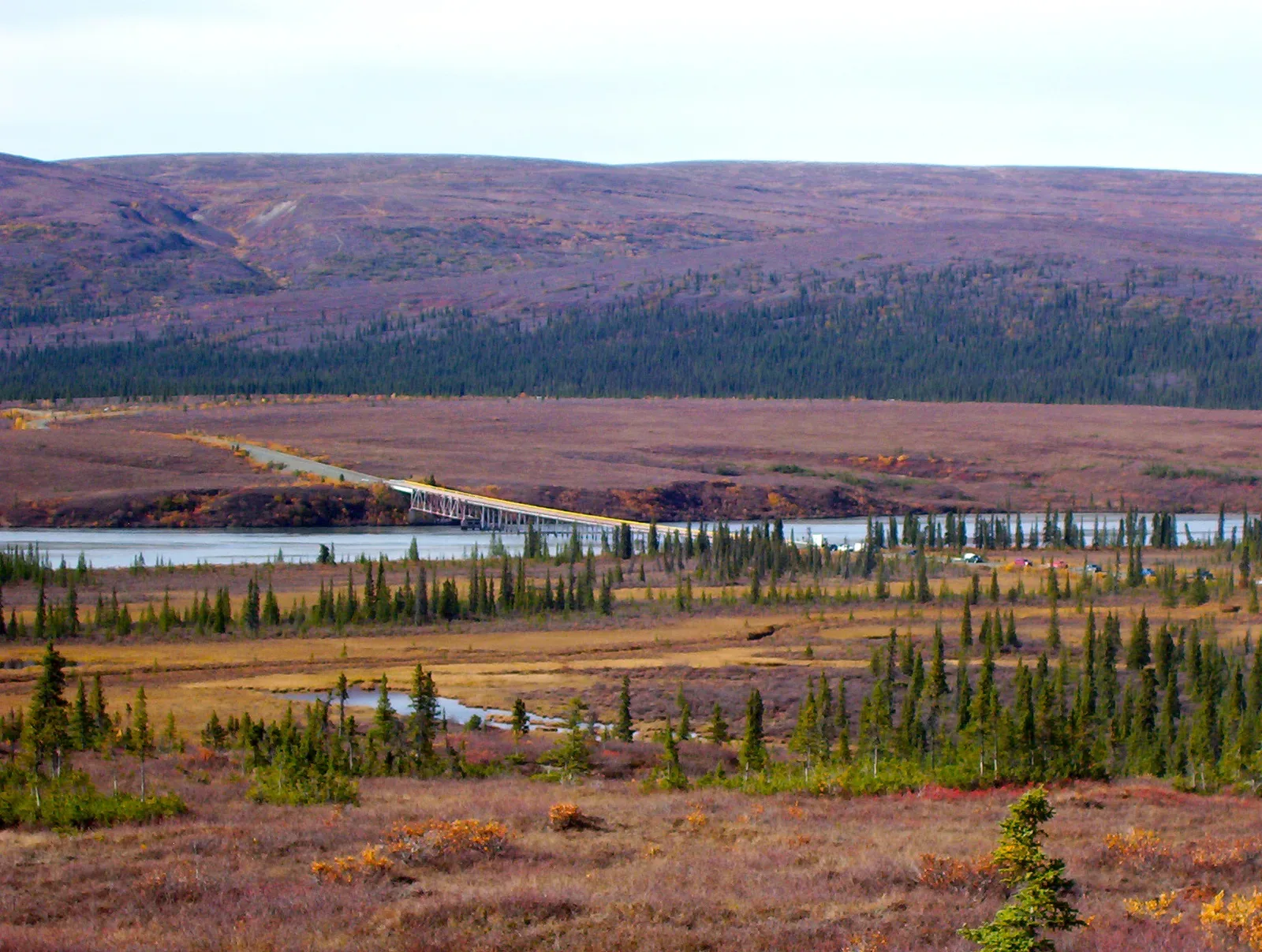
Alaska's relationship with firearms is older than the concept of Alaska itself. Before the first Russian ship anchored in these waters, the people who had lived here for millennia had already developed projectile weapon systems sophisticated enough to take bowhead whales and brown bears. When firearms arrived -- first through Russian trade, then through American territorial administration -- they didn't displace that tradition so much as layer onto it.
Today, Alaska sits at one end of the American firearms policy spectrum. It was the first state in the country to adopt constitutional carry modeled on Vermont's approach, it has no firearms registry, no permit-to-purchase requirement, and its legislature has made repeated attempts to assert state sovereignty over federally regulated firearms manufactured and sold within its borders. For a state with fewer people than most mid-sized American cities, it punches well above its weight in shaping the national conversation about gun rights.
That's not an accident. It comes from geography, history, and a culture where firearms are working tools as much as they are political symbols -- and in Alaska, often more so.
In Alaska, firearms are working tools as much as they are political symbols -- and often more so.
Pre-Contact & Indigenous Arms Traditionsedit
The Unangan (Aleut), Yup'ik, Inupiaq, Athabascan, Tlingit, Haida, and Tsimshian peoples who inhabited Alaska developed some of the most specialized hunting weapon technology in the pre-contact world. The atlatl -- a spear-throwing lever that dramatically extends range and velocity -- was in use across Alaska for thousands of years before the bow became widespread. Arctic peoples were engineering compound bows from multiple materials laminated together, sinew-backed to handle the stress of extreme cold, at a time when European technology hadn't significantly improved on the simple self bow.
Indigenous weapons systems included:
- Atlatl systems for extended range and velocity
- Sinew-backed compound bows for extreme cold conditions
- Kayak-based harpoon platforms for marine hunting
- Laminated construction using multiple materials
The Yup'ik and Inupiaq peoples of coastal western and northern Alaska developed the kayak-based harpoon system for marine mammal hunting that effectively functioned as a ranged weapon platform -- a floating rest with a projectile attached to a retrievable line. Taking a beluga or bowhead whale from a skin boat with a hand-thrown harpoon requires the same combination of weapon knowledge, range estimation, and shot placement that any modern hunter would recognize immediately.
Armor and organized warfare were also part of the picture. Tlingit warriors wore slat armor -- interlaced wooden rods over leather -- and helmets, and conducted raids that required weapons capable of defeating that protection. Tlingit daggers and war clubs were purpose-built combat tools, not ceremonial objects. The distinction matters because it establishes that Alaska's Indigenous peoples had a fully developed martial culture before any outside influence arrived.
The Athabascan peoples of the Interior developed the sinew-backed bow independently and used it for caribou, moose, and bear -- animals that require substantial penetrating power to kill cleanly. Their arrows used foreshafts that could be replaced in the field, essentially a modular system that extended the life of a valuable projectile in an environment where manufacturing materials weren't always at hand. That's practical engineering, and it reflects exactly the relationship with tools that Alaska's gun culture still carries today.
Russian Colonial Era (1741–1867)edit
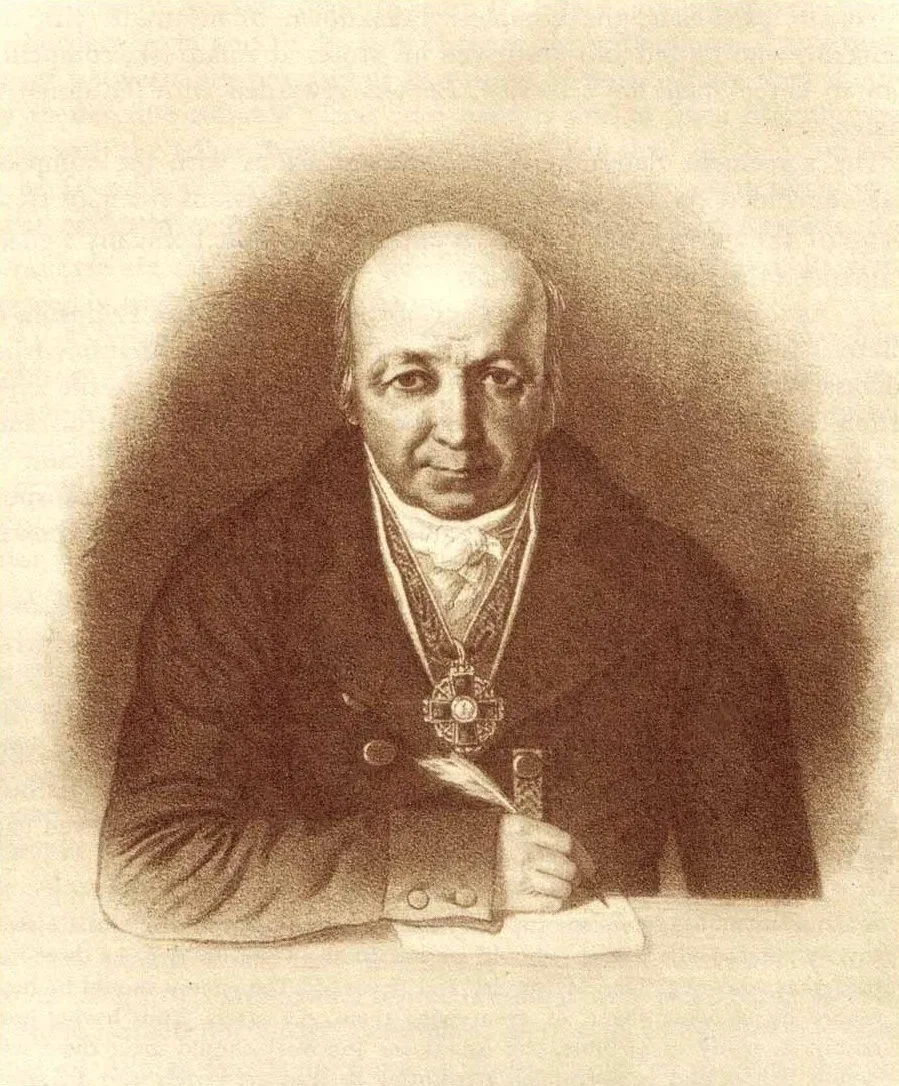
When Vitus Bering's 1741 expedition made sustained European contact with Alaska possible, the Russian-American Company that followed was in the fur business -- and firearms were currency. The trade that developed between Russian colonizers and Alaska Native peoples was transactional in ways that had lasting consequences. Firearms were among the goods exchanged for sea otter pelts, and their introduction into communities that had relied on traditional weapons shifted power dynamics across the region.
The Unangan people bore the worst of early Russian contact. The Russian-American Company effectively enslaved Unangan hunters for sea otter expeditions, and the population collapsed catastrophically through violence, disease, and forced relocation. Firearms were part of that violence -- Russian colonial enforcers carried them, and the asymmetry in weapons technology was part of how a small number of traders and soldiers controlled a much larger population.
The Tlingit response to Russian expansion was more organized resistance. In 1802, Tlingit warriors -- having obtained firearms through trade with British and American ships -- destroyed the Russian settlement at Sitka, killing most of its occupants. The Battle of Sitka in 1804 followed, when the Russian-American Company returned with the warship Neva and significant firepower to re-establish the settlement. The Tlingit held a fortified position called Shis'gi Noow (the fort at the sapling area) against Russian cannon fire for days before withdrawing. It was one of the most significant armed confrontations in Alaska's history and demonstrated that access to firearms had given the Tlingit the ability to contest Russian control in ways that pure numbers alone had not.
The Battle of Sitka demonstrated that access to firearms had given the Tlingit the ability to contest Russian control in ways that pure numbers alone had not.
New Archangel (modern Sitka) became the capital of Russian America and the center of whatever firearms regulation existed -- which was almost entirely focused on controlling Native access to weapons capable of threatening Russian authority. The Russian-American Company maintained its own armed forces and trading monopoly, and the firearm policies of that era were colonial control mechanisms rather than anything resembling a rights framework.
By the mid-19th century, the Russian-American Company's commercial viability was declining with the sea otter population. Russia's interest in Alaska was waning. The Alaska Purchase of 1867 transferred 586,000 square miles and its complicated firearms situation to the United States for $7.2 million.
Territorial Era (1867–1959)edit
When the United States took possession of Alaska, it didn't immediately establish coherent governance. The Alaska Organic Act of 1884 created the first civil government, but Alaska remained a district -- not a territory with full self-governance -- and law enforcement was thin on the ground across an enormous landscape. That reality shaped the firearms culture in straightforward ways: if you were in trouble, you were almost certainly on your own.
Gold Rush Era Violence
The Klondike Gold Rush of 1896–1898 and the subsequent Nome Gold Rush of 1899–1900 brought an enormous and rapid influx of population into Alaska, most of it through Skagway and Dyea on the southeast coast. Skagway in particular became notorious. Jefferson Randolph "Soapy" Smith ran a criminal operation that controlled much of the town until his death in a confrontation with Frank Reid on July 8, 1898 -- a shootout in which both men died. The White Pass & Yukon Route corridor was essentially lawless enough that the North-West Mounted Police on the Canadian side of the border became the more reliable law enforcement presence, and the line they drew at the Chilkoot Pass -- requiring stampeders to carry a year's worth of supplies -- was enforced with rifles.
The U.S. Army established Fort Seward (later renamed Chilkoot Barracks) near Haines in 1903, the last fort built in Alaska during the territorial period. Military presence was spread across enormous distances, and civilian firearms ownership was the practical reality of daily life. Subsistence hunting wasn't a lifestyle choice -- it was survival, and the rifle or shotgun was as essential as the axe.
Alaska became an organized territory in 1912, giving it a legislature for the first time, but firearms regulation at the territorial level was minimal. The federal government controlled much of the land management, including game regulations, and the Alaska Game Commission, established in 1925, began regulating hunting -- but the underlying right to keep and carry firearms went essentially unaddressed in territorial law. There was no practical need to address it. In a territory where the nearest law enforcement officer might be a week's travel away, the question of whether you could carry a firearm was academic.
World War II Transformation
Key territorial period events shaping Alaska's firearms culture
World War II transformed Alaska's strategic importance overnight. After Japan occupied Attu and Kiska in the Aleutian Islands in June 1942 -- the only occupation of American soil during the war -- Alaska became a massive military staging area. The Alaska-Canada Highway (ALCAN) was built in 1942 primarily as a military supply route. At peak, over 300,000 U.S. military personnel were stationed in Alaska. Fort Richardson, Elmendorf Air Force Base, Ladd Field (Fairbanks), and dozens of smaller installations were built or expanded rapidly.
The Aleutian Campaign -- the retaking of Attu in May 1943 and the discovery that Japanese forces had evacuated Kiska before the August 1943 landing -- is one of the lesser-known campaigns of the Pacific war but directly involved Alaska civilians and the Alaska Territorial Guard. The Alaska Territorial Guard, organized in 1942, enrolled over 6,000 Alaskans, including a large number of Alaska Natives who provided local knowledge and terrain capability that the regular military couldn't replicate. They were issued Springfield rifles and served without pay for most of the war. Their commander, Major Marvin "Muktuk" Marston, recruited heavily in Native villages across western and northern Alaska, and the Guard's service is a significant chapter in both Alaska military history and Alaska Native history. The territorial legislature formally recognized their service in 2007.
Statehood & Early Modern Era (1959–1999)edit
Alaska achieved statehood on January 3, 1959, becoming the 49th state. The Alaska Constitution, ratified in 1956 and effective upon statehood, included an individual right to keep and bear arms in Article I, Section 19: "A well-regulated militia being necessary to the security of a free State, the right of the people to keep and bear arms shall not be infringed." That language mirrored the Second Amendment without addition -- the stronger state constitutional language that some other states adopted came later.
In 1994, Alaska voters approved a ballot measure strengthening that protection. The amended Article I, Section 19 reads: "A well-regulated militia being necessary to the security of a free State, the right of the people to keep and bear arms shall not be infringed. The individual right to keep and bear arms shall not be denied or infringed by the State or a political subdivision of the State." The addition of the individual right language and the explicit prohibition on political subdivision infringement was intentional -- it preempted any future attempt by Anchorage or Juneau to enact local gun ordinances stricter than state law.
The 1994 amendment also set the stage for what came next. Alaska was moving in a consistently more permissive direction on firearms while the national conversation in the post-Brady Bill and assault weapons ban era was moving the other way. That tension between federal legislative direction and Alaska's own trajectory defined the next decade.
Subsistence hunting became a separate but related flashpoint during this period. The Alaska National Interest Lands Conservation Act (ANILCA) of 1980 had established a rural subsistence priority on federal lands. When the Alaska Supreme Court ruled in 1989 that the state's rural residency preference violated the Alaska Constitution's equal access provisions, it triggered a federal takeover of subsistence management on federal lands in 1990. The ongoing conflict between state and federal authority over who could hunt what, where, and with what has never been fully resolved -- and firearms are at the center of that conflict in the most literal sense.
Modern Era (2000–Present)edit
Constitutional Carry Pioneer
The single most significant Alaska firearms law development of the modern era came in 2003, when the Alaska legislature passed HB 102, making Alaska the first state to adopt what became known as "Vermont-style carry" or constitutional carry -- the legal framework under which any person who can legally possess a firearm can carry it concealed without a permit. Vermont had never required a permit; Alaska became the first state to proactively repeal its permit requirement and replace it with permitless carry.
The move was deliberate and direct. Alaska already had open carry without a permit. The 2003 legislation extended that principle to concealed carry. A voluntary permit system was retained for Alaskans who wanted to carry in other states under reciprocity agreements, but the permit became optional rather than mandatory. As of the law's passage, Alaska joined Vermont as the only two jurisdictions in the country with this framework. Today, constitutional carry has spread to the majority of states, but Alaska's 2003 action was the catalyst that proved the political viability of the approach.
Firearms Freedom Movement
The Alaska Firearms Freedom Act, passed in 2010, took a different angle on firearms sovereignty. The law declared that firearms manufactured in Alaska and kept within Alaska were not subject to federal regulation under the Commerce Clause -- essentially arguing that a product that never crosses state lines is beyond Congress's interstate commerce authority. Legal scholars noted the direct challenge to Wickard v. Filburn (1942) and Gonzales v. Raich (2005), both of which had interpreted federal commerce power broadly. A Duke Law Review analysis of the Alaska Firearms Freedom Act concluded that while the legal argument had intellectual merit, it faced nearly insurmountable obstacles in federal court given existing precedent. Similar laws passed in Montana and other states have been challenged and generally lost in federal courts, and Alaska's version has not produced definitive litigation.
Ongoing Refinements
The 2010s brought additional refinements to Alaska firearms law. The legislature strengthened preemption to ensure that no municipality could enact local firearms regulations more restrictive than state law -- directly addressing Anchorage's periodic attempts to regulate firearms in parks or municipal buildings. The preemption statute is among the stronger versions in the country, covering not just the right to carry but also any regulation of firearms, ammunition, or accessories.
In 2013, Alaska amended its firearms laws to explicitly address the question of federal universal background check proposals that were circulating in the post-Sandy Hook legislative environment. The legislature passed SB 21, which included language directing Alaska law enforcement not to enforce any federal firearms laws that would infringe on the rights guaranteed by the Alaska Constitution. This type of Second Amendment Sanctuary language predates the sanctuary movement that spread through other states later in the decade, though Alaska's version was incorporated into state statute rather than passed as a resolution.
Alaska's permitless carry law was extended and clarified over time. By the 2020s, the law applied to residents and non-residents alike for concealed carry within the state -- one of the more permissive frameworks in the country. The voluntary permit system remained available and useful for interstate reciprocity purposes, with Alaska maintaining reciprocity agreements with a substantial number of other states.
The intersection of firearms law and subsistence rights continued to generate legal complexity. Federal land management of subsistence on Bureau of Land Management, U.S. Forest Service, National Park Service, and U.S. Fish and Wildlife Service lands means that the rules governing what you can hunt, when, and where -- and therefore the practical context in which Alaskans carry and use firearms -- are split between state and federal jurisdictions in ways that remain confusing for anyone trying to navigate them. Rural Alaska Natives hunting on federal lands operate under different rules than urban Alaskans hunting on state lands, and the firearm is the same tool in both hands.
Notable Figures & Manufacturersedit
Soapy Smith (1860–1898) is the most famous figure in Alaska's frontier gun violence history, though his reputation was built partly in Colorado before he arrived in Skagway. His death in the 1898 shootout with Frank Reid -- who died of his wounds days later -- ended the criminal operation that had plagued Skagway and became one of the most documented incidents of the gold rush era.
Marvin "Muktuk" Marston (1902–1978) organized the Alaska Territorial Guard during World War II, recruiting Alaska Native men across western and northern Alaska into a functioning irregular military force. His work with the Guard -- and his advocacy for Alaska Native rights afterward -- make him one of the more consequential figures in Alaska's military firearms history.
Sydney Laurence (1865–1940) is better known as Alaska's most famous painter, but his career as a gold rush-era adventurer put him in the same frontier firearms culture that defined territorial Alaska. He's not a firearms figure per se, but the world he documented was one in which the rifle was as common as the paintbrush.
On the manufacturing side, Alaska has not historically been a significant center of firearms production -- the economics of remote geography and small population don't favor manufacturing. However, several custom rifle builders and gunsmiths have built reputations serving Alaska's demanding hunting environment. The conditions -- extreme cold, wet coastal rainforest, high-alpine exposure, and game animals that can exceed 1,500 pounds -- create a genuine proving ground that has influenced rifle and cartridge selection discussions nationally.
Alaska Silencer (Anchorage) is among the more visible Alaska-based firearms industry businesses in the modern era, operating in a state where suppressor ownership follows the same rules as federal law with no additional state restrictions.
Military installations and shooting organizations include:
- Joint Base Elmendorf-Richardson (JBER) - largest military installation
- Fort Wainwright - Fairbanks area training facilities
- Eielson Air Force Base - contributing to military firearms culture
- Alaska Rifle Club - competitive shooting organization
The Alaska Rifle Club, one of the older shooting organizations in the state, and various NRA-affiliated clubs operate ranges in Anchorage, Fairbanks, Juneau, and other population centers. Competitive shooting in Alaska tends toward practical and hunting-oriented disciplines rather than Olympic-style target shooting, reflecting the culture.
Military installations have played a substantial role in firearms training and culture. Joint Base Elmendorf-Richardson (JBER), formed from the merger of Elmendorf Air Force Base and Fort Richardson in 2010, is the largest military installation in Alaska and maintains significant small arms training infrastructure. Fort Wainwright near Fairbanks and Eielson Air Force Base contribute to a substantial military presence that has influenced firearms culture in the Fairbanks area particularly.
Current Legal Landscapeedit
Alaska's current firearms legal framework is among the most permissive in the country.
Carry Framework
| Category | Alaska Law | Federal Comparison |
|---|---|---|
| Concealed Carry | No permit required (residents & non-residents) | Varies by state |
| Open Carry | Legal without permit | Varies by state |
| Purchase Permits | None required | Background check only |
| Registration | No firearms registration | No federal registry |
| Waiting Period | None | None federally |
| Assault Weapons | No restrictions | No federal ban |
| Magazine Limits | None | None federally |
| Suppressors | Legal with NFA compliance | Legal with NFA compliance |
| Preemption | Full state preemption | Varies by state |
Here's where things actually stand:
Carry Laws:
- No permit required to carry concealed or openly, for residents and non-residents
- Voluntary Alaska Concealed Handgun Permit (CHP) available for interstate reciprocity
- Must inform law enforcement of concealed carry during official contact (added by 2013 legislation)
- No prohibited locations beyond federally mandated ones (schools, federal buildings) plus state-specific additions (courthouses, domestic violence shelters)
Purchase & Transfer Rules
Purchase & Transfer:
- No permit required to purchase firearms
- No firearms registration
- No waiting period
- Background checks follow federal NICS requirements; no additional state check
- Private party sales legal with no background check requirement
Preemption:
- State law fully preempts local firearms ordinances
- No municipality may enact regulations more restrictive than state law
- Municipalities may regulate discharge of firearms within limits
Restrictions:
- Standard federal prohibited persons categories apply
- Alaska adds some state-specific prohibitions, including persons convicted of certain domestic violence misdemeanors
- Minimum age 21 to purchase handguns from licensed dealers (federal); age 18 for long guns
- Persons under 16 may not possess firearms without parental permission (state law)
- Suppressors legal with federal NFA compliance; no additional state process
- Short-barreled rifles and shotguns legal with federal NFA compliance
- No assault weapons ban; no magazine capacity limits
Federal Complications
State vs. Federal Tension: Alaska's Second Amendment Sanctuary provisions and the Firearms Freedom Act remain on the books but have not been tested successfully in federal courts. Any Alaskan relying on those statutes to avoid federal firearms law is making a bet that courts have consistently declined to support. The practical legal reality is that federal law governs federally licensed dealers, NFA items, and prohibited persons, regardless of what state law says about federal enforcement priorities.
Subsistence & Firearms: The subsistence hunting framework creates a unique overlay. On federal public lands -- which comprise roughly 60 percent of Alaska's total land area -- subsistence hunting rules are administered by the Federal Subsistence Board, and the firearms used in that hunting are subject to state and federal hunting regulations independently of the carry laws. A rural Alaska resident with a subsistence priority and a rifle is navigating at least two separate regulatory frameworks simultaneously.
The Alaska Department of Fish and Game (ADF&G) maintains its own regulations on legal hunting methods, calibers (in certain circumstances), and seasons that interact with the firearms a hunter carries. The practical guidance from ADF&G -- use what you can shoot accurately, stainless synthetic bolt-action for most Alaska conditions -- reflects real-world experience with what works in this environment.
The BGC Takeedit
Alaska is about as gun-friendly as it gets in the United States, and that's not just politics -- it's geography and culture working together. When you're genuinely days away from meaningful law enforcement response, when brown bears are a realistic hazard during daily life in many parts of the state, and when subsistence hunting isn't a romantic notion but a practical caloric necessity for thousands of rural residents, the relationship between people and firearms is different than it is in the Lower 48. Not better or worse -- different. More functional and less symbolic.
The constitutional carry move in 2003 was meaningful not because it changed how most Alaskans were already living -- a lot of people in rural Alaska were already carrying without worrying about it -- but because it formalized a philosophical position:
The default is freedom and the burden is on the government to justify any restriction, not on the citizen to justify exercising a right.
That idea spread from Vermont and Alaska to become the dominant legislative trend in Republican-controlled states over the next two decades.
The tensions worth watching are the subsistence conflicts. Federal land management and state firearms/hunting law interact in ways that create genuine legal landmines for rural Alaska Natives trying to hunt the way their families have hunted for generations. That's not a gun rights debate in the political sense -- it's a question about whose authority governs what on which piece of ground, and it never fully gets resolved.
For a shooter visiting or moving to Alaska: you're going to want a rifle more than a handgun, you're going to want stainless over blued, and you're going to want to actually practice with whatever you carry for bear country rather than buying something impressive and leaving it in the case. The state's firearms culture will respect you if you treat your guns as tools and know how to use them. That's always been the standard here.
Referencesedit
-
Alaska Department of Fish and Game -- Firearms and Ammunition for Hunting in Alaska. https://www.adfg.alaska.gov/index.cfm?adfg=hunting.firearms
-
Wikipedia -- Gun laws in Alaska. https://en.wikipedia.org/wiki/Gun_laws_in_Alaska
-
NRA-ILA -- Alaska State Gun Laws and Regulations. https://www.nraila.org/gun-laws/state-gun-laws/alaska/
-
Giffords Law Center -- Alaska Gun Laws. https://giffords.org/lawcenter/gun-laws/states/alaska/
-
Duke Law Review -- Analyzing the Alaska Firearms Freedom Act. https://scholarship.law.duke.edu/cgi/viewcontent.cgi?article=1509&context=alr
-
U.S. Department of the Interior -- Overview and History of Subsistence Management in Alaska. https://www.doi.gov/subsistence/library/history
-
Bureau of Land Management -- Alaska Federal Subsistence. https://www.blm.gov/programs/natural-resources/subsistence
-
Alaska State Constitution, Article I, Section 19 (1956, amended 1994)
-
Alaska Native Claims Settlement Act (ANCSA), Public Law 92-203 (1971)
-
Alaska National Interest Lands Conservation Act (ANILCA), Public Law 96-487 (1980)
-
Norris, Frank -- Alaska Subsistence: A National Park Service Management History. National Park Service, 2002.
-
Marston, Marvin R. ("Muktuk") -- Men of the Tundra: Alaska Eskimos at War. October House, 1969.
-
Alaska Legislature -- HB 102 (2003), Constitutional Carry legislation.
-
Alaska Legislature -- Alaska Firearms Freedom Act (2010).
-
Alaska Youth Law Guide -- Guns, Knives, and Other Weapons. Alaska Bar Association. https://alaskabar.org/youth/cars-and-weapons/guns-knives-and-other-weapons/
Last Updated: February 24, 2026
- Quail Creek Plantation(Okeechobee, FL)
- 2aHawaii(Honolulu, HI)
- Boston Firearms(Everett, MA)
- Safeshoot(Kingston, NY)
Loading comments...