Specifications
Bergmann MP 18

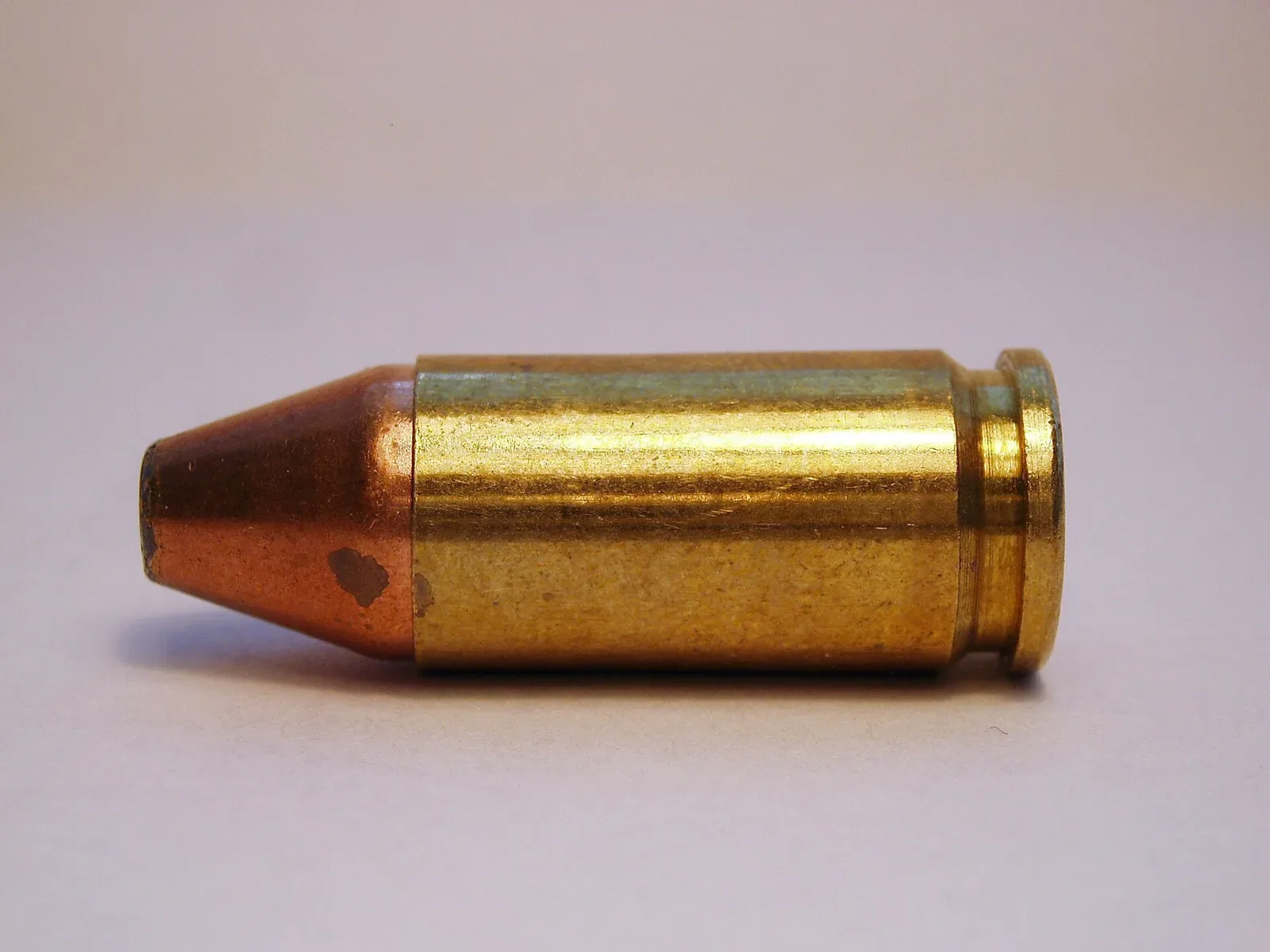
The 9×19mm Parabellum — developed in 1902 for the Luger pistol, it became the standard submachine gun round by World War I.
Malis (Public domain)
| Manufacturer | |
|---|---|
| Made By | Bergmann Waffenfabrik |
| Designer | Hugo Schmeisser |
| Origin | Germany |
| Specifications | |
| Caliber | 9×19mm Parabellum |
| Action | select fire |
| Weight | 4.18 kg |
| Production | |
| Designed | 1917 |
| Variants | |
| |
| Service Use | |
German ArmySturmtruppen237th Infantry Brigade119th Infantry DivisionFreikorpsFinnish forcesJapanese NavyChinese forcesGerman SicherheitsdienstWaffen-SSKriegsmarine | |
Bergmann MP 18: The Gun That Created a Weapon Class
Firearms encyclopedia article
From The Boise Gun Club Handbook
Overviewedit
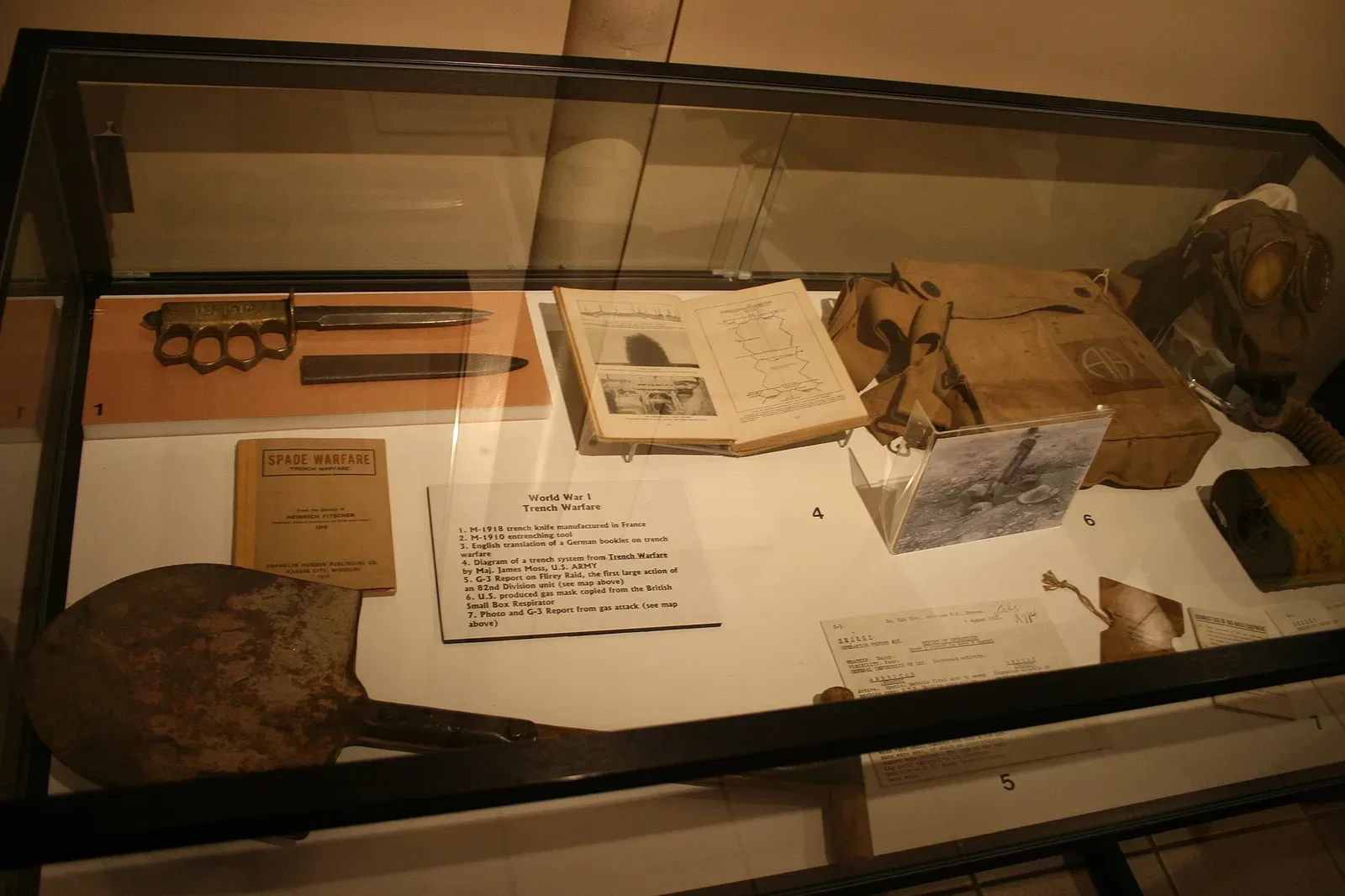
Before the Bergmann MP 18 existed, there was no such thing as a submachine gun. The concept itself — a shoulder-fired, fully automatic weapon chambered for pistol ammunition — had to be invented from scratch, driven by the specific and brutal demands of trench warfare. Hugo Schmeisser, working at Bergmann Waffenfabrik under Theodor Bergmann, delivered that invention in 1917. The German Army adopted it in 1918, designating it the Maschinenpistole 18/I.
The MP 18 arrived too late to alter the outcome of World War I and too few actually reached the front to make a decisive tactical difference. What it did instead was something more permanent: it established the template for an entirely new category of infantry weapon.
The MP 18's basic design formed the basis of most submachine guns manufactured between 1920 and 1960 — four decades of weapons development tracing a direct line back to one German engineer's workbench.
That is not a short run of influence. The gun weighed 4.18 kg unloaded, measured 832 mm overall with a 200 mm barrel, and fired 9×19mm Parabellum at a cyclic rate of approximately 350–500 rounds per minute from an open-bolt blowback action. Those specs are almost secondary to what it represented: proof that the concept worked.
Design Historyedit
Early Development Problems
The MP 18 did not emerge from a sudden flash of inspiration — it came out of a documented institutional failure. In 1915, the German Rifle Testing Commission at Spandau attempted to solve the trench warfare problem by converting existing pistols. They modified the Luger and the Mauser C96 to accept larger magazines and fire in full automatic mode.
At 1,200 rounds per minute, neither the modified Luger nor Mauser C96 could be aimed with any accuracy. The commission concluded that a fundamentally different weapon was needed.
Development path from failed pistol conversions to the MP 18
Schmeisser's Solution
Schmeisser had already spent time designing blowback-operated pistols for Bergmann, so the mechanical principles were not foreign to him. What he built was a purpose-designed automatic weapon that married the pistol-caliber cartridge to a rifle-style wooden stock and a simple tubular receiver, making the package controllable and shoulder-fired from the start.
The action was an open-bolt blowback — no locking mechanism, the bolt's inertia doing the work — which kept the parts count low and the reliability high. A barrel shroud managed heat during sustained automatic fire. The charging handle sat on the right side of the receiver, and the magazine fed from the left.
Variant Testing
Four variants were evaluated by the German Army, designated MP 18/I through MP 18/IV. They shared the same fundamental design but differed in how they fed ammunition.
| Variant | Designation | Magazine Type | Magazine Capacity | Notes |
|---|---|---|---|---|
| MP 18/I | Production model | TM 08 Trommelmagazin (drum) | 32 rounds | Adopted by German Army |
| MP 18/II | Prototype | Unknown | Unknown | Limited information |
| MP 18/III | Test variant | Straight box (90° feed) | 20 rounds | Used Mauser-pattern magazines |
| MP 18/IV | Test variant | Straight box (90° feed) | 20 rounds | Used Mauser-pattern magazines |
The MP 18/I — the version that went to war — used the TM 08 Trommelmagazin, a 32-round snail drum that was already in service with the long-barreled Luger pistol. The MP 18/III and MP 18/IV used straight box magazines in a 90-degree feed, accepting Mauser-pattern magazines. Schmeisser's original preference was a 20-round box magazine, but the testing commission overruled him on the production version, insisting on the drum because it was already in the supply system.
Magazine Problems
That decision haunted the MP 18 in the field. The drum magazine presented several serious liabilities in combat conditions:
- Drum swept back at Luger grip angle, making loading awkward under pressure
- Heavy steel construction pulled muzzle down and left during firing
- Could be over-inserted into magazine well, causing bolt fouling and stoppages
- Required proprietary loading tool and multi-step process
- Loading system failed in wet or dirty conditions
- German doctrine required second soldier just to carry spare magazines
According to Calibre Magazine, German military doctrine actually called for a second soldier to accompany the MP 18 gunner just to carry spare magazines — effectively turning a weapon designed for fast solo assault use into a two-man crew system.
Full-scale production began in early 1918.
Technical Characteristicsedit
Construction Quality
| Specification | Value |
|---|---|
| Overall Length | 832 mm (32.8 in) |
| Barrel Length | 200 mm (7.9 in) |
| Weight (Unloaded) | 4.18 kg (9.2 lbs) |
| Caliber | 9×19mm Parabellum |
| Rate of Fire | 350-500 rpm |
| Operating System | Open-bolt blowback |
| Feed System | 32-round TM 08 drum magazine |
| Sights | V-notch rear (100/200m), post front |
The MP 18's receiver was machined from thick steel tube — approximately 3 mm wall thickness — roughly double what later WWII-era submachine guns like the Sten or MP 40 used. The bolt itself was machined from a single block of steel. These are not efficient manufacturing choices; they are expensive, time-consuming ones. The MP 18 was built the way a precision instrument gets built, not the way a war-emergency weapon gets built.
That quality came at a cost in production speed and unit price, which would later drive the development of stamped-and-welded successors.
Operating Mechanism
MP 18 open-bolt blowback operating cycle
The firing mechanism was pure simplicity. An open-bolt design means the bolt sits rearward when the gun is cocked, held by the sear. Pulling the trigger releases it, the bolt strips a round from the magazine, chambers it, and the fixed firing pin strikes the primer as the bolt reaches the forward position — all in one movement. No disconnector was fitted because the MP 18 had no semi-automatic function: it was full-auto only. A two-position V-notch rear sight flipped between 100 and 200 metres.
Safety Systems
Safety was achieved by pulling the bolt handle upward into a notch cut into the receiver, physically blocking forward movement. This was adequate but not ideal. Like many open-bolt designs of its era, the MP 18 was vulnerable to accidental discharge if the buttstock received a hard knock while the bolt was forward on a loaded chamber — the impact could drive the bolt rearward enough to pick up and fire a round.
German police, who inherited large numbers of MP 18s after the war, specifically requested external safeties be added to their guns. That feedback worked its way into later designs: the Sten and MP 40 both incorporated a cocking-handle-into-receiver-slot safety specifically to address this problem.
Field Stripping
Field stripping used an interrupted-thread rear cap and a receiver that hinged out of the stock around a front pivot — a takedown system that Calibre Magazine describes as surprisingly modern in concept. The striker assembly nested inside the bolt and was a separate component from the bolt face, which was the one unnecessary complication in an otherwise stripped-down design.
After the war, surviving MP 18s were modified to accept straight 20-round and later 30-round box magazines, which eliminated most of the drum magazine's liabilities. The post-war box magazine version is mechanically closer to what Schmeisser wanted to build in the first place.
Combat & Field Useedit
Deployment Timeline
The MP 18 is routinely described as a weapon of the Sturmtruppen — the German storm troopers who pioneered infiltration tactics in 1917 and 1918. The association is accurate in concept but the timeline requires some precision. According to Wikipedia, there is no concrete evidence that the MP 18 reached the front in early 1918 or that submachine guns were employed during the Spring Offensive. The weapon was primarily fielded in the second half of 1918, after the Spring Offensive had already ended.
The first recorded unit to receive the MP 18/I was the 237th Infantry Brigade of the 119th Infantry Division, which took delivery of 216 guns for field trials in July 1918. Shortly after, the gun appeared at the Battle of Amiens. Canadian troops from the 13th Battalion of the 5th Regiment Royal Highlanders of Canada were photographed with a captured MP 18/I on August 11, 1918.
Production Numbers
How many guns were actually built and how many reached the front remain genuinely contested questions.
| Source | Production Estimate | Delivery Estimate | Notes |
|---|---|---|---|
| Major-General von Wrisberg | ~17,000 | ~17,000 | By October 1918 |
| Serial Number Analysis | ~35,000 | Unknown | 1918-1919 production |
| French Post-War Report | 50,000 | 8,000-10,000 | 1918 only |
| Wikipedia Assessment | Unknown | ~4,000 | Actually saw combat |
Major-General Ernst von Wrisberg, director of the Prussian War Ministry, recorded approximately 17,000 delivered by October 1918 — a figure consistent with surviving military acceptance stamps reaching into the 17,000 serial range. Existing serial numbers run into the 30,000s, and one estimate based on surviving guns suggests around 35,000 were manufactured during 1918 and possibly into 1919. A French post-war report cited 50,000 produced in 1918, with only 8,000–10,000 actually delivered.
The most telling indicator: all MP 18s captured by Allied forces in the second half of 1918 carried low serial numbers, typically in the hundreds. A reasonable estimate, per Wikipedia, is that approximately 4,000 guns saw actual combat.
Tactical Employment
The weapon was intended for close-range trench clearance — the environment for which it was designed. Battles inside trenches happened at ranges measured in feet, not hundreds of yards, and what mattered was volume of fire and maneuverability, not long-range accuracy. In that context, the MP 18 delivered exactly what it was designed to deliver.
The Sturmtruppen tactics it was meant to support — infiltrate, bypass strong points, strike deep — required individual soldiers to generate the kind of suppressive fire that previously required a crew-served weapon. The MP 18 put that firepower in one man's hands.
Post-War Violence
The armistice ended the MP 18's brief combat career before it could be fully integrated into German doctrine. But the weapon's post-war history turned out to be nearly as violent as its wartime one. The Freikorps — paramilitary veterans' organizations that the Weimar government used to suppress the Spartacist uprising in 1919 — armed themselves heavily with MP 18s drawn from military stocks. The government actively collaborated with the Freikorps during this period and made little effort to prevent the guns from flowing into paramilitary hands.
In 1922, Foreign Minister Walther Rathenau was assassinated by ultranationalists using a stolen MP 18.
The MP 18 subsequently saw service across a remarkable range of conflicts:
- Russian Civil War
- Warlord Era in China
- Rif War in Morocco
- 1924 Estonian coup attempt
- Chaco War
- Spanish Civil War
- Second Sino-Japanese War
- World War II (SD units, Waffen-SS, Kriegsmarine)
The Third Reich also distributed old MP 18 stocks as foreign aid to fascist groups in France, Austria, and Czechoslovakia. The French far-right organization La Cagoule received deliveries of MP 18s, MP 28/IIs, and MP 35/Is; several arms caches were discovered and destroyed by French police before World War II. The Austrian SS, banned after the failed 1934 coup attempt, received MP 18s during their exile in Germany. In Czechoslovakia, police confiscated MP 18s smuggled in by the SS to arm Henleinist sabotage squads, with some appearing during the Sudeten Uprising of 1938.
Legacy & Influenceedit
Direct Descendants
The MP 18's influence on subsequent design is wide enough to structure an entire history of 20th-century small arms around it. The mechanism — open-bolt blowback, pistol caliber, shoulder-fired — became the default template for submachine gun design for the next five decades.
Timeline of MP 18's influence on subsequent submachine gun development
The direct lineage is easier to trace than in most weapons families. Bergmann sold the manufacturing license to SIG of Switzerland, which produced it as the SIG Bergmann 1920 in both 7.65mm Luger and 7.63mm Mauser.
International Proliferation
| Country/Manufacturer | Designation | Caliber | Notes |
|---|---|---|---|
| Switzerland (SIG) | SIG Bergmann 1920 | 7.65mm Luger, 7.63mm Mauser | Licensed production |
| Finland | Via SIG purchase | 7.65mm Luger | Influenced Suomi KP/-31 |
| Japan | SIG Bergmann | 7.63×25mm Mauser | Navy use with Type 30 bayonets |
| China | Multiple variants | Various | Tsing Tao, Dagu, Hanyang arsenals |
| Spain | Avispero | 9mm Largo | Civil War production, 36-round magazine |
| Britain | Lanchester | 9×19mm | Royal Navy copy of MP 28 |
| USSR | PPD-34 influence | 7.62×25mm Tokarev | Influenced by Suomi/MP 28 |
The SIG Bergmann went to Finland, Japan, Estonia, and other buyers. Finland's purchase contributed directly to the development of the Suomi KP/-31, which in turn influenced Degtyarev's PPD-34 in the Soviet Union. The Japanese Navy acquired SIG Bergmanns chambered in 7.63×25mm Mauser, fitting them with Type 30 bayonets and issuing them to marines in China.
China produced copies of the SIG Bergmann at multiple factories — arsenals at Tsing Tao, Dagu, and Hanyang — with each facility producing variants that differed from one another. The Tsing Tao and Dagu versions used a bottom-mounted magazine. These weapons saw use by Chinese Republican troops from the mid-1920s through the 1940s.
Design Evolution
Schmeisser continued developing the design independently at C.G. Haenel through the 1920s, eventually producing the MP 28/II — essentially an improved MP 18 with a fire selector for semi-automatic function and a new double-stack magazine of Schmeisser's own design. The MP 28 was the direct ancestor of the British Lanchester, which the Royal Navy copied nearly part-for-part in 1940, and the Lanchester's side-mounted magazine configuration fed directly into the Sten.
The Soviet PPD-34 drew on MP 28 design elements. The Spanish Republic mass-produced a copy of the MP 28 called the Avispero during the Civil War, chambered in 9mm Largo with a 36-round magazine.
Even the MP 40 — the submachine gun most people picture when they think of Germany in World War II — owes a debt to the MP 18 through the magazine design Schmeisser had patented for the MP 18 and MP 28. The German War Office required the MP 40 to use that magazine design, which is the ironic reason Schmeisser's name became permanently associated with the MP 40 in Allied countries, despite him having little direct involvement in that weapon's development.
The MP 18 also made an unexpected appearance in American organized crime. According to Wikipedia, during the 1920s a Chicago gun dealer named Vincent Daniels imported 7.65mm SIG Bergmann submachine guns, installed a two-position fire selector, and sold them under the name "Daniels Rapid-Fire Carbine." Members of the Northside Gang and the Chicago Outfit were among the buyers.
Manufacturing Lessons
Where the MP 18 fell short was in manufacturability. Its thick machined receiver, single-block bolt, and high-quality components made it expensive and slow to produce — liabilities that became obvious once the arms industry understood what was needed. The weapons that replaced it in military service — the Sten, the MP 40, eventually the PPSh-41 — were built from stampings and used spot welding, cutting production time and cost dramatically while delivering comparable battlefield performance.
The MP 18's quality was actually a limitation in the context of modern industrial warfare, and its successors figured that out quickly.
The Treaty of Versailles connection deserves clarification because it gets consistently mangled. A common claim holds that the MP 18 was so effective it was banned outright. Per Wikipedia, the treaty restricted Germany to 1,134 such weapons — a number low enough to effectively kill military distribution — but the treaty did not explicitly prohibit Germany from manufacturing submachine guns. The 1920 property stamps added to police-issued MP 18s signified government approval for distribution, not a post-ban workaround.
The BGC Takeedit
The MP 18 is one of those weapons where the historical significance is so much larger than the object itself that it almost defies physical description. You can hold one — there are examples in museums — and what you're holding is a heavy, somewhat clunky gun with a drum magazine that is genuinely unpleasant to load. Nothing about the physical object suggests "this thing changed everything."
What Schmeisser built was not just a gun — it was a proof of concept that created an entire category of weapons.
Before the MP 18, armies had rifles, pistols, and machine guns. After it, they had a fourth option that occupied a space none of the others could fill: automatic fire, pistol caliber, one man, moving fast through tight spaces. Every submachine gun that followed — the Thompson, the Sten, the PPSh, the MP 40, the MAC-10, the Uzi — exists because that proof of concept held up.
Schmeisser's name being attached to the MP 40 rather than the MP 18 is one of firearms history's genuine ironies. He made substantial contributions to the weapon that started it all, and got credit for one he largely didn't design. History is messy like that.
The drum magazine problem is worth dwelling on because it's a recurring theme in military procurement: a committee overruling the engineer on a key design decision, and the engineer being right. Schmeisser designed the MP 18 for a 20-round box magazine. The testing commission forced the TM 08 drum on him because it was already in the supply system. The drum turned a fast-handling individual weapon into a two-man crew system.
The box magazine came back after the war, and that's essentially the version that influenced everything that followed. Sometimes the bureaucrats learn the lesson eventually.
The other thing worth noting is how quickly the MP 18 escaped military control and started showing up in the hands of paramilitaries, criminals, and foreign extremist organizations. That pattern — a military weapon proliferating into non-state hands within years of its introduction — is not unique to the MP 18, but the MP 18 is one of the earliest and clearest examples of it in the modern era. The Rathenau assassination in 1922, the Cagoule arms caches in France, the Henleinist sabotage squads in Czechoslovakia — this gun got around.
That's a consequence of designing something genuinely useful and then producing tens of thousands of them during a chaotic period when government control over military stocks was, to put it charitably, inconsistent.
The MP 18 didn't win a war, didn't reach the front in planned numbers, and was obsolete within a decade. What it did was define the template for a weapon class that remained relevant for the better part of a century.
That's a legacy most gun designs never come close to.
Referencesedit
- Wikipedia: MP 18 — https://en.wikipedia.org/wiki/MP_18
- Firearms History, Technology & Development: The MP 18 Submachine Gun — http://firearmshistory.blogspot.com/2015/10/the-mp-18-submachine-gun.html
- Calibre Magazine: Bergmann MP 18: The first submachine gun — https://calibremag.ca/bergmann-mp18-the-first-submachine-gun/
Last Updated: February 27, 2026
- Gls Guns(Sumner, IA)
- Bi-mart - Yakima (Fruitvale Ave)(Yakima, WA)
- New Philly Sportsman Specialities(New Philadelphia, OH)
- R&R Sports & Outdoors(Brandon, FL)
Loading comments...