Legal Details
California Firearms Laws: Complete Guide

| Identification | |
|---|---|
| Jurisdiction | |
Territory | United States (Federal) |
California Firearms Laws: Complete Guide
Legal information and analysis
From The Boise Gun Club Handbook
This is educational information, not legal advice. Laws change. Consult an attorney for your specific situation.
California has some of the most restrictive firearms laws in the country -- and the state keeps adding to them. If you own guns here, or are thinking about it, the rules touch nearly every step of the process: buying, carrying, transporting, storing, and even how many you can purchase in a given month.
Buying a Firearm in Californiaedit
The purchase process in California is deliberately layered. When Governor Newsom received a SIG Sauer handgun as a gift from podcaster Shawn Ryan, he still hadn't taken possession of it as of early 2026 -- because doing so requires navigating the same process every California gun buyer faces, regardless of who you are.
To take possession of a firearm transferred through a dealer in California, you must:
- Pass a background check
- Provide thumbprints
- Pass a handgun safety test
- Sign required affidavits
- Provide a valid driver's license
- Provide documents confirming your name and current address (such as a utility bill)
- Appear in person -- you cannot send someone else to do the paperwork
- Return in person after the waiting period to sign for and pick up the firearm
According to CalMatters, the fees and taxes associated with a handgun purchase run around $300 on top of the firearm's purchase price. That's on a gun that might retail for $700.
The 10-day waiting period applies to all firearm purchases in California. There are no exceptions for existing permit holders or people who already own firearms. You do your paperwork, then you come back ten days later.
Background Checks and Ammunitionedit
California requires background checks for ammunition purchases -- a policy championed by Newsom when he was lieutenant governor, per CalMatters. It was the first such requirement in the nation at the time. The system has faced legal challenges from Second Amendment groups in federal court, but remains in effect pending those appeals.
This means a trip to the gun store for a box of .308 involves the same background check infrastructure as buying the rifle itself. If you're coming from a state where you can grab ammo off the shelf, this will slow you down.
Magazine Restrictionsedit
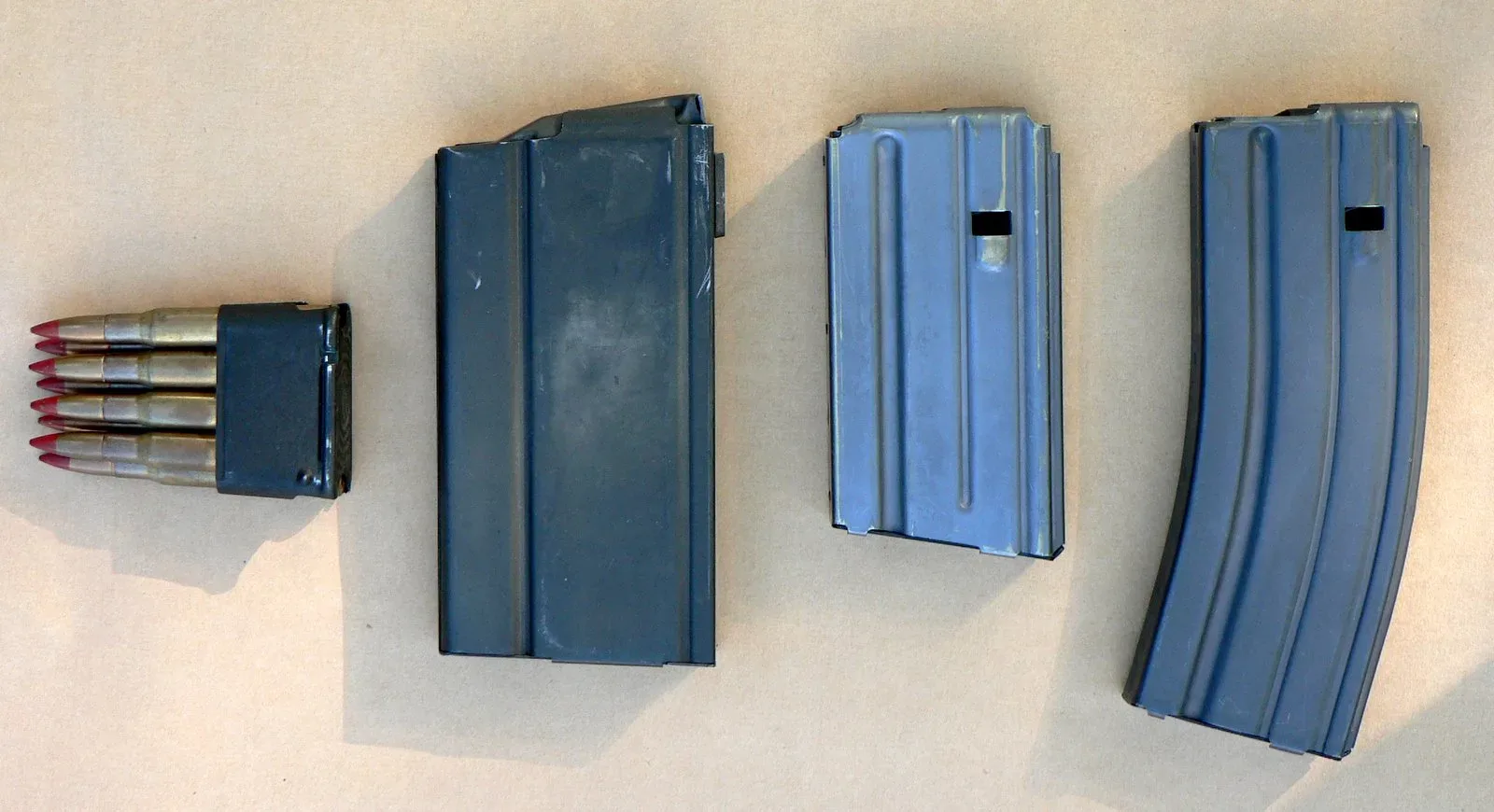
California bans magazines capable of holding more than 10 rounds. Per CalMatters, this prohibition was part of the same ballot initiative that established the ammunition background check requirement. As of 2025, that ban remains in place and in force, according to FFL Guard.
The legal history here is messy and has gone back and forth in the courts -- but the current status is that standard-capacity magazines (anything over 10 rounds) are prohibited for civilian purchase and possession in California.
Assault Weaponsedit
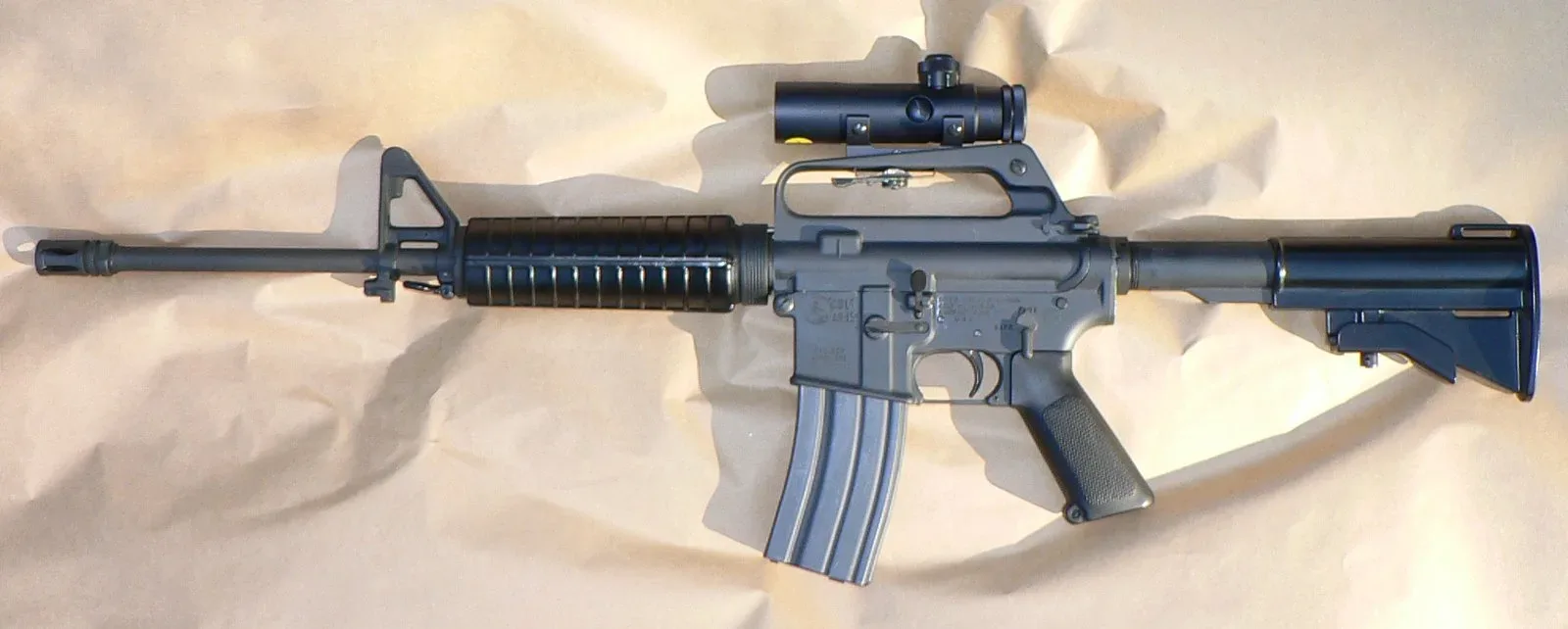
California bans the manufacture, sale, and possession of firearms classified as "assault weapons" under state law. Per Ammo.com's state-by-state analysis, assault weapons are banned in California. The state's definition is specific and codified -- it covers certain semi-automatic rifles, pistols, and shotguns based on features.
Also banned under California law, according to Ammo.com:
- "Cane guns" or firearms not easily identifiable as such
- Zip guns (improvised firearms)
Governor Newsom has publicly proposed going further -- he has advocated for a 28th Amendment to the U.S. Constitution that would ban civilian ownership of assault weapons nationally, per CalMatters. No other state has endorsed that proposal.
The Glock ban: In 2024, Newsom signed what CalMatters describes as the first-in-the-nation ban on new Glock handguns and similar semi-automatic pistols. The law targets those specific models because certain versions can be converted to fire fully automatically using a 3D-printed "switch" -- a device that is already illegal under federal law. The ban applies to new sales; it does not apply retroactively to guns already in circulation, and it did not affect the SIG Sauer gifted to Newsom.
Purchase Limitsedit
California limits handgun purchases to three firearms per month. This is a relatively new restriction. CalMatters reports that Newsom signed this law after a three-judge panel of the 9th Circuit Court of Appeals struck down an earlier California law -- one Newsom signed in 2019 -- that had limited handgun purchases to one per month. The appeals court found that earlier limit unconstitutional, writing:
"We are not aware of any circumstance where government may temporarily meter the exercise of constitutional rights in this manner. We doubt anyone would think government could limit citizens' free-speech right to one protest a month, their free-exercise right to one worship service per month, or their right to be free from unreasonable searches and seizures to apply only to one search or arrest per month."
The new three-per-month law is now subject to its own legal scrutiny. As of this writing, it remains in effect.
The 11% Excise Taxedit
In 2023, California added an 11% excise tax on guns and ammunition, per CalMatters. This is on top of existing sales taxes and the fees associated with the transfer and background check process. That tax also faces court challenges but is currently in effect.
Assault Weapons and NFA Itemsedit
Suppressors, short-barreled rifles, and short-barreled shotguns are heavily restricted or outright prohibited in California. The state does not allow most NFA items that are otherwise legal under federal law with proper registration. If you're moving to California from a suppressor-friendly state, consult an attorney before you pack.
Full-auto weapons are illegal to possess without a special federal permit, per CalMatters -- and the state's assault weapons laws create additional layers on top of federal NFA rules.
Unserialized and Undetectable Firearmsedit
California prohibits the manufacture, possession, and transfer of unserialized and undetectable firearms. Per the California DOJ's 2026 Information Bulletin, the state's laws cover manufacturing or causing the manufacture of assault weapons, machineguns, undetectable firearms, and unserialized firearms. Ghost guns -- firearms assembled from parts without a manufacturer-applied serial number -- fall squarely in prohibited territory under California law.
FFL Dealers and AB-1263edit
California's AB-1263 created new compliance obligations for federally licensed firearms dealers (FFLs) operating in or doing business with California customers, according to Orchid Advisors. The law, which was briefed by Orchid in November 2025, impacts FFLs nationwide -- not just those physically located in California -- because it affects how transfers into California are handled.
If you're an out-of-state dealer receiving a transfer request from a California resident, AB-1263 is worth knowing about. The compliance requirements are specific enough that dealers are advised to consult legal counsel.
Carry Lawsedit
California does not have constitutional carry. Carrying a concealed firearm requires a Concealed Carry Weapon (CCW) permit, and California has historically operated as a may-issue state -- meaning local authorities had broad discretion to deny permits even to qualified applicants.
The U.S. Supreme Court's 2022 Bruen decision changed the landscape significantly by striking down may-issue frameworks that required applicants to demonstrate "good cause." California has been adjusting its laws in response, and litigation is ongoing. The practical effect on permitting in California continues to evolve -- this is an area where consulting an attorney or checking directly with your county sheriff's office is genuinely necessary, because the on-the-ground situation may differ by jurisdiction and has been changing.
Open carry is generally prohibited in California in most circumstances.
Prohibited Personsedit
California's prohibited persons list tracks and in many cases expands upon the federal list. State law prohibits firearm possession by individuals who:
- Have been convicted of a felony
- Have been convicted of certain misdemeanors
- Are subject to certain restraining orders
- Have been involuntarily committed for mental health treatment
- Are addicted to controlled substances
- Are under 21 for handguns; under 18 for long guns
The age floor for handgun purchases in California is 21. Long guns (rifles and shotguns) require the buyer to be at least 18.
Prohibited Placesedit
Even with a valid CCW permit, there are numerous locations where carry is prohibited in California. This list has expanded in recent years, and additional locations were added in response to Bruen via California's "sensitive places" legislation -- which itself has been subject to ongoing litigation.
Generally prohibited locations include:
- Government buildings
- Schools and school zones
- Public parks and playgrounds
- Hospitals and medical facilities
- Places of worship
- Bars and restaurants where alcohol is the primary business
- Public transit
- Any private property where the owner has posted a prohibition
Key Point: California's sensitive places law significantly expanded the list of prohibited carry locations after Bruen. The exact current scope is being litigated. Do not rely on a list from 2022 or earlier.
Transport and Vehicle Carryedit
Transporting firearms in California without a CCW requires the firearm to be unloaded and in a locked container -- not just the glove box or center console. Ammunition should be stored separately. This applies to both handguns and long guns in most circumstances.
If you're passing through California from another state under the Firearm Owners Protection Act (FOPA) safe passage provisions, you must be traveling directly through with no extended stays, the firearm must be unloaded, and it must be in a locked container in the trunk or a locked case not readily accessible from the passenger compartment. FOPA safe passage is a federal protection, but California has historically been aggressive in its interpretation of what qualifies. If you're driving through, don't stop for more than a gas-and-go.
Reciprocityedit
California does not honor concealed carry permits from any other state. If you have a CCW from Nevada, Arizona, Texas, or anywhere else, it is not valid in California. Period.
Conversely, a California CCW is honored by a limited number of states. Given California's may-issue history and the ongoing legal changes, reciprocity agreements have been limited. Check directly with the destination state's attorney general website before traveling with your California CCW -- reciprocity lists change.
| Direction | Status |
|---|---|
| Out-of-state permits honored in California | None |
| California CCW honored in other states | Limited -- verify with destination state |
Red Flag Lawsedit
California has a red flag law -- formally called a Gun Violence Restraining Order (GVRO). It allows family members, household members, law enforcement, and (as of recent expansions) employers, coworkers, and teachers to petition a court to temporarily remove firearms from someone deemed a danger to themselves or others.
The GVRO process can result in emergency orders issued without the gun owner present (ex parte). California's red flag law is one of the broader versions in the country in terms of who can petition for a removal order.
Preemptionedit
California does not have full statewide preemption of local firearms laws. Cities and counties retain some authority to enact their own restrictions on top of state law. This means the rules in San Francisco, Los Angeles, or another municipality may be more restrictive than state baseline law. If you live in or are traveling to a specific California city, check local ordinances -- don't assume state law is the only layer.
Newsom's Constitutional Amendment Proposaledit
For context on where California's political leadership wants to take gun law nationally: Governor Newsom has formally proposed a 28th Amendment to the U.S. Constitution that would establish national age limits, mandatory background checks, waiting periods, and a ban on civilian ownership of assault weapons. Per CalMatters, no other state has signed on to Newsom's proposal as of early 2026.
This is relevant not because it's current law -- it isn't -- but because it signals the direction California's executive branch intends to push both at the state level and through federal advocacy.
Recent and Ongoing Legal Challengesedit
A significant portion of California's gun laws are currently being litigated in federal court. The following are in active dispute as of early 2026, per CalMatters:
- The ammunition background check system
- The magazine ban (over-10-round prohibition)
- The 11% excise tax on guns and ammunition
- The sensitive places expansion of prohibited carry locations
- The three-guns-per-month purchase limit
What this means for you: The law as written and the law as currently enforced can diverge during active litigation. Some provisions may be enjoined (temporarily blocked) by court order at any given moment. Check current status with a California firearms attorney or a reliable legal tracking source before making decisions based on any specific provision.
Quick Reference: California Firearms Law Summaryedit
| Topic | California Rule |
|---|---|
| Permit required for concealed carry | Yes -- CCW permit |
| Constitutional/permitless carry | No |
| Open carry | Generally prohibited |
| Waiting period | 10 days |
| Background check for ammo | Yes |
| Magazine capacity limit | 10 rounds maximum |
| Assault weapons | Banned |
| Unserialized (ghost) guns | Banned |
| Purchase limit | 3 firearms per month |
| Excise tax on guns/ammo | 11% |
| Red flag/GVRO law | Yes |
| Minimum age -- handguns | 21 |
| Minimum age -- long guns | 18 |
| Out-of-state permits honored | None |
| Local preemption | No full preemption |
| NFA items (suppressors, SBRs, etc.) | Heavily restricted/prohibited |
Resourcesedit
- California DOJ 2026 Firearms Law Bulletin: https://oag.ca.gov/system/files/media/2026-dle-02.pdf
- CalMatters -- California gun laws and Newsom firearm coverage: https://calmatters.org/politics/2026/03/california-gun-control-laws-newsom-firearm/
- Orchid Advisors -- AB-1263 FFL compliance briefing: https://orchidadvisors.com/california-ab-1263-new-laws-impact-ffls/
- FFL Guard -- California magazine ban update: https://www.fflguard.com/what-fflguard-offers/yearly-service-plans/california-ca/california-magazine-ban-update/
- Ammo.com -- Banned and restricted guns by state: https://ammo.com/research/list-of-banned-guns-and-ammo-by-state
Last Updated: March 30, 2026
- Oliver Firearms(Spartanburg, SC)
- Gls Guns(Sumner, IA)
- G & P Distributors(McConnellsburg, PA)
- New Philly Sportsman Specialities(New Philadelphia, OH)
This is not legal advice
This guide provides general information about federal and state firearms laws based on publicly available statutes. Laws change frequently and vary significantly by state. Always verify current laws in your jurisdiction. Consult a qualified attorney for legal advice on your specific situation. When in doubt, contact local law enforcement or state police.
Loading comments...