Brand Info
Sig Sauer
Manufacturer

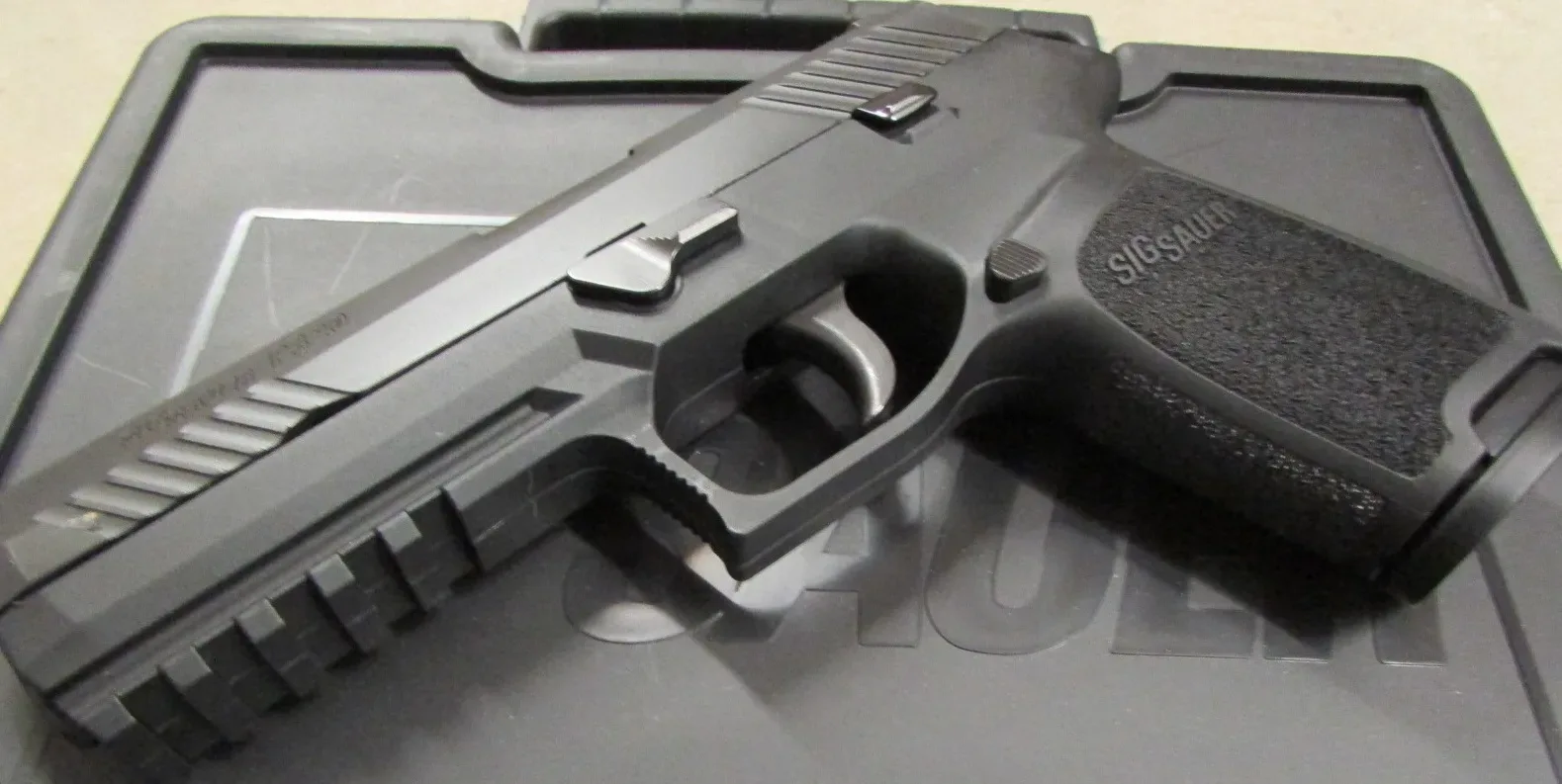
The P320, introduced in 2014, became SIG's modular platform and won the U.S. military's XM17 Modular Handgun System competition in 2017.
TexasWarhawk (CC BY-SA 4.0)
| Overview | |
|---|---|
Headquarters | Newington, NH |
| Tagline | We build the toughest, most precise rifles, pistols, suppressors, optics, ammunition, and airguns, while offering the finest firearms training. |
SAAMI | Member |
Products | |
| Key Products | Key Milestones, Handgun Lineup, Rifles and Carbines, Optics and Accessories, The Technology Push, How They Stack Up, Common Issues and Criticisms, Buying Recommendations |
Links | |
| www.sigsauer.com | |
Sig Sauer
Reference article
From The Boise Gun Club Handbook
Sig Sauer went from Swiss boutique manufacturer to America's most aggressive firearms company in about a decade -- and they're the outfit everyone else is scrambling to catch up with.
Sig Sauer traces back to 1853 in Switzerland, where Schweizerische Industrie Gesellschaft started making wagons before switching to guns. The company you know today came from a partnership between Swiss SIG and German J.P. Sauer & Sohn, eventually setting up shop in New Hampshire where most of the action happens now.
The trajectory is remarkable. They won the M17/M18 contract -- the biggest military pistol deal in decades. The P365 redefined what a micro-compact could hold. The MCX platform pushed AR-pattern rifles forward when everyone else was making minor tweaks.
They did it by being willing to kill their own darlings. The P320 replaced the legendary P226 as the flagship pistol, and instead of sales dropping, they went through the roof. That takes guts.
Key Milestonesedit
| Year | Milestone | Significance |
|---|---|---|
| 1853 | SIG founded in Switzerland | Started as wagon manufacturer |
| 1976 | SIG-Sauer partnership, P220 launch | First major entry into US market |
| 1985 | Navy SEALs adopt P226 | Credibility after M9 trials loss |
| 2014 | P320 modular platform launches | Striker-fired revolution begins |
| 2017 | U.S. Army M17/M18 contract | Largest military pistol contract in decades |
| 2018 | P365 micro-compact release | Redefined concealed carry standards |
| Present | Newington, NH headquarters | Full-spectrum firearms manufacturer |
Key milestones in Sig Sauer's transformation from Swiss wagon maker to American firearms leader
Handgun Lineupedit
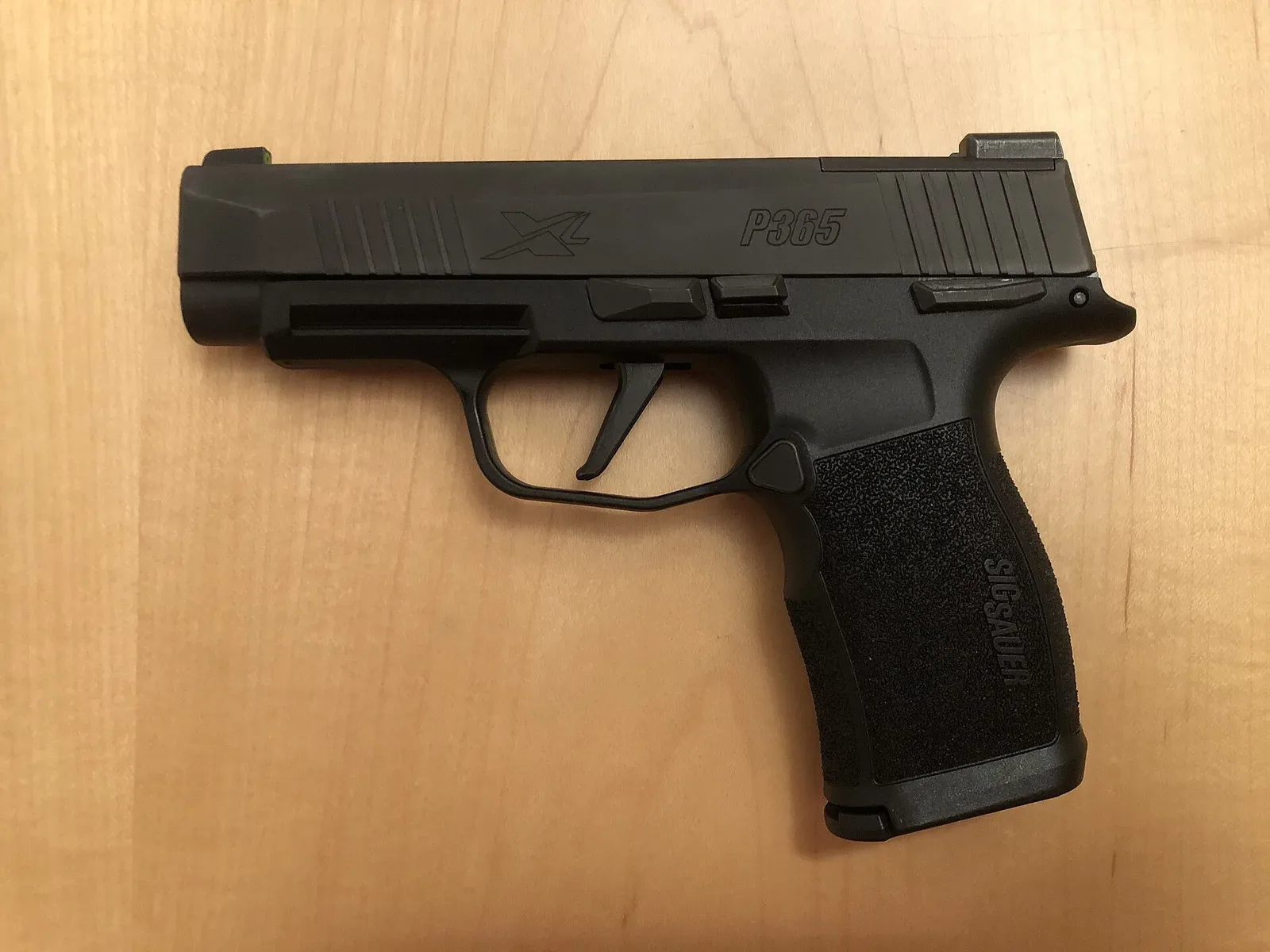
Sig's handgun catalog breaks into two worlds -- the modern striker-fired stuff that's winning contracts and selling like crazy, and the traditional double-action/single-action hammer guns that built their reputation.
The P365 changed everything. Before 2018, micro-compact pistols held 6+1 if you were lucky. The P365 delivered 10+1 in the same footprint.
Striker-Fired Platforms
P365 Family -- This is what changed everything. The P365 delivered 10+1 in the same footprint. Every other manufacturer had to scramble to match it.
- P365 (~$500-$600) -- The original 10+1 micro-compact
- P365XL (~$550-$650) -- Longer slide and grip, 12+1 capacity
- P365 X-Macro (~$700-$800) -- Integrated compensator, 17+1 rounds
The P365 variants dominate concealed carry discussions for good reason. You've either considered one or bought one if you carry daily.
P320 Modular System -- The serialized modular FCU swaps between different grip modules, so legally you own one gun that can be a compact, full-size, or competition pistol depending on what you bolt it into.
- P320 Compact/Full (~$500-$700) -- Standard duty-size pistols, basis for the M17/M18
- P320 AXG (~$900-$1,100) -- Aluminum grip module gives it that premium metal-frame feel
- P320 X-Five Legion (~$900) -- Competition-ready with tungsten-infused grip and flat trigger
| Model | Type | Capacity | Price Range | Best For |
|---|---|---|---|---|
| P365 | Striker-fired micro | 10+1 | $500-$600 | Daily carry |
| P365XL | Striker-fired compact | 12+1 | $550-$650 | Carry with better grip |
| P365 X-Macro | Striker-fired comp | 17+1 | $700-$800 | Competition carry |
| P320 Compact | Striker-fired modular | 15+1 | $500-$700 | Duty/home defense |
| P320 AXG | Metal frame modular | 17+1 | $900-$1,100 | Premium duty |
| P226 | DA/SA hammer | 15+1 | $1,000-$1,300 | Traditional full-size |
| P229 | DA/SA hammer | 13+1 | $1,000-$1,200 | Compact traditional |
Traditional DA/SA Hammer Guns
These are the pistols that made Sig's reputation -- double-action first shot, single-action follow-ups, all-metal construction.
- P226 (~$1,000-$1,300) -- The classic full-size that Navy SEALs carried for decades
- P229 (~$1,000-$1,200) -- Compact version, popular as LE backup guns
- P220 (~$1,100-$1,300) -- The original SIG in America, .45 ACP specialist
- P238/P938 (~$600-$700) -- Micro 1911-style pistols in .380 and 9mm
The Legion series adds premium finishes and triggers to these traditional models, but you're paying $200-300 more for the upgrades.
Rifles and Carbinesedit
Sig's rifle division is where they're pushing hardest into new territory -- winning military contracts and trying to establish themselves beyond just being a pistol company.
MCX Platform
MCX Platform -- Short-stroke piston system with AR-style controls. The folding stock and quick-change barrel system make it more adaptable than standard ARs.
- MCX Spear (~$3,000-$4,000) -- Won the Army's Next Generation Squad Weapon contract, chambers the new .277 SIG Fury cartridge
- MCX Virtus (~$2,500-$3,000) -- Available in 5.56 and .300 Blackout, modular setup
Other Rifle Platforms
- MPX (~$1,800-$2,200) -- Gas-operated pistol-caliber carbine in 9mm, dominates PCC competition
- Cross (~$1,600-$2,000) -- Bolt-action hunting rifle with folding stock
- 716i Tread (~$1,200-$1,500) -- Budget .308 AR-10 platform
| Platform | System | Caliber Options | Price Range | Primary Use |
|---|---|---|---|---|
| MCX Spear | Short-stroke piston | .277 Fury | $3,000-$4,000 | Military/tactical |
| MCX Virtus | Short-stroke piston | 5.56/.300 BLK | $2,500-$3,000 | Tactical/hunting |
| MPX | Gas-operated PCC | 9mm | $1,800-$2,200 | Competition/defense |
| Cross | Bolt-action | Multiple | $1,600-$2,000 | Hunting/precision |
| 716i Tread | DI gas system | .308 | $1,200-$1,500 | Budget precision |
The MCX Spear winning the military contract is a big deal -- it's the first time in decades that a non-AR platform got selected for frontline troops.
Optics and Accessoriesedit
Sig built out a complete optics division to support their firearms. The Romeo5 red dot at around $120 became the budget standard -- MOTAC auto-on technology, shakes awake when you move it, holds zero well enough for the money.
Red Dot Sights
- Romeo5 (~$120) -- Budget king, can't beat it at this price point
- Romeo1 Pro (~$300) -- Slide-mounted for pistols
- Romeo4T/6T (~$400+) -- Military-spec versions
Magnifiers and Scopes
- Juliet series (~$200-$500) -- Flip-to-side magnifiers that pair with Romeo dots
- Tango series (~$400-$2,000) -- Rifle scopes from budget to precision
- KILO rangefinders (~$300-$700) -- Applied ballistics integration
Suppressors
Suppressors -- SLX and SLH series (~$800-$1,200) with modular designs. They're newer to this market but making solid products.
| Product Line | Type | Price Range | Key Features |
|---|---|---|---|
| Romeo5 | Red dot | ~$120 | MOTAC, budget king |
| Romeo1 Pro | Pistol red dot | ~$300 | Slide-mounted |
| Romeo4T/6T | Military red dot | $400+ | Mil-spec durability |
| Juliet series | Magnifiers | $200-$500 | Flip-to-side design |
| Tango series | Rifle scopes | $400-$2,000 | Variable magnification |
| KILO series | Rangefinders | $300-$700 | Applied ballistics |
| SLX/SLH | Suppressors | $800-$1,200 | Modular design |
The Technology Pushedit
Sig isn't content making incremental improvements -- they're trying to push entire platforms forward, sometimes successfully and sometimes with growing pains.
The P320 modular FCU system means you legally own the fire control unit, not the frame. Swap it between different grip modules and you've got different guns without transfers. That's genuinely useful, not just marketing.
The .277 SIG Fury cartridge uses a hybrid steel/brass case to handle 80,000 PSI chamber pressure -- significantly more than traditional cartridges. Whether that translates to real-world advantages for civilians remains to be seen, but the military bought into it.
The P365's capacity breakthrough came from engineering the magazine and grip geometry from scratch instead of trying to adapt existing designs. That's why competitors took years to match it -- they had to start over too.
Sig's approach to innovation: fundamental re-engineering rather than incremental improvements
How They Stack Upedit
The bottom line: Comparing Sig's mainstream pistols to the competition shows where they excel and where they're just keeping up.
| Sig Model | Competitor | Sig Advantage | Competitor Advantage | Verdict |
|---|---|---|---|---|
| P320 | Glock 17/19 | Better trigger, modularity | Proven track record, aftermarket | Preference-dependent |
| P365 | Shield Plus/Hellcat | First-to-market refinement | Price competition | Still the standard |
| MCX | Standard AR-15 | Piston system, folding stock | Half the price, parts availability | Premium alternative |
Common Issues and Criticismsedit
Sig's rapid expansion created quality control growing pains that you need to know about before buying.
P320 Drop Safety Issue
The P320 drop-safety issue pre-2017 was real -- the gun could fire if dropped at specific angles. Sig fixed it with an upgrade program, but it damaged trust. If you're buying used, make sure it has the upgraded trigger.
Quality Control Concerns
Quality control inconsistency shows up as finish problems, machining issues, or parts that don't fit quite right. It's not universal, but it happens more than it should for the price point.
Inspect your gun carefully and run a few hundred rounds before trusting it.
Customer Service Issues
Customer service gets overwhelmed during high-demand periods. Don't expect quick turnaround if you need warranty work when they're launching new products.
Rushed Product Launches
Some newer product lines feel rushed to market. The Cross rifle had accuracy issues early on that required fixes. The lesson: let someone else be the beta tester on brand-new Sig products.
Buying Recommendationsedit
Category-Specific Recommendations
- For concealed carry: P365 or P365XL depending on how much gun you can hide
- For duty/home defense: P320 Full gives you modularity and proven reliability
- For traditional DA/SA: P226 Legion for classic Sig feel with premium touches
- For budget red dot: Romeo5 at $120 is legitimately hard to beat
- For precision rifle: Cross offers something different from standard bolt-actions
The BGC Takeedit
Sig Sauer is the most ambitious firearms company in America right now -- they're making pistols, rifles, optics, suppressors, ammunition, and airguns, and they're actually competitive in every category. That's rare.
The P365 and P320 platforms are legitimate game-changers, not just marketing hype. The military contracts are real validation. The innovation is real -- modular FCUs, .277 SIG Fury cartridges, short-stroke piston AR platforms that actually improve on the original.
If you buy a Sig, inspect it carefully and run 200 rounds through it before trusting it with your life. Most are good -- very good, actually -- but the occasional lemon slips through more often than it should.
The criticism about quality control growing pains is also real. Sig scaled from boutique Swiss manufacturer to American mass-market producer in about a decade, and some units show it. Finish quality isn't always consistent. Some products feel rushed to market.
The brand loyalty is passionate, sometimes to a fault. "SIG life" people exist, and they'll defend every product decision regardless of merit. Don't let the fanboys or the haters make your decision -- judge each gun on its own merits.
Bottom line: Sig makes some of the most advanced firearms available to civilians today. They're pushing the entire industry forward. Just buy smart and inspect what you get.
See Alsoedit
- Quail Creek Plantation(Okeechobee, FL)
- 2aHawaii(Honolulu, HI)
- Boston Firearms(Everett, MA)
- Safeshoot(Kingston, NY)
Loading comments...