Legal Details
FFL Transfer Requirements

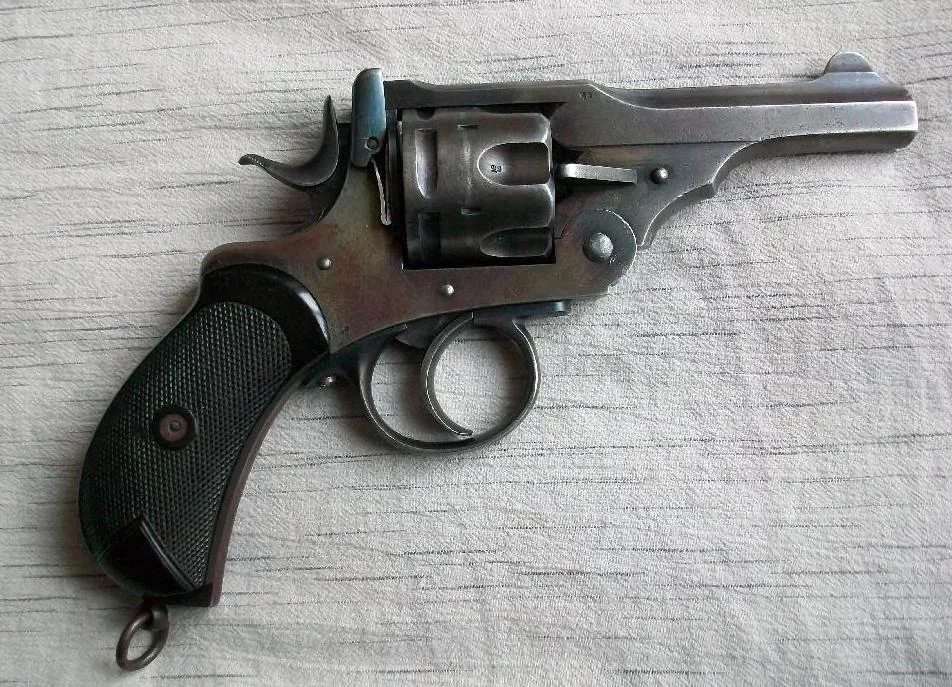
The Webley Mk I (1887) — a pre-1899 British service revolver legally exempt from FFL transfer requirements in the United States.
Rusfuture (Public domain)
| Identification | |
|---|---|
Citation | 18 U.S.C. Chapter 44 |
| Code Sections |
|
| Jurisdiction | |
Territory | United States (Federal) |
Enacted By | United States Congress |
Administered By | Bureau of Alcohol, Tobacco, Firearms and Explosives |
| Timeline | |
Signed | 1968 |
| Key Provisions | |
| |
| Applicability | |
| Applies To | All persons purchasing, selling, or transferring firearms in interstate commerce |
| Exemptions |
|
| Penalties | Federal felony charges for violations |
Related Laws | |
FFL Transfers Required
when federal dealer involvement is mandatory
From The Boise Gun Club Handbook
Disclaimer: This information is for educational purposes only and should not be considered legal advice. Federal and state laws change, and individual circumstances vary. Always consult with qualified legal counsel and relevant authorities for specific situations.
Every gun owner eventually runs into FFL transfer requirements--whether you're buying online, at a gun show, or from that guy in Montana selling the perfect hunting rifle. Get this wrong and you're looking at federal felony charges.
- Interstate deals: Buying from anyone in another state--dealer or private party
- Online purchases: That rifle ships to your local FFL, not your doorstep
- Gun show out-of-staters: Dealer from Oregon at your local show? FFL required
- Any licensed dealer: Even in-state purchases from gun stores go through their FFL
The Gun Control Act of 1968 (18 U.S.C. Chapter 44) draws a bright line here. When firearms cross state lines, they must go through a Federal Firearms License holder.
When firearms cross state lines, they must go through a Federal Firearms License holder. No exceptions for "just this once" or "he's a good guy."
Federal law actually allows same-state private transfers without an FFL in most cases. But many states have layered on their own requirements that are much stricter. Idaho's pretty friendly--California, not so much.
When FFL Transfers Are Required
How This Actually Worksedit
The Transfer Process
You find a gun online or make a deal with someone out of state. Before money changes hands, call a local FFL and arrange the transfer--most charge $25-75 for the service.
Standard FFL Transfer Process Flow
| Step | Who | What Happens | Typical Cost |
|---|---|---|---|
| 1. Contact FFL | Buyer | Call local FFL to arrange transfer | $25-75 fee |
| 2. Provide FFL Info | Buyer | Give seller your FFL's contact details | - |
| 3. Ship Firearm | Seller | Ships to your chosen FFL (not to you) | Shipping cost |
| 4. Complete Transfer | Buyer | Fill Form 4473, pass background check | 20 min process |
| 5. Take Possession | Buyer | Walk out with your firearm | - |
The seller ships to your chosen FFL. You show up with ID, fill out Form 4473, pass your background check, and walk out with your firearm. Takes maybe 20 minutes if NICS is running smooth.
Cost Considerations
That "great deal" you found online isn't quite as great once you add transfer fees and drive time. Factor these costs into any purchase decision.
When You Don't Need an FFLedit
Federal Exceptions
| Exception Type | Description | Key Limitations |
|---|---|---|
| Temporary Sporting Loans | Lending firearms for hunting/sport | Must be temporary, sporting purpose |
| Inheritance Transfers | Firearms received through estate | Complex rules, often time-limited |
| Antique Firearms | Pre-1899 manufactured firearms | Must meet federal antique definition |
| FFL-to-FFL Business | Dealer inventory transfers | Licensed dealers only |
Federal law includes some practical exceptions that actually make sense. Temporary sporting loans work without paperwork--lending your hunting rifle to a visiting buddy is fine. Inheritance situations get more complex fast, but there's usually a path. Antique firearms manufactured pre-1899 are typically exempt from the whole mess.
FFL-to-FFL business transfers happen all the time when dealers move inventory between stores. That's their world, not yours.
Myths That'll Get You in Troubleedit
Common Misconceptions
| Dangerous Myth | Reality | Consequences |
|---|---|---|
| "Private sales never need FFLs" | Interstate private sales require FFL | Federal felony charges |
| "I can ship directly to buyer" | Only to FFLs (rare exceptions) | ATF investigation |
| "Gun shows are FFL-free zones" | Only same-state where legal | State/federal violations |
| "Online guns ship to my house" | Must ship to FFL | Criminal charges |
I've heard these at every gun show and online forum, and they're all wrong:
"Private sales never need FFLs." Interstate private sales absolutely do. "I can ship directly to the buyer." Only to other FFLs, with rare exceptions. "Gun shows are FFL-free zones." Only for same-state private sales where state law allows it.
"Online purchases can ship to my house." Not unless you want ATF knocking on your door with a very official attitude.
Don't take legal advice from forum warriors or the guy at the gun show who "knows a guy." When firearms cross state lines, use an FFL.
Making It Easyedit
Preparation Tips
Find a local FFL before you need one. Some gun stores are friendlier about transfers than others--shop around for service and price. Pawn shops often do transfers too and sometimes charge less.
Keep your FFL's contact info handy for online purchases. Many sites will ask for it during checkout, and fumbling around for phone numbers kills the momentum on a good deal.
Legal Compliance
The legal reality: State laws can be much more restrictive than federal law. Some require FFLs for all transfers, others have waiting periods or permit requirements. Know your state's rules before any transfer--federal compliance isn't enough if you're violating state law.
Resources worth bookmarking:
- Bureau of Alcohol, Tobacco, Firearms and Explosives: atf.gov
- Your local ATF Industry Operations Investigators
- State attorney general's office for state-specific rules
- 18 U.S.C. Chapter 44 for the actual federal statutes
When in doubt, use an FFL. The transfer fee beats federal prison every time.
Last Updated: 2026-01-15
See Alsoedit
- Ace Hardware of Sandusky(Sandusky, MI)
- New Philly Sportsman Specialities(New Philadelphia, OH)
- Atwoods Ranch & Home #46(LACY LAKEVIEW, TX)
- G & P Distributors(McConnellsburg, PA)
This is not legal advice
This guide provides general information about federal and state firearms laws based on publicly available statutes. Laws change frequently and vary significantly by state. Always verify current laws in your jurisdiction. Consult a qualified attorney for legal advice on your specific situation. When in doubt, contact local law enforcement or state police.
Loading comments...