Specifications
Glock 19 Gen 5

Field-stripped Glock 30 showing the modular design of Glock's striker-fired system — frame, slide, barrel, and internal components clearly visible.
Jan Hrdonka en:User:Hrd10 (Public domain)
| Manufacturer | |
|---|---|
| Made By | Glock Ges.m.b.H. |
| Designer | Gaston Glock |
| Origin | Austria |
| Specifications | |
| Caliber | 9mm Luger |
| Action | striker fired |
| Capacity | 15+1 rounds |
| Barrel | 4.02 inches |
| Length | 7.36 inches |
| Weight | 23.65 oz (unloaded) |
| Feed | Detachable box magazine |
| Sights | Fixed polymer front, adjustable steel rear |
| Production | |
| Designed | 1988 |
| In Production | 2017 |
| Variants | |
| |
| Service Use | |
Numerous law enforcement agencies worldwideMilitary units worldwide | |
| Cultural Note | |
| One of the most successful handgun designs in modern history and arguably the most popular handgun in America, dominating both law enforcement and civilian concealed carry markets. | |
| Related Firearms | |
| |
Glock 19 Gen 5
Firearms encyclopedia article
From The Boise Gun Club Handbook
The Glock 19 Gen 5 is a striker-fired, polymer-framed pistol that's become the default answer to "what should I carry?" Chambered in 9mm with a 15-round capacity, it measures 7.36 inches overall with a 4.02-inch barrel and weighs 23.65 ounces empty. Glock introduced the Gen 5 in 2017 with a better barrel, cleaner trigger, and ambidextrous slide stops—addressing complaints that had built up over three decades.
This is probably the most carried pistol in America, and for good reason. It's big enough to shoot well, small enough to disappear under clothing, and reliable enough that you can forget about it until you need it.
You'll find G19s on the hips of cops, in nightstand safes, and tucked into appendix holsters across every state. It bridges that sweet spot between the full-size Glock 17 and the subcompact 26—giving you real capacity without printing through your shirt.
History and Developmentedit
Origins and Early Development
Gaston Glock wasn't even a gun guy when he designed this thing back in 1988. The Austrian engineer had been making knives and curtain rods when he decided to bid on his country's military pistol contract. His outsider perspective led him to question everything—why do pistols need hammers? Why use steel when polymer works? Why complicate the trigger system?
The Glock 19 came along as the compact version of his successful Model 17. Police departments wanted something their officers could carry both on and off duty, and civilians were starting to get serious about concealed carry.
Key milestones in Glock 19 evolution
The G19 hit that target perfectly.
Law Enforcement Adoption
Law enforcement adoption drove everything in the '90s and 2000s. Departments liked the consistent trigger pull, minimal controls, and the fact that the gun worked when cops needed it to work.
No manual safeties to forget, no DA/SA transition to screw up under stress.
| Generation | Year | Key Improvements |
|---|---|---|
| Gen 1 | 1988 | Original compact design |
| Gen 2 | 1994 | Checkered grip texture |
| Gen 3 | 1998 | Accessory rail, finger grooves |
| Gen 4 | 2010 | Modular backstrap, dual recoil spring |
| Gen 5 | 2017 | Marksman barrel, ambidextrous controls, no finger grooves |
Generation 5 Refinements
The Gen 5 changes came from listening to thirty years of user feedback. Shooters complained about the finger grooves not fitting their hands. Lefties wanted ambidextrous controls. Accuracy nuts wanted a better barrel. Glock finally delivered all three in 2017.
Design and Mechanismedit
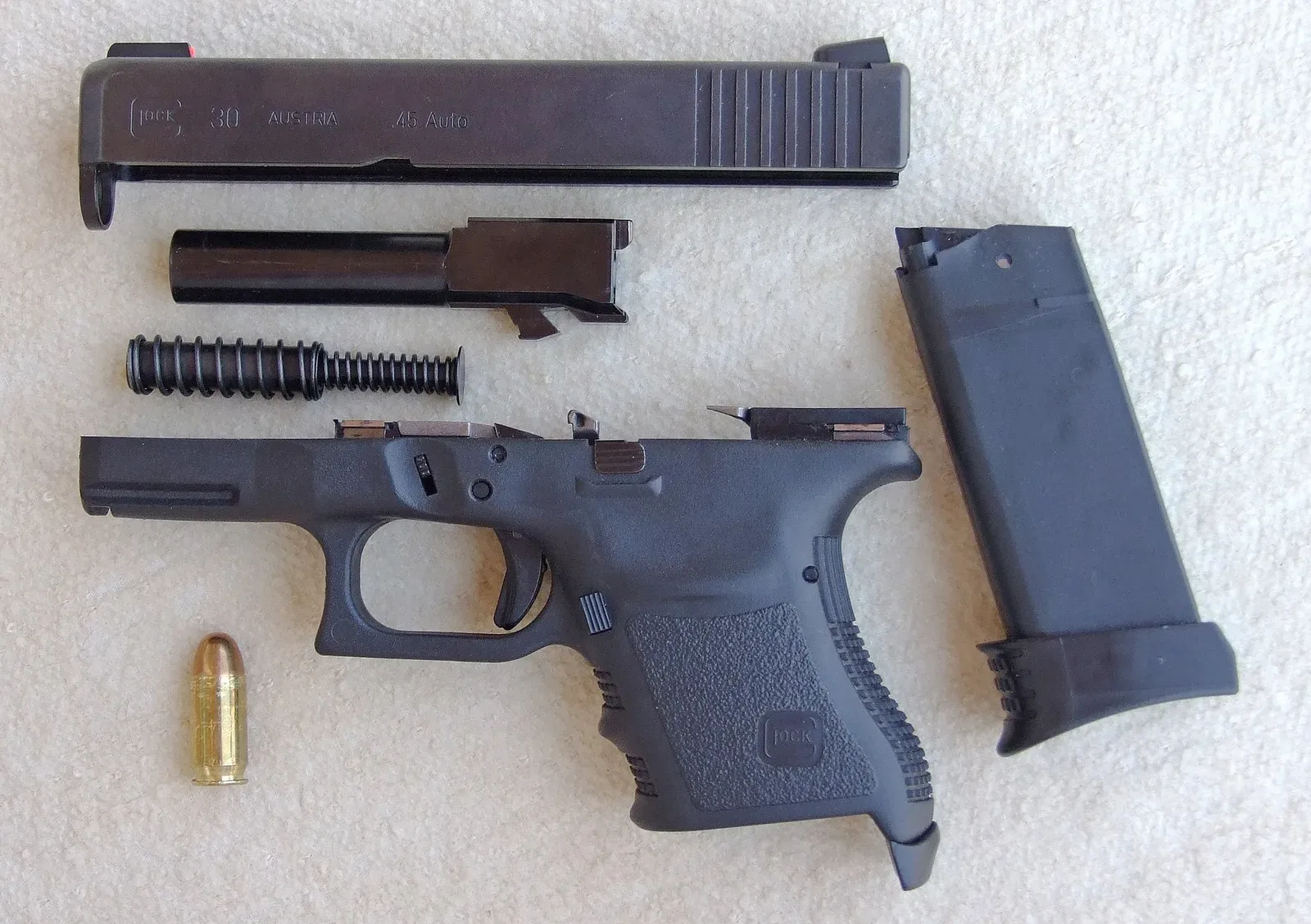
Striker-Fired Action
The striker-fired action is what makes this gun work so well for defensive use. Pull the trigger, gun goes bang—same trigger pull every time. When you rack the slide, the striker gets partially cocked and sits there waiting. Pulling the trigger finishes cocking it and lets it fly forward to hit the primer.
Glock Safe Action System firing sequence
Safety Systems
Glock's Safe Action system gives you three safety mechanisms working together:
- Trigger blade safety prevents sideways pressure from firing
- Firing pin safety blocks striker until full trigger pull
- Drop safety locks mechanism if pistol is dropped
Frame and Ergonomics
The polymer frame was revolutionary in 1982 and still makes sense today. It's lighter than steel, doesn't rust, and handles temperature changes better than early polymer attempts from other companies. The Gen 5 ditched the finger grooves that never seemed to fit anyone's hands quite right, replacing them with a more aggressive texture that actually works.
Those new ambidextrous slide stops are a bigger deal than they sound. Previous generations left southpaws fumbling around or learning awkward manual of arms. Now everyone gets the same controls.
Generation 5 Improvements
The Glock Marksman Barrel represents the biggest accuracy improvement in the platform's history. The enhanced polygonal rifling and tighter manufacturing tolerances turn the G19 from a "minute of bad guy" gun into something that can actually shoot respectable groups.
Specificationsedit
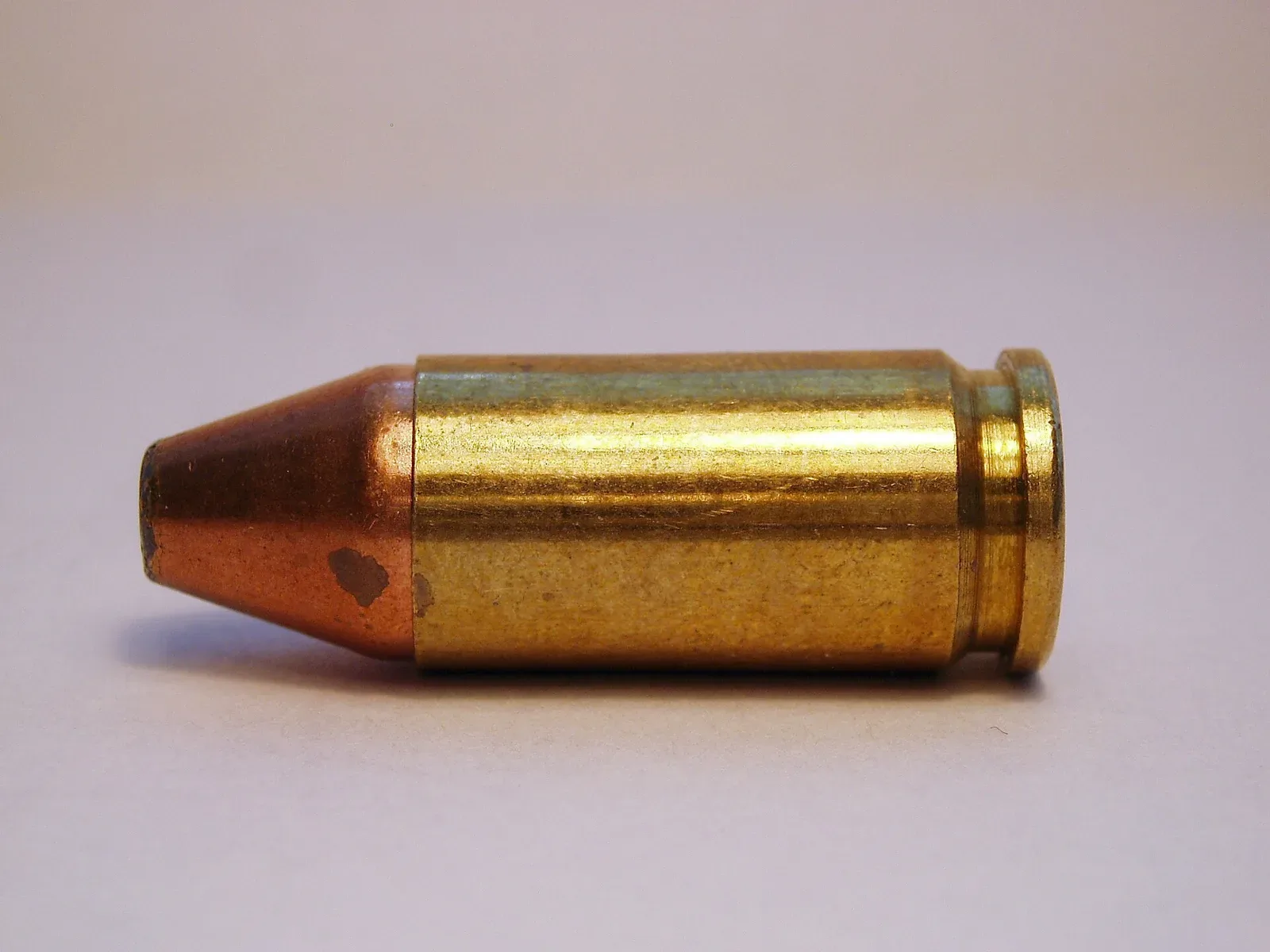
| Specification | Value |
|---|---|
| Caliber | 9mm Luger |
| Action | Striker-fired |
| Capacity | 15+1 rounds |
| Barrel Length | 4.02 inches |
| Overall Length | 7.36 inches |
| Height | 5.04 inches |
| Width | 1.26 inches |
| Weight (Empty) | 23.65 oz |
| Sights | Fixed polymer front, adjustable steel rear |
| Feed System | Detachable box magazine |
| Trigger Pull | ~5.5 lbs |
| Frame Material | Polymer |
| Slide Material | Steel with nDLC finish |
| Barrel Rifling | Polygonal |
Variants That Actually Matteredit
The Glock 19X takes the G19 slide and mates it to a full-size frame—giving you 17 rounds instead of 15 and a longer grip that some people shoot better. It came out of Glock's failed attempt to win the Army pistol contract, but turned into a solid option for people who don't need to conceal the grip.
Glock 19 MOS models come with the slide already cut for red dot sights. If you're planning to run an optic, buy the MOS version instead of paying a gunsmith to mill your slide later. The factory cuts are cleaner and you get the mounting plates included.
The Glock 45 flips the script—G19 slide on a G17 frame, but in basic black instead of the 19X's coyote color. Same capacity boost, different aesthetic.
| Variant | Frame Size | Capacity | Key Difference |
|---|---|---|---|
| Glock 19 | Compact | 15+1 | Standard model |
| Glock 19X | Full-size | 17+1 | G19 slide, G17 frame, coyote finish |
| Glock 19 MOS | Compact | 15+1 | Optics-ready slide |
| Glock 45 | Full-size | 17+1 | G19 slide, G17 frame, black finish |
Special editions and commemorative models show up occasionally, but they're the same gun with different rollmarks or finishes. The core specs stay consistent.
Real-World Useedit
Law Enforcement Applications
Law enforcement agencies gravitated to the G19 because it solved the on-duty/off-duty problem. Cops could carry the same gun in uniform and in plainclothes without changing their manual of arms or holster fit. Federal agencies picked it up for the same reason—one gun, multiple roles.
The reliability factor can't be overstated. Police departments that switched from revolvers or other semi-autos saw dramatic reductions in weapon malfunctions during critical incidents.
When your life depends on the gun working, simple mechanics and proven reliability matter more than features.
Concealed Carry Use
Concealed carry is where the G19 really dominates civilian use. It's small enough to disappear in a good holster but large enough that you can actually hit what you're aiming at. The 15-round capacity gives you twice the ammunition of most compact revolvers.
Most CCW instructors recommend the G19 as a first defensive pistol because it doesn't punish new shooters with excessive recoil or complicated controls. You can focus on marksmanship and gun handling instead of figuring out which safety to disengage.
Home Defense Role
Home defense applications benefit from the same reliability that attracted police departments. No external hammer to snag on clothing, no manual safety to forget under stress, no DA/SA trigger transition to practice. Point and shoot.
Aftermarket and Competition
The aftermarket support for the G19 exceeds every other pistol platform. You can swap triggers, barrels, sights, slides, frames—basically everything except the serial numbered part. Popular upgrades include match barrels for accuracy, competition triggers for better feel, and slide cuts for mounting optics.
Competition shooters use G19s in USPSA Production, IDPA Stock Service Pistol, and various 3-Gun divisions. The platform's inherent accuracy and reliability, combined with extensive modification options, make it competitive right out of the box and capable of serious customization for dedicated competitors.
| Use Case | Advantages | Considerations |
|---|---|---|
| Law Enforcement | Reliability, consistent manual of arms | Department approval required |
| Concealed Carry | Size/capacity balance, holster options | May print on smaller frames |
| Home Defense | Simple operation, high capacity | Consider overpenetration |
| Competition | Aftermarket support, proven accuracy | Trigger may need upgrade |
What You Should Know Before Buyingedit
Performance Characteristics
The Gen 5 trigger is noticeably better than previous generations, but it's still a Glock trigger—functional rather than refined. Most people adapt quickly, but competitive shooters often swap in aftermarket units.
Practical Considerations
Holster availability is unlimited. Every major manufacturer makes G19 holsters, and most offer multiple options for different carry positions and retention systems. This matters more than you might think—a great gun with a lousy holster becomes a mediocre carry setup.
The 9mm chambering hits the sweet spot for most users. Effective terminal performance, manageable recoil, high capacity, and reasonable ammunition costs. You can practice regularly without breaking the bank.
Magazine compatibility extends across the entire 9mm Glock line:
- G17 magazines work in G19 (with extra length)
- G26 magazines work but reduce capacity to 10 rounds
- Aftermarket options range from 10 to 33 rounds
Training and Support
Training opportunities exist everywhere because everyone knows how to teach Glock. Most firearms schools use G19s as their standard platform, so you won't waste time learning different manual of arms if you take classes.
See Alsoedit
- Glock 17 Gen 5
- Glock 26 Gen 5
- SIG P320 Compact
- Smith & Wesson M&P9 Compact
- HK VP9
The BGC Takeedit
After thirty-plus years, the Glock 19 Gen 5 remains the standard by which other defensive pistols get measured. The Gen 5 improvements address most of the legitimate complaints about earlier versions without messing up what made the gun successful in the first place.
Is it perfect? No. The trigger could be better, the sights are mediocre, and some people's hands don't fit the grip well. But it works when you need it to work, shoots accurately enough for defensive purposes, and carries comfortably enough for daily use.
The aftermarket ecosystem means you can fix whatever doesn't work for you out of the box. Don't like the sights? Swap them. Want a better trigger? Dozens of options exist. Need night sights or an optic mount? Easy upgrades.
For most people asking 'what pistol should I carry,' the G19 Gen 5 remains the safe answer. It's not the most exciting option, but it's the one that'll still be running when more exotic choices are back at the factory.
- R&R Sports & Outdoors(Brandon, FL)
- Bi-mart - Yakima (Fruitvale Ave)(Yakima, WA)
- Gls Guns(Sumner, IA)
- New Philly Sportsman Specialities(New Philadelphia, OH)
No reviews yet
Be the first to review the Glock 19 Gen 5. Share your experience with the community.
Write the First ReviewLoading comments...