State Details
Hawaii

Overview | |
|---|---|
State | Hawaii (HI) |
Capital | Honolulu |
Statehood | 1959 |
Population | 1,435,138 |
Gun Ownership | 14.9% |
Active FFLs | 71 |
Carry Laws | |
Constitutional Carry | No |
Open Carry | No |
CCW Permit Available | Yes |
Permit Reciprocity | none |
Self-Defense | |
Castle Doctrine | Yes |
Stand Your Ground | No |
Duty to Retreat | Yes |
Regulations | |
State Preemption | No |
Red Flag / ERPO | Yes |
Waiting Period | 14 days |
Universal BGC | Yes |
NFA Items | No |
Assault Weapons Ban | Yes |
Magazine Limit | 10 rounds |
Key Legislation | |
| |
Hawaii Firearms History: From the Kingdom of Hawaii to the Modern Legal Battleground
Reference article
From The Boise Gun Club Handbook
Overviewedit
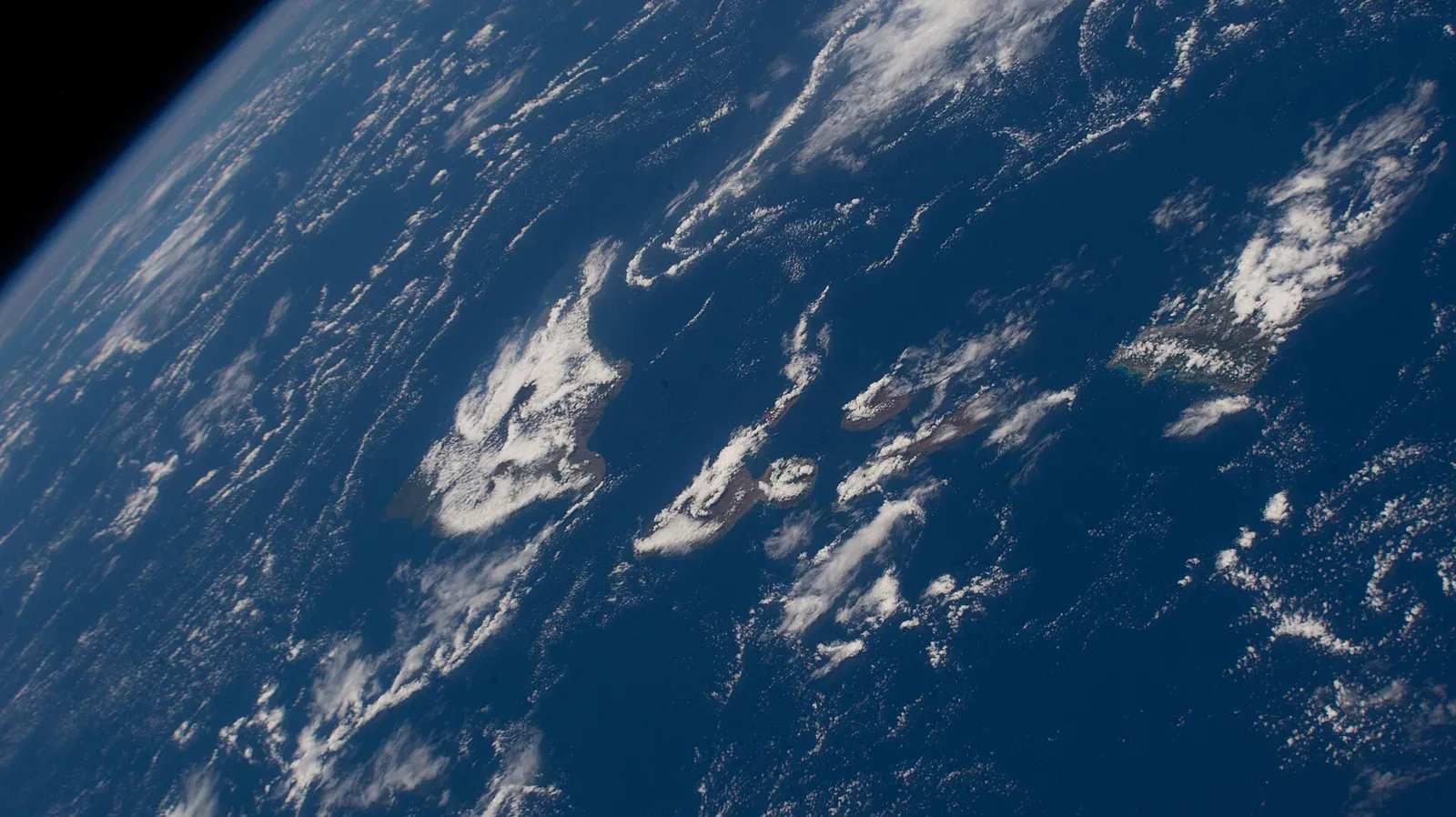
Hawaii's relationship with firearms doesn't fit the standard American template -- and that's not an accident. This is a place where gun law traces back to a monarchy, where the overthrow of a queen at gunpoint shaped a century of political culture, and where a surprise naval attack in 1941 militarized an entire civilian population overnight.
This is a place where gun law traces back to a monarchy, where the overthrow of a queen at gunpoint shaped a century of political culture, and where a surprise naval attack in 1941 militarized an entire civilian population overnight.
The islands became a state in 1959 with a regulatory tradition already baked in, and they've spent the decades since building what is now one of the most restrictive firearms frameworks in the country.
For gun owners, Hawaii is genuinely difficult terrain. Ownership rates are among the lowest in the nation. The permit-to-purchase system covers all firearms. Public carry has been tightly controlled since before the United States had any claim to the islands at all. And right now, Hawaii is at the center of some of the most consequential Second Amendment litigation in a generation -- cases that will shape how courts interpret the Bruen decision for years to come.
Understanding how Hawaii got here means going back a long way -- further than statehood, further than U.S. territorial status, all the way back to the Kingdom of Hawaii itself.
Pre-Annexation Era: The Kingdom of Hawaiiedit
When most Americans think about 19th-century firearms regulation, they think about frontier saloons, cattle towns, and the occasional ordinance against carrying guns inside city limits. Hawaii's story is entirely different. The Kingdom of Hawaii -- a sovereign monarchy recognized by the major world powers -- was developing its own firearms laws decades before the United States had any jurisdiction over the islands.
Kingdom Firearms Laws
In 1852, the Kingdom of Hawaii enacted the Act to Prevent the Carrying of Deadly Weapons, a criminal statute that prohibited the unauthorized carrying of pistols or other deadly weapons in public. The law specified that criminal penalties could be imposed unless "good cause be shown" for carrying such weapons. This wasn't a frontier ad hoc ordinance -- it was formal legislation from a functioning government with its own supreme court.
The Hawaii Supreme Court affirmed the licensing framework in 1897 in Republic of Hawaii v. Clark, holding that a proper license "would be a good defense" to a charge under the Act.
| Date | Legislation | Key Provisions |
|---|---|---|
| 1833 | Early Weapons Law | General weapons restrictions (cited in modern court filings) |
| 1852 | Act to Prevent the Carrying of Deadly Weapons | Prohibited unauthorized public carry of pistols; required "good cause" for permits |
| 1897 | Republic of Hawaii v. Clark | Supreme Court affirmed licensing framework as valid defense |
Political Context and Foreign Pressure
The political context matters. The Kingdom of Hawaii in the mid-19th century was under constant pressure from foreign commercial interests, particularly American sugar planters and merchants who had established significant economic footholds on the islands. The monarchy had legitimate reasons to be concerned about armed civilians -- including foreign nationals who might use firearms to destabilize royal authority. Whether the 1852 law was primarily a public safety measure or a political tool of the monarchy is a debate that has resurfaced in 21st-century federal courts, with the Hawaii Rifle Association arguing in an amicus brief to the Supreme Court that the law was enacted at the king's whim to oppress subjects, not as part of any American constitutional tradition.
The Kingdom of Hawaii also passed an 1833 law restricting weapons -- cited by Hawaii officials in 2026 Supreme Court filings -- making Hawaii's pre-annexation regulatory history among the oldest and most documented of any jurisdiction that eventually became part of the United States.
King Kamehameha III had actually embraced a constitutional framework for the Kingdom in 1840, and firearms were already in civilian circulation throughout the islands by then -- used for hunting, protection from wild animals, and, increasingly, as symbols of status among the ali'i (nobility) who had acquired Western weapons through trade. American, British, and French trading vessels had been running guns through Hawaiian ports since the late 18th century, and by the time the 1852 law passed, firearms were a familiar part of island life.
The Overthrow, Annexation, and Territorial Period (1893–1941)edit
Pearl Harbor and Martial Law
The single most consequential armed event in Hawaiian history happened on January 17, 1893, when a group of American businessmen and sugar planters -- backed by U.S. Marines from the USS Boston -- overthrew Queen Lili'uokalani, the last reigning monarch of the Kingdom of Hawaii. The Marines landed armed, positioned themselves near the government buildings, and made clear that the U.S. government would not intervene to protect the Queen.
She surrendered under protest, later stating she did so to avoid bloodshed.
The Provisional Government of Hawaii that took power was explicitly pro-annexation, but President Grover Cleveland refused to annex the islands after an investigation by former Congressman James Blount concluded that the U.S. Minister to Hawaii had conspired in the overthrow. The provisional government transformed itself into the Republic of Hawaii in 1894 and continued lobbying for annexation.
Annexation finally came under President William McKinley through the Newlands Resolution of 1898 -- a joint resolution of Congress rather than a treaty, a method that remains legally contested by some scholars and Hawaiian sovereignty advocates to this day. Hawaii became a U.S. Territory that same year.
The territorial period brought federal firearms law into play, but Hawaii's existing regulatory traditions largely continued. The territorial government maintained permit and licensing requirements consistent with the Kingdom-era laws, and the Hawaii Revised Laws codified restrictions on public carry that echoed the 1852 Act to Prevent the Carrying of Deadly Weapons. The islands were geographically isolated -- the nearest U.S. mainland port was roughly 2,400 miles away -- which meant that firearms supply chains, pricing, and availability were different from continental American experience. Getting guns and ammunition to Hawaii cost more and took longer, a practical reality that has consistently shaped the islands' gun culture in ways that have nothing to do with politics.
The territorial legislature in 1907 codified regulations governing the sale and transfer of firearms, requiring dealers to maintain records of transactions -- an early form of what would eventually evolve into Hawaii's comprehensive registration system.
20th Century: Pearl Harbor, Martial Law, and the Path to Statehoodedit
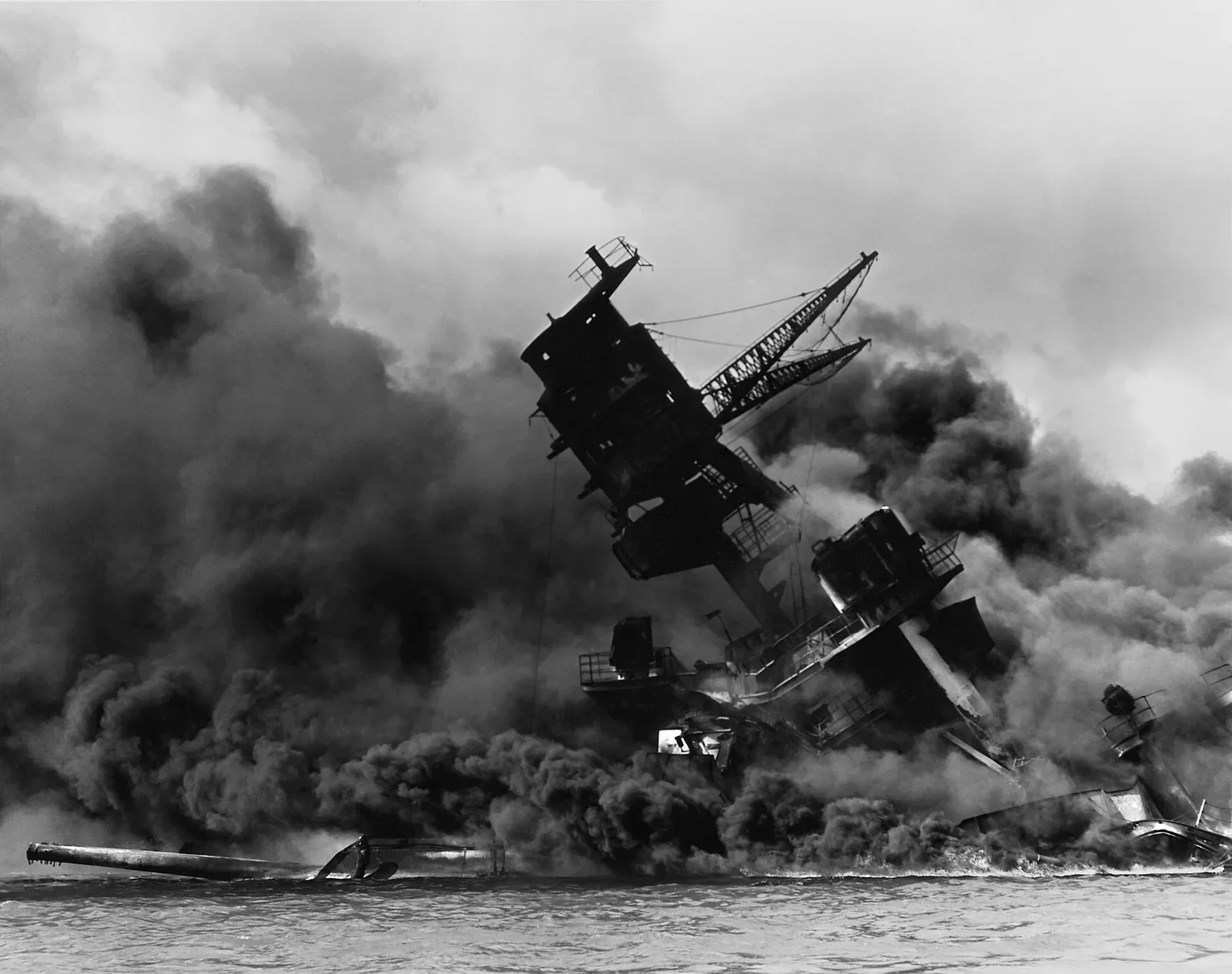
Pearl Harbor and Martial Law
On December 7, 1941, the Imperial Japanese Navy attacked Pearl Harbor on Oahu's southern coast, killing 2,403 Americans, wounding 1,178 more, sinking or damaging 19 naval vessels, and destroying 328 aircraft. It was the deadliest attack on American soil in the 20th century and it immediately transformed Hawaii's relationship with firearms, military power, and civilian authority.
Governor Joseph Poindexter declared martial law on December 7, 1941 -- the same day as the attack -- and transferred authority to Army General Walter Short, then to General Delos Emmons. Under martial law, civilian courts were suspended and military tribunals handled criminal cases. The military imposed strict controls on firearms in civilian hands: residents were ordered to register all weapons, and in many cases confiscation of civilian arms was carried out in the name of military security. The fear was not unfounded -- Hawaii had a substantial Japanese-American population, and military planners (wrongly, as history proved) considered the potential for sabotage or fifth-column activity a serious threat.
| Event | Date | Impact on Firearms |
|---|---|---|
| Pearl Harbor Attack | December 7, 1941 | 2,403 killed, 1,178 wounded; immediate martial law declared |
| Martial Law Begins | December 7, 1941 | Civilian firearms registration ordered; many confiscated |
| Military Authority Transfer | December 1941 | General Short replaced by General Emmons |
| Martial Law Ends | October 24, 1944 | Nearly 3 years of military rule over civilians |
| Duncan v. Kahanamoku | 1946 | Supreme Court ruled military tribunals exceeded authority |
| Hawaii Statehood | August 21, 1959 | Existing restrictive framework carried into statehood |
Military Rule and Civil Liberties
Martial law in Hawaii lasted until October 24, 1944 -- nearly three years -- making it the longest period of military rule over a civilian population in American history outside of Reconstruction-era occupation. The U.S. Supreme Court addressed the legality of Hawaii's military tribunals in Duncan v. Kahanamoku (1946), ruling that the military courts had exceeded their authority and that civilians should have been tried in civilian courts even during wartime. The case is a landmark in civil liberties law, but it also illustrates just how thoroughly the wartime military apparatus had displaced normal civilian life in the islands.
Throughout the war, Hawaii served as the primary staging ground for U.S. Pacific operations. At its peak, the military population on Oahu alone approached 500,000 personnel. Major installations including Pearl Harbor Naval Station, Hickam Field, Schofield Barracks, and Wheeler Field made the islands one of the most militarized places on earth. This military presence didn't translate into civilian gun culture the way it did in, say, Texas or Virginia -- the islands' geographic isolation, high cost of living, and the specific traumas of the martial law period produced a civilian population that was, if anything, more accustomed to firearms being a military matter rather than a civilian one.
Postwar Period and Statehood
After the war, Hawaii entered the postwar period still as a territory, with statehood advocates pushing hard in Congress. The primary obstacles were Cold War-era concerns about Communist influence in the Hawaii labor movement -- the International Longshoremen's and Warehousemen's Union under Jack Hall was a major force -- and the racial politics of admitting a state with a non-white majority population. Hawaii finally achieved statehood on August 21, 1959, becoming the 50th state, after Congress passed the Hawaii Admission Act and voters approved in a plebiscite.
The firearms regulatory framework Hawaii brought into statehood was already significantly more restrictive than most continental states. The new state legislature didn't start from scratch -- it codified and expanded what was already there.
Modern Era (2000–Present)edit
Core Regulatory Framework
Hawaii entered the 21st century with a comprehensive firearms regulatory system built on decades of layered legislation, and the state has continued adding to it at a pace that has few parallels in the country. The core framework is Hawaii Revised Statutes Chapter 134, which governs firearms, ammunition, and dangerous weapons.
The permit-to-purchase system requires anyone buying a firearm in Hawaii -- handgun, rifle, or shotgun -- to first obtain a permit from the county police department. There are four county police departments: Honolulu Police Department, Maui Police Department, Hawaii County Police Department (the Big Island), and Kauai Police Department. Each has its own administrative process, and historically the process has been criticized by gun owners for delays and inconsistency. Once purchased, all firearms must be registered with the county police department within five days.
The Young v. Hawaii Litigation
Public carry has been the central legal battleground. Hawaii required applicants to demonstrate an "exceptional case" and a specific reason to fear injury -- effectively a may-issue system that in practice almost never issued permits. George Young, a resident of Hawaii County, applied twice for a permit to carry a firearm and was denied both times. His lawsuit, Young v. Hawaii, worked its way through the federal courts for years. The Ninth Circuit's en banc decision in 2021 upheld Hawaii's permitting scheme, with Judge Jay Bybee writing for the majority and citing the Kingdom-era 1852 law as evidence of a longstanding local tradition of restricting public carry. Judge Diarmuid O'Scannlain filed a lengthy dissent joined by three other judges, arguing that the Second Amendment protected a right to carry outside the home.
Post-Bruen Legislative Response
The Supreme Court's June 2022 decision in New York State Rifle & Pistol Association v. Bruen fundamentally changed the legal landscape. Bruen struck down New York's similar may-issue permitting scheme and established a new test requiring modern gun regulations to be consistent with the historical tradition of firearm regulation at the time of the founding. The Court also vacated and remanded Young v. Hawaii along with three other Second Amendment cases for reconsideration under the new standard.
Hawaii responded to Bruen aggressively. Attorney General Anne Lopez initially issued a statement suggesting Hawaii would evaluate whether the decision affected its laws, some of which "date back to the days of the Kingdom of Hawaii." The AG subsequently issued an opinion letter acknowledging that the "exceptional case" requirement for carry permits could no longer be enforced under Bruen.
But the state legislature moved simultaneously to build new statutory restrictions -- the 2023 legislative session produced a sweeping set of changes including a dramatically expanded list of "sensitive places" where firearms are prohibited even for permit holders:
- Beaches, parks, and public recreation areas
- Banks and financial institutions
- Bars and restaurants serving alcohol
- Government buildings and facilities
- Hospitals and medical facilities
- Sports arenas and entertainment venues
- Private property (unless owner explicitly posts permission)
Three Maui residents challenged the sensitive-places law almost immediately after it passed. A federal district court judge blocked portions of the law pending litigation. That case eventually reached the Supreme Court, which agreed in 2025 to take up the question of how Bruen's sensitive-places carve-out applies to Hawaii's framework -- with oral arguments in January 2026 showing a Court that appeared skeptical of the breadth of Hawaii's restrictions, particularly the provision that effectively banned carry on all private property without explicit owner permission.
The 2023 legislative session also passed a law creating legal accountability for gun industry members whose conduct results in harm -- part of a national wave of similar legislation following the partial repeal of the Protection of Lawful Commerce in Arms Act (PLCAA) protections that some states have attempted through state-level carve-outs.
In 2024, Hawaii extended its minimum age for ammunition purchases to 21, making it one of a small number of states to impose age restrictions on ammunition in addition to firearms. The state also has mandatory registration, a 14-day waiting period, an assault weapons ban, a prohibition on magazines holding more than 10 rounds, microstamping requirements for new handguns, ghost gun regulations, and a red flag law that allows law enforcement, family members, medical professionals, educators, and colleagues to petition for emergency removal of firearms.
Gun ownership rates in Hawaii are consistently among the lowest in the country -- estimates typically place the household ownership rate somewhere between 8% and 14%, compared to a national average around 32%. Whether that's a cause or effect of the regulatory environment -- or simply a function of the islands' demographics, cost of living, and cultural history -- is a question gun policy advocates on both sides argue about constantly.
Notable Figures & Manufacturersedit
Hawaii has produced no significant domestic firearms manufacturers. The islands' geographic isolation, high cost of doing business, and regulatory environment have made manufacturing essentially nonexistent. There are no arsenals, no significant gunsmithing traditions that developed into commercial enterprises, and no arms factories of historical note. This is worth stating plainly because it shapes the state's gun culture -- Hawaii has never had the kind of local manufacturing base that ties a community's economic identity to firearms production the way some New England or Southern states do.
George Young is the most significant figure in modern Hawaiian firearms law -- not as a manufacturer or historical gunfighter, but as the plaintiff whose decade-long legal battle produced some of the most important Second Amendment jurisprudence to come out of Hawaii. Young, a resident of the Big Island, became the face of the carry rights fight in Hawaii when his denied permit applications launched litigation that ran from roughly 2012 through the Bruen remand in 2022.
The Hawaii Rifle Association (HRA) is the state's primary pro-gun advocacy organization and the local affiliate of the National Rifle Association. The HRA has been active in litigation -- filing amicus briefs in Young v. Hawaii and related cases -- as well as in legislative opposition to new gun control measures. Given Hawaii's political environment, the HRA operates in a state where Democrats hold supermajorities in both chambers of the legislature and the governor's office, making legislative victories essentially nonexistent in recent decades. The organization's primary arena has been the courts.
Anne Lopez, Hawaii's Attorney General since 2023, has been an aggressive defender of the state's firearms regulations in federal litigation, including in the sensitive-places cases currently before the Supreme Court. Her office has consistently argued that Hawaii's unique pre-annexation history provides a state-specific historical tradition that supports stricter regulation than Bruen might otherwise require.
Queen Lili'uokalani belongs in any honest account of Hawaii's firearms history -- not as a gun figure, but because the armed overthrow of her government in 1893 is the foundational event that shapes how many Native Hawaiians and sovereignty advocates think about firearms, military power, and the American state. The relationship between armed force and colonialism is not abstract history in Hawaii; it's a live political conversation.
On the military side, Admiral Chester Nimitz, who commanded U.S. Pacific Fleet operations from Pearl Harbor starting December 31, 1941, is the most prominent military figure associated with the islands during the period when Hawaii's civilian gun culture was being most dramatically shaped by wartime policy. Nimitz's headquarters at Pearl Harbor coordinated the entire Pacific theater of operations, making Hawaii the strategic center of the war in a way that left permanent marks on the islands' infrastructure, demographics, and political culture.
Current Legal Landscapeedit
Hawaii's current firearms laws are among the most comprehensive in the country, and right now they're being stress-tested in federal courts under Bruen's historical-tradition framework.
Core Requirements
| Requirement | Details | Enforcement |
|---|---|---|
| Permit to Purchase | All firearms (handgun, rifle, shotgun) | County police departments |
| Waiting Period | 14 days | All purchases |
| Registration | Within 5 days of acquisition | Mandatory for all firearms |
| Minimum Age | 21 years | Firearms and ammunition (as of 2024) |
| Carry Permits | Shall-issue post-Bruen | Extensive training required |
| Magazine Capacity | 10 rounds maximum | State-wide limit |
| Storage Requirements | Secure storage when not in immediate control | Legal requirement |
Sensitive Places Litigation
| Location Type | Carry Status | Notes |
|---|---|---|
| Government Buildings | Prohibited | Standard sensitive place |
| Schools & Universities | Prohibited | K-12 and higher education |
| Hospitals & Medical | Prohibited | Healthcare facilities |
| Beaches & Parks | Prohibited | Public recreation areas |
| Bars & Restaurants | Prohibited | Establishments serving alcohol |
| Sports Arenas | Prohibited | Entertainment venues |
| Private Property | Prohibited (default) | Unless owner posts permission signs |
| Banks & Financial | Prohibited | Financial institutions |
The sensitive-places law passed in 2023 is the provision currently before the Supreme Court. It prohibits carry in an expansive list of locations and, most controversially, defaults to prohibiting carry on private property unless the owner affirmatively posts a sign indicating firearms are permitted. Critics -- including the federal judge who partially blocked the law -- have argued this effectively eliminates the right to carry in most public spaces, which is precisely what Bruen said a state cannot do.
Hawaii does not have preemption -- cities and counties can pass their own additional firearms regulations on top of state law.
Constitutional carry does not exist in Hawaii and has no legislative support in the current political environment. A permit is required to carry in any manner outside the home.
Statistical Context
The state's gun death rate is consistently among the lowest in the country -- around 3 to 4 per 100,000 residents annually, compared to a national average above 13. Gun control advocates cite this as evidence that Hawaii's regulatory approach works. Gun rights advocates counter that Hawaii's geographic isolation, demographics, low population density outside Honolulu, and cultural factors make direct comparisons to mainland states misleading. Both arguments contain real data and neither is entirely wrong.
The BGC Takeedit
Hawaii is as close to a worst-case scenario for a gun owner as you'll find in the United States, and it's been that way for a long time -- not because Hawaii suddenly went anti-gun, but because the islands have been building this framework continuously since before they were part of the country.
If you're moving to Hawaii, understand what you're getting into before your household goods ship. The permit-to-purchase process runs through county police departments, and the experience varies significantly by county. Honolulu has historically had the longest waits and the most bureaucratic friction. You will register every firearm. You will wait 14 days. You will need to figure out secure storage before your firearms arrive, because the law applies the moment you take possession.
Carrying is theoretically legal now -- Bruen cracked open the door that Hawaii had kept bolted for over a century. But the sensitive-places list is so extensive that carrying in most populated areas is still legally treacherous, and that list is currently being litigated at the Supreme Court level. Don't assume the map of where you can legally carry will look the same in 2027 as it does today.
The Hawaii Rifle Association is doing the work that needs doing in this environment -- litigation, legislative testimony, public advocacy. They're fighting uphill in a state where the political math is almost uniformly against them, but the federal courts have been a more receptive venue, particularly post-Bruen.
For Hawaiian gun owners who grew up there, the culture is real even if it's quieter than what you'd find in Idaho or Wyoming. There are ranges, there are competitors, there are hunters pursuing feral pigs and axis deer on Maui and the Big Island. The gun community exists -- it's just smaller, more dispersed, and operating in a legal environment that treats every aspect of ownership as something requiring a permit, registration, and a waiting period.
The historical argument Hawaii keeps making in court -- that the Kingdom of Hawaii's 1852 law establishes a state-specific tradition that justifies stricter-than-national-average regulation -- is genuinely interesting legal theory, and it's not obviously wrong as a matter of history. Whether it survives Bruen scrutiny is what the Supreme Court is currently deciding. The outcome of the current litigation will either validate Hawaii's approach or force the most significant dismantling of its regulatory structure since statehood. Either way, Hawaii is where Second Amendment law is being made right now.
Referencesedit
- Young v. Hawaii, 992 F.3d 765 (9th Cir. 2021) (en banc)
- New York State Rifle & Pistol Association v. Bruen, 597 U.S. 1 (2022)
- Duncan v. Kahanamoku, 327 U.S. 304 (1946)
- Republic of Hawaii v. Clark, 10 Haw. 585 (1897)
- Act to Prevent the Carrying of Deadly Weapons, 1852 Haw. Sess. Laws 19
- Hawaii Revised Statutes Chapter 134 (current through 2025 legislative session)
- Hawaii Admission Act, Pub. L. 86-3 (1959)
- Newlands Resolution (Joint Resolution to Provide for Annexing the Hawaiian Islands), 30 Stat. 750 (1898)
- Andrew Willinger, "Hawaii's Public-Carry Law and the Challenge of Pre-State Historical Tradition," Duke Center for Firearms Law (July 20, 2022)
- Williamson Chang, "Darkness over Hawaii: The Annexation Myth Is the Greatest Obstacle to Progress," 16.1 Asian-Pacific Law & Policy Journal 70 (2015)
- Hawaii Rifle Association, Amicus Brief, Young v. Hawaii (U.S. Supreme Court, 2021)
- Attorney General Anne Lopez, Opinion Letter re: HRS § 134-9(a) "Exceptional Case" Requirement (2022)
- Everytown Research & Policy, Hawaii State Profile (2024)
- "Gun Laws in Hawaii," Wikipedia (consulted February 2026)
- "Majority of Supreme Court Appears Skeptical of Hawaii Gun Law," New York Times (January 20, 2026)
- "Supreme Court will weigh Hawaii's strict ban on guns on private property," PBS NewsHour (2025–2026)
- Hawaii Rifle Association, Simplified Overview of HRS Chapter 134 (updated May 5, 2025)
Last Updated: February 24, 2026
- Quail Creek Plantation(Okeechobee, FL)
- 2aHawaii(Honolulu, HI)
- Boston Firearms(Everett, MA)
- Safeshoot(Kingston, NY)
Loading comments...