Quick Reference
Home Defense Firearms: Shotgun vs Pistol vs AR-15

| Time & Effort | |
|---|---|
Read Time | 12 min read |
Home Defense Firearms: Shotgun vs Pistol vs AR-15
Handbook article
From The Boise Gun Club Handbook
Which One Actually Makes Sense for Your House?edit
Somebody breaks your front door at 2 a.m. You've got maybe seconds to get to your firearm, get your family clear, and be ready. The gun sitting in your nightstand better be one you can actually run -- not the one that looked cool at the gun store six months ago.
Shotgun, pistol, or AR-15 -- all three can end a threat. But each one comes with real tradeoffs that matter a lot depending on your living situation, your physical ability, who else is in your house, and how much you train. Here's what you actually need to know.
The Core Tradeoffs at a Glanceedit
| Platform | Capacity | Maneuverability | Recoil | Stopping Power | Avg. Entry Price |
|---|---|---|---|---|---|
| 9mm Pistol | 15–18+ rounds | Excellent | Low | Moderate | ~$400–$600 |
| Pump Shotgun | 5–8+1 rounds | Limited | Heavy | High | ~$300–$600 |
| Semi-Auto Shotgun | 5–8+1 rounds | Limited | Moderate | High | ~$1,000–$1,500+ |
| AR-15 (carbine) | 30+1 rounds | Moderate | Very Low | High | ~$459–$1,800+ |
| AR-15 Pistol | 30+1 rounds | Good | Very Low | High | ~$459+ |
Prices sourced from current retail listings per Pew Pew Tactical.
Pistols: The Everyday Workhorseedit
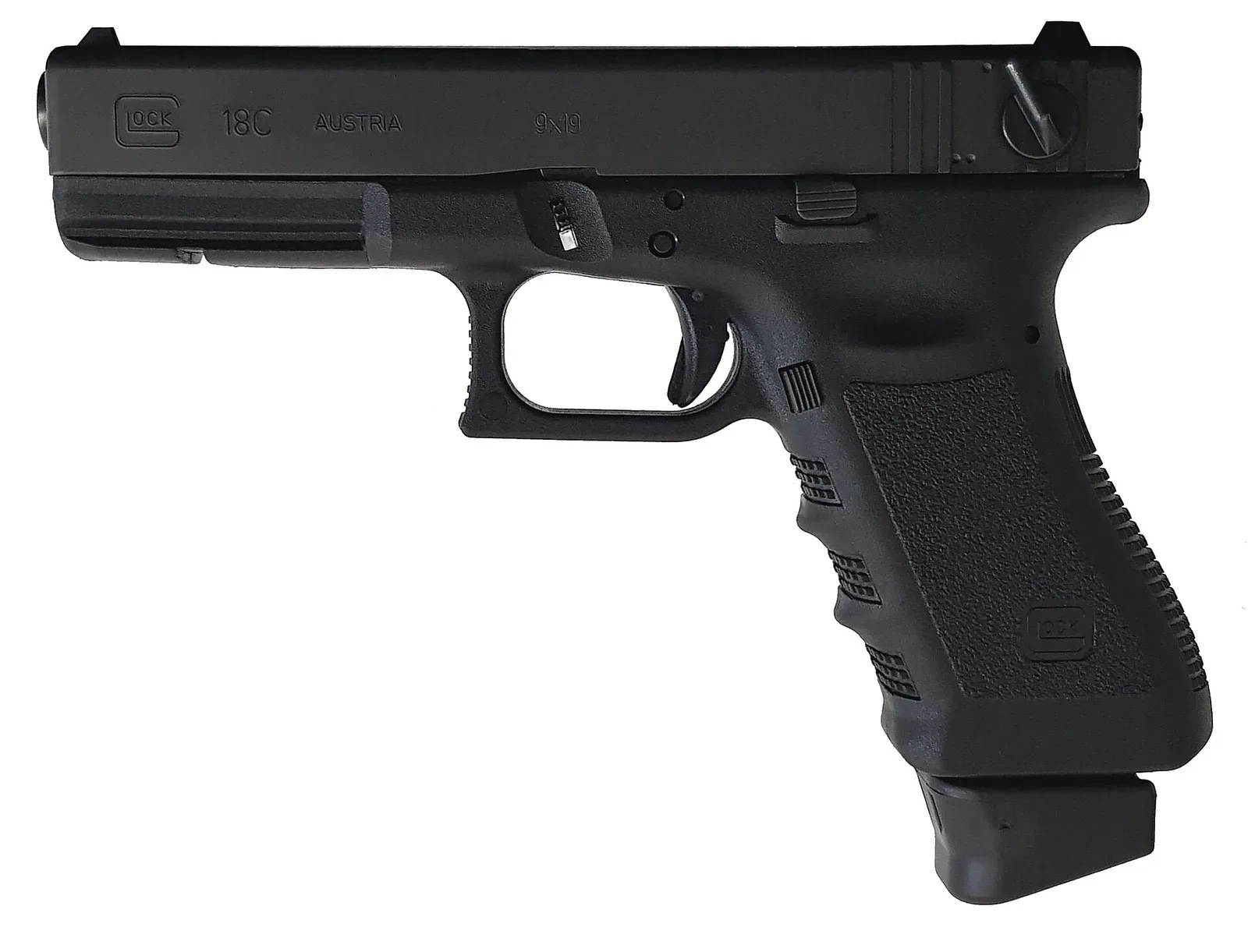
If you ask most experienced defensive shooters what they actually keep on their nightstand, a significant number will say a pistol -- specifically something like a Glock 19 or Walther PDP. There are good reasons for that.
A pistol is small enough to move through your house with one hand free. That free hand lets you open doors, make a phone call, or physically direct a family member to safety. Try doing any of that while managing a shotgun. The size also means storage is simpler -- a quick-access handgun vault runs relatively cheap and mounts just about anywhere.
Modern striker-fired 9mm pistols carry 15 to 18 rounds standard, and a reload is fast. The Glock 19 Gen 5 runs 15+1, fits both concealed carry and home defense roles, and has a track record long enough that its reliability isn't really debated anymore. The Walther PDP pushes that to 18+1 and offers what Pew Pew Tactical describes as the cleanest striker-fired trigger in this price range -- the ergonomics are noticeably better out of the box.
Key Point: When comparing stopping power, there are effectively two categories: handguns, and then long guns. Pistol rounds are less powerful than rifle or shotgun loads -- full stop. That gap is real, and the right defensive ammunition matters more with a pistol than with any other platform.
The honest downside of a pistol is that it's harder to shoot accurately under stress compared to a long gun. When you shoulder a rifle or shotgun, you get four points of contact. A pistol is two hands and a lot of prayer if your fundamentals aren't solid. Regular training closes that gap, but the gap exists.
For apartments, smaller homes, or anyone who wants one gun that pulls double duty as a carry gun, a quality 9mm pistol is a practical answer.
Shotguns: Serious Power, Serious Limitationsedit

The pump-action shotgun has a mythology around it that exceeds its actual utility in a few important ways -- and undersells it in others. Let's sort that out.
On the power side, a 12-gauge with quality defensive ammunition is devastating at home-defense distances. There's no argument there. Shotguns also offer genuine ammunition versatility: you can select loads based on penetration characteristics, recoil, or pattern density in ways that pistols and rifles simply don't allow.
The Mossberg 590A1 is a well-regarded pump option -- built heavily, available in configurations up to 8+1 capacity, and proven reliable when you work the action correctly. That last part matters. User-induced malfunctions are common with pump shotguns among less-trained shooters. The unlocking mechanism is counterintuitive if you haven't drilled it. According to Liberty Safe, shotguns are statistically less reliable than handguns when you factor in how often untrained users short-stroke the pump or fumble the release.
If budget allows, a semi-automatic defensive shotgun like the Beretta 1301 Tactical eliminates the short-stroke problem entirely. Its gas-operated system cycles fast, recoil is noticeably softer than a pump running equivalent loads, and Pew Pew Tactical's test unit performed without malfunction across every ammo type they fed it. The tradeoff is price -- the 1301 runs around $1,375–$1,549 depending on retailer.
Safety Note: You have to aim a defensive shotgun. At typical home-defense distances, even a cylinder-bore 12-gauge pattern is roughly the size of a softball to a paper plate -- not a wide swath. Every pellet that leaves that barrel is your legal responsibility.
The other real issues with shotguns:
- Length and weight -- the Mossberg 500, a popular option, is 40 inches long and nearly 8 pounds loaded. Moving through hallways and around corners with that is a skill, not an assumption.
- Capacity -- 5 to 8 rounds before a slow, fumble-prone reload.
- Overpenetration -- 00 buckshot will go through multiple interior walls. If you have family members in adjacent rooms, that's not a small consideration.
- Recoil -- Heavy, especially with a pump that doesn't bleed energy through a gas system. Reduced-recoil defensive loads help, but they still hit harder than most people expect.
The intimidation argument -- that racking a pump shotgun will send an intruder running -- has some merit psychologically, but it also tells the intruder exactly where you are and how many rounds you're probably carrying. That's not a trade most tactically-minded people want to make.
AR-15: What the Police Are Carrying When They Respond to Your 911 Calledit
There's a reason patrol officers show up to serious calls with rifles rather than handguns. The AR-15 platform offers a combination of capacity, low recoil, accuracy, and accessory support that no other platform matches at its price point.
A standard AR-15 magazine holds 30 rounds of 5.56 NATO. Recoil is minimal compared to a shotgun -- fast, accurate follow-up shots are genuinely easier. The ergonomics are straightforward, and mounting a light or optic requires nothing more than a rail and a few minutes. Per Liberty Safe, the AR-15 is actually easier to load, unload, and operate than most defensive shotguns.
The overpenetration concern -- that rifle rounds will punch through every wall in your house -- is real but more nuanced than it first appears. According to Liberty Safe, properly selected expanding 5.56 defensive ammunition can actually expend most of its energy inside a target and penetrate fewer walls than common 00 buckshot or some handgun rounds. Ammunition selection matters enormously here. FMJ training ammo is not what you load for home defense.
Key Point: A 5.56 rifle round with full-metal-jacket ammunition is a wall-punching liability in a home. Quality defensive loads -- like Speer Gold Dot 62gr JSP -- behave very differently. Know the difference before you load the magazine.
For home defense specifically, an AR-15 pistol configuration (shorter barrel, no traditional buttstock) is worth serious consideration. Per Pew Pew Tactical, compared to a standard 16-inch carbine, an AR pistol is far more maneuverable in close quarters. The Palmetto State Armory AR-15 pistol starts around $459 and gives you 30+1 capacity, solid reliability, and room to upgrade components as budget allows. The Daniel Defense DDM4 V7 is the premium end of the spectrum at ~$1,827 -- more precision, tighter build tolerances, and not much left to upgrade.
The real disadvantages of the AR-15 for home defense:
- Size -- even an AR pistol is longer and heavier than a handgun. Running it through your house takes practice.
- Noise -- an AR-15 fired indoors is genuinely disorienting. The muzzle blast is intense. Without hearing protection, permanent hearing damage is essentially guaranteed. A suppressor helps, but 5.56 out of a short barrel is still not hearing-safe even suppressed.
- Malfunctions -- rare on quality rifles, but a case-over-bolt malfunction can take the rifle offline until you do a full teardown. That's a worst-case scenario, but worth knowing.
- Training requirement -- if you're going to keep an AR-15 as your primary home defense firearm, invest in a tactical carbine course. The platform rewards training more than the others.
Head-to-Head: What the Platform Comparison Actually Looks Likeedit
| Factor | Pistol | Pump Shotgun | Semi-Auto Shotgun | AR-15 |
|---|---|---|---|---|
| Indoor maneuverability | Excellent | Poor | Poor | Moderate (pistol config: Good) |
| Capacity before reload | 15–18+ | 5–8+1 | 5–8+1 | 30+1 |
| Reload speed | Fast | Slow | Slow | Fast |
| Recoil management | Easy | Hard | Moderate | Very Easy |
| Stopping power | Moderate | High | High | High |
| Overpenetration risk | Moderate | High (00 buck) | High (00 buck) | Depends on ammo |
| Ease of use under stress | Moderate | Lower | Moderate | High |
| Noise indoors | Loud | Very Loud | Very Loud | Extremely Loud |
| Quick-access storage | Easy | Harder | Harder | Harder |
| Entry price point | ~$400+ | ~$300+ | ~$1,000+ | ~$459+ |
The Overpenetration Question Deserves Its Own Momentedit
This is the one that trips people up the most, and it's worth slowing down on.
Every round you fire in your home that doesn't stop inside your target is potentially headed toward a family member, a neighbor, or someone on the street. That's not a hypothetical -- it's physics.
00 buckshot launches nine pellets roughly the diameter of a .33-caliber ball. Each one maintains lethal energy through multiple interior walls. The same is true for most handgun rounds with FMJ ammunition. According to Liberty Safe, even expanding defensive rifle bullets still penetrate at least several walls and retain lethal energy if they don't first hit an attacker.
The answer isn't to avoid shooting -- it's to choose defensive ammunition designed for your platform and know your home's layout. Birdshot is not a reliable defensive load despite what you may have heard. Quality 00 buckshot or defensive slugs for shotguns, quality hollow-point or JSP loads for pistols and rifles.
The Storage Problem Nobody Talks About Enoughedit
The best home defense firearm is the one you can actually get to. A shotgun or rifle leaned in the corner is fast -- and completely unsecured if you have children or anyone else in the house who shouldn't access it.
Quick-access pistol safes are relatively inexpensive and mount in a nightstand, under a desk, or in a vehicle. Securing a long gun with the same speed is harder and generally more expensive. Per Liberty Safe, this is a legitimate tactical consideration, not just a storage logistics problem -- if your firearm is locked in a standard long-gun safe that takes 30 seconds to open, you've just made the storage decision for you.
Safety Note: Some states require firearms to be stored in specific ways, especially in homes with children. Others leave it to your discretion. Know your state and local laws before deciding where and how you stage your home defense firearm.
Shooting any firearm indoors without hearing protection will likely cause permanent hearing damage. If you have the budget and patience for the process, a suppressor is a legitimate safety upgrade -- especially for a pistol used in a home defense role. The process for purchasing a suppressor is more involved than a standard firearm purchase. Check Idaho law and federal NFA requirements before going that route.
Specific Recommendations Worth Knowingedit
If you want one gun for both carry and home defense: Glock 19 Gen 5. It's not the flashiest option, but it has earned its reputation through decades of documented reliability. 15+1 capacity, fits 33-round magazines if you want more rounds staged at home, and the aftermarket support is essentially unlimited.
If you want the cleanest shooting pistol experience: Walther PDP Full Size with the 4.5-inch barrel. The trigger is noticeably better out of the box than the Glock. 18+1 capacity. Costs a little more but the ergonomics justify it for most shooters.
If your state caps magazines at 10 rounds: Springfield Armory 1911 Operator AOS in .45 ACP. If you're capped at 10 rounds anyway, the extra energy per round from .45 ACP makes sense. It also accepts a weapon light and red dot, which keeps a century-old design genuinely relevant.
If you want a pump shotgun: Mossberg 590A1. Built heavily, available in 8+1 configuration, and proven reliable when you work it correctly. Practice the manual of arms until it's automatic -- the pump action rewards training and punishes inattention.
If budget allows for a semi-auto shotgun: Beretta 1301 Tactical. Faster cycling, softer recoil, and Picatinny rail for an optic. The higher price buys you a meaningfully better tool for a defensive role.
If you want an AR-15 and budget is a concern: Palmetto State Armory AR-15 pistol. Around $459, 30+1 capacity, and PSA's track record on their in-house builds is solid. A short-barrel pistol configuration gives you better indoor maneuverability than a standard carbine.
If you want the premium AR-15 option: Daniel Defense DDM4 V7. Reliable, accurate, well-built. At ~$1,827 there isn't much left to upgrade -- you're buying a finished tool.
The Bottom Lineedit
There is no universally correct answer here -- only the answer that fits your house, your skill level, who else lives there, and how much you're willing to train.
For most people in most situations, a quality 9mm pistol paired with good defensive ammunition and a quick-access safe covers the realistic home defense scenario. It's maneuverable, has meaningful capacity, stores securely, and can be trained on efficiently.
If you have the space, the training, and the storage solution, an AR-15 pistol configuration adds capacity and terminal performance that a handgun genuinely can't match. The shotgun sits in a specific niche -- devastating power, but demanding enough in terms of training and physical management that it's not the default recommendation it once was.
Whichever platform you choose: use quality defensive ammunition, add a weapon-mounted light, secure it properly, and get training. The firearm is only part of the equation. Last Updated: March 30, 2026
- J & L Gunsmithing(Chesapeake, VA)
- Gls Guns(Sumner, IA)
- Tkc Customs(Wimberley, TX)
- Oliver Firearms(Spartanburg, SC)
Loading comments...