Legal Details
Legislation

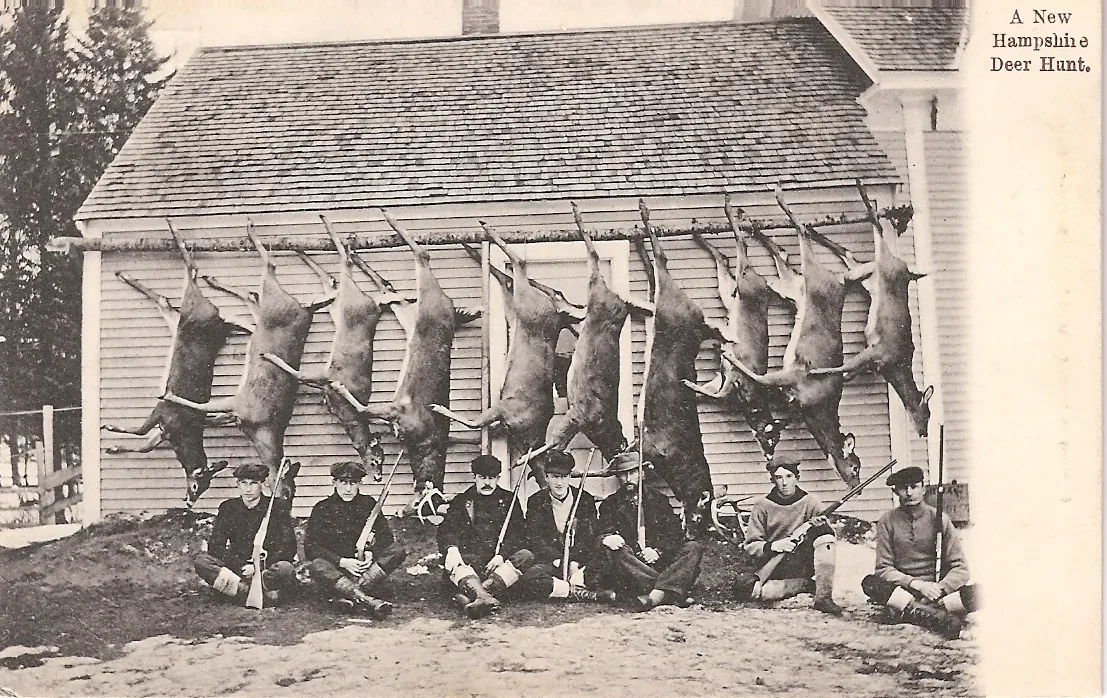
Early 20th-century New Hampshire deer hunt postcard — documents traditional hunting methods and culture before modern regulated draw systems.
Unknown authorUnknown author (Public domain)
| Identification | |
|---|---|
| Jurisdiction | |
Territory | Idaho |
| Timeline | |
| Effective | January 1, 2026 |
| Applicability | |
| Penalties | Not specified in article; consult Idaho Fish and Game for enforcement details |
Idaho 2026 Hunting Regulations: What Changed
Legal information and analysis
From The Boise Gun Club Handbook
This is educational information, not legal advice. Laws change. Consult an attorney or Idaho Fish and Game directly for your specific situation.
Idaho's 2026 hunting season is carrying more regulatory weight than most. Two significant shifts hit at once: nonresident deer and elk tags moved from over-the-counter sales to a draw system, and the Fish and Game Commission adopted new rules restricting thermal imaging, night vision, and cellular trail cameras for big game hunting.
Nonresident Deer and Elk: The Draw Is Nowedit
The over-the-counter era for nonresident general season deer and elk tags is over. Starting in 2026, out-of-state hunters can no longer log on at midnight and grab a tag on a first-come, first-served basis. Per the new framework that took effect January 1, 2026, nonresidents must now enter a lottery draw — and they have to buy a nonresident hunting license before they're even eligible to apply.
That license purchase is non-refundable. You're paying for the chance to apply, not a guaranteed tag. According to sources covering the change, the application window for the first draw ran December 5–15, 2025, with results released in early January 2026. Hunters who drew a tag had until January 20, 2026 to purchase it before forfeiting the draw.
For anyone who missed round one or came up empty, a second-chance draw ran February 5–15, 2026, covering unclaimed tags from the first round. Results from that draw came out in early March, with a tag purchase deadline of March 20, 2026.
The application structure allows up to five hunt choices per species on a single application. Groups of up to four hunters can apply together, but each member needs their own nonresident license. Per a STL.News summary of the January 1 regulatory changes, the stated goals are improved fairness, demand management, and sustainable wildlife management.
Applicants should note: even if you don't draw a tag, your nonresident license still gets you access to other hunts — controlled hunts, small game, upland game, and similar opportunities.
Key Point: Planning now matters more than reflexes. Knowing your preferred units, backup units, and weapon restrictions (such as A-tag versus B-tag distinctions for elk) is what separates a successful application from a wasted license fee.
The reaction from the hunting community has been mixed. Some hunters view the draw as a fairer system that eliminates the site-crash chaos of tag release day. Others have pushed back hard, arguing that buying a non-refundable license with no guarantee of a tag amounts to paying for nothing. That debate is ongoing.
Technology Restrictions: Thermals, Night Vision, and Cellular Camerasedit
The Idaho Fish and Game Commission voted unanimously on November 20, 2025 to adopt new rules restricting several emergent hunting technologies for big game. These rules still require legislative approval before they are codified into law, but the Commission has sent them to the 2026 legislative session for debate.
The driving force behind these changes was the Hunting and Advanced Technology (HAT) Working Group, a body convened by Idaho Fish and Game (IDFG) that received over 750 applications from Idaho sportsmen and women. Twenty-three participants were selected based on diversity of hunting interests, age, location, and background. The group met eight times between late 2024 and early 2025 before producing formal recommendations, which the Commission then reviewed, refined based on public input and enforceability concerns, and adopted.
The specific restrictions, as laid out in proposed IDAPA Rule 13.01.08.410.04, apply to big game ungulates — moose, bighorn sheep, mountain goat, elk, mule deer, white-tailed deer, and pronghorn — from August 1 through December 31. According to Eastmans' reporting on the rule text, the following are prohibited during that window:
- Use of thermal imaging technology, including for scouting, hunting, or retrieval
- Use of night vision technology, including for scouting, hunting, or retrieval
- Use of a transmitting trail camera (cellular camera) for hunting or scouting on federal, state, local government, or private land open to the public for hunting
- Use of any aircraft, including unmanned aircraft systems (drones), for scouting or hunting — this is in addition to existing aircraft restrictions under Section 36-1101(b) Idaho Code
Key Point: The thermal and night vision bans aren't just about pulling the trigger after dark. They cover scouting and retrieval as well. If you're using a thermal to locate a downed animal during the restricted window, that's covered under the rule as written.
The transmitting camera restriction is worth reading carefully. It targets cameras that send images remotely — the cellular trail camera you check from your phone. Standard non-transmitting trail cameras are not addressed by this specific restriction.
Ellary TuckerWilliams, Legislative and Community Engagement Coordinator for Idaho Fish and Game, described the Commission's reasoning to the Congressional Sportsmen's Foundation:
"The Commission looked at the totality of work and data gathered over the past 2 years, including a statewide hunter survey, the HAT Working Group, public comments, and IDFG staff feedback, and made a decision that they believed was in the best interest of wildlife management, conservation, and future generations of hunters. Should the legislature approve our rules, Idaho would be in alignment with other western states like Alaska, Wyoming, Utah, Montana, and others that already have similar, even more restrictive, regulations on these technologies. Idaho is not breaking new ground here. We are honestly doing a little bit of catch up."
Idaho has historically been a restrictive state on hunting methods. Per Eastmans' coverage, Idaho only recently permitted mechanical broadheads and lighted nocks for archery, and only recently allowed accuracy tips and pressure bases for muzzleloaders — while still requiring an exposed ignition system and loose black powder. The technology restrictions fit a consistent pattern.
The New Centerfire Open Sight Seasonedit
Not every change in the 2026 rule package tightens the screws. IDAPA Rule 13.01.08.408.01 establishes a framework for a new "Centerfire Open Sight Only Season." The rule opens the door for the Commission to create this season, but the Commission must formally establish it before it becomes active.
Under the proposed rule, legal equipment for this season would be any centerfire firearm equipped only with open or peep sights, with or without a verifier. No magnified optics. Per Eastmans' reporting on the rule, this is framed as an opportunity expansion — another way to get hunters into the field under a specialized method restriction, similar to how archery and muzzleloader seasons work.
Whether any specific hunt units will offer this season, and when, depends on future Commission action.
What's Still Pending in the Legislatureedit
Two significant items from the 2026 rule package still require legislative action before they become enforceable law.
First, the technology restrictions described above — thermal, night vision, cellular cameras, and drones for big game — were adopted by the Commission but sent to the 2026 legislative session for debate and codification. According to the Congressional Sportsmen's Foundation, public feedback on these changes has been mixed since the Commission's adoption, and the legislative conversation is ongoing.
Second, Sen. Dan Foreman (R-Moscow) introduced a bill in late January 2026 that would require the Idaho Fish and Game Commission to provide a mandatory 30-day public comment period before setting hunting or fishing seasons, or before setting limits on taking fish and wildlife. The bill was introduced before the Senate Resources and Environment Committee on January 28, 2026, per the Idaho Capital Sun.
Under current Idaho law — specifically the notice requirements tied to Idaho Code § 36-105 — the Commission must provide notice of proposed proclamations in the same manner as public open meetings, but no minimum comment period is specified. Sen. Foreman's argument is straightforward:
"Sportsmen and hunting organizations need a reasonable amount of time to absorb, analyze and respond to season setting proposals. The Idaho Fish and Game Commission big game season setting for deer and elk is sort of the main event for most Idaho hunters, and many of my constituents feel that the current season setting process could benefit from an increased public comment period."
As of the bill's introduction, it had been voted out of committee for a full public hearing but had not been assigned a final bill number or passed. Track it through the Idaho Legislature's website if you want to know where it lands.
How Idaho's Season-Setting Process Worksedit
It's worth understanding the two-track system Idaho uses, because it affects which changes hunters see and when.
According to IDFG's rules page, season-setting — things like open dates, bag limits, and species availability — does not require legislative approval. The Commission sets those during Commission meetings. Administrative rules covering legal equipment, methods of take, controlled hunt requirements, and tag quotas are a different category. Those carry the force of law and require legislative review and approval before becoming final and enforceable, per Idaho Administrative Procedure Act (IDAPA 13) rulemaking requirements.
That's why the technology restrictions are in a holding pattern: the Commission voted them through, but the legislature has to sign off. Season dates for 2026-2027 upland game, and other cycles listed on the IDFG rules page, follow their own biennial timelines.
A Summary of the Major 2026 Changesedit
| Change | Who It Affects | Status as of Early 2026 |
|---|---|---|
| Nonresident deer and elk draw system | Nonresident hunters | In effect January 1, 2026 |
| Thermal imaging ban for big game ungulates (Aug 1–Dec 31) | All hunters | Pending legislative approval |
| Night vision ban for big game ungulates (Aug 1–Dec 31) | All hunters | Pending legislative approval |
| Cellular/transmitting trail camera ban for big game scouting | All hunters | Pending legislative approval |
| Drone/aircraft ban for big game scouting (in addition to existing statute) | All hunters | Pending legislative approval |
| Centerfire Open Sight Only Season framework | All hunters | Rule framework adopted; season not yet established |
| Mandatory 30-day public comment period for season-setting | Process change (Commission) | Pending legislative action |
Practical Notes for 2026edit
If you're a nonresident planning an Idaho deer or elk hunt, the draw window for 2026 general season tags has already closed. The first draw ran December 5–15, 2025, and the second-chance draw ran February 5–15, 2026. If you missed both, watch for any leftover tag sales that may follow. Start planning your 2027 application strategy now — know your units, your backup choices, and the weapon restrictions before the December window opens again.
On the technology front, the Commission has passed the rules and sent them to the legislature. If you're hunting Idaho big game in 2026, the safest posture is to treat thermal, night vision, cellular cameras, and drones as off the table for big game ungulates August through December — regardless of where the legislative vote lands by the time seasons open. IDFG wardens will be watching, and enforcement challenges acknowledged by former IDFG-trained staff in public commentary don't mean the rules aren't being enforced.
Idaho's trespass law, which changed July 1, 2018, remains relevant for anyone scouting new ground. Per the IDFG rules page, that change is worth reviewing before you set foot on private land — especially as scouting regulations around cellular cameras become more scrutinized.
Resourcesedit
- https://idfg.idaho.gov/rules
- https://idfg.idaho.gov/sites/default/files/seasons-rules-big-game-supplemental-proclamation-2026-2.pdf
- https://congressionalsportsmen.org/news/idaho-fish-and-game-commission-proposes-restrictions-on-technology-allowed-for-big-game-hunting/
- https://blog.eastmans.com/idaho-big-game-methods-of-take-changes-are-coming/
- https://idahocapitalsun.com/briefs/new-bill-would-require-30-day-public-comment-period-prior-to-setting-idaho-hunting-seasons/
- https://www.stl.news/new-idaho-laws-taking-effect-january-1-2026/
Last Updated: April 03, 2026
- Ace Hardware of Sandusky(Sandusky, MI)
- New Philly Sportsman Specialities(New Philadelphia, OH)
- Atwoods Ranch & Home #46(LACY LAKEVIEW, TX)
- G & P Distributors(McConnellsburg, PA)
This is not legal advice
This guide provides general information about federal and state firearms laws based on publicly available statutes. Laws change frequently and vary significantly by state. Always verify current laws in your jurisdiction. Consult a qualified attorney for legal advice on your specific situation. When in doubt, contact local law enforcement or state police.
Loading comments...