Legal Details
Idaho Constitutional Prohibition on Firearm Registration

Photo by Frank Schulenburg (CC BY-SA 4.0)
| Identification | |
|---|---|
Citation | Idaho Const. art. I, § 11 |
| Code Sections |
|
| Jurisdiction | |
Territory | Idaho |
| Key Provisions | |
| |
| Applicability | |
| Applies To | All persons, state agencies, counties, cities, and legislative bodies in Idaho |
| Exemptions |
|
Related Laws | |
Idaho Gun Registration Requirements
Idaho has no firearm registration requirement
From The Boise Gun Club Handbook
This is educational information, not legal advice. Laws change. Consult an attorney for your specific situation.
Idaho doesn't just skip gun registration — the state constitution flat-out bans it, which means no legislature, no city council, and no county commissioner can ever create one without a full constitutional amendment.
The Constitutional Banedit
Idaho Constitution Article I, Section 11 prohibits any law imposing registration requirements on the ownership or possession of firearms or ammunition. Per Giffords Law Center, that's the exact constitutional language: "no law shall impose registration on the ownership or possession of firearms or ammunition."
This isn't a statute some future legislature can quietly repeal during a late-night session. Changing it requires a supermajority of the legislature plus voter approval. It applies to everyone — state agencies, county governments, city governments, and any future legislature. The constitutional ban is total and uniform across the state.
The practical result: no state database tracks what you own. There are no registration forms, no fees, no renewal notices, and no bureaucratic approval process standing between you and your legal gun purchase.
How Dealer Purchases Actually Workedit
Buying from a licensed dealer still means federal paperwork — Form 4473 and a background check through NICS. That's federal law, and Idaho can't touch it. But here's the distinction that matters: the dealer keeps those 4473s in their own files. Idaho does not pull that data into any state registry or database. The federal transaction record stays with the dealer.
When you walk out of the store, Idaho has no record of what you bought. The state never had one to begin with.
Private Sales, Gifts, and Inheritanceedit
Private sales between Idaho residents require no paperwork under Idaho law — no bill of sale, no state notification, nothing. According to the sources, the same holds for gifts and inherited firearms. If you inherit a gun collection, there's no transfer process and no state notification required. If you move to Idaho from another state and bring your firearms with you, no registration or transfer process applies.
Here's how it breaks down by transaction type:
| Transaction Type | Federal Requirements | Idaho Requirements |
|---|---|---|
| Dealer Purchase | Form 4473, NICS check | None beyond federal |
| Private Sale (residents) | None | None |
| Inheritance | None | None |
| Gift | None | None |
| Moving to Idaho | None | None |
Idaho makes no distinction between handguns and long guns on this point. Neither category requires registration.
State Preemption — Cities Can't Fill the Gapedit
Some gun owners wonder whether a city like Boise or Coeur d'Alene could step in and create local registration requirements even if the state can't. They can't. Per FindLaw's review of Idaho law, a state preemption law prohibits any local law of a city or county from providing stricter regulations than the state. Combined with the constitutional ban, that closes the door at every level of government simultaneously.
NFA Items: Where Federal Law Takes Overedit
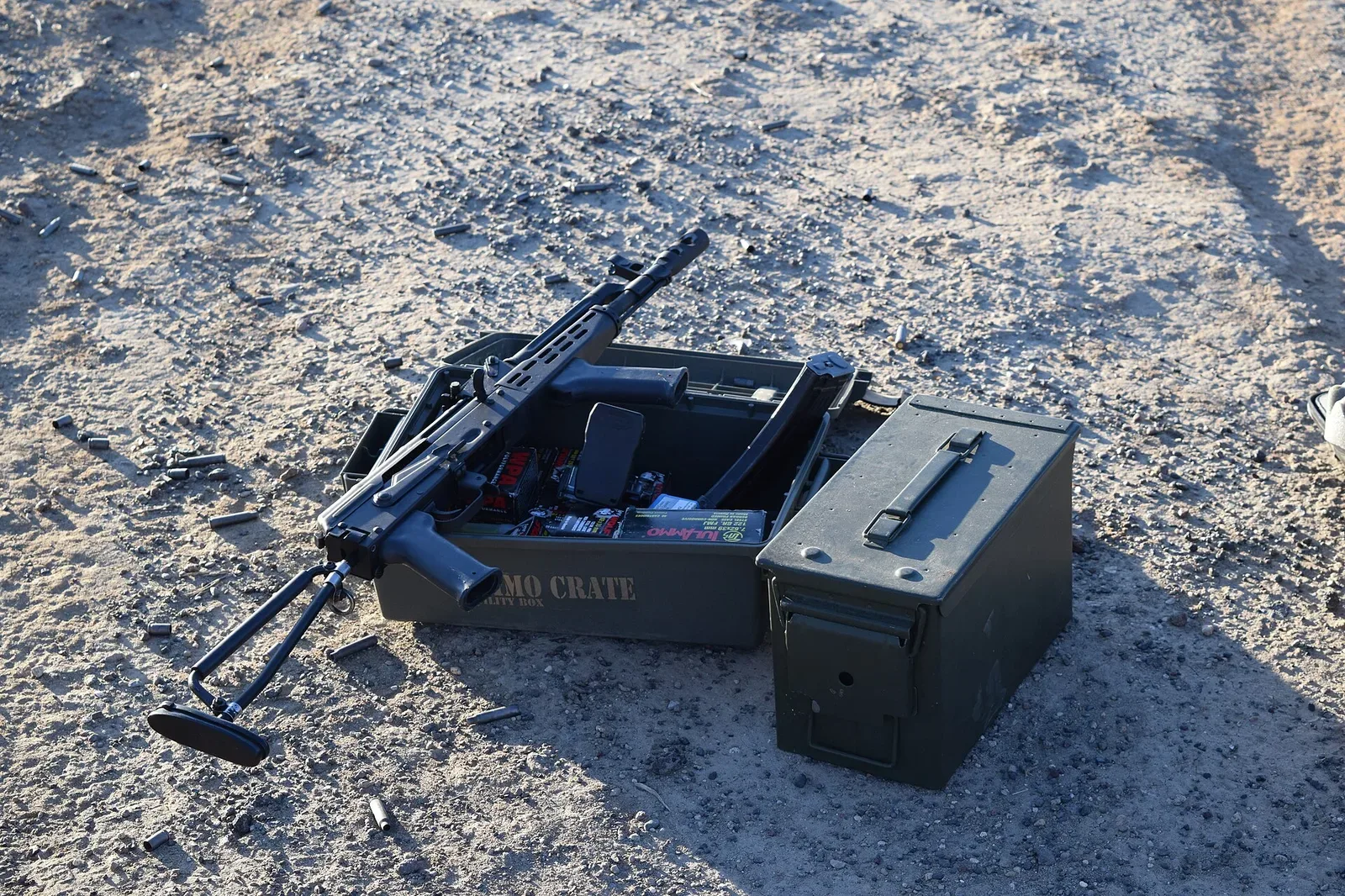
Idaho's constitutional ban doesn't override federal law. National Firearms Act items — suppressors, short-barreled rifles (SBRs), short-barreled shotguns (SBSs), machine guns, and Any Other Weapons (AOWs) — remain subject to federal registration requirements regardless of what the Idaho Constitution says.
The good news for Idaho residents is that the state has made these items legal under state law to the extent federal law allows. You can own a suppressor in Idaho. You can own an SBR. Machine guns manufactured before 1986 are legal to own if you comply with federal law. But you still navigate the full federal process — ATF paperwork, the applicable tax stamp, and the wait.
| NFA Item | Idaho State Law | Federal Requirement | Approx. Processing Time |
|---|---|---|---|
| Suppressors | Legal | Tax stamp, ATF Form 4 | 4–12 months |
| Short-Barreled Rifles | Legal | Tax stamp, ATF Form 1 or 4 | 4–12 months |
| Machine Guns (pre-1986) | Legal | Tax stamp, limited supply | 4–12 months |
| AOWs | Legal | Tax stamp, ATF Form 4 | 4–12 months |
Federal machine gun law makes it unlawful to transfer or possess a machine gun manufactured after 1986, with narrow exceptions for the armed forces and government agencies. Pre-1986 transferable machine guns are legal for civilians under federal law but expensive and tightly regulated. Idaho handles its side of the equation — those items are state-legal — but the federal registration requirement is entirely outside the state's control.
Prohibited Persons Still Applyedit
No registration doesn't mean no rules. According to FindLaw, the following persons cannot own or possess firearms in Idaho:
- People with a felony conviction, unless the conviction was nullified by expungement, pardon, set aside, or a restoration of rights under state law
- Minors under 18 without consent or accompaniment of a parent or guardian
- Anyone otherwise prohibited under federal law per 18 U.S.C. Section 922
Under Idaho Statutes 18-3316, possessing a firearm after a felony conviction is a felony punishable by up to five years in prison and a fine of up to $5,000. The absence of registration doesn't change who can legally possess a firearm — it just means the state isn't tracking what law-abiding people own.
Law enforcement can still trace firearms used in crimes through federal channels and manufacturer records when necessary. The system focuses on prohibited persons, not prohibited items.
Prohibited Placesedit
Even without registration requirements, Idaho restricts where you can carry. Per FindLaw, firearms are prohibited in:
- In or on the grounds of private or public elementary or secondary schools, on school transportation, or at school-sponsored activities (Idaho Statutes 18-3302D)
- Courthouses
- Juvenile detention facilities and jails
- College dormitories or residence halls
- Public entertainment facilities owned by public colleges and universities when signs are posted
- State veterans' homes
- Mental health clinics using Medicaid funding
- Children's residential care facilities and therapeutic outdoor programs
- Hotels, when the hotelkeeper chooses to prohibit firearms
Possession on or near school grounds is a misdemeanor under Idaho law, punishable by up to one year in jail and a fine of up to $1,000.
Purchasing a Firearm in Idahoedit
No license or permit is required to purchase a firearm in Idaho. Per FindLaw, there is no waiting period. According to Bunker Firearms, you must be at least 18 to purchase rifles or shotguns, and at least 21 to purchase a handgun from a licensed dealer. Idaho does not ban assault weapons or ghost guns — firearms manufactured from a kit with no serial number.
For private sales, Idaho law does not require a background check. That's a legal reality, not a recommendation — it's worth being cautious regardless of what the law requires.
Carry Laws — The Short Versionedit
In 2016, Idaho adopted a permitless carry law. Per FindLaw, any otherwise law-abiding U.S. citizen who is not prohibited from possessing firearms can carry concealed throughout the state without a permit or license. Open carry is legal without a license for those 18 and older.
Idaho still maintains a voluntary Concealed Weapons License (CWL) process — both a regular CWL and an Enhanced CWL — primarily for reciprocity purposes when traveling to other states. Applications go to your county sheriff's office; the Idaho Sheriffs' Association handles CWL administration statewide. The Enhanced CWL requires a minimum eight-hour in-person training course covering Idaho law, safe and responsible use of handguns, self-defense principles, and live-fire training with at least 98 rounds fired.
Per the Idaho Sheriffs' Association, Idaho recognizes all other states' CWLs. Some states — California, Oregon, and New York are cited by the Sheriffs' Association as examples — do not recognize out-of-state CWLs. Check with the Idaho State Police for the current reciprocity list before traveling; agreements can change when statutory language changes.
Stand Your Groundedit
Per FindLaw, Idaho passed a Stand Your Ground law in 2018. A person need not retreat from any place they have a right to be. The law permits a person to stand their ground and use all force and means that appear necessary to a reasonable person in a similar situation with similar knowledge.
Red Flag Lawsedit
Per FindLaw, Idaho has no red flag law. There is no Extreme Risk Protection Order (ERPO) process in Idaho.
Universal Background Checksedit
Per FindLaw, Idaho does not require universal background checks. Private sales between individuals do not require a background check under state law. Federal law still requires licensed dealers to run NICS checks on all sales.
Moving to Idaho from a Registration Stateedit
If you're relocating from a state that required you to register your firearms — California, New York, Hawaii, and others come to mind — your existing firearms are simply legal in Idaho. There is no transfer process, no notification requirement, and nothing to file. You're done the moment you cross the state line with your lawfully owned property.
Transplants from heavily regulated states sometimes can't believe the answer is that simple. It is.
Record-Keeping: Not Required, Still Smartedit
Idaho requires nothing in the way of personal documentation, but keeping your own records is worth doing. Your dealer receipts, serial numbers, purchase dates, and any private sale details you write down are useful for warranty claims, insurance documentation, and personal inventory. None of it goes to the state — it's purely for your own purposes. A fireproof safe with other important documents is a reasonable place to keep it.
The bottom line: Idaho's constitutional ban on firearm registration under Article I, Section 11 is as solid as state law gets — no registry exists, none can be created without amending the constitution, and that protection runs from the state level down through every county and city in Idaho.
Resourcesedit
- https://boisegunclub.com/handbook/no-registration-required-idaho
- https://boisegunclub.com/handbook/idaho-gun-registration-requirements
- http://giffords.org/lawcenter/state-laws/registration-in-idaho/
- https://www.findlaw.com/state/idaho-law/idaho-gun-control-laws.html
- https://www.idahosheriffs.org/cpt_services/concealed-weapons-licensing/
- https://web.archive.org/web/20260610043331/https://www.bunkerfirearms.com/post/idaho-gun-laws-stay-compliant-and-safe-with-idaho-firearm-compliance
Last Updated: March 05, 2026
- Ace Hardware of Sandusky(Sandusky, MI)
- New Philly Sportsman Specialities(New Philadelphia, OH)
- Atwoods Ranch & Home #46(LACY LAKEVIEW, TX)
- G & P Distributors(McConnellsburg, PA)
This is not legal advice
This guide provides general information about federal and state firearms laws based on publicly available statutes. Laws change frequently and vary significantly by state. Always verify current laws in your jurisdiction. Consult a qualified attorney for legal advice on your specific situation. When in doubt, contact local law enforcement or state police.
Loading comments...