Details
Jan Žižka z Trocnova a Kalicha
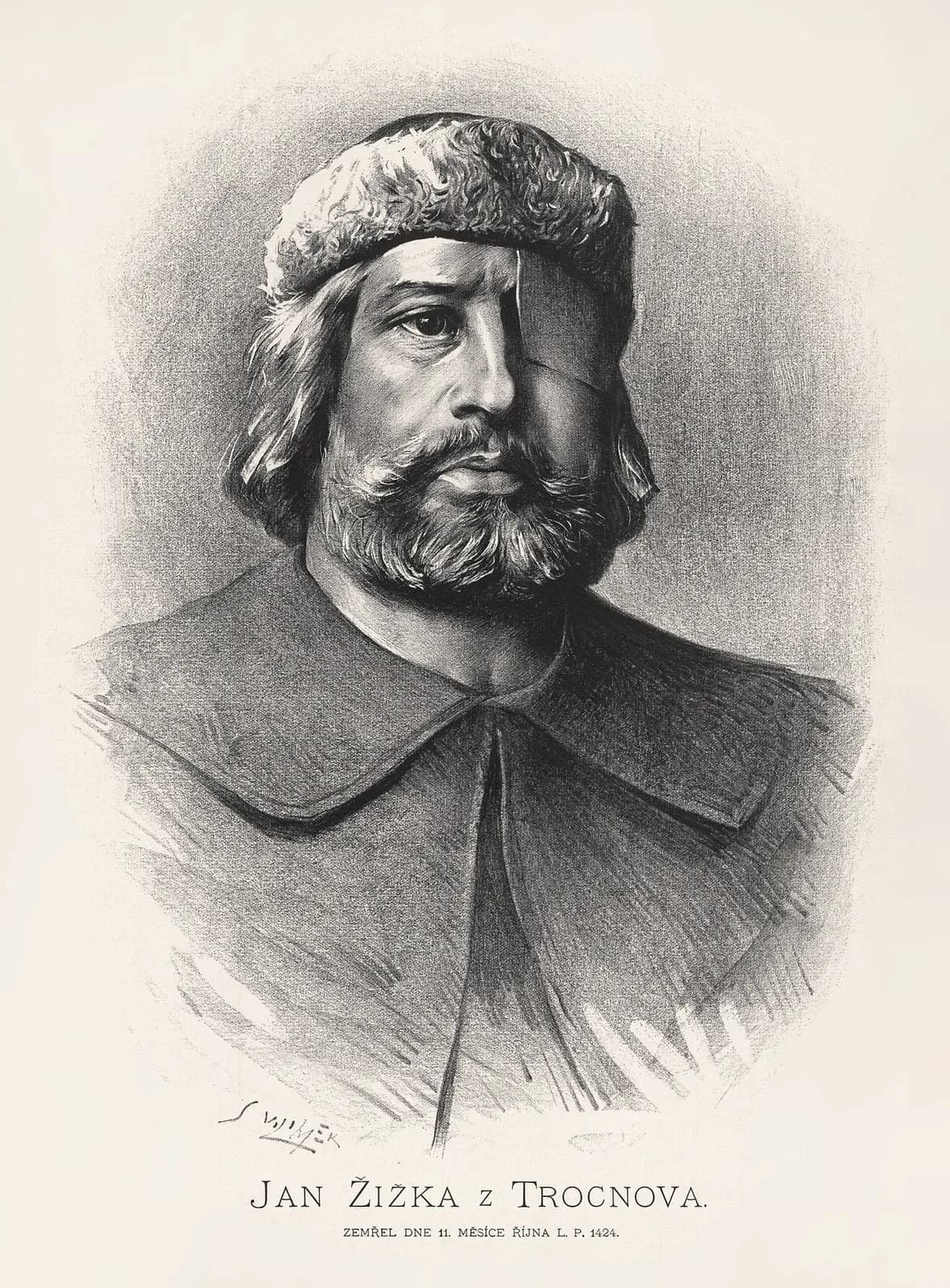
Jan Vilímek's portrait of Žižka (c. 1360–1424) — the Hussite commander who revolutionized medieval warfare through mobile artillery and disciplined infantry tactics.
| Biography | |
|---|---|
| Born | c. 1360, Trocnov, Kingdom of Bohemia |
| Died | 11 October 1424, near Přibyslav, Moravian frontier |
| Nationality | Bohemia |
| Legacy | |
| Known For | Czech military commander who never lost a battle; pioneered deployment of gunpowder weapons as central battlefield system; commanded peasant and townspeople armies against Holy Roman Empire forces during Hussite Wars |
| Key Innovation | The wagenburg (wagon fort) - combining defensive wagon formations with gunpowder weapons to create mobile combined-arms system that broke cavalry dominance in medieval warfare |
Jan Žižka: The One-Eyed General Who Invented Tank Warfare
Firearms encyclopedia article
From The Boise Gun Club Handbook
Overviewedit
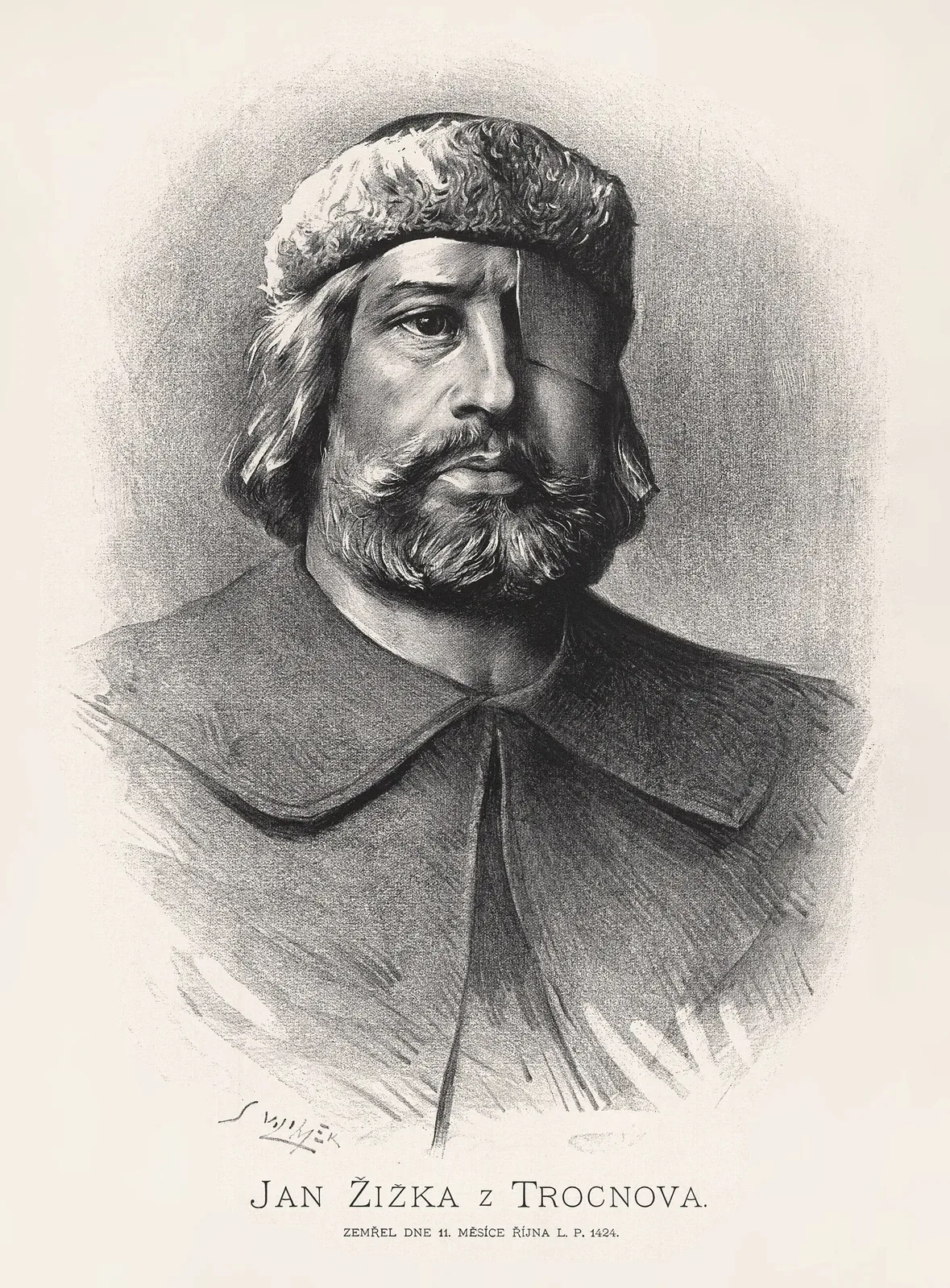
Jan Žižka z Trocnova a Kalicha — John Zizka of Trocnov and the Chalice — was a Czech military commander born around 1360 in the village of Trocnov, in the Kingdom of Bohemia. He died on 11 October 1424 near Přibyslav, on the Moravian frontier. In between those two dates, he fought in one of the most consequential military campaigns of the 15th century, commanded armies of farmers and townspeople against the professional forces of the Holy Roman Empire, and never lost a battle — not even after he went completely blind.
For this article's purposes — a companion to a scrollytelling history of firearms — what matters most about Žižka is not just that he won. It's how he won. He was among the first European commanders to deploy gunpowder weapons as a central battlefield system rather than a siege curiosity. He put cannons on carts, chained those carts into mobile fortresses, and used disciplined infantry fire to neutralize the armored cavalry that had dominated European warfare for centuries.
The words his soldiers used for their weapons — píšťala for the handheld firearm, houfnice for the anti-personnel field gun — passed into English as "pistol" and "howitzer."
That alone would earn him a place in any serious history of firearms development. The rest of his record makes the case overwhelming.
Early Life & Backgroundedit
The exact date of Žižka's birth is unknown. A document dated 3 April 1378 references a Johannes dictus Zizka de Trocnov as a witness on a marriage contract, which historians use to estimate he was born around 1360 — old enough to be a legal adult by that date.
Czech historian Tomek and others have debated whether this document refers to Žižka himself or possibly his father, since a man born in 1360 would have been in his late fifties when the Hussite Wars began. Historian František Šmahel acknowledged that even that age need not have prevented effective military leadership.
| Date | Event | Source |
|---|---|---|
| c. 1360 | Estimated birth year | Based on 1378 legal document |
| 1378 | First documented reference | Marriage contract witness |
| 1378-1384 | Financial difficulties | Property sale records |
| 1384-1406 | Missing from records | Likely mercenary period |
| 1406 | Accused of banditry | Rosenberg estate records |
| 1409 | Royal pardon granted | King Wenceslas IV arbitration |
| 1410 | Battle of Grunwald | Polish chronicler Jan Długosz |
| 1411-1412 | Royal service begins | Chamberlain to Queen Sofia |
His family belonged to the lower Czech gentry — the zemané — but held little property. According to later historian Petr Čornej, "Žižka" was not a family name but a personal nickname unattested in any other family member. The nickname likely meant "one-eye" in a dialect of the period, and Žižka was indeed missing one eye well before the wars began. Per HistoryNet, the first written record of his signature — on a deed when he was approximately 18 — already identifies him as "Zizka of Trocnov," suggesting the injury happened in youth rather than battle, possibly during a fight.
The Missing Years (1384-1406)
Property documents from 1378 to 1384 suggest persistent financial difficulty. By 1384, a document records him selling a field he had received as part of a dowry from a wife named Kateřina. After that date, Žižka disappears from written records for roughly twenty years. The consensus among historians is that he spent that period as a mercenary soldier, moving across Central Europe for pay.
His name resurfaces around 1406, this time in the acta negra maleficorum — the black book of the Rosenberg estate — as an accused bandit. The historian Šmahel connects this period of south Bohemian banditry to the economic squeeze on the lower gentry: the Rosenberg estates were expanding, church landholdings were growing, and men like Žižka were being pushed off their hereditary properties or driven into debt.
Žižka declared open hostility against Henry III of Rosenberg and the city of Budějovice. His associates during this period included outright criminals, and the group funded itself through robbery, ransom, and attacks on small towns. At least one murder is attributed to Žižka during this stretch — a man in the service of Rosenberg.
From Outlaw to Royal Service
This outlawry ended on 25 April 1409 when King Wenceslas IV agreed to arbitrate Žižka's conflict with Budějovice, and on 27 June issued a pardon — calling him "faithful and beloved" — which implied the king found some legitimacy in Žižka's grievances.
The following year, 1410, according to Polish chronicler Jan Długosz, Žižka fought as a mercenary at the Battle of Grunwald on 15 July — one of the largest battles in medieval European history — on the winning Polish-Lithuanian side against the Teutonic Knights. Długosz records Žižka serving afterward in the garrison of Radzyń. The battle was a formative experience. As West Point Assistant Professor Major William Mengel put it: Grunwald was "a battle between two very large mounted cavalry forces. Later, Zizka would try to find a way to defeat heavy cavalry with infantry."
Sometime around 1411–1412, Žižka entered the service of Queen Sofia of Bavaria, wife of King Wenceslas IV, as her chamberlain. Per the Hussite historian Vavřinec z Březové, who knew Žižka personally, he served as a familiaris regis Bohemiae — a king's courtier — in this period. It was also during this time, according to later sources, that Žižka encountered the sermons and writings of Jan Hus. A 1414 document records the purchase of a house in Na Příkopě street in Prague by a one-eyed royal doorman named Janek — Czech historiography generally accepts this was Žižka.
Key Contributionsedit
The Defenestration and Religious Context
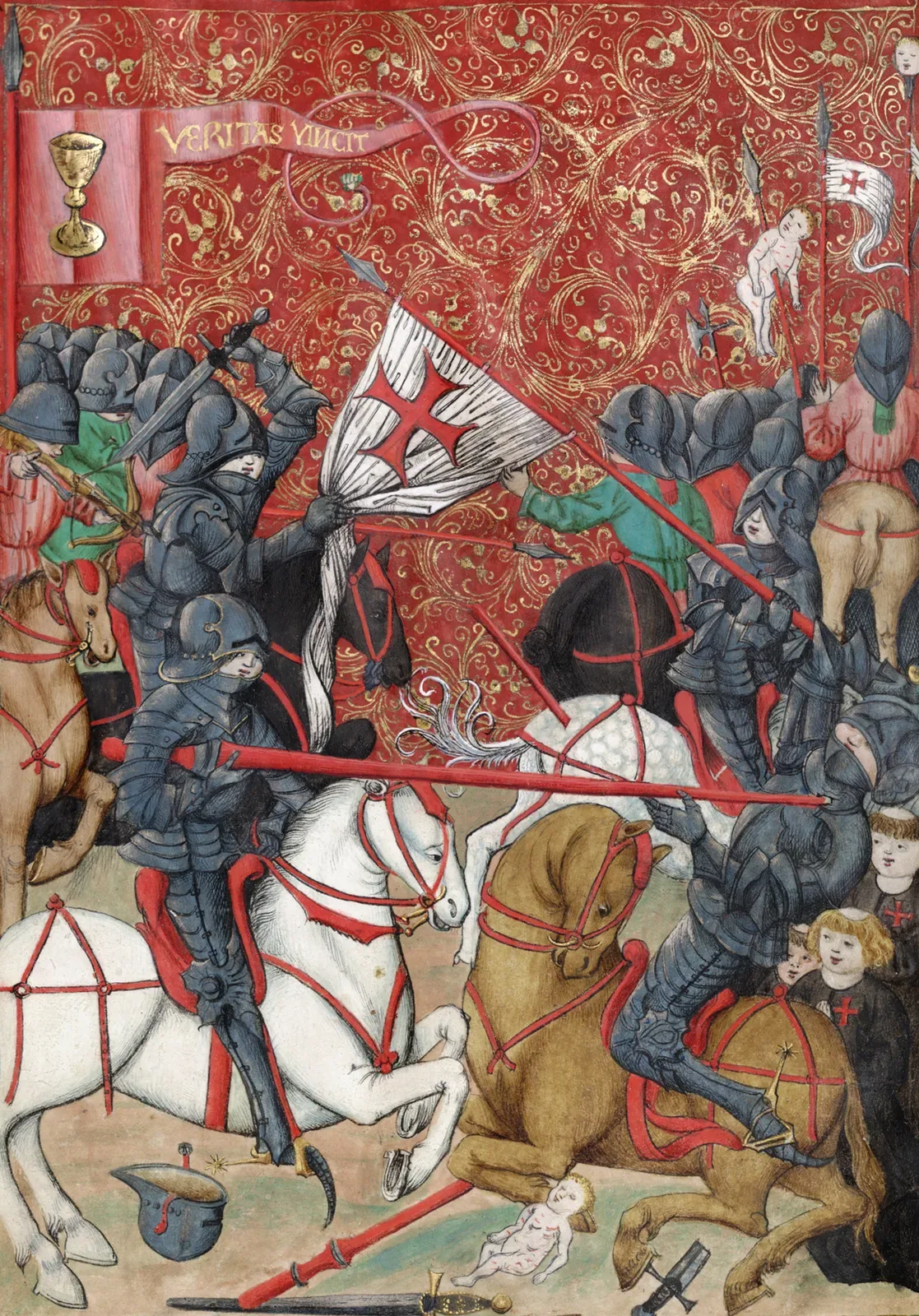
Jan Žižka made his first clear mark on history on 30 July 1419, when he joined a Hussite procession led by the priest Jan Želivský. The crowd gathered at the New Town Hall in Prague, demanding the release of Hussite prisoners. When the city councillors refused, the crowd stormed the building and threw the councillors from the windows — the First Defenestration of Prague, now regarded as the start of the Hussite revolution. King Wenceslas IV died seventeen days later, likely from a heart attack triggered by the news.
The religious context matters for understanding what Žižka was building militarily. Jan Hus, a theologian who had criticized Catholic Church corruption and the selling of indulgences, had been burned at the stake at the Council of Constance on 6 July 1415, despite a promise of safe conduct from King Sigismund. His followers — the Hussites — regarded him as a martyr. The chalice, one of Hus's reforming symbols (allowing lay communion in both bread and wine), became the emblem on Hussite banners. When Pope Martin V issued a bull on 17 March 1420 declaring a crusade against the Hussites and all heretics in Bohemia, Žižka found himself commanding a peasant army against professional military forces drawn across Europe.
Building an Army from Farmers
He had to work with what he had. His soldiers were farmers, townspeople, and militia — lacking cavalry, armor, and formal military training. Žižka's response was methodical. He introduced drills and strict discipline, and accepted women into his forces with equal discipline rules applied regardless of social rank or gender — an approach that was genuinely unusual for the period.
Žižka's specific innovations included:
- Introduced systematic drills and strict discipline
- Adapted agricultural tools (flails) into spiked weapons
- Accepted women into forces with equal discipline rules
- Applied military ordinances regardless of social rank
The Wagenburg System
The central innovation was the wagenburg — the wagon fort, or vozová hradba in Czech. Žižka did not invent the concept of using wagons defensively; various peoples had done that going back to antiquity. What he did was combine that older concept with the newest gunpowder technology to create something functionally different: a combined-arms weapons system.
Per Prof. Brian Todd Carey's analysis, the Hussite battlewagons evolved quickly from sturdy peasant carts into mass-produced armored vehicles with standardized wheel sizes and axle lengths. The carriages were built on a rectangular wooden base roughly three-and-a-half feet off the ground, with hanging planks — sometimes armor-plated — suspended from the top and pierced with loopholes for gun and crossbow fire. Some wagons had wooden roofs against indirect fire. Additional hinged planking protected the wheels when stationary.
Each armored carriage carried a standard kit including:
- Axes, spades, pickaxes, hoes for digging and mobility
- Lances with hooks for cavalry defense
- Chains for securing wagon formations
- Tools served dual military and logistical purposes
Each armored carriage was commanded by a wagon captain and crewed by twenty soldiers:
| Wagon Crew Position | Number | Equipment | Role |
|---|---|---|---|
| Drivers | 2 | Arms, driving tools | Vehicle operation |
| Handgunners | 2 | píšťala (early firearms) | Ranged fire |
| Crossbowmen | 6 | Crossbows | Ranged fire |
| Infantry | 8 | Flails, polearms | Close combat |
| Shield-bearers | 2 | Shields, tools | Protection, support |
| Total per wagon | 20 | Standard kit included | Combined arms |
The handgunners were armed with píšťala — literally "fife" or "flute" in Czech, for the resemblance of the barrel to a woodwind instrument — early smooth-bore firearms with simple ignition systems. As calibers grew, gunsmiths added metal hooks to the barrel to brace against the gun loop and manage recoil, producing what were called "hook guns." The Hussites also operated houfnice — wide-barreled indirect-fire bombards mounted on wheeled carts, named from the Czech word for "crowd" indicating their anti-personnel function.
The tactical battle sequence had two stages. In the first, the Hussites positioned the wagenburg on high ground where possible, provoked the enemy into attacking with artillery fire, and then used massed crossbow and handgun fire to break up the cavalry charge — targeting the horses first, stripping the knights of their mobility and dropping them onto the field in full armor where they couldn't escape. In the second stage, once the enemy's momentum was spent, Hussite cavalry swept out from the flanks and infantry pushed out through gaps between the wagons, striking a disorganized and exhausted force.
Žižka's Two-Stage Wagenburg Battle Sequence
Major Battles and Tactical Evolution
When defensive ground wasn't available, Žižka improvised. At the Battle of Sudoměř on 25 March 1420 — his first pitched battle as a Hussite commander — he led a column of approximately 400 people (soldiers and civilian dependents) with twelve wagons, intercepted by a royalist cavalry force estimated at 2,000 knights. Unable to secure elevated ground, Žižka flanked his position with a fishpond dam and marshy terrain on one side, forcing the cavalry to attack on terms they couldn't exploit.
At the Battle of Sudoměř, unable to secure elevated ground, Žižka flanked his position with a fishpond dam and marshy terrain, forcing the cavalry to attack on terms they couldn't exploit.
The royalist knights could not break through. The battle lasted into darkness, at which point the attackers withdrew in confusion, reportedly killing each other in the dark. Žižka's force escaped to Tábor the next morning.
At the Battle of Vítkov Hill on 14 July 1420, an estimated 60–80 Hussites under Žižka's personal command repulsed a major German crusader assault on the position securing Prague's communications with the open country. Sigismund's army abandoned the siege shortly after.
| Battle | Date | Hussite Forces | Enemy Forces | Outcome |
|---|---|---|---|---|
| Sudoměř | 25 Mar 1420 | ~400 with 12 wagons | ~2,000 knights | Hussite victory |
| Vítkov Hill | 14 Jul 1420 | 60-80 defenders | Major crusader assault | Siege lifted |
| Kutná Hora | Late 1421 | 10,000-12,000 | ~50,000 | Strategic withdrawal |
| Nebovidy | 6 Jan 1422 | Reinforced army | Sigismund's forces | 12,000 enemy casualties |
The most operationally significant engagement came in late 1421 at Battle of Kutná Hora. Žižka commanded a combined Taborite and Prague force when pro-Catholic citizens inside the city opened the gates to Sigismund's army — which numbered around 50,000 men against the Hussites' estimated 10,000–12,000 — surrounding the Hussite force. What followed is described by historians as the first mobile artillery maneuver in history: Žižka organized his cannon-equipped wagons into an offensive column and broke through the encircling lines. He retreated to Kolín, received reinforcements, then turned and destroyed Sigismund's army at Nebovidy on 6 January 1422. Sigismund lost 12,000 men.
Military Ordinances and Army Structure
By 1423, Žižka had codified his methods into twelve written principles — Žižka's Military Orders — covering army structure, march and camp discipline, formation of the wagenburg and infantry before battle, use of intelligence, and distribution of captured arms and supplies. Per Carey's analysis, these ordinances are historically significant not just for their tactical content but because they constituted a framework for a national army based on merit, where discipline applied regardless of social position or gender. That was not how European armies worked in 1423.
The Language of His Weapons
The etymology alone marks Žižka's place in firearms history. According to the Wikipedia source, the Czech píšťala — the Hussite handgun — is the likely origin of the English word "pistol." The houfnice — the Hussite anti-infantry field gun — is the origin of "howitzer." These are not minor footnotes. These are the weapons that broke the cavalry dominance of medieval European warfare, and the soldiers who used them named them in a language that passed those names into every subsequent Western military vocabulary.
Impact on Firearms Developmentedit
The Operational Innovation
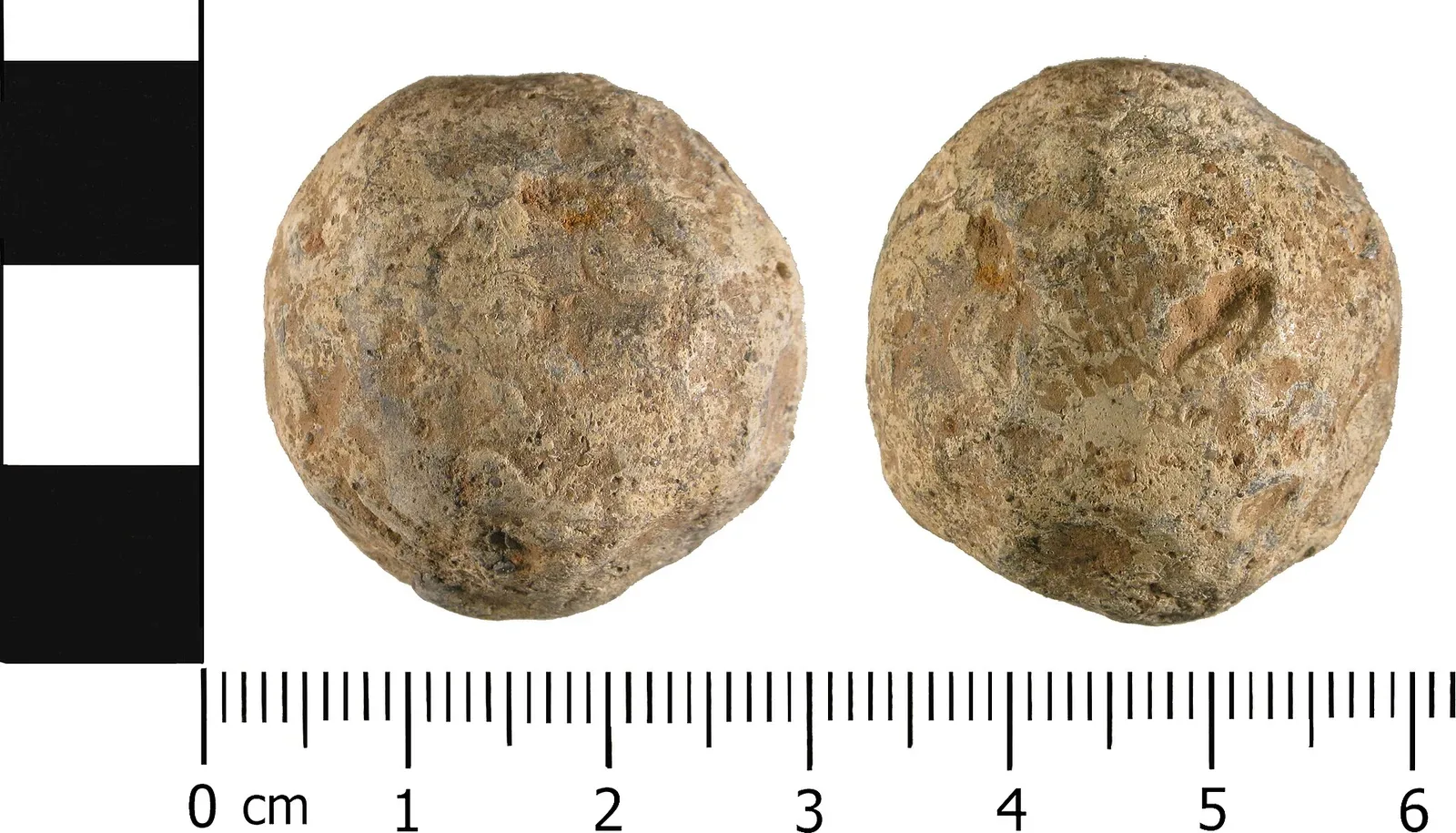
Žižka's specific contribution to firearms history was not inventing any particular weapon — one snippet source (warhistory.org) notes explicitly that both handguns and early artillery had been in general European use since the 1380s, and that Žižka did not originate gunpowder innovations in isolation. What he did was operationalize them. Gunpowder weapons in early 15th-century Europe were primarily siege tools. The problem with putting a handgunner on an open field against cavalry was obvious: one shot, then you're dead before you can reload.
Žižka's answer was the wagenburg — a protected firing position that turned a single-shot liability into sustained volume of fire. From behind the wagon walls, massed and disciplined gunners could reload in relative safety and fire continuously.
The Germans had recently begun corning gunpowder — a process that made it denser, more consistent, and suitable for use in smaller weapons. Žižka understood what that meant tactically and built his system around it.
Geographic Spread of Tactics
The downstream effects were substantial. Per Adam Ali's analysis at Medievalists.net, the wagenburg tactic spread geographically and chronologically in a traceable line. John Hunyadi of Hungary studied Hussite tactics firsthand when Sigismund brought him to Prague in 1436, and used war wagons with cannon and crossbowmen against the Ottomans through the 1440s. The Ottomans, after losing to Hungarian wagon tactics, adopted the system themselves — calling it tabur jangi — and used it decisively at the Battle of Otlukbeli in 1473 against the Aq Qoyunlu, and at Chaldiran in 1514 against the Safavids. The Safavids, after their defeat at Chaldiran, reformed their own army and deployed a wagenburg at the Battle of Jam in 1528. And Babur, advised by an Ottoman expert named Ustad Ali Quli, used the Ottoman formation — wagons with handgunners and field artillery — at the Battle of Panipat on 21 April 1526 to defeat a Lodi army of 50,000 men with 12,000 of his own. That battle was the foundation of the Mughal Empire.
| Region/Leader | Period | Adaptation | Key Battles |
|---|---|---|---|
| John Hunyadi (Hungary) | 1440s | War wagons vs Ottomans | Multiple campaigns |
| Ottoman Empire | 1470s | Tabur jangi system | Otlukbeli (1473) |
| Safavid Empire | 1520s | Reformed wagon tactics | Battle of Jam (1528) |
| Mughal Empire (Babur) | 1526 | Ottoman-advised formation | Panipat (1526) |
Geographic and chronological spread of Hussite wagon tactics across Eurasia
In less than a century, the tactical concept Žižka had developed in Bohemia had reshaped warfare from central Europe to the Indian subcontinent.
The Infantry Revolution
At home, German acts of Parliament as early as the 1420s enacted ordinances requiring the building and maintenance of armored battlewagons — a direct legislative response to Hussite military effectiveness. None of the imitators matched the Hussites' discipline or the social cohesion that made the system work. As Mengel noted, if you're opposed to arming your peasants — because they might turn the weapons on you — you're missing the infantry that makes the wagon fort function. The tactic was inseparable from the social revolution that produced it.
Žižka's broader tactical legacy is the Infantry Revolution — the acceleration of a shift away from cavalry as the dominant arm of European warfare. Archers and pikemen had already begun challenging mounted knights before Žižka, but his integration of gunpowder weapons into a combined-arms system made the argument definitive. Knights charging a wagenburg were riding into sustained gunfire from covered positions. The age of armored cavalry as the decisive battlefield force was ending, and Žižka's wars in Bohemia are a clear marker in that transition.
Later Life & Legacyedit
The Blind General
Žižka lost the use of his remaining eye while besieging Rabí Castle in 1421 — one account says a crossbow bolt struck a tree and sent a splinter into his eye. He continued to command effectively after going completely blind, relying on subordinates to describe the battlefield and making tactical decisions from those reports. His opponents reportedly believed he was a demon. It was well known that his troops sang a Hussite hymn, "Ye Warriors of God," on the march; according to HistoryNet, when the knights of the Fifth Crusade heard the song in the distance, they fled before the Hussites came into view.
In the later years of his career, Žižka also fought internal Hussite civil wars — the movement had fractured between his radical Taborites and the more moderate Utraquists. He defeated Utraquist forces at Hořice on 20 April 1423, again at the farm of Strachov on 4 August 1423, and decisively at the Battle of Malešov on 7 June 1424. In September 1424, a peace between Hussite factions was brokered through the influence of John of Rokycany, and the reunited Hussites agreed to campaign into Moravia with Žižka in command.
Death and Succession
He never reached the campaign. Žižka died on 11 October 1424 at Žižkovo Pole, near Přibyslav, during a siege. The traditional account said plague; modern historians, after examining skeletal remains, consider the carbuncle — a severe purulent skin infection — the most likely cause of death. The arsenic poisoning theory has been ruled out.
His dying wish, according to the chronicler Piccolomini, was that his skin be used to make drums so he could continue to lead his troops after death. His soldiers called themselves Sirotci — "the Orphans" — because they felt they had lost their father. His enemies said: "The one whom no mortal hand could destroy was extinguished by the finger of God."
He was interred at the church of Saints Peter and Paul in Čáslav. In 1623, by order of Emperor Ferdinand II, his remains were removed and his grave destroyed.
He was succeeded in command by Prokop the Great, who continued the Hussite campaigns. The wars themselves ground on until 1434, when the moderate Utraquists defeated the radical Taborites at the Battle of Lipany, and a negotiated peace eventually followed in 1436.
Modern Commemorations
The monument to Žižka on Vítkov Hill in Prague — a bronze equestrian statue by Bohumil Kafka — is the third-largest of its type in the world. The Prague district of Žižkov is named for his 1420 victory on that hill. Czech historian Petr Čornej's 900-page biography, published in 2019 for the 600th anniversary of the Hussite Revolution, won the 2020 Magnesia Litera Book of the Year award. Žižka's tactics are, per Wikipedia, still studied in military academies.
During World War II, multiple military units were named after him. The 1st Czechoslovak Partisan Brigade of Jan Žižka was among the first anti-Nazi guerrilla formations in occupied Czechoslovakia. A Yugoslav partisan brigade of the same name was formed in western Slavonia on 26 October 1943 in areas with large Czech and Slovak minority populations. In 1917, the 3rd Czechoslovak Rifle Regiment of the Czech legions in Russia was named after "Jan Žižka z Trocnova."
The BGC Takeedit
The reason Žižka belongs in a firearms history is that he's the first person who really got it — who understood that gunpowder wasn't just a way to knock down castle walls, but a system that could be integrated into mobile field tactics to defeat an enemy that looked, on paper, completely superior.
The wagenburg wasn't magic. It was a brutally practical solution to a specific problem: how do you stop a cavalry charge when you don't have cavalry? You take away their advantage — speed, reach, the ability to run you down — by making them come to you through sustained fire, in terrain you've chosen, from behind cover. The gun made that possible. Without gunpowder weapons, the wagon fort is just a wagon fort. With them, it's a force multiplier that turns peasants into soldiers capable of stopping the best heavy cavalry in Europe.
What strikes me about Žižka is the discipline piece. It's easy to focus on the hardware — the wagons, the cannons, the handguns — but the hardware only works if the people running it don't break and run the moment 2,000 knights come thundering across a field at them. Žižka built that discipline from scratch, wrote it down in military ordinances that treated every soldier equally regardless of rank, and maintained it across a decade of fighting that included going completely blind. That's not tactics. That's leadership.
The word "pistol" and the word "howitzer" both come from the weapons his soldiers carried. The next time you hear either of those words on a range, you're hearing a linguistic echo of a bunch of Czech farmers who refused to quit.
Referencesedit
- https://en.wikipedia.org/wiki/Jan_%C5%BDi%C5%BEka
- https://www.medievalists.net/2019/01/wagenberg-war-wagons/
- https://www.historyextra.com/period/medieval/jan-zizka-real-medieval/
- https://www.historynet.com/zizkas-zeal/
- https://warhistorynetwork.com/groups/medieval-military-history-c-500-c-1500/forum/topics/focus-on-tactics-the-one-eyed-general-and-the-development-of-wage
Last Updated: February 27, 2026
- Gls Guns(Sumner, IA)
- Bi-mart - Yakima (Fruitvale Ave)(Yakima, WA)
- New Philly Sportsman Specialities(New Philadelphia, OH)
- R&R Sports & Outdoors(Brandon, FL)
Loading comments...