Legal Details
Idaho Hunting Regulations 2026

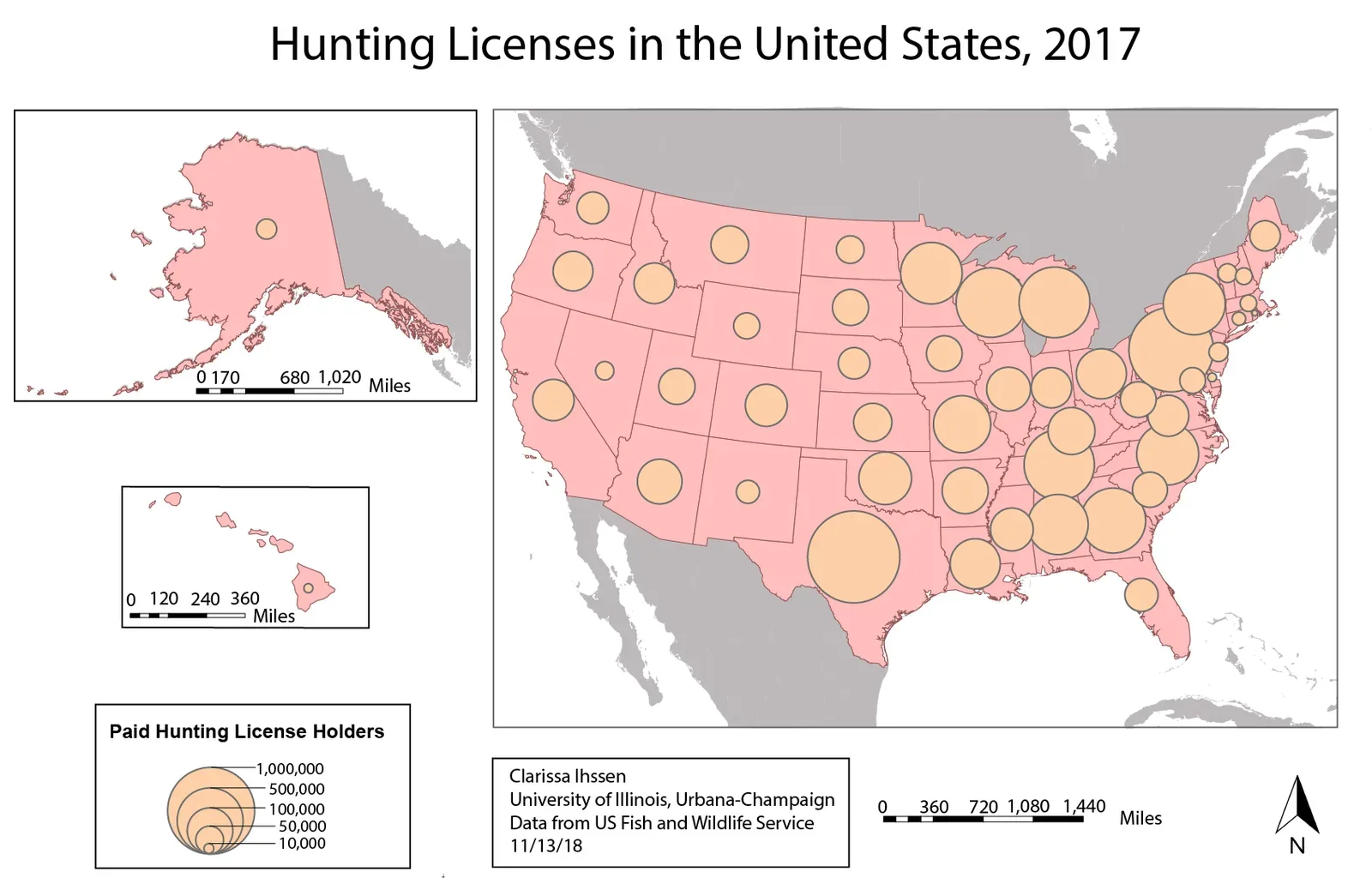
U.S. hunting license purchases by state in 2017 — demonstrates regional variation in participation and licensing demand across the country.
Ihssenc (CC BY-SA 4.0)
| Identification | |
|---|---|
| Jurisdiction | |
Territory | Idaho |
Enacted By | Idaho Fish and Game Commission |
Administered By | Idaho Fish and Game (IDFG) |
| Timeline | |
| Effective | 2026 hunting season |
| Key Provisions | |
| |
| Applicability | |
| Applies To | Nonresident hunters seeking general season deer and elk tags in Idaho for the 2026 season |
| Exemptions |
|
Related Laws | |
Legislative History | |
March 2026Final 2026 seasons and rules set for approval by the Idaho Fish and Game Commission December 5, 2025First nonresident draw application period opens December 15, 2025First nonresident draw application period closes January 2026First draw results announced January 20, 2026Deadline to claim tags from the first draw period (except DAV); unclaimed tags roll into second period February 5, 2026Second nonresident draw application period opens February 13, 2026Deadline for corrections/edits to second-period applications (2:00 p.m. MST; email [email protected]) February 15, 2026Second nonresident draw application period closes March 2026Second draw results announced March 20, 2026Deadline to claim all tags from the second draw period including DAV; unclaimed tags enter first Returned Tag Sale | |
| Major Amendments | |
2026Idaho Fish and Game Commission approved a permanent rule shift requiring all nonresident general season deer and elk tags to be issued via draw rather than first-come, first-served | |
Idaho Hunting Regulations 2026: Licenses, Tags, and Season Dates
Legal information and analysis
From The Boise Gun Club Handbook
This is educational information, not legal advice. Regulations change. Always verify current rules at idfg.idaho.gov or by contacting Idaho Fish and Game directly before you hunt.
Idaho made a major structural change for 2026 — nonresident general season deer and elk tags now go through a draw, and if you didn't know that going in, you missed the window or wasted money on a license for a hunt you couldn't access.
The Big Change for 2026: Nonresident Drawedit
For decades, nonresident deer and elk tags in Idaho were first-come, first-served. You logged on at the right time, you got a tag. You didn't, you didn't. It was frustrating, chaotic, and frankly unfair to anyone who couldn't sit at a computer at the right moment.
Starting with the 2026 season, the Idaho Fish and Game Commission approved a rule requiring all nonresident general season deer and elk tags to be issued through a draw. This is a permanent structural shift — not a one-year experiment. The framework mirrors how Idaho's controlled hunt draws already work, which means most Idaho hunters will recognize the process even if nonresidents don't.
Pure Random System
The draw uses a pure random number system. Idaho Fish and Game does not use preference points or bonus points. Every applicant gets one random number assigned, and tags flow from the lowest number to the highest until quota is exhausted.
There's no advantage to applying multiple years in a row, and no points carry over.
License Requirements Before You Applyedit
You cannot apply for the draw without first purchasing a valid 2026 Idaho hunting license. For nonresidents, that's a Nonresident Hunting License at $185. That fee is nonrefundable — if you don't draw, you don't get it back.
That said, the license isn't worthless if you strike out on deer and elk. With it, you're eligible to:
- Apply for controlled hunt draws (deer, elk, pronghorn, and others)
- Apply for moose, bighorn sheep, and mountain goat tags
- Purchase tags from Returned Tag sales throughout the year
- Hunt species that don't require a draw tag
So the license has real utility beyond the general season draw. It's not a total loss if the draw doesn't go your way.
Hunter Education Requirements
If you were born after January 1, 1975, you need proof of Hunter Education certification on file with IDFG before you can purchase a license. Archery hunters also need archery certification on file. If you need IDFG staff to manually add your certification, get that paperwork in early — the agency recommends submitting by December 12 at 2:00 p.m. MST to guarantee processing before any application deadline. After that, add it yourself via your profile at GoOutdoorsIdaho.com.
The Two Application Periodsedit
Key dates for the 2026 nonresident draw system
| Application Period | Dates | Results | Claim Deadline | Notes |
|---|---|---|---|---|
| First Period | Dec 5-15, 2025 | Early Jan 2026 | Jan 20, 2026 | Unclaimed tags roll to second period |
| Second Period | Feb 5-15, 2026 | Early Mar 2026 | Mar 20, 2026 | Corrections due Feb 13 at 2pm MST |
| DAV Special | Dec 5-15, 2025 only | Early Jan 2026 | Mar 20, 2026 | Extended claim window |
If you drew a tag in the first period, you cannot apply in the second period for that same species — even if you chose not to claim the tag. You can still apply for a species you didn't draw. There is no second application period for DAV tags.
How the Draw Actually Worksedit
Once an application period closes, every application gets randomly assigned a number. The draw engine then runs through all applications from the lowest number to the highest, evaluating first choices first.
Idaho nonresident tag draw process flow
If quota remains for your first-choice hunt, you get the tag. After all first choices are processed, the engine loops back to the beginning and evaluates second choices for everyone who didn't get their first — skipping applications that already won or where no quota remains. This repeats through fifth choices.
Group Applications
You can apply with up to four hunters as a group. The group is treated as a single application — no extra entries for being a group. If the draw reaches your group application and there aren't enough tags left for all members, the group gets nothing. One tag left and a four-person group next in line means the group is skipped.
Application Limits
Up to five hunt choices per application. Regular deer and white-tailed deer tags share one application — you don't need separate apps for each subspecies. Elk gets its own application.
Most hunters submit two — one elk, one deer. DAV hunters can submit up to four: DAV Elk, non-DAV Elk, DAV Deer, and non-DAV Deer.
Nonresident Tag Feesedit
The license cost is just the entry fee. Tags carry their own costs on top. Nonresident tag prices vary by species. Confirm current tag fees directly with IDFG at the links below, as the Commission retains authority to modify allocations and fees during the season-setting process (final 2026 seasons and rules were set for approval in March 2026).
| License/Tag Type | Cost | Notes |
|---|---|---|
| Nonresident Hunting License | $185 | Required to apply; nonrefundable |
| Nonresident Deer Tag | See IDFG website | Pricing subject to Commission changes |
| Nonresident Elk Tag | See IDFG website | Pricing subject to Commission changes |
| DAV Tags | Reduced fees | Uncapped elk zones only at DAV price |
DAV hunters pay reduced fees on DAV-specific tags — but only in uncapped elk zones for elk. If a DAV hunter wants a capped elk zone, they enter the standard nonresident draw and pay full nonresident tag prices.
Capped vs. Uncapped Elk Zonesedit
This distinction matters a lot for both regular nonresidents and DAV hunters.
| Zone Type | Tag Availability | Draw Required | Junior Mentored Access | DAV Access |
|---|---|---|---|---|
| Capped Zones | Hard nonresident quota | Yes, all hunters | Must enter draw | Standard draw only |
| Uncapped Zones | No hard ceiling | Most hunters | Over-counter after draw | DAV draw + over-counter |
Uncapped zones have no hard ceiling on nonresident tag numbers — tags are available more broadly, and for certain hunter categories (like junior mentored and DAV), they may be available over-the-counter after the draw process completes.
Capped zones have a firm nonresident quota. These are the zones that generated the most competition under the old first-come, first-served system, and they're the zones where the draw matters most. Capped zone tags go through the draw for all nonresidents, including junior mentored hunters.
The 2026 Nonresident General Tags brochure identifies which elk zones are capped and which are uncapped — download it from idfg.idaho.gov before you apply. You'll also need it to find the specific hunt codes used when submitting your application.
Special Categories: DAV, Junior Mentored, and Lifetime License Holdersedit
DAV Hunter Process
Disabled American Veterans (DAV): Nonresident DAV hunters can participate in both the standard Nonresident Draw and a separate DAV Draw. To access the DAV draw, you need a NONRES HUNTING/3-DAY FISHING – DAV license. The DAV draw offers reduced-price tags for Regular Deer, White-tailed Deer, and Elk (uncapped zones only at the DAV price).
| Hunter Category | License Type | Draw Requirements | Tag Access |
|---|---|---|---|
| DAV Hunters | NONRES HUNTING/3-DAY FISHING – DAV | Both DAV Draw and standard draw eligible | Reduced-price tags, uncapped elk only |
| Junior Mentored | NONRES HUNTING - JR MENTORED | Capped elk zones only | Over-counter for uncapped zones |
| Former ID Residents w/ Lifetime | Lifetime license | None | Resident quota, late June/July availability |
There's only one DAV application period — December 5–15 — because DAV hunters get an extended claim window through March 20.
Eligibility paperwork for DAV status must have been received by December 12, 2025 at 2:00 p.m. MST to guarantee processing before the application period closed. If a DAV hunter succeeds in both the DAV Draw and the Nonresident Draw for the same species, they pick one tag — not both.
Junior Mentored Access
Hunters with a NONRES HUNTING - JR MENTORED license only need to enter the draw if they're applying for a capped elk zone. Uncapped elk zone tags and all deer tags are unlimited for junior mentored hunters and become available over-the-counter after the draw process wraps up — typically late spring.
Lifetime License Holders
Former Idaho residents with Lifetime Licenses are treated closer to residents. They purchase tags out of the resident quota and don't need to participate in the nonresident draw at all. Tags for this group become available in late June or early July when resident tags go on sale.
Resident Tags: How They Workedit
Residents are not part of the nonresident draw system. Idaho residents purchase general season deer and elk tags over-the-counter when they become available — typically late June or early July. Resident tags for capped elk zones do have quotas and separate processes; check the Resident Capped Elk Zones page at idfg.idaho.gov for specifics on units with resident caps.
Residents born after 1974 also need hunter education certification, same as nonresidents.
Controlled Hunts: Separate from the General Season Drawedit
Applying for the nonresident general season draw doesn't affect your ability to also apply for controlled hunts. These are separate processes. Controlled hunts typically offer more restricted access to premium units with tighter harvest management — antler restrictions, spike-only rules, limited entry areas, and so on.
Controlled hunt applications for deer, elk, pronghorn, and other species run on their own schedule. DAV hunters have their own controlled hunt opportunities as well. The draw results from the nonresident general season draw don't carry over or interact with controlled hunt applications.
What Happens to Unclaimed Tagsedit
When successful applicants don't claim their tags by the deadline, those tags don't disappear. The system recycles them:
- Tags unclaimed by the January 20 deadline go back into the pool for the second application period
- Tags unclaimed by the March 20 deadline enter the first Returned Tag Sale of the year
Returned Tag Sales
Returned Tag Sales are open to any licensed hunter — resident or nonresident — who missed the draw or wants additional opportunity. Dates for these sales are announced at idfg.idaho.gov. They can sell out fast depending on the unit, so watch the IDFG website and sign up for notifications if you're relying on this as a backup.
Chronic Wasting Disease (CWD) Rulesedit
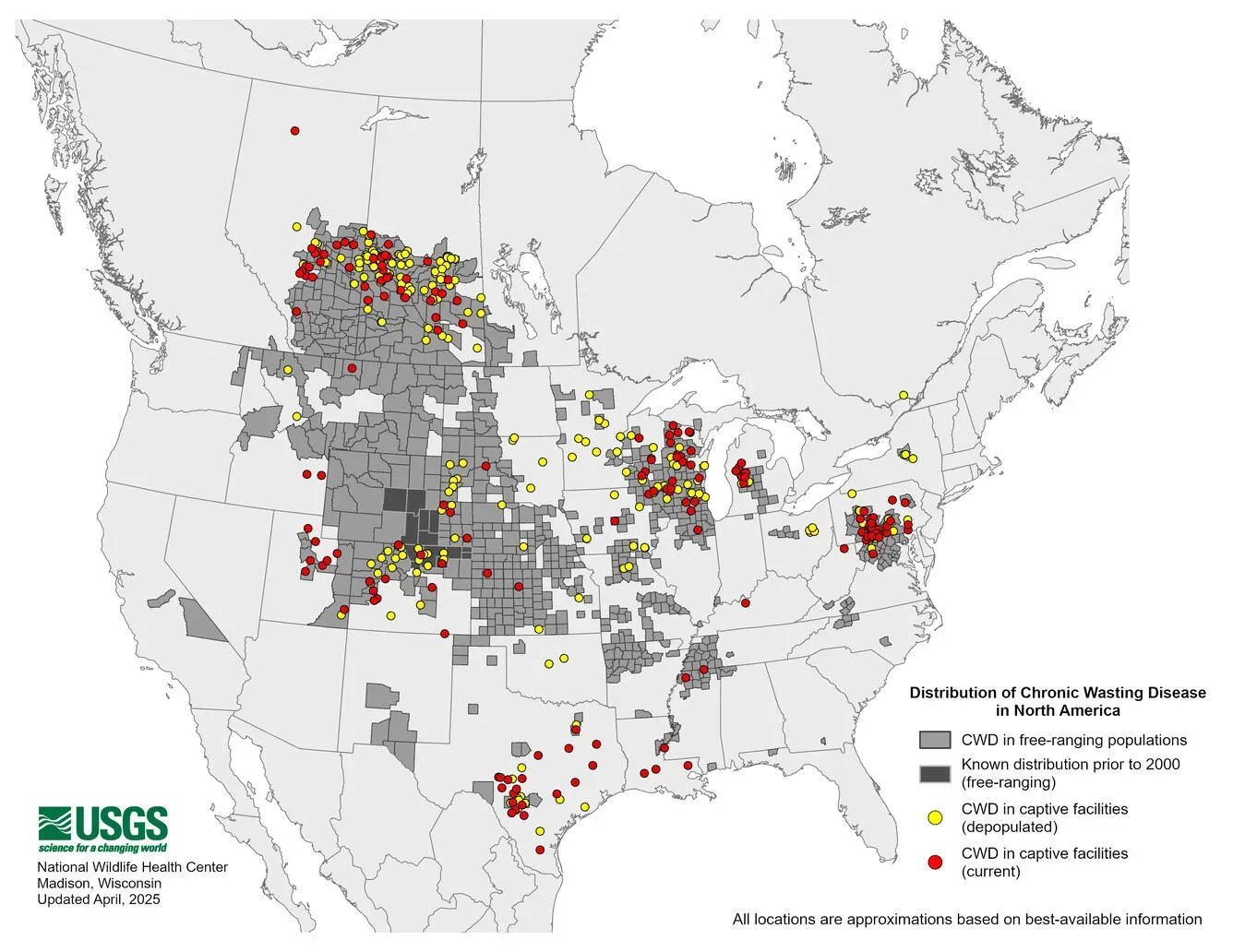
Chronic Wasting Disease is a real consideration in several Idaho units for 2026, and it carries legal teeth — not just a recommendation. Certain Game Management Units require mandatory CWD testing before you can transport harvested deer out. In some units, specific transport restrictions apply to how you can move carcasses and parts across county or state lines.
Affected Units
Units with CWD requirements noted in the 2026 tag brochure include portions of Units 1, 14, 23, 24, 32A, and others. This is not a complete list — the tag brochure and the Big Game Seasons and Rules brochure have the definitive unit-by-unit breakdown. Check both before you hunt.
Interstate Transport
If you're hauling a deer across state lines from an affected unit, federal interstate transport rules may also apply depending on your destination state. Don't assume it's fine because you followed Idaho's rules — your home state or destination state may have its own CWD import restrictions.
Weapon-Specific Seasonsedit
Not every unit offers every weapon season. The tag brochure flags units with archery-only, muzzleloader-only, or short-range-only restrictions. Examples from the 2026 nonresident tag list:
| Weapon Restriction | Example Units | Requirements |
|---|---|---|
| Archery Only | ELK7, ELK9, ELK11 | Archery certification on file |
| Archery + Muzzleloader | ELK13, ELK15 | Respective certifications |
| Archery + Short Range | RD38, RD63, WD63 | See Big Game Rules for "short range" definition |
If you're applying for a unit with a weapon restriction, you need the right equipment and — for archery — the certification on file. The Big Game Seasons and Rules brochure defines what qualifies as "short range" equipment in Idaho. Check it before you assume your rifle hunt is on.
Season Datesedit
The 2026 Big Game Seasons and Rules brochure was scheduled for Commission approval in March 2026 and publication in April 2026 at idfg.idaho.gov/big-game. Specific season open and close dates for deer, elk, and other species are in that document — not the tag brochure, which covers quotas and hunt codes.
Historical Patterns
Historically, Idaho general seasons follow patterns like:
- Archery deer and elk: typically September
- General rifle deer: typically October into November
- General rifle elk: typically October into November
- Late seasons: unit-dependent, can run into December
These dates shift annually based on Commission decisions and cannot be confirmed until the 2026 brochure publishes. Do not hunt based on prior-year dates alone.
How to Apply: GoOutdoorsIdaho.comedit
Everything runs through GoOutdoorsIdaho.com. If you've bought an Idaho license in the past ten years or so, you likely already have an account — log in with your last name, date of birth, and the last four digits of your Social Security number.
Pre-Application Checklist
Before applying:
- Confirm your mailing address is current — tags are mailed to the address on file
- Confirm your email is current — draw results and license confirmations go there
- Have your hunter education certification on file (or add it via your profile)
- Have the 2026 Nonresident General Tags brochure open — you need the specific hunt codes
- Know the deer GMU or elk zone you want to apply for before you start
IFDG also has a mobile app with step-by-step application instructions and a walkthrough video on the nonresident draw page.
Other Species: Pronghorn, Moose, Sheep, Goatedit
The nonresident draw covered in this article applies specifically to general season deer and elk. Other species operate differently:
- Pronghorn, moose, bighorn sheep, and mountain goat are controlled hunts and have their own application processes and timelines
- A valid nonresident hunting license (the same $185 license) qualifies you to apply for these
- Draw odds, quotas, and application windows for these species are listed separately at idfg.idaho.gov
Upland game, waterfowl, and turkey don't require draw tags for most seasons — check the Upland Game, Furbearer, and Turkey brochure and Migratory Birds brochure for those regulations.
What's Still Being Finalizededit
As of February 2026, the second application period just closed. A few things remain in process:
- Second draw results: announced early March 2026
- Claim deadline for all remaining tags including DAV: March 20, 2026
- Final 2026 Big Game Seasons and Rules: Commission approval March 2026, publication April 2026
- Returned Tag Sales: dates announced after March 20 deadline passes
If you're planning a 2026 Idaho hunt and haven't applied yet, your remaining paths are the Returned Tag Sales and controlled hunt draws. Watch idfg.idaho.gov for sale announcements.
The bottom line: The 2026 nonresident draw is Idaho's biggest structural change to tag access in years — if you're hunting deer or elk as a nonresident, the draw is now the only way in for general season, and you have to pay for your license before you know if you drew.
Resourcesedit
- Nonresident Deer and Elk Tags (draw information, application portal): https://idfg.idaho.gov/licenses/tag/quotas/nonresident
- Everything a nonresident hunter needs to know about the 2026 draw: https://idfg.idaho.gov/article/everything-nonresident-hunter-needs-know-about-2026-tag-drawing
- Second application period details: https://idfg.idaho.gov/article/second-application-period-nonresident-general-season-deerelk-tags-february-5-15
- 2026 Nonresident General Tags and Tags Allocated to Outfitters (PDF): https://idfg.idaho.gov/sites/default/files/seasons-rules-big-game-supplemental-proclamation-2026-2.pdf
- Big Game Seasons and Rules (publishes April 2026): https://idfg.idaho.gov/big-game
- GoOutdoorsIdaho.com (license purchase and draw applications): https://gooutdoorsidaho.com
- IDFG Licenses Office (corrections, DAV paperwork): [email protected]
Last Updated: February 23, 2026
- Ace Hardware of Sandusky(Sandusky, MI)
- New Philly Sportsman Specialities(New Philadelphia, OH)
- Atwoods Ranch & Home #46(LACY LAKEVIEW, TX)
- G & P Distributors(McConnellsburg, PA)
This is not legal advice
This guide provides general information about federal and state firearms laws based on publicly available statutes. Laws change frequently and vary significantly by state. Always verify current laws in your jurisdiction. Consult a qualified attorney for legal advice on your specific situation. When in doubt, contact local law enforcement or state police.
Loading comments...