Legal Details
Legislation

The AR-15 platform — the most common semi-automatic rifle in civilian ownership and a frequent reference point in assault weapons definitions across U.S. jurisdictions.
M62 (CC BY-SA 3.0)
| Identification | |
|---|---|
| Jurisdiction | |
Territory | Virginia |
Virginia Firearms Laws: What's Changing in 2026
Legal information and analysis
From The Boise Gun Club Handbook
Updated August 15, 2026. The law moved twice since this article was written. The $200 making and transfer tax on suppressors, SBRs, SBSs and AOWs was eliminated effective January 1, 2026 by the One Big Beautiful Bill Act. Then on August 5, 2026 a federal court in Silencer Shop Foundation v. ATF struck down the NFA registration and approval requirements for those same items, and that injunction took effect August 13. It covers only the plaintiffs, their members and their customers. Living in a plaintiff state does not make you covered. Machine guns and destructive devices are unchanged. Read the current guide: NFA Items in 2026: What Actually Changed.
This is educational information, not legal advice. Laws change. Consult an attorney for your specific situation.
Virginia just wrapped up the most consequential gun legislation session in its modern history — 25 gun reform bills passed the General Assembly, and as of March 14, 2026, they're sitting on Governor Abigail Spanberger's desk waiting for her signature, veto, or amendment request. The Governor has until April 13, 2026 to act. If she signs, Virginia's legal landscape for gun owners changes dramatically on July 1, 2026.
What Changed — and What Didn'tedit
What changed: Democrats gained a governing trifecta when Spanberger won the governorship in November, replacing Republican Glenn Youngkin, who had vetoed 42 gun reform bills across the 2024 and 2025 sessions. Lawmakers came back this session with 16 of those 18 vetoed bills — and got 14 of them across the finish line, according to The Trace.
What this means for you: Nothing is law yet. These bills require the Governor's signature. But Senator Saddam Azlan Salim, who sponsored the assault weapons ban, told The Trace he doesn't expect her to veto any of them, citing that the bills were crafted in consultation with policy staffers in her office. Plan accordingly.
The bills that failed are just as important to understand. A five-day waiting period died in committee. A permit-to-purchase regime — like Illinois or Colorado use — failed to advance. A proposed $500 tax on suppressors was unanimously tabled. An 11% sales tax on firearms and ammunition was continued to 2027. For now, those aren't your problem.
The Assault Weapons Ban (SB749 / HB217)edit
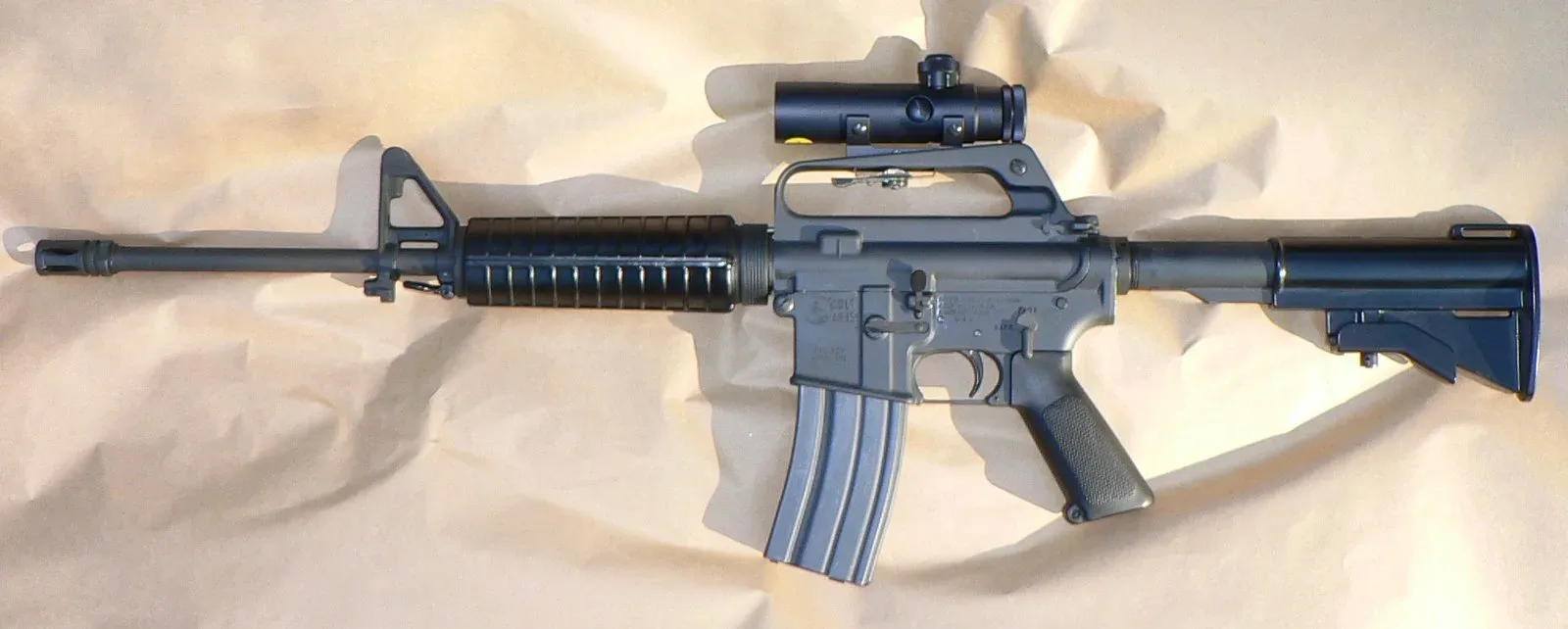
This is the bill everyone's talking about, and the full legislative text from the Virginia LIS gives us the specifics.
The Law: Under the proposed § 18.2-287.4:1, any person who imports, sells, manufactures, purchases, or transfers an "assault firearm" as defined in § 18.2-308.2:2 is guilty of a Class 1 misdemeanor. A subsequent conviction under that section triggers a three-year prohibition on purchasing, possessing, or transporting any firearm.
The definition of "assault firearm" is broad. It covers:
- Semi-automatic centerfire rifles or pistols equipped with a fixed magazine capacity in excess of 10 rounds
- Semi-automatic centerfire rifles that accept a detachable magazine and have one or more of these features: folding/telescoping/collapsible stock, thumbhole stock or conspicuous pistol grip, second handgrip, grenade launcher, or a threaded barrel capable of accepting a muzzle brake, compensator, suppressor, or flash suppressor
- Semi-automatic centerfire pistols with features including a second handgrip, a magazine that attaches outside the pistol grip, a barrel shroud, a threaded barrel, or a buffer tube/arm brace designed to allow shoulder firing
- Semi-automatic shotguns with a folding stock, pistol grip, detachable magazine, fixed magazine over five rounds, or similar characteristics
- Shotguns with a revolving cylinder
- Any firearm capable of accepting a belt ammunition feeding device
- Any firearm modified to be operable as one of the above
Manually operated firearms — bolt-action, pump, lever, slide — are explicitly excluded. Antique firearms and permanently inoperable firearms are also excluded.
Grandfathering: Firearms lawfully purchased and possessed before July 1, 2026, may be kept. But the grandfathering has teeth — what you can do with a grandfathered firearm is significantly restricted. Per the bill text, a person who lawfully owned an assault firearm before July 1, 2026 may:
- Sell it to a licensed dealer or to someone outside of Virginia who can lawfully possess it
- Transfer it temporarily to a licensed dealer or gunsmith for service and return
- Pass it by inheritance
- Loan it at a range operated by an FFL for on-premises target shooting or training
- Gift it to an immediate family member (spouse, children, parents, grandparents, siblings) who is not otherwise prohibited
You cannot simply sell or transfer it to a Virginia neighbor who didn't own one before the cutoff. Private in-state transfers of grandfathered assault firearms to non-family members are prohibited under the bill.
Key Point: There is no registration requirement or confiscation provision in this bill. If you owned it legally before July 1, 2026, you can keep it. You just can't sell it to most people in Virginia.
Magazine Capacity Limits (SB749 / HB217)edit
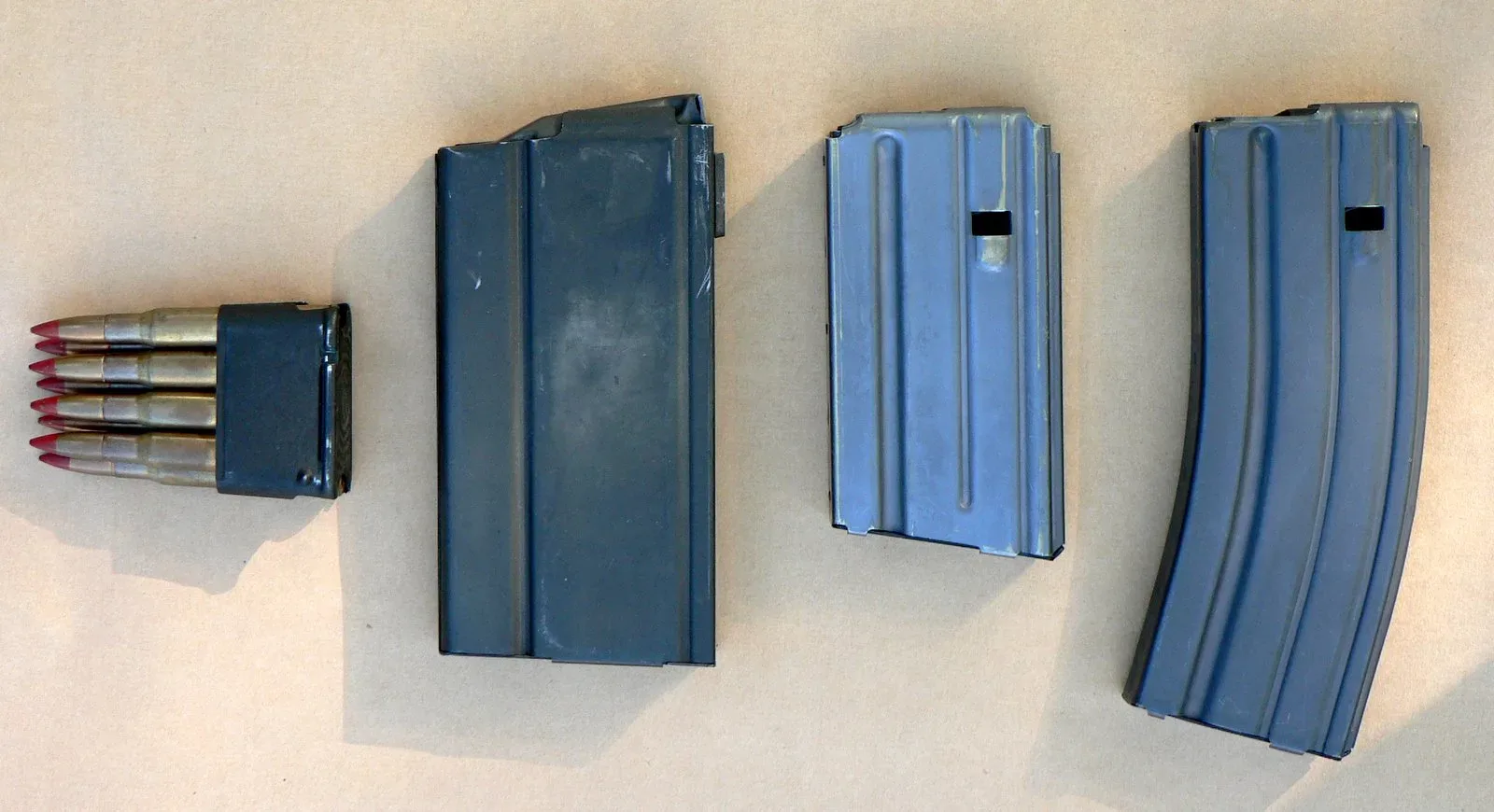
The same bill package establishes § 18.2-309.1, which prohibits importing, selling, bartering, transferring, or purchasing a "large capacity ammunition feeding device" — defined as any magazine, belt, drum, feed strip, or similar device capable of accepting more than 15 rounds.
The .22 LR tubular magazine carveout is explicit: attached tubular devices designed only for .22 caliber rimfire ammunition are not covered.
Like the firearms ban, there's a grandfathering provision: if you lawfully owned magazines over 15 rounds before July 1, 2026, you can keep them. You can also import them (bring them into Virginia) if you owned them before that date. But you cannot sell or transfer them within Virginia — only to an FFL or to someone outside the Commonwealth who can legally possess them.
Exemptions cover law enforcement, military branches, senior military colleges organized under federal law, and FFLs dealing with those entities.
Philip Van Cleave, president of the Virginia Citizens Defense League, told The Trace he plans to challenge the assault weapons ban to the Supreme Court. He cited the "common use" standard from existing Supreme Court precedent, noting that magazine capacity bans were recently struck down in D.C. Van Cleave's challenge will face the reality that SCOTUS has declined to hear assault weapon ban challenges from other states, most recently Maryland in 2025 — though Justice Kavanaugh's denial in that case noted the Court "should address the AR-15 issue soon." NRA-ILA has also stated its litigation team is actively working in the event of Spanberger's signature.
Age Restrictions (SB643 / HB1525)edit
Two separate bills address minimum age requirements for firearm purchases and possession.
SB643 / HB1525 would prohibit the purchase and possession of certain firearms by anyone under 21. Per NRA-ILA, if enacted as written, the possession prohibition would apply broadly — including to people under 21 who already own such firearms before the law takes effect.
SB749 / HB217 also contains age-related provisions: the bill prohibits the sale of assault firearms to anyone under 21, and the bill's language amending § 18.2-308.7 adds "assault firearm as defined in § 18.2-308.2:2" to the list of firearms that persons under 18 may not possess or transport.
The age restriction bills were flagged by NRA-ILA as particularly broad in their retroactive application — people who legally purchased covered firearms before their 21st birthday could face possession liability under the proposed law. If you're in that situation, consult an attorney before the April 13 deadline passes.
Carrying Firearms on Public Property (SB727 / HB1524)edit
This bill would make it a crime to carry or transport many commonly configured semi-automatic firearms on public property. Per NRA-ILA, covered firearms include semi-automatic rifles and pistols equipped with:
- A fixed magazine over 10 rounds
- A standard (detachable) magazine over 20 rounds
- A folding stock
- The ability to accept a suppressor
- Various other features enumerated in the bill
This is separate from the assault weapons purchase ban — SB727/HB1524 specifically targets the carrying and transportation of these configured firearms in public spaces, even for owners who grandfathered their firearms under the sales ban.
Firearms in Vehicles (SB496 / HB110)edit
This bill would tighten restrictions on keeping a firearm in your vehicle for self-defense. NRA-ILA describes it as placing "further restrictions on the ability for a law-abiding individual to keep a firearm in their vehicle."
A related measure that did pass — and is also on the Governor's desk — would make it a crime to leave a visible firearm in an unattended vehicle. The Trace connected this bill to the March 12, 2026 shooting at Old Dominion University, where the perpetrator used a handgun stolen from a car a year earlier.
Key Point: These are two separate bills with different scopes. One addresses deliberately leaving a visible gun in an unattended car; the other addresses broader vehicle carry rights. Both are pending the Governor's signature.
Privately Made Firearms / "Ghost Guns" (SB323 / HB40)edit
SB323 / HB40 would end the practice of individuals building unserialized firearms for personal use. Specifically, it would:
- Prohibit manufacturing firearms without serial numbers
- Prohibit transfer and possession of unserialized or plastic firearms
- Penalize individuals who lawfully purchased unfinished frames and receivers before the bill's effective date
That last point is the sharpest edge here. If you bought an 80% lower or unfinished frame before the law's effective date, the bill would still expose you to liability for possessing it if you haven't completed and serialized it — or if you have completed it into an unserialized firearm. This is an area where an attorney's advice is worth every dollar before July 1.
Firearms in Hospitals (SB173 / HB229)edit
This bill would prohibit possession of any weapons in a hospital that provides mental health services or developmental services. Any weapons seized in violation would be forfeited to the Commonwealth under the amended § 19.2-386.28, which the bill text explicitly includes in the forfeiture statute.
Concealed Handgun Permits — What's on the Tableedit
Several bills touch the Concealed Handgun Permit (CHP) system:
SB115 would affect concealed carry reciprocity with other states. NRA-ILA's description is that it "jeopardizes concealed carry permit reciprocity" — NRA-ILA has not spelled out how the framework would be reshaped, but it is enough of a concern to be flagged as one of the significant pending bills.
HB916 would expand the curriculum requirements for Virginia CHP classes and — significantly — eliminate the National Rifle Association and United States Concealed Carry Association courses from the code as qualifying courses for the permit process.
HB101 — a pro-gun bill that also passed — would make it easier to apply for a CHP by eliminating the requirement that applications be submitted in writing. This one is on Spanberger's desk alongside the restrictive bills.
Virginia is currently a shall-issue state for concealed handgun permits. The existing disqualification list under § 18.2-308.09 remains extensive — covering felony convictions, certain misdemeanors, mental health adjudications, substance abuse, domestic violence protective orders, and more. The proposed amendments to that section add a new disqualifier tied to convictions under the proposed assault firearm ban (§ 18.2-308.1:9).
Firearm Industry Liability (SB27 / HB21)edit
This bill would impose new "responsible conduct" standards on manufacturers, distributors, and retailers. It would require these businesses to establish "reasonable controls" over the manufacture, sale, distribution, use, and marketing of firearm products — and it creates a civil cause of action allowing the Attorney General, local government attorneys, or private individuals to sue gun businesses for injunctions, damages, and costs.
NRA-ILA describes this as a direct attack on the industry designed to "regulate the industry out of existence through litigation," noting that it runs against longstanding federal protections for the firearms industry. Van Cleave of the VCDL specifically called out this bill's litigation-enabling mechanism when speaking to The Trace.
Colleges and Universities (SB272 / HB626)edit
SB272 / HB626 would limit who can carry firearms at public institutions of higher learning. Current Virginia law already restricts campus carry in certain circumstances — this bill would tighten those restrictions further. Source material doesn't detail the specific new limits, but the bill is among those pending on the Governor's desk.
Expanded Red Flag Lawedit
Virginia already has a red flag law — the Substantial Risk Order process under § 19.2-152.13 and § 19.2-152.14. The 2026 session included an expansion that would broaden who can petition for a temporary removal of firearms from someone deemed at risk. According to The Trace, the expansion would allow doctors, family members, and school administrators to petition — not just law enforcement as under current law.
This is among the bills on Spanberger's desk.
Background Checks and Private Salesedit
Virginia already requires background checks on all firearm sales, including private sales, through § 18.2-308.2:5. Private sellers must run buyers through a licensed dealer to get a NICS check before completing the sale. This was enacted in a prior session and remains in effect regardless of what happens with the 2026 bills.
The permit-to-purchase bill (SB797 / HB1359) — which would have required a state police license before you could buy a gun — failed. SB797 was briefly incorporated into SB643 and then removed; HB1359 died in House Appropriations.
The one-handgun-per-month limit under § 18.2-308.2:2(R) remains in effect. A bill that would have removed that limit failed this session.
Bills That Were Defeatededit
Not everything the majority pushed made it through. These died during the 2026 session:
| Bill | What It Would Have Done | Outcome |
|---|---|---|
| HB700 | 5-day waiting period on all firearm purchases | Died in House Public Safety Committee |
| HB207 | $500 tax on suppressors | Unanimously tabled in House Finance |
| HB919 | 11% sales tax on firearms and ammunition | Continued to 2027 |
| HB926 | Strengthen localities' ability to prohibit outdoor shooting | Continued to 2027 |
| SB797 / HB1359 | Permit-to-purchase regime (Illinois/Colorado model) | Failed — language removed or died in committee |
Pro-Gun Bills That Passededit
Two bills favorable to gun owners also made it through and are on the Governor's desk:
| Bill | What It Does |
|---|---|
| HB101 | Eliminates the written application requirement for Concealed Handgun Permits |
| SB86 | Allows eligible immediate survivors of law enforcement officers to purchase the officer's service weapon for $1 |
NFA Items — Suppressors, SBRs, and Machine Gunsedit
Virginia does not prohibit NFA items at the state level as a general matter, and nothing in the 2026 session changed that baseline. Suppressors, short-barreled rifles, short-barreled shotguns, and legally registered pre-1986 machine guns remain legal to own in Virginia with proper federal NFA registration and tax payment.
The caveat: if the assault weapons ban passes and is signed, certain suppressor-ready features (threaded barrels, the ability to accept a suppressor) would be among the characteristics that classify a semi-automatic rifle or pistol as an "assault firearm" under the new definition. This doesn't retroactively make your registered suppressor illegal — but it does affect what new firearms you can buy that are suppressor-ready, and it affects how you configure existing firearms going forward. The interaction between NFA ownership and the new assault firearm definition is an area where you should get legal advice specific to your situation.
The proposed $500 suppressor tax (HB207) was unanimously killed in committee. That's not on the table for 2026.
Preemptionedit
Virginia has state preemption of local firearms ordinances — localities cannot generally enact gun regulations more restrictive than state law. The 2026 bills do not appear to alter that preemption framework based on available source material. What changes at the state level applies uniformly; cities and counties don't get to pile on top.
What to Watch Before April 13edit
Spanberger has until April 13, 2026 to sign, veto, or seek amendments on the bills. NRA-ILA is urging members to call the Governor's Office at 804-786-2211 and request vetoes. The VCDL has already committed to litigation if the bills are signed.
If you have firearms or magazines that would be affected by the assault weapons ban or magazine capacity restrictions, the practical window for action — whether that's completing grandfathering eligibility by owning them before July 1, 2026, or consulting an attorney about your specific situation — is measured in weeks, not months.
The bottom line: Virginia gun owners are looking at a potential July 1, 2026 effective date for some of the most sweeping restrictions in the state's history. Nothing is final until Spanberger acts. But given the signals from her office and the senator who sponsored the lead bill, planning as if these pass is the smart move. Get legal advice on your specific inventory and situation before the April 13 deadline closes out your options.
Resourcesedit
- https://www.nraila.org/articles/20260315/virginia-legislature-adjourns-from-2026-session-anti-gun-bills-on-governors-desk
- https://www.thetrace.org/2026/03/virginia-25-gun-reforms-spanberger/
- https://lis.virginia.gov/bill-details/20261/SB749/text/SB749H2
- https://www.gunowners.org/va02262026/
- https://www.gunsandammo.com/editorial/va-ban-law/547626
Last Updated: March 30, 2026
- Ace Hardware of Sandusky(Sandusky, MI)
- New Philly Sportsman Specialities(New Philadelphia, OH)
- Atwoods Ranch & Home #46(LACY LAKEVIEW, TX)
- G & P Distributors(McConnellsburg, PA)
This is not legal advice
This guide provides general information about federal and state firearms laws based on publicly available statutes. Laws change frequently and vary significantly by state. Always verify current laws in your jurisdiction. Consult a qualified attorney for legal advice on your specific situation. When in doubt, contact local law enforcement or state police.
Loading comments...