Organization Info
NBRSA
National Bench Rest Shooters Association

| Overview | |
|---|---|
Founded | pre-1970 |
Headquarters | Virginia, USA |
Disciplines | benchrest (short range group, short range score, long range 600/1000 yard) |
Membership | |
Cost | $85/year individual (U.S.); $10/year associate; $110/year individual (Canada) |
Links | |
| www.nbrsa.org | |
National Bench Rest Shooters Association (NBRSA)
Reference article
From The Boise Gun Club Handbook
The National Bench Rest Shooters Association (NBRSA) is the original national governing body for competitive benchrest shooting in the United States. It sanctions registered matches across three disciplines -- short-range group, short-range score, and long-range competition at 600 and 1,000 yards -- and maintains the official world records for each. Headquartered in Virginia, the organization operates through a network of regional directors and member clubs spread across the country.
History & Foundingedit
Post-War Origins
Benchrest shooting as a formalized competitive discipline grew out of the post-World War II era, when a generation of returning veterans and firearms enthusiasts started taking rifle accuracy seriously as a sport in its own right -- not just a byproduct of hunting or military training. The NBRSA emerged as the primary organizing body for that activity, and before 1970 it was essentially the sanctioning body for short-range benchrest in the United States. If you shot registered benchrest matches, you shot under NBRSA rules.
The early decades were a period of genuine experimentation. The NBRSA formalized equipment classes and target standards that shaped how the sport developed -- decisions made in those years about what constitutes a legal rifle, how groups are measured, and what counts as a world record are still reflected in the rulebook today. Hunter Class was officially adopted by the NBRSA in 1966, complete with a purpose-built Hunter Class target, reflecting the organization's effort to bring in shooters whose rifles sat somewhere between a field gun and a full-on benchrest rig.
Key milestones in NBRSA's organizational evolution
The IBS Split
The landscape shifted in the early 1970s when the International Benchrest Shooters (IBS) broke away and formed a competing sanctioning body. The split divided the benchrest community and created a rivalry -- and a degree of redundancy -- that persists to this day. Both organizations run registered matches, both maintain world records, and both compete for the same pool of members. The NBRSA retained its historical prestige and the bulk of its established infrastructure, but it no longer held a monopoly on the sport.
Mission & Purposeedit
The NBRSA's stated objectives center on the development and encouragement of extreme accuracy in rifles, ammunition, equipment, and shooting methods. That's not marketing copy -- it's a reasonably accurate description of what draws people to benchrest in the first place.
This is a sport where shooters obsess over seating depth in thousandths of an inch, chase sub-0.1-inch groups at 100 yards, and treat handloading as its own discipline nested inside the larger one.
The organization provides the competitive infrastructure -- standardized targets, uniform rules, a world record tracking system, and a calendar of registered matches -- that gives benchrest shooters a common framework to compete within. Without that, you'd just have a bunch of people shooting tight groups with no meaningful way to compare results or crown champions.
Programs & Competitionsedit
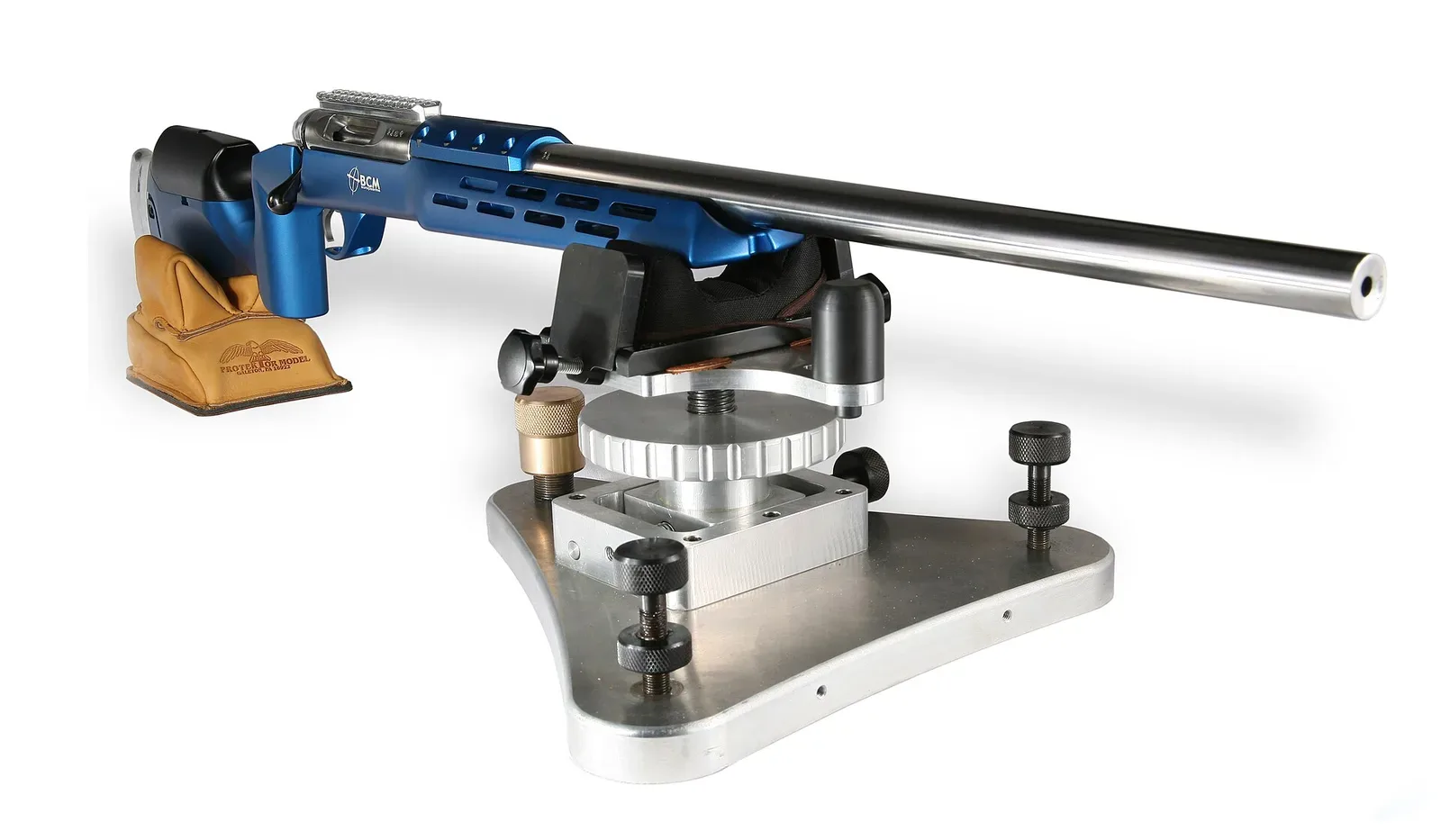
The NBRSA sanctions matches across three distinct disciplines, each with its own ruleset, equipment classes, and record structure.
Competition Disciplines
| Discipline | Distance | Scoring Method | Target Focus |
|---|---|---|---|
| Short-Range Group | 100, 200, 300 yards | Smallest group size | Raw mechanical precision |
| Short-Range Score | 100, 200, 300 yards | Bullseye placement + target-dot | Deliberate shot placement |
| Long-Range | 600, 1000 yards | Smallest group size | Wind reading + precision |
Short-Range Group shooting is the discipline most people picture when they hear "benchrest." Competitors fire 5- or 10-shot groups at 100, 200, or 300 yards from a bench, and the goal is the smallest possible aggregate group size across a set of five to eight matches. The rifle does the talking -- conditions, technique, and load development all have to come together, because the scoring is brutally objective.
A group is a group.
Short-Range Score runs at the same distances but scores differently. Instead of measuring group size, shooters are rewarded for placing each shot inside a bullseye circle, with additional credit for hitting the "target-dot" inside the bull. It rewards a different skill set -- more deliberate shot placement, less emphasis on raw mechanical precision of the rifle system.
Long-Range competition moves the targets out to 600 and 1,000 yards, where wind reading becomes a factor that no amount of load development can fully compensate for. Like short-range group, competitors are chasing the smallest 5- or 10-shot groups, but the challenge at distance is categorically different. The NBRSA tracks a historical progression of long-range records, which gives a useful window into how the sport has advanced technically over the decades.
Match Structure
The NBRSA sanctions more than 200 registered matches annually across the United States. National Championship events are the pinnacle of the competitive calendar, and performance at nationals feeds into the organization's Hall of Fame points system. Regional matches feed into that structure and give members a path from local competition up to national-level results.
The organization also runs a Regional Mentorship Program available to members at no additional charge. Regional directors and experienced members walk newer shooters through rifle tuning, load development, and match procedure. For someone coming into benchrest from general precision rifle shooting, that mentorship access is genuinely valuable -- benchrest has its own vocabulary and technique refinements that aren't obvious from the outside.
Membership & Benefitsedit
Membership Tiers
| Membership Type | Annual Cost | Includes Magazine | Eligibility |
|---|---|---|---|
| Individual (U.S.) | $85 | Yes | All U.S. residents |
| Individual (Canada) | $110 | Yes | Canadian residents |
| Individual (International) | $85 | Yes | Non-U.S./Canada |
| Associate | $10 | No | Under 18 and spouses only |
| Club with Magazine | $85 | Yes | Member clubs |
| Club without Magazine | $40 | No | Member clubs |
Value Proposition
The $85 individual membership includes a subscription to Precision Rifleman, the NBRSA's monthly publication. Strip out the magazine and you're paying for:
- Access to registered matches
- Ability to set official world records
- Hall of Fame eligibility
- Regional mentorship program access
- Subscription to Precision Rifleman magazine
Memberships can be renewed online through the NBRSA website or by mail using a printed form.
The associate membership at $10 is worth knowing about if you have a spouse or young shooter in the household who wants to participate without paying full freight.
Notable Achievementsedit
Record Keeping
| Achievement Category | Description | Significance |
|---|---|---|
| World Records Program | Official records across all disciplines | Industry standard for benchrest excellence |
| Hall of Fame | Recognition via national championship points | Long-term competitive achievement |
| Equipment Standardization | Established classes, targets, measurements | Shaped modern precision rifle culture |
| Hunter Class (1966) | Purpose-built target and rules | Bridged gap between field guns and benchrest rigs |
The NBRSA's most concrete contribution to the sport is its world record program. The organization tracks official records across all three disciplines, with dedicated record chairmen for group, score, and long-range shooting who verify and confirm submissions. The historical record progression for 600 and 1,000 yard shooting is publicly available on the NBRSA website -- it reads like a slow-motion engineering timeline, showing how equipment and technique have incrementally pushed the boundaries of what's possible at distance.
The Hall of Fame represents the organization's recognition of its most accomplished competitive members. Points accumulate through performance at national championship events, which ties long-term recognition directly to sustained competitive excellence rather than a single breakthrough result.
Historical Impact
From a broader historical standpoint, the NBRSA's role in standardizing benchrest competition during the sport's formative decades -- establishing equipment classes, target designs, and measurement protocols -- shaped the technical culture of precision rifle shooting in ways that extended well beyond its own membership. Many of the practices that serious precision rifle shooters take for granted today trace back to decisions made in the NBRSA rulebook.
Structure & Governanceedit
The NBRSA operates through a structure of elected officers and Regional Directors, with directors serving as the primary point of contact between the national organization and local member clubs and individual shooters. Regional directors are also the ones running the mentorship program in their areas, which means the quality of that resource varies somewhat by region depending on who's in the role.
NBRSA organizational structure and member relationships
The organization holds elections for director and alternate director positions -- the 2026 cycle was active as of early 2026. Contact for the organization runs through a Virginia phone number and an iCloud email address, which is a small signal about organizational scale: this is a volunteer-heavy operation, not a staffed association with a corporate office.
Club memberships are structured separately from individual memberships, with clubs maintaining their own affiliation and magazine subscription choices independent of individual member dues.
Relationship to Other Organizationsedit
The NBRSA's most significant organizational relationship -- or rivalry, depending on how you look at it -- is with the IBS (International Benchrest Shooters). The two organizations have coexisted since the IBS split from the NBRSA in the early 1970s, and they've never fully merged back together despite serving essentially the same competitive community. Some shooters hold memberships in both. Some clubs run matches under both sanctions. Others pick a side and stay there.
The practical effect is a fragmented record system -- a world record under NBRSA rules and a world record under IBS rules aren't the same thing, even if they're shot by the same person with the same rifle on the same day.
Whether that matters to you depends on which records you're chasing and which matches your local club runs.
The Precision Rifleman magazine ties the NBRSA to its membership in a more tangible way than most associations manage. Having a monthly publication dedicated to the discipline keeps the community connected between match seasons and gives the organization a vehicle for communicating rule changes, match results, and technical content.
The BGC Takeedit
Membership Decision Matrix
For a benchrest shooter -- yes, straightforwardly. If you want to shoot registered matches, set records, or compete at nationals, you need the membership. There's no workaround.
For someone curious about benchrest but not yet committed, the calculus is a little different. The $85 dues plus Precision Rifleman is a reasonable entry point, and the Regional Mentorship Program is a legitimate perk that most shooting organizations don't offer at all.
If your local club runs NBRSA-sanctioned matches, it makes obvious sense. If your local club is IBS-affiliated and you're only shooting locally, you might join the wrong organization for your area without knowing it -- check what your nearby clubs are actually sanctioned under before you pay dues.
The associate membership at $10 is an easy yes for spouses or juniors who want to participate without a full dues commitment.
Target Audience
Who benefits most: Competitive benchrest shooters who are serious about registered matches and record chasing. The infrastructure -- standardized rules, official targets, world record tracking, Hall of Fame -- exists specifically for people competing at that level. Recreational shooters who just like shooting small groups off a bench will get less direct value, though the mentorship program and magazine subscription are still useful if you're working to improve.
Honest Assessment
The honest caveat: The NBRSA/IBS split is a genuine inconvenience for the benchrest community. Two record systems, two sets of sanctioned matches, two dues structures for shooters who want access to both -- it's the kind of organizational fragmentation that serves neither organization's members particularly well.
The NBRSA has history and prestige on its side, but if your competitive goals and local club situation point toward IBS, don't pay NBRSA dues out of tradition.
Referencesedit
- National Bench Rest Shooters Association official website: https://www.nbrsa.org
- NBRSA Membership page: https://www.nbrsa.org/memberships/
- NBRSA Membership Benefits: https://www.nbrsa.org/nbrsa-membership-value/
- Historical Progression of Long Range Records: https://www.nbrsa.org/historical-progression-of-long-range-records/
- 1000 Yard Historical Records: https://www.nbrsa.org/disciplines/1000yd/1000-yard-historical-records/
- "A History of Benchrest Shooting," BenchTalk: https://benchtalk.netlify.app/benchrest-history
- AccurateShooter Forum -- Shooting Associations thread: https://forum.accurateshooter.com/threads/shooting-associations-freedom-ibs-nbrsa-ubr.4158345/
Last Updated: February 24, 2026
- Quail Creek Plantation(Okeechobee, FL)
- 2aHawaii(Honolulu, HI)
- Boston Firearms(Everett, MA)
- Safeshoot(Kingston, NY)
Loading comments...