Organization Info
PITA
Pacific International Trapshooting Association
| Overview | |
|---|---|
Founded | Exact year unconfirmed; active pre-1995 |
Headquarters | Twin Falls, ID |
Disciplines | trap shooting |
Membership | |
Cost | Low annual fee; current pricing at shootpita.com |
Links | |
| shootpita.com | |
Pacific International Trapshooting Association (PITA)
Reference article
From The Boise Gun Club Handbook
The Pacific International Trapshooting Association (PITA) is a regional trapshooting organization serving shooters across the Pacific Northwest and Western United States. Headquartered in Twin Falls, Idaho, PITA coordinates registered trap competitions, maintains competitor averages, and connects member clubs across its geographic footprint.
For western trap shooters who don't want to travel to Vandalia for every sanctioned event, PITA is the organization that keeps local and regional competition running.
History & Foundingedit
Early Organization
PITA traces its origins to early organized trapshooting in the Pacific region, where western shooters needed a regional body to govern competitions closer to home. Orin "O.N." Ford is credited as a key organizer in PITA's formation and has been recognized -- belatedly by some accounts -- for his foundational role in building the association into a functioning regional body.
Forum discussions among longtime trap shooters have noted that Ford's contributions deserved formal Hall of Fame recognition far earlier than they received.
The association grew alongside the broader postwar boom in shooting sports, when trap clubs were proliferating across the West and shooters needed a structure for registered competition that didn't require a cross-country trip. PITA filled that gap for the region, giving western clubs a sanctioning body and giving shooters a way to build official averages in their own backyard.
Hall of Fame Establishment
Key milestones in PITA's organizational development
The PITA Hall of Fame was formally established in 1995 to recognize individuals who made outstanding contributions to the sport and the organization -- whether through competitive achievement, administrative work, or service to the trapshooting community.
Mission & Purposeedit
PITA's stated purpose is to promote trapshooting, gun safety, and competition through events sponsored throughout the Northwest. That's a straightforward mandate -- run shoots, keep records, grow the sport regionally.
In practice, PITA functions as:
- Sanctions registered competitions across member clubs
- Tracks shooter averages across all events
- Provides organizational framework independent of national ATA circuit
- Enables legitimate competitive records at regional level
PITA functions as the connective tissue between member clubs across its territory, giving regional shooters a competitive home that the national body can't fully replicate at the local level.
The two organizations aren't mutually exclusive -- plenty of western shooters hold dual membership -- but PITA gives regional shooters a home that the national body can't fully replicate at the local level.
Programs & Competitionsedit
Competition Disciplines
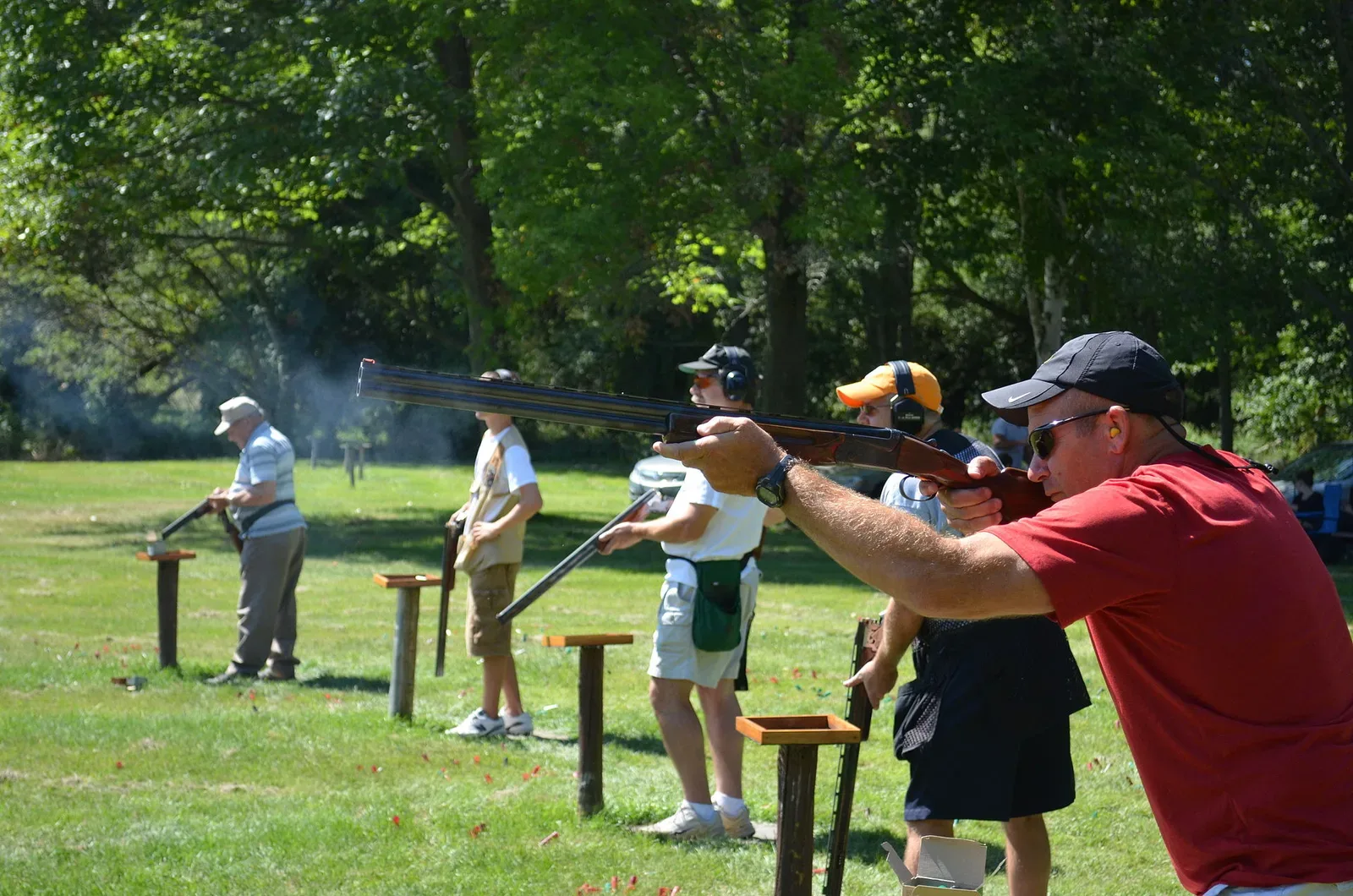
PITA's competitive calendar revolves around registered trap events hosted by member clubs across the Pacific region. Shooters accumulate registered targets and build official averages through these events, which feed into classification systems that keep competition fair across skill levels.
The association runs events in 16-yard singles, handicap, and doubles -- the standard trap disciplines.
| Discipline | Format | Description |
|---|---|---|
| 16-Yard Singles | Standard trap | Shooters positioned 16 yards behind trap house |
| Handicap | Variable distance | Shooters positioned 16-27 yards based on skill level |
| Doubles | Two targets | Two clay targets released simultaneously |
Championship Structure
Member clubs host local and regional shoots throughout the season, with larger PITA championship events drawing competitors from across the association's footprint.
The PITA Hall of Fame at pitahalloffame.com maintains records of inductees and serves as the organization's primary vehicle for honoring long-term contributors. Induction recognizes both competitive achievement and service to the association and the sport more broadly.
PITA also connects to state-level organizations within its territory. The California State Trapshooting Association (CSTA), for example, maintains a PITA section on its website and facilitates membership for California shooters participating in PITA-sanctioned events.
Membership & Benefitsedit
PITA membership is the entry point for shooting registered targets under the association's sanction. Without it, you can still shoot at member clubs, but your targets won't count toward an official PITA average and you won't be eligible to compete in PITA championship events.
Core Benefits
| Benefit | Description |
|---|---|
| Official Average | Registered targets tracked across all PITA events |
| Championship Eligibility | Access to PITA-sanctioned championships and registered shoots |
| Historical Records | PITA history and average books (nominal fee) |
| Classification System | Fair competition through skill-based categories |
Pricing and Accessibility
Cost is described as inexpensive relative to what you get -- the CSTA notes that joining is "simple, fast and inexpensive," which tracks with how regional shooting organizations typically price membership to keep participation accessible. Specific current pricing is available at shootpita.com.
The association has acknowledged membership growth as an ongoing priority. A recent PITA Board announcement described a dedicated effort to promote and grow the association, signaling that leadership is aware the organization needs to actively recruit new shooters rather than rely on existing members to sustain the rolls.
Notable Achievementsedit
PITA's longevity as a regional organization is itself the headline achievement -- maintaining a functioning competitive structure for western trap shooters across decades of changing demographics, economic conditions, and competition from other shooting sports is not a small thing.
The 1995 establishment of the PITA Hall of Fame formalized recognition for the people who built and sustained the organization. The Hall covers both competitive excellence and administrative contribution, which matters for an organization where volunteer labor from club officers and association board members keeps the whole thing running.
Forum and community discussions highlight shooters like Rich Bullard as long-term fixtures in the PITA community -- people who have shot PITA events for years and represent the kind of local-community connection that regional organizations live or die by. That continuity of participation, across generations of shooters who know each other from the line, is what PITA has built and what it's working to preserve.
Structure & Governanceedit
PITA operates as a nonprofit organization -- its EIN is on file through public charity records -- governed by a board that sets policy, sanctions events, and manages the association's ongoing operations. Headquarters is in Twin Falls, Idaho.
Member clubs form the operational backbone. Individual clubs host the registered shoots that generate the targets and averages that make PITA membership meaningful. The board coordinates at the association level, but the day-to-day reality of PITA is club officers running shoots, keeping target records, and sending data up to the association.
| Level | Role | Function |
|---|---|---|
| PITA Board | Policy & Coordination | Sanctions, averages, championships |
| Member Clubs | Event Hosting | Registered shoots, target records |
| State Associations | Regional Interface | Facilitate membership, state records |
The governance structure is typical for regional shooting sports organizations -- volunteer-heavy, club-driven, with a central board handling sanctions, averages, and championship coordination. That structure works well when clubs are healthy and engaged; it creates vulnerabilities when clubs struggle or close.
Relationship to Other Organizationsedit
PITA operates independently from the Amateur Trapshooting Association (ATA), the national governing body for trap in the United States. Wikipedia's trap shooting article describes PITA as "an independent" organization -- it's not an ATA subsidiary or affiliate, it's a parallel structure for regional competition.
In practice, many western trap shooters hold both PITA and ATA membership. The ATA runs the Grand American, the sport's marquee national championship held in Sparta, Illinois. PITA covers the regional calendar that makes the sport accessible without requiring transcontinental travel for every registered shoot.
State organizations like the CSTA sit between the individual shooter and PITA, facilitating membership and maintaining state-level competitive records that feed into the broader PITA structure. This layered system -- club, state association, PITA -- mirrors how the ATA operates nationally, just scaled to the western region.
Organizational structure showing parallel PITA and ATA pathways for trap shooters
The relationship is cooperative rather than competitive. A western shooter plugged into PITA can still shoot ATA events and vice versa. The organizations serve overlapping but distinct functions, and serious competitors typically use both.
Challengesedit
Industry-Wide Pressures
PITA has faced the same headwinds hitting most regional shooting sports organizations: aging membership, club closures, and competition for new shooters' attention from a wider range of recreational options than existed when the association was built.
A thread on Trapshooters.com titled "R.I.P.: Pacific International Trapshooting Association (PITA)" captures some of the frustration among longtime members about organizational direction and the health of the regional club ecosystem. The discussion touches on the tension between centralized association management and the grassroots club structure that historically made regional shoots viable -- when local clubs lose the energy and membership to run events, the association's calendar shrinks.
Organizational Response
The board's recent membership growth initiative suggests leadership is taking the challenge seriously. Whether that effort translates to meaningful new participation is an open question, but the acknowledgment that active recruitment is necessary -- rather than assuming shooters will find their way in -- is at least the right framing of the problem.
The BGC Takeedit
Worth joining? If you shoot trap in the Pacific Northwest or Western states and you want your targets to count for something beyond that day's fun, yes -- join PITA. The cost is low relative to what you spend on shells and entry fees anyway, and having an official average opens up championship competition that you're locked out of otherwise.
The organization is honest regional infrastructure. It's not glamorous, but it keeps western trap competition organized and gives shooters a framework that doesn't require flying to Ohio.
Who benefits most are shooters who compete regularly at member clubs and care about building a legitimate competitive record. If you shoot a round of trap once a month for fun with no interest in classifications or championships, PITA membership is optional. If you're chasing targets, building your average, and eyeing regional championship events -- it's not optional, it's just part of the cost of doing business as a competitive trap shooter in the West.
The membership growth challenge is real and worth watching. Organizations like PITA live and die by club health, and a regional body with shrinking clubs eventually becomes an association in name only. The board seems aware of this. Whether the awareness translates to action that actually moves the needle is the question the next few years will answer.
Referencesedit
- shootpita.com -- Official PITA website
- pitahalloffame.com -- PITA Hall of Fame
- shootcsta.com/pita -- California State Trapshooting Association PITA page
- causeiq.com -- PITA nonprofit profile
- americantrapshooter.com -- Thread on Orin Ford and PITA history
- trapshooters.com -- Community discussion on PITA organizational challenges
- Wikipedia, "Trap shooting" -- en.wikipedia.org/wiki/Trap_shooting
- Facebook, PITA page -- facebook.com/shoot.PITA
Last Updated: February 24, 2026
- Quail Creek Plantation(Okeechobee, FL)
- 2aHawaii(Honolulu, HI)
- Boston Firearms(Everett, MA)
- Safeshoot(Kingston, NY)
Loading comments...