Organization Info
RMEF
Rocky Mountain Elk Foundation

| Overview | |
|---|---|
Founded | 1984 |
Headquarters | Missoula, MT |
Disciplines | hunter education |
Membership | |
Cost | Varies by tier; entry-level annual membership available |
Links | |
| www.rmef.org | |
Rocky Mountain Elk Foundation (RMEF)
Reference article
From The Boise Gun Club Handbook
The Rocky Mountain Elk Foundation (RMEF) is a nonprofit conservation and hunting advocacy organization headquartered in Missoula, Montana. Founded in 1984, it focuses on elk habitat conservation, public land access, science-based wildlife management, and preserving hunting heritage. As of 2025, RMEF has conserved or enhanced more than 9.1 million acres of wildlife habitat and operates through a network of 500+ chapters and over 11,000 volunteers across the United States.
History & Foundingedit
The Founding Four
On May 14, 1984, four elk hunters from northwest Montana -- a pastor, a realtor, a logger, and a drive-in owner -- pooled their time and money to formally establish RMEF. They had noticed that organizations existed to look after ducks and turkeys, but nothing was dedicated specifically to elk. That gap bothered them enough to do something about it.
| Year | Milestone | Details |
|---|---|---|
| 1984 | Founded | Four hunters from northwest Montana establish RMEF |
| 1984 | First magazine | 32,000 copies of Bugle magazine printed |
| 1985 | First convention | Held in Spokane, Washington |
| 1985 | First habitat project | Prescribed burn on Elk Creek, Kootenai National Forest |
| 1988 | First land acquisition | 16,440-acre Robb Creek property in Montana |
| 1988 | Major corporate gift | $500,000 from Anheuser-Busch |
| 1988 | Headquarters move | Relocated from Troy to Missoula, Montana |
Early Struggles and Growth
The early days were genuinely scrappy. RMEF set up in a doublewide trailer on a vacant lot outside Troy, Montana, with borrowed money and drained bank accounts. The founders mailed 43,000 brochures promising a magazine and an annual convention. Fewer than 250 people responded -- less than half a percent.
Rather than fold, they honored their commitments, borrowed more money, and printed 32,000 copies of the first issue of Bugle magazine, hand-delivering copies to grocery stores and gas stations across the West. By the end of 1984, membership had climbed to roughly 2,500.
The first RMEF convention was held in Spokane, Washington in April 1985. That same year, the organization funded its first habitat project -- a prescribed burn on Elk Creek in the Kootenai National Forest near Libby, Montana. The name was fitting.
The 1988 Turning Point
1988 was a turning point. RMEF completed its first land acquisition -- the 16,440-acre Robb Creek property in Montana -- and secured a $500,000 corporate gift from Anheuser-Busch, announced by former board member and company vice president Ray Goff.
Membership had reached 32,000, the volunteer base hit 2,000 across 70 chapters, and the organization had already protected or enhanced more than 110,000 acres of elk country. That year, RMEF moved its headquarters 175 miles southeast to Missoula, where it remains today.
Now in its fifth decade, RMEF has completed nearly 15,000 conservation and hunting heritage projects -- a pace that works out to roughly one square mile of habitat conserved per day since founding.
Key milestones in RMEF's organizational development and conservation impact
Mission & Purposeedit
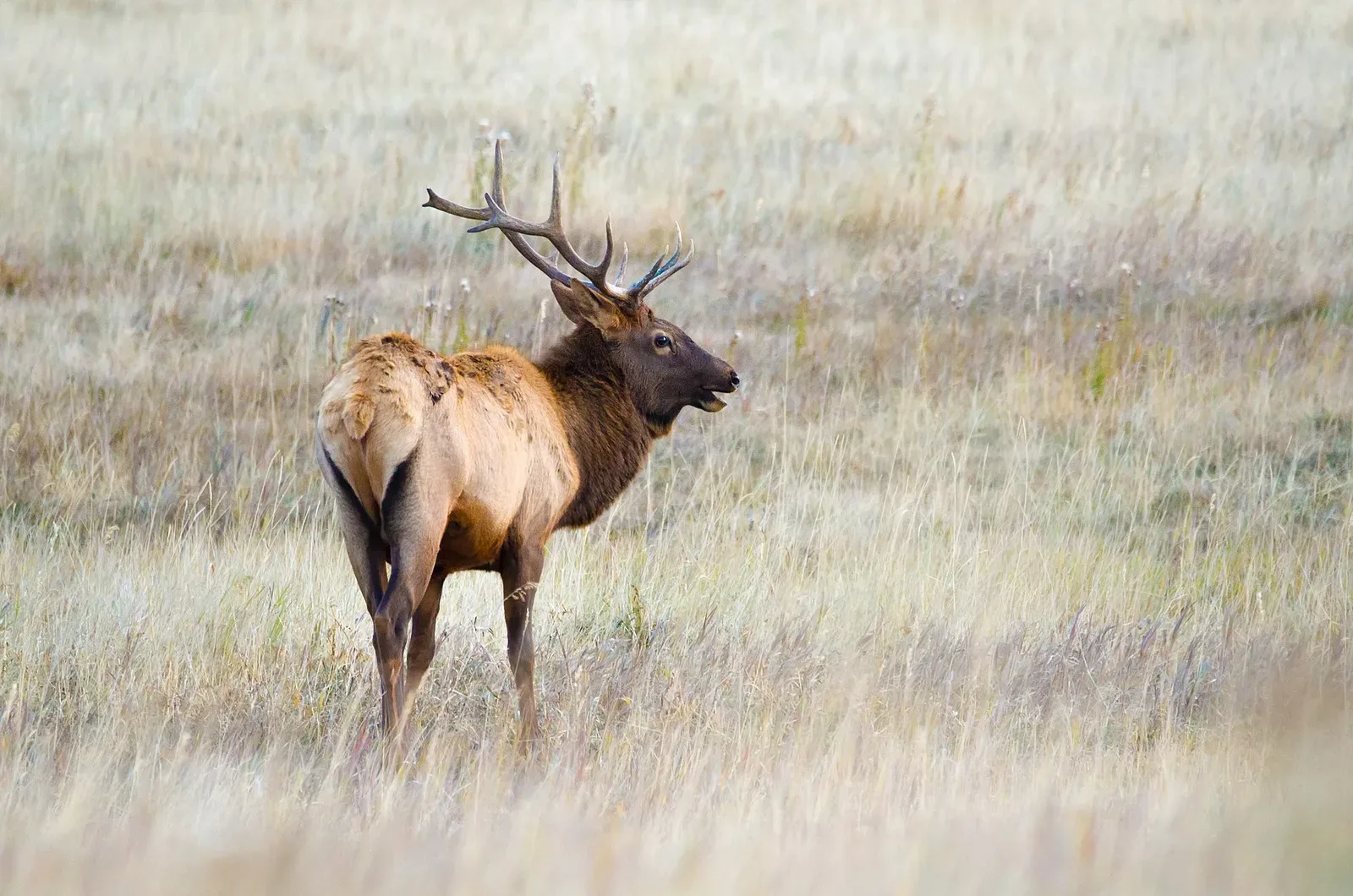
RMEF's stated mission is to ensure the future of elk, other wildlife, their habitat, and America's hunting heritage. It operates under the tagline "Hunting Is Conservation"® -- a position that reflects its core argument: that hunters, through license fees, excise taxes, and direct funding of organizations like RMEF, are the primary financial engine behind North American wildlife conservation.
"Hunting Is Conservation"® — RMEF's core argument that hunters are the primary financial engine behind North American wildlife conservation
The organization pursues that mission through four main channels:
- Acquiring and protecting habitat
- Improving and opening public access to land
- Funding and advocating for science-based wildlife management
- Educating hunters and the public about conservation
RMEF is explicit that it is pro-hunting -- not just wildlife-friendly -- and it frames those two things as inseparable.
Its current conservation goal is 10 million acres of conserved or enhanced habitat by 2030.
RMEF's four-channel approach to elk and wildlife conservation
Programs & Competitionsedit
Publications and Media
| Program | Type | Description |
|---|---|---|
| Bugle Magazine | Publication | Flagship magazine covering elk hunting and conservation |
| RMEF Elk Camp | Fundraising | Chapter-hosted dinner-auction events nationwide |
| OutdoorClass | Education | Online hunting education platform (acquired 2026) |
| Elk Country Visitor Center | Education | Public education hub in Missoula |
| Big Game Days | Event | Four-day celebration scheduled July 16-19, 2026 |
Bugle Magazine is the organization's flagship publication, covering elk hunting, conservation, and wildlife management. It's been running since RMEF's founding year and remains a member benefit.
Events and Fundraising
RMEF Elk Camp and local banquet events are the backbone of grassroots fundraising. Chapters host these events nationwide -- typically dinner-auction formats -- where the bulk of chapter-level conservation funding is raised. These aren't just fundraisers; they're where a lot of the hunter-to-hunter culture gets passed along.
Education and Outreach
OutdoorClass is an online hunting education and skills platform that RMEF acquired in early 2026. It features instructors like Randy Newberg and Corey Jacobsen and covers everything from elk calling to western hunting tactics. RMEF positions it as a way to extend hunter education beyond the traditional classroom setting, targeting both newer hunters and experienced ones looking to sharpen specific skills.
The Elk Country Visitor Center in Missoula serves as a public education hub and was undergoing renovation as of 2025, with a reopening expected later that year.
Big Game Days is a newly announced event scheduled for July 16-19, 2026 in Missoula -- a four-day gathering aimed at hunters and outdoor brands, framed as a celebration of conservation and big game hunting culture.
RMEF also funds and participates in wildlife research, reintroduction programs, and prescribed fire projects across multiple western states. The organization has been involved in elk restoration efforts that helped establish or rebuild herds in areas where populations had declined.
Membership & Benefitsedit
RMEF membership is structured around a few tiers, with the entry-level annual membership providing a Bugle magazine subscription, access to member pricing on merchandise, and eligibility to participate in chapter events and banquets. Higher tiers stack on additional gear, exclusive content, and recognition.
Members also get access to the OutdoorClass platform as part of certain membership packages following RMEF's 2026 acquisition of that platform.
| Membership Tier | Core Benefits | Additional Perks |
|---|---|---|
| Entry Level | Bugle magazine subscription | Member pricing on merchandise |
| Chapter event eligibility | Access to local banquets | |
| Higher Tiers | All entry-level benefits | Exclusive gear and content |
| OutdoorClass platform access | Special recognition |
Chapter banquets are where membership gets tangible fast -- tickets to these events typically include dinner, access to raffles and live auctions, and the direct knowledge that money raised at that table is staying close to home for local conservation projects. The chapter network spans all 50 states, though the density is heaviest in the West.
Volunteer opportunities are substantial. RMEF runs on 11,000+ volunteers who help with:
- Organize chapter events and banquets
- Conduct public outreach and education
- Support on-ground conservation projects
- Advocate for hunting access and wildlife management
For people who want to do more than write a check, there's genuine work available.
Notable Achievementsedit
Conservation Metrics
| Achievement Category | Metric | Details |
|---|---|---|
| Habitat Conservation | 9.1 million acres | Conserved or enhanced as of 2025 |
| Public Access | 1.6 million acres | Previously inaccessible land opened |
| Conservation Projects | Nearly 15,000 | Lifetime projects completed |
| Chapter Network | 500+ chapters | Operating across all US states |
| Volunteer Base | 11,000+ | Active volunteers nationwide |
| Project Pace | ~1 square mile/day | Average habitat conserved since founding |
Advocacy Victories
On the advocacy side, RMEF played a prominent role in defeating Colorado Proposition 127 in 2024 -- a ballot measure that would have banned mountain lion and bobcat hunting and broadly restricted wildlife management tools. RMEF funded opposition efforts and served as a public voice against the measure.
The organization also filed to intervene in a federal lawsuit brought by environmental groups seeking to return gray wolves in the northern Rocky Mountains to Endangered Species Act protections -- a move that put RMEF squarely in the middle of one of the most contentious wildlife management debates in the West.
Structure & Governanceedit
RMEF is a 501(c)(3) nonprofit. It is governed by a Board of Directors, with Fred Lekse serving as board chair as of 2025. Day-to-day operations are run by Kyle Weaver, who holds the title of President and CEO.
The chapter structure is decentralized by design -- local chapters raise funds independently through banquets and events, and a portion of that money flows back to fund projects in or near the chapter's geography. This keeps local hunters invested in the work and gives chapters real ownership over their conservation footprint.
RMEF publishes annual reports and makes financial information available, which is standard for a major nonprofit of its size. It consistently receives favorable ratings from charity watchdog organizations, though prospective donors should always verify current ratings independently.
Relationship to Other Organizationsedit
RMEF operates in a space shared by several other species-specific hunting and conservation organizations -- Ducks Unlimited for waterfowl, the National Wild Turkey Federation for turkeys, Pheasants Forever for upland birds, and the Mule Deer Foundation for mule deer. RMEF's founders specifically noticed the gap that elk occupied and built the organization to fill it.
RMEF works alongside federal and state land management agencies -- the U.S. Forest Service, Bureau of Land Management, U.S. Fish & Wildlife Service, and various state fish and wildlife agencies -- on habitat projects and access agreements. Much of what RMEF does on the ground requires that kind of coordination, since most elk habitat sits on public land managed by one of those agencies.
RMEF has also partnered with onX Maps on public access mapping and promotion, and with OutdoorClass (now an RMEF subsidiary) on hunter education content.
The organization positions itself as complementary to -- rather than competitive with -- broader conservation groups, though its explicitly pro-hunting stance puts it in occasional tension with organizations that advocate for wildlife management approaches that restrict or eliminate hunting as a tool.
The BGC Takeedit
Who Should Join
Worth joining? For elk hunters, yeah -- pretty straightforwardly. The membership cost is low relative to what an elk hunt costs you in time, tags, and gear, and the conservation work RMEF does directly affects the public land elk hunting that most of its members depend on.
For elk hunters, the membership cost is low relative to what an elk hunt costs you in time, tags, and gear, and the conservation work directly affects the public land elk hunting that most members depend on.
If you hunt elk on public land in the West, RMEF has almost certainly worked on habitat or access in areas you've hunted.
Who benefits most? Western public land elk hunters get the most direct return. If you're a whitetail hunter in the Midwest who's never chased elk and doesn't plan to, the connection is more philosophical than practical -- though the public land access work has implications beyond elk specifically.
The chapter banquet model is genuinely effective at keeping money local and volunteers engaged. It's also a good way to meet other hunters in your area who give a damn about the same things you do. That's not nothing.
Known Criticisms
The criticisms worth knowing about: Some hunters and wildlife managers have pushed back on RMEF's positions regarding predator management -- specifically wolf and grizzly bear populations -- arguing the organization has been either too aggressive or not aggressive enough depending on who you ask.
RMEF's intervention in the wolf Endangered Species Act lawsuit signals a clear stance in favor of state management authority over federal ESA protections, which will land differently depending on your views on that debate. There's also a reasonable question about how much of the 9.1 million acres figure represents true permanent protection versus temporary enhancements or easements that could change over time.
RMEF's accounting methodology combines acquisitions, conservation easements, and habitat enhancement projects into a single number, which is common in the nonprofit conservation world but worth understanding before you take the headline figure at face value.
None of that is a reason to avoid RMEF -- it's just context for what you're actually supporting when you join. For elk hunters who want their dollars doing something concrete for the animals and country they hunt, it's one of the more direct pipelines available.
Referencesedit
- Rocky Mountain Elk Foundation. "History." rmef.org/history/. Accessed February 2026.
- Rocky Mountain Elk Foundation. "RMEF Celebrates 41 Years of Conservation and Hunting Advocacy by Looking Ahead." rmef.org. May 13, 2025.
- Rocky Mountain Elk Foundation. Homepage. rmef.org. Accessed February 2026.
- Rocky Mountain Elk Foundation. "What RMEF Has Done for You Lately." rmef.org/media/what-rmef-has-done-for-you-lately/. Accessed February 2026.
- Wikipedia contributors. "Rocky Mountain Elk Foundation." Wikipedia. Accessed February 2026.
Last Updated: February 24, 2026
- Quail Creek Plantation(Okeechobee, FL)
- 2aHawaii(Honolulu, HI)
- Boston Firearms(Everett, MA)
- Safeshoot(Kingston, NY)
Loading comments...