State Details
Rhode Island

Overview | |
|---|---|
State | Rhode Island (RI) |
Capital | Providence |
Statehood | 1790 |
Population | 1,095,610 |
Gun Ownership | 14.8% |
Active FFLs | 55 |
Carry Laws | |
Constitutional Carry | No |
Open Carry | Yes |
CCW Permit Available | Yes |
Permit Reciprocity | limited |
Self-Defense | |
Castle Doctrine | Yes |
Stand Your Ground | No |
Duty to Retreat | Yes |
Regulations | |
State Preemption | No |
Red Flag / ERPO | Yes |
Waiting Period | 7 days |
Universal BGC | Yes |
NFA Items | Partial |
Assault Weapons Ban | No |
Magazine Limit | 10 rounds |
Key Legislation | |
| |
Notable Manufacturers | |
| |
Rhode Island Firearms History
Reference article
From The Boise Gun Club Handbook
Overviewedit
Rhode Island is the smallest state in the union, but its firearms history punches well above its weight. From one of the earliest mandatory-carry laws in colonial America to the first state-level automatic weapons ban in the country, Rhode Island has a habit of being first — in both directions.
The same colony that required every man to show up armed to public meetings in 1639 is now the state where buying a handgun requires a safety certificate, a waiting period, and a background check layered on top of the federal one.
Rhode Island was founded by dissidents and that independent streak runs through its gun history — from mandatory carry in 1639 to the nation's first automatic weapons ban in 1927.
That tension isn't an accident. Rhode Island was founded by Roger Williams as a refuge for dissidents, and that independent streak runs through its gun history as much as anything else. It was a manufacturing state before it was a regulatory one — Providence gunsmiths armed Continental soldiers, and a Rhode Island governor's carbine design equipped Union cavalry. The state built weapons for a century and a half before it started restricting them.
What you have today is a small, densely populated state where the rural-urban divide over firearms is real and consequential. The western and southern reaches of the state have genuine hunting culture, competitive shooters, and working farms where a shotgun behind the door makes practical sense. Providence and its suburbs have the political weight to pass laws those communities would never vote for on their own. That's the honest picture.
Colonial & Frontier Eraedit
Early Settlement Defense
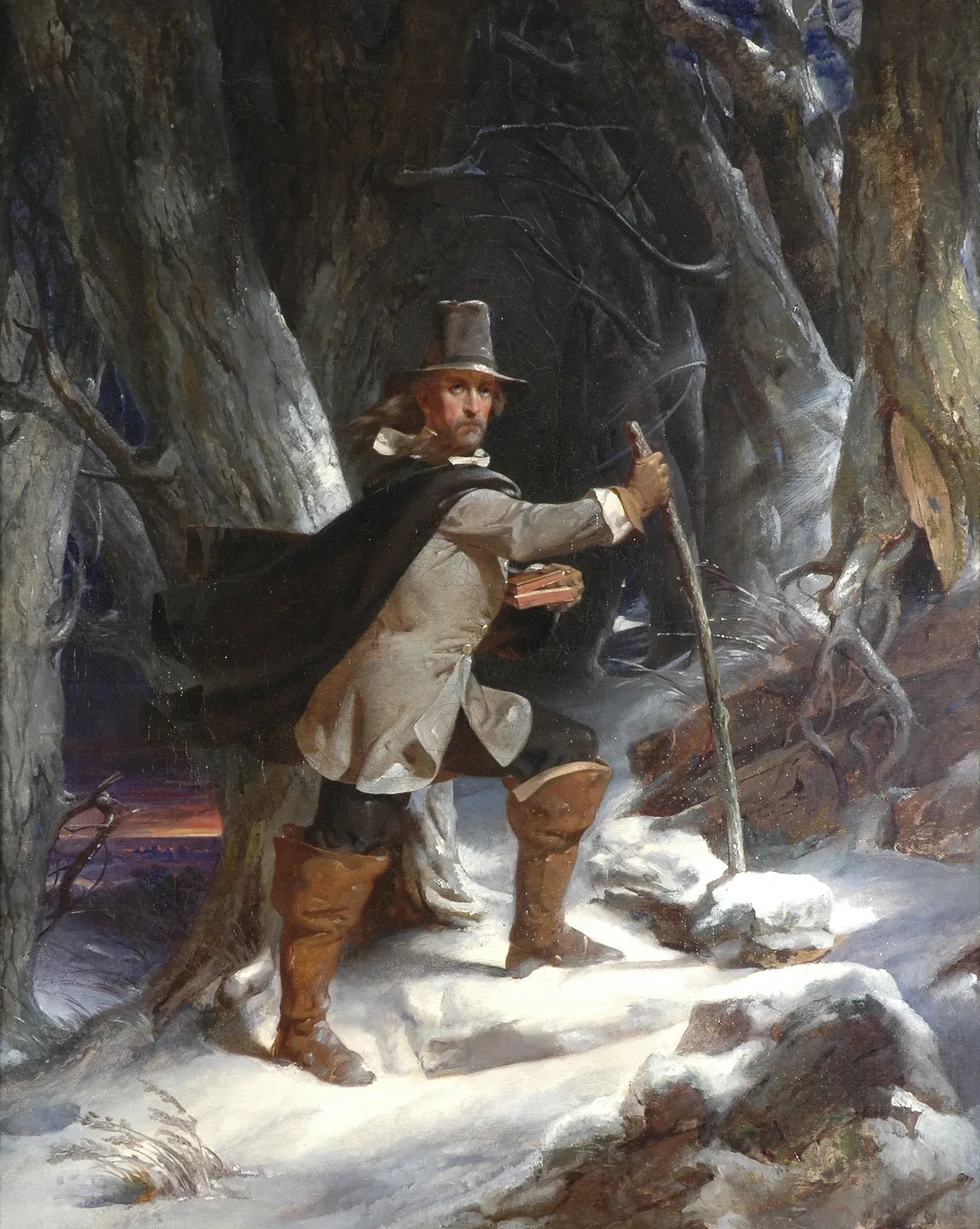
Rhode Island's relationship with firearms goes back to its founding year. In 1639 — just three years after Roger Williams established Providence — the colony passed a law ordering that "none shall come to any public Meeting without his weapon," with a fine of five shillings for showing up unarmed. That's not a curiosity. That's a functioning colony on contested ground treating an armed populace as a baseline civic requirement, not an afterthought.
None shall come to any public Meeting without his weapon, with a fine of five shillings for showing up unarmed. — Rhode Island Colonial Law, 1639
The context matters. The Narragansett and Wampanoag nations surrounded the early settlements, and relations were uneasy from the start. Roger Williams himself maintained better relationships with Indigenous leaders than most colonial governors, but the broader colony operated in a state of low-grade tension that made the militia question a live one. Every able-bodied man was expected to be armed and ready, because the alternative was a settlement that couldn't defend itself.
| Year | Event | Significance |
|---|---|---|
| 1639 | Mandatory carry law enacted | Colony requires all men to carry weapons to public meetings |
| 1675-1676 | King Philip's War | Deadliest conflict proportionally in American history; Providence attacked |
| 1676 | Providence destroyed | March attack demonstrates need for armed militia |
King Philip's War Impact
King Philip's War (1675–1676) made that concern concrete. Metacom — called King Philip by the English — led a coordinated multi-tribal uprising against New England colonists that remains, proportionally, one of the deadliest conflicts in American history. Rhode Island settlements burned.
Providence was attacked and largely destroyed in March 1676. The war demonstrated exactly why the colony's militia laws existed, and it reshaped how Rhode Islanders thought about armed readiness for generations. The colony that had welcomed dissenters and maintained relative peace with its neighbors learned in brutal terms what happened when that peace broke.
Colonial Manufacturing
Colonial Rhode Island's gunsmiths operated primarily in Providence and Newport, producing and repairing flintlock muskets, pistols, and the fowling pieces that doubled as hunting arms and militia weapons. The trade was small by Massachusetts or Pennsylvania standards — Rhode Island's economy leaned heavily on maritime commerce and the slave trade — but local smiths were a functioning part of the colony's arms supply chain. Powder was a chronic shortage problem, and the colony maintained powder houses at several locations, including the Providence Powder House that still stands in North Providence today.
Revolutionary Eraedit
Path to Independence
When the Revolution came, Rhode Island was already ahead of most colonies in its institutional hostility to British authority. The burning of the HMS Gaspee in 1772 — when Providence merchants and a deputy sheriff led a raid that torched a British revenue schooner that had run aground near Warwick — preceded the Boston Tea Party by more than a year. Rhode Island declared independence from Britain on May 4, 1776, two months before the Continental Congress got around to it.
| Date | Event | Rhode Island Role |
|---|---|---|
| 1772 | HMS Gaspee burned | Providence merchants raid British revenue ship |
| May 4, 1776 | RI declares independence | Two months before Continental Congress |
| August 1778 | Battle of Rhode Island | First significant use of Black soldiers in combat |
| May 29, 1790 | Constitution ratified | Last of original 13 states to join Union |
Wartime Manufacturing
The problem, as everywhere in 1775–1776, was weapons. The Continental Army needed muskets, powder, flints, and bayonets in quantities that no colony could supply from existing stock. Rhode Island's response was practical: Providence became a center of wartime manufacturing, with a network of artisans — blacksmiths, gunsmiths, founders, and millwrights — retooling for military production. The "call to arms" network in Providence coordinated production among craftsmen who had previously worked independently, turning a cottage industry into something closer to organized supply.
Revolutionary War arms production network in Providence
Military Leadership
Jeremiah Olney, who commanded a Rhode Island regiment and later became a customs collector under Washington, represents the kind of officer-class connection between arms supply and field command that ran through the state's Revolutionary participation. The 1st Rhode Island Regiment — notable for being one of the few racially integrated combat units in the Continental Army, including a significant number of Black soldiers who had been promised freedom for their service — relied on whatever weapons could be scrounged, repaired, or manufactured locally.
General Nathanael Greene, born in Potowomut (now Warwick) in 1742, became the Continental Army's most capable operational commander after Washington himself. Greene's management of supply chains, including arms and powder, was a significant part of his military contribution — he understood logistics in a way many of his contemporaries didn't. His Southern Campaign, where he wore down Cornwallis through strategic retreat and attrition, required keeping an army armed and functional under conditions that would have broken a less organized commander.
Rhode Island was also the site of the Battle of Rhode Island in August 1778 — the first significant use of Black soldiers in American combat — fought largely around Portsmouth on Aquidneck Island. The retreat of American forces after French naval support failed was covered by the Black Regiment, whose stand at Butts Hill bought time for the withdrawal. The firearms those men carried — a mix of Continental-issue muskets and locally sourced arms — were the same tools that made that rear guard action possible.
Constitutional Ratification
Rhode Island was also the last of the original thirteen states to ratify the Constitution, holding out until May 29, 1790, after the new government had already been operating for over a year. The state's reluctance had multiple causes — small-state suspicion of federal power, mercantile interests, paper money politics — but it fits the pattern of a state that guarded its autonomy jealously, including on questions of militia and arms.
19th Century: Statehood & Expansionedit
Industrial Foundation
Rhode Island entered the 19th century as a state in the middle of industrializing, and that transformation would define its relationship to firearms manufacturing for the next hundred years. The same water power that drove the Slater Mill in Pawtucket — the start of American textile manufacturing — also powered the machine shops and small foundries that turned out metal goods, including firearms components.
Burnside Carbine Era
The name that dominates Rhode Island's 19th-century firearms story is Ambrose Burnside. Born in Indiana, Burnside settled in Bristol, Rhode Island after leaving the Army, and in 1853 he established the Bristol Firearms Company to manufacture his patented breech-loading carbine design.
The Burnside Carbine used a distinctive brass cartridge with a conical hole in the base — an early metallic cartridge design — loaded through a pivoting breech mechanism. It was one of the cleanest and most reliable designs of its era.
Timeline of the Burnside Carbine from invention to political career
Burnside's business struggled financially, and he was eventually pushed out of the company he founded. The Bristol Firearms Company reorganized and continued production, ultimately delivering approximately 55,000 Burnside Carbines to Union forces during the Civil War — making it the third most widely used carbine in the conflict. Burnside himself went on to command the Army of the Potomac (disastrously at Fredericksburg in December 1862), serve as governor of Rhode Island from 1866 to 1869, and serve three terms as a U.S. Senator. The sideburns named after him are his most durable legacy, but the carbine that armed Union cavalry is the more consequential one.
| Manufacturer | Product | Period | Production Numbers |
|---|---|---|---|
| Bristol Firearms Company | Burnside Carbine | 1853-1865 | ~55,000 units |
| Providence Tool Company | Peabody Rifles | Post-Civil War | ~100,000 units |
| Various Providence smiths | Artillery components | 1861-1865 | Unknown quantities |
Civil War Production
The Civil War brought Rhode Island into the conflict with notable intensity given its size. The state contributed multiple infantry regiments, artillery batteries, and cavalry units. Rhode Island's 2nd Infantry was among the first Union regiments to arrive in Washington after Fort Sumter. The industrial base that had been building for decades — machine shops, foundries, textile mills — was redirected toward war production. Providence manufacturers produced not just Burnside's carbines but also artillery components, edged weapons, and military accoutrements.
Providence Tool Company, operating in the post-Civil War period, secured contracts to produce Peabody rifles — a single-shot breech-loading design by Henry O. Peabody of Boston that was manufactured in Providence. The Peabody action was subsequently licensed to Swiss designer Friedrich von Martini, producing the Martini-Henry that became the standard British Army rifle. Providence Tool produced somewhere in the range of 100,000 Peabody rifles for export, primarily to the Ottoman Empire, France, and several South American nations. Rhode Island, in other words, was arming the world's militaries from a factory on the Providence River.
The Dorr Rebellion
The Dorr Rebellion of 1842 deserves mention in any honest account of Rhode Island firearms history. Thomas Dorr led an armed insurrection against the established state government, which was still operating under the 1663 Royal Charter and restricting suffrage to property owners. Dorr's forces — armed with whatever they could gather — attempted to seize the Providence Arsenal in May 1842. The attempt failed, the arsenal held, and Dorr was arrested and convicted of treason. But the rebellion forced a new state constitution that dramatically expanded suffrage. It's a case where the threat of armed political action produced constitutional change, even when the armed action itself failed.
20th Century: Wars, Industry & Regulationedit
Early Federal Era
Rhode Island's manufacturing identity carried into the 20th century, but the firearms industry had largely consolidated elsewhere — Connecticut's Winchester and Colt, Springfield's armory in Massachusetts — by the time World War I arrived. Rhode Island's contribution to the war effort was primarily through its broader industrial base: metalworking, textiles for uniforms, and jewelry manufacturers that converted to military production.
Brown University in Providence, Rhode Island School of Design, and the state's network of technical schools fed engineers and machinists into the defense industry. Davol Rubber Company and other manufacturers converted to war production. The state's naval tradition — Rhode Island's coast and Narragansett Bay had been strategically important since the Revolution — made Newport a center of Navy activity, including the Naval War College that had been operating there since 1884.
| Year | Legislation/Event | Impact |
|---|---|---|
| 1927 | Automatic weapons ban | First state-level prohibition, predates federal NFA by 7 years |
| 1934 | Federal NFA enacted | National regulation follows Rhode Island model |
| 1941 | Quonset Point established | Major naval aviation facility |
| 1968 | Gun Control Act | Federal dealer licensing affects all states |
First Automatic Weapons Ban
The most significant legislative moment in early 20th-century Rhode Island firearms history came in 1927, when the state passed a prohibition on the manufacture and sale of automatic machine guns. This made Rhode Island the first state in the country to ban automatic weapons — seven years before the federal National Firearms Act of 1934 addressed the same problem at the national level. The context was the gangster era: the same Thompson submachine guns showing up in Chicago were showing up in Providence, which had its own organized crime presence, and the state legislature moved before Congress did.
World War II Expansion
World War II brought significant military investment to Rhode Island. Quonset Point Naval Air Station, established in 1941 on the western shore of Narragansett Bay, became a major naval aviation facility. Davisville hosted the Navy's Construction Battalion (Seabee) training center — the Naval Construction Training Center that trained the engineer-combat troops who built airstrips and fortifications across the Pacific. Newport expanded as a major Navy base and training command. The state's economy was deeply tied to military spending throughout the war and into the Cold War.
Cold War Defense Industry
Raytheon, which established significant operations in Rhode Island, became a major defense contractor in the missile and electronics space — not a firearms manufacturer, but representative of how Rhode Island's industrial capacity shifted from guns to guidance systems and defense electronics over the course of the 20th century.
The Gun Control Act of 1968 affected Rhode Island as it did every state, imposing federal dealer licensing requirements and prohibitions that layered onto the state's existing regulations. Rhode Island had maintained a relatively permissive framework through mid-century, but the national conversation around firearms that followed the assassinations of Robert Kennedy and Martin Luther King Jr. in 1968 shifted the political climate everywhere, including in a small northeastern state where urban Democrats were gaining durable legislative majorities.
Modern Era (2000–Present)edit
Legislative Restrictions
The modern era in Rhode Island firearms law is a story of incremental restriction passed by a Democratic-dominated legislature against persistent opposition from the state's rural and suburban gun owners. The state operates under significant tension between its permissive concealed carry statute — Rhode Island is technically shall-issue for concealed carry permits — and a body of substantive law that restricts what you can carry and how you can acquire it.
Rhode Island requires a safety certificate for handgun purchases, obtained through a licensed instructor, plus a seven-day waiting period and background check for all handgun sales. The state bans large-capacity magazines (defined as over ten rounds) and maintains restrictions on so-called assault weapons, though the definitional specifics have been a point of ongoing legislative and legal contest.
Post-Bruen Adjustments
The Rhode Island Extreme Risk Protection Order (ERPO) law, passed in 2018, allows courts to temporarily remove firearms from individuals deemed a risk to themselves or others. Rhode Island was among the earlier states to adopt this framework, doing so in the same political window that followed the Parkland shooting in February 2018. The law allows family members, household members, and law enforcement to petition the court — a broader petitioner class than some other states.
Recent legal developments in Rhode Island firearms law
In 2022, following the Bruen decision from the U.S. Supreme Court, Rhode Island's concealed carry framework got complicated. NYSRPA v. Bruen struck down New York's proper-cause requirement for carry permits, and because Rhode Island's permitting scheme had operated on a nominally shall-issue basis (though with discretionary elements depending on the issuing authority — either the local police chief or the Attorney General), the practical impact was less disruptive than in states with explicit may-issue regimes. The state moved to clarify its shall-issue posture in the aftermath.
A 2023 law raised the minimum age to purchase assault-style weapons to 21 — matching the handgun purchase age — and tightened several existing provisions. The legislature has consistently pushed toward stricter regulation with near-party-line votes, and the governor's office has signed those bills reliably.
Gun Culture Persistence
The state's gun culture operates in that political environment but doesn't disappear because of it. South County (Washington County), Kent County, and the western reaches of Providence County have genuine hunting traditions — deer, turkey, and waterfowl — and competitive shooting at ranges like the Addieville East Farm pheasant operation and various fish and game clubs throughout the state. The Rhode Island Council on Domestic Animals and the state's Division of Fish and Wildlife manage hunting seasons that draw consistent participation.
Rhode Island's hunting license data reflects the state's size — it's never going to compete with Montana or Wisconsin in raw numbers — but the per-capita participation in rural areas is real. The state's Right to Hunt and Fish amendment, which voters approved in 2020 as an amendment to the state constitution, was a direct pushback from the rural and sporting community against the direction of legislative policy. It passed with about 53% of the vote, which in a state that reliably votes Democratic in federal elections says something about where the base of gun-culture support actually sits.
Notable Figures & Manufacturersedit
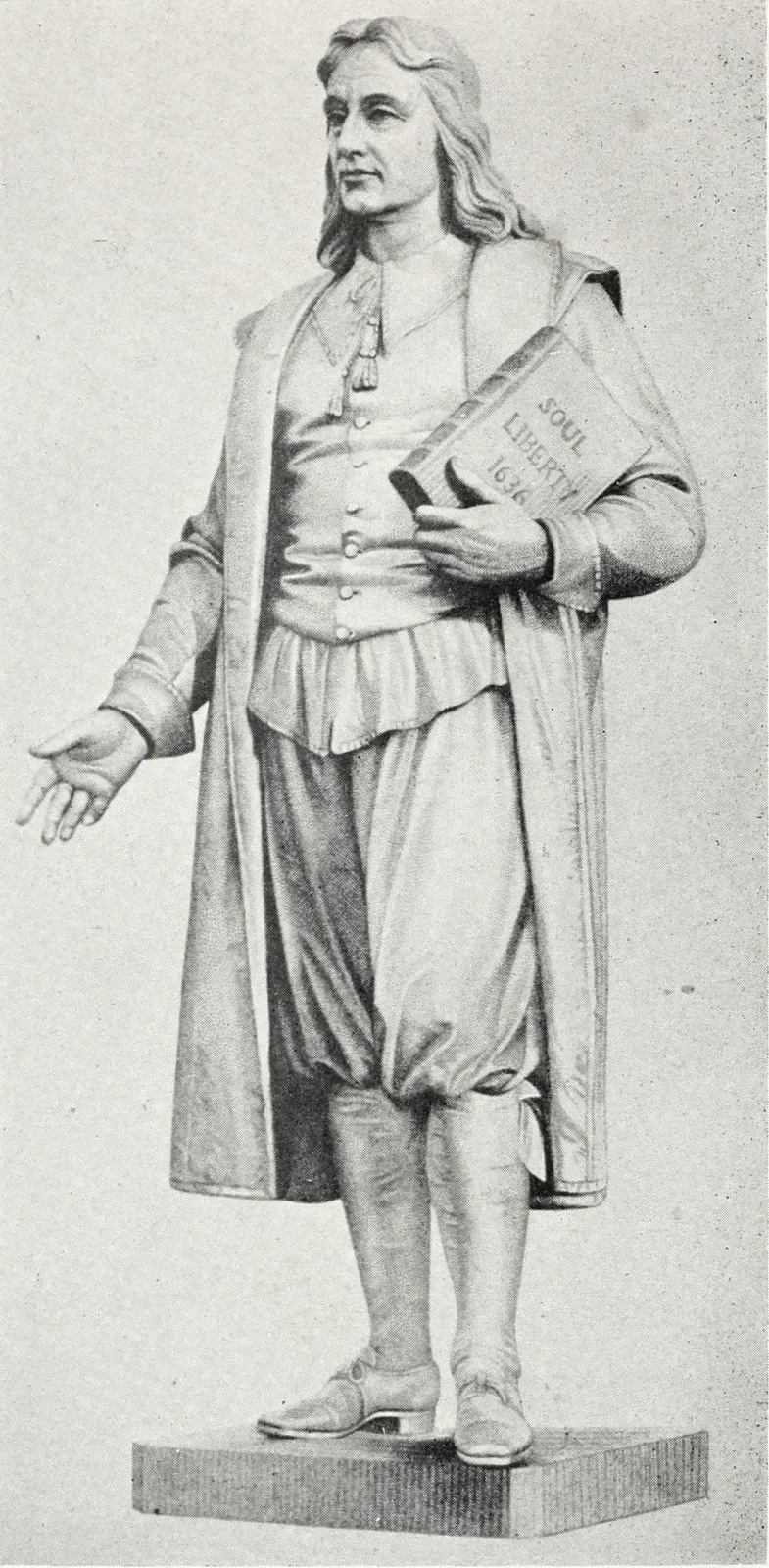
Ambrose Burnside (1824–1881) is the central figure in Rhode Island firearms manufacturing. His carbine design, whatever his battlefield failures, was a genuine technical achievement — the Burnside Carbine's brass cartridge predated widespread metallic cartridge adoption and the action was reliable under field conditions. He served as governor and senator after the war and is buried in Swan Point Cemetery in Providence.
Henry O. Peabody (1817–1888) designed the Peabody rifle that the Providence Tool Company manufactured in large numbers for export. The action's influence on the Martini-Henry — the rifle that armed British forces from the Battle of Isandlwana to the Northwest Frontier — gives a Providence-manufactured design an outsized place in Victorian military history.
Providence Tool Company operated from the 1850s through the late 19th century and represents Rhode Island's most significant period of large-scale arms manufacturing for military contracts. At its peak production for foreign military contracts, it was one of the more productive rifle manufacturers in the northeastern United States.
Nathanael Greene (1742–1786) is Rhode Island's greatest military figure — born in Warwick, he rose from a Quaker background that initially rejected his military ambitions to become Washington's most trusted general. His operational genius was as much about supply and logistics as tactics, and his understanding of how to keep an army armed and moving shaped the Southern Campaign's outcome.
The Bristol Firearms Company (later reorganized as the Burnside Rifle Company) produced the Burnside Carbine from its Bristol facility. The company's financial history was turbulent — Burnside himself lost control of it — but the manufacturing output was consequential to the Union war effort.
Colt's Hartford operation is often credited with dominating New England arms manufacturing, but Rhode Island's contributions through Providence Tool and Bristol Firearms represent a distinct tradition of smaller-scale but technically significant production that's easy to overlook against the larger Connecticut manufacturers.
Current Legal Landscapeedit
Rhode Island sits in the restrictive tier of American state firearms law — not as tight as New Jersey or Massachusetts, but clearly in that neighborhood and moving in the same direction. Here's where it actually stands:
Purchase Requirements
| Category | Requirement | Details |
|---|---|---|
| Handgun Purchase | Safety certificate | Valid 5 years, licensed instructor required |
| Waiting period | 7 days mandatory | |
| Background check | All sales including private transfers | |
| Minimum age | 21 years | |
| Carry Permits | Authority | Local police chief or Attorney General |
| Standard | Shall-issue (legally) | |
| Recognition | No reciprocity with other states | |
| Prohibited Items | Magazines | Over 10 rounds banned |
| Suppressors | State prohibition (stricter than federal) | |
| Machine guns | Banned since 1927 |
Carry Laws
Concealed carry permits are issued by either the local police chief or the Attorney General — shall-issue in statute, though local discretion has historically varied. There is no permitless (constitutional) carry. Carry is prohibited in schools, courthouses, and various other sensitive locations.
Prohibited Items
- Magazines over ten rounds are banned
- Automatic weapons prohibited (going back to the 1927 law)
- Suppressors are prohibited under state law (more restrictive than federal law alone)
- "Assault weapons" as defined by state statute are subject to restriction, though the definitional scope has been a point of ongoing legislative refinement
Other Provisions
- Extreme Risk Protection Orders (red flag law) since 2018
- Safe storage requirements for homes with children under 18
- Mandatory reporting of lost or stolen firearms within 24 hours
- Ghost gun provisions targeting unserialized firearms, passed as part of 2022–2023 legislation
The state does not have a preemption law in the strong form that some states use to block local ordinances from exceeding state law. Providence and other municipalities have occasionally pursued their own restrictions, though the overlap with state law limits the practical space for local addition.
Enforcement Reality
Rhode Island does not recognize concealed carry permits from any other state. If you're driving through from Vermont with your permit, you're effectively disarmed the moment you cross the border, since Rhode Island doesn't have constitutional carry either. Plan accordingly.
The Rhode Island Attorney General's office handles the state-level permit process, and that office has been held by Democrats for the past two decades. The practical experience of applicants — processing time, scrutiny of applications — reflects that institutional context.
The BGC Takeedit
Rhode Island is an honest test case for what happens when a small, urbanized state's political majority gets durable control of the legislature. The gun laws here have tightened consistently since the mid-2000s, and there's no structural reason to expect that trend to reverse.
Rhode Island is an honest test case for what happens when a small, urbanized state's political majority gets durable control of the legislature.
The state's congressional delegation is uniformly Democratic, the legislature runs 2-to-1 Democratic in both chambers, and the governor has signed every major restriction that's come to the desk.
For gun owners in Rhode Island, the practical reality is that you can still hunt, you can still shoot competitively, and you can still own a reasonable battery of firearms for home defense and sporting use. What you can't do is own a standard-capacity magazine for most modern semi-automatic rifles and pistols, buy a suppressor through normal NFA channels (they're banned under state law regardless of federal approval), or carry across state lines without checking whether the other state recognizes anything from Rhode Island (almost none do, and Rhode Island recognizes nothing in return).
The rural-urban divide is the realest thing about Rhode Island gun culture. Drive through Exeter, Hopkinton, or Burrillville and you're in a world that looks a lot like rural New Hampshire — farms, woods, working trucks, hunting camps. Drive into Providence or Pawtucket and the political culture is indistinguishable from any other northeastern city. Those two Rhode Islands coexist in a state where the urban side has enough population to determine legislative outcomes almost every time. The Right to Hunt and Fish constitutional amendment passing in 2020 was a genuine win for the sporting community, but it doesn't have teeth against legislation that restricts the tools rather than the activity.
What Rhode Island gets right: the shall-issue structure for concealed carry is real, even if the processing experience varies by jurisdiction. The state hasn't gone full may-issue in practice even though it probably could politically. And there's a functional sporting community here — ranges, clubs, hunting traditions, competitive shooters — that operates within the regulatory framework and isn't going anywhere.
What Rhode Island gets wrong: banning suppressors when the federal NFA process already regulates them is pure politics, not public safety. The magazine cap at ten rounds affects every common defensive handgun and most modern sporting rifles — that's not a fringe restriction, it's a direct hit on the most popular defensive tools. And the layered handgun purchase requirements (safety certificate plus waiting period plus background check) stack compliance costs on law-abiding buyers in ways that don't touch the illegal market at all.
If you're moving to Rhode Island for work, or you're already there — get the safety certificate, get the carry permit processed through the AG's office rather than relying on local discretion, and know what you can and can't own before you bring your collection across the border. The laws are knowable, they're enforced, and the penalties for non-compliance are real in a state this small where law enforcement density is high.
The colony that fined you five shillings for showing up to a public meeting unarmed in 1639 will now fine you considerably more for showing up with the wrong magazine.
Referencesedit
- Rhode Island General Laws § 11-47 — Weapons (current statutory text governing firearms regulation)
- Rhode Island Secretary of State, Colonial Records of Rhode Island, Vol. I (1639 militia law documentation)
- Flayderman, Norm. Flayderman's Guide to Antique American Firearms. Gun Digest Books, 2007. (Burnside Carbine and Providence Tool Company production data)
- Hatch, Louis Clinton. The Administration of the American Revolutionary Army. Harvard Historical Studies, 1904.
- Bicknell, Thomas Williams. The History of the State of Rhode Island and Providence Plantations. American Historical Society, 1920.
- Gould, R.F. The Burnside Carbine and the Bristol Firearms Company. Arms & Armor Press, 1982.
- Rhode Island General Assembly, Acts and Resolves (1927 automatic weapons prohibition)
- Chaput, Erik J. The People's Martyr: Thomas Wilson Dorr and His 1842 Rhode Island Rebellion. University Press of Kansas, 2013.
- Giffords Law Center. Rhode Island Gun Laws. (https://giffords.org/lawcenter/gun-laws/states/rhode-island/)
- The Trace. A Timeline of American Gun History. (https://www.thetrace.org)
- Rhode Island Division of Fish and Wildlife, Annual Hunting License Reports, 2010–2024.
- Rhode Island Board of Elections, 2020 General Election Results (Question 1: Right to Hunt and Fish)
- New York State Rifle & Pistol Association v. Bruen, 597 U.S. 1 (2022)
- Battle of Rhode Island Historical Society. The Call to Arms in Rhode Island and the Community of Artisans Who Crafted Them. (https://battleofrhodeisland.org)
Last Updated: February 24, 2026
- Quail Creek Plantation(Okeechobee, FL)
- 2aHawaii(Honolulu, HI)
- Boston Firearms(Everett, MA)
- Safeshoot(Kingston, NY)
Loading comments...