Specifications
Smith & Wesson Model 29

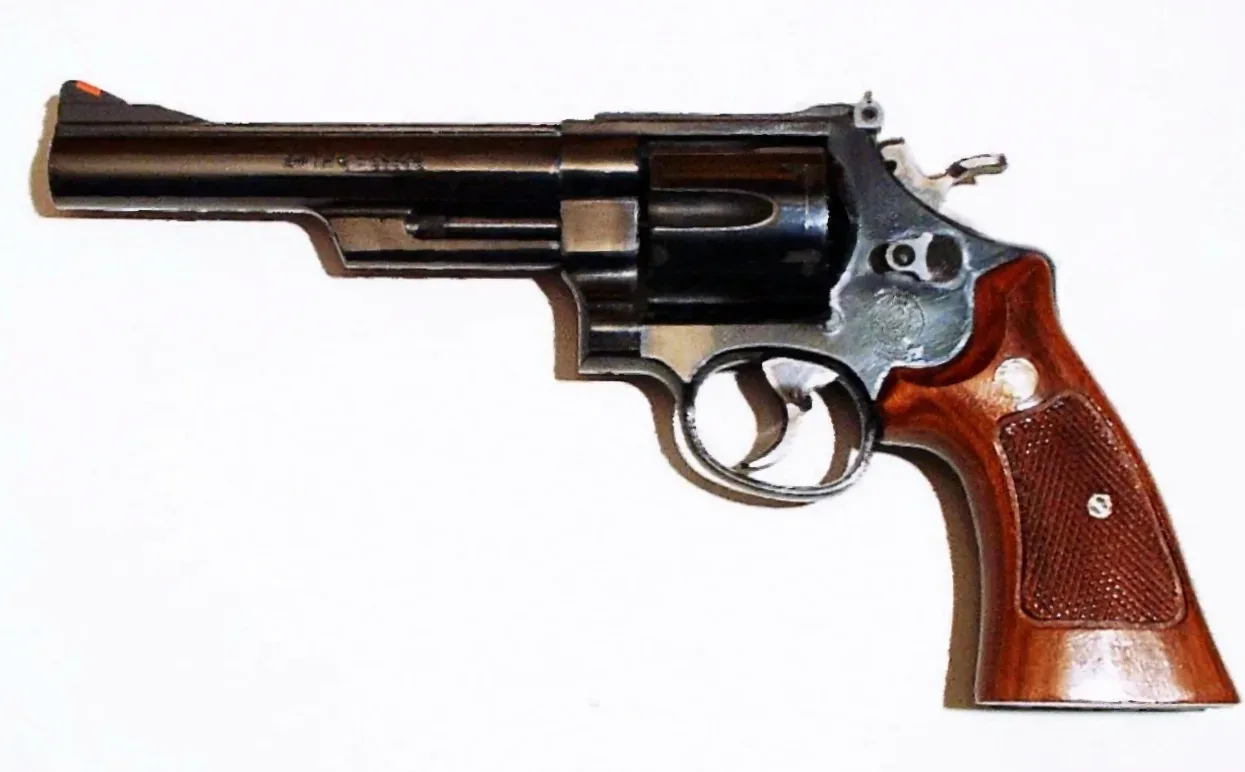
The original Smith & Wesson Model 29 (first generation, 1955–1966) with 6-inch barrel — the revolver that became legendary after its appearance in Dirty Harry.
The original uploader was Kaltduscher at German Wikipedia. (Original text: kaltduscher) (CC BY-SA 3.0)
| Manufacturer | |
|---|---|
| Made By | Smith & Wesson |
| Designer | Smith & Wesson (in collaboration with Elmer Keith and Remington Arms) |
| Origin | United States |
| Specifications | |
| Caliber | .44 Remington MagnumAlso: .44 Special |
| Action | da sa |
| Capacity | 6 rounds |
| Barrel | 3", 4", 5", 6", 6.5", 8⅜" |
| Length | 11.375" (6" barrel) |
| Weight | 47 oz (6" barrel, unloaded) |
| Feed | 6-round cylinder |
| Sights | Adjustable rear, red ramp front |
| Performance | |
| Eff. Range | ~75 yards (hunting) |
| Production | |
| Designed | 1955 |
| In Production | 1955 |
| Unit Cost | $140 (original 1955 price); $900-$1,400 (2024 standard model) |
| Variants | |
| |
| Cultural Note | |
| Achieved iconic status after appearing in the 1971 film 'Dirty Harry' starring Clint Eastwood. The film triggered massive demand that Smith & Wesson could not meet, with prices increasing 300-400% on the secondary market. The 'Dirty Harry Effect' demonstrated cinema's powerful influence on firearms sales. | |
| Related Firearms | |
| |
Smith & Wesson Model 29
Firearms encyclopedia article
From The Boise Gun Club Handbook
The Smith & Wesson Model 29 is a six-shot, double-action revolver chambered in .44 Magnum that Smith & Wesson has been making since 1955. It was the first factory gun you could buy for the .44 Remington Magnum cartridge, which Smith & Wesson developed with Remington Arms.
Most folks know it as Dirty Harry's gun from the 1971 movie, where Clint Eastwood called it "the most powerful handgun in the world." That was actually true when the movie came out.
Historyedit
Development
Key milestones in Model 29 development and cultural impact
The .44 Magnum cartridge came about because Elmer Keith -- a gun writer and handgun hunter from the old school -- had been loading .44 Special rounds way past factory specs for years. He wanted something with real punch for hunting, so he worked with engineers at Smith & Wesson and Remington in the early 1950s to make it happen.
Smith & Wesson built the Model 29 on their big N-frame, which could handle the .44 Magnum's 36,000 psi chamber pressure. The first guns shipped in 1955 at $140 -- serious money back then.
Early Production
The early Model 29s from before 1958 are what collectors really want. These guns had five screws in the sideplate, pinned barrels, recessed cylinder chambers, and diamond-checkered magna grips.
Smith & Wesson gradually cut these features to save money over the years. The older guns feel more solid because they basically are.
The early Model 29s are what collectors really want - five screws, pinned barrels, recessed chambers, and that solid feel that comes from old-school manufacturing.
The Dirty Harry Effect
When Dirty Harry hit theaters in December 1971, everything changed overnight. Smith & Wesson couldn't make them fast enough to keep up with demand. A gun that had been sitting on dealer shelves suddenly commanded premium prices -- some dealers marked them up 300-400% during the worst of the shortage.
This was probably the first time Hollywood drove gun sales this hard. It definitely wasn't the last.
| Era | Price Impact | Availability |
|---|---|---|
| Pre-1971 | Standard MSRP | Readily available |
| 1972-1974 | 300-400% markup | Severe shortage |
| 1975-1980 | 150-200% markup | Limited |
| 1981+ | Normalized | Regular production |
Specificationsedit
| Specification | Detail |
|---|---|
| Caliber | .44 Remington Magnum |
| Capacity | 6 rounds |
| Action | Double-action/Single-action |
| Frame | N-frame (carbon steel) |
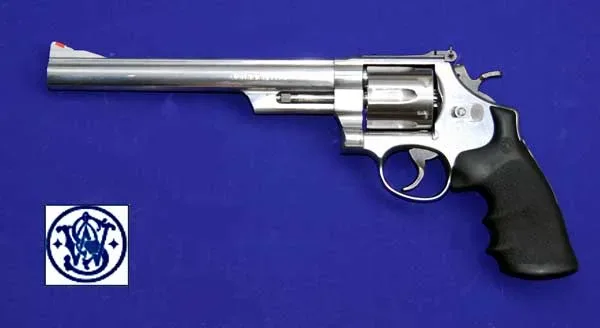
| Barrel lengths | 3", 4", 5", 6", 6.5", 8⅜" |
| Overall length | 11.375" (6" barrel) |
| Weight | 47 oz (6" barrel, unloaded) |
| Sights | Adjustable rear, red ramp front |
| Grip | Checkered walnut (standard) |
| Finish | Blued or nickel |
Variantsedit
Model 29-2 through 29-10
Smith & Wesson uses dash numbers to track engineering changes. Each time they modify something, the dash number goes up.
| Model | Year | Key Changes |
|---|---|---|
| 29-1 | 1960 | Initial production |
| 29-2 | 1961 | Removed fifth screw |
| 29-3 | 1982 | Eliminated pinned barrels |
| 29-4 | 1988 | Quit recessing chambers |
| 29-5 | 1990 | Updated hammer nose bushing |
| 29-10 | 2002 | MIM parts, internal lock |
The Model 29-2 from 1961 dropped the fifth screw. The 29-3 in 1982 eliminated pinned barrels. By the 29-4 in 1988, they quit recessing the chambers. The 29-5 in 1990 updated the hammer nose bushing.
The current 29-10 from 2002 has MIM internal parts and that internal lock system -- which most serious shooters disable or avoid.
Model 629
In 1979, Smith & Wesson released the Model 629 -- basically a stainless steel Model 29. It's actually more popular than the original blued version because stainless handles weather and neglect better.
The 629 stays in production while the blued Model 29 comes and goes depending on demand.
Model 29 Classic
The Classic version has a 6.5" full-lug barrel, interchangeable front sights, and Hogue rubber grips. Post-2001 guns have the internal lock.
Performance Center Variants
Smith & Wesson's Performance Center makes limited-run Model 29s with glass-bead finishes, action work, custom barrel lengths, and unfluted cylinders. These guns shoot better but cost more.
Model 29 variant family tree showing major production lines
Practical Considerationsedit
Recoil Management
The .44 Magnum hits you with about 18.5 ft-lbs of recoil energy - enough to hurt if you're not ready for it.
You need a solid grip technique. Most guys do better with a high thumbs-forward grip or a proper two-handed revolver grip. Lean into the gun -- don't fight it.
Those factory wood grips look nice but they'll beat up your hand. Pachmayr or Hogue rubber grips absorb more punishment. For practice, .44 Special loads give you the same manual of arms with half the kick.
Hunting Applications
The Model 29 works for hunting if you know its limits. You can take:
- Whitetail deer out to 75 yards
- Wild boar at reasonable ranges
- Black bear with proper loads
For hunting, you want heavy hard-cast bullets -- 300 grains or more. They penetrate deeper than hollow points and won't come apart on bone.
Collecting
The bottom line: Pre-1958 guns command serious money, especially the pre-29 .44 Magnums from 1955-1957 that can hit $8,000+ in good shape.
| Variant | Approximate Market Value (2024) |
|---|---|
| Pre-29 .44 Magnum (1955-1957) | $3,500 - $8,000+ |
| 5-screw Model 29 | $2,500 - $5,000 |
| 8⅜" nickel | $1,800 - $3,000 |
| Standard 6" blued (good condition) | $900 - $1,400 |
Cultural Impactedit
Dirty Harry made this gun famous, but it kept showing up in movies and games:
- Dirty Harry (1971)
- Magnum Force (1973)
- Sudden Impact (1983)
- The Dead Pool (1988)
- Taxi Driver (1976)
- Resident Evil video game series
Smith & Wesson still releases "Dirty Harry" commemorative editions when they think the market can handle another one.
The BGC Takeedit
The Model 29 is a solid revolver that does exactly what it's supposed to do -- launch big, heavy bullets at high velocity. The older guns feel more substantial because they are, but even the current production guns work fine if you can find one.
Is it practical? Depends what you're doing with it. For hunting or just because you want one, sure.
For daily carry, you're looking at nearly three pounds of gun that holds six shots. There are better options for that job.
The .44 Magnum cartridge isn't the most powerful handgun round anymore, but it's still plenty powerful enough for anything you're likely to point it at.
Factory ammo is everywhere, and it's still plenty capable.
If you want one, buy it. Just understand what you're getting into with the recoil and weight.
See Alsoedit
- .44 Remington Magnum
- Smith & Wesson Model 629
- Smith & Wesson N-frame
- Ruger Super Redhawk
- Desert Eagle
- Gls Guns(Sumner, IA)
- Bi-mart - Yakima (Fruitvale Ave)(Yakima, WA)
- New Philly Sportsman Specialities(New Philadelphia, OH)
- R&R Sports & Outdoors(Brandon, FL)
Loading comments...