Legal Details
Legislation

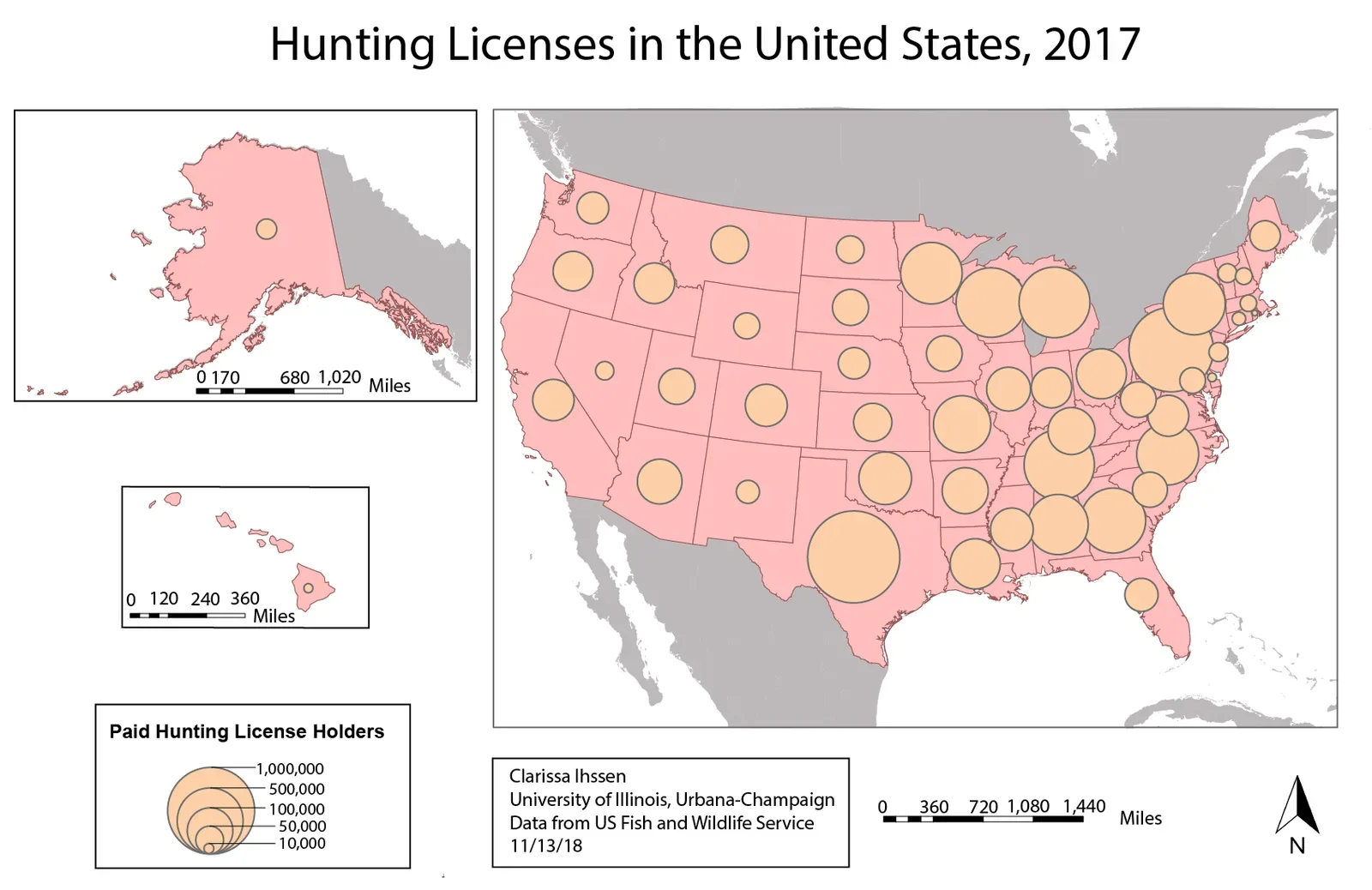
U.S. hunting license purchases by state in 2017 — regional participation patterns reflect state population, hunting culture, and wildlife abundance.
Ihssenc (CC BY-SA 4.0)
| Identification | |
|---|---|
| Jurisdiction | |
Territory | Washington |
Washington 2026 Hunting Regulations: What Changed
Legal information and analysis
From The Boise Gun Club Handbook
This is educational information, not legal advice. Laws change. Consult an attorney or WDFW directly for your specific situation.
The Washington Department of Fish and Wildlife (WDFW) runs its season-setting process through formal rulemaking every year, and 2026 brought a meaningful set of changes — not just calendar tweaks. The big ones touch Chronic Wasting Disease (CWD) transport, licensing discounts for volunteer instructors, a restructured raffle and auction program, a new wildlife area acquisition on the coast, and adjustments across deer, elk, moose, bighorn sheep, and mountain goat special permit structures.
Here's the full picture, pulled from the rulemaking record.
The Rulemaking Process: Where Things Standedit
The 2026 season-setting package is filed under rulemaking reference #2025-21. WDFW filed the initial CR-101 preproposal on October 29, 2025 (WSR 25-22-046). The full CR-102 rule proposal followed on February 3, 2026 (WSR 26-04-120), with a virtual public hearing held March 11, 2026.
A CR-102 Supplemental was filed March 18, 2026 (WSR 26-07-078) to address substantial changes to WAC 220-220-080 (reduced rate combination deer hunting licenses) that weren't included in the February filing. The comment period for that supplemental runs through April 21, 2026 at 11:59 p.m., with a director-level Zoom hearing scheduled for April 22, 2026 at 2 p.m.
The final CR-103 permanent rule filing is still pending as of this writing. The proposed amendments span WAC chapters 220-400 through 220-416.
| Rulemaking Milestone | Date |
|---|---|
| CR-101 Filed | October 29, 2025 |
| CR-102 Filed | February 3, 2026 |
| CR-102 Continuance Filed | February 19, 2026 |
| Virtual Public Hearing (General) | March 11, 2026 |
| CR-102 Supplemental Filed | March 18, 2026 |
| Supplemental Comment Period Closes | April 21, 2026 |
| Supplemental Public Hearing | April 22, 2026 |
| CR-103 Permanent Rule | Pending |
CWD Transport Rules: The Change With the Most Teethedit
If you hunt deer, elk, or moose in any WDFW management region where CWD has been detected, you're now required to submit a sample of the animal for testing. You also have to follow new carcass transport restrictions.
According to the eRegulations source for Washington deer general seasons, WAC 220-413-030 governs transport from Region 1 (the 100-series GMUs in northeastern Washington). The rule is direct:
You cannot bring whole carcasses into Washington.
This applies to deer, elk, moose, or caribou harvested or salvaged outside of Washington as well. Out-of-state hunters bringing animals back across the border need to be aware of this — it's not just an in-state rule.
Separately, WAC 220-412-090 is being amended to eliminate CWD incentive multi-season deer tags. WDFW previously offered these tags to encourage hunters to voluntarily participate in CWD surveillance sampling in eastern Washington. Now that CWD sampling is mandatory in that region, the incentive tags serve no purpose and are being removed from the regulations.
Key Point: If you were counting on a CWD incentive tag as part of your eastern Washington deer strategy, that option is gone for 2026. Adjust your permit planning accordingly.
Dead Wildlife Possession: Shed Antlers Clarifiededit
WAC 220-400-040 is getting a clarification that a lot of antler shed hunters have probably wondered about. The proposed language confirms that:
Possession of naturally shed antlers of deer, elk, or moose is not prohibited unless the shed antlers were retrieved, collected, or possessed while trespassing on closed public lands or department-controlled lands.
If you're picking up sheds on legally accessible land, you're fine. If you're hopping fences onto closed WDFW lands to do it, the antlers become a violation. The amendment also clarifies the penalty structure for WAC violations in this section.
Hunter Education Instructors: Codified Discountsedit
WAC 220-220-080 (Reduced Rate Combination Deer Hunting Licenses) and WAC 220-220-090 (Reduced Rate Combination Elk General Licenses) are both being updated to clarify licensing requirements for Hunter Education Instructor permits and, in the case of the elk license, to formally codify a discount on license and tag costs.
According to the rulemaking record, Hunter Education Instructors are volunteers who contribute over 20,000 hours annually to the department's mission. The changes are consistent with RCW 77.32.155, which directs WDFW to offer nonmonetary incentives to promote instructor volunteer service.
The Supplemental CR-102 filed March 18 specifically addresses additional changes to WAC 220-220-080 that weren't captured in the February draft — if you're an instructor or work with the hunter education program, the April 22 hearing is the place to weigh in if you haven't already.
GMU Boundary Descriptions: Region 3 Cleanupedit
WAC 220-410-030 is being updated for Game Management Unit (GMU) boundary descriptions in Region 3. Per the rulemaking record, the current WAC descriptions reference non-existent conditions and road names that no longer apply. These are administrative adjustments — they're not changing where you can hunt, they're fixing the written descriptions so they actually match reality and reduce confusion.
If you hunt in Region 3 (central Washington), it's worth pulling the updated boundary maps once the CR-103 is finalized to make sure your mental picture of the GMU lines matches the current language.
Raffle and Auction Program: Restructured After Auditedit
WAC 220-412-040 (Washington Raffle Hunts) and WAC 220-412-060 (Washington Auction Hunts) are both being amended following a state auditor's office review of WDFW's big game auction and raffle program. The audit identified areas where the program wasn't meeting WAC compliance requirements.
The fix isn't more rules — it's actually fewer. WDFW is removing most of the prescriptive, contract-specific language from both WACs and moving it into agency guidance documents instead. The rationale is that rigid WAC language was creating compliance problems for staff-limited non-governmental organizations that run these programs on the department's behalf. A guidance document can be updated administratively; a WAC change requires this whole public rulemaking process.
Big game auctions have been conducted by conservation organizations under contract with WDFW since 1994. The raffle program covers deer, elk, mountain goat, bighorn sheep, moose, and wild turkey. Neither program is going away — the structure of how they're administered is being modernized.
Special Permits: Deer, Elk, Moose, Bighorn Sheep, Mountain Goatedit
WAC 220-415-030 through 220-415-130 cover special permit seasons for the major big game species. The rulemaking record lists the rationale categories across these rules as:
- Balancing hunting opportunity among user groups (archery vs. rifle vs. muzzleloader)
- Adjusting permit levels based on population status — more tags when numbers support it, fewer when they don't
- Maintaining consistency in season timing and weekday open/close patterns
- Addressing specific local management needs
Bighorn sheep (WAC 220-415-120) has the most moving parts this cycle. The rulemaking record lists six separate change rationales:
- Updating permit structure for the 2026 license year.
- Additional harvest permitted in one unit due to a relatively high ram population — also helps reduce disease risk from contact with neighboring domestic sheep flocks.
- Same rationale applied to a second unit.
- One permit rotates annually among WDFW, the Oregon Department of Fish and Wildlife, and the Confederated Tribes of the Umatilla Reservation — the 2026 license year permit moves to one of the other co-managers.
- One unit is above population objective; additional ewe harvest is authorized and also reduces domestic sheep disease contact risk.
- A clerical correction to improve clarity on hunt area descriptions and associated regulations.
Moose (WAC 220-415-070) changes address two things: updating permits for the 2026 license year, and improving access for disabled hunters in a specific area while retaining youth hunting opportunity and balancing hunting pressure.
Mountain goat (WAC 220-415-130) change is straightforward — updating to provide special hunt permits for the 2026 license year.
Deer and elk special permits (WAC 220-415-030 and 220-415-060) follow the standard population-and-opportunity balancing framework described above. The 2026 Game Division Ungulate Proposal supplement material document covers the specific unit-by-unit changes.
Multi-Season Tags: Applications and Costsedit
Multi-season tags let you hunt with all three weapon types — modern rifle, muzzleloader, and archery — under a single tag, season permitting. Elk multi-season tag holders can hunt on both sides of the state.
According to WDFW's multi-season page, the 2026 application window ran December 1, 2025 through March 31, 2026. Drawing results are available in April.
| Multi-Season Application Cost | Price |
|---|---|
| Resident | $9.61 |
| Non-Resident | $152.30 |
| Youth | $5.05 |
| Senior | $3.60 |
If drawn, tag purchase costs are:
| Tag Type | Cost (Resident and Non-Resident) |
|---|---|
| Deer Multi-Season Tag | $191.77 |
| Elk Multi-Season Tag | $250.97 |
Note that the application cost and the tag cost are separate transactions — you pay the application fee to enter the drawing, and then purchase the tag if your name comes up.
Waterfowl: New Property, New Access Rulesedit
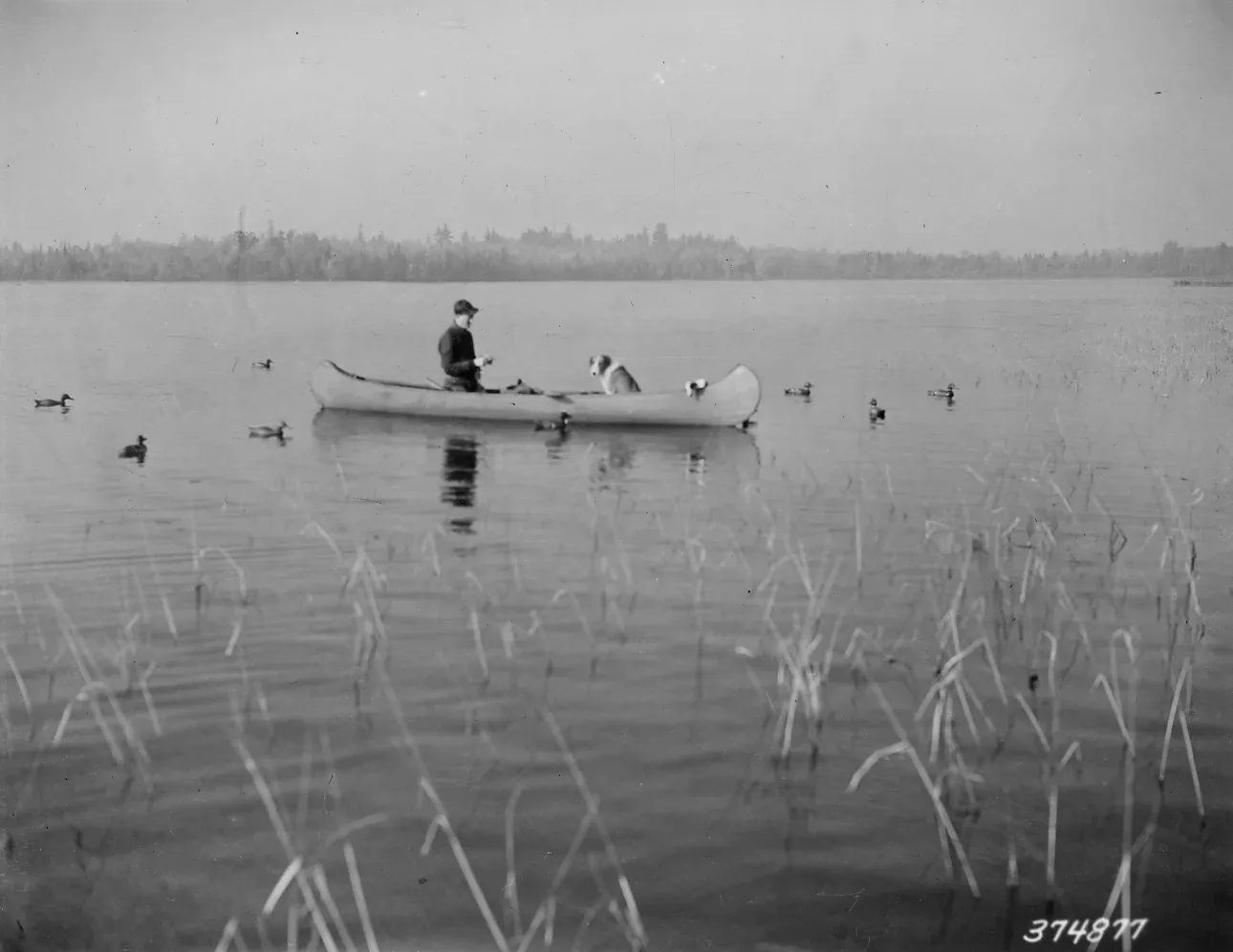
WAC 220-416-060 covers the 2025-2026 waterfowl and migratory gamebird seasons. Washington waterfowl seasons operate within federal frameworks set through the U.S. Fish and Wildlife Service (USFWS) and the Pacific Flyway Council, with input from Canada, Russia, and Mexico. States can be more restrictive than federal frameworks to address regional conservation needs — Washington often is.
WAC 220-416-080 is where the new property acquisition comes in. WDFW recently acquired land that expands the North Willapa Bay Unit of the Johns River Wildlife Area, located in Goose Management Area 2 – Coast. The acquired property was previously private land with no public hunting access.
The area is known for high concentrations of waterfowl — particularly Dusky Canada geese. Because of anticipated high demand and ease of public access, WDFW implemented an emergency rule imposing regulated access area restrictions for waterfowl, coot, and snipe hunting on this property. Per the rulemaking record, WDFW expects to conduct permanent rulemaking in 2026 to lock in those rules permanently.
If you hunt the coast for geese, this unit is worth watching closely as the permanent rule develops.
2025-2026 General Season Quick Referenceedit
The 2026 rulemaking applies to the 2026 license year. The general season dates below reflect the 2025-2026 season currently in effect, per eRegulations and WDFW sources. Dates vary significantly by GMU — treat these as a starting framework, not a substitute for checking your specific unit.
Deer General Seasons
| Season | Dates | Notes |
|---|---|---|
| Modern Firearm — Black-tailed (General) | Oct. 11–31, 2025 | Most western GMUs |
| Modern Firearm — White-tailed | Oct. 11–21 or Oct. 11–24, 2025 | Varies by GMU |
| Modern Firearm — Mule Deer | Oct. 11–21, 2025 | Eastern WA GMUs |
| Late General — Black-tailed | Nov. 13–16, 2025 | Selected western GMUs |
| Late General — White-tailed | Nov. 8–19, 2025 | Selected GMUs |
| High Buck Hunt (Firearm & Muzzleloader) | Sept. 15–25, 2025 | Wilderness areas and Lake Chelan Recreation Area |
| Early Archery (Black-tailed) | Sept. 1–26, 2025 | Varies by GMU |
| Early Muzzleloader | Sept. 27–Oct. 5, 2025 | All deer types, varies by GMU |
| Late Archery — Black-tailed | Nov. 26–Dec. 31, 2025 | Varies by GMU |
| Late Muzzleloader — Black-tailed | Nov. 26–Dec. 15, 2025 | Selected GMUs |
Bag limit: One deer per hunter per license year, except where otherwise permitted by department rule.
Key Point: GMUs 157 (Mill Creek Watershed), 490 (Cedar River), and 522 (Loo-wit) are closed to deer hunting. Units 290 (Desert), 329 (Quilomene), 371 (Alkali), and 485 (Green River) require a special permit.
Columbian White-tailed Deer are protected under both state and federal endangered species law — they cannot be harvested. CWTD have been transplanted to the Ridgefield National Wildlife Refuge and may now be found in GMU 564. Know your deer identification before you shoot.
Elk General Seasons
| Season | Dates | Notes |
|---|---|---|
| Modern Firearm — Eastern WA | Oct. 25–Nov. 2 or Oct. 25–Nov. 15, 2025 | Varies by GMU and legal elk type |
| Modern Firearm — Western WA | Nov. 1–12, 2025 | — |
| Early Archery — Eastern & Western | Sept. 6–18, 2025 | Varies by GMU |
| Early Muzzleloader — Eastern & Western | Oct. 4–10, 2025 | — |
| Master Hunter seasons | Aug. 1, 2025–Jan. 20, 2026 | Various windows within this range |
Bag limit: One elk per season per hunter, with exceptions for Master Hunters; two elk per license year.
Bear, Cougar, and Other Big Game
| Species | General Season | Notes |
|---|---|---|
| Black Bear (Fall) | Aug. 1–Nov. 15 or Aug. 15–Nov. 15, 2025 | Several GMUs closed |
| Cougar | Sept. 1, 2025–Mar. 31, 2026 | Or when cap is reached |
| Moose | Oct. 1–Nov. 30, 2025 | Special permit only |
| Mountain Goat | Sept. 1–Nov. 30, 2025 | Special permit only |
| Bighorn Sheep | Sept. 15–Nov. 15, 2025 | Special permit only, varies by GMU |
Turkey
| Season | Dates |
|---|---|
| Spring Youth 2026 | April 1–7, 2026 |
| Spring General 2026 | April 15–May 31, 2026 |
| Fall 2025 | September 1–December 31, 2025 |
| Fall Special Permit 2025 | November 15–December 15, 2025 |
Migratory Birds and Upland Game
| Species | Dates | Notes |
|---|---|---|
| Duck Statewide (except Scaup) | Oct. 11–19 and Oct. 22, 2025–Jan. 25, 2026 | Special hunt Sept. 20–27 |
| Scaup | Nov. 1, 2025–Jan. 25, 2026 | Closed Oct. 11–31 |
| Goose | Sept. 6, 2025–Feb. 15, 2026 | Varies by Goose Management Area |
| Brant | Jan. 10–25, 2026 | Varies by county |
| Band-Tailed Pigeon | Sept. 1–Oct. 30, 2025 | — |
| Forest Grouse | Sept. 15, 2025–Jan. 15, 2026 | — |
| Pheasant — Western WA | Sept. 20–Nov. 30 and Dec. 1–15, 2025 | Youth-only opener Sept. 13–14 |
| Pheasant — Eastern WA | Oct. 18, 2025–Jan. 19, 2026 | Youth-only opener Sept. 13–14 |
| Chukar — Eastern WA | Oct. 4, 2025–Jan. 31, 2026 | — |
| Gray Partridge — Eastern WA | Oct. 4, 2025–Jan. 19, 2026 | — |
| Sage & Sharp-tailed Grouse / Ptarmigan | Closed statewide | — |
Licensing Requirements and Reportingedit
All hunters born after January 1, 1972 must complete a hunter education course before obtaining a Washington hunting license. Depending on your target species, you'll need either a big game license or a small game license, plus the appropriate tag or stamp.
Hunter orange and/or fluorescent hunter pink is required for anyone hunting in an area open to modern firearm general deer or elk seasons — this applies even if you're bowhunting or muzzleloading in those areas during overlap periods.
Mandatory reporting applies to big game and turkey. Per eRegulations, big game and turkey harvest must be reported by January 31, 2026, through the WDFW Fish and Hunt portal or by calling 360-902-2464. Missing the reporting deadline affects eligibility for the incentive permit drawing.
Baiting regulations for deer and elk are in effect. Check WDFW's current baiting rules before you set anything up — this area has seen regulatory attention in recent years.
Night hunting restrictions apply during modern firearm deer and elk general seasons in October and November: no hunting bobcat or raccoon at night, and no hunting coyote at night during those seasons in either eastern or western Washington.
What's Still Pendingedit
As of late April 2026, the CR-103 permanent rule filing for the 2026 season-setting package had not yet been filed. The Supplemental CR-102 addressing WAC 220-220-080 was still in its comment period through April 21, with the director hearing on April 22.
This means some of the rule changes described above — particularly the hunter education instructor licensing provisions — are still working through the final adoption process. Check the WDFW rulemaking page for #2025-21 for the current status before the season opens.
What this means for you: Most of the operational changes (CWD transport rules, eliminated CWD incentive tags, the new North Willapa Bay waterfowl access restrictions) are already in effect through emergency or prior rulemaking. The structural changes to the raffle/auction program and the instructor licensing discounts are still finalizing. When in doubt, call WDFW directly.
Resourcesedit
- https://wdfw.wa.gov/about/regulations/development/2026-hunting-season-setting
- https://wdfw.wa.gov/hunting/special-hunts
- https://wdfw.wa.gov/hunting/requirements/important-dates
- https://publicinput.com/w11502
- https://www.eregulations.com/washington/hunting/deer-general-seasons
- https://wdfw.wa.gov/hunting/special-hunts/multi-season
- https://huntwise.com/field-guide/state-hunting-guide/guide-to-washington-hunting-seasons
Last Updated: April 03, 2026
- Ace Hardware of Sandusky(Sandusky, MI)
- New Philly Sportsman Specialities(New Philadelphia, OH)
- Atwoods Ranch & Home #46(LACY LAKEVIEW, TX)
- G & P Distributors(McConnellsburg, PA)
This is not legal advice
This guide provides general information about federal and state firearms laws based on publicly available statutes. Laws change frequently and vary significantly by state. Always verify current laws in your jurisdiction. Consult a qualified attorney for legal advice on your specific situation. When in doubt, contact local law enforcement or state police.
Loading comments...