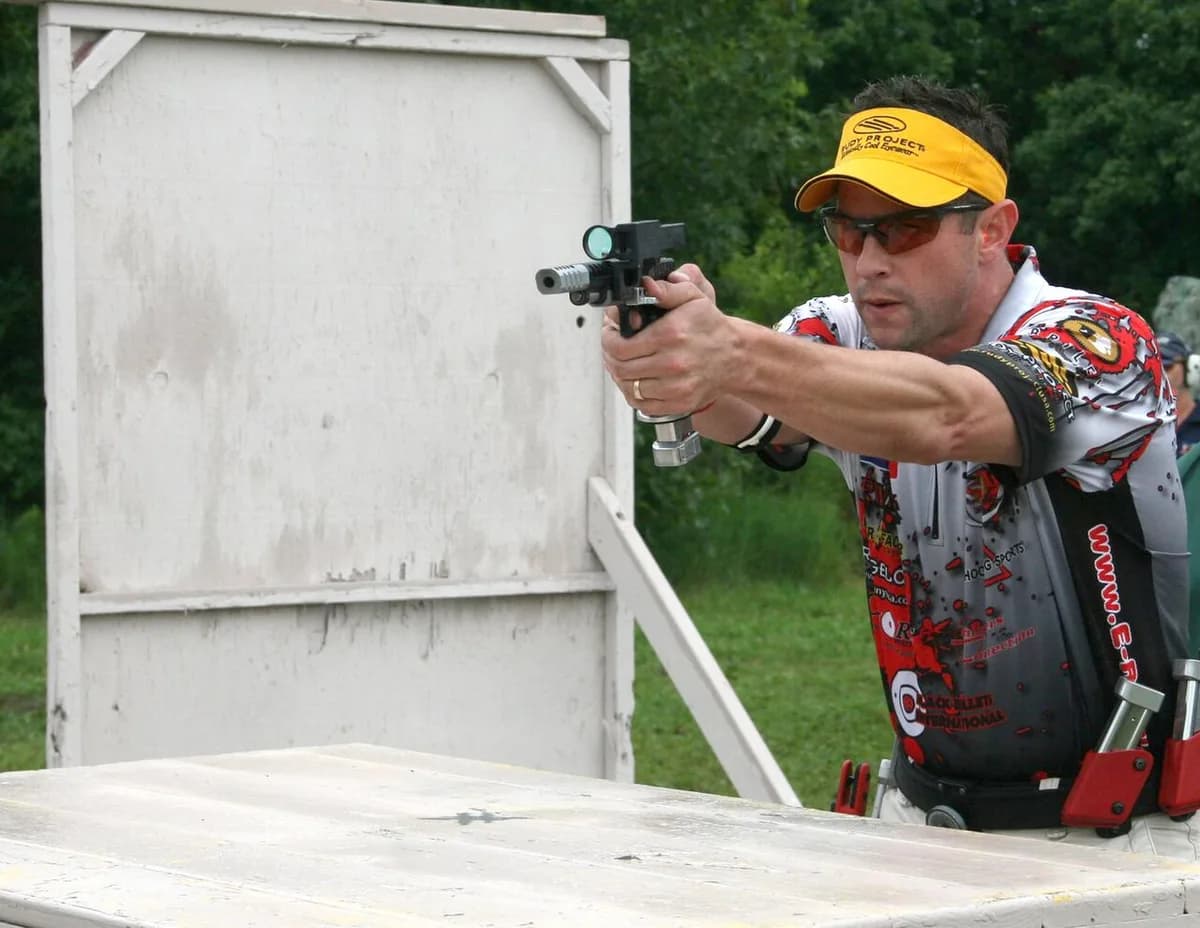
IDPA & USPSA
IDPA (International Defensive Pistol Association) and USPSA (United States Practical Shooting Association) are the two major practical pistol sports in the US. IDPA emphasizes defensive scenarios with concealment requirements, while USPSA focuses on pure speed and accuracy.
01 // LEARN
What is IDPA & USPSA?
Understanding this shooting discipline
IDPA (International Defensive Pistol Association) and USPSA (United States Practical Shooting Association) are the two major practical pistol sports in the US. IDPA emphasizes defensive scenarios with concealment requirements, while USPSA focuses on pure speed and accuracy.
Both sports share core fundamentals but differ in rules, equipment requirements, and stage design philosophy. Clubs nationwide host regular matches, making practical pistol one of the most accessible shooting sports.
Types & Variations
02 // START
Getting Started with IDPA & USPSA
Equipment, costs, and tips for beginners
Getting into idpa & uspsa doesn't require starting with top-tier gear. Focus on safety fundamentals, basic equipment, and finding welcoming places to learn. The community is generally helpful to newcomers who show up prepared with the right attitude.
Essential Equipment
What you need to get started
Safety & Rules
Know these before your first shot
Pro Tips for Beginners
Advice from experienced shooters
What Does IDPA & USPSA Cost?
Realistic budget expectations
$600-1,200
Basic equipment to begin
$2,000-5,000+
Quality gear for serious shooters
Hidden costs to consider: Start with your carry gun and existing holster. Upgrade belt and mag pouches first - they matter more than the gun.
IDPA vs USPSA Comparison
Compare your options
| Type | Best For |
|---|---|
| IDPA Concealment required. Cover garment, capacity limits, retention holsters common. | Concealed carry practitioners who want practical defensive training |
| USPSA Production No concealment. OWB holster, factory capacity magazines, minor power factor. | Beginners wanting competitive shooting without concealment gear |
| USPSA Carry Optics Red dot allowed. Popular modern division. Slide-mounted optics only. | Shooters with red dot equipped carry guns |
03 // ASK
Frequently Asked Questions
Common questions about idpa & uspsa
New to idpa & uspsa? These are the most common questions from shooters exploring this discipline. The shooting community is generally welcoming and happy to help newcomers.
Find answers to common questions about idpa & uspsa. Can't find what you're looking for? Contact us and we'll help you out.
Either works well for beginners. IDPA is slightly more beginner-friendly with concealment gear you may already own. USPSA Production division also has low equipment requirements. Many shooters compete in both.
A quality 9mm like a Glock 17/34, CZ SP-01, or Walther PDP will serve you well in multiple divisions. Matches see everything from stock carry guns to full race guns - start with what you have.
Club matches typically require 100-150 rounds. Bring 20% extra in case of reshoot or additional practice. Major matches may require 300+ rounds. Check match announcements for specific round counts.
Classifiers are standardized stages that determine your skill ranking within a division. Both IDPA and USPSA use classifiers to place shooters in appropriate classes (Novice through Master/Grand Master).
04 // FIND
Upcoming Events
Find idpa & uspsa events near you
22 League
22 League at Rock County Rifle and Pistol Club, Inc. in Janesville, WI. Check with the host club for match details, start times, and registration.
Hunter Safety Class
Hunter Safety Class at Luxemburg Sportsman's Club in Luxemburg, WI. Check with the host club for match details, start times, and registration.
GSSF Practice Matches @ ACC
GSSF Practice Matches @ ACC When 10/08/2026 4:00 PM - 6:00 PM Location Bay 3-4 GSSF Pratice Match This Practice Match follows GLOCK's GSSF format, but is for practice and warm-up. Please search for "ACC GSSF" at www.PractiScore.com for more match information. Registration is managed the via PractiScore link. Always verify match date and time via PractiScore before arriving at the range. Match cancellations will NOT be posted to the ACC calendar. Show details
Pistol Team
Pistol Team at Braintree Rifle and Pistol Club Inc in Braintree, MA. Check with the host club for match details, start times, and registration.
Open Trap
Open Trap at Watauga Gun Club in Boone, NC. Check with the host club for match details, start times, and registration.
Spring - Pistol Caliber Gun Club
USPSA Style Matches Our club offers a chance to compete in a safe, fun, and dynamic environment, in a USPSA or IDPA style action shooting format. It doesn’t matter if you are an experienced shooter mastering their craft or a new shooter who wants to learn how to handle your firearm more efficiently. Both styles of shooting provide an opportunity to shoot in a challenging, dynamic scenario which includes multiple targets, movement, drawing from a holster and rapid fire. More Info Here
05 // LOCATE
Where to Shoot
Ranges, clubs, and shops for this discipline