State Details
Alabama

Overview | |
|---|---|
State | Alabama (AL) |
Capital | Montgomery |
Statehood | 1819 |
Population | 5,108,468 |
Gun Ownership | 48.9% |
Active FFLs | 976 |
Carry Laws | |
Constitutional Carry | Yes (2023) |
Open Carry | Yes |
CCW Permit Available | Yes |
Permit Reciprocity | 36+ states |
Self-Defense | |
Castle Doctrine | Yes |
Stand Your Ground | Yes |
Duty to Retreat | No |
Regulations | |
State Preemption | Yes |
Red Flag / ERPO | No |
Waiting Period | None |
Universal BGC | No |
NFA Items | Yes |
Assault Weapons Ban | No |
Magazine Limit | None |
Key Legislation | |
| |
Notable Manufacturers | |
| |
Alabama Firearms History: From the Selma Arsenal to Constitutional Carry
Reference article
From The Boise Gun Club Handbook
Overviewedit
Alabama sits at an intersection of Southern gun culture, Civil War industrial history, and active federal military investment that makes its firearms story genuinely distinct from any other state in the South. This isn't just about high ownership rates -- though Alabama does run around 55.5% gun ownership, third-highest in the country. It's about a state that built Confederate cannon in industrial quantities, housed one of the Army's most important Cold War arsenals, trained generations of military aviators in aerial gunnery, and eventually became a case study in how a state can systematically strip away permit requirements over a thirty-year arc.
The through-line from pre-statehood Creek trade guns to the 2023 constitutional carry bill is a story about a place where firearms were never abstract -- they were tools of war production, subsistence hunting, military training, and civilian self-reliance, all layered on top of each other across two centuries.
Colonial & Frontier Eraedit
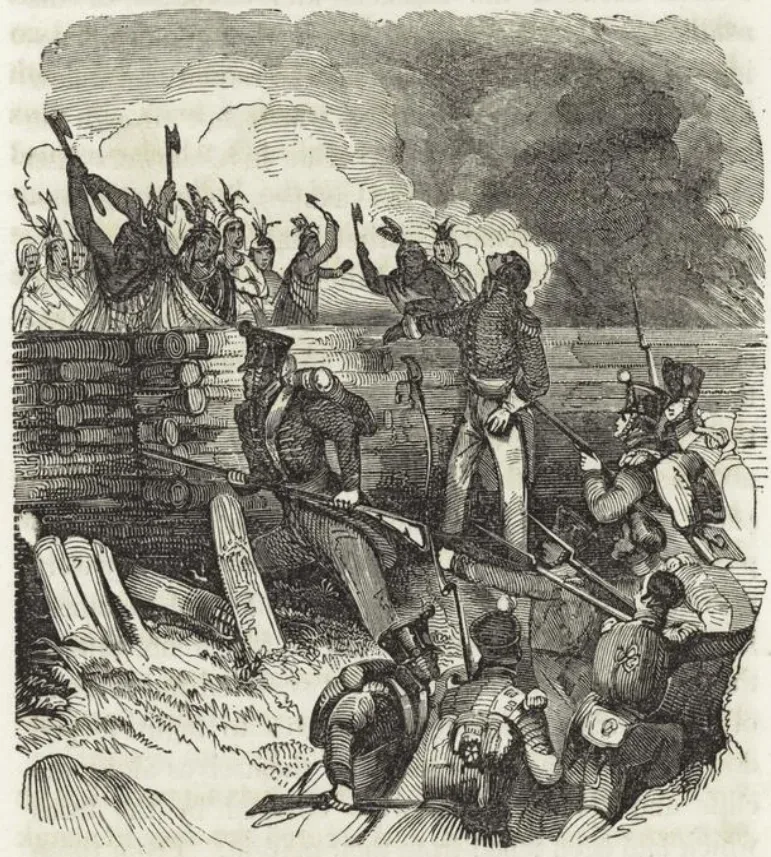
Before Alabama was a state, before it was even a territory in any organized sense, the region that would become the Heart of Dixie was contested ground between several Creek Nation confederacies, French and Spanish colonial interests, and eventually British and American settlers pushing inland from the Gulf Coast.
Creek Nation and Trade Guns
The Creek people had integrated European firearms into their material culture by the early 1700s, acquiring flintlock trade muskets through French outposts at Mobile (founded 1702) and through Spanish contacts further south and west. These weren't curiosities -- they replaced and supplemented traditional weapons for hunting and warfare within a generation of sustained contact. British traders operating out of Carolina also pushed trade guns into the region, and by mid-century the Creek were sophisticated enough consumers of firearms that they understood the difference between a serviceable trade gun and a shoddy one.
The Creek War and Territorial Formation
Fort Mims, in present-day Baldwin County, became the site of one of the most consequential frontier violence events in American history on August 30, 1813, when Creek Red Stick warriors attacked the fort and killed somewhere between 250 and 500 settlers and mixed-heritage residents. The Fort Mims Massacre triggered a full military response and brought Andrew Jackson into Alabama with Tennessee militia and U.S. Army regulars. Jackson's campaign through 1813-1814 -- culminating in the Battle of Horseshoe Bend on March 27, 1814, where Creek forces were decisively defeated -- was fought almost entirely on what is now Alabama soil. The firearms technology of that campaign, primarily flintlock muskets and rifles on both sides, was representative of the period: accurate rifles carried by some militia, smoothbore muskets standard for regulars, and a mix of trade guns and captured weapons among the Creek warriors.
The Creek War of 1813-1814 effectively opened Alabama to American settlement and set the stage for territorial organization. The Mississippi Territory had nominally included the region since 1798, but actual American control over the interior was limited until after Horseshoe Bend. Alabama Territory was carved out separately in 1817, and statehood followed on December 14, 1819, when Alabama became the 22nd state.
The frontier period before and immediately after statehood was characterized by practical, decentralized gunsmithing. Traveling smiths and small shops in settlements like Huntsville and St. Stephens kept flintlocks functioning and did limited new production, but the region depended heavily on firearms manufactured in Pennsylvania, Virginia, and the Northeast. Local manufacture of complete firearms was limited. What Alabama contributed during this period was iron -- the mineral-rich geology of the north-central part of the state would eventually underpin the Civil War industrial complex at Selma, but in 1820, it was still mostly untapped.
19th Century: Statehood, Civil War, and the Selma Arsenaledit
Antebellum Period and Early Manufacturing
Alabama's antebellum firearms landscape was shaped by the same forces as the rest of the Deep South -- an agricultural economy that relied on hunting for protein, a culture of personal arms for frontier protection, and an emerging awareness of the state's iron and coal deposits as potential industrial assets. The first real test of that industrial potential came with secession.
When Alabama left the Union on January 11, 1861, the state possessed almost no organized military manufacturing capacity. That changed with remarkable speed. On December 7, 1861, the Alabama legislature passed "An Act to Encourage the Manufacture of Fire Arms and Munitions of War," offering financial incentives to private manufacturers willing to tool up for military production. This legislation specifically targeted small arms -- rifles, pistols, and edged weapons -- because the Confederacy's artillery and naval ordnance situation was being addressed through a different supply chain.
Small arms manufacturers did respond. The Dickson, Nelson and Company -- operating initially in Rome, Georgia, but relocating to Adairsville and eventually to Dickson in Cherokee County, Alabama after Sherman's Georgia campaign threatened their original location -- became one of the more notable Confederate rifle producers. The firm made copies of the Model 1841 Mississippi Rifle and later produced a variation of the Enfield Pattern 1853. Their output was modest by industrial standards but significant given the constraints: skilled labor was scarce, raw materials were unreliable, and Union cavalry raids were a constant threat to any fixed production facility in the Deep South. Surviving Dickson, Nelson rifles are prized by Civil War collectors today, both for their rarity and as evidence of what Confederate small manufacturers actually managed to produce under pressure.
The Selma Industrial Complex
The centerpiece of Alabama's Confederate military production, however, was not small arms. It was the Selma Arsenal and Naval Foundry -- known variously as the Selma Naval Foundry and Ironworks or the Selma Arsenal and Gun Works -- which became the South's most important heavy weapons manufacturing complex outside of the Tredegar Ironworks in Richmond.
The Selma Arsenal complex had its origins in a contract awarded in 1861 to Colin J. McRae, a former Mississippi legislator, to cast cannon for the Confederate government. McRae erected a foundry on the Alabama River in Dallas County, using pig iron from Alabama's existing blast furnaces. The complex got a major expansion in 1862 when General Josiah Gorgas, chief of the Confederate Bureau of Ordnance, ordered the former Federal Arsenal at Mount Vernon near Mobile relocated to Selma. The vulnerability of Alabama's Gulf Coast to Union naval forces -- New Orleans had fallen in April 1862 -- made keeping a major ordnance facility near Mobile untenable.
When McRae departed for Europe in 1863 as a Confederate purchasing agent, he sold the foundry to the Confederate government for $450,000. Commander Catesby ap Roger Jones took over supervision, and under his direction Selma became the only facility in the Lower South capable of producing Brooke rifles -- large-caliber artillery designed by Commander John Mercer Brooke for Confederate naval and coastal defense use. The 6.4-inch Brooke just cleared 11 feet in length and weighed over 10,000 pounds; the 7-inch version ran over 12 feet and weighed as much as 15,000 pounds. Selma is believed to have cast 11 of the massive 11-inch Brooke smoothbore guns, each exceeding 20,000 pounds, though only eight were completed and shipped. The facility cast its first cannon -- a 7-inch Brooke rifle -- in July 1863.
By 1864, the Selma Arsenal complex covered 50 acres along present-day Water Avenue and employed as many as 10,000 workers across approximately 100 buildings -- 3,000 in the foundry alone and another 3,000 in the arsenal. The workforce included German craftsmen recruited for their technical skills, free women and children employed in various production roles, and enslaved men hired out by local landowners. The facility drew its iron supply from a network of Alabama ironworks: the Shelby Iron Works near Columbiana in Shelby County (founded by Horace Ware in the late 1840s), the Brierfield Furnace in Bibb County, the Tannehill Ironworks in Jefferson County, and the Little Cahaba Iron Works in Bibb County, established by William Phineas Browne in 1848.
| Facility | Location | Primary Output | Peak Employment |
|---|---|---|---|
| Selma Arsenal and Gun Works | Dallas County | Brooke rifles, naval guns, ammunition | 10,000 workers |
| Dickson, Nelson and Company | Cherokee County | Model 1841 rifles, Enfield copies | ~200 workers |
| Shelby Iron Works | Shelby County | Pig iron for ordnance | ~300 workers |
| Tannehill Ironworks | Jefferson County | Iron supply | ~250 workers |
Selma's shipyard also produced Confederate ironclads: the CSS Tennessee, CSS Huntsville, and CSS Tuscaloosa, and partially outfitted the CSS Nashville. The CSS Tennessee -- a 1,273-ton ironclad ram -- performed at the Battle of Mobile Bay in August 1864, where its iron plating withstood heavy bombardment at close range before the vessel was ultimately captured. At its peak, Selma was producing approximately half of the Confederacy's cannon and two-thirds of its ammunition.
Wilson's Raid and the End of Confederate Production
That concentration of production made Selma an obvious target. Its location deep in central Alabama had protected it through most of the war, but in the spring of 1865, General James H. Wilson led a Union cavalry raid into Alabama specifically to dismantle the state's military-industrial infrastructure. Wilson's forces burned the University of Alabama in Tuscaloosa on April 4 and systematically destroyed Alabama's iron-producing facilities before converging on Selma.
On April 2, 1865, Wilson's troops captured the city and destroyed everything: the arsenal, the ordnance center, the gunpowder works, the nitre works, and 11 ironworks and foundries. The destruction included:
- 15 siege guns and 10 heavy carriages
- 10 field pieces and 10 caissons
- 63,000 rounds of artillery ammunition
- Three million feet of lumber
- 10,000 bushels of coal
- 11 ironworks and foundries destroyed
General Lee surrendered at Appomattox one week later.
Reconstruction and Discriminatory Laws
The postbellum period brought a different kind of firearms-related legislation to Alabama. The Reconstruction era and its aftermath produced a tangle of racially motivated disarmament statutes that were not unique to Alabama but were enforced with particular vigor there. The 1897 Code of Alabama, compiled under Commissioner William Logan Martin and adopted by act of the General Assembly on February 16, 1897, included provisions regulating the carrying of concealed weapons that were part of the same legal tradition as similar statutes across the South -- laws that in practice were applied selectively and disproportionately against Black Alabamians. This pattern of discriminatory enforcement in post-Reconstruction firearms law would remain a documented feature of Alabama's legal landscape well into the 20th century and informs some of the contemporary debate over who actually bore the costs of restrictive carry laws before constitutional carry.
20th Century: Wars, Federal Investment, and the Regulatory Frameworkedit
World War I Era
Alabama entered the 20th century as an agricultural state with a growing industrial base, and two World Wars would accelerate that industrialization while embedding federal military infrastructure that permanently shaped the state's relationship with firearms development and testing.
During World War I, Alabama's contribution to military firearms was primarily through manpower and the state's steel production feeding the national war machine. No major Alabama-based small arms manufacturers emerged during this period, but the state's National Guard units trained extensively, and the experience of mass mobilization made Alabama's military culture more institutionally organized than it had been since the Civil War.
World War II and Federal Arsenal Development
World War II brought transformative federal investment. Redstone Arsenal, established in Huntsville in 1941, was initially developed as a chemical weapons storage and production facility -- the Huntsville Arsenal -- before being combined with the adjacent Camp Sibert and reorganized as Redstone Arsenal in 1943. The facility's mission evolved through the war to include ordnance research, testing, and storage, and it housed significant small arms testing programs alongside the chemical and conventional munitions work.
Redstone's postwar evolution into the center of American rocket and missile development under Wernher von Braun and the German scientists brought over through Operation Paperclip is well documented, but its role in conventional weapons research -- including small arms systems, recoilless rifles, and later advanced soldier systems -- ran quietly alongside the headline-grabbing rocket programs for decades.
Cold War Military Infrastructure
Also established in Alabama during World War II was the facility that would eventually become Fort Novosel (known as Fort Rucker from 1955 until its renaming in 2023 in compliance with the Naming Commission's recommendations under the National Defense Authorization Act of 2021). Located near Daleville in Dale County, Fort Rucker became the U.S. Army Aviation Center in 1954 and developed into the primary training installation for Army aviators. The weapons dimension of that mission was significant: helicopter crews and fixed-wing aviation personnel required specialized gunnery training for close air support, door gun operation, and aerial rocket systems.
The aerial gunnery programs developed at Fort Rucker during the Vietnam War era -- when the Army was fielding armed UH-1 Huey helicopters and the first purpose-built attack helicopter, the AH-1 Cobra -- established doctrine and training standards that influenced military aviation weapons training globally. Those programs continued through the AH-64 Apache era and remain active at Fort Novosel today.
Legal Framework Development
On the legislative side, Alabama's 20th-century firearms law was relatively permissive by national standards through most of the century, though the state did maintain a concealed carry permit system requiring sheriff's approval -- a system that, like the 19th-century laws before it, gave local officials discretion that was historically exercised inconsistently. The Gun Control Act of 1968 imposed federal requirements that applied uniformly, and Alabama dealers and buyers operated under those federal standards while state law remained less restrictive in most respects.
The Alabama Uniform Firearms Act was codified in Title 13A of the Alabama Code, establishing the framework for firearms possession standards, prohibited persons categories, and carry licensing that would govern the state through the end of the century. Alabama Code Section 13A-11-72 set out the prohibited persons list; Section 13A-11-63 addressed short-barreled rifles and shotguns by reference to federal law.
The 1990s brought one of the most consequential structural changes in Alabama firearms law -- the passage of comprehensive firearms preemption legislation. Alabama's preemption statute prevented local governments from enacting firearms ordinances more restrictive than state law, eliminating the possibility of a Birmingham or Mobile creating a local regulatory environment that conflicted with the statewide framework. This was a deliberate policy choice that reflected both the NRA's national legislative strategy and Alabama's own political culture, and it laid the groundwork for the constitutional and statutory changes that followed in the 21st century.
Modern Era (2000–Present)edit
Constitutional Amendment and Strict Scrutiny
The first significant development of the modern era came not from the legislature but from a constitutional amendment. In 2014, Alabama voters approved Amendment 3, which rewrote Article I, Section 26 of the Alabama Constitution to establish the right to bear arms as a fundamental right subject to strict scrutiny for any restriction. The amended provision reads:
Every citizen has a fundamental right to bear arms in defense of himself or herself and the state. Any restriction on this right shall be subject to strict scrutiny.
Alabama also added a provision barring international treaties from compelling actions that would interfere with that right. The amendment passed with roughly 72% of the vote -- a margin that reflects genuine popular consensus, not a squeaker.
The strict scrutiny standard matters in practice. Most constitutional rights under American law receive intermediate scrutiny when legislatures regulate them, meaning the government only has to show a substantial interest and a reasonable fit. Strict scrutiny is a much harder bar -- the government has to show a compelling interest and a narrowly tailored means to achieve it. Alabama's 2014 amendment effectively put firearms restrictions in the same constitutional category as restrictions on core First Amendment rights.
Civilian Marksmanship Program Investment
The Civilian Marksmanship Program made a consequential infrastructure investment when it opened the Talladega Marksmanship Park in Talladega County in 2014. The CMP, a federally chartered corporation with roots in the National Board for the Promotion of Rifle Practice going back to 1903, had been searching for a site for a flagship competition facility and selected Alabama's Talladega site in part because of the state's cooperative posture. The facility includes ranges for high-power rifle, pistol, air gun, and precision rifle competition, and it hosts national-level matches that draw competitors from across the country. For Alabama's shooting sports community, the Talladega Marksmanship Park put the state on the national precision shooting calendar in a way it hadn't been before.
Constitutional Carry Implementation
The major legislative development of the modern era came in 2023. Act 2023-11, signed by Governor Kay Ivey on March 10, 2023, eliminated the permit requirement for concealed carry in Alabama. Alabama became the 25th state to adopt constitutional carry (also called permitless carry), meaning that any person who is legally permitted to possess a firearm under state and federal law can carry it concealed without obtaining a license. The existing concealed handgun license system was retained voluntarily -- people who want a license for reciprocity purposes with other states can still get one through their county sheriff -- but the requirement was lifted.
The permit system that was eliminated had been administered by county sheriffs, who issued licenses at their discretion under a "shall-issue" framework that had been tightened over the years. Alabama had moved to a cleaner shall-issue system in 2013 under Act 2013-283, which standardized the process and reduced sheriff discretion in denying permits, making the 2023 constitutional carry bill a logical next step in a trajectory that had been building for a decade.
Timeline of major Alabama firearms law developments in the modern era
Registry Prohibition and Market Context
In 2024, Alabama added a firearms registry prohibition to state law. The new provision at Alabama Code Sections 5-29-3 prohibits any state governmental entity, or any agent or employee of such entity, from keeping or causing to be kept any list, record, or registry of privately owned firearms or their owners. The state Attorney General is authorized to investigate allegations of violations and take enforcement action. This put Alabama in line with other states that have proactively barred the creation of any state-level registry infrastructure.
Alabama's civilian shooting market reflects the state's culture and demographics. Hunting -- particularly whitetail deer hunting -- remains a dominant driver of long gun sales, and Alabama's deer hunting culture is deeply rooted in rural family traditions. The state's Wildlife Management Areas and the mix of private and public timber land in the southern half of the state support active hunting seasons. On the competitive side, the Talladega Marksmanship Park draws precision rifle and service rifle competitors, and the state has active USPSA, IDPA, and 3-Gun shooting communities centered in the Birmingham, Huntsville, and Montgomery metro areas.
Notable Figures & Manufacturersedit
Josiah Gorgas deserves mention here even though he wasn't Alabamian by birth. Born in Pennsylvania in 1818, Gorgas married into a prominent Alabama family and threw his lot with the Confederacy as chief of the Bureau of Ordnance. His decision to relocate the Mount Vernon Arsenal to Selma was operationally crucial -- without that move, the Selma Arsenal probably doesn't develop into the industrial powerhouse it became. After the war, Gorgas became president of the University of the South at Sewanee and later vice chancellor of the University of Alabama, where he died in 1883. He is buried in Tuscaloosa.
Commander Catesby ap Roger Jones, who supervised the Selma Arsenal foundry during its peak production years, had previously commanded the CSS Virginia (the converted Merrimack) during the Battle of Hampton Roads in March 1862 -- one of the first ironclad engagements in naval history. Jones brought that experience with naval ordnance directly to the Selma operation.
Colin J. McRae, who built the original Selma Arsenal foundry and sold it to the Confederate government, deserves credit for establishing the industrial infrastructure that Gorgas and Jones later expanded. McRae's subsequent career as a Confederate purchasing agent in Europe -- trying to secure weapons, machinery, and financing for the Confederacy abroad -- illustrates how early Confederate leadership understood that their manufacturing base was insufficient and needed European supplementation.
The Dickson, Nelson and Company represents the small-arms manufacturing side of Alabama's Civil War production. The firm's relocation from Georgia into Cherokee County, Alabama, under pressure from Sherman's advance shows both the fragility of Confederate manufacturing and the resourcefulness of those trying to keep it running. Surviving Dickson, Nelson rifles are documented by the American Society of Arms Collectors and remain among the more collectible Confederate long arms.
Wernher von Braun and the German rocket team at Redstone Arsenal aren't primarily firearms figures, but their presence from 1950 onward shaped the institutional culture at Redstone and the broader Huntsville defense community in ways that touched weapons development programs. The defense contracting ecosystem that grew up around Huntsville's aerospace and missile work created a technical workforce and procurement infrastructure that Alabama's smaller firearms-adjacent manufacturers have drawn on.
On the modern manufacturing side, Alabama doesn't have the concentrated small arms production base of Connecticut or Massachusetts, but several companies producing precision components, military contract parts, and complete firearms have operated in the state. The automotive manufacturing base that grew significantly in the 1990s and 2000s -- with Mercedes-Benz in Vance, Honda in Lincoln, Hyundai in Montgomery, and Toyota in Huntsville -- brought precision machining and quality control expertise to the state's manufacturing workforce that translates directly to firearms production tolerances.
Current Legal Landscapeedit
Alabama's current firearms law is among the least restrictive in the country by any objective measurement. The framework breaks down as follows:
Core Legal Framework
Purchase and Possession: No state permit is required to purchase or possess a rifle, shotgun, or handgun. Alabama does not require firearms to be registered. There is no waiting period for purchases.
Preemption: State firearms law preempts local ordinances. Cities and counties cannot enact firearms regulations more restrictive than state law.
Assault Weapons / Magazine Restrictions: Alabama has no laws restricting "assault weapons" or "large capacity" magazines. There are no microstamping or "smart gun" requirements.
| Legal Category | Alabama Status | Notes |
|---|---|---|
| Constitutional Carry | Legal (2023) | No permit required |
| Assault Weapons Ban | None | No state restrictions |
| Magazine Capacity | Unlimited | No state restrictions |
| NFA Items | Legal | Must comply with federal law |
| Preemption | Complete | Local restrictions prohibited |
| Registry | Prohibited | 2024 law bars state registries |
| Constitutional Standard | Strict Scrutiny | 2014 amendment |
Carry and Self-Defense Laws
Concealed Carry: Constitutional carry has been in effect since Act 2023-11 took effect. No permit is required to carry a concealed handgun for any person legally eligible to possess one. The voluntary concealed handgun license (available through county sheriffs) remains available for reciprocity purposes and is recognized by a large number of other states. An Alabama concealed carry permit also exempts the holder from the federal NICS background check at point of purchase under the ATF's Brady Permit Chart.
Castle Doctrine: Alabama has an enacted Castle Doctrine with no duty to retreat in the home.
Ammunition: No state background check or licensing requirement for ammunition purchases. The state does prohibit Teflon-coated brass or steel handgun ammunition and ammunition designed to penetrate body armor, with exemptions for law enforcement. Ala. Code Ann. § 13A-11-60.
Prohibited Items and Persons
NFA Items: Short-barreled rifles and short-barreled shotguns are legal under Alabama law when possessed in compliance with federal NFA requirements (i.e., properly registered with ATF). The state statute at Ala. Code Ann. § 13A-11-63 makes it a felony to possess them in violation of federal law, not in violation of state law separately -- so the federal registration is what governs. Machine guns are federally regulated; Alabama law separately prohibits converting a semiautomatic pistol to fire as a machine gun unless the parts are registered in the National Firearms Registration and Transfer Record.
Prohibited Persons: Alabama Code § 13A-11-72 prohibits firearms possession by persons convicted of crimes of violence, persons subject to specified protective orders, persons unlawfully present in the United States, and persons adjudicated of unsound mind, among other categories. The state prohibited persons statute was updated effective October 1, 2025 to align more precisely with federal categories.
Registry Prohibition: The 2024 registry prohibition law bars any state governmental entity from maintaining a list or registry of privately owned firearms or their owners, with AG enforcement authority.
Constitutional Protection: The 2014 constitutional amendment requires strict scrutiny for any restriction on the right to bear arms.
The BGC Takeedit
If you're a gun owner moving to Alabama or considering it, the legal environment is about as permissive as you'll find east of the Mississippi. Constitutional carry, no registration, no AWB, strict scrutiny constitutional protection, preemption -- the legislative checklist is essentially complete from a gun rights perspective. The 2023 constitutional carry bill wasn't a close call in the legislature, and the 2014 constitutional amendment passed with 72% of the vote.
This isn't a state where gun rights are a perennial political knife fight. They're settled.
The culture that produced those laws is real and not performative. Alabama's gun culture is rooted in rural hunting traditions that go back generations, military service that touches nearly every family in the state, and a genuine working-class attitude toward firearms as practical tools rather than political symbols. The politics are conservative and the gun laws reflect that, but you're not going to walk into most Alabama gun shops and find the vibe of an ideological bunker.
It's more like a place where people just assume you know what you're doing and treat you accordingly until you demonstrate otherwise. The Talladega Marksmanship Park is genuinely worth knowing about if you're into precision rifle or service rifle competition. It's a well-run facility with infrastructure you won't find at most state-level ranges, and the CMP's match calendar means you can actually shoot against serious competition there regularly.
The honest complication in Alabama's firearms story is the historical one. The same legal tradition that produced Alabama's 19th-century carry laws, and the discretionary permit system that persisted into the 21st century, was documented to operate unequally along racial lines for most of its history. That history is relevant context for understanding why constitutional carry -- which removes official discretion from the equation entirely -- resonates beyond its obvious political base. When a permit system depended on a local sheriff's approval, who got approved and who didn't was never just about the law on paper.
For hunters, Alabama's whitetail deer culture is the real deal. The state consistently produces mature bucks from its mix of agricultural fields, timber company land, and river bottom habitat, and the WMA system gives public land hunters real access rather than the overcrowded token public land you find in some states. Bring a rifle you trust and expect to actually use it.
Referencesedit
- Lewis, Herbert J. "Selma Ordnance and Naval Foundry." Encyclopedia of Alabama. Published July 6, 2009. Last Updated April 23, 2024. encyclopediaofalabama.org
- Jones, James Pickett. Yankee Blitzkrieg: Wilson's Raid through Alabama and Georgia. Athens: University of Georgia Press, 1976.
- Stephen, Walter W. "The Brooke Guns from Selma." Alabama Historical Quarterly 20 (Fall 1958): 462–75.
- Still, William N. "Selma and the Confederate States Navy." Alabama Review 15 (January 1962): 19–37.
- Stockham, Richard J. "Alabama Iron for the Confederacy: The Selma Works." Alabama Review 21 (July 1968): 163–72.
- "Alabama's Confederate Gunmakers." American Rifleman. americanrifleman.org
- "The Dickson, Nelson Company: Alabama Civil War Gunmakers." American Society of Arms Collectors Bulletin 60 (1989). americansocietyofarmscollectors.org
- NRA-ILA. "Alabama State Gun Laws and Regulations." Last Updated July 22, 2025. nraila.org
- Alabama Law Enforcement Agency. "Gun Laws." alea.gov
- Martin, William Logan, Commissioner. The Code of Alabama, Adopted February 16, 1897. Duke Center for Firearms Law. firearmslaw.duke.edu
- Wikipedia contributors. "Gun laws in Alabama." Wikipedia, The Free Encyclopedia. en.wikipedia.org
- Alabama Act 2023-11 (Constitutional Carry). Alabama Legislature. 2023.
- Alabama Constitution, Article I, Section 26 (as amended 2014).
- Alabama Code Annotated §§ 13A-11-60, 13A-11-62, 13A-11-63, 13A-11-72, 13A-11-82.1; § 5-29-3.
Last Updated: February 24, 2026
- Quail Creek Plantation(Okeechobee, FL)
- 2aHawaii(Honolulu, HI)
- Boston Firearms(Everett, MA)
- Safeshoot(Kingston, NY)
Loading comments...