Details
CZ 82

| Category | firearms |
|---|---|
| Last Updated | 3/25/2026 |
CZ 82
The finest pistol ever chambered in 9x18mm Makarov
From The Boise Gun Club Handbook
Quick Statsedit
| Attribute | Detail |
|---|---|
| Manufacturer | Česká zbrojovka (CZ), Czechoslovak Socialist Republic |
| Designer | Augustin Nečas |
| Type | Semi-automatic pistol |
| Caliber(s) | 9×18mm Makarov (Vz. 82 & CZ 83); .380 ACP (CZ 83); .32 ACP (CZ 83) |
| Capacity | 12-round (9×18mm / .380 ACP); 15-round (.32 ACP) |
| Barrel Length | 97 mm (3.8 in) |
| Overall Length | 172 mm (6.8 in) |
| Height | 127 mm (5.0 in) |
| Width | 36 mm (1.4 in) |
| Weight (Empty) | 800 g (28 oz) — 9×18mm / .380 ACP; 750 g (26 oz) — .32 ACP |
| Weight (Loaded) | 920 g (32 oz) — 9×18mm / .380 ACP |
| Action | Blowback, double-action/single-action |
| Muzzle Velocity | 305 m/s (1,001 ft/s) |
| Effective Range | ~50 m (55 yards) |
| Sights | Fixed front blade; rear drift-adjustable for windage |
| Year Designed | 1982 |
| Production Run | 1983–1992 (Vz. 82); 1983–2012 (CZ 83) |
Overviewedit
The Pistole vz. 82 — commonly called the CZ 82 in the West — is a compact, double-action/single-action semi-automatic pistol manufactured by Česká zbrojovka for the Czechoslovak military. "Vz." is an abbreviation for vzor, Czech for "model." The pistol replaced the aging vz. 52 chambered in 7.62×25mm Tokarev when Czechoslovakia standardized to the Soviet 9×18mm Makarov cartridge, and it entered military service in 1983.
The civilian and export counterpart is the CZ 83, mechanically near-identical but offered in additional calibers and finishes. Where the Vz. 82 was strictly a military sidearm, the CZ 83 was sold commercially in the West. CZ USA placed the CZ 83 in discontinued/limited production status in 2012.
Surplus Vz. 82 pistols have been imported into the United States by several importers over the years and currently enjoy Curio and Relic (C&R) status with the BATFE, making them eligible for transfer directly to C&R license holders.
History & Developmentedit
Czechoslovakia occupied an unusual position in the Warsaw Pact. While most Eastern Bloc nations adopted direct Soviet designs — Romanian and East German arsenals produced Makarov clones, for instance — the Czechs had a long-standing reputation for independent technical excellence and kept to their own design practices. They standardized their ammunition with Soviet requirements but built their own weapons to use it.
The Vz. 82 was designed in 1982 by Augustin Nečas to replace the vz. 52. That older pistol had used the 7.62×25mm Tokarev cartridge — the same round as the Soviet TT-33 — which was being phased out in favor of the 9×18mm Makarov across Warsaw Pact forces. The Czechs could have simply licensed or copied the Soviet Makarov PM, but instead produced a distinctly Czech design: more ergonomic, higher capacity, and featuring ambidextrous controls that the Makarov lacked entirely.
According to Wikipedia, the Vz. 82 was reportedly the first service pistol to feature both an ambidextrous frame-mounted thumb safety and an ambidextrous magazine release simultaneously.
Production of the military Vz. 82 ran from 1983 to 1992. Following the Velvet Divorce of 1993, both the Czech Republic and Slovakia retained the pistol as their standard military sidearm. The Czech Republic gradually phased it out starting in 2012, with the CZ 75 P-01 Phantom and later the CZ P-10 C/F taking over the role.
The pistol gained further historical relevance in early 2022 when, per reporting cited by Wikipedia, the Czech Republic gifted 30,150 Pistole vz. 82 pistols to Ukraine as part of a military aid package in response to the Russian invasion — bringing the Cold War-era sidearm back into active conflict use.
The Vz. 82 was added to the U.S. BATFE Curio and Relic list in February 2007, following a letter to the ATF from an individual who attached documentation from a federal museum curator attesting to the pistol's collector interest. This was notable because the C&R designation is typically reserved for firearms at least 50 years old; the Vz. 82 received special dispensation well before reaching that threshold.
Technical Specificationsedit
The Vz. 82 is a straight blowback operated pistol — there is no locking mechanism between the barrel and slide. The barrel is fixed solidly to the frame, which provides an inherent accuracy advantage over designs using tilting or rotating barrel lockups. The trade-off is that blowback operation requires a substantially heavier recoil spring to safely manage cartridge pressure, which makes slide manipulation noticeably stiff relative to the pistol's compact dimensions.
The barrel measures 97 mm (3.8 inches), is chrome-plated, and uses polygonal rifling rather than conventional lands-and-grooves. Polygonal rifling creates a rounded, hills-and-valleys bore profile. According to sources, this contributes to longer barrel life, provides resistance to corrosion from surplus corrosive ammunition, and makes bore cleaning straightforward. The chrome plating specifically addresses the practical reality that military surplus 9×18mm Makarov ammunition — including Czech military loads by Sellier & Bellot — is often corrosively primed.
The action is double-action/single-action (DA/SA). The first shot from a loaded, hammer-down condition requires a long, heavy double-action trigger pull; subsequent shots fire in single-action with a shorter, lighter pull. An internal hammer block prevents the hammer from contacting the firing pin unless the trigger is deliberately pulled, providing a measure of drop safety.
Key Point: The Vz. 82 has no dedicated decocking lever. To safely lower the hammer on a chambered round, the shooter must manually ease the hammer down — a technique that demands care and training. Some users choose to carry it with the hammer down on an empty chamber, or cocked and locked on the frame-mounted safety.
Both the frame-mounted thumb safety and the magazine release are fully ambidextrous — functional from either side of the frame without modification. The slide release is located on the left side of the frame only.
Sights are fixed: a front blade and a rear sight drift-adjustable for windage. Some surplus examples have had their original red-painted sight inserts worn away; aftermarket tritium sights designed for the CZ 75 have been reported to fit.
The magazine is a staggered-column (double-stack) detachable box holding 12 rounds of 9×18mm Makarov or .380 ACP, or 15 rounds of .32 ACP in the CZ 83 variant. According to Weaponsystems.net, this gives the 9×18mm version 50% greater capacity than the single-stack Soviet Makarov PM.
The finish on military surplus examples is a baked enamel paint, not bluing or phosphate (Parkerizing). This is visible in wear patterns on used examples — the finish chips at corners and high-contact points rather than wearing to bare metal the way blued firearms do.
Common Loadings (9×18mm Makarov)
| Load | Bullet Weight | Approx. Velocity | Notes |
|---|---|---|---|
| Czech Military Surplus (Sellier & Bellot) | ~95 gr | ~1,000 ft/s | Slightly higher pressure than standard; optimized for Vz. 82 per Recoil Magazine |
| Standard Commercial (Privi Partizan) | ~95 gr | ~1,000 ft/s | Widely available; functions reliably per range reports |
| Buffalo Bore Hollow Point | ~95 gr | Higher-pressure load | Self-defense option; functions reliably per Recoil Magazine range test |
Variants & Modelsedit
| Variant | Caliber | Magazine Capacity | Rifling | Production Notes |
|---|---|---|---|---|
| Pistole vz. 82 | 9×18mm Makarov | 12-round | Polygonal | Military issue only; 1983–1992 |
| CZ 83 (.380 ACP) | .380 ACP | 12-round | Conventional grooved | Civilian/export; standard Vz. 82 mag fits without alteration |
| CZ 83 (.32 ACP) | .32 ACP | 15-round | Conventional grooved | Civilian/export; lighter at 750 g empty |
| CZ 83 (9×18mm Makarov) | 9×18mm Makarov | 12-round | Polygonal | Civilian variant; produced 1999–2001 only |
The military Vz. 82 and the civilian CZ 83 are mechanically near-identical. The primary differences are cosmetic — the CZ 83 was offered in satin nickel finish in addition to black, and could be had with wood grips from the factory or aftermarket. The Vz. 82 is finished in baked enamel and issued with black plastic grips.
According to Wikipedia, a standard Vz. 82 9×18mm magazine fits the CZ 83 chambered in .380 ACP without alteration, since the two cartridges are dimensionally close enough to share the same magazine body.
The CZ 83 in .32 ACP used conventional grooved rifling rather than polygonal, as did the .380 ACP version. Only the 9×18mm variants — both military Vz. 82 and the limited CZ 83 Makarov run — carried the polygonal bore.
Performance Characteristicsedit
At the range, the Vz. 82 delivers consistent results for its size and price tier. A range test documented by Recoil Magazine using Privi Partizan and Buffalo Bore hollow-points produced average groups of 2 to 3 inches at 50 feet, with no failures to fire, feed, or eject across the test session.
The fixed barrel blowback design contributes to that consistency. Because the barrel doesn't move during the firing cycle, the relationship between barrel and sights stays constant shot to shot — a fundamental accuracy advantage over pivoting-barrel designs. The low bore axis relative to the shooter's hand also keeps muzzle rise manageable, which aids faster follow-up shot placement.
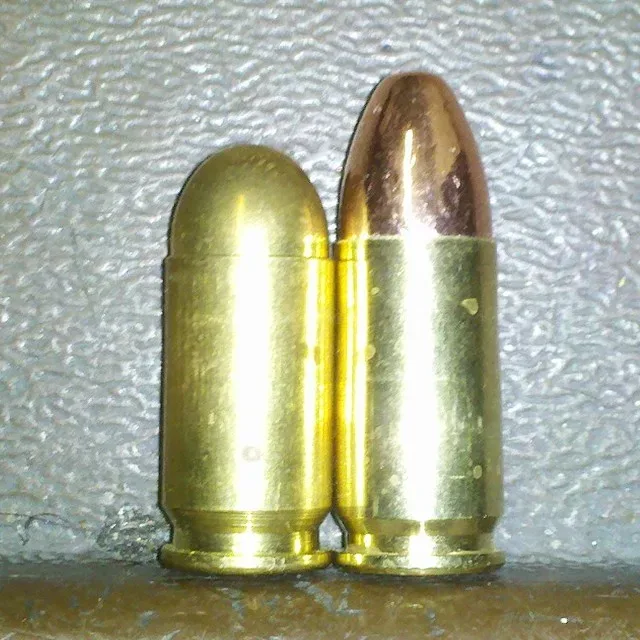
Recoil character in 9×18mm is worth understanding going in. The cartridge sits between .380 ACP (9×17mm) and 9×19mm Parabellum in both case length and ballistic performance. The recoil impulse has been described as sharp rather than heavy — a quick, snappy push rather than a slow push. The 9×18mm uses a slightly larger 0.365-inch diameter bullet compared to the 0.355-inch bullet used by standard 9mm and .380 ACP, and the case length at 18mm splits the difference between the two Western cartridges.
Key Point: The heavy recoil spring required by blowback operation makes racking the slide noticeably stiff — stiffer than you'd expect from a pistol this size. Shooters with limited hand strength should work the slide before committing to this as a carry gun.
Grip technique matters. A high "thumbs-forward" grip — common in modern pistol technique — can position the support thumb in contact with the slide during cycling. According to a report from Firearms Insider, this creates enough drag to occasionally leave a spent case in the chamber. Curling both thumbs down and rearward eliminates the issue entirely. It's a technique adjustment, not a mechanical defect, but worth knowing.
For shooters accustomed to Walther PP-series takedown, the Vz. 82's mechanism will feel familiar but improved. Both systems use a hinged trigger guard to release the slide assembly. On the PP and the Soviet Makarov, the trigger guard must be held down while simultaneously manipulating the slide — a process that benefits from a third hand. The Vz. 82's trigger guard locks open and stays there until manually re-engaged, which makes field-stripping straightforward.
Strengthsedit
- Ambidextrous thumb safety and magazine release — reportedly the first service pistol to combine both
- Chrome-plated, polygonally-rifled barrel resists corrosion from surplus ammunition and extends service life
- Fixed barrel blowback delivers consistent accuracy; low bore axis reduces muzzle rise
- 12-round staggered magazine in a compact frame — 50% more capacity than the single-stack Soviet Makarov PM
- DA/SA trigger with internal hammer block provides drop safety without a dedicated decocker
- Build quality consistently rated above comparable Warsaw Pact-era sidearms
- Improved trigger guard takedown mechanism over the Walther PP and Makarov — locks open during disassembly
- C&R eligible since February 2007 — simplified transfer process for licensed collectors
- Surplus examples often include original holster, spare magazine, cleaning rod, and lanyard
- Tritium sights designed for the CZ 75 have been reported to fit, improving low-light capability
Weaknessesedit
- No decocking lever — manual hammer lowering on a chambered round requires practiced technique or deliberate carry discipline
- Heavy recoil spring from blowback operation makes slide manipulation harder than the pistol's size implies
- 9×18mm Makarov is absent from most retail shelves; requires online ordering or specialty sourcing
- Spare parts and accessories are surplus-market dependent — no new production supply chain
- Surplus grade condition varies significantly; a clean example costs noticeably more than a Grade-B worn one
- Thumbs-forward grip technique can cause slide drag and incomplete cycling; requires a grip adjustment
- Holster selection is limited compared to common modern handguns
- U.S. import markings are visible on the frame; quality varies by importer
- No new production — all examples are used military surplus or out-of-production civilian CZ 83s
Notable Usersedit
The Vz. 82 saw wide adoption across military and law enforcement organizations following its 1983 introduction. According to Wikipedia:
| Country / Organization | Role / Notes |
|---|---|
| Czechoslovakia | Standard military sidearm 1983–1993 |
| Czech Republic | Continued in service; gradual phase-out began 2012 in favor of CZ 75 P-01 and CZ P-10 C/F |
| Slovakia | Retained after 1993 Velvet Divorce |
| Ukraine | 30,150 pistols gifted by Czech Republic in 2022 in response to Russian invasion |
| Israel | Used by Israel Police law enforcement |
| Palestinian Authority | Used by Palestinian security forces |
| Georgia | Imported early 1990s; used by elite National Guard and Police units |
| Indonesia | Used by Forest Rangers |
| Kazakhstan | 20 CZ 83 pistols purchased in 1998 for Ministry of Internal Affairs |
| North Korea | Listed as user |
| Vietnam | Used by People's Army of Vietnam and Vietnam People's Public Security; 9×18mm CZ 83 imported in the 1980s |
A CZ 83 was used by the German neo-Nazi organization National Socialist Underground in racially motivated murders across Germany in the 2000s, per Wikipedia citing NDR reporting.
The BGC Takeedit
The following is an editorial assessment — not sourced from manufacturers or distributors.
The Vz. 82 is the Eastern Bloc pistol that the Soviet Makarov wanted to be. Same cartridge, same general size envelope — but the Czechs gave you double the magazine capacity, ambidextrous controls, a chrome-lined polygonal barrel, and a takedown mechanism that doesn't require a prayer and an extra thumb. If you're going to live in the 9×18mm world, this is the gun to do it with.
The C&R status is a genuine practical advantage if you hold that license. Buying surplus firearms through FFL transfers adds cost and friction; the C&R path removes both. For collectors, the low purchase price relative to condition and history makes these hard to pass up when they show up in decent shape.
For carry use, the no-decocker situation is the real friction point. You have to decide how you're living with this gun. Cocked and locked on the frame safety works, but it requires consistent discipline. Hammer down on an empty chamber is safe but slow. Hammer down on a loaded chamber via manual lowering is the kind of thing that ends careers and worse when it goes wrong. The gun doesn't make this decision for you, and you need to make it consciously before you put this in a holster.
The ammunition sourcing issue is real but manageable. If you already shoot Makarov caliber, you have stock. If you're new to it, plan ahead — this is not a gun you resupply at the Walmart sporting goods counter. Czech military surplus by Sellier & Bellot is the gold standard load for this pistol per range reports; the slightly elevated pressure was apparently tuned for the Vz. 82 specifically.
The 2–3 inch groups at 50 feet reported in testing are solid for a fixed-sight blowback pistol in this price range. The fixed barrel does its job. This isn't a bullseye gun, but it shoots better than most people expect from a surplus pistol that used to cost less than $200.
Bottom line: the Vz. 82 is a well-engineered piece of Cold War history that still functions as a practical handgun. The weaknesses are real but known quantities — not surprises. Go in with eyes open on the decocker situation and the ammo logistics, and you have a compact, reliable, historically interesting pistol that punches above its typical street price.
See Alsoedit
- CZ 83 (civilian export variant)
- CZ 75 / CZ 75 P-01 (Czech military replacement for the Vz. 82)
- CZ P-10 C (current Czech military service pistol)
- Makarov PM (Soviet contemporary; single-stack Makarov in the same caliber)
- Vz. 52 (Czechoslovak predecessor; 7.62×25mm Tokarev)
- Walther PP / PPK (mechanical inspiration for blowback design and takedown approach)
- 9×18mm Makarov (cartridge reference)
Referencesedit
- https://en.wikipedia.org/wiki/CZ_82
- https://www.recoilweb.com/crapshoot-cz-82-review-181981.html
- https://www.militaryfactory.com/smallarms/detail.php?smallarms_id=1208
- https://www.firearmsinsider.tv/gun-gear-reviews/cz-82-9x18-pistol-review
- http://www.eyrie.net/Grill/GotW/Entries/007.html
- https://weaponsystems.net/system/289-CZ+82
- https://www.youtube.com/watch?v=ciqp09o__FA
- https://www.youtube.com/watch?v=KEk1EtjmdLI
Last Updated: March 30, 2026
- Gls Guns(Sumner, IA)
- Bi-mart - Yakima (Fruitvale Ave)(Yakima, WA)
- New Philly Sportsman Specialities(New Philadelphia, OH)
- R&R Sports & Outdoors(Brandon, FL)
No reviews yet
Be the first to review the CZ 82. Share your experience with the community.
Write the First ReviewLoading comments...