State Details
District of Columbia

Overview | |
|---|---|
State | District of Columbia (DC) |
Statehood | N/A -- federal district, not a state |
Population | 678,972 |
Gun Ownership | 25.7% |
Active FFLs | 3 |
Carry Laws | |
Constitutional Carry | No |
Open Carry | No |
CCW Permit Available | Yes |
Permit Reciprocity | none |
Self-Defense | |
Castle Doctrine | Limited |
Stand Your Ground | No |
Duty to Retreat | Yes |
Regulations | |
State Preemption | No |
Red Flag / ERPO | Yes |
Waiting Period | 10 days |
Universal BGC | Yes |
NFA Items | No |
Assault Weapons Ban | Yes |
Magazine Limit | 10 rounds |
Key Legislation | |
| |
Notable Manufacturers | |
| |
District of Columbia Firearms History
Reference article
From The Boise Gun Club Handbook
Overviewedit
No other jurisdiction in the United States has shaped national firearms law more directly than the District of Columbia -- and done so almost entirely by trying to eliminate guns from civilian hands. The ten-square-mile federal enclave carved from Maryland and Virginia land in 1790 has been a laboratory for the most aggressive gun restrictions in American history, and the legal battles that followed those restrictions produced the most consequential Second Amendment rulings the country has ever seen.
DC is not a state. It has no governor, no state legislature, and its residents have no voting representation in Congress.
Understanding DC's firearms history means understanding how one city's political decisions forced the entire country to finally answer a question that had been deferred for nearly 70 years.
That unique constitutional status made it ground zero for the Second Amendment debate in a way no state could be -- federal courts had direct jurisdiction, and the Supreme Court's 2008 decision in District of Columbia v. Heller landed with force precisely because DC's peculiar legal standing made the individual-rights question impossible to sidestep.
Early Federal Period: Arsenal, Navy Yard & the Armed Capitaledit
Fortress Washington
When Congress selected the Potomac site for the permanent federal seat in 1790, the decision carried immediate military implications. The new government needed facilities to store and manufacture arms under federal control, and the District of Columbia became home to two of the most important installations in early American military history.
Federal Military Installations
The Washington Arsenal, established at Greenleaf Point (the confluence of the Potomac and Anacostia rivers) in 1791, served as the primary federal storage depot for ordnance on the Eastern Seaboard. By the early 19th century it held tens of thousands of muskets, cannon, and powder stores. It was not a manufacturing facility on the scale of Harper's Ferry Arsenal across the Potomac in what was then still Virginia, but its logistical role was critical.
During the War of 1812, British forces under Admiral Cockburn burned Washington in August 1814 -- the Arsenal included. Retreating American soldiers had already attempted to destroy the powder stores to prevent capture, and the resulting explosions killed several British soldiers. The Arsenal was rebuilt and remained operational well into the Civil War era before being gradually transitioned to other uses.
| Installation | Established | Primary Function | Notable Features |
|---|---|---|---|
| Washington Arsenal | 1791 | Federal ordnance storage | Located at Greenleaf Point; burned by British 1814; rebuilt |
| Washington Navy Yard | 1799 | Naval ordnance manufacturing | Most productive naval facility; manufactured Dahlgren guns |
| Harper's Ferry Arsenal | 1799 | Arms manufacturing | Larger scale production across Potomac in Virginia |
The Washington Navy Yard, established in 1799 on the Anacostia River, became the most productive naval ordnance facility in the country during the 19th century. Under Commandant Thomas Tingey, it built the early American Navy's guns and continued manufacturing and proving naval ordnance through the Civil War. The Navy Yard's gun factory produced the Dahlgren gun -- the smoothbore cannon designed by Rear Admiral John A. Dahlgren that became standard armament on Union warships. Dahlgren worked at the Navy Yard from the 1840s onward, running the ordnance department and conducting live proof tests on the Anacostia waterfront. His bottle-shaped iron cannon design, proven at the Yard, equipped more Union naval vessels than any other cannon type during the Civil War.
Civilian Gun Culture
Civilian gun ownership in the early District followed the norms of the era -- entirely unrestricted, culturally unremarkable. Residents of Georgetown, Alexandria (then still part of the District), and Washington City kept firearms as a matter of course. The city's population was small, its neighborhoods mixed between federal workers and working tradespeople, and personal firearms were no more controversial than they were anywhere else on the Atlantic seaboard.
Alexandria was retroceded to Virginia in 1846, shrinking the District to its current Maryland-derived footprint. That retrocession had nothing to do with guns, but it matters for understanding what DC is today -- a jurisdiction that is legally and constitutionally unlike any state, governed ultimately by Congress, and subject to federal court jurisdiction without the usual state intermediary.
Civil War Era: Occupied Capitaledit
Fortress Washington
Washington spent the entire Civil War as an armed camp. After the fall of Fort Sumter in April 1861 and the subsequent secession of Virginia, the capital sat surrounded on three sides by hostile or uncertain territory. Maryland had not seceded but was deeply divided, and Confederate forces were positioned within artillery range of the Capitol dome for much of the war's early period.
The government responded by fortifying the city with a ring of 68 forts and batteries -- Fort Stevens, Fort Lincoln, Fort Totten, and dozens more -- encircling Washington in what became the most heavily fortified city in the Western Hemisphere by 1863.
| Fortification System | Quantity | Key Examples | Construction Period |
|---|---|---|---|
| Forts and Batteries | 68 total | Fort Stevens, Fort Lincoln, Fort Totten | 1861-1863 |
| Garrison Strength | ~30,000 troops | Various Union regiments | Peak 1864 |
| Defensive Perimeter | 37 miles | Complete ring around capital | Most fortified Western Hemisphere city |
The Washington Arsenal expanded dramatically to supply these fortifications. By 1864 it employed hundreds of workers manufacturing ammunition and storing ordnance.
Early's Raid and Fort Stevens
In July 1864, Confederate General Jubal Early led approximately 15,000 troops to the outskirts of Washington, reaching Fort Stevens on the Seventh Street Pike on July 11-12. This was the only direct Confederate attack on the capital, and it is the only engagement of the Civil War where a sitting president came under direct enemy fire -- Abraham Lincoln famously stood on the parapet at Fort Stevens observing the skirmish on July 12 until an officer -- reportedly Oliver Wendell Holmes Jr., then a young captain -- told him to get down. Early withdrew after determining the fortifications were too strong.
Sequence of events that transformed Washington into an armed fortress
The Washington Arsenal disaster of June 17, 1864 killed 21 workers -- mostly young women employed in the cartridge-filling department -- when loose powder ignited in the laboratory building. It remains one of the deadliest industrial accidents in the District's history, and it prompted federal investigations into munitions worker safety that influenced subsequent ordnance manufacturing standards.
Wartime Civilian Firearms
Civilian firearms in wartime Washington were complicated. The District sat under martial law provisions during much of the war, and the military government had authority to restrict movement and arms carrying as it saw fit. The question of armed freedmen was politically explosive -- Washington had a large free Black population before the war that grew dramatically as escaped slaves reached Union lines. The political debates over whether to arm Black troops, resolved with the formation of the United States Colored Troops in 1863, played out in part against the backdrop of Washington's racially charged wartime politics.
19th Century: Reconstruction, Policing & the Shift Toward Restrictionedit
After the Civil War, Washington's relationship with civilian firearms began its long drift toward restriction. The District's governance was directly controlled by Congress, and Congress was responsive to the concerns of the federal bureaucracy and the political class that populated the capital -- neither of which was particularly enthusiastic about armed civilians in the streets of the national seat of government.
The Metropolitan Police Department, established in 1861 under congressional authority, gradually accumulated powers to regulate arms carrying in the District. By the late 19th century, DC had statutes restricting the carrying of concealed weapons that were more stringent than most contemporary state laws. These were not unusual for urban jurisdictions of the era -- New York and other major cities had similar restrictions -- but DC's congressional governance meant there was no state-level political counterweight to federal and municipal officials who preferred a disarmed civilian population in the capital.
The assassination of President James A. Garfield at the Baltimore and Potomac Railroad Station in Washington on July 2, 1881 -- shot by Charles J. Guiteau with a British Bulldog revolver -- intensified conversations about firearms in the capital, though it produced no immediate legislative change. The assassination of President William McKinley in Buffalo in 1901 generated similar debate. Washington itself remained a place where firearms were legally owned but socially complicated by the presence of a governing class that was never entirely comfortable with the armed citizenry it ostensibly served.
20th Century: Federal Power & the Road to the 1975 Banedit
Federal Expansion Era
The 20th century brought two world wars, dramatic federal expansion, and a District of Columbia that was increasingly defined by its role as the administrative center of a growing federal government. The city's population swelled with federal workers, and its political culture became more uniformly liberal as the century progressed -- particularly after the District of Columbia Home Rule Act of 1973, which gave DC residents elected local government for the first time since Congress had stripped self-governance in 1874.
The 1975 Ban
Home rule was barely two years old when the newly empowered DC City Council passed the Firearms Control Regulations Act of 1975. The law was sweeping. It prohibited residents from registering new handguns -- any handgun not already registered before the law took effect was banned from civilian ownership within the District. Shotguns and rifles could be registered, but the law required that all firearms kept in the home be stored unloaded and either disassembled or secured with a trigger lock. Carrying a firearm outside the home without a license was prohibited, and licenses to carry were effectively never issued to civilians.
| DC Firearms Control Regulations Act of 1975 | Provision |
|---|---|
| Handgun Registration | Prohibited after 1975 effective date |
| Existing Handguns | Grandfathered but non-transferable |
| Long Guns | Registration required |
| Storage Requirements | Must be unloaded and disassembled/trigger locked |
| Carry Licenses | Effectively never issued to civilians |
The practical effect was a near-total civilian disarmament in the District. Residents who had registered handguns before 1975 could keep them, but the pool of legally owned handguns shrank with each passing year as those grandfathered weapons were transferred, lost, or destroyed with no legal mechanism to replace them. By the late 1990s, legal handgun ownership in DC had effectively ceased for all practical purposes.
Crime and Justification
The law's sponsors and defenders argued it was a necessary response to the District's severe crime problem. Washington's homicide rate through the late 1980s and early 1990s -- the crack epidemic era -- was among the highest of any American city, earning it the grim label "murder capital of the United States" in the early 1990s. Gun control advocates pointed to the high rate of gun violence as justification for the ban. Gun rights advocates pointed to the same statistics as evidence that disarming law-abiding residents had accomplished nothing except leaving them defenseless.
The Washington Navy Yard continued its role as a federal ordnance facility through the 20th century, transitioning from manufacturing to a Naval Weapons Plant and eventually to administrative and museum functions. The Dahlgren Hall at the Yard preserves its 19th-century ordnance heritage. The Navy Yard remains a significant federal installation -- and was the site of the September 16, 2013 mass shooting in which Aaron Alexis killed 12 people, an event that predictably reignited DC's gun control debates despite occurring entirely within a secure federal military facility.
Modern Era (2000–Present): Heller, the Long Legal War & Current Realityedit
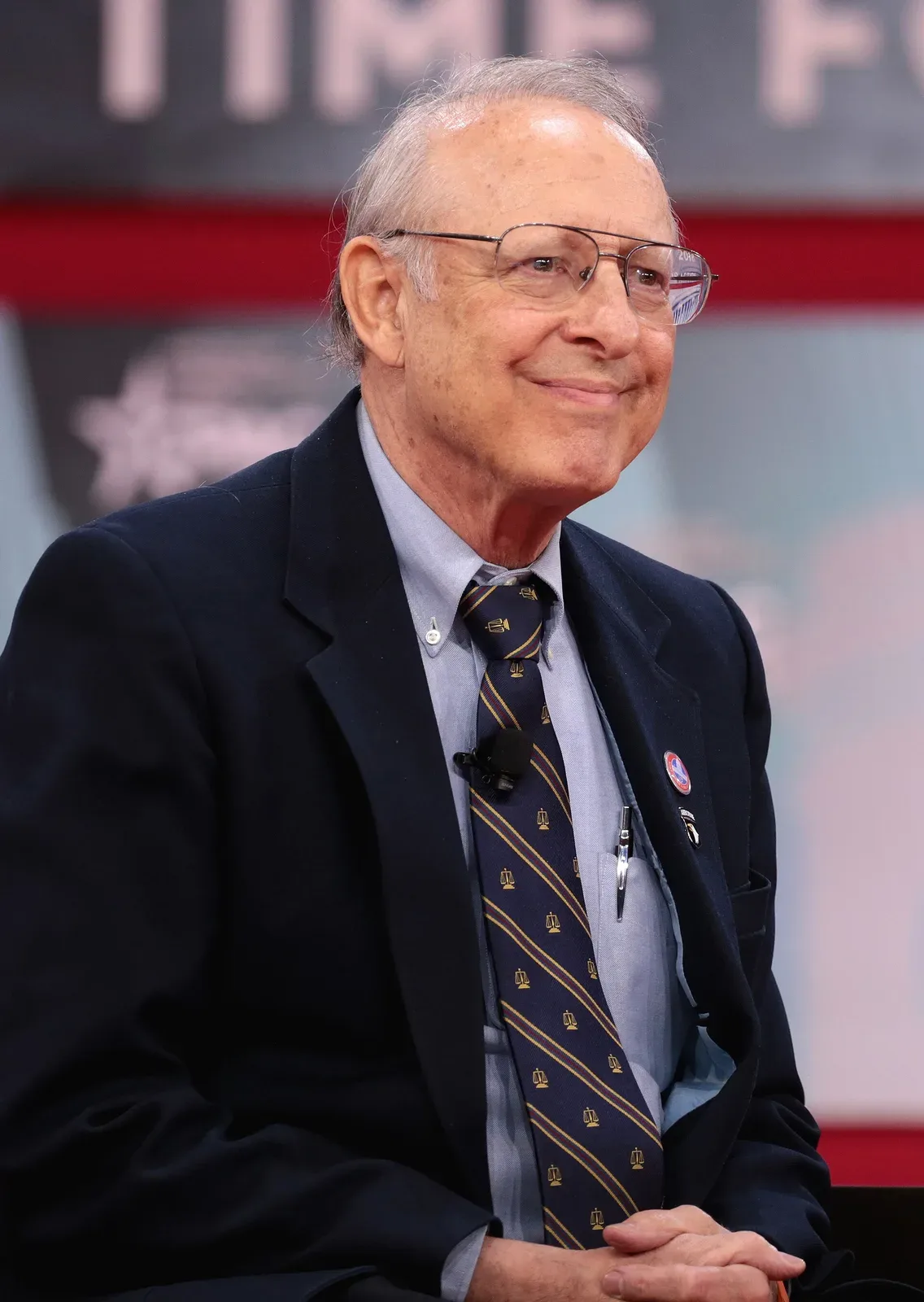
Building the Heller Case
The legal challenge to the 1975 Act began taking shape in the early 2000s. Robert A. Levy, a senior fellow at the Cato Institute who had made his fortune in business before earning his law degree at age 50, spent two years identifying and vetting plaintiffs for a Second Amendment challenge he intended to personally finance.
Levy had never owned a gun himself -- the case was a constitutional scholar's project, modeled on the deliberate plaintiff-selection strategy of Thurgood Marshall in the school desegregation cases.
Clark M. Neily III and co-counsel assembled six plaintiffs: Dick Anthony Heller, a licensed special police officer who carried a gun in federal buildings but was prohibited from keeping one in his home near the Kentucky Courts public housing complex in Southeast DC; Shelly Parker, a software designer who had been threatened by drug dealers while working to clean up her neighborhood; Tom G. Palmer, a Cato Institute colleague who had defended himself with a handgun from a threatening group in California in 1982; Tracey Ambeau (later Hanson), an Agriculture Department employee living in a high-crime neighborhood near Union Station; George Lyon, a communications lawyer who held DC registrations for long guns but wanted a handgun; and Gillian St. Lawrence, a Georgetown mortgage broker who owned legally registered long guns but wanted home-defense access.
| Heller Plaintiff | Occupation | Standing Issue |
|---|---|---|
| Dick Anthony Heller | Licensed special police officer | Applied for and denied handgun registration |
| Shelly Parker | Software designer | Threatened by drug dealers |
| Tom G. Palmer | Cato Institute researcher | Previous self-defense experience |
| Tracey Ambeau | USDA employee | High-crime neighborhood resident |
| George Lyon | Communications lawyer | Owned long guns, wanted handgun |
| Gillian St. Lawrence | Georgetown mortgage broker | Owned long guns, wanted home defense access |
Litigation Strategy
The lawsuit -- Parker v. District of Columbia in the trial court -- was filed in February 2003 in the U.S. District Court for the District of Columbia. District Court Judge Emmet G. Sullivan dismissed it on March 31, 2004. On appeal, the U.S. Court of Appeals for the D.C. Circuit reversed in a 2-1 decision, with Senior Circuit Judge Laurence H. Silberman writing the majority opinion holding that the Second Amendment protects an individual right. Only Dick Anthony Heller was found to have standing, having actually applied for and been denied a handgun registration -- the case was renamed Heller v. District of Columbia at the appellate level.
The 15-year legal battle from initial filing to shall-issue carry
Supreme Court Decision
The Supreme Court granted certiorari and heard argument on March 18, 2008. On June 26, 2008, the Court decided District of Columbia v. Heller, 554 U.S. 570, in a 5-4 decision authored by Justice Antonin Scalia, joined by Chief Justice John Roberts and Justices Anthony Kennedy, Clarence Thomas, and Samuel Alito. The majority held that the Second Amendment protects an individual right to keep and bear arms unconnected with militia service, for traditionally lawful purposes including self-defense in the home. DC's handgun ban and the mandatory trigger-lock/disassembly requirement for long guns were both struck down as unconstitutional.
The Second Amendment protects an individual right to keep and bear arms unconnected with militia service, for traditionally lawful purposes including self-defense in the home.
Justice John Paul Stevens dissented, joined by Justices David Souter, Ruth Bader Ginsburg, and Stephen Breyer, arguing that the Amendment protects only militia-related arms bearing. Justice Breyer filed a separate dissent arguing that even under an individual-rights reading, DC's law survived constitutional scrutiny as a reasonable regulation.
District of Columbia v. Heller was the most significant Second Amendment ruling in American history -- the first time the Supreme Court directly held that the Amendment protects individual rights independent of militia service. Because DC is a federal enclave rather than a state, the ruling did not automatically apply to state and local governments. That question was resolved two years later in McDonald v. City of Chicago (2010), which incorporated the Second Amendment against the states through the Fourteenth Amendment's Due Process Clause.
Post-Heller Compliance
DC's response to Heller was grudging compliance at minimum speed. The Council enacted emergency legislation in July 2008 that technically allowed handgun registration but imposed so many procedural hurdles:
- Mandatory ballistics testing
- Registration fees
- Multiple-step approval processes
- Requirement that all firearms be registered through a single authorized dealer
Heller himself was initially turned away when he tried to register his revolver because it was classified as a "multi-shot" weapon. The litigation continued.
Heller v. District of Columbia (Heller II), decided by the DC Circuit in 2011, addressed the new post-ruling regulations. The Circuit Court upheld the registration requirements, the prohibition on semi-automatic rifles, and the magazine capacity limits DC had enacted. The litigation underscored that Heller had settled the constitutional question in the abstract while leaving the scope of permissible regulation deeply contested.
Carry Rights Battles
The carry question came next. DC had never issued civilian carry permits in any practical sense, and after Heller it continued not to. Palmer v. District of Columbia, decided by U.S. District Court Judge Frederick J. Scullin Jr. in July 2014, held that DC's complete prohibition on carrying firearms outside the home was unconstitutional. DC appealed and the Circuit Court stayed the ruling pending appeal, but DC was ultimately forced to create a carry permit system.
The system DC created was "may-issue" -- applicants were required to demonstrate a specific, articulable need for self-defense beyond the general desire for protection. The Metropolitan Police Department applied this standard rigorously, approving almost no applications from ordinary residents. In Wrenn v. District of Columbia, decided by the D.C. Circuit on July 25, 2017, a divided panel struck down DC's "good reason" requirement as inconsistent with the Second Amendment. The Circuit held that self-defense is the core right Heller identified, and the District cannot require residents to show special need before exercising a core constitutional right. DC did not petition for Supreme Court review, and the ruling took effect.
As of 2026, DC maintains a "shall-issue" carry permit system in technical terms -- but the application process remains burdensome compared to most states. Applicants must complete a training requirement, pass a background check, pay fees, and renew periodically. DC has no reciprocity with any state carry permits, meaning out-of-state permit holders cannot legally carry in the District. Constitutional carry has not been enacted and has no realistic political path in DC's current legislative environment.
The September 2013 Washington Navy Yard shooting killed 12 employees and wounded several others. The shooter, Aaron Alexis, had a Secret clearance and legitimate access to the installation -- he used a Remington 870 shotgun he had legally purchased in Virginia after passing a background check. DC officials used the event to call for tighter federal gun laws, though the mechanics of how Alexis obtained and brought his weapon illustrated limitations of jurisdiction-specific restrictions when firearms can be legally purchased and transported across state lines.
Notable Figures & Manufacturersedit
DC has never had a significant commercial firearms manufacturing industry -- the District's economic base has always been governance, law, and associated professional services, not industrial production. The notable firearms figures connected to the District are almost entirely in the legal, political, and military ordnance spheres.
Military Ordnance Figures
John A. Dahlgren (1809-1870) built his career at the Washington Navy Yard and developed the Dahlgren gun there, becoming the Navy's ordnance chief and eventually a Rear Admiral. His design work at the Yard represents DC's most concrete contribution to American arms development.
Legal Warriors
Robert A. Levy financed and directed the Heller litigation from his position at the Cato Institute on Massachusetts Avenue. His decision to build a plaintiffs' coalition modeled on civil rights litigation strategy -- diverse, carefully vetted, selected to foreclose procedural dismissal -- was the tactical choice that got the case to the Supreme Court in a posture the majority could work with.
Dick Anthony Heller was a Capitol Police special officer who lived in Southeast DC and whose name now attaches to the most consequential Second Amendment case in American history. He continued engaging in Second Amendment litigation in the District after the 2008 ruling, challenging the post-Heller regulations in the Heller II case.
Clark M. Neily III and Alan Gura, who argued the case before the Supreme Court, are both connected to DC's legal community. Gura's oral argument in Heller on March 18, 2008 is studied in law schools as an example of skilled Supreme Court advocacy under intense questioning from both sides.
Antonin Scalia's majority opinion in Heller was written in DC -- at the Supreme Court building on First Street NE -- and constitutes the most detailed textual and historical analysis of the Second Amendment ever produced by the Court. Whatever one thinks of the result, the opinion's methodology shaped how Second Amendment cases are argued and decided nationwide.
Political and Advocacy Players
The National Rifle Association maintained its headquarters in Washington, DC for decades before moving to Fairfax, Virginia. Its political operation -- the NRA-ILA (Institute for Legislative Action) -- remains headquartered in the Virginia suburbs just across the Potomac. The NRA's physical and political proximity to Congress has been a constant feature of DC's gun policy environment.
The Giffords Law Center (formerly the Law Center to Prevent Gun Violence) and Everytown for Gun Safety maintain significant Washington advocacy presences, reflecting the District's role as the national arena where gun policy is ultimately decided through legislation, regulation, and litigation.
Current Legal Landscapeedit
DC's current firearms laws are among the most restrictive in the United States -- a statement that remains true even after Heller, McDonald, Wrenn, and the Supreme Court's 2022 decision in New York State Rifle & Pistol Association v. Bruen, which established a historical-tradition test for Second Amendment regulations and struck down New York's may-issue carry regime.
Registration and Ownership
Handgun registration is required for all handguns kept in the District. The registration process involves:
- Submit firearm to Metropolitan Police Department for ballistics testing
- Pay registration fees
- Complete firearms safety course
- Pass written test
- Renew every three years
Prohibited Items
Assault weapons -- defined by DC law to include semi-automatic rifles with detachable magazines and various listed features -- are prohibited. DC's assault weapons ban survived post-Heller challenge in the Heller II litigation in 2011, though the legal durability of that ruling under the Bruen historical-tradition framework is actively contested.
Magazine capacity is limited to ten rounds. Standard-capacity magazines common in modern defensive handguns -- 15-17 rounds for a Glock 17, for example -- are illegal in the District.
| Current DC Gun Law | Requirement | Post-Heller Status |
|---|---|---|
| Handgun Registration | Required, 3-year renewal | Upheld in Heller II |
| Assault Weapons Ban | Semi-auto rifles prohibited | Under Bruen challenge |
| Magazine Capacity | 10-round limit | Under Bruen challenge |
| Carry Permits | Shall-issue since Wrenn | No reciprocity |
| Safe Storage | Locked when not in control | Modified post-Heller |
Carry and Storage
Carry permits are available on a shall-issue basis following Wrenn, but the process involves training requirements, fees, and Metropolitan Police Department processing. No reciprocity with any state permit exists. Residents of Virginia or Maryland with valid carry permits must disarm before entering the District.
Red flag (ERPO) laws are in effect in DC, allowing courts to order temporary firearms removal from individuals deemed to pose a risk. The District enacted its Extreme Risk Protection Order statute in 2019.
Safe storage requirements apply -- firearms must be stored in a locked container or with a trigger lock when not in the owner's immediate control. This requirement, in its original form, was directly addressed in Heller, where the Court struck down the mandatory trigger-lock requirement as applied to operable home-defense firearms. DC's current safe storage law is structured to comply with Heller while still requiring secured storage in most circumstances.
Ongoing Legal Challenges
The New York State Rifle & Pistol Association v. Bruen decision (2022) has generated ongoing litigation challenging DC's assault weapons ban, magazine restrictions, and registration requirements under the new historical-tradition test. As of early 2026, several cases challenging these provisions are working through the federal courts, and the legal landscape is actively shifting.
DC has no state preemption (there are no localities within DC to preempt) and no hunting tradition to speak of -- it is an urban jurisdiction where the firearms policy debate is almost entirely about self-defense in an urban environment, carry rights, and the scope of permissible regulation in a post-Heller constitutional framework.
The BGC Takeedit
Gun owners in DC exist in a state of permanent legal friction. This is not the Idaho range-day vibe, or the Texas "my rights don't need a permit" attitude, or even the quiet pragmatism of gun owners in blue suburban states who just want to be left alone. DC gun owners are, almost by definition, people who have decided that navigating one of the most complicated and adversarial compliance environments in the country is worth it to exercise a constitutional right that their city's government has spent 50 years trying to eliminate.
The Heller case is the defining fact of DC's firearms history -- nothing else comes close.
The irony is thick: the most restrictive gun jurisdiction in the country produced the ruling that enshrined the individual right to keep arms as settled constitutional law for the entire nation.
The DC City Council's 1975 overreach handed Second Amendment advocates the perfect test case, in the perfect jurisdiction, at the perfect historical moment. If DC had been a state, Heller almost certainly doesn't happen the way it did -- the federal enclave status removed the incorporation question and forced a direct confrontation with the core Second Amendment issue that the Court had been dodging since Miller in 1939.
Post-Heller DC has been a demonstration of what happens when a governing body treats a constitutional ruling as an obstacle to route around rather than a command to comply with. The registration system, the assault weapons ban, the may-issue carry system that Wrenn eventually killed, the magazine limits -- every one of these was a political choice to do the maximum restriction the courts might tolerate rather than a good-faith attempt to balance public safety with constitutional rights. That posture has kept DC gun owners in court for nearly two decades, and the Bruen framework is going to keep the litigation going.
For the practical-minded gun owner: if you live in DC and want to exercise your rights, you're looking at a registration process that takes weeks, fees that stack up, training requirements, and a carry permit process that works but requires effort. If you're visiting DC, your home state permit means nothing here, and you need to plan accordingly. The Metropolitan Police Department treats firearms violations seriously, and the federal status of many DC locations means federal charges are possible for violations that would be state misdemeanors elsewhere.
The gun culture in DC is small but not trivial. There are DC-based shooters who train seriously, who carry legally, and who participate in competitive shooting at ranges in Northern Virginia and suburban Maryland -- because there are no commercial shooting ranges within the District itself. That fact alone tells you something about where DC's political priorities have been.
DC is not going to become gun-friendly through the political process. The Council reflects the overwhelming preferences of a majority-liberal, majority-urban electorate that views gun restrictions as common sense rather than constitutional violations. The change in DC -- and it has been real change, from total ban to functional shall-issue carry over 18 years of litigation -- has come entirely from federal courts applying constitutional standards. That trend is likely to continue as Bruen challenges work through the system.
For Second Amendment history, DC is ground zero. For actually exercising Second Amendment rights, it remains one of the hardest places in the country to do it.
Referencesedit
- District of Columbia v. Heller, 554 U.S. 570 (2008)
- Parker v. District of Columbia, 311 F. Supp. 2d (D.D.C. 2004), reversed, 478 F.3d (D.C. Cir. 2007)
- Heller v. District of Columbia (Heller II), 670 F.3d 1244 (D.C. Cir. 2011)
- Palmer v. District of Columbia, 59 F. Supp. 3d 173 (D.D.C. 2014)
- Wrenn v. District of Columbia, 864 F.3d 650 (D.C. Cir. 2017)
- McDonald v. City of Chicago, 561 U.S. 742 (2010)
- New York State Rifle & Pistol Association v. Bruen, 597 U.S. 1 (2022)
- District of Columbia Firearms Control Regulations Act of 1975, D.C. Law 1-85
- District of Columbia Home Rule Act, Pub. L. 93-198 (1973)
- Bowling, Cynthia J. and Matthew Ruther. "Gun Law History in the United States and Second Amendment Rights." Rockefeller Institute of Government, 2019.
- Markel, Howard. "The Washington Arsenal Explosion of 1864." JAMA, 2013.
- Dahlgren, Madeleine Vinton. Memoir of John A. Dahlgren. Boston: James R. Osgood, 1882.
- Levy, Robert A. "The Heller Case: Gun Rights Affirmed." Cato Institute, 2008.
- Overby, Peter. "How the NRA Built a Bureaucracy to Promote Gun Rights." NPR, 2013.
- Metropolitan Police Department, District of Columbia. Firearms Registration and Licensing Requirements, current edition.
Last Updated: February 24, 2026
- Quail Creek Plantation(Okeechobee, FL)
- 2aHawaii(Honolulu, HI)
- Boston Firearms(Everett, MA)
- Safeshoot(Kingston, NY)
Loading comments...