Details
John Hancock Hall

The M1819 Hall rifle's hinged breechblock — the first mass-produced breechloader adopted by the U.S. military, manufactured at Harpers Ferry starting in 1824.
| Biography | |
|---|---|
| Born | January 4, 1781, Portland, Maine |
| Died | February 26, 1841, Darksville, Randolph County, Missouri |
| Nationality | American |
| Legacy | |
| Known For | Invented the M1819 Hall breech-loading rifle and established the manufacturing system that proved interchangeable parts were achievable at scale, founding the American System of Manufacturing |
| Key Innovation | Breech-loading rifle design combined with mechanized production using precision machinery, gauged tolerances, and division of labor to achieve uniform, interchangeable parts manufacturing |
John H. Hall: Breechloader Inventor and Father of American Mass Production
Firearms encyclopedia article
From The Boise Gun Club Handbook
Overviewedit
John Hancock Hall (January 4, 1781 – February 26, 1841) invented the M1819 Hall breech-loading rifle and built the manufacturing system that proved interchangeable parts were actually achievable at scale — not just a theory. His rifle works at Harpers Ferry Arsenal in Virginia became the proving ground for what historians call the American System of Manufacturing, a method that eventually spread far beyond guns into clocks, shoes, bicycles, and automobiles.
Hall didn't just design a faster-loading rifle. He designed the machines, gauges, and factory layout to build it the same way every single time, at volume, with workers who didn't need to be master craftsmen.
His breech-loading design had real tactical advantages — faster loading, especially from prone or mounted positions — but it also had a persistent flaw: gas leakage at the breech joint that reduced velocity and accuracy compared to muzzle-loaders. Hall knew about it. The Army knew about it. Nobody fixed it.
The rifle still served in U.S. conflicts from the Black Hawk War through the Mexican-American War, and some examples were still being fired in percussion-converted form during the Civil War, decades after Hall's death.
Early Life & Backgroundedit
Maine Origins and Early Loss
Hall was born on January 4, 1781, in Portland, Maine — then part of the District of Maine in Massachusetts. His father, a tanner who had graduated from Harvard University, died when Hall was 13, leaving him to take on responsibilities early. Formal schooling was limited; what education he received came largely from his father before that loss.
| Year | Age | Milestone |
|---|---|---|
| 1781 | 0 | Born in Portland, Maine |
| 1794 | 13 | Father dies, takes on responsibilities |
| 1802 | 21 | Working as journeyman cooper |
| 1803 | 22 | Joins Portland Light Infantry militia |
| 1810 | 29 | Sets up woodworking/boat-building shop |
| 1811 | 30 | Develops breech-loading concept |
From Cooper to Gunsmith
He completed an apprenticeship in cooperage and was working as a journeyman cooper on the Portland waterfront by 1802. The trade immersed him in woodworking and assembly — fitting staves, managing tolerances, making things that had to hold together under pressure. It wasn't gunsmithing, but it built the mechanical instincts he'd need later.
Hall joined the Portland Light Infantry militia in 1803, and that experience pointed him toward firearms. According to historical sources, he became focused specifically on the problem of loading speed — how long it took a soldier to reload a muzzle-loader in the field and what that cost in a fight. That's the problem the breech-loader was built to solve.
By 1810, he had set up a woodworking and boat-building shop and was tinkering with guns on the side. The breech-loading concept came together in early 1811 while he was living in Portland and North Yarmouth, Maine.
Key Contributionsedit
The Patent and Initial Production
On May 21, 1811, Hall received U.S. Patent No. 1,515X — issued jointly with Dr. William Thornton, a Washington, D.C., architect who claimed partial influence on the concept. The patent covered a tip-up breech system: a rear-pivoted, hinged breechblock that a soldier could raise to expose the chamber, load powder and ball directly, lock back down, prime the pan, and fire. No ramrod required for the main charge. For a soldier lying in a ditch or sitting on a horse, that was a significant practical advantage over the standard muzzle-loader.
Hall's manufacturing revolution: from artisan craftsmanship to mechanized production
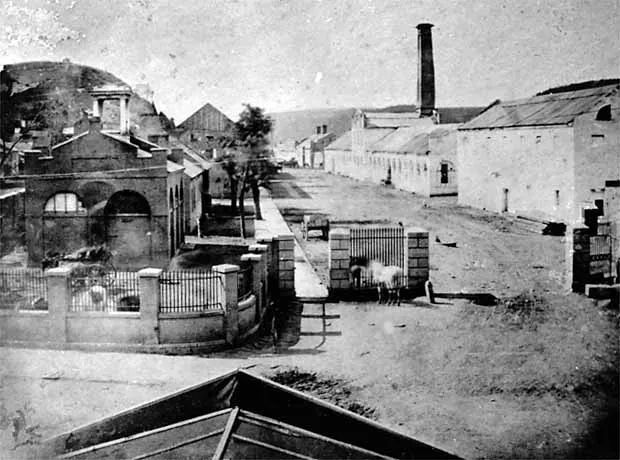
Hall began producing his rifles at around 50 per year out of his Maine shop. The U.S. Army Ordnance Corps ordered 200 rifles in December 1814 — but Hall had to turn them down because he couldn't meet the Army's 1815 delivery deadline. That miss stung, but it also clarified something important: the bottleneck wasn't the design. It was production. Individually fitted parts meant each rifle was essentially a custom job, and custom jobs don't scale.
Hall proposed a solution to the Army in June 1816 — build the rifle around the uniformity principle, what we now call interchangeable parts. Every component dimensionally identical, verified by gauges, so any part from any production run fits any rifle. The Army was interested enough to order 100 rifles under an initial January 1817 contract, and those guns were eventually issued to a regiment at Bellefontaine, Missouri. Field reports from Colonel Talbot Chambers, dated March 1819, were not encouraging — soldiers reported fouling problems and hang-fires, and Chambers dismissed the design as essentially worthless. By then, Hall had already moved to Harpers Ferry.
| Contract Date | Quantity | Terms | Status |
|---|---|---|---|
| Dec 1814 | 200 rifles | 1815 delivery | Declined - couldn't meet deadline |
| Jan 1817 | 100 rifles | Initial contract | Completed, issued to Bellefontaine |
| Mar 19, 1819 | 1,000 rifles | $60/month + $25/rifle + $1 royalty | Main Harpers Ferry contract |
| Jul 1824 | 1,000 rifles | Extension | Completed |
| 1827 | 3,000 rifles | $1,450 annually + royalties | Completed |
| 1828 | 6,000 rifles | Renewal | Completed |
Harpers Ferry Contract and Setup
Hall conducted demonstrations at Harpers Ferry Armory in 1817 and 1818, impressing Superintendent James Stubblefield and Master Armorer Armistead Beckham. On March 19, 1819, he signed a contract with the War Department for 1,000 breech-loading rifles, with interchangeable parts as the chief condition — not a nice-to-have, a requirement.
The terms were specific: a $60 monthly salary, $25 per rifle produced, and a $1 royalty per weapon. Hall relocated to Harpers Ferry in April 1819 and set up Hall's Rifle Works on Virginius Island, a small island in the Shenandoah River, using an old sawmill as his base. The isolation from the main armory wasn't accidental — skilled armory workers resented Hall's authority and his mechanized approach, which threatened to devalue their craftsmanship. Putting him on an island reduced the friction.
Timeline of Hall's manufacturing system development at Harpers Ferry
Manufacturing Innovation Under Pressure
The next five years were brutal. Malaria outbreaks in 1820–1821 hit the workforce hard. Production costs ran over estimates, exceeding $50 per rifle by 1822. Hall consistently ran over budget and struggled to make payroll.
What kept the project alive was backing from Ordnance Colonel George Bomford, who believed in what Hall was building and pushed for contract renewals. Hall's solution to the production problem was methodical. He transferred water power through leather belts and pulleys to run machine tools at greater than 3,000 revolutions per minute — well beyond what most artisans achieved with hand cutters and files. He built machine tools from cast-iron frames to minimize vibration. He employed metal-cutting machines fitted with cutters and saws. Rough-cut components were then hand-filed to final dimension and verified against a gauging system Hall had designed himself. Nothing passed inspection that didn't fit the gauge.
By 1832, inspections confirmed that nearly all tasks in the rifle works were mechanized. Hall reorganized the factory floor around division of labor — workers specialized on specific components rather than building complete rifles. The machines were designed, in Hall's own words, so that activity was more necessary than judgment and common laborers or even young boys could run them successfully.
"One boy by the aid of these machines can perform more work than ten men with files, in the same time, and with greater accuracy." — John H. Hall
Ordnance Colonel George Talcott's 1832 inspection confirmed it: the rifle works achieved greater uniformity and quality than other armories, with a single operator accomplishing what ten manual workers could not.
Validation and Scaling Success
The orders kept coming because the results kept delivering. When the U.S. Ordnance Department sent a three-man committee to verify Hall's work, they found something they hadn't expected. The committee described Hall's system as entirely novel and capable of yielding the most beneficial results to the Country, especially if carried into effect on a large scale.
The Ordnance Department found Hall's system "entirely novel" and capable of yielding "the most beneficial results to the Country, especially, if carried into effect on a large scale."
A 1827 board of commissioners specifically noted the "perfect uniformity" achieved by Hall's machinery — a level of interchangeability they considered "almost or totally impossible" by any other U.S. or European process at the time. Colonel Bomford's 1827 report praised the rifles for "great superiority" in convenience, safety, loading speed, accuracy, and durability, based on more than 13 years of testing. A board at Fortress Monroe in 1826 confirmed that Hall's rifles could achieve up to 77 discharges in 4.5 minutes, compared to 54 from muskets.
The comparative fire trial put numbers to the tactical advantage directly: 38 men, 10 minutes, targets at 100 yards.
| Test Parameter | Muzzle-Loading Rifles | Smooth-Bore Muskets | Hall Breech-Loaders |
|---|---|---|---|
| Shots Fired (10 min) | 464 | 845 | 1,198 |
| Hits at 100 yards | 164 | 208 | 430 |
| Hit Rate | 35% | 25% | 36% |
| Volume Advantage | Baseline | 1.8x | 2.6x |
With conventional muzzle-loading rifles, the company fired 464 shots and scored 164 hits — 35%. With standard smooth-bore Army muskets, they fired 845 shots and scored 208 hits — 25%. With Hall's breech-loaders, they fired 1,198 shots and scored 430 hits — 36%. The hit rate was comparable to the muzzle-loader, but the volume of fire was roughly two-and-a-half times higher.
Impact on Firearms Developmentedit
Technical Specifications and Variants
The M1819 Hall Rifle was a single-shot, breech-loading flintlock chambered in .52 caliber with a 32.5-inch rifled barrel featuring 16 right-hand grooves. The production version used iron furniture, lacquer-browned ironwork, and a case-hardened breechblock. The first 1.5 inches of the bore were left smooth and slightly oversized — not to ease loading, which would have been nearly impossible given the bore was smaller than the chamber, but to protect the rifling during bayonet mounting and drill.
| Model | Year | Type | Barrel Length | Caliber | Production Numbers |
|---|---|---|---|---|---|
| M1819 Hall Rifle | 1819 | Flintlock | 32.5" | .52 | ~23,500 |
| M1824 Hall Rifle | 1824 | Flintlock (refined) | 32.5" | .52 | Included in above |
| M1833 Hall Carbine | 1833 | Flintlock | 26" | .52 | ~13,682 |
| Hall-North Carbine | 1830-1836 | Flintlock | 26" | .52 | ~5,700 (by contractor) |
| Hall Pistol | ~1836 | Flintlock | ~8" | .54 | Limited numbers |
Subsequent variants extended the design: the M1824 Hall Rifle refined the flintlock mechanism; the M1833 Hall Carbine shortened the barrel to 26 inches for cavalry use. A Hall Breech-Loading Pistol was produced in limited numbers in approximately .54 caliber. By 1842, 23,500 rifles and 13,682 Hall-North carbines had been produced, most at Harpers Ferry, with additional production of about 5,700 rifles by contractor Simeon North in Connecticut between 1830 and 1836. Hall earned nearly $40,000 in royalty and patent-licensing fees over the production run.
Combat Service Record
- Second Seminole War (1835–1842): Dragoon regiments found faster reloading useful in Florida swamp terrain
- Black Hawk War (1832): Majority of 6th U.S. Infantry armed with Hall Rifles
- Mexican-American War: Used by Tennessee volunteers, Rochester Union Grays of New York, and Missouri Mounted Volunteers
The Persistent Gas Leak Problem
The Hall rifle's fundamental weakness was well understood and never solved. Gas leakage from the interface between the removable breechblock and the bore on every shot forced a heavier powder charge to compensate for lost pressure, and even with that, the .52-caliber ball's penetrating ability was only one-third that of comparable muzzle-loaders. The muzzle velocity of the carbine variant ran 25 percent lower than the Jenks carbine, despite similar barrel lengths and identical 70-grain powder charges.
| Problem | Cause | Effect | Army Response |
|---|---|---|---|
| Gas leakage | Breechblock-to-bore interface gap | Reduced muzzle velocity, 1/3 penetration of muzzle-loaders | Enlarged gas escape ports |
| Erosion worsening | Hot gases eroding metal surfaces | Gap widens over time | Extended ports from 4" to 4.45", widened 0.1" to 0.175" |
| Higher powder consumption | Compensating for pressure loss | Increased logistics burden | Accepted as operational limitation |
| Reduced accuracy | Inconsistent gas escape | Field complaints from officers | No engineering solution attempted |
As the rifle aged in service, the gas erosion worsened. The hot gases gradually eroded the face of the breechblock and the barrel breech, widening the gap and compounding the problem. Gas escape ports were built into the frame specifically to vent this leakage away from the shooter — and those ports were enlarged during later production runs, extended from 4 inches to 4.45 inches and widened from 0.1 to 0.175 inches, specifically to channel more gas out the sides rather than into the stock. That's an acknowledgment of the problem, not a fix.
A functional breech seal could have accelerated the shift away from muzzle-loaders by a generation. Instead, the Hall rifle spent its entire service life fighting its own physics.
No serious engineering effort was made to develop an effective seal. The Hall rifle's production run ended in 1853, and its gradual replacement came not from a single successor but from the broader shift toward percussion ignition and eventually self-contained cartridges — technologies that also, incidentally, made better breech sealing possible.
Industrial Legacy Beyond Firearms
The rifle's ballistic limitations are almost beside the point when you look at what the Harpers Ferry rifle works actually produced. Hall's cutting machines were engineered for simplicity — designed so that activity was more necessary than judgment and common laborers or even young boys could run them successfully. The machines functioned without manual guidance during operation and stopped automatically when the workpiece was finished, allowing one worker to monitor several machines simultaneously.
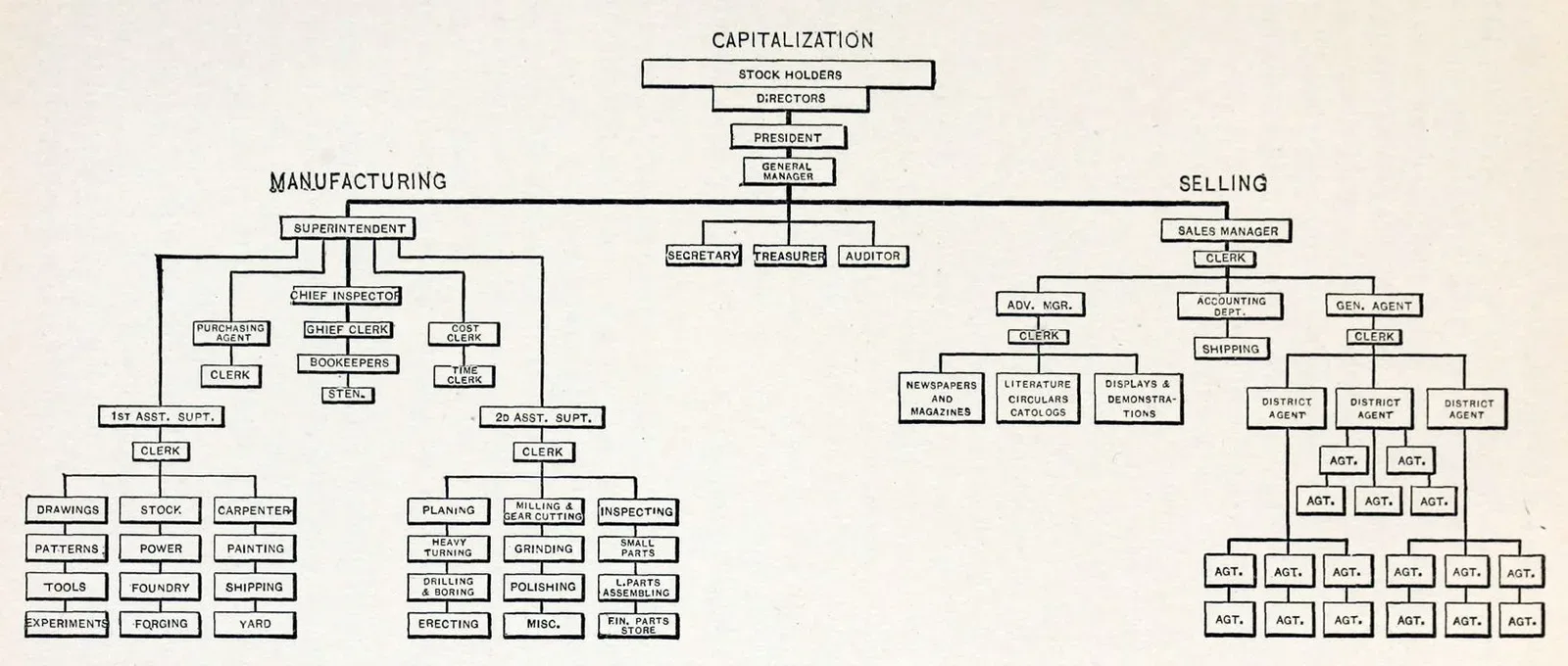
How Hall's manufacturing principles spread throughout American industry
The workers who learned Hall's methods at Harpers Ferry didn't stay in gunsmithing. They took those methods to:
- Precision machinery designed for semi-skilled operation
- Gauged tolerances ensuring component uniformity
- Division of labor with workers specializing on specific components
- Semi-skilled workers producing uniform results without master craftsmanship
The principles Hall demonstrated on Virginius Island — precision machinery, gauged tolerances, division of labor, semi-skilled workers producing uniform components — became the foundation of American industrial production. Together with Simeon North and other armorers of the period, Hall's work at Harpers Ferry is credited as a core contribution to the adoption of the American System of Manufactures as a whole.
Later Life & Legacyedit
Declining Health and Final Contracts
Hall's health began failing noticeably by 1837, when he delegated increasing duties to his son William. On January 14, 1840, he formally requested a medical leave of absence and left Harpers Ferry, never to return.
His original 1819 contract had evolved considerably by this point — by 1835, his compensation was structured as a $1,000 annual salary for personal services plus $1,600 annually for the government's use of his inventions, applicable not only at Harpers Ferry but also at Springfield Armory.
Congressional Petitions and Final Settlement
From 1836 to 1840, Hall petitioned Congress repeatedly for additional compensation for his machinery and interchangeable parts innovations. None of those petitions resulted in payment. He did receive $380 from the government in December 1840 for improvements he had made to his Armory-owned residence on Camp Hill — fencing, grading, paving, landscaping. That was the final financial settlement.
The Committee on Military Affairs had recommended a $10,000 reward to Hall in 1836 for "energetic devotion of great and peculiar talents" over nearly 25 years of service at personal financial sacrifice. He never received it.
Death and Posthumous Recognition
Hall traveled west to Missouri to join family. He died on February 26, 1841, in Darksville, Randolph County, Missouri, at age 60, and was buried in the Hall Family Cemetery in Darksville.
Production of Hall-pattern rifles continued briefly after his departure. The flintlock rifle production effectively ended around the time of his death, though some 4,200 percussion Hall Rifles were assembled during 1841 and 1842. Hall-specific breechloading production concluded in December 1843 with the completion of the Model 1842 carbine, after which the facility repurposed his machinery for standardized musket manufacturing.
Harpers Ferry National Historical Park today maintains a dedicated exhibit and trail on Hall's Rifle Works, including rifle components and interpretive resources emphasizing Hall's contributions from 1819 to 1840. His work is a permanent part of the park's historical narrative on the origins of American industrial manufacturing.
The broader historical accounting is unambiguous. Hall demonstrated that interchangeable parts manufacturing was achievable in practice, not just in theory, at a time when European armories had attempted it and failed. The 1827 board of commissioners said as much directly. What followed from that demonstration — mechanized production spreading across American industry throughout the remainder of the 19th century — traces a direct line back to an old sawmill on a small island in the Shenandoah River.
The BGC Takeedit
Hall tends to get footnoted in firearms history under breech-loaders or under interchangeable parts, but rarely gets his full due in either category. The breech-loader story usually jumps to Dreyse or Chassepot or the metallic cartridge era, skipping past the fact that Hall was issuing breech-loading rifles to U.S. infantry in the 1830s — decades before the needle gun made European militaries pay attention. The interchangeable parts story usually starts with Eli Whitney and the cotton gin mythology, even though the contemporaneous record makes clear that Hall actually achieved what Whitney only claimed.
The gas leak is the honest asterisk. Hall knew about it from early on, the Army knew about it, and for roughly three decades nobody made a serious attempt to engineer a solution. That's a significant institutional failure, not just a design limitation — and it's worth naming it directly.
What Hall did accomplish — building a working factory system on a government shoestring, fighting off resistant skilled workers, surviving malaria outbreaks and budget overruns, and actually delivering on the interchangeable-parts promise — is a story about institutional stubbornness in the best possible sense. He outlasted every obstacle except his own health. The guys who came after him and built American industry out of standardized components learned their trade from his machines. That's not a small thing.
Referencesedit
- https://en.wikipedia.org/wiki/John_H._Hall_(gunsmith)
- https://collegehillarsenal.com/Harpers-Ferry-Hall-Rifle
- https://americansocietyofarmscollectors.org/wp-content/uploads/2022/04/1980-B42-John-H-Hall-And-The-Origin-Of-The-Breech.pdf
- https://www.nps.gov/hafe/learn/historyculture/john-h-hall.htm
Last Updated: February 27, 2026
- Gls Guns(Sumner, IA)
- Bi-mart - Yakima (Fruitvale Ave)(Yakima, WA)
- New Philly Sportsman Specialities(New Philadelphia, OH)
- R&R Sports & Outdoors(Brandon, FL)
Loading comments...