Legal Details
Legislation

The Colt AR-15 Sporter SP1 — the civilian progenitor of modern AR-pattern rifles, first manufactured in 1964 and the baseline for assault weapon definitions.
M62 (CC BY-SA 3.0)
| Identification | |
|---|---|
| Jurisdiction | |
Territory | Illinois |
Illinois Firearms Laws: FOID and PICA Guide
Legal information and analysis
From The Boise Gun Club Handbook
This is educational information, not legal advice. Laws change. Consult an attorney for your specific situation.
Illinois is one of the most restrictive states in the country for gun owners — you need government-issued permission just to touch a firearm, and a sweeping 2023 ban on so-called "assault weapons" fundamentally changed what you can legally buy, sell, or keep. If you own guns in Illinois or are thinking about moving there, you need to understand two things above all else: the Firearm Owner's Identification Card (FOID) system and the Protect Illinois Communities Act (PICA).
The FOID Card: Your Entry Ticket to Firearms in Illinoisedit
Illinois requires a FOID card to purchase, possess, or transport firearms and ammunition. There is no exception carved out for private property, inheritance, or a trip to the range. According to the Illinois State Police (ISP), a FOID card is mandatory even to purchase ammunition — this is statewide, not just a city-level rule.
Black powder and muzzleloading firearms are not exempt. Per GAT Guns, all muzzleloaders and blackpowder firearms — both handguns and long guns — require a FOID card and a background check in Illinois. Stun guns and TASERs also require a FOID card, a background check, and a 24-hour waiting period.
The FOID system is administered through the Firearms Services Bureau portal. To create an account, you need an email address, a driver's license or state ID, and your FOID card if you already have one. The same portal is used to manage PICA endorsement affidavits, which are covered in detail below.
The Protect Illinois Communities Act (PICA): What It Is and What It Doesedit
On January 10, 2023, Governor JB Pritzker signed Public Act 102-1116 — the Protect Illinois Communities Act — into law. Per ISP, the Act went into effect immediately upon signing. PICA regulates the sale, distribution, and possession of assault weapons, high-capacity magazines, .50 caliber rifles, .50 BMG cartridges, and switches in Illinois.
The short version: you cannot buy a new assault weapon in Illinois. The sale, delivery, and purchase of assault weapons and high-capacity magazines after January 10, 2023, is prohibited for ordinary Illinois residents under 720 ILCS 5/24-1.9. If you owned regulated items before that date, you may keep them — but only if you filed a required endorsement affidavit, and only in specific locations.
The Illinois Supreme Court addressed a legal challenge to PICA in Caulkins v. Pritzker, reversing the trial court's judgment. Per ISP, that decision means the Protect Illinois Communities Act is enforceable across Illinois.
What PICA Regulates: Assault Weapons, Magazines, and Moreedit
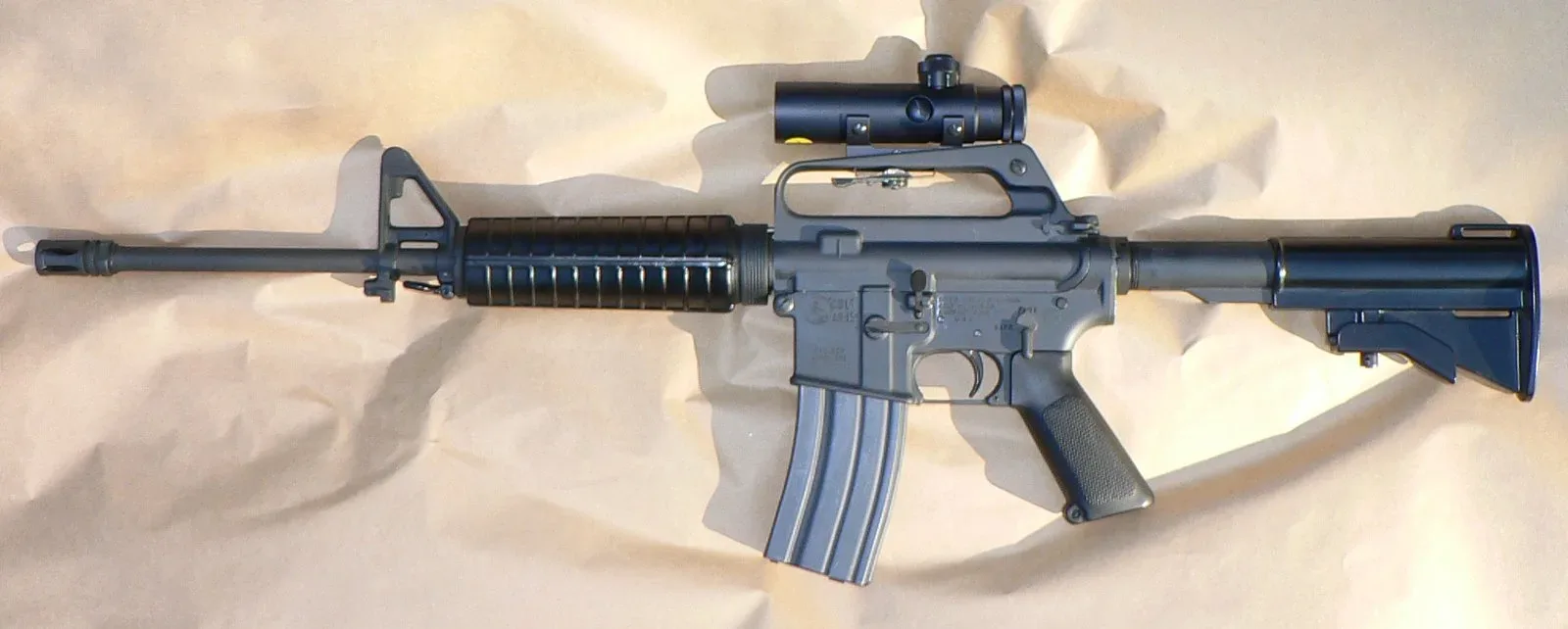
The definition of "assault weapon" under PICA is deliberately broad. Per ISP, it includes any firearm, part, or combination of parts designed or intended to convert a firearm into an assault weapon as defined in the Act. The relevant statute is 720 ILCS 5/24-1.9(a)(1). ISP has published a PICA Identification Guide with flowcharts to help owners determine what is and isn't regulated.
A few clarifications directly from ISP:
- Bolt-action, pump-action, lever-action, and slide-action firearms are not assault weapons under PICA — even if they have features that would otherwise be regulated — unless the firearm is a shotgun with a revolving cylinder.
- A .22 caliber semiautomatic rifle with a fixed magazine designed to operate only with .22 rimfire ammunition is exempt.
- Not all semiautomatic rifles are assault weapons. Whether a given rifle is regulated depends on its features. Use ISP's identification guide.
- Only .50 BMG caliber cartridges are regulated — not all .50 caliber ammunition. See 720 ILCS 5/24-1.9(a)(5).
Assault Weapon Attachments
PICA also regulates assault weapon attachments — devices capable of being attached to a firearm that are specifically designed to make or convert a firearm into an assault weapon. Per ISP, these include:
- Pistol grips or thumbhole stocks
- Any feature capable of functioning as a protruding grip held by the non-trigger hand
- Folding, telescoping, thumbhole, or detachable stocks, or stocks adjustable in ways that reduce the firearm's dimensions or concealability
- Flash suppressors
- Grenade launchers
- Barrel shrouds (excluding slides that enclose the barrel)
- Threaded barrels
- Buffer tubes, arm braces, or parts that protrude horizontally behind the pistol grip and facilitate firing from the shoulder
What does not count as an assault weapon attachment, per ISP:
- Scopes, scope mounts, red dot sights, holographic sights, and their mounts
- Laser sighting devices
- Flashlights or other lighting devices
- Slings and sling mounts
- Aftermarket stocks that don't otherwise meet the regulated criteria
- Picatinny rails
- Bayonets and bayonet mounts
- Belt clips and minimalistic holsters for pistols
Key Point: A muzzle brake and a flash suppressor are not the same thing under PICA. Per ISP, a muzzle brake directs the energy of the muzzle blast to reduce felt recoil — it does not suppress flash. A flash suppressor reduces visible muzzle flash. They are regulated differently.
High-Capacity Magazines
Per 720 ILCS 5/24-1.10(a), a large capacity ammunition feeding device means a magazine, belt, drum, feed strip, or similar device with a capacity of — or that can be readily restored or converted to accept — more than 10 rounds for long guns or more than 15 rounds for handguns, or any combination of parts from which such a device can be assembled.
"Readily" means any modification that is fairly or reasonably efficient, quick, and easy, and does not require special knowledge, skill, additional parts or tools, or significant expense. A standard 15-round handgun magazine without an extension kit installed is legal under that standard, per ISP.
A magazine, belt, drum, feed strip, or similar device that has a capacity of, or that can be readily restored or converted to accept, more than 10 rounds of ammunition for long guns and more than 15 rounds of ammunition for handguns — 720 ILCS 5/24-1.10(a)
For shotguns specifically: semi-automatic shotguns are limited to a 5-round capacity. The capacity is measured by the maximum identified chambered size round, not smaller shells. Detachable-magazine shotguns capable of accepting more than 10 rounds are also regulated as large capacity feeding devices.
There is a specific exemption for tubular devices designed to accept and operate only with .22 caliber rimfire ammunition.
The Endorsement Affidavit: If You Owned It Before January 10, 2023edit
If you possessed a regulated item before PICA's effective date, you were required to file an endorsement affidavit by January 1, 2024. Per ISP, failing to do so while retaining possession is a violation of both the FOID Act and the Criminal Code of 2012, with penalties spelled out in 430 ILCS 65/14 and 720 ILCS 5/24-1(b). People who violate these requirements may be arrested and charged.
The affidavit is filed electronically through the Firearms Services Bureau portal per 430 ILCS 65/4.1. There is no fee. If you need help, ISP operates FOID kiosks at four locations across the state (you cannot bring firearms to the kiosks).
| Kiosk Location | Address | Hours |
|---|---|---|
| ISP Troop 3 (Northern IL) | 16648 Broadway St, Lockport, IL 60441 | M–F 7:00am–11:30am & 12:30pm–3:30pm |
| ISP Troop 6 (Central IL) | 801 S 7th St, Springfield, IL 62703 | M–F 8:30am–12:00pm & 1:00pm–5:00pm |
| ISP Troop 8 (Southern IL) | 1100 Eastport Plaza Dr, Collinsville, IL 62234 | M–F 7:00am–12:30pm & 1:00pm–3:00pm |
| ISP Troop 10 (Southern IL) | 1391 S Washington St, Du Quoin, IL 62832 | M–F 8:30am–12:00pm & 1:00pm–5:00pm |
Hours are subject to change.
Key Point: ISP's portal remains open for late filers. There are no separate fines or penalties specifically for late submissions, but per ISP, the relevant jurisdiction could deem a late affidavit invalid or insufficient. If you haven't filed and you still have regulated items, talk to an attorney.
What Requires an Affidavit vs. What Doesn't
| Item | Affidavit Required? |
|---|---|
| Assault weapon owned before Jan. 10, 2023 | Yes |
| Assault weapon attachment owned before Jan. 10, 2023 | Yes — even without an assault weapon |
| .50 caliber rifle owned before Jan. 10, 2023 | Yes |
| .50 BMG cartridges owned before Jan. 10, 2023 | Yes |
| Large capacity ammunition feeding device | No |
| Items not kept in Illinois | No |
Per ISP, if you own multiple assault weapons or attachments with the same exact make and model number, one affidavit can cover all of them with a quantity note. Different makes and models each require their own filing.
New Illinois Residents
If you move to Illinois on or after January 1, 2024, and bring regulated items with you, you must apply for a FOID card and complete an endorsement affidavit within 60 days of moving. You may file the affidavit while your FOID application is pending. See 720 ILCS 5/24-1.9 and 20 Ill. Admin. Code 1230.15.
Inheritance
Regulated items may be transferred to an heir — defined as any person entitled to receive a distribution by intestate succession, will, trust, or other method permitted by law. The person inheriting must obtain a FOID card and complete an endorsement affidavit within 60 days of receiving the item. If you inherited a regulated item that didn't have an affidavit on file before the January 1, 2024 deadline, ISP advises you to still complete the affidavit.
Buying, Selling, and Transferring Regulated Itemsedit
The sale of new assault weapons to Illinois civilians ended on January 11, 2023. Per ISP, Illinois residents cannot lawfully purchase an AR-15 or other assault weapon as defined by PICA after that date, unless they fall within a narrow set of exemptions under 720 ILCS 5/24-1.9(e).
If you have an endorsed assault weapon and want to transfer it, your options are limited:
- Transfer to an heir
- Transfer to an individual residing in another state who will keep it in that state
- Transfer to a Federal Firearms Licensee (FFL)
You cannot sell it to your neighbor. You cannot sell it back to its previous owner if your FOID was revoked and later reinstated — once transferred, per ISP, PICA prohibits it from coming back to you unless you are exempt.
For large capacity ammunition feeding devices, the same transfer restrictions apply. Per ISP, within 10 days of any transfer (except to an heir), you must notify the Illinois State Police through the Person-to-Person transfer portal.
FFLs have more flexibility. Per ISP, nothing in PICA prohibits an FFL from manufacturing, purchasing, or possessing PICA-regulated items for the purpose of selling or transferring to exempt persons, the United States government or its agencies, or for export to another state. FFLs can also transfer regulated firearms to out-of-state FFLs to liquidate inventory.
Where You Can Possess Regulated Itemsedit
Owning an endorsed assault weapon doesn't mean you can take it anywhere. Per ISP, lawful possession is limited to:
- Private property owned or immediately controlled by you
- Private property not open to the public, with express permission of the owner
- Premises of a licensed FFL or gunsmith for lawful repair
- A licensed firing range or sport shooting competition venue
- While traveling directly to or from the above locations
These same geographic restrictions apply to large capacity ammunition feeding devices, even though no endorsement affidavit is required for them.
Loaning your endorsed firearm at the range: Per ISP, if the owner has completed the endorsement affidavit and is physically present, another individual can use the regulated firearm at a properly licensed range.
PICA Exemptionsedit
Certain individuals and circumstances are exempt from PICA's purchase and possession provisions. Per ISP under 720 ILCS 5/24-1.9(e):
Qualified law enforcement officers — any government agency employee authorized by law to engage in or supervise prevention, detection, investigation, or prosecution of violations of law; authorized by the agency to carry a firearm; not subject to disqualifying disciplinary action; meeting the agency's regular firearms qualification standards; not under the influence; and not prohibited by federal law from receiving a firearm.
Qualified retired law enforcement officers — as defined by 18 U.S.C. 926(C), meaning individuals who separated in good standing after at least 10 years of service (or due to service-connected disability), who maintain active qualification standards at their own expense within the most recent 12 months, and who meet the other federal criteria.
Armed Services and National Guard members — assault weapons used in performance of official duties, transported to and from duties, secured at home or place of business, or possessed for approved training, are exempt for the duration of employment. Per ISP, any person leaving such employment must file an endorsement affidavit before separation.
Corrections officers — those authorized to carry a firearm with even limited arrest powers, or responsible for maintaining public order or detention of accused/convicted persons, are exempt while employed. Upon retirement, they must prove they can maintain active firearms qualification standards to remain exempt.
Per ISP, proof of eligibility means a current or retired employment ID, a letter from the employing agency on official letterhead, or a similar official instrument confirming employment and identity. FFLs and individuals should require this proof before transferring a regulated item.
Repairsedit
You can repair your own endorsed assault weapon, per ISP, as long as the repairs don't require replacing parts that would constitute assault weapon attachments. Since non-exempt individuals cannot purchase assault weapon attachments, those parts would need to be replaced by an FFL or gunsmith. Under 720 ILCS 24-1.9(d) and 720 ILCS 24-1.10(d), assault weapons, .50 caliber rifles, and large capacity ammunition feeding devices may be temporarily surrendered to an FFL or gunsmith for repairs, regardless of duration.
Traveling Through Illinois with Regulated Itemsedit
If you're a non-resident passing through Illinois with an assault weapon, per ISP, you must complete the transit within 24 hours, the weapon must be unloaded, and neither the weapon nor any ammunition can be readily accessible from the passenger compartment. If the vehicle has no compartment outside the driver's area, the firearm must be in a locked container — not the glove compartment or center console.
This tracks with the federal Firearm Owners Protection Act (FOPA) safe passage provisions, though ISP's FAQ makes clear that FOPA's regulatory framework under 18 U.S.C. § 926 does not override PICA, which is a state statute rather than a federal agency rule.
Local Restrictions: Chicago, Cook County, Aurora, and Highland Parkedit
Illinois does not have full firearms preemption. Cities and counties can — and do — layer additional restrictions on top of state law. Per GAT Guns, the following local restrictions are in effect:
Chicago
No firearms. No ammunition. Even accessories have restrictions:
- No collapsible, folding, or thumbhole stocks
- No flash hiders
- No batons
- No magazines exceeding 10 rounds
- No accessories capable of functioning as a protruding grip held by the non-trigger hand
There are no law enforcement exemptions for Chicago — even purchases with department letterhead are not permitted through commercial channels, per GAT Guns.
Cook County (Excluding Chicago)
| Firearm Type | Rule |
|---|---|
| Semiautomatic rifles | Prohibited |
| AR/AK pattern receivers | Prohibited |
| Lever-action rifles with tubular magazines | Permitted |
| Bolt-action rifles with ≤10 round magazines | Permitted |
| Pump-action .22LR rifles with tubular magazines | Permitted |
| Single-shot rifles | Permitted |
| Semiautomatic shotguns with regulated features | Prohibited |
| Shotguns with revolving cylinders | Prohibited |
| Fixed magazine shotguns over 5 rounds | Prohibited |
For handguns in Cook County, semiautomatic pistols with a detachable magazine plus two or more regulated features are prohibited. Box-type detachable magazines over 10 rounds are prohibited for long guns. Law enforcement officers may purchase restricted items for duty use only, with department letterhead submitted for each purchase.
City of Aurora
Semiautomatic rifles are prohibited. AR and AK pattern receivers are prohibited. Semiautomatic shotguns are prohibited. Shotguns with revolving cylinders are prohibited. Slide-action shotguns with 15 rounds or fewer are permitted.
For handguns, semiautomatic pistols with a detachable magazine plus two or more of the following are prohibited: magazine attaching outside the pistol grip, threaded barrel, barrel shroud, 50 ounces or more unloaded weight, or being a semiautomatic version of an automatic firearm.
Long gun magazines with 15 rounds or more are prohibited. Batons are prohibited. Law enforcement may purchase restricted items for duty use with department letterhead per purchase.
City of Highland Park
Highland Park has one of the most specific prohibited lists in the state. Per GAT Guns, prohibited rifles include AR- and AK-pattern receivers; semiautomatic rifles with fixed magazines over 10 rounds; and semiautomatic rifles with capacity for a 10-plus round magazine and one or more regulated features. Numerous rifles are specifically named as prohibited, including (but not limited to) AK-pattern rifles, AR-10, AR-15, Bushmaster XM15, Armalite M15, Steyr AUG, Ruger Mini-14, Tavor, Thompson variants, and Uzi variants.
Prohibited shotguns include those with revolving cylinders, semiautomatic shotguns with regulated features, and specifically: Armscor 30 BG, SPAS 12, LAW 12, Striker 12, and Streetsweeper.
All magazines over 10 rounds are prohibited in Highland Park. Active law enforcement may purchase restricted items for duty use with department letterhead per purchase.
What this means for you: Even if your firearm is legal under PICA statewide, it may still be prohibited in Chicago, Cook County, Aurora, or Highland Park. If you're buying, traveling, or moving to any of these jurisdictions, check local ordinances before you do anything.
Homemade Firearms and Serializationedit
If you own a homemade firearm regulated by PICA and possessed it before January 10, 2023, nothing in PICA prevents you from having it serialized consistent with Illinois law. Per ISP, see 720 ILCS 24-5.1 for the serialization process. You would still need to file an endorsement affidavit if the firearm meets the definition of an assault weapon.
Concealed Carry Handguns and PICAedit
Your concealed carry handgun must comply with PICA. Per ISP, a handgun is regulated by PICA if it has features listed in 720 ILCS 5/24-1.9(c) — such as a threaded barrel — or if it is specifically named in 720 ILCS 5/24-1.9(k). Additionally, your carry handgun cannot have a magazine capable of holding more than 15 rounds, because that magazine constitutes a large capacity ammunition feeding device that can only be lawfully possessed in the limited locations specified under 720 ILCS 5/24-1.10(d).
Recent Legal Developmentsedit
What changed: PICA faced immediate legal challenges after its January 2023 signing. Per ISP, the Southern District of Illinois issued an order on April 28, 2023, that was stayed by the U.S. Appellate Court on May 4, 2023. Any purchases of regulated firearms or attachments made during that narrow window between April 28 and May 4, 2023, became unlawful to possess beginning January 1, 2024, per 720 ILCS 5/24-1.9(c), unless the owner filed an endorsement affidavit stating possession predated PICA.
The Illinois Supreme Court then ruled in Caulkins v. Pritzker, reversing the trial court and upholding PICA's enforceability statewide.
On February 8, 2024, per ISP, the Illinois State Police adopted final administrative rules to implement PICA, which can be found in the Illinois Register. ISP filed the proposed rule on September 15, 2023.
Capitol News Illinois reported that new laws related to gun storage and police background check changes were set to take effect in 2026, but the full details of those provisions were not available in the scraped source material. If those laws affect your situation, verify the current text directly with ISP or an Illinois attorney.
Enforcementedit
Per ISP, enforcement of PICA is handled by law enforcement agencies statewide, including ISP itself. ISP partners with local law enforcement through its Violent Crime Intelligence Task Force to reduce illegal possession and use of firearms, firearm-related homicides, and other violent crimes. All law enforcement officers have access to ISP's identification resources for PICA-regulated items.
Endorsement affidavit information is confidential and exempt from disclosure under the Freedom of Information Act. Per 720 ILCS 24/5-1.9(d), it can only be disclosed to law enforcement acting in the performance of their duties. ISP enters this information into the Law Enforcement Access Data System (LEADS) under authority granted by 20 ILCS 2605/2605-45.
Questions and Assistanceedit
If you have compliance questions not answered by ISP's published FAQ, you can email [email protected] or visit one of the FOID kiosks listed above. The Firearms Services Bureau portal handles FOID account management, endorsement affidavit filings, and person-to-person transfer notifications.
Resourcesedit
- https://isp.illinois.gov/Home/AssaultWeapons
- https://gatguns.com/il-gun-buyer-faq/
- https://capitolnewsillinois.com/news/new-laws-gun-storage-police-background-check-changes-take-effect-in-2026/
- https://azitalaw.com/what-is-the-new-illinois-firearms-law/
- http://www.ilga.gov/legislation/ilcs/fulltext.asp?DocName=072000050K24-1.10
Last Updated: March 30, 2026
- Ace Hardware of Sandusky(Sandusky, MI)
- New Philly Sportsman Specialities(New Philadelphia, OH)
- Atwoods Ranch & Home #46(LACY LAKEVIEW, TX)
- G & P Distributors(McConnellsburg, PA)
This is not legal advice
This guide provides general information about federal and state firearms laws based on publicly available statutes. Laws change frequently and vary significantly by state. Always verify current laws in your jurisdiction. Consult a qualified attorney for legal advice on your specific situation. When in doubt, contact local law enforcement or state police.
Loading comments...