Legal Details
Hughes Amendment / Machine Gun Ban

Photo: SP4 Edward W. Scott (Public Domain)
| Identification | |
|---|---|
Citation | 18 U.S.C. § 922(o) |
| Code Sections |
|
| Jurisdiction | |
Territory | United States (Federal) |
Enacted By | 99th United States Congress |
Administered By | Bureau of Alcohol, Tobacco, Firearms and Explosives (ATF) |
| Timeline | |
Signed | May 19, 1986 |
| Effective | May 19, 1986 |
| Key Provisions | |
| |
| Applicability | |
| Applies To | Civilians seeking to acquire, possess, manufacture, or transfer machine guns. Does not apply to law enforcement agencies, military, or properly licensed FFLs with Special Occupational Tax for official purposes. |
| Exemptions |
|
| Penalties | Possession of an unregistered machine gun is a federal felony punishable by up to 10 years imprisonment and substantial fines. Manufacturing a new machine gun as a civilian, including converting semi-automatic firearms, also carries federal felony penalties. |
Related Laws | |
Legislative History | |
1986Rep. William Hughes (D-NJ) introduced amendment to Firearm Owners Protection Act during final vote May 19, 1986Firearm Owners Protection Act of 1986 signed into law with Hughes Amendment included | |
Machine Gun Ban (1986)
civilian restrictions on automatic weapons
From The Boise Gun Club Handbook
This article is for educational purposes only and does not constitute legal advice. Federal firearms laws are complex and change over time. Always consult with qualified legal counsel and verify current regulations with the ATF before making any decisions regarding NFA items.
On May 19, 1986, Congress slammed the door shut on civilian machine gun ownership--sort of. The Hughes Amendment didn't ban machine guns outright, but it froze the civilian registry forever, turning every pre-1986 full-auto into a collectible worth more than most people's cars.
- The setup: Rep. William Hughes from New Jersey managed to slip this poison pill into the Firearm Owners Protection Act--which is ironic since FOPA actually loosened most other gun restrictions from 1968
- The rule: Machine guns made before May 19, 1986 can still be owned by civilians who jump through all the NFA hoops. Everything after that date? Off limits forever
Here's the reality check--before 1986, you could walk into a gun store, fill out your Form 4, pay your $200 tax stamp, and walk out with a brand new M16 for about $1,200. That was the same process a suppressor took until 2026, when Congress zeroed the suppressor tax and a federal court struck the registration requirement for covered buyers. Machine guns kept both. See NFA Items in 2026: What Actually Changed.
What The Registry Freeze Actually Didedit
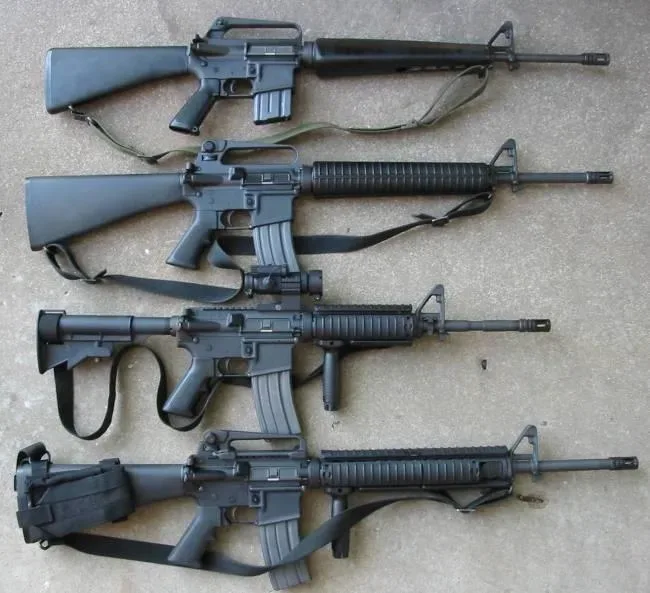
Basic economics kicked in hard. When you cut off supply but demand stays steady, prices go through the roof.
Price Impact on Civilian Market
That $1,200 M16 from 1986? Try $25,000 to $40,000 today. A MAC-10 that sold for $400 back then goes for $8,000-$12,000 now.
The civilian market has roughly 175,000-200,000 transferable machine guns, and that number never gets bigger.
| Item | 1986 Price | 2024 Price | Price Increase |
|---|---|---|---|
| M16 Full-Auto | $1,200 | $25,000-$40,000 | 2,000-3,300% |
| MAC-10 | $400 | $8,000-$12,000 | 2,000-3,000% |
| Uzi | $800 | $15,000-$25,000 | 1,900-3,100% |
| Thompson M1A1 | $2,500 | $35,000-$50,000 | 1,400-2,000% |
Every time one gets destroyed, damaged beyond repair, or disappears into an evidence locker, the remaining ones get a little more valuable. It's artificial scarcity at its finest.
Key legislative milestones affecting civilian machine gun ownership
Transferable vs. Post-Sample Classifications
This created two classes of machine guns that every dealer will explain to you. Transferable means pre-1986 and available to civilians with deep pockets. Post-sample or dealer sample means post-1986 and only available to FFLs with the right paperwork, law enforcement, and military.
Who Still Gets New Machine Gunsedit
The ban only applies to us regular folks. Law enforcement agencies can still buy new machine guns for official use. Military gets whatever they want, obviously.
Licensed Dealer Exceptions
Licensed dealers with the proper Special Occupational Tax can acquire post-1986 machine guns as dealer samples, but there are strict rules:
- Type 07 FFLs with Class 2 SOT can manufacture new machine guns for military and law enforcement contracts
- Class 3 dealers can get post-samples for law enforcement demonstrations and rentals
- When they surrender their license those post-1986 guns get destroyed or go to law enforcement--never to civilians
| License Type | Can Acquire | Can Manufacture | Civilian Transfer |
|---|---|---|---|
| Type 07 FFL + Class 2 SOT | Yes (post-samples) | Yes (for LE/Military) | No |
| Class 3 Dealer + SOT | Yes (demos/rentals) | No | No |
| Law Enforcement | Yes (official use) | No | No |
| Military | Yes (unlimited) | Yes | No |
| Private Citizens | Pre-1986 only | No | Yes (pre-1986 only) |
Post-1986 machine gun acquisition flowchart
Military Bring-Back Loophole
There's a narrow exception for military bring-backs from WWII and earlier conflicts, but that involves proving the gun was legally imported decades ago. Don't count on finding a legal bring-back Thompson in grandpa's attic.
The Penalties Will Ruin Your Lifeedit
Possession of an unregistered machine gun is a federal felony carrying up to 10 years in prison and substantial fines. The ATF doesn't negotiate on this stuff.
Manufacturing a new machine gun as a civilian--even by converting a semi-auto--creates an unregistered machine gun. Federal prison is federal prison.
If You're Actually Shoppingedit
What this means for you: You're looking at $8,000 minimum to get into the cheapest transferable machine gun, plus the $200 tax stamp, plus potentially 6-12 months waiting for ATF approval. Most decent ones cost $15,000-$40,000.
| Budget Range | What You Can Get | Condition | Typical Examples |
|---|---|---|---|
| $8,000-$12,000 | Entry-level | Fair to Good | MAC-10, MAC-11, M11/9 |
| $15,000-$25,000 | Mid-range | Good | Uzi, HK94 conversions |
| $25,000-$40,000 | High-end | Excellent | M16, M4, quality conversions |
| $40,000+ | Premium/Rare | Mint/Collector | STG-44, early M16s, rare variants |
Due Diligence Requirements
Before you spend that kind of money, get your ducks in a row. Verify registration status through your Class 3 dealer--never take the seller's word for it.
Work with reputable NFA dealers who understand what's at stake here.
Ongoing Costs and Considerations
Budget for ammunition because full-auto eats ammo faster than you think. Consider storage and insurance--you're buying something worth more than most cars.
The ATF Form 4 process is the same as any NFA item, but one mistake with a $30,000 machine gun hurts a lot more than a mistake with a $300 suppressor.
Dangerous Myths That'll Get You Arrestededit
People believe some seriously dangerous nonsense about machine gun laws:
- "You can convert semi-autos legally" - Wrong, that creates a new machine gun
- "Police trade-ins can be sold to civilians" - Wrong, post-1986 guns never transfer to civilians
- "The ban has a sunset clause" - Wrong, the Hughes Amendment is permanent
- "Kits and 80% lowers are different" - Wrong, the receiver manufacturing date is what counts
I've seen guys at gun shows confidently explaining how to "legally" convert AR-15s. Don't listen to that garbage.
The ATF has heard every creative interpretation you can imagine, and none of them work.
The bottom line: The Hughes Amendment created artificial scarcity that turned machine guns from working firearms into expensive collectibles. If you've got the money and want the experience, go for it--but understand you're paying collector prices for the privilege of owning a piece of frozen-in-time American firearms history. Don't expect this law to change anytime soon, which means prices will likely keep climbing as the finite supply slowly shrinks.
Resourcesedit
- ATF National Firearms Act FAQ - Official guidance on machine gun regulations
- 18 U.S.C. § 922(o) - The Hughes Amendment statute
- ATF Form 4 (Application for Tax Paid Transfer and Registration of Firearm)
- National Firearms Act (26 U.S.C. Chapter 53) - Underlying federal law
- ATF Industry Operations Division - For technical questions about NFA compliance
Last Updated: 2026-01-15
See Alsoedit
- Ace Hardware of Sandusky(Sandusky, MI)
- New Philly Sportsman Specialities(New Philadelphia, OH)
- Atwoods Ranch & Home #46(LACY LAKEVIEW, TX)
- G & P Distributors(McConnellsburg, PA)
This is not legal advice
This guide provides general information about federal and state firearms laws based on publicly available statutes. Laws change frequently and vary significantly by state. Always verify current laws in your jurisdiction. Consult a qualified attorney for legal advice on your specific situation. When in doubt, contact local law enforcement or state police.
Loading comments...