State Details
Montana

Overview | |
|---|---|
State | Montana (MT) |
Capital | Helena |
Statehood | 1889 |
Population | 1,132,812 |
Gun Ownership | 66.3% |
Active FFLs | 834 |
Carry Laws | |
Constitutional Carry | Yes (2021) |
Open Carry | Yes |
CCW Permit Available | Yes |
Permit Reciprocity | 36+ states |
Self-Defense | |
Castle Doctrine | Yes |
Stand Your Ground | Yes |
Duty to Retreat | No |
Regulations | |
State Preemption | Yes |
Red Flag / ERPO | No |
Waiting Period | None |
Universal BGC | No |
NFA Items | Yes |
Assault Weapons Ban | No |
Magazine Limit | None |
Firearms Freedom Act | Yes |
Key Legislation | |
| |
Notable Manufacturers | |
| |
Montana Firearms History: From Territorial Laws to Constitutional Carry
Reference article
From The Boise Gun Club Handbook
Overviewedit
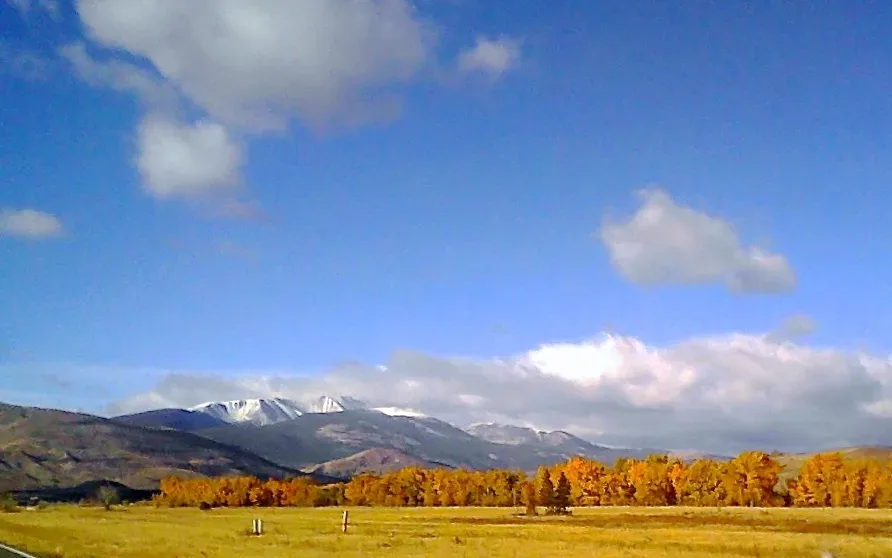
Montana sits in a peculiar place in American firearms history — a state that opened with one of the earliest concealed carry bans on the frontier and closed the 20th century with some of the most permissive gun laws in the country. That arc isn't a contradiction. It's a reflection of how the place itself changed, and how the people who stayed shaped the laws around the life they were actually living.
The Treasure State covers 147,000 square miles. Most of it is ranch land, national forest, or wilderness. The nearest gun store from a lot of Montana addresses is also the nearest anything.
Firearms here aren't a political statement for most residents — they're a practical tool, the same way a truck or a chain saw is a practical tool.
That culture informs everything: the legislation, the court fights, the debates, and the attitudes you'll find at any gun counter between Billings and Kalispell.
Montana's firearms story runs from Salish and Blackfoot trade networks through the fur trade era, into the violent territorial period, through two World Wars, and into a 21st-century legal landscape where you can carry a concealed handgun without a permit anywhere in the state, provided you're not legally prohibited from owning one. Getting there took 160 years of politics, court cases, and genuine cultural pressure from the people who live here.
Territorial Era & Pre-Statehood (1864–1889)edit
Fur Trade and Early Firearms Distribution
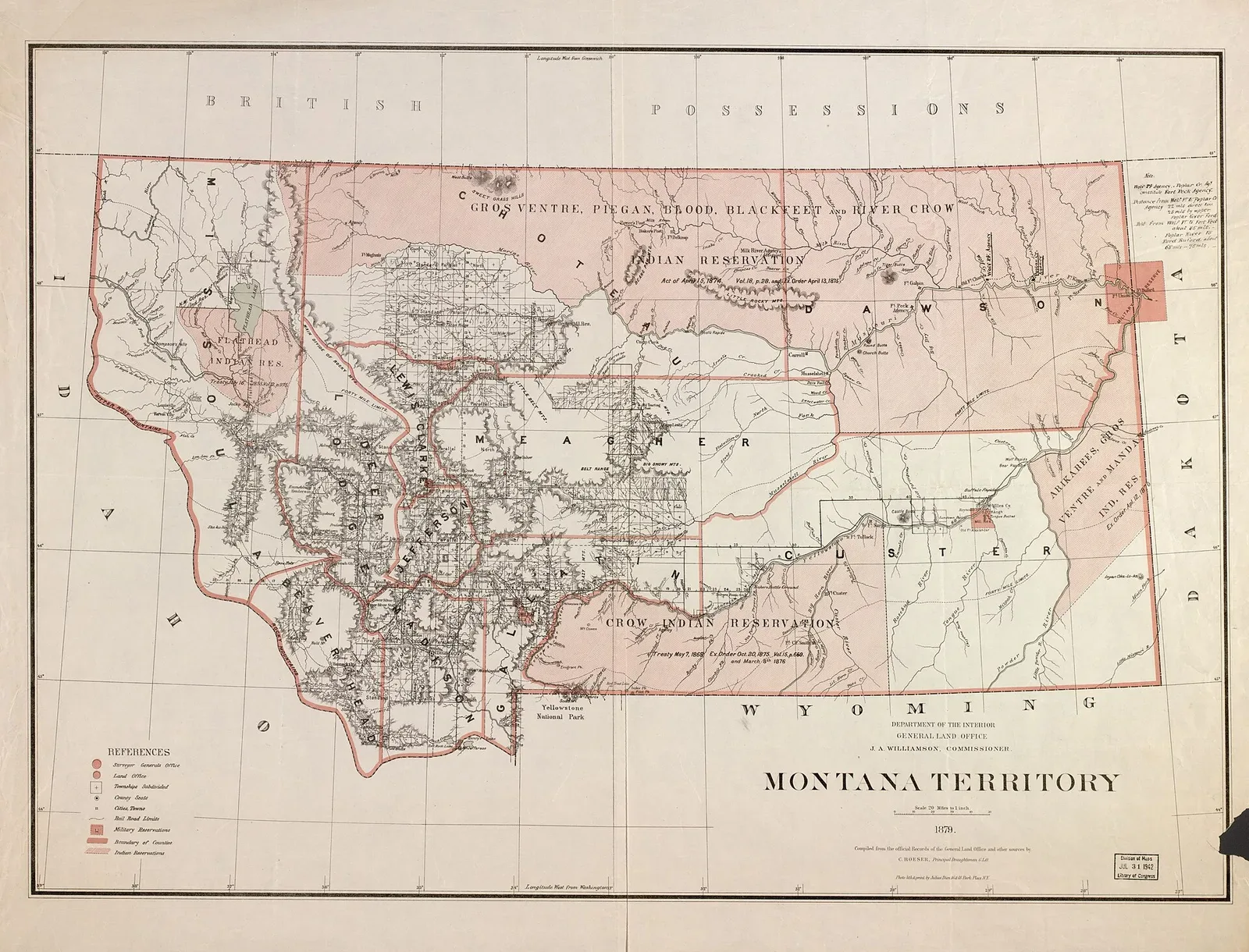
Before there was a Montana Territory, there were guns moving through the northern Rockies in volume. The fur trade era — centered on the American Fur Company's Fort Union, established in 1828 at the confluence of the Yellowstone and Missouri Rivers — brought flintlocks and later percussion-cap trade guns into the region in large numbers. The Blackfoot Confederacy, the Crow Nation, the Salish, and other tribes had been acquiring firearms through trade networks since at least the early 1800s. The Lewis and Clark Expedition (1804–1806) passed through what would become Montana and noted the presence of firearms among several tribal groups along the Missouri and over the Continental Divide.
The fur trade posts — Fort Benton (established 1847), Fort Union, and others — served as the primary distribution points for arms and ammunition into the upper Missouri country for decades. By the time gold was discovered at Grasshopper Creek near Bannack in 1862, there was already a functioning, if informal, firearms economy in the region.
| Fort | Established | Location | Primary Purpose |
|---|---|---|---|
| Fort Union | 1828 | Missouri/Yellowstone confluence | Fur trade hub |
| Fort Benton | 1847 | Upper Missouri River | Trade and supply depot |
| Fort Shaw | 1867 | Sun River | Military operations |
| Fort Ellis | 1867 | Near Bozeman | Territorial defense |
| Fort Missoula | 1877 | Missoula | Regional command |
| Fort Assiniboine | 1879 | Near Havre | Northern border security |
Gold Rush Violence and the Plummer Gang
Bannack, then Alder Gulch (Virginia City), then Last Chance Gulch (Helena) — the gold rush camps pulled in thousands of men almost overnight, and with them came the full spectrum of frontier violence. The Plummer Gang, led by the corrupt sheriff Henry Plummer operating out of Bannack and Virginia City, conducted a documented campaign of robbery and murder between 1862 and 1864. The Montana Vigilantes — formed by miners and merchants who had lost faith in any legal structure — hanged Plummer and at least 21 of his associates in January 1864. Those events happened entirely outside any legal framework because there wasn't one yet.
First Territorial Laws
When Montana Territory was formally established on May 26, 1864, the first territorial legislature had a violence problem on its hands and they knew it. Their response is worth noting: the territory's first legislature passed a law banning the carrying of concealed deadly weapons within the limits of any town in the territory. This was not a federal imposition — it was local frontier pragmatism. The gold camps were genuinely dangerous, and the men running the territory decided that the combination of alcohol, transient populations, and hidden weapons was killing people they couldn't afford to lose.
That law stayed on the books in various forms for over 150 years, right up until 2021.
Military Infrastructure and Indian Wars
The territorial period also saw the establishment of significant military infrastructure. Fort Shaw (established 1867) on the Sun River, Fort Ellis (1867) near present-day Bozeman, Fort Missoula (1877), and Fort Assiniboine (1879) near Havre were all built in direct response to conflicts with Native nations resisting confinement to reservations. The Battle of the Big Hole in August 1879 — where Colonel John Gibbon and approximately 160 soldiers attacked a Nez Perce encampment led by Chief Joseph, Looking Glass, and others — was fought largely within what is now Montana. The Nez Perce were armed with a mix of weapons including Winchester repeating rifles and demonstrated tactical sophistication that cost Gibbon's command heavily before the battle ended inconclusively.
The Battle of Little Bighorn (June 1876) occurred in present-day Montana, where combined Lakota Sioux and Northern Cheyenne forces under Sitting Bull and Crazy Horse destroyed Lieutenant Colonel George Armstrong Custer's immediate command of the 7th Cavalry. The battle is documented evidence that many of the warriors at Little Bighorn were better-armed than the soldiers they faced — the Winchester Model 1873 outranged and outpaced the single-shot Springfield Model 1873 Trapdoor carbines carried by Custer's troopers. That tactical mismatch contributed directly to the outcome.
The Fort Peck Indian Reservation (established 1888) and the Blackfeet Reservation (formalized 1888) were both established in the years immediately preceding statehood, and firearms restrictions on Native populations — enforced by the Army and agency police — were a deliberate federal policy tool throughout this period.
19th Century: Statehood & Expansion (1889–1899)edit
Montana achieved statehood on November 8, 1889. The state constitution adopted that year included a right to keep and bear arms provision in Article II, Section 12:
The right of any person to keep or bear arms in defense of his own home, person, and property, or in aid of the civil power when thereto legally summoned, shall not be called in question, but nothing herein contained shall be held to permit the carrying of concealed weapons.
| Montana Statehood & Constitutional Arms Provision |
|---|
| Date: November 8, 1889 |
| Constitutional Article: Article II, Section 12 |
| Protected Uses: Home defense, personal defense, property defense, civil power assistance |
| Explicit Exception: Concealed carry may be regulated |
| Key Language: "nothing herein contained shall be held to permit the carrying of concealed weapons" |
That language is specific in ways that matter. It names three protected purposes — home, person, and property defense — and explicitly carves out concealed carry as something the state may regulate. This wasn't an oversight. The delegates writing the Montana constitution knew exactly what they were doing. They'd watched the territorial years and they built the exception intentionally.
The cattle industry that dominated eastern Montana in the 1880s created its own firearms culture. The open range era — before the brutal winter of 1886–1887 killed an estimated 60–90% of cattle on Montana ranges and effectively ended the unfenced open range — was a period when cowboys, cattle detectives, and ranchers operated in a largely extra-legal environment. The Montana Stockgrowers Association, founded in 1884, wielded enormous political power and employed stock detectives who carried firearms as a professional tool. The violence between large cattle outfits and homesteaders or small ranchers was never as theatrical as Wyoming's Johnson County War, but it was real.
The copper industry that built Butte into one of the most densely populated cities in the West by the 1890s brought a different kind of firearms culture — labor violence. The Anaconda Copper Mining Company, the Butte Miners' Union (established 1878, one of the oldest labor unions in the West), and the Western Federation of Miners operated in a city where armed confrontations between strikers, company guards, and militia were a recurring feature of life. The state called out the National Guard multiple times in Butte labor disputes before the turn of the century.
Fort Keogh, established in 1876 near Miles City following the Little Bighorn campaign, remained an active military post through the 1880s and served as a base for operations against Chief Sitting Bull's band after their return from Canada in 1881. Colonel Nelson Miles, who would later become Commanding General of the U.S. Army, conducted multiple campaigns from Montana forts during this decade.
20th Century: Wars, Industry & Regulation (1900–1999)edit
Montana's 20th century firearms story runs through two world wars, significant labor violence, and the gradual construction of the modern regulatory framework — much of which Montanans would spend the last quarter of the century trying to dismantle.
World War I and the Sedition Era
Fort William Henry Harrison, established near Helena in 1892 as a National Guard facility, became a significant training installation. During World War I, Montana contributed proportionally more men to the armed forces than almost any other state. The Montana Council of Defense, operating under wartime emergency powers, used its authority broadly and sometimes ruthlessly — a period that left lasting suspicion of centralized government authority among Montana residents that arguably persists today.
The Sedition Act of 1918 is worth noting here because Montana's version preceded the federal one. The Montana Sedition Act, passed in February 1918, was the model that Congress used for the federal Sedition Act passed in May of the same year. The state's aggressive prosecution of war dissenters — largely aimed at German-American communities, labor organizers, and members of the Industrial Workers of the World (IWW) — created a political climate in which firearms ownership and individual rights were contested in ways that shaped later attitudes.
Labor Violence and Armed Conflict
The Anaconda Road Massacre of August 1920, where sheriff's deputies shot into a crowd of striking miners near Anaconda, killed one worker and wounded others. Events like this, repeated across Montana's industrial communities, meant that for a significant portion of the population, firearms weren't just for hunting — they were part of a broader conversation about power and self-defense that had explicit class dimensions.
Fort Peck Dam construction (1933–1940) brought tens of thousands of workers into northeastern Montana during the Depression, creating boom towns along the Missouri that briefly recalled the gold camp atmosphere of the 1860s. Armed robberies, bar fights, and the general disorder of transient construction camps were documented throughout the project.
World War II and Cold War Infrastructure
Malmstrom Air Force Base, established as Great Falls Army Air Base in 1942, became and remains one of the defining military installations in Montana. During World War II, the base trained B-17 and later B-29 crews and served as a staging point for the Northwest Staging Route supplying the Soviet Union through Alaska. After the war, Malmstrom became home to Minuteman intercontinental ballistic missile wings — at its Cold War peak, the base controlled approximately 200 Minuteman III missiles spread across a 14,000-square-mile area of central Montana. The presence of nuclear weapons infrastructure in rural Montana created unique security requirements and a military presence that shaped communities across a wide swath of the state.
| Major 20th Century Military Installations |
|---|
| Fort William Henry Harrison (1892) - Helena area National Guard facility |
| Great Falls Army Air Base (1942) - Later Malmstrom AFB |
| Peak Minuteman III Coverage - 200 missiles across 14,000 square miles |
| Primary Mission - ICBM operations during Cold War |
Federal Regulation and State Response
The Gun Control Act of 1968 — the federal legislation that established the modern framework of licensed dealers, prohibited persons, and the basis for the NICS background check system — was received in Montana with the skepticism that most federal firearms legislation got in the state. Montana had no state-level legislation in 1968 that meaningfully tracked with the new federal requirements; the state's own framework remained minimal.
The Montana Code Annotated accumulated firearms regulations through the latter half of the 20th century, including provisions on machine guns (MCA § 45-8-302 through 45-8-307), sawed-off firearms (MCA § 45-8-340), and silencers (MCA § 45-8-336 through 45-8-337). These laws largely tracked federal NFA categories with state-specific penalties.
The concealed carry permit system that existed through most of the late 20th century required a permit for concealed carry within city limits and within logging, mining, and railroad camps — essentially the same framework the territorial legislature had established in 1864, refined over time. Rural carry outside incorporated areas remained effectively unregulated. This two-tier system — permissive in the country, more regulated in town — reflected the actual geography of how Montanans lived and worked.
The 1972 Montana Constitutional Convention produced a revised state constitution that retained the Article II, Section 12 arms provision essentially intact from the 1889 version, with the explicit concealed carry exception remaining. The convention delegates were not trying to roll back gun rights — they were trying to modernize a document that was unwieldy in other respects. The arms provision was largely noncontroversial at the time.
By the 1990s, Montana's gun politics were moving in a consistently pro-gun direction at the state level even as federal legislation like the Brady Handgun Violence Prevention Act (1993) and the federal assault weapons ban (1994) passed in Washington. The Brady Act's mandated background check system was contested in Printz v. United States (1997), a case brought by Jay Printz, the sheriff of Ravalli County, Montana, who refused to conduct background checks as required by the Brady Act's interim provisions. The Supreme Court ruled 5-4 in Printz's favor, holding that Congress could not compel state officers to administer federal regulatory programs. This is one of the most significant Second Amendment-adjacent court decisions in American history, and it came directly from a Montana county sheriff making a principled stand.
Modern Era (2000–Present)edit
The 21st century in Montana firearms law has been defined by two major legislative pushes: the Firearms Freedom Act of 2009 and the permitless carry expansion of 2021. Both were deliberate assertions of state authority against federal frameworks, and both generated national attention.
The Firearms Freedom Act Experiment
The Firearms Freedom Act, signed by Governor Brian Schweitzer on April 15, 2009, declared that firearms manufactured in Montana and remaining in Montana were not subject to federal regulation under the Commerce Clause. The theory was straightforward: if a gun never crosses state lines, it's not interstate commerce, and Congress has no authority to regulate it under the Commerce Clause framework that underlies most federal firearms law. The practical impact was limited — United States v. Engel (9th Circuit, 2011) and the Supreme Court's subsequent refusal to hear the case effectively gutted the Act's legal teeth. But it catalyzed the Firearms Freedom Act movement in over two dozen other states and forced a serious national conversation about the limits of federal firearms authority. Montana was the first state to pass one, and it did so under a Democratic governor, which says something about how the issue cut across normal political lines in the state.
The 2021 Legislative Revolution
The 2021 legislative session was transformative for Montana gun law. Senate Bill 357, signed by Governor Greg Gianforte on February 18, 2021, eliminated the permit requirement for concealed carry throughout the state. The previous law had required a permit within incorporated city limits — that restriction is now gone. Any person not prohibited by state or federal law from possessing a firearm may carry concealed in Montana without a permit.
| Key Montana Firearms Legislation (2000-Present) |
|---|
| 2009 - Montana Firearms Freedom Act (SB 114) |
| 2021 - Permitless Carry (SB 357) |
| 2021 - Campus Carry (HB 102) |
| 2021 - Enhanced Preemption (SB 275) |
| 2021 - Federal Law Nullification (HB 258) |
The state still issues concealed weapon permits (CWP) for residents who want them — primarily for reciprocity purposes when traveling to other states — but the permit is no longer a prerequisite for carry within Montana.
The same 2021 session passed House Bill 102, which eliminated most gun-free zones on public university and college campuses, requiring public institutions to allow concealed carry by those legally permitted to do so. This was immediately controversial — the University of Montana and Montana State University both pushed back — but the law stood.
Montana also passed Senate Bill 275 in 2021, strengthening state preemption of local firearms ordinances, and House Bill 258, which prohibited the state from enforcing any federal firearms laws or regulations that the legislature deemed to exceed federal constitutional authority — a largely symbolic measure but one that reflects the consistent legislative direction.
Ongoing Policy Challenges
The Montana Shooting Sports Association (MSSA), founded by Gary Marbut of Missoula, has been the most active state-level gun rights organization for decades. Marbut personally drafted or co-drafted many of the pro-gun bills that have passed the Montana legislature, including the Firearms Freedom Act. The MSSA operates as a distinctly Montana organization — not a state affiliate of the NRA, though the two organizations have worked on parallel tracks frequently.
On the other side of the ledger, Montana's gun violence statistics are genuine and documented. The state consistently ranks in the top five nationally for gun suicide rates — a rate that Everytown Research has documented at around 20+ gun deaths per 100,000 residents, significantly above the national average. The factors driving this are multiple and genuinely complex: geographic isolation, limited mental health infrastructure, high rates of firearm access, and demographic patterns all play roles. This is not a comfortable fact, but it's a real one, and the policy debate in Montana increasingly has to account for it.
The 2023 legislative session continued the pattern, with the legislature passing several additional firearms preemption and pro-carry measures while declining to advance any proposals for red flag laws, universal background checks, or waiting periods.
Notable Figures & Manufacturersedit
- Jay Printz — Ravalli County Sheriff who won Printz v. United States (1997)
- Gary Marbut — MSSA president and Firearms Freedom Act architect
- Governor Brian Schweitzer — Democrat who signed the Firearms Freedom Act
- Governor Greg Gianforte — Signed 2021 permitless carry legislation
- Henry Plummer — Corrupt sheriff whose execution led to first territorial gun laws
Colonel Nelson Miles — Commanded multiple Indian Wars campaigns from Montana forts in the 1870s–1880s, including the pursuit of Chief Joseph and the Nez Perce through Montana and into Canada. Fort Keogh near Miles City is named for his aide Captain Myles Keogh, who died at Little Bighorn.
On the manufacturing side, Montana has never been a major firearms manufacturing state in the industrial sense. There is no Montana equivalent of Springfield or Ruger. What the state has is a robust custom gunsmithing and custom rifle-building culture, concentrated particularly around hunting communities in western Montana. Montana Rifle Company, based in Kalispell, manufactures bolt-action hunting rifles and is one of the larger production operations in the state — their American Legends Series rifles are well-regarded in the hunting market. Big Timber, Montana hosts several custom gunsmiths serving the outfitter and trophy hunting market. The state's manufacturing footprint is custom and artisanal rather than industrial.
Accurate Arms Company operated in McEwen, Tennessee — not Montana, despite the branding that sometimes causes confusion. However, Western Powders, based in Miles City, Montana, is a legitimate Montana operation. They manufacture and distribute reloading powders under the Accurate and Ramshot brand names, and they're a real presence in the handloading community nationally.
Fort Missoula deserves specific mention for a non-obvious chapter: it was the home of the 25th Infantry Regiment (Buffalo Soldiers) in the 1890s, and the post's commander, Lieutenant James Moss, equipped a bicycle corps of Black soldiers to test military mobility in Montana's terrain. The experiment had nothing to do with firearms manufacturing, but Fort Missoula's history as a Buffalo Soldier post is significant and often overlooked.
During World War II, the Remington Arms Company had no Montana facilities, but Montana's contribution to wartime production included significant copper output from the Butte mines that went directly into ammunition cases. Butte's copper wasn't abstract industrial output — it was literally the brass in the cartridges American soldiers carried. The Anaconda Copper Mining Company's smelter at Anaconda processed ore that ended up as cartridge cases at Remington, Winchester, and Western Cartridge plants across the country.
Current Legal Landscapeedit
Montana's current firearms laws are among the most permissive in the country by any objective measure. Here's the actual framework:
Constitutional Foundation
Constitutional Provision: Article II, Section 12 of the Montana Constitution protects the right to keep and bear arms for home, personal, and property defense. The provision explicitly notes it does not require the state to permit constitutional carry — but the legislature has chosen permissive policy regardless.
Carry Laws and Permits
Permitless Carry: Since Senate Bill 357 took effect in 2021, no permit is required to carry concealed anywhere in Montana where carry is otherwise legal, provided the carrier is not prohibited by state or federal law from possessing a firearm. Open carry has always been legal for non-prohibited persons.
Concealed Weapon Permits: Montana still issues CWPs through county sheriffs. The permit is useful for reciprocity with other states. Montana's enhanced permit (which requires additional training) is recognized by more states than the standard permit. Minnesota and Washington recognize only the enhanced permit.
Prohibited Places: Even under permitless carry, certain locations remain off-limits:
| Prohibited Places Under Montana Law |
|---|
| Federal buildings and property |
| K-12 school buildings |
| Posted private establishments |
| Correctional facility secure areas |
| Courthouses and court facilities |
| Private property (owner prohibition) |
NFA Items and Federal Compliance
NFA Items: Montana law generally tracks federal NFA categories. Silencers (NFA-registered, tax stamp in hand) are legal to possess. Machine guns follow the same federal registry restrictions that apply nationally — no new transferable machine guns manufactured after May 19, 1986. Sawed-off rifles and shotguns follow the same NFA registration requirements. Montana has no additional state-level restrictions on NFA items beyond what federal law requires, with the exception that unregistered silencers are treated as prima facie evidence of criminal intent under MCA § 45-8-337.
What Montana Doesn't Have:
| What Montana DOESN'T Require/Prohibit |
|---|
| ❌ No assault weapons ban |
| ❌ No magazine capacity limits |
| ❌ No red flag laws |
| ❌ No universal background checks |
| ❌ No waiting periods |
| ❌ No firearms registration |
| ❌ No purchase permits |
| ❌ No "ghost gun" restrictions |
State Preemption and Local Restrictions
State Preemption: Montana has strong firearms preemption law. Local governments cannot enact firearms ordinances more restrictive than state law. A city cannot require permits, registration, or impose waiting periods beyond what state law allows.
Campus Carry: Under House Bill 102 (2021), public colleges and universities must allow concealed carry by those legally permitted to carry. Individual institutions may designate specific secure areas (like police stations or childcare facilities), but a blanket campus ban is no longer legal.
Prohibited Persons (State Law): MCA § 45-8-313 prohibits possession by persons convicted of felonies involving weapon use and other specified offenses. Federal prohibitions (convicted felons, domestic violence misdemeanants, adjudicated mental defectives, etc.) apply independently under 18 U.S.C. § 922(g).
The Firearms Freedom Act Legacy: While the Firearms Freedom Act's Commerce Clause theory has been rejected by the federal courts, it remains on the books in Montana and has generated ongoing academic and legal debate about the boundaries of federal regulatory authority. It has not, as a practical matter, shielded any Montana resident from federal prosecution under the NFA or GCA.
The BGC Takeedit
Montana is genuinely one of the best states in the country to own and carry firearms, and that's not marketing language — it's the actual legal reality. No permit to buy, no permit to carry, no registration, no magazine limits, no assault weapons definition to worry about, strong preemption, and campus carry. If your main criterion is legal permissiveness, Montana is near the top of the list.
The culture matches the law.
Montana isn't performatively pro-gun the way some states are — you don't see a lot of people ostentatiously open-carrying AR pistols at the grocery store to make a point. What you see is ranchers with .357s on their hips because they're moving cattle in snake country.
Hunters with .338 Win Mags in their trucks because they're hunting elk in serious terrain, and shopkeepers with something behind the counter because the sheriff is 45 minutes away. It's functional carry, not political theater.
The gun stores in Montana tend to be decent. Prices aren't as sharp as online, but the guys behind the counter usually know what they're talking about, and the selection reflects what people actually use in Montana — lots of hunting rifles, lots of revolvers and lever guns, plenty of practical handguns. You can find ARs and modern sporting rifles without much trouble in any mid-sized town.
The hard truth is the suicide number. Montana's gun suicide rate is real and it's high. That's not a reason to strip rights from the overwhelming majority of gun owners who aren't in crisis, but it is a genuine public health problem that deserves honest attention. The answer isn't a red flag law that most Montanans wouldn't comply with anyway — it's mental health infrastructure in rural communities that currently has none. That's a harder problem to solve than passing a bill, which is probably why the legislature has mostly avoided it.
The Firearms Freedom Act was a fascinating legal experiment that ultimately lost in court, but it mattered. It put the Commerce Clause question in front of more people than any law school article ever could, and it gave two dozen other states a template for their own versions. The legal theory didn't hold up, but the political and cultural statement it made was heard clearly.
Printz is the sleeper case here. Most gun owners know Heller (2008) and Bruen (2022). Far fewer know that a county sheriff in rural Montana set a precedent in 1997 that still constrains how the federal government can commandeer state and local officers to enforce federal law. That case came from a guy doing his job the way he thought was right, in a county most people couldn't find on a map. That's a very Montana story.
If you're moving to Montana, or visiting, the practical answer is: carry what you're comfortable with, carry it legally (which is easy here), take the enhanced CWP if you travel to other states, and understand that outside of a handful of urban areas, you're genuinely on your own for response time if something goes wrong. The laws reflect that reality because the people who live here built them to reflect it.
Referencesedit
- Montana Code Annotated, Title 45, Chapter 8 (Weapons Offenses) — https://leg.mt.gov/bills/mca/title_0450/chapter_0080/parts_index.html
- Montana Constitution, Article II, Section 12 — https://www.umt.edu/montana-constitution/articles/article-ii/ii-12.php
- Printz v. United States, 521 U.S. 898 (1997)
- Montana Firearms Freedom Act, SB 114 (2009) — https://archive.legmt.gov
- Senate Bill 357 (2021), Montana Legislature — Permitless Carry
- House Bill 102 (2021), Montana Legislature — Campus Carry
- NRA-ILA Montana Gun Laws Summary (updated October 2025) — https://www.nraila.org/gun-laws/state-gun-laws/montana/
- Giffords Law Center, Montana Gun Laws — https://giffords.org/lawcenter/gun-laws/states/montana/
- Everytown Research & Policy, Montana — https://everytownresearch.org/rankings/state/montana/
- Daily Montanan, "Montana's first act as a territory? Gun control" (June 26, 2021) — https://dailymontanan.com/2021/06/26/montanas-first-act-as-a-territory-gun-control/
- Montana Free Press, "What does Montana law say about carrying a concealed firearm?" (January 27, 2026) — https://montanafreepress.org/2026/01/27/what-does-montana-law-law-about-carrying-a-concealed-firearm/
- Cato Institute, "Guns and the Commerce Clause: On the Way to the Supreme Court" — https://www.cato.org/blog/guns-commerce-clause-way-supreme-court
- United States v. Engel, 9th Circuit (2011)
- Garland v. Cargill, 602 U.S. ___ (2024)
- Paul Wylie, The True Story of Frontier Montana (historical reference for Plummer Gang and Vigilante period)
- Fort Missoula Historical Museum — https://fortmissoulamuseum.org
- Malmstrom Air Force Base historical records — https://www.malmstrom.af.mil
Last Updated: February 24, 2026
- Quail Creek Plantation(Okeechobee, FL)
- 2aHawaii(Honolulu, HI)
- Boston Firearms(Everett, MA)
- Safeshoot(Kingston, NY)
Loading comments...