State Details
Oklahoma

Overview | |
|---|---|
State | Oklahoma (OK) |
Capital | Oklahoma City |
Statehood | 1907 |
Population | 4,019,800 |
Gun Ownership | 54.7% |
Active FFLs | 1,180 |
Carry Laws | |
Constitutional Carry | Yes (2019) |
Open Carry | Yes |
CCW Permit Available | Yes |
Permit Reciprocity | 36+ states |
Self-Defense | |
Castle Doctrine | Yes |
Stand Your Ground | Yes |
Duty to Retreat | No |
Regulations | |
State Preemption | Yes |
Red Flag / ERPO | No |
Waiting Period | None |
Universal BGC | No |
NFA Items | Yes |
Assault Weapons Ban | No |
Magazine Limit | None |
Key Legislation | |
| |
Oklahoma Firearms History
Reference article
From The Boise Gun Club Handbook
Overviewedit
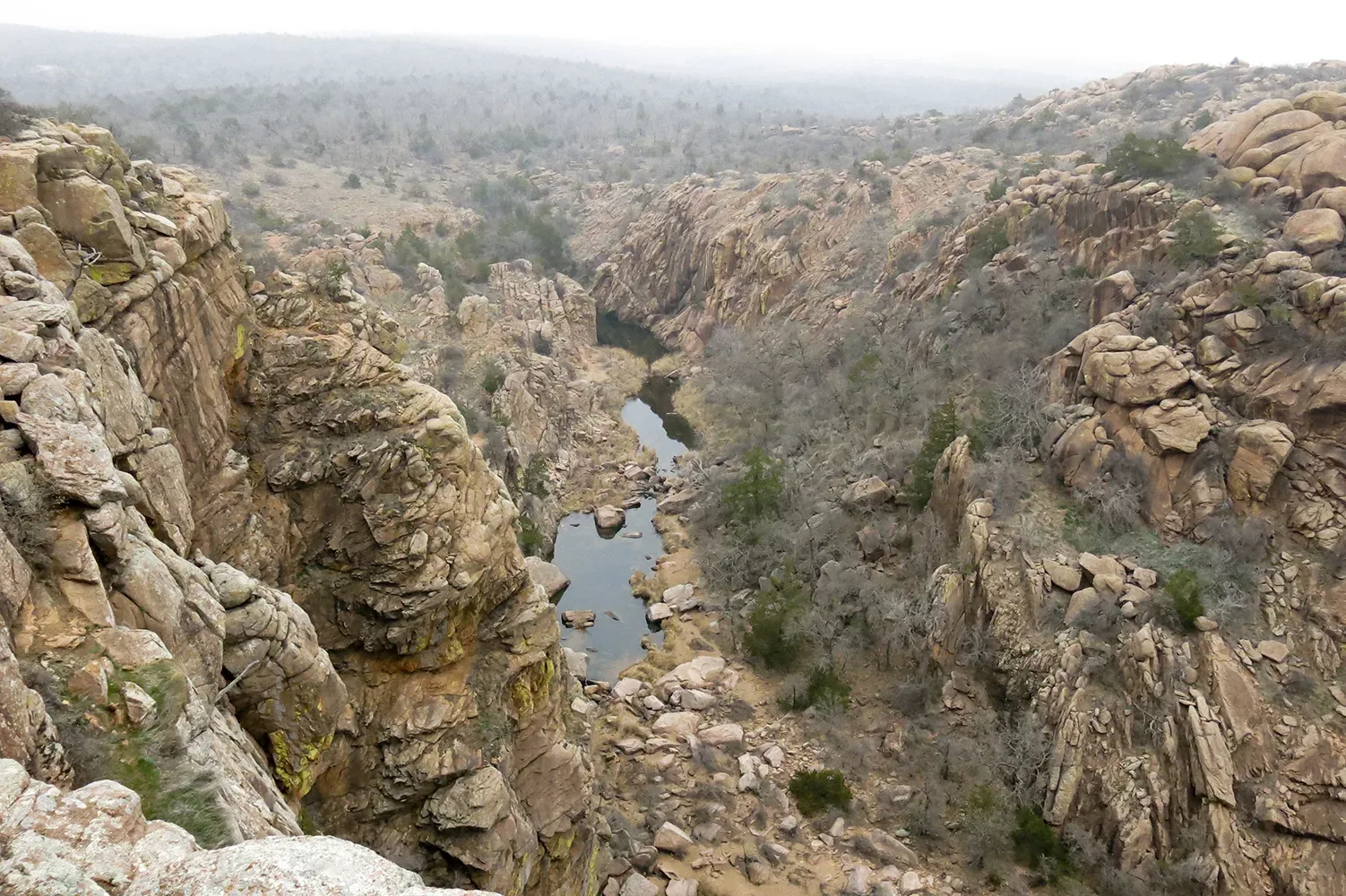
Oklahoma's relationship with firearms is older than the state itself. Long before President Theodore Roosevelt signed Presidential Proclamation 780 on November 16, 1907 and Oklahoma became the 46th state, guns were already woven into the daily fabric of life across both Oklahoma Territory and Indian Territory. The same pistols, rifles, and shotguns that fed families, enforced tribal law, ran cattle, and occasionally ended disputes were already a generation old when statehood arrived.
That history didn't happen in a vacuum. Oklahoma sits at the geographic and cultural intersection of the Southern Plains, the old Indian Nations, and the American frontier West. The firearms culture that resulted isn't purely Southern, purely Western, or purely Native — it's its own thing, shaped by land runs, tribal sovereignty, oil booms, two world wars, and a stubborn political consensus that armed citizens don't need government permission to stay that way.
Today Oklahoma ranks among the most permissive states in the country on firearms law, and that didn't happen by accident. It's the end product of over 130 years of consistent, specific cultural and legislative choices.
Territorial Era & Pre-Statehood (Pre-1907)edit
Native American Nations & Early Governance
Before the United States opened Oklahoma to non-Indian settlement, the land was home to the Five Civilized Tribes — the Cherokee, Choctaw, Chickasaw, Creek (Muscogee), and Seminole nations — who had been relocated from the American Southeast under the Indian Removal Act of 1830. Each of these nations developed functioning governmental structures in Indian Territory, including their own light military forces, and firearms were central to that existence. Hunting, law enforcement within tribal jurisdictions, and defense against encroachment all required an armed population.
The Cherokee Nation, for instance, maintained mounted lighthorse police who patrolled tribal lands armed with rifles and revolvers throughout the mid-to-late 1800s.
| Event | Date | Significance |
|---|---|---|
| Indian Removal Act | 1830 | Five Civilized Tribes relocated to Indian Territory |
| Cherokee Nation Lighthorse Police | Mid-1800s | Tribal law enforcement with rifles and revolvers |
| Stand Watie surrender | June 23, 1865 | Last Confederate general surrender at Doaksville |
| Fort Sill established | 1869 | Federal military firearms presence begins |
| Red River War ends | 1875 | Quanah Parker surrenders, organized resistance ends |
| First Land Run | April 22, 1889 | 50,000 armed settlers race for 1.9 million acres |
| Territorial Concealed Weapons Act | 1890 | First formal firearms regulation established |
Civil War Impact on Indian Territory
The Civil War tore through Indian Territory with particular violence. The Five Tribes were internally divided — some had slaveholding elites with economic ties to the Confederacy, while others sided with the Union. Stand Watie, a Cherokee general, became the last Confederate general to surrender on June 23, 1865, doing so at Doaksville in the Choctaw Nation.
His forces, including the 1st Cherokee Mounted Rifles and 2nd Cherokee Mounted Rifles, had fought throughout the Indian Territory theater using the same Springfield rifles, Enfield muskets, and assorted revolvers as their counterparts elsewhere. The conflict left Indian Territory economically devastated and politically restructured — the Reconstruction Treaties of 1866 forced new agreements on all five tribes and opened the door to further federal encroachment.
Federal Military Presence & Fort Sill
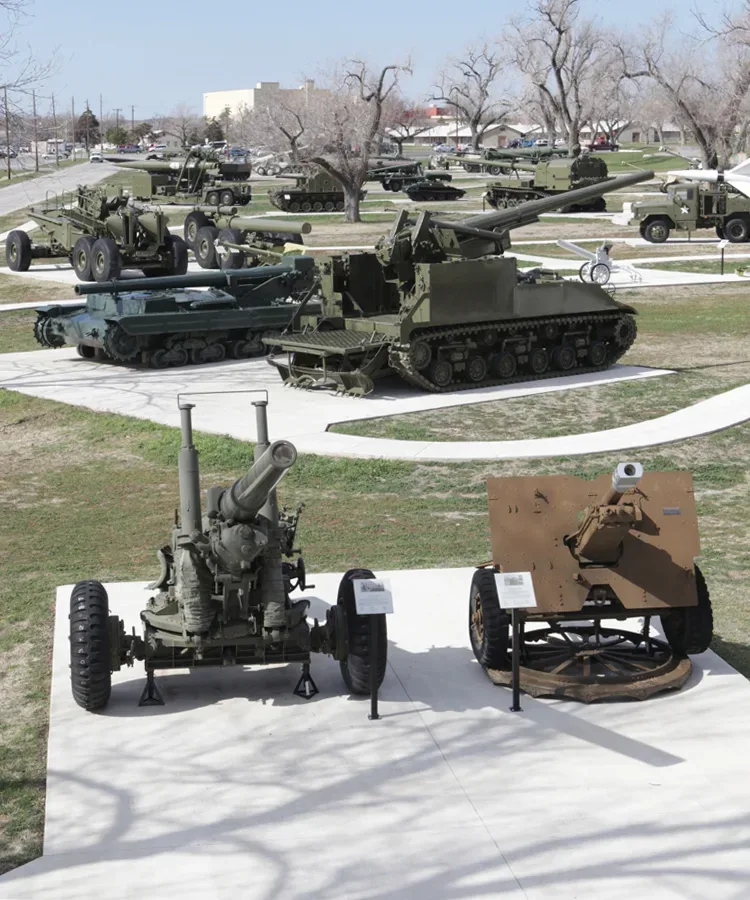
The establishment of Fort Sill in 1869 by General Philip Sheridan near present-day Lawton introduced a permanent federal military firearms presence to the region. Fort Sill was founded specifically to control Comanche, Kiowa, and Apache raiding across the Southern Plains — the Red River War of 1874 effectively ended organized armed resistance by those tribes, with Quanah Parker and the last free Comanche bands surrendering in 1875.
Fort Sill became their reservation headquarters, and the post's artillery mission — which dates to its earliest years — would eventually make it the home of U.S. Army Field Artillery, a designation it still holds.
Land Runs & Armed Settlement
At exactly noon on April 22, 1889, the starting pistol fired and the first Land Run opened 1.9 million acres of the Unassigned Lands to non-Indian settlers. Approximately 50,000 people had lined up at the territorial borders. They crossed on horseback, in wagons, and on foot — and most of them were armed.
Winchester lever-actions and Colt revolvers were standard-issue equipment for anyone serious about staking and holding a claim. The towns that appeared overnight — Guthrie and Oklahoma City among them — were rough places where local law barely existed and personal firearms were the practical gap-filler.
Timeline of major Oklahoma land runs showing the scale of armed settlement
Early Territorial Law & Order
The Organic Act of 1890 established a formal territorial government for Oklahoma Territory, and one of the new legislature's first acts was addressing firearms in public. Oklahoma Territory's Concealed Weapons law of 1890, codified in the initial territorial statutes, prohibited carrying pistols, revolvers, bowie knives, dirk knives, and loaded canes upon or about a person within the territory. The legislature was trying to bring some civic order to what were still essentially boomtowns. It didn't eliminate guns — it never could have — but it established the legal framework that would evolve into Oklahoma's carry permit system over the following century.
The Twin Territories period between 1890 and 1907 saw additional land runs — the 1891 run into the Iowa, Sac and Fox, and Pottawatomie-Shawnee lands, the 1892 Cheyenne-Arapaho run, the massive Cherokee Strip run of September 16, 1893 (the largest land run in American history, with an estimated 100,000 participants racing for 6 million acres), and the Kickapoo run of 1895. Each of these events repeated the same dynamic: tens of thousands of armed settlers flooding into territory where law was thin and personal firearms were the primary security apparatus. The Oklahoma Self-Defense Act's philosophical roots go directly to this period.
In Indian Territory during the same years, the U.S. Marshals operating out of Judge Isaac Parker's federal court in Fort Smith, Arkansas were the primary law enforcement presence. Parker's deputies — men like Bass Reeves, the first Black U.S. Marshal west of the Mississippi and the most prolific lawman of the era with over 3,000 felony arrests — operated in an environment where carrying was a matter of survival. Reeves was known for his accuracy with both rifle and pistol and worked Indian Territory from 1875 to 1907, the entire span of Parker's court jurisdiction. The territory's lawlessness created a genuine arms-carrying culture that outlasted the frontier era and became part of Oklahoma's cultural DNA.
Statehood & Early 20th Century (1907–1940)edit
Constitutional Framework
When the Oklahoma Enabling Act was signed by President Roosevelt on June 16, 1906, it set in motion the merger of Oklahoma Territory and Indian Territory into a single state. The constitutional convention met in Guthrie beginning November 20, 1906, producing a constitution with strong populist and labor influences.
Article 2, Section 26 of the Oklahoma Constitution established the state's right to keep and bear arms:
The right of a citizen to keep and bear arms in defense of his home, person, or property, or in aid of the civil power, when thereunto legally summoned, shall never be prohibited, but nothing herein contained shall prevent the legislature from regulating the carrying of weapons.
That language has survived unchanged. It's a slightly more qualified protection than some state constitutions — it explicitly carves out a legislative role in regulating carry — but it planted a clear constitutional floor.
Oil Boom & Industrial Growth
The early state years coincided with the oil boom that transformed Oklahoma's economy. The Glenn Pool oil field near Tulsa, discovered in 1905, and the subsequent boom across the Osage Hills and central Oklahoma created rapid urban growth in Tulsa and Oklahoma City. Oil field work was rough, often dangerous, and conducted far from population centers. Workers kept firearms on hand for practical purposes — protection from both wildlife and the occasional claim jumper or labor dispute that turned physical.
Tulsa gun stores of the era stocked a full range of working-man firearms alongside whatever sporting rifles the newly wealthy wildcatter class wanted.
| Oil Field/Discovery | Year | Impact on Firearms Culture |
|---|---|---|
| Glenn Pool (Tulsa area) | 1905 | Created armed oil field workforce |
| Osage Hills fields | 1910s | Remote work required personal protection |
| Central Oklahoma boom | 1920s | Urban gun stores stocked working-man firearms |
| East Texas spillover | 1930s | Continued demand for practical firearms |
The Tulsa Race Massacre
The Tulsa Race Massacre of May 31 – June 1, 1921 is one of the most significant — and most violent — firearms events in Oklahoma history. The destruction of the Greenwood District, a prosperous Black neighborhood, involved armed confrontations between Black residents defending their community and white rioters, as well as actions by the Tulsa Police Department and the Oklahoma National Guard. Black residents, many of them World War I veterans, were among the armed defenders of Greenwood.
The event resulted in the deaths of an estimated 100 to 300 people, the destruction of over 35 square blocks, and the arrest and detention of thousands of Black Tulsa residents. The massacre's firearms dimension — specifically, whether armed Black citizens had legal grounds to defend themselves and their property — has been a subject of legal and historical analysis ever since.
World War I Military Contributions
World War I had already demonstrated what Oklahoma's rural, firearms-familiar population could contribute militarily. The 36th Infantry Division, organized at Camp Bowie in Fort Worth but drawing heavily from Oklahoma and Texas National Guard units, deployed to France in 1917. Oklahoma men had grown up shooting — deer, turkey, and whatever else the land produced — and that translated directly to military marksmanship.
The 90th Infantry Division, also drawing Oklahoma and Texas draftees, earned the nickname "Tough Ombres" during the Meuse-Argonne Offensive. Oklahoma's draft boards sent men who already knew how to handle the M1903 Springfield that equipped American infantry.
Mid-20th Century: War, Industry & Federal Law (1940–1968)edit
World War II Military Installations
| Military Installation | Established | Primary Function | Firearms Connection |
|---|---|---|---|
| Fort Sill | 1869 (expanded WWII) | Artillery training & Field Artillery School | Trained artillery officers for both theaters |
| Camp Gruber | 1942 | Infantry training, POW camp | Trained 42nd Infantry Division (Rainbow) |
| Tinker Air Force Base | 1942 | Air logistics depot | Weapons maintenance & modification |
| McAlester Army Ammunition Plant | 1943 | Ammunition production | Primary conventional munitions facility |
Fort Sill became a defining institution for American artillery training in the 20th century. During World War II, Fort Sill processed enormous numbers of artillery trainees and expanded its facilities dramatically. The Field Artillery School at Fort Sill trained officers and enlisted men who would operate everything from 105mm howitzers to the M1 155mm Long Tom across both the European and Pacific theaters.
Oklahoma also hosted Camp Gruber near Braggs, which served as a training post for the 42nd Infantry Division (Rainbow Division) and later housed German prisoners of war. Tinker Air Force Base, established in Midwest City in 1942, became one of the largest Air Force logistics depots in the country — not a direct firearms manufacturer, but deeply integrated into the military-industrial supply chain that included weapons maintenance and modification.
Ammunition Production & McAlester
Oklahoma's industrial base contributed to wartime production, though the state never developed a major firearms manufacturing sector comparable to Connecticut's armory corridor or Massachusetts's Springfield Armory ecosystem. What Oklahoma had was ammunition and components capacity.
The McAlester Army Ammunition Plant — established in 1943 in McAlester in southeastern Oklahoma — became and remains one of the U.S. military's primary conventional ammunition production and storage facilities. It manufactures and stores artillery shells, bombs, and a broad range of conventional munitions. The plant employs thousands of Oklahomans and represents the state's most direct contribution to military ordnance production. It is still operational as of 2026.
Federal Gun Control Act Impact
The postwar period saw Oklahoma gun culture settle into a durable pattern: high rural ownership rates, broad hunting participation, widespread familiarity with firearms across demographics, and very little political appetite for restriction. The Gun Control Act of 1968 — passed at the federal level in the aftermath of the assassinations of Martin Luther King Jr. and Robert F. Kennedy — imposed the federal framework of FFL dealer licensing, prohibitions on certain classes of buyers, and interstate transfer restrictions.
Oklahoma's legislature didn't add state-level restrictions on top of the federal baseline, and the political consensus to do so never materialized.
Modern Era (2000–Present)edit
Progressive Liberalization
Oklahoma's firearms law has moved in one direction since 2000: toward fewer restrictions. The state's political alignment — solidly Republican in statewide and federal races since the mid-1990s — produced consistent legislative majorities with strong pro-firearms voting records and direct relationships with the Oklahoma Rifle Association (ORA) and national organizations.
The Oklahoma Self-Defense Act, which had established the state's concealed carry permit system in 1995, was progressively liberalized through the 2000s and 2010s.
Constitutional Carry Achievement
Senate Bill 1212, signed by Governor Kevin Stitt on February 27, 2019, and effective November 1, 2019, eliminated the permit requirement for concealed or open carry for most adults. Oklahoma became the 15th constitutional carry state. The law sets the minimum age at 21 for most carriers, dropping to 18 for active military and veterans with honorable discharge. The state's existing Self-Defense Act permit remains available for those who want it — primarily for reciprocity purposes when traveling to states that recognize Oklahoma's permit but not permitless carry.
Evolution of Oklahoma's carry laws from permit-required to constitutional carry
Post-Bruen Legal Adjustments
The Stand Your Ground framework in Oklahoma is broad. The Firearms Freedom Act passed in 2009 attempted to assert that firearms manufactured and sold entirely within Oklahoma were exempt from federal commerce clause regulation — a legal argument that courts have consistently rejected at the federal level, but which represented a direct challenge to the GCA's reach. The Oklahoma State Question 762 (2012) amended the state constitution to further entrench firearms rights language, though the existing Article 2, Section 26 had already provided substantial protection.
The U.S. Supreme Court's decision in New York State Rifle & Pistol Association v. Bruen (2022) reshaped Second Amendment jurisprudence nationally, and Oklahoma courts and law enforcement have had to interpret its implications. The Oklahoma Bar Association Journal in March 2023 addressed how Bruen's holding — that firearms regulations must be consistent with the historical tradition of firearms regulation in America — affects Terry stops and reasonable suspicion analysis in the state, given that carrying a firearm in public is presumptively lawful under both Oklahoma statute and now federal constitutional interpretation.
| Legislation | Year | Effect |
|---|---|---|
| Oklahoma Self-Defense Act | 1995 | Established concealed carry permits |
| Firearms Freedom Act | 2009 | Attempted federal commerce clause challenge |
| State Question 762 | 2012 | Constitutional firearms rights amendment |
| Constitutional Carry (SB 1212) | 2019 | Eliminated permit requirement for most adults |
| Post-Bruen adjustments | 2022-2023 | Revised law enforcement procedures |
Continued Defense Industry Role
The Oklahoma City National Memorial, which commemorates the April 19, 1995 bombing of the Alfred P. Murrah Federal Building, carries an indirect but significant connection to the firearms world. Timothy McVeigh, the perpetrator, was a gun-show circuit regular who sold anti-government literature at shows across the Midwest in the years preceding the attack. The bombing's aftermath contributed to the political environment that shaped the 1996 anti-terrorism legislation at the federal level, including provisions affecting certain categories of persons and weapons. Oklahoma itself tightened building security procedures but didn't move legislatively on firearms in response.
The McAlester Army Ammunition Plant continues to be a major economic employer and a critical piece of the national defense supply chain in the modern era. During the post-9/11 period, the plant ramped up production significantly to support operations in Afghanistan and Iraq. As of 2025, it remains one of the Army's primary facilities for assembling and storing conventional munitions.
Notable Figures & Manufacturersedit
- Bass Reeves (1838–1910): Most prolific U.S. Marshal in Indian Territory with 3,000+ arrests
- Stand Watie (1806–1871): Last Confederate general to surrender, commanded forces in Indian Territory
- Quanah Parker (c. 1845–1911): Last chief of Quahada Comanche, surrendered at Fort Sill 1875
Bass Reeves (1838–1910) stands as one of the most significant firearms-proficient lawmen in American history. Born enslaved in Arkansas, Reeves escaped to Indian Territory during the Civil War, learned Creek and several other tribal languages, and was recruited as a deputy U.S. Marshal in 1875. Over 32 years he made over 3,000 felony arrests across Indian Territory, was shot at numerous times, and killed 14 men in the line of duty — always in self-defense by the record. He carried a pair of Colt revolvers and a Winchester rifle and was famous for his ability to shoot with either hand. Some historians have proposed him as a partial inspiration for the Lone Ranger character, though that attribution remains debated.
Stand Watie (1806–1871) commanded Confederate forces in Indian Territory through the entire Civil War and was the last Confederate general officer to surrender. His tactical use of cavalry and irregular warfare in the Indian Territory theater demonstrated the military application of firearms by Native American forces and shaped post-war federal Indian policy.
Quanah Parker (c. 1845–1911), the last chief of the Quahada Comanche, engaged in the last organized armed resistance by Southern Plains tribes before surrendering at Fort Sill in 1875. His story represents the end of the pre-reservation era for the Southern Plains tribes and the full establishment of Fort Sill's role as the region's dominant military installation.
Elmer Keith (1899–1984) — while not an Oklahoman by birth — is worth noting in the regional context: the outdoor writer and ammunition developer who championed the .44 Magnum and .357 Magnum cartridges built his early shooting experience on the Western ranges, and his influence on handgun culture was felt heavily in Oklahoma's sporting firearms community.
On the manufacturing side, Oklahoma never developed a major commercial firearms manufacturer in the traditional sense. The state's industrial firearms contribution came primarily through McAlester Army Ammunition Plant and through components and machining work during wartime production surges. Several small custom gunsmiths and manufacturers have operated in the state — notably in the Tulsa and Oklahoma City metro areas — but no Oklahoma-based firm achieved national-scale production comparable to manufacturers in New England or the Mid-Atlantic states.
The Oklahoma Rifle Association is the state's oldest and most established firearms organization, with roots in the territorial period. It has consistently promoted marksmanship education, hunter safety, and Second Amendment advocacy at the state legislature. The Oklahoma Firearms Association (OFA) operates as a more recent and in some respects more aggressive legislative advocacy organization, and was a significant force behind the constitutional carry legislation.
Current Legal Landscapeedit
Constitutional Foundation
Oklahoma's current firearms legal framework is among the most permissive in the United States, and it's built on a coherent stack of state constitutional, statutory, and recent judicial authority.
Oklahoma Constitution, Article 2, Section 26 provides the baseline: the right to keep and bear arms in defense of home, person, or property shall never be prohibited. The legislature retains only the power to regulate carrying — not possession, not ownership.
Core Statutory Framework
On the statutory side:
- No permit required to purchase, possess, or acquire rifles, shotguns, or handguns
- No registration of firearms or firearm owners
- No assault weapon or large-capacity magazine restrictions
- Constitutional carry effective November 1, 2019 — no permit required to carry concealed or open for eligible adults (21+, or 18+ for military/veterans)
- Stand Your Ground — no duty to retreat before using defensive force when lawfully present
- Castle Doctrine — presumption of reasonable fear when an intruder forcibly enters an occupied dwelling, vehicle, or workplace
- Preemption — local governments cannot enact firearms ordinances more restrictive than state law
- Prohibited persons follow the standard federal framework (felons, domestic violence misdemeanor convicts, adjudicated mental defectives, etc.) plus Oklahoma-specific additions for persons on felony probation
- Restricted bullets — Oklahoma specifically prohibits so-called "armor-piercing" rounds with a fluorocarbon coating and less than 60% lead core (21 Okla. Stat. §§ 1289.19–1289.22), which mirrors and reinforces the federal prohibition
- NFA items — suppressors, short-barreled rifles and shotguns, and other NFA items are legal when properly registered under federal law; Oklahoma has no additional state restrictions
| Legal Framework | Status | Details |
|---|---|---|
| Constitutional Carry | ✅ Legal | Age 21+ (18+ military/veterans) |
| Purchase Permits | ❌ Not required | No permits for any firearm type |
| Registration | ❌ Not required | No firearm or owner registration |
| Assault Weapon Restrictions | ❌ None | No state-level restrictions |
| Magazine Capacity | ❌ No limits | No state restrictions on capacity |
| Stand Your Ground | ✅ Yes | No duty to retreat when lawfully present |
| Castle Doctrine | ✅ Yes | Presumption of reasonable fear in home/vehicle |
| Local Preemption | ✅ Strict | Localities cannot exceed state restrictions |
| NFA Items | ✅ Legal | When properly registered federally |
Permit System & Reciprocity
The Self-Defense Act permit remains available on a shall-issue basis for those who want it. The permit provides reciprocity with numerous other states that recognize Oklahoma's license even if they don't honor permitless carry from other states. Oklahoma's permit is recognized by over 30 states.
Law Enforcement Implications
Following Bruen, Oklahoma law enforcement and prosecutors have had to adjust their approach to firearms-related stops and charges. Because open and concealed carry are now presumptively lawful for most adults without any permit requirement, the mere presence of a firearm is explicitly not sufficient to establish reasonable suspicion of criminal activity. The Oklahoma Bar Association's guidance in 2023 specifically addressed this, noting that officers cannot treat a visible or disclosed firearm as a basis for a Terry stop absent additional articulable factors.
The state's preemption law is strict and has been enforced against attempted local ordinances in Oklahoma City and Tulsa, both of which have historically had more restrictive political majorities than the state legislature. Any local ordinance that contradicts state firearms law is void.
The BGC Takeedit
Oklahoma is about as clean as it gets for a gun owner who wants to live somewhere that has genuinely resolved the question of whether the government trusts its citizens. The answer here is yes, and it has been for a long time.
The constitutional carry passage in 2019 wasn't a surprise — it was the conclusion of a 30-year trend. Oklahoma didn't get dragged into permissive carry laws kicking and screaming. The state legislature moved consistently in that direction, the courts didn't obstruct it, and the governors signed what came across their desks. There's no tension between the culture and the law here, which is a rarer thing than it sounds.
The gun culture itself is unpretentious. You're not going to find a lot of people in Oklahoma open carrying a tricked-out rifle to make a point — that's not really the vibe. But you will find high rates of practical ownership, lots of hunting, substantial military veteran population (Fort Sill's presence and the state's strong military tradition have produced a disproportionate number of veterans relative to population), and a general attitude that a firearm is a tool rather than a fashion statement or a political prop.
The Tulsa and Oklahoma City metro areas have more political diversity than the rural counties, and both cities have attempted at various points to do something more restrictive at the local level — preemption law makes that a dead end, and the courts have said so. The tension is real but it's also largely settled legally.
For competitive shooters, Oklahoma has a decent scene — USPSA, IDPA, 3-Gun, and cowboy action shooting all have established clubs. The ORA's marksmanship programs have kept range culture active. Fort Sill occasionally opens certain facilities to civilian shooters through organized programs, though that varies by command and current operational tempo.
The honest caution: Oklahoma's permissive framework means that responsible ownership and training matter more, not less, because the safety net of required training has been removed from the carry equation. Constitutional carry works best when the culture that surrounds it has genuine competence as a norm. In Oklahoma's rural communities, that norm largely exists — four generations of people who grew up handling firearms is a real thing. In the urban areas, newer gun owners should seek out training voluntarily, because nobody's going to make them.
If you're moving to Oklahoma as a gun owner, the legal environment will be one of the least complicated you'll encounter. If you're already here, you know this. The Sooner State lived up to the nickname on constitutional carry — got there before most everyone else had figured out they were going.
Referencesedit
- Oklahoma Historical Society, Encyclopedia of Oklahoma History and Culture — "Statehood Movement" (Linda D. Wilson, 2010)
- National Archives, "Oklahoma Statehood, November 16, 1907" — Presidential Proclamation 780
- Duke Center for Firearms Law, Leander G. Pitman, The Statutes of Oklahoma 1890, Concealed Weapons ch. 25, art. 47, §§ 1–10
- NRA-ILA, Oklahoma State Gun Laws Summary (updated November 7, 2025)
- Wikipedia, "Gun laws in Oklahoma"
- Oklahoma Bar Association Journal, "The New Second Amendment Frontier" (March 2023)
- New York State Rifle & Pistol Association, Inc. v. Bruen, 597 U.S. 1 (2022)
- U.S. Census Bureau, "April 2024: 1889 Oklahoma Land Rush"
- Oklahoma Constitution, Article 2, Section 26
- 21 Okla. Stat. §§ 1283, 1289.18, 1289.19–1289.22, 1290.12(B)
- Oklahoma Senate Bill 1212 (2019) — Constitutional Carry
- McAlester Army Ammunition Plant official records and Army Materiel Command documentation
- Littlefield, Daniel F., Jr. The Cherokee Freedmen. Greenwood Press, 1978.
- Burton, Art T. Black Gun, Silver Star: The Life and Legend of Frontier Marshal Bass Reeves. University of Nebraska Press, 2006.
- Ellsworth, Scott. Death in a Promised Land: The Tulsa Race Riot of 1921. Louisiana State University Press, 1982.
Last Updated: February 24, 2026
- Quail Creek Plantation(Okeechobee, FL)
- 2aHawaii(Honolulu, HI)
- Boston Firearms(Everett, MA)
- Safeshoot(Kingston, NY)
Loading comments...