Organization Info
4-H
4-H Shooting Sports

| Overview | |
|---|---|
Founded | early-to-mid 20th century (formalized nationally in latter 20th century) |
Headquarters | Administered through USDA Cooperative Extension System; national committee coordination varies by state |
Disciplines | trap shooting, archery, air guns, smallbore rifle, pistol, muzzleloader, hunting |
Membership | |
Cost | Varies by county; no national fee specific to shooting sports program |
Links | |
| 4-hshootingsports.org | |
4-H Shooting Sports
Reference article
From The Boise Gun Club Handbook
4-H Shooting Sports is the shooting and archery program arm of the broader 4-H youth development organization, operating through the Cooperative Extension System — a network of land-grant universities and county offices that runs across all 50 states. The program reaches roughly 500,000 youth annually, making it one of the largest structured youth shooting programs in the country.
Its stated purpose is youth development first, marksmanship second — which is the framing you need to understand everything else about how it operates.
History & Foundingedit
Early Development
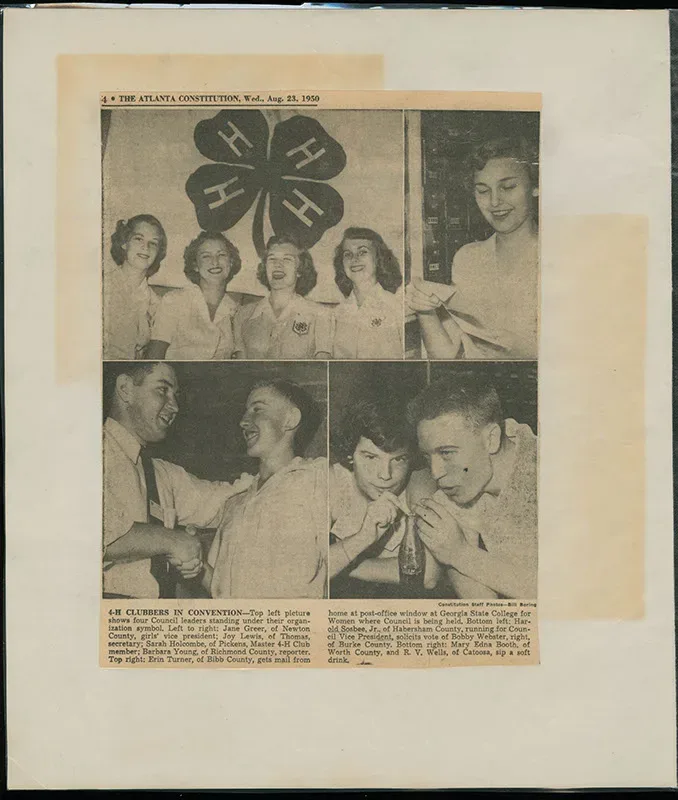
4-H itself dates to the early 1900s, rooted in agricultural education for rural youth. The shooting sports component formalized later, growing out of existing hunting safety and wildlife management curricula that county Extension agents were already delivering informally in rural communities.
National Organization
The program coalesced into its current national structure under the National 4-H Shooting Sports Committee, which developed standardized instructor certification, discipline rules, and a national competitive framework.
The formal program website and national coordination infrastructure trace to the late 20th century, though many county-level clubs had been running programs for decades before any centralized structure existed. That local-first origin is still visible in how the program runs today — county clubs operate with substantial independence under state and national guidelines rather than top-down directives.
Evolution of 4-H Shooting Sports from informal local programs to national organization
The National 4-H Shooting Sports Invitational, held annually in Grand Island, Nebraska, became the flagship national competitive event. It draws state-qualifying teams from across the country and functions as the program's highest-profile competitive showcase.
Mission & Purposeedit
The program's stated mission: teach the knowledge, skills, and attitudes for using firearms and archery equipment so that youth, parents, and adult volunteers become responsible, self-directed members of society. That language sounds like a pamphlet, but the operational reality is consistent with it — the program uses marksmanship as a vehicle for youth development rather than running shooting competitions with youth development bolted on as an afterthought.
Youth development first, marksmanship second — the program uses shooting as a vehicle for building character, not the other way around.
The prevention education model is central to how the program frames itself. It emphasizes positive youth-adult interaction, peer leadership, and immediate feedback — a kid who shoots a clean group gets instant gratification, which is a legitimate pedagogical hook for building confidence and sustained engagement.
The program also explicitly targets youth who aren't traditional athletes, recognizing that precision sports don't require the physical attributes that exclude many kids from conventional team sports. Conservation ethics and hunting tradition are woven into the curriculum alongside marksmanship. This reflects the program's Extension roots — the same county offices that run 4-H Shooting Sports also manage wildlife, agriculture, and natural resources education.
Programs & Competitionsedit
4-H Shooting Sports operates across multiple disciplines, though availability varies heavily by county and state depending on certified instructor availability and range access.
Available Disciplines
| Discipline | Equipment | Notes |
|---|---|---|
| Archery | Recurve and compound | Max 60 lb draw weight, field or target points only |
| Air Rifle/Pistol | .177 caliber | Most consistently available |
| Smallbore Rifle | .22 LR rimfire | Common in rural areas |
| Pistol | Air and smallbore divisions | Spottier availability |
| Shotgun | 12 gauge or smaller | Popular in rural counties |
| Muzzleloader | Traditional firearms | Instructor-dependent |
| Hunting | Standalone project | Some states only |
Not every club offers every discipline. In many rural counties, shotgun and archery are the most consistently available because the volunteer base and range infrastructure exist. Pistol and muzzleloader programs are spottier — they depend entirely on whether a certified instructor is active in that county.
Competition Structure
Competition is structured at three levels: club, state, and national. State events vary in format — Maryland, for example, runs annual smallbore rifle, archery, and shotgun state matches. The National 4-H Shooting Sports Invitational in Grand Island, Nebraska is the national endpoint for competitive shooters, drawing team competitors who have qualified through their state programs.
Competition pathway and non-competitive track options
Not all participants compete. Many clubs run purely as skill development and safety programs, with no competitive component. The program accommodates both tracks.
Membership & Benefitsedit
Youth Participation
Youth membership is open to anyone ages 8–18 (some states extend this to 19) enrolled as a 4-H member in a shooting sports project through their local county Extension office. There is no national membership fee specific to the shooting sports program — costs are handled at the county and state level and vary accordingly. Some clubs charge nominal dues; others are free. Equipment is sometimes available on loan through clubs, though most participants eventually acquire their own gear.
To join, you contact your county Extension office, find an active club, and register through that county's 4-H enrollment system. The program is explicitly open to all youth regardless of race, sex, religion, or disability. Enrollment is not selective — the limiting factor is usually club availability, not eligibility criteria.
Adult Volunteer Pathway
For adult volunteers, involvement means completing the state 4-H volunteer certification process — background check, protecting minors training, and discipline-specific instructor training. The instructor pathway is tiered:
| Role | Age Requirement | Qualifications | Supervision Level |
|---|---|---|---|
| Certified Instructor | 21+ | State Level 1 training, full 4-H volunteer certification | Can run ranges independently |
| Assistant Instructor | 18+ | 1+ years experience, instructor approval | Must have certified instructor present |
| Teen Volunteer | 14+ | Instructor approval only | Assists only, cannot run ranges |
The volunteer structure is strict about supervision requirements, particularly around live-fire. Assistant instructors and teen volunteers cannot run ranges independently — a Certified Instructor must be physically present.
Notable Achievementsedit
The scale of the program is its most quantifiable achievement — approximately 500,000 youth participants annually represents a significant footprint in youth shooting education, larger than most people outside the shooting sports community would expect from a 4-H program.
The National 4-H Shooting Sports Invitational consistently draws competitors at a skill level comparable to other national youth shooting programs. State teams that qualify and place well at nationals are generating genuinely competitive marksmanship scores, not participation-trophy-level results.
The program's instructor certification framework has become a model referenced by other youth shooting organizations. The tiered certification system — with specific requirements per discipline and mandatory background checks — predates similar requirements that other youth organizations adopted later.
Scholarship opportunities exist for competitive participants, including:
- National 4-H Shooting Sports scholarship
- Daisy scholarship for air gun competitors
- National Wild Turkey Federation academic scholarships for hunting/wildlife participants
Structure & Governanceedit
Federal Structure
4-H Shooting Sports sits inside the larger 4-H structure, which means it operates through the Cooperative Extension System — a federal-state-local partnership where the USDA funds land-grant universities, which in turn support county Extension offices.
| Level | Structure | Responsibilities |
|---|---|---|
| National | National 4-H Shooting Sports Committee | Standards, discipline rules, instructor certification frameworks |
| State | 4-H Shooting Sports Advisory Team | District coordination, Level 2 instructor training, state events |
| County | Local clubs through Extension offices | Direct program delivery, youth instruction |
This federated structure creates real variation in program quality and availability. A county with an active, long-tenured certified instructor running a well-equipped club will look nothing like a county where the only option is a club that meets twice a year with borrowed equipment. The national committee sets the floor; local execution determines the ceiling.
State and County Operations
At the state level, a 4-H Shooting Sports Advisory Team typically includes district coordinators plus nationally certified (Level 2 instructor certification) instructors covering each discipline. These are the people who train new instructors and who hold state events together. Level 2 instructor certification is the national-level credential — instructors certified at this level can train other instructors, not just youth.
Program administration at the county level runs through the 4-H Youth Development Extension Agent for that county, which means shooting sports sits inside a broader youth development portfolio rather than operating as a standalone program.
Relationship to Other Organizationsedit
The NRA Foundation provides equipment grants and funding to state 4-H Shooting Sports programs, which Delaware and other states acknowledge explicitly. This relationship is functional — equipment costs for a smallbore rifle or air gun program are real, and NRA Foundation grants through the Friends of the NRA banquet system have directly funded gear for programs that otherwise couldn't afford to equip new shooters.
This funding relationship draws occasional criticism from opponents of the NRA, who argue it blurs the line between an educational youth program and a firearms industry advocacy pipeline. Program administrators generally push back by pointing to the youth development framing and the strict safety structure, but the funding relationship is real and documented.
The program coordinates with state Hunter Education programs in several states, recognizing that the hunting project within 4-H Shooting Sports overlaps with hunter education curriculum. In some states these are delivered jointly.
USA Shooting, the national governing body for Olympic shooting sports, has no formal partnership with 4-H Shooting Sports, but there is a natural feeder relationship — some national-level competitive shooters trace their early development to 4-H clubs, particularly in air rifle and smallbore disciplines.
The National Wild Turkey Federation maintains a scholarship connection to 4-H programs, particularly those with hunting and wildlife management components.
The BGC Takeedit
If you've got a kid who's 10 years old, curious about firearms, and you're trying to figure out where to start — 4-H Shooting Sports is probably the right answer, assuming there's an active club in your county. The instructor certification requirements are real. The safety culture is genuine.
And the youth development framing, which might sound like bureaucratic padding, actually matters in practice: these clubs are run by adults who signed up because they want to work with kids, not because they want to coach a travel team to a trophy.
The program does more for kids who aren't natural athletes than almost anything else in youth sports. Precision shooting is genuinely equalizing — a smaller, quieter kid who can control their breathing and trigger press can outshoot a bigger, more physically capable kid every time.
That's not a small thing for a 12-year-old who gets cut from every other team.
The weaknesses are structural, not philosophical. County-to-county variation is dramatic. Some clubs are exceptional — well-equipped, experienced instructors, multiple disciplines, active competitive programs. Others are barely functional, running once a month with a single volunteer who's one bad harvest away from not having time to show up.
You won't know which one you've got until you walk in the door. Contact your county Extension office, find the club, and go watch a session before you commit your kid to it.
For youth shooting education in a structured, safety-first environment, 4-H Shooting Sports is as good as it gets at the county level. Whether you get the good version depends entirely on your zip code.
For adults who want to get involved as volunteers, the program is a legitimate way to put something back. The instructor certification process isn't a rubber stamp — it takes time and involves real training. But if you're already a competent shooter with patience for working with kids, it's a straightforward path to running a range that actually matters.
The NRA Foundation funding relationship is worth knowing about, not because it compromises the program's safety or educational quality — it doesn't — but because some parents will want to know it exists before they enroll. That's a fair thing to disclose upfront.
Referencesedit
- National 4-H Shooting Sports. Skills for Life – Activity for Lifetime. https://4-hshootingsports.org/
- University of Delaware Cooperative Extension. 4-H Shooting Sports. https://www.udel.edu/academics/colleges/canr/cooperative-extension/personal-economic-development/project-information/shooting-sports/
- University of Maryland Extension. Maryland 4-H Shooting Sports Plan & Policy, revised April 2017. https://extension.umd.edu/sites/extension.umd.edu/files/2021-03/Shooting%20Sports%20Plan%20%26%20Policy%20April%202017.pdf
- NYS 4-H. Shooting Sports. https://www.nys4-h.org/4-hshootingsports
- Washington State University Extension. Shooting Sports. https://extension.wsu.edu/4h/projects/shooting-sports/
- Wikipedia. 4-H Shooting Sports Programs. https://en.wikipedia.org/wiki/4-H_Shooting_Sports_Programs
- National 4-H Shooting Sports. Instructor Resources. https://4-hshootingsports.org/resources/instructor/
Last Updated: February 24, 2026
- Quail Creek Plantation(Okeechobee, FL)
- 2aHawaii(Honolulu, HI)
- Boston Firearms(Everett, MA)
- Safeshoot(Kingston, NY)
Loading comments...